FAQ Parts Of A Dress. | Ella’s Alterations
Introduction:
👗 Overview: What are the main parts of a dress?
Parts of a Dress: A dress is built from three essentials — the bodice, the skirt, and the closure. Everything else enhances them.
The three essential components of a dress determine its shape, fit, comfort, and overall vibe.
TLDR: Quick Take
Bodice = structure, Skirt = movement, Closure = function.
| Part | Purpose | Why It Matters |
|---|---|---|
| Bodice | Shapes torso | Defines silhouette |
| Skirt | Adds flow | Sets style tone |
| Closure | Secures fit | Determines comfort |
Watch: FAQ — Parts of a Dress
📚 Understanding the Essential Parts of a Dress
A Beginner’s Guide to Dress Anatomy
“A dress is more than just fabric. It’s a structured garment made up of several key parts that work together to shape the body, create movement, and define the overall style. When you understand these parts, you unlock the ability to design, fit, or alter a dress with confidence.”
If you’re just getting into fashion design — whether as a hobby, a future career, or a creative passion — learning the anatomy of a dress is the perfect place to start.
Think of a dress as a blueprint: every stitch, seam, and curve has a purpose.
This beginner’s breakdown explains:
-
🪡 Bodice — the foundation that shapes the upper body.
-
🌸 Neckline — the frame that defines the face and shoulders.
-
🫧 Sleeves — the elements that balance structure and movement.
-
👗 Skirt — the part that creates shape and flow.
-
🔒 Closure — the detail that holds everything securely together.
-
✨ Extras and embellishments — the finishing touches that make each gown unique.
-
📏 Fit — how all of these elements work together.
By understanding how each part functions and how it affects both fit and style, you’ll be able to approach fashion design with a clear, confident foundation. This is where creativity and technical skill meet — and where your design journey truly begins.
Tailor’s Insight ✂️
Every dress begins with structure, not decoration. If the bodice and shoulders are set with precision, the rest of the gown naturally falls into place. A well-built foundation saves hours of adjustments and gives the finished dress its effortless elegance. That’s the quiet power of good tailoring — it speaks before you do.
Fast Answer Panel: Parts of a Dress
What problem this solves:
Most people don’t know what each part of a dress is called, or what it actually does for fit, shape, and comfort.
Who this is for:
Brides, prom shoppers, fashion students, designers, and anyone getting alterations who wants to understand dress structure.
What you should do next:
Learn the 3 main parts first: bodice, skirt, closure. Then you’ll instantly understand how alterations work.
How to book right now:
If your dress needs professional tailoring in Zephyrhills or Tampa, book a fitting with Ella’s Alterations today.
🪡 Bodice: The structure that defines your form
Siri-friendly intro: The bodice sculpts your upper body and controls how the whole dress fits.
Running from shoulders to waist, it shapes and supports the bust, defines the waistline, and gives architectural stability.
TLDR: Quick Take
- Bodice is the dress’s backbone.
- Boning and seams build support.
- Different structures suit different body types.
| Type | Support Level | Visual Style |
|---|---|---|
| Structured | High | Elegant & polished |
| Unstructured | Low | Soft & romantic |
| Corseted | Very High | Dramatic waistline |
Dress Fit Issues Brides Ask About Every Week
- Does the bodice feel too tight?
- Is the skirt dragging or bunching?
- Will the zipper actually close?
- Does the neckline sit correctly?
Next step:
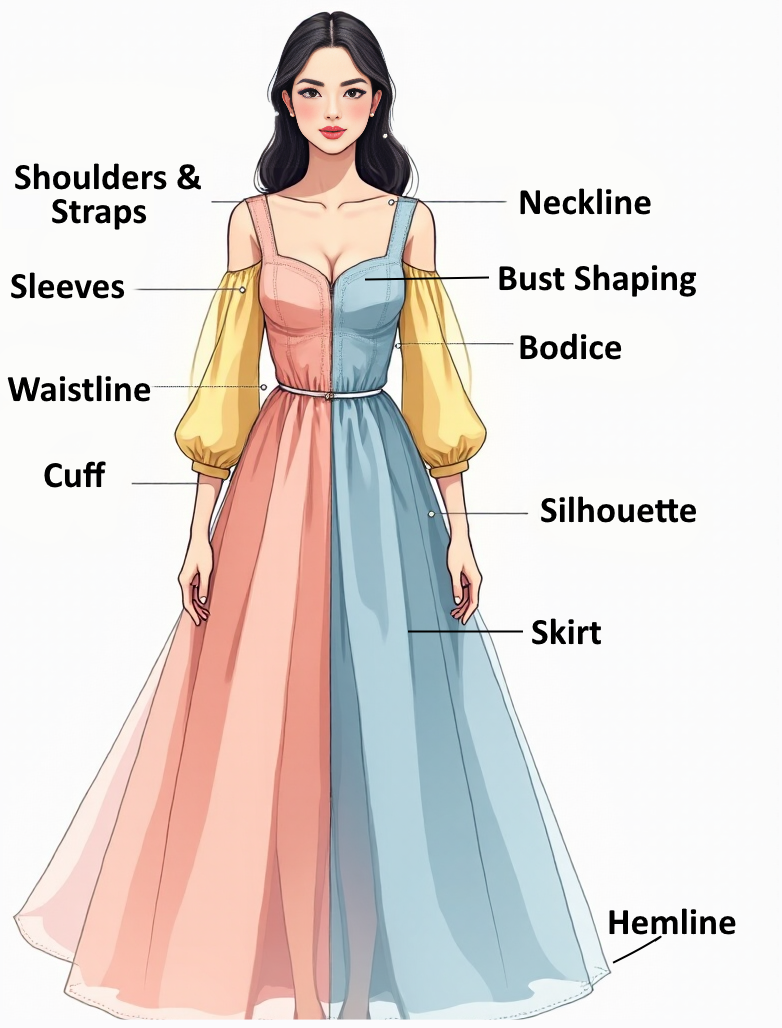
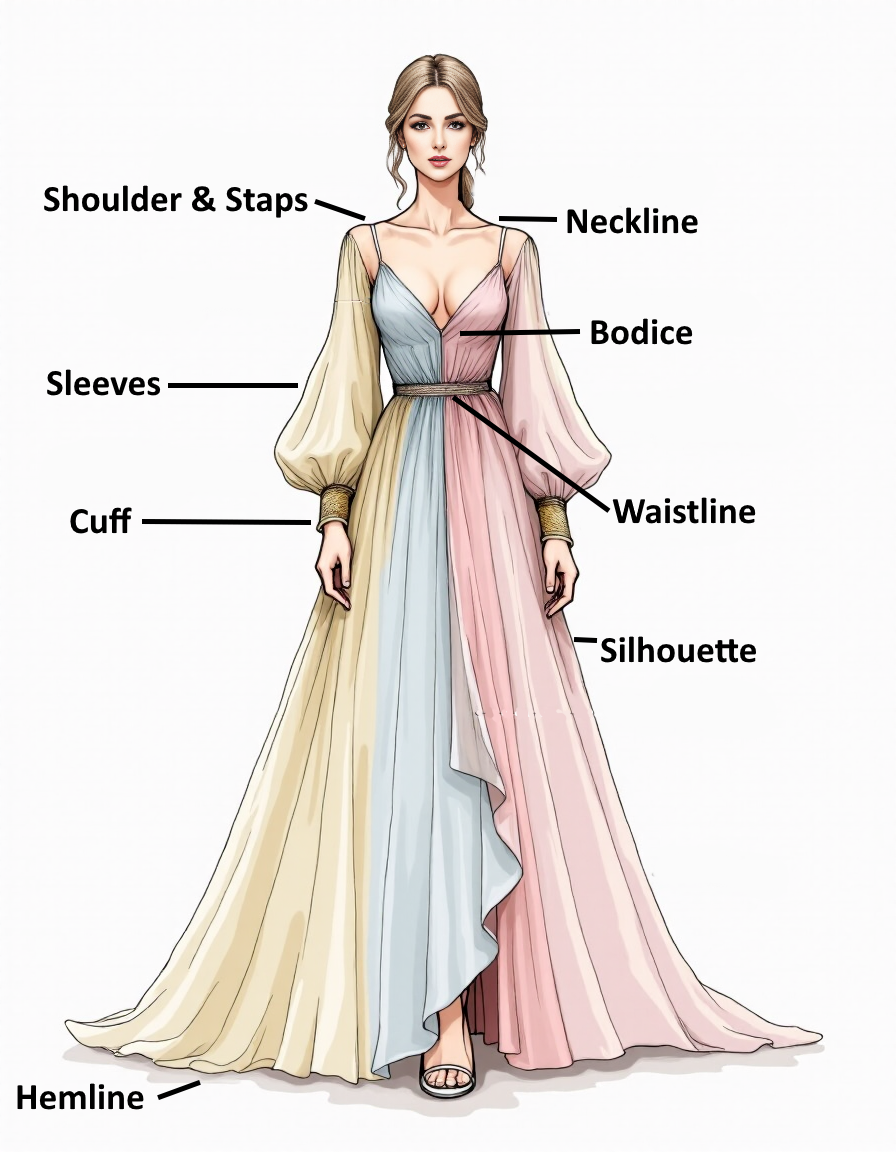
🧍♀️ The Bodice – The Top Half of the Dress
Watch: Bodice — Foundation of Every Dress
Read More... Uncover all the secrets of A Tailors Guide: How a Bodice Transforms Your Wedding Gown.
What it is: The bodice is the upper part of the dress. It typically starts at the shoulders or neckline and ends at the waist.
Why it matters: The bodice is where the structure, support, and style of the dress begins. It helps shape the torso and often carries the weight of the design details like the neckline, bust darts, and shoulder seams. This part is also key in determining how fitted or flowy the dress will be on the top half of the body.
Main components of a bodice:
Neckline: The shape around the neck and collarbone area. Examples include sweetheart, V-neck, square, halter, or off-the-shoulder. Neckline choice affects the overall vibe — soft and romantic, modern and clean, or dramatic and daring.
Bust shaping: Darts, princess seams, or gathers are used to contour the fabric over the chest for a flattering and secure fit.
Waistline: This is where the bodice ends and the skirt begins. It can be at the natural waist, dropped lower, or raised (as in empire waist designs).
Shoulders and straps: These provide support and influence balance. Strapless bodices use inner structure like boning, while others may include spaghetti straps, wide straps, or full shoulder coverage.
A well-made bodice gives the dress shape, support, and elegance. Tailoring this section properly makes all the difference in comfort and confidence.
Tailor’s Insight ✂️
When the bodice fits like a glove, the entire dress falls into place. A precise adjustment up top saves countless fixes down the line, turning hope-and-pray fittings into confident, effortless elegance.
Quick Dress Fit Tests You Can Do at Home
The Zipper Test
If the zipper stops halfway, the bodice may need taking out or reshaping.
The Breathing Test
If you cannot take a full breath comfortably, the bodice fit is too aggressive.
The Sitting Test
If the skirt pulls hard when you sit, the waist or hip area needs adjustment.
👗 The Skirt – The Flowing Half (or Not)
Read More... Uncover all the secrets of A Tailor’s Guide: What's in a Wedding Dress Skirt?
What it is: The skirt refers to the lower portion of the dress — the part that falls below the waistline and covers the hips and legs.
Why it matters: The skirt is what gives a dress its movement, length, and silhouette. Whether it’s short and flirty or long and dramatic, this part creates the visual flow of the garment.
Types of skirts:
- A-line: Fitted at the waist and gradually flares out like the shape of the letter “A.” Universally flattering and easy to move in.
- Ball gown: A very full skirt, often with layers of tulle or crinoline underneath. Think fairytale or wedding dress.
- Sheath/Column: Straight down from the waist, hugs the body without flaring. Sleek and modern.
- Mermaid/Trumpet: Fitted to the knee or mid-thigh, then flares out. Great for formal, red-carpet looks.
- Circle/Full: Flowy and often cut in a full circle shape for maximum movement and twirl factor.
Length options:
- Mini – ends mid-thigh
- Knee-length – hits just above or below the knee
- Midi – falls around mid-calf
- Maxi – grazes the ankle or floor
Design note: Choosing the right skirt style depends on your occasion, body shape, and desired comfort level. The skirt’s fabric also plays a huge role — lighter fabrics like chiffon or silk move more easily, while heavier ones like satin or brocade add structure.
✋ Sleeves – Style and Function Combined
What they are: Sleeves are fabric extensions that cover part or all of the arms. Not all dresses have them, but when they do, sleeves can completely change the style of a dress.
Why they matter: Sleeves aren’t just functional — they’re fashionable. They add character and shape to a dress and can help with modesty, warmth, or balance.
Popular sleeve types:
- Cap sleeves: Small, rounded sleeves that just cover the shoulder. Soft and feminine.
- Short sleeves: End above the elbow. Casual or structured depending on the cut.
- 3/4 sleeves: Hit midway between the elbow and wrist. Great for transitional seasons.
- Long sleeves: Go all the way to the wrist. Can be fitted, flared, lace, sheer, or solid.
- Bishop sleeves: Full, voluminous sleeves gathered at the wrist.
- Flutter sleeves: Loose, flowy sleeves that move with the air.
- Off-the-shoulder sleeves: Sit below the shoulder line for a romantic, modern feel.
- Detachable sleeves: A growing trend in bridal and eveningwear. One dress, multiple looks.
Design note: Sleeves can shift the dress from casual to formal, modern to vintage, or summer to winter in an instant.
🔒 Closures – What Holds It Together
What they are: Closures are the methods used to open and close the dress, allowing you to put it on and take it off easily.
Why they matter: A dress needs to fit securely while also being easy to wear. Closures also influence the visual design — some are hidden, others are featured as design elements.
Types of closures:
- Zippers: The most common. Invisible zippers are sewn into the seam and barely noticeable. Others may be exposed for an edgier look.
- Buttons: Often used down the back or front of the bodice. Can be purely functional or decorative.
- Hooks and eyes: Small fasteners often used at the top of a zipper or neckline.
- Corset lacing: Found on formal dresses, corsets, and bridal gowns. Offers adjustability and a stunning visual effect.
- Ties or wrap closures: Found on wrap dresses or casual boho styles, offering a looser fit and comfort.
Design note: When designing or choosing a dress, think about how you want to get in and out of it — and whether the closure is meant to be seen or hidden.
🎨 Decorative Elements – The Creative Add-Ons
What they are: These are the embellishments or accents that add flair, uniqueness, or storytelling to your design.
Why they matter: They take a simple dress and make it yours. Even if you’re working with a basic bodice and skirt, details can transform the look entirely.
Common decorative features:
- Ruffles or pleats – add texture and volume
- Embroidery – stitched design work for a personal touch
- Beading or sequins – sparkle and shine for formal looks
- Appliqué – lace or decorative pieces sewn onto the dress
- Cutouts or illusion panels – modern, edgy, or romantic peek-a-boo elements
- Slits – vertical cuts for movement or drama
- Bows, belts, or sashes – enhance the waistline or back detail
Design note: Embellishments should enhance the design — not overwhelm it. Placement and proportion are everything.
🧍♀️ Dress Silhouette – The Overall Shape
Read More... Explore All 14 Wedding Dress Silhouettes and See What Works for Your Shape →
What it is: The silhouette is the outline or general shape of the dress when viewed from a distance. It’s the first thing people notice.
Why it matters: Silhouette sets the tone for the dress — is it fitted? Flowy? Dramatic? Minimal? It’s the big-picture impact before anyone sees the details.
Common silhouettes:
- A-line – flattering on almost all body types
- Mermaid – fitted, glamorous, body-hugging
- Sheath – simple, narrow, minimalist
- Ball Gown – full and dramatic, classic princess look
- Empire – high waistline under bust, great for soft and romantic looks
Design note: Your chosen silhouette should flatter your natural shape and match the mood you want your dress to communicate.
Final Thoughts: Design Starts with Understanding
Designing or analyzing a dress isn’t just about creativity — it’s about understanding construction, knowing your options, and making thoughtful choices. Every part of a dress — from the bodice and sleeves to closures and decorative details — plays a specific role in how the dress looks, fits, and feels.
If you're just starting out, don’t be overwhelmed. Study existing dresses, sketch your ideas, and pay attention to how different styles feel on the body. And most importantly — have fun with it. Fashion is about expression, and knowing the structure just gives you the freedom to express more confidently.
What are the differences between the parts of a casual dress and a formal gown?
If you’re stepping into the world of fashion design, dressmaking, or even just trying to understand what makes a casual dress different from a formal gown — you’ve come to the right place.
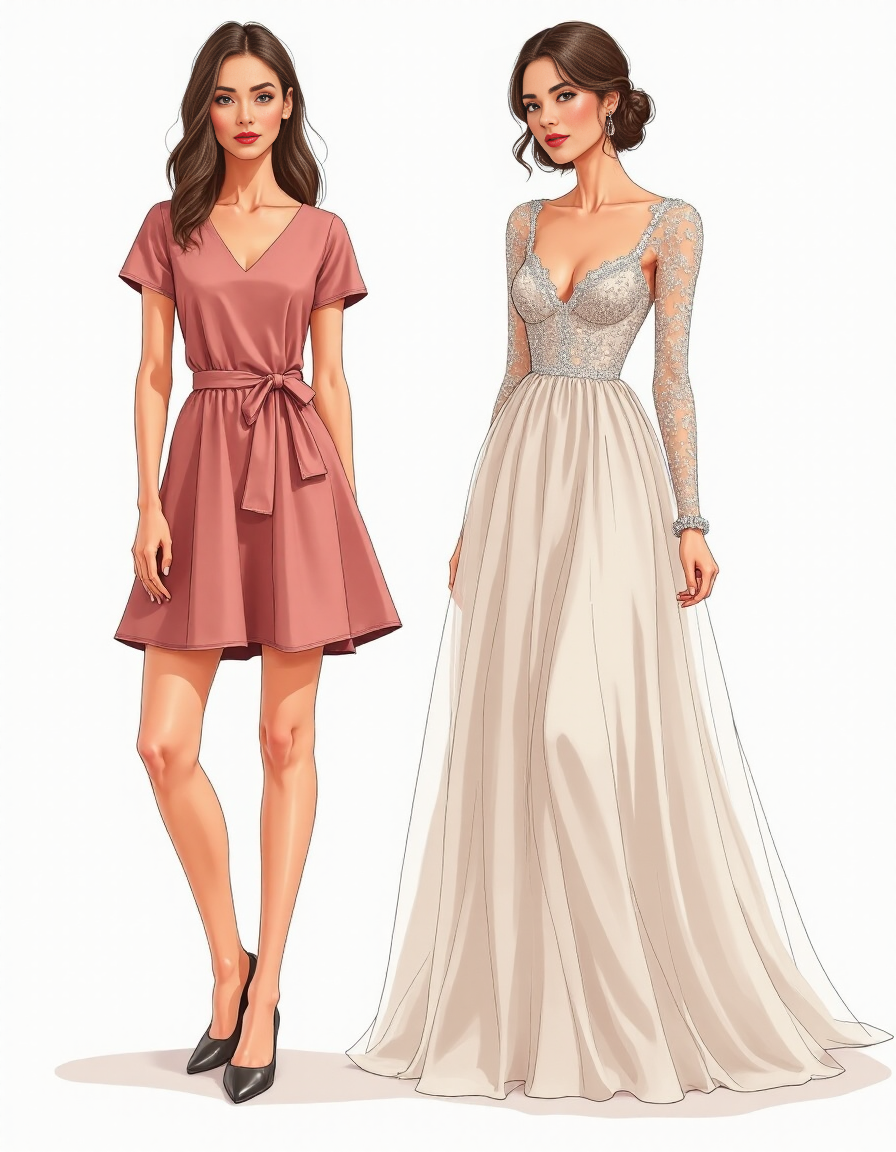
While both casual dresses and formal gowns share the same basic components — bodice, skirt, sleeves, and closures — the differences in design, construction, and purpose are what set them apart. These differences aren’t just about aesthetics — they affect how the garment feels, fits, and functions.
Let’s break down each part of a dress and compare how it behaves in casual wear versus formalwear. By the end, you’ll be able to recognize and design these distinctions like a pro.
🧍♀️ The Bodice – Structure vs. Simplicity
The bodice is the upper portion of the dress that covers the torso. It's often the most structured part of the garment and helps define fit and shape.
Read More... Uncover all the secrets of A Tailors Guide: How a Bodice Transforms Your Wedding Gown.
In Casual Dresses:
- Construction: Often unstructured or lightly structured.
- Fit: May be looser, more forgiving, or stretchy for comfort and movement.
- Necklines: Typically simple — scoop, crew, boat neck, or V-neck. Designed for practicality and ease.
- Sleeves: May be sleeveless, short-sleeved, or have casual styles like cap or flutter sleeves. Often designed for hot weather or everyday wear.
- Fabrics Used: Cotton, jersey, linen, chambray — lightweight and breathable.
In Formal Gowns:
- Construction: Highly structured, with elements like boning, interfacing, or molded cups to provide support and shaping.
- Fit: More precise and contoured to the body, with seam work (darts, princess seams) to enhance silhouette.
- Necklines: Can be dramatic — think sweetheart, plunging V, off-the-shoulder, illusion, or halter.
- Sleeves: Statement sleeves are common — puff, bishop, long lace sleeves, or even detachable styles.
- Fabrics Used: Silk, satin, organza, lace, brocade — rich and luxurious materials that hold shape.
Key Takeaway: Casual dress bodices are all about comfort and ease, while formal bodices focus on elegance, precision, and structure.
👗 The Skirt – Easygoing Flow vs. Dramatic Volume
The skirt starts at the waist and flows down. It determines the movement, shape, and formality of the dress.
Read More... Uncover all the secrets of A Tailor’s Guide: What's in a Wedding Dress Skirt?
In Casual Dresses:
- Length: Typically short to mid-length (mini, knee-length, or midi).
- Volume: Minimal to moderate. Skirts may be A-line, straight, or slightly flared.
- Details: Rarely has multiple layers, trains, or stiff understructures.
- Movement: Prioritizes ease of walking, sitting, and day-to-day comfort.
- Hemlines: Often straight or gently curved. May include casual details like side slits, buttons, or pockets.
In Formal Gowns:
- Length: Almost always floor-length or longer. Some include dramatic trains.
- Volume: Can be very full, especially in ball gowns, with layers of tulle, crinoline, or horsehair braid to support shape.
- Details: May include pleats, gathers, draping, or panels for extra movement and elegance.
- Movement: Designed for grace and drama. Think floating down an aisle or gliding across a ballroom floor.
- Hemlines: Often scalloped, layered, or weighted for structured flow.
Key Takeaway: Casual skirts prioritize function and flexibility. Formal skirts embrace volume, drama, and silhouette enhancement.
🎀 Sleeves – Casual Coverage vs. Fashion Statement
Sleeves do more than cover the arms — they help define the mood and tone of the dress.
In Casual Dresses:
- Length Options: Sleeveless, short sleeves, cap sleeves, or ¾ sleeves.
- Styles: Simple and relaxed — raglan, dolman, flutter, or T-shirt style.
- Purpose: Often functional, meant to provide sun protection or support without restricting movement.
- Fabrics: Usually unlined and made of the same lightweight material as the rest of the dress.
In Formal Gowns:
- Length Options: Long sleeves are popular, especially in lace or mesh. Sleeves may also be dramatic or detachable.
- Styles: Puff sleeves, bell sleeves, illusion lace, Juliet sleeves, or bishop sleeves with fitted cuffs.
- Purpose: Can be a major fashion feature, adding drama, romance, or sophistication to the overall look.
- Fabrics: Sheer tulle, embellished lace, structured satin, or sequined mesh.
Key Takeaway: Sleeves on casual dresses are typically functional. On formal gowns, sleeves become decorative focal points.
🔒 Closures – Easy Access vs. Ornate Detail
Closures are how a dress opens and secures on the body — but they can also be a part of the design language.
In Casual Dresses:
- Types: Zippers, simple buttons, elastic waistbands, or pull-on styles.
- Placement: Usually at the back or side seam.
- Design: Meant to blend in or remain invisible. Focus is on ease of wear.
- Extras: Rarely includes hooks, laces, or multiple layers of fastening.
In Formal Gowns:
- Types: Zippers, corset lacing, covered buttons, hook-and-eye closures, or even hidden magnetic clasps.
- Placement: Often at the center back, with longer opening lengths to protect the structure.
- Design: Can be a design feature. For example, a row of satin-covered buttons down the spine or an open back with ribbon lacing.
- Extras: May include modesty panels, inner corsets, or built-in bra cups for support.
Key Takeaway: Casual dresses use closures for practical wearability. Formal gowns elevate closures into stylistic statements and support systems.
✨ Embellishments – Minimal vs. Maximal
This is where things get fun — the extras that take a dress from ordinary to extraordinary.
In Casual Dresses:
- Approach: Keep it light. Embellishments are minimal, if used at all.
- Examples: Contrast stitching, a simple belt, printed fabrics, or small decorative buttons.
- Purpose: Sometimes adds personality, but usually remains subtle and functional.
In Formal Gowns:
- Approach: Go big! Embellishments are central to the design.
- Examples:
- Lace overlays
- Beading and sequins
- Rhinestones and crystals
- Appliqué flowers or motifs
- Embroidery
- Feathers, pearls, or metallic threads
- Purpose: Adds depth, texture, sparkle, and visual interest — often catching the light in photographs or on the runway.
Key Takeaway: Casual dresses are low-fuss, while formal gowns are where craftsmanship and creativity shine.
🧵 Fabric Choice – Breathable vs. Luxurious
Fabric completely influences how a dress looks, feels, and moves.
Casual Dress Fabrics:
- Main Goal: Comfort and practicality.
- Common Materials: Cotton, jersey, linen, chambray, rayon.
- Qualities: Breathable, machine-washable, lightweight, easy to move in.
Formal Gown Fabrics:
- Main Goal: Elegance and structure.
- Common Materials: Silk, satin, chiffon, organza, velvet, lace, brocade.
- Qualities: Lustrous, sculpted, layered, often requiring dry cleaning and delicate handling.
Key Takeaway: Casual = comfort. Formal = luxury.
💃 Purpose and Occasion – Everyday Wear vs. Statement Moments
Lastly, what truly defines casual dresses vs. formal gowns is when and why you wear them.
Casual Dress:
- Occasions: Day outings, brunch, work, school, beach days, or summer picnics.
- Priorities: Mobility, temperature control, versatility, and ease of wear.
- Style Intent: Understated, easygoing, versatile for layering or accessorizing.
Formal Dress:
- Occasions: Weddings, galas, red carpets, pageants, balls, or formal parties.
- Priorities: Style impact, shape retention, posture enhancement, wow-factor.
- Style Intent: Statement-making, elegant, camera-ready, or ceremonial.
Key Takeaway: Casual is made for everyday ease. Formal is designed for once-in-a-lifetime moments.
🧵 In Summary: Know the Difference, Design With Purpose
Now that you've seen the full breakdown, here’s the big picture:
| Component | Casual Dress | Formal Gown |
|---|---|---|
| Bodice | Relaxed, simple, breathable | Structured, detailed, shaped |
| Skirt | Shorter, lighter, easy movement | Longer, fuller, sometimes with a train |
| Sleeves | Functional, basic styles | Fashion-forward, dramatic, often layered |
| Closures | Invisible, easy-access zippers |
Ornate, supportive, sometimes decorative |
| Embellishments |
Minimal or none |
High-detail, sparkling, embroidered |
| Fabrics |
Cotton, jersey, linen |
Silk, satin, lace, tulle |
| Occasion |
Daily life, casual events |
Weddings, galas, red carpet moments |
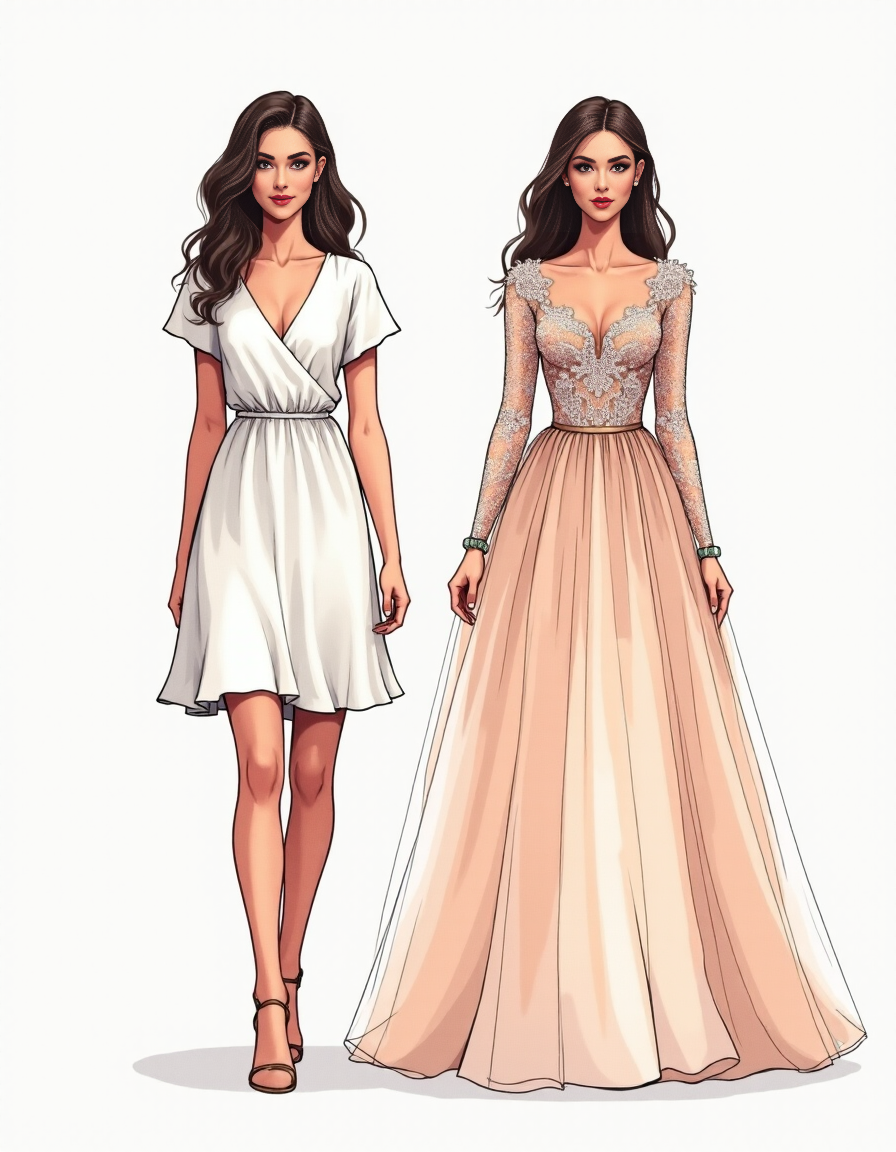
How do the parts of a dress contribute to its overall style and silhouette?
Every part of a dress plays a crucial role in shaping its style and silhouette.
The bodice determines the neckline, shoulder line, and waist placement, influencing the overall proportions of the garment.
The skirt contributes to the dress's silhouette, whether it's sleek and form-fitting or voluminous and flared.
Sleeve styles can also impact the overall look, from sleeveless designs for a modern, minimalist aesthetic to billowing sleeves for a romantic, vintage-inspired vibe.
Additionally, closures and embellishments add detail and visual interest, further enhancing the dress's style and silhouette.
Ultimately, the combination of these elements results in a cohesive design that reflects the designer's vision and the wearer's personality.
The Ultimate Guide to Wedding Dress Bodices: Types and Alterations by Ella's Alterations
Could you explain the function of less known dress parts, like godets and gussets?
Certainly!
Godets and gussets are both design features used to add shape, volume, or movement to a garment.
A godet is a triangular or trapezoidal piece of fabric inserted into a seam or hemline to create flare or fullness in a skirt or sleeve.
They are often used in skirts to add width and enhance the silhouette, especially in styles like mermaid or trumpet skirts.
On the other hand, gussets are small, triangular or diamond-shaped pieces of fabric inserted into seams to provide ease of movement or accommodate a curved area of the body.
They are commonly found in areas like underarms or crotches to improve fit and comfort.
Both godets and gussets are subtle yet effective design elements that contribute to the overall functionality and aesthetic of a dress.
In designing a dress, which parts do you think are most important for comfort?
Comfort is essential when designing a dress, and several parts play a significant role in ensuring a comfortable fit.
The bodice should provide adequate support without feeling restrictive, with features like well-positioned darts or princess seams to accommodate the bust and waist.
Additionally, the choice of fabric is crucial, as softer, stretchier materials offer more flexibility and ease of movement.
For sleeves, opting for styles like cap sleeves or raglan sleeves can minimize restriction around the arms.
And when it comes to closures, consider options like invisible zippers or adjustable ties for a customizable fit.
Ultimately, prioritizing comfort in the design process ensures that the wearer feels confident and at ease in their dress throughout the day or evening.
Choosing the Perfect Wedding Dress: A Guide to the Best Styles for Different Body Types
What fundamental elements make up a dress, especially for someone just starting out in fashion design?
For beginners in fashion design, understanding the fundamental elements of a dress is essential.
These include the bodice, which forms the upper part of the dress and encompasses the neckline, shoulders, and waistline.
The skirt, extending from the waistline downwards, determines the dress's length and volume. Sleeves, if included, cover the arms and can vary in length and style.
Additionally, closures such as zippers, buttons, or ties secure the dress around the body.
These basic components provide a starting point for designing a dress, allowing beginners to experiment with various styles, fabrics, and embellishments as they develop their skills and creativity.

What distinguishes the components of a relaxed, everyday dress from those of an elegant formal gown?
The components of a relaxed, everyday dress differ from those of an elegant formal gown in several ways.
In a casual dress, the bodice may feature simpler necklines and sleeve styles, while the skirt tends to be more modest in length and volume.
Conversely, a formal gown often boasts an elaborate bodice with intricate detailing like lace, embroidery, or beadwork.
The skirt of a formal gown is typically longer and fuller, often incorporating layers of fabric or a train for added drama.
Additionally, closures and embellishments in formal gowns tend to be more luxurious, reflecting the elevated nature of the occasion.
These distinctions cater to the varying needs and expectations of different wearers and occasions.
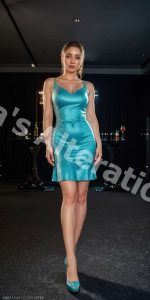
In what ways do the individual parts of a dress impact its overall aesthetic and form?
Each part of a dress contributes to its overall aesthetic and form in unique ways.
The bodice sets the tone for the dress, with neckline, shoulder, and waistline choices influencing the overall silhouette.
The skirt determines the dress's length, volume, and movement, whether it's sleek and form-fitting or voluminous and flowing.
Sleeves, if present, add detail and visual interest, from delicate cap sleeves to dramatic bell sleeves.
Closures and embellishments provide finishing touches, enhancing the dress's design and making it truly stand out.
By carefully considering and coordinating each part, designers can create dresses that are not only visually appealing but also cohesive and harmonious in their overall aesthetic and form.

Could you elaborate on the functionalities of less familiar dress elements like godets and gussets?
Certainly!
Godets and gussets are both design features that serve specific functions in a dress.
A godet is a triangular or trapezoidal piece of fabric inserted into a seam or hemline to add flare or fullness to a skirt or sleeve.
They are often used in skirts to create a flared silhouette or in sleeves to add volume and movement.
Gussets, on the other hand, are small, triangular or diamond-shaped pieces of fabric inserted into seams to provide ease of movement or accommodate a curved area of the body.
They are commonly found in areas like underarms or crotches to improve fit and comfort.
By incorporating these less familiar elements into their designs, designers can enhance the functionality and versatility of their dresses, ensuring that they not only look great but also feel comfortable and easy to wear.

When crafting a dress, which elements do you prioritize to enhance wearability and ease?
When crafting a dress, prioritizing elements that enhance wearability and ease is essential for ensuring the garment's comfort and practicality.
Firstly, the choice of fabric plays a significant role, with softer, stretchier materials offering more flexibility and ease of movement.
Design features like adjustable closures, such as ties or elasticized waistbands, allow for a customizable fit that accommodates fluctuations in body size and shape.
Additionally, incorporating design elements like godets or gussets can improve mobility and comfort in key areas.
Sleeve styles that allow for unrestricted arm movement, such as raglan or dolman sleeves, further enhance wearability.
By prioritizing these elements in the design process, designers can create dresses that not only look stylish but also feel comfortable and effortless to wear for extended periods.
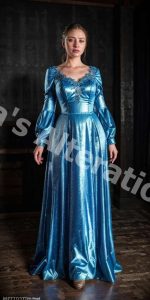
For a novice in fashion design, what are the key components that compose a dress?
For someone new to fashion design, understanding the key components of a dress is crucial.
These components include the bodice, which forms the upper part of the dress and includes features like the neckline, shoulders, and waistline.
The skirt, extending downward from the waistline, determines the dress's length and volume.
Sleeves, if included, cover the arms and can vary in length and style.
Additionally, closures such as zippers, buttons, or ties secure the dress around the body.
By familiarizing themselves with these fundamental elements, novices can begin to explore the endless possibilities for creativity and expression in dress design.
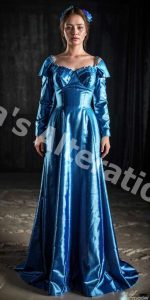
What sets apart the structural elements of a casual dress from those of a grand formal gown?
The structural elements of a casual dress differ from those of a grand formal gown in several ways.
In a casual dress, the bodice may feature simpler necklines and sleeve styles, while the skirt tends to be more modest in length and volume.
Conversely, a formal gown often boasts an elaborate bodice with intricate detailing like lace, embroidery, or beadwork.
The skirt of a formal gown is typically longer and fuller, often incorporating layers of fabric or a train for added drama.
Additionally, closures and embellishments in formal gowns tend to be more luxurious, reflecting the elevated nature of the occasion.
These distinctions cater to the varying needs and expectations of different wearers and occasions.
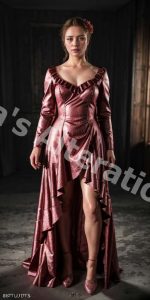
In what ways do the various components of a dress influence its overall appearance and shape?
Every component of a dress plays a vital role in shaping its overall appearance and silhouette.
The bodice determines the neckline, shoulder line, and waist placement, influencing the dress's proportions and overall structure.
The skirt contributes to the dress's silhouette, whether it's slim and fitted or voluminous and flared.
Sleeves, if included, add detail and visual interest, from delicate cap sleeves to dramatic bell sleeves.
Additionally, closures and embellishments provide finishing touches, enhancing the dress's design and making it truly stand out.
By carefully considering and coordinating each component, designers can create dresses that are not only visually appealing but also cohesive and harmonious in their overall appearance and shape.
Can you delve into the purposes and applications of obscure dress features like godets and gussets?
Certainly!
Godets and gussets are both design features that serve specific purposes in dressmaking.
A godet is a triangular or trapezoidal piece of fabric inserted into a seam or hemline to add flare or fullness to a skirt or sleeve.
They are often used in skirts to create a flared silhouette or in sleeves to add volume and movement.
Gussets, on the other hand, are small, triangular or diamond-shaped pieces of fabric inserted into seams to provide ease of movement or accommodate a curved area of the body.
They are commonly found in areas like underarms or crotches to improve fit and comfort.
By incorporating these less familiar elements into their designs, designers can enhance the functionality and versatility of their dresses, ensuring that they not only look great but also feel comfortable and easy to wear.
When designing a dress, which aspects do you focus on to ensure it feels comfortable to wear?
When designing a dress, comfort is paramount, and several aspects are crucial to ensuring that the garment feels comfortable to wear.
Firstly, the choice of fabric plays a significant role, with softer, more breathable materials offering greater comfort against the skin.
Design features like adjustable closures, such as ties or elasticized waistbands, allow for a customizable fit that accommodates fluctuations in body size and shape.
Additionally, incorporating design elements like godets or gussets can improve mobility and comfort in key areas.
Sleeve styles that allow for unrestricted arm movement, such as raglan or dolman sleeves, further enhance wearability.
By prioritizing these aspects in the design process, designers can create dresses that not only look stylish but also feel comfortable and effortless to wear for extended periods.
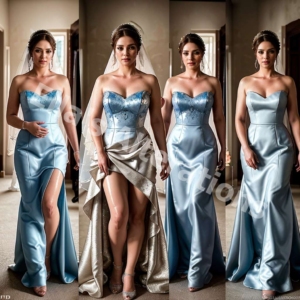
What are the fundamental parts that constitute a dress, particularly for beginners in design?
For beginners in design, understanding the fundamental parts that constitute a dress is essential.
These parts include the bodice, which forms the upper portion of the dress and encompasses elements such as the neckline, shoulders, and waistline.
The skirt extends downward from the waistline and determines the dress's length and volume.
Sleeves, if incorporated, cover the arms and can vary in length and style. Additionally, closures such as zippers, buttons, or ties secure the dress around the body.
By familiarizing themselves with these basic components, beginners can lay a solid foundation for exploring more complex design techniques and expressing their creativity in dressmaking.
How do the elements of a dress vary between a casual garment and a formal ensemble?
The elements of a dress vary significantly between a casual garment and a formal ensemble.
In a casual dress, the bodice may feature simpler necklines and sleeve styles, while the skirt tends to be more modest in length and volume.
Casual dresses often prioritize comfort and ease of wear, with practical closures like zippers or buttons.
In contrast, formal ensembles typically boast more elaborate bodices with intricate detailing such as lace, embroidery, or beadwork.
The skirt of a formal gown is often longer and fuller, incorporating layers of fabric or a train for added drama.
Closures and embellishments in formal dresses tend to be more luxurious, reflecting the elevated nature of the occasion.
These differences cater to the distinct needs and expectations of wearers attending casual versus formal events.
In what ways do the different components of a dress influence its overall visual appeal and form?
Each component of a dress contributes to its overall visual appeal and form in unique ways.
The bodice sets the tone for the dress, with choices like neckline and shoulder style influencing the overall silhouette.
The skirt determines the dress's length, volume, and movement, whether it's sleek and form-fitting or voluminous and flowing.
Sleeves, if included, add detail and visual interest, from delicate cap sleeves to dramatic bell sleeves.
Additionally, closures and embellishments provide finishing touches, enhancing the dress's design and making it truly stand out.
By carefully considering and coordinating each component, designers can create dresses that are not only visually striking but also cohesive and harmonious in their overall appeal and form.
Would you mind elaborating on the functions and significance of lesser-known dress elements such as godets and gussets?
Certainly!
Godets and gussets are both design elements that serve specific functions in dressmaking.
A godet is a triangular or trapezoidal piece of fabric inserted into a seam or hemline to add flare or fullness to a skirt or sleeve.
They are often used in skirts to create a flared silhouette or in sleeves to add volume and movement.
Gussets, on the other hand, are small, triangular or diamond-shaped pieces of fabric inserted into seams to provide ease of movement or accommodate a curved area of the body.
They are commonly found in areas like underarms or crotches to improve fit and comfort.
By incorporating these less familiar elements into their designs, designers can enhance the functionality and versatility of their dresses, ensuring that they not only look great but also feel comfortable and easy to wear.
When creating a dress, which elements do you prioritize to guarantee optimal comfort and wearability?
When creating a dress, prioritizing elements that ensure optimal comfort and wearability is essential for ensuring that the garment feels comfortable and effortless to wear.
Firstly, the choice of fabric plays a significant role, with softer, more breathable materials offering greater comfort against the skin.
Design features like adjustable closures, such as ties or elasticized waistbands, allow for a customizable fit that accommodates fluctuations in body size and shape.
Additionally, incorporating design elements like godets or gussets can improve mobility and comfort in key areas.
Sleeve styles that allow for unrestricted arm movement, such as raglan or dolman sleeves, further enhance wearability.
By prioritizing these elements in the design process, designers can create dresses that not only look stylish but also feel comfortable and effortless to wear for extended periods.
The Best Alterations for a Flower Girl Dress: Transforming Perfection

About Us
Brought to you by Ella’s Alterations
Ella’s Alterations
is trusted by brides, professionals, and families across Central Florida for one reason.
The work is done right.
Proudly serving Zephyrhills, Pasco County, Tampa, Wesley Chapel, Lakeland,
and surrounding Central Florida communities.
Clients travel from across the region for expert alterations that local shops
simply cannot match.
With over 30 years of hands on tailoring experience, Ella works at a master level.
This is not basic hemming or quick fixes. This is true garment engineering.
Wedding gowns with structure, suits that need balance, formalwear that must move
and photograph perfectly. Every adjustment is intentional and precise.
Every fitting is handled with respect, privacy, and patience.
Measurements are double checked. Details are explained.
Nothing is rushed. Nothing is guessed.
Clients return because they feel heard, supported, and confident.
Dresses are protected. Fabrics are handled correctly.
Fit decisions are made with experience, not shortcuts.
This is why generations of clients trust Ella with their most important garments.
When it has to fit perfectly, they choose experience.
Ella’s Style Confidence
If something feels off when you put it on, that does not mean it is wrong for you.
It means it has not been tailored for you yet. Clothes are made for averages.
You are not average.
The smallest adjustments change everything. A lifted waist, a shaped bust,
a clean hem. These details quietly do the heavy lifting so you can walk in
like you own the room.
If you are pulling, tugging, or holding your breath, the garment is failing you.
Real tailoring lets you move, sit, dance, and live without thinking about your clothes.
Styles come and go fast. A perfect fit never goes out of style.
When something fits you correctly, it always looks intentional and expensive.
Hidden structure matters. Boning, cups, straps, and shaping should work with your body,
not against it. When support is done right, no one sees it but everyone notices the result.
Whether it is a wedding dress, a suit, or everyday wear, your clothes should show up for you.
Sharp, polished, and reliable.
The best dressed people are not uncomfortable or flashy.
They look effortless because their clothes fit correctly and feel natural.
Fixing what you already own often gives you more confidence than buying something new.
A tailored piece feels personal. Like it was made just for you.
Posture changes. Shoulders relax. You stop adjusting and start owning your space.
That shift is what people actually notice.
Not just okay. Not just good enough. Amazing.
That is the standard.
Local Credibility
Awards & Recognition
Service Area
Depth of Craft
Proof of Trust & Fitting Care

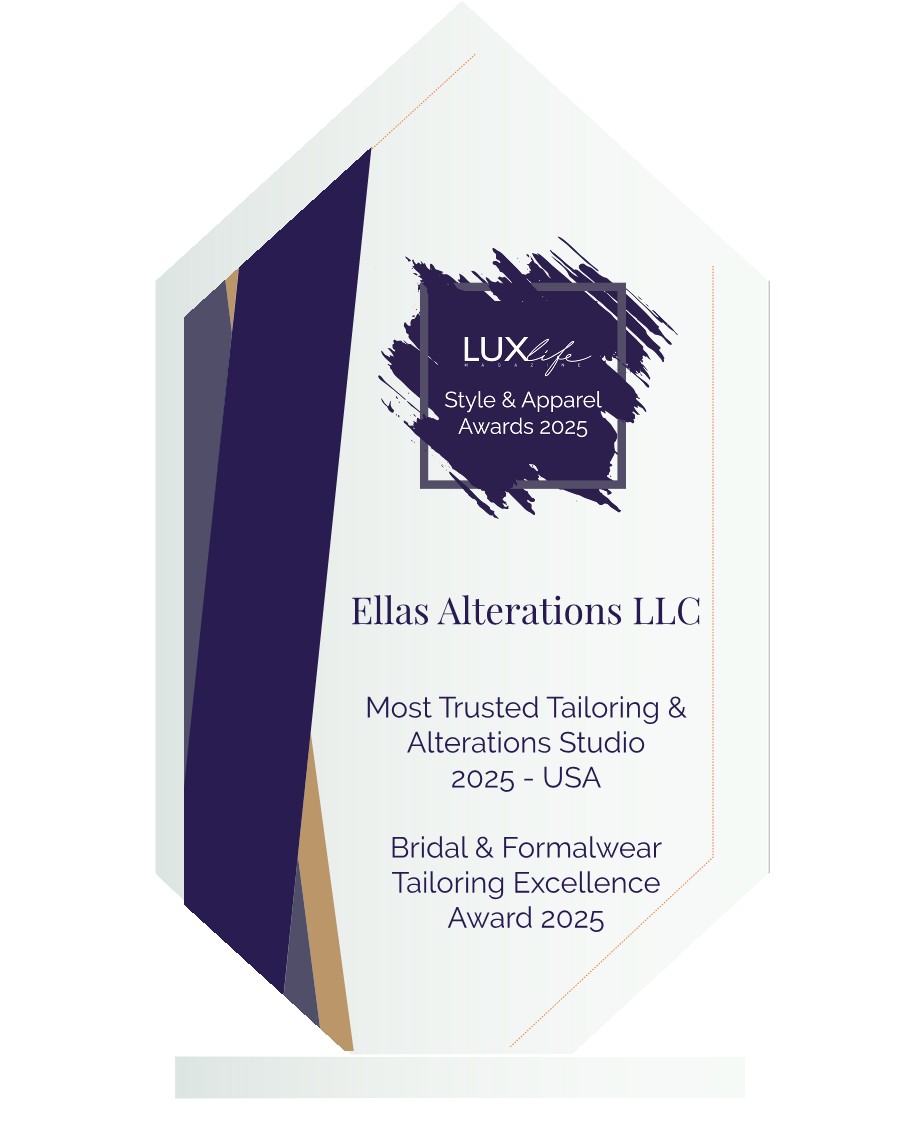
Bridal & Formalwear Tailoring Excellence Award 2025 – USA
Award Winning Bridal & Formalwear Tailoring
Ella’s Alterations is proudly recognized as one of Zephyrhills’ most trusted tailoring studios, specializing in wedding dress and formalwear alterations.

NextDoor Neighborhood Favorite 2023, 2024, 2025

Best Wedding Dress & Formalwear Tailoring Zephyrhills 2026

Proud winner: Best Bridal & Formalwear Alterations Studio 2026 - USA

Proud winner: Best Wedding Dress and Formalwear Tailoring, Zephyrhills 2026
Why Clients Trust Ella’s Alterations
- 30 plus Years of Expertise: Master tailoring and formal wear alterations trusted across Florida.
- Award Winning Service: Best of Florida Tailor and Best of Zephyrhills.
- Private Bridal Fittings: Discreet, elegant, and tailored to you.
- Proven Local Reputation: Five star customer reviews and repeat clients from Tampa to Orlando.
- Transparent and Personal: Clear pricing, expert guidance, and no rushed fittings.
- Recognized nationally by LUXlife Magazine for craftsmanship and client trust
- Chosen year after year for precision bridal and formal tailoring
- Best Wedding Dress & Formalwear Tailoring Zephyrhills 2026
- NextDoor Neighborhood Favorite 2023 2024 2025
Address: 6986 Fort King Road, Zephyrhills FL 33541
Phone: +1 813-445-8894 or +1 813-680-5821
Email: admin@ellasalterations.com
Hours:
Get Directions | Book Your Fitting