Tailoring Basics | Ella’s Alterations
Tailoring Basics
Tailoring isn’t just sewing. It’s a craft that blends precision, patience, and skill. Whether you’re altering your favorite jeans or creating a wedding gown, understanding the basics sets the stage for everything else.
Listen: Tailoring Basics (Audio Guide)
Tailor’s Insight ✂️
“People think tailoring is just sewing, but it’s so much more. It’s the language of fit, fabric, and finish. A good tailor doesn’t just alter clothes — they sculpt confidence. Mastering the basics is where real craftsmanship begins.”
— Ella Dixon, Master Tailor & CEO of Ella’s Alterations
Tailoring is an art form that has stood the test of time, maintaining its essential place in the world of fashion and clothing. Whether it's altering a garment to fit perfectly or creating a piece from scratch, tailoring encompasses various techniques and skills that result in a finished product that fits and flatters the body. Here, we'll explore the basics of tailoring, focusing on some key aspects that every aspiring tailor or fashion enthusiast should know.
1. Measuring Accurately
One of the cornerstones of tailoring is precise measurement. It's essential to measure the body accurately to ensure the garment fits perfectly. Key areas to measure include the chest, waist, hips, arms, and legs. Using a flexible measuring tape and having a clear understanding of where and how to measure is crucial.
2. Understanding Fabrics
Different fabrics behave in different ways. Some are stretchy and forgiving, while others are stiff and rigid. A good tailor understands how fabrics behave and how to work with them. The choice of fabric is crucial, especially when it comes to how it drapes, its appearance, durability, and how it reacts to sewing and pressing.
3. Pattern Making and Cutting
Pattern making is the art of translating measurements into a paper template, which is then used to cut the fabric. Proper pattern making ensures that the garment's pieces fit together seamlessly. Cutting the fabric requires a steady hand and sharp scissors or a rotary cutter. Cutting accurately according to the pattern is vital in tailoring, as even small mistakes can lead to a poor fit.
4. Sewing Techniques
Sewing is at the heart of tailoring. Various stitches and techniques are used to join fabric pieces, including straight stitch, zig-zag stitch, overcasting, and more. Mastery of sewing by hand and with a sewing machine is necessary for creating professional-looking garments. Understanding how to control tension, seam allowances, and how to properly finish edges are also key aspects.
5. Pressing and Finishing
Pressing is often overlooked but is an essential step in tailoring. Proper pressing sets seams, shapes the fabric, and gives a finished appearance to the garment. Using the right temperature and techniques ensures that the fabric looks crisp without being damaged.
Finishing techniques such as hemming, adding buttons, zippers, or other closures, and fine-tuning the fit all contribute to a polished final product. Attention to detail in these final stages elevates the garment and reflects the skill of the tailor.
6. Building a Basic Toolkit
Every tailor needs a set of tools to work effectively. Essential tools include measuring tapes, scissors, pins, needles, thread, a sewing machine, an iron, and more. Investing in quality tools will make the tailoring process smoother and more enjoyable.
Conclusion
Tailoring is a multifaceted skill that requires attention to detail, an understanding of fabrics, mastery of sewing techniques, and a passion for creating beautiful garments. Whether you're altering a favorite piece of clothing or designing a new garment, these tailoring basics will serve as a foundation for your work.
Learning tailoring is not only a valuable skill but also a creative outlet that allows you to express individuality through clothing. With patience, practice, and a dedication to the craft, you can take the first steps into the world of tailoring, where every stitch is a step towards fashion's timeless elegance. Whether you're a professional looking to hone your skills or a beginner eager to dive into the world of fashion, these fundamentals are your gateway to the beautiful art of tailoring.
Quick Facts 🧵
- Average tailor uses 10–15 different stitches for one garment.
- Pressing can shape seams more than stitching can.
- Cotton is the best beginner fabric.
- Precise measuring saves up to 50% of alteration time.
- Sharp scissors reduce fraying by 30%.
- Professional tailors press at least 3 times during construction.
Mini Glossary: Tailoring Terms Explained ✂️
- Dart
- A tapered seam used to shape fabric around curves like the bust, waist, or hips.
- Drape
- How fabric hangs or flows when placed on a body or mannequin.
- Overcasting
- A stitch used to prevent fabric edges from fraying.
- Seam Allowance
- The space between the fabric edge and the stitching line, usually ½ inch or 5/8 inch.
- Interfacing
- A material added to fabric to give it structure, often used in collars, cuffs, and waistbands.
- Baste
- Temporary stitching used to hold fabric pieces together before the final sewing.
- Notch
- Small cuts or marks on fabric edges to align pattern pieces correctly.
- Grainline
- The direction of the fabric threads; aligning patterns with the grain ensures proper fit and drape.
- Pressing
- Using an iron to shape seams and give a polished finish.
- Facing
- A fabric piece sewn on the inside edge of a garment to give it a clean finish.
Key Takeaways 🪡
- Tailoring starts with precision — every measurement counts.
- Fabric choice affects everything from look to technique.
- Pressing gives garments their final polished shape.
- Quality tools save time and boost results.
- Knowing tailoring terms gives you control over your craft.
- Tailoring isn’t just sewing — it’s sculpting style.
Ready to Take Your Fit to the Next Level?
At Ella’s Alterations, we don’t just stitch clothes — we shape confidence. Whether it’s your wedding gown, a special occasion outfit, or your favorite everyday piece, we’ll make sure it fits flawlessly. Book your fitting today and experience what true tailoring feels like.
Serving Zephyrhills, Wesley Chapel, Tampa, Lakeland, and surrounding Florida communities.

About Us
Brought to you by Ella’s Alterations
Ella’s Alterations
is trusted by brides, professionals, and families across Central Florida for one reason.
The work is done right.
Proudly serving Zephyrhills, Pasco County, Tampa, Wesley Chapel, Lakeland,
and surrounding Central Florida communities.
Clients travel from across the region for expert alterations that local shops
simply cannot match.
With over 30 years of hands on tailoring experience, Ella works at a master level.
This is not basic hemming or quick fixes. This is true garment engineering.
Wedding gowns with structure, suits that need balance, formalwear that must move
and photograph perfectly. Every adjustment is intentional and precise.
Every fitting is handled with respect, privacy, and patience.
Measurements are double checked. Details are explained.
Nothing is rushed. Nothing is guessed.
Clients return because they feel heard, supported, and confident.
Dresses are protected. Fabrics are handled correctly.
Fit decisions are made with experience, not shortcuts.
This is why generations of clients trust Ella with their most important garments.
When it has to fit perfectly, they choose experience.
Ella’s Style Confidence
If something feels off when you put it on, that does not mean it is wrong for you.
It means it has not been tailored for you yet. Clothes are made for averages.
You are not average.
The smallest adjustments change everything. A lifted waist, a shaped bust,
a clean hem. These details quietly do the heavy lifting so you can walk in
like you own the room.
If you are pulling, tugging, or holding your breath, the garment is failing you.
Real tailoring lets you move, sit, dance, and live without thinking about your clothes.
Styles come and go fast. A perfect fit never goes out of style.
When something fits you correctly, it always looks intentional and expensive.
Hidden structure matters. Boning, cups, straps, and shaping should work with your body,
not against it. When support is done right, no one sees it but everyone notices the result.
Whether it is a wedding dress, a suit, or everyday wear, your clothes should show up for you.
Sharp, polished, and reliable.
The best dressed people are not uncomfortable or flashy.
They look effortless because their clothes fit correctly and feel natural.
Fixing what you already own often gives you more confidence than buying something new.
A tailored piece feels personal. Like it was made just for you.
Posture changes. Shoulders relax. You stop adjusting and start owning your space.
That shift is what people actually notice.
Not just okay. Not just good enough. Amazing.
That is the standard.
Local Credibility
Awards & Recognition
Service Area
Depth of Craft
Proof of Trust & Fitting Care

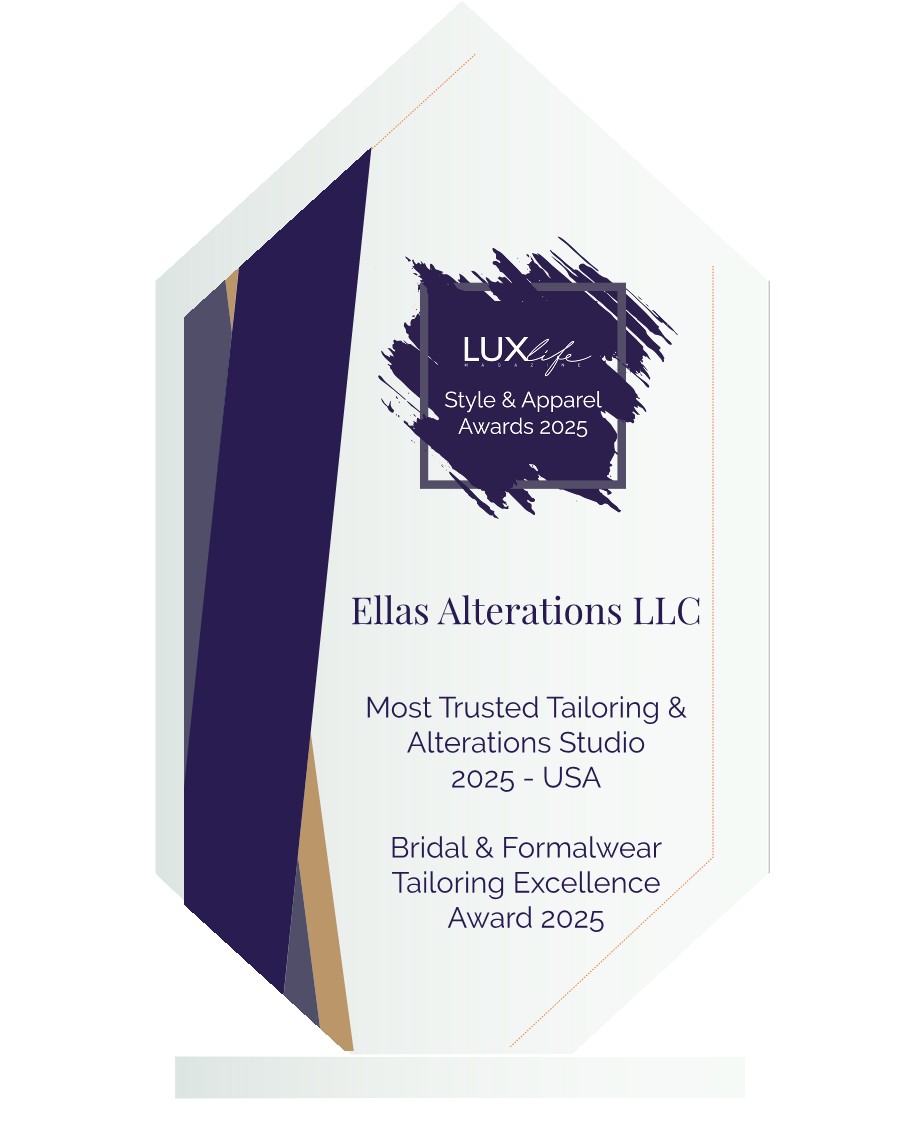
Bridal & Formalwear Tailoring Excellence Award 2025 – USA
Award Winning Bridal & Formalwear Tailoring
Ella’s Alterations is proudly recognized as one of Zephyrhills’ most trusted tailoring studios, specializing in wedding dress and formalwear alterations.
NextDoor Neighborhood Favorite 2023, 2024, 2025

Best Wedding Dress & Formalwear Tailoring Zephyrhills 2026
Proud winner: Best Bridal & Formalwear Alterations Studio 2026 - USA
Proud winner: Best Wedding Dress and Formalwear Tailoring, Zephyrhills 2026
Why Clients Trust Ella’s Alterations
- 30 plus Years of Expertise: Master tailoring and formal wear alterations trusted across Florida.
- Award Winning Service: Best of Florida Tailor and Best of Zephyrhills.
- Private Bridal Fittings: Discreet, elegant, and tailored to you.
- Proven Local Reputation: Five star customer reviews and repeat clients from Tampa to Orlando.
- Transparent and Personal: Clear pricing, expert guidance, and no rushed fittings.
- Recognized nationally by LUXlife Magazine for craftsmanship and client trust
- Chosen year after year for precision bridal and formal tailoring
- Best Wedding Dress & Formalwear Tailoring Zephyrhills 2026
- NextDoor Neighborhood Favorite 2023 2024 2025
Address: 6986 Fort King Road, Zephyrhills FL 33541
Phone: +1 813-445-8894 or +1 813-680-5821
Email: admin@ellasalterations.com
Hours:
Get Directions | Book Your Fitting