Know Your Gown: Essential Parts of a Wedding Dress.
Introduction: Why Gown Anatomy Matters
You’ve found the dress… or maybe you’re still searching.
Either way, there’s one thing every bride-to-be should know: your wedding gown isn’t just one beautiful piece of fabric.
It’s an intricate creation, carefully crafted from multiple parts, each with its own name, purpose, and design possibilities.
Understanding gown anatomy isn’t just “bridal trivia.”
It helps you:
- Communicate clearly with designers, seamstresses, and consultants.
- Make informed decisions about alterations.
- Identify what makes you feel comfortable and confident.
- Spot high-quality craftsmanship.
Think of your dress like a love story.
The neckline is the first glance.
The bodice is the conversation.
The skirt is the grand gesture.
And the train?
That’s the unforgettable ending.
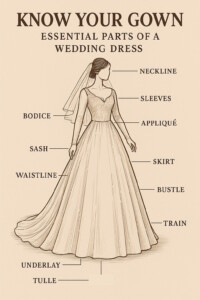
The Head-to-Toe Wedding Dress Overview
Before we get specific, here’s the quick map of your gown:
- Shape – Find Your Shape, Find Your Dress. Read More...
- Neckline – Frames your face and sets the tone. Read More...
- Bodice – The fitted upper part that supports and shapes. Read More...
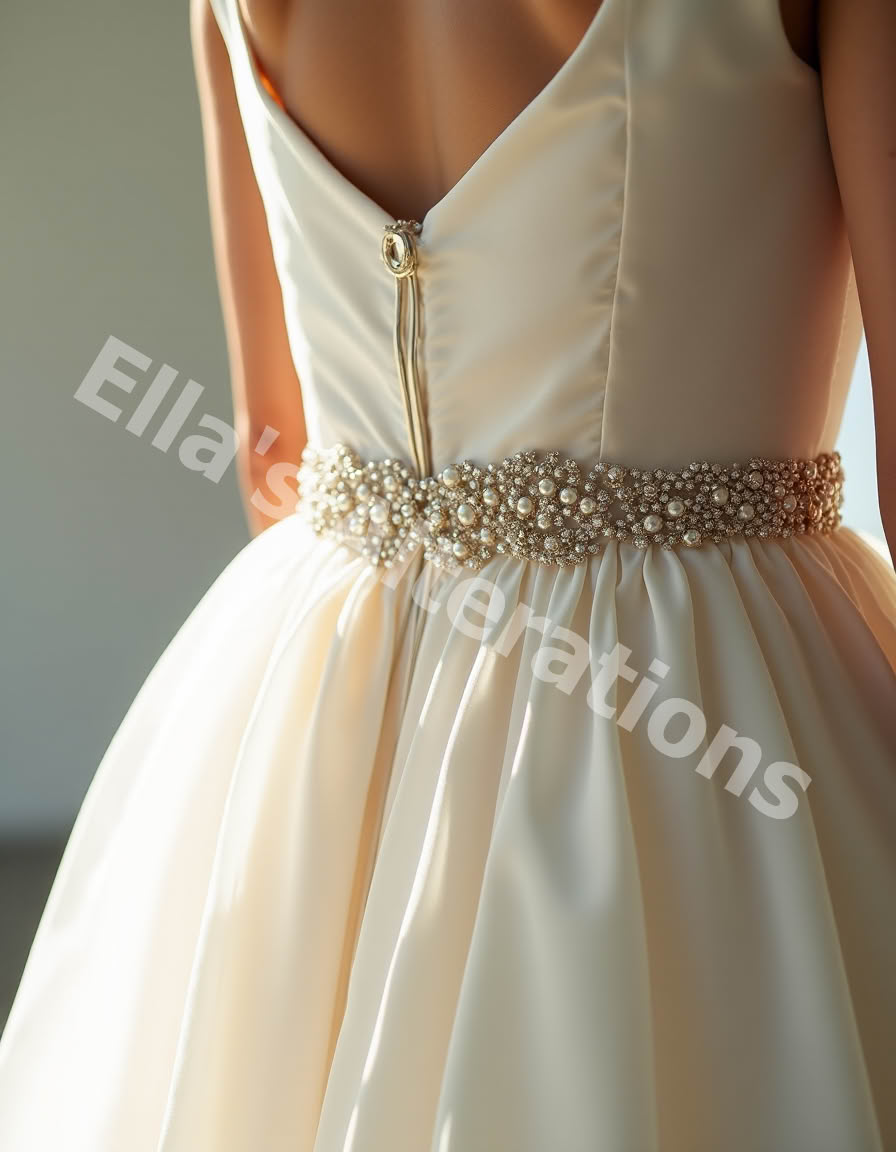
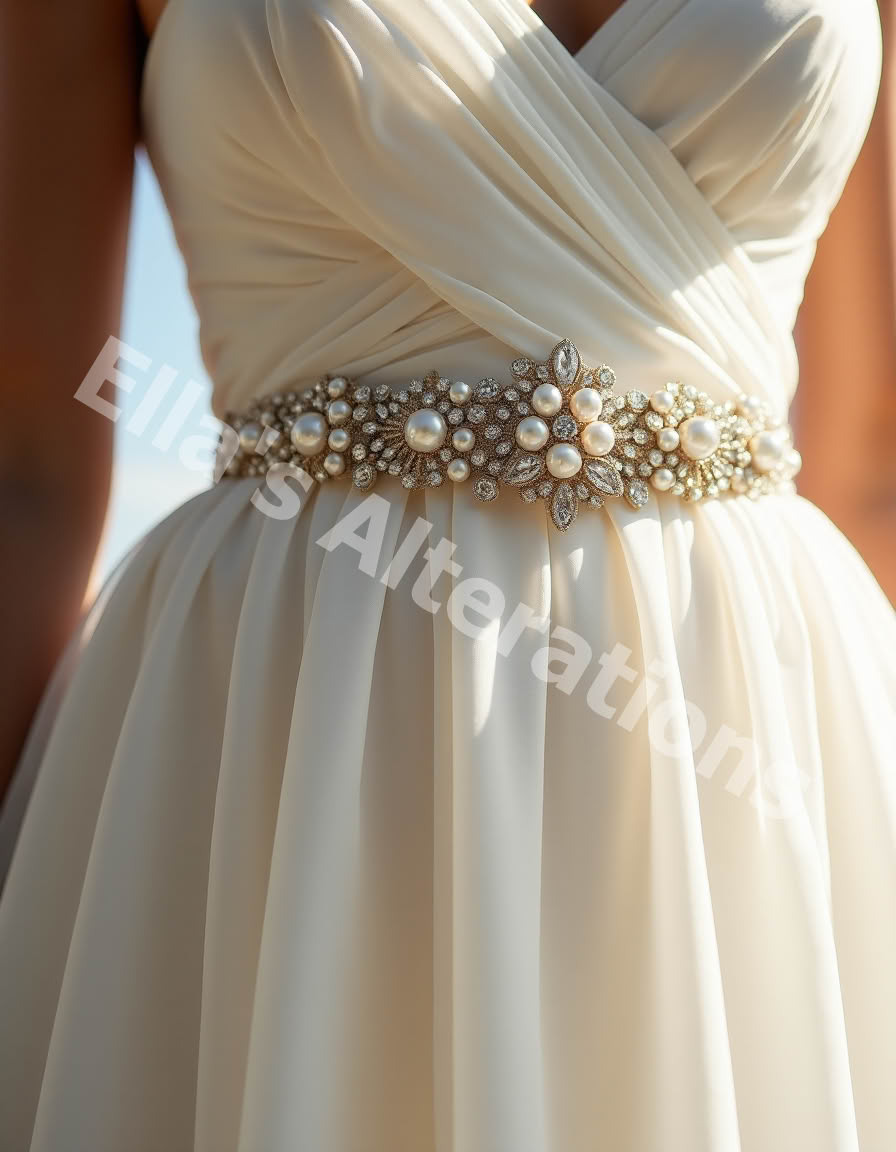
- Waistline – Where bodice meets skirt, influencing proportion.
- Bustles - How Bustles Transform Your Wedding Gown. Read More...
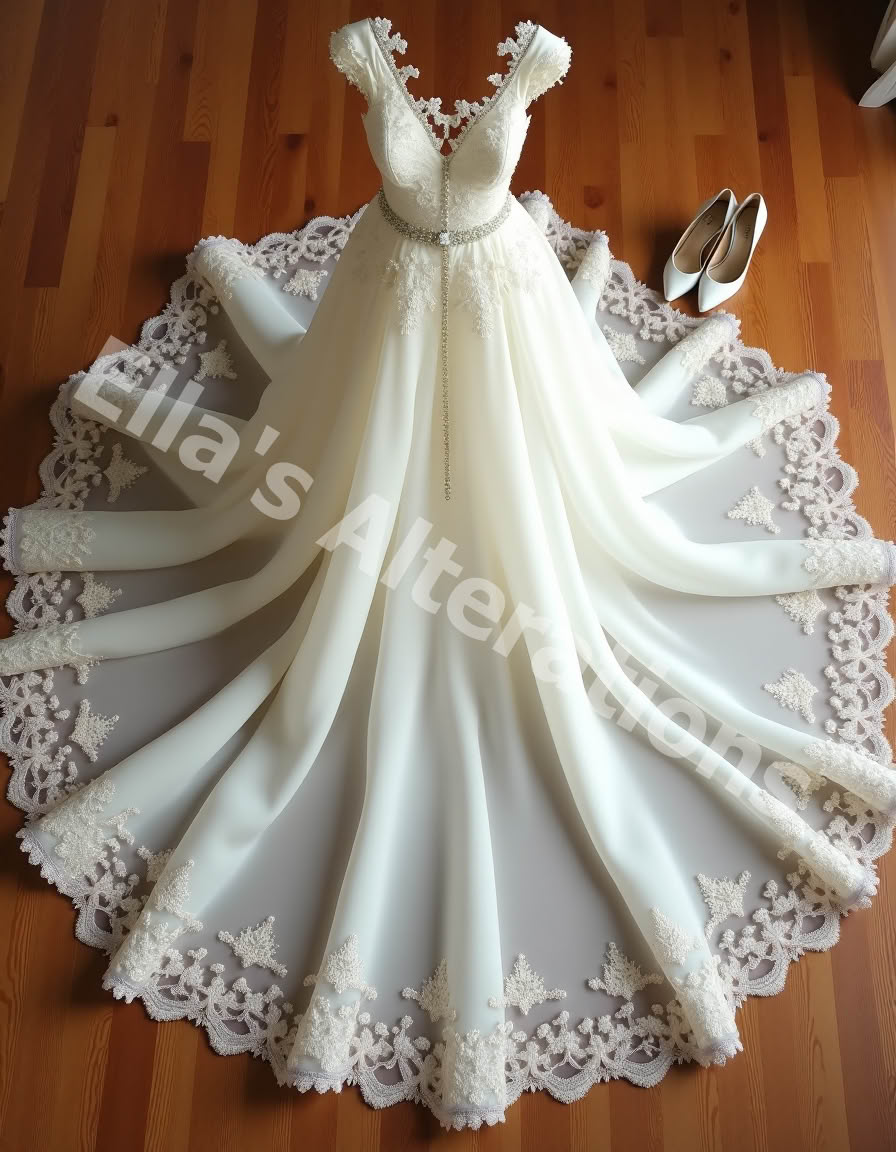
- Skirt – The flowing or fitted lower part that defines silhouette. Read More...
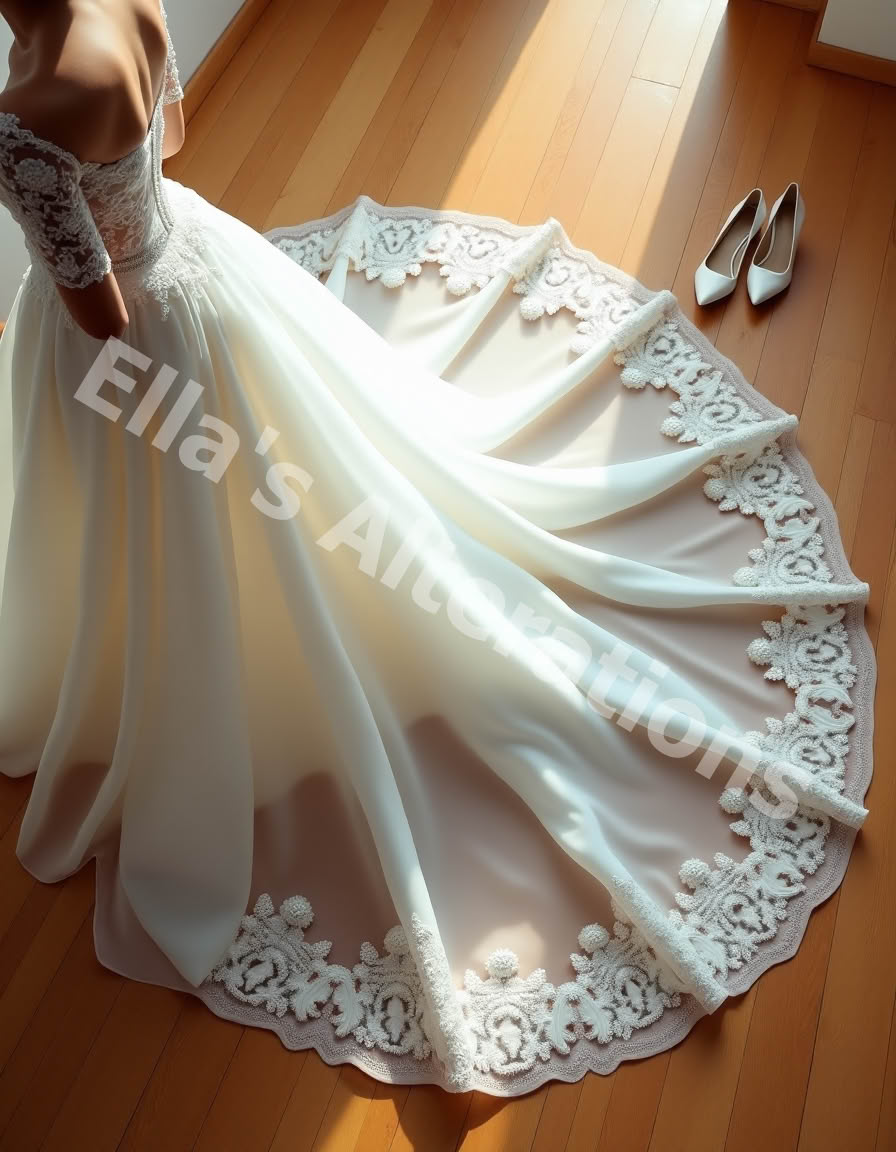
- Train – The dramatic extension behind the skirt.
- Sleeves – Functional or decorative arm coverings.
- Hemline – The bottom edge of the skirt.
- Fabrics & Layers – Structural and decorative textiles. Part 1 of 7
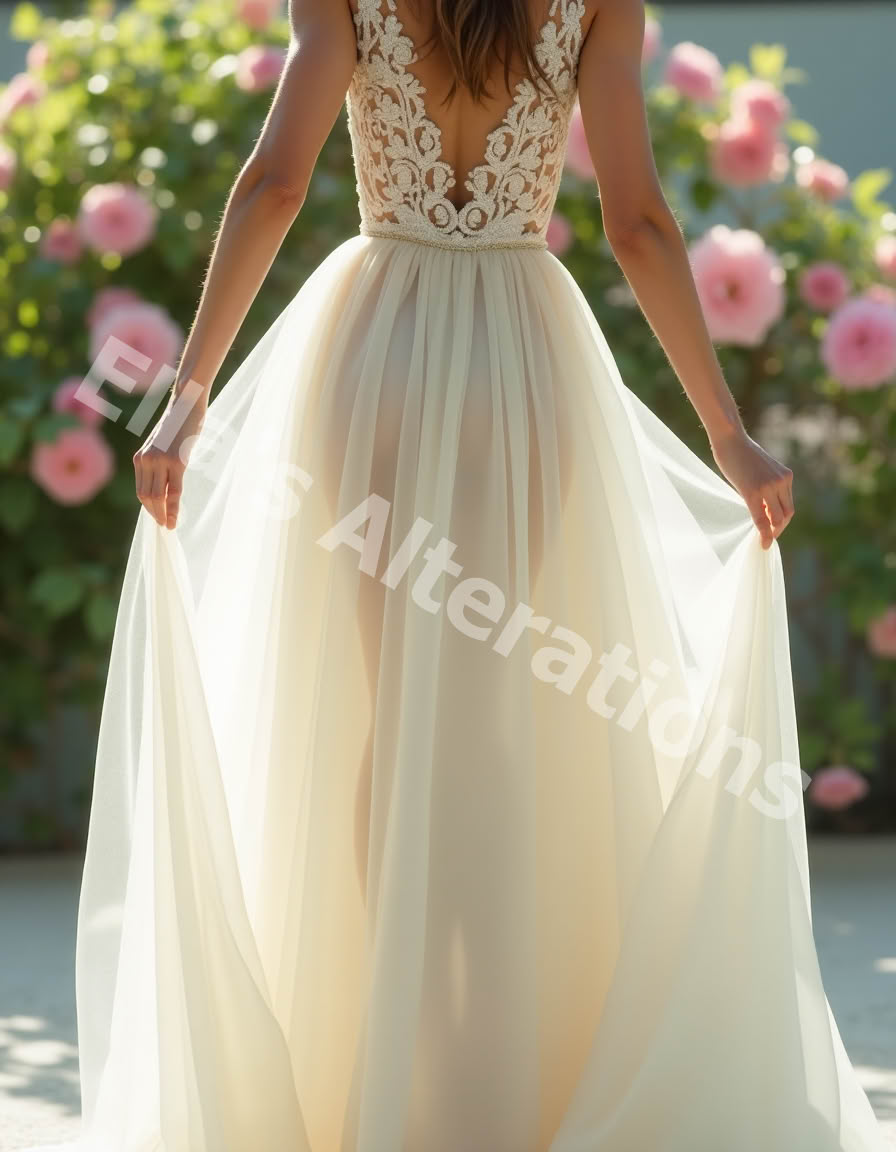
- Embellishments – Appliqué, lace, beadwork, and more.
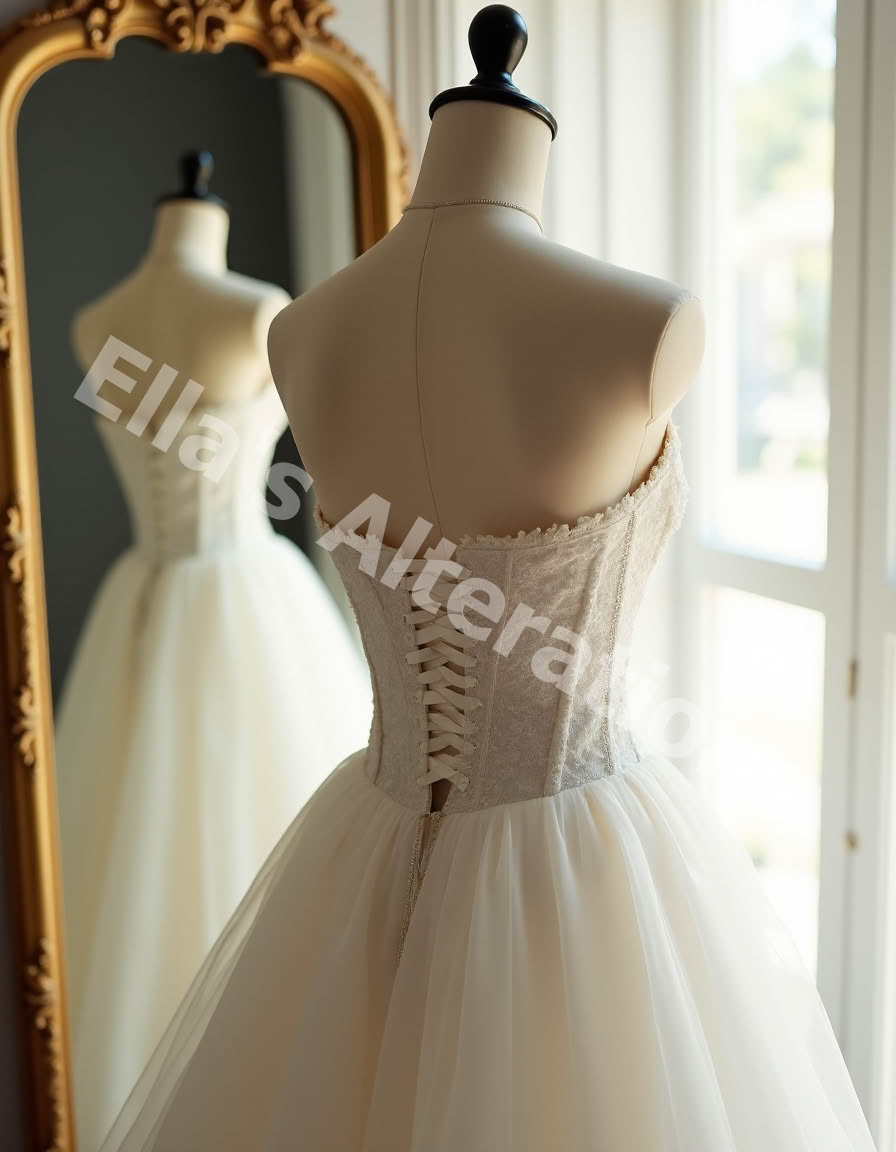
- Undergarments & Structure – Corsets, crinolines, bustles.
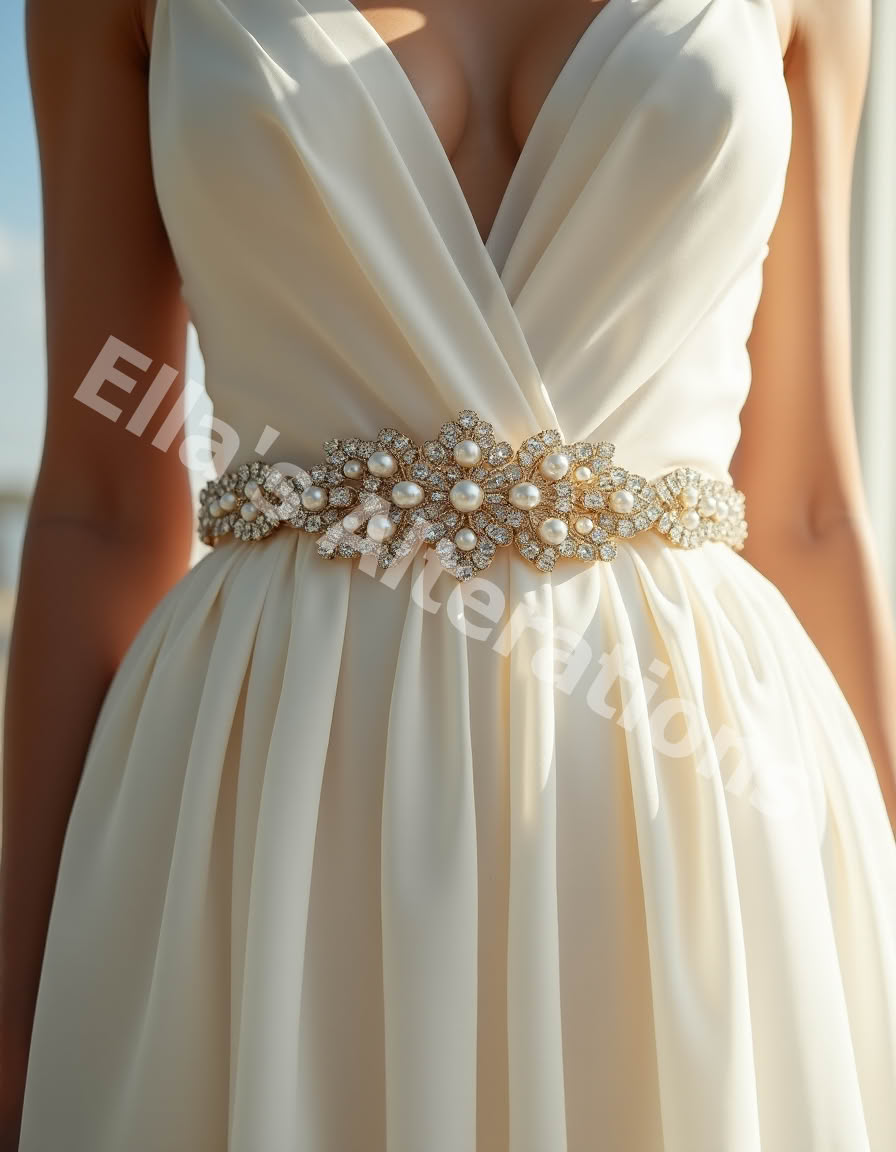
- Accessories – Veil, sash, belts, overlays.
We’ll deep dive into each.
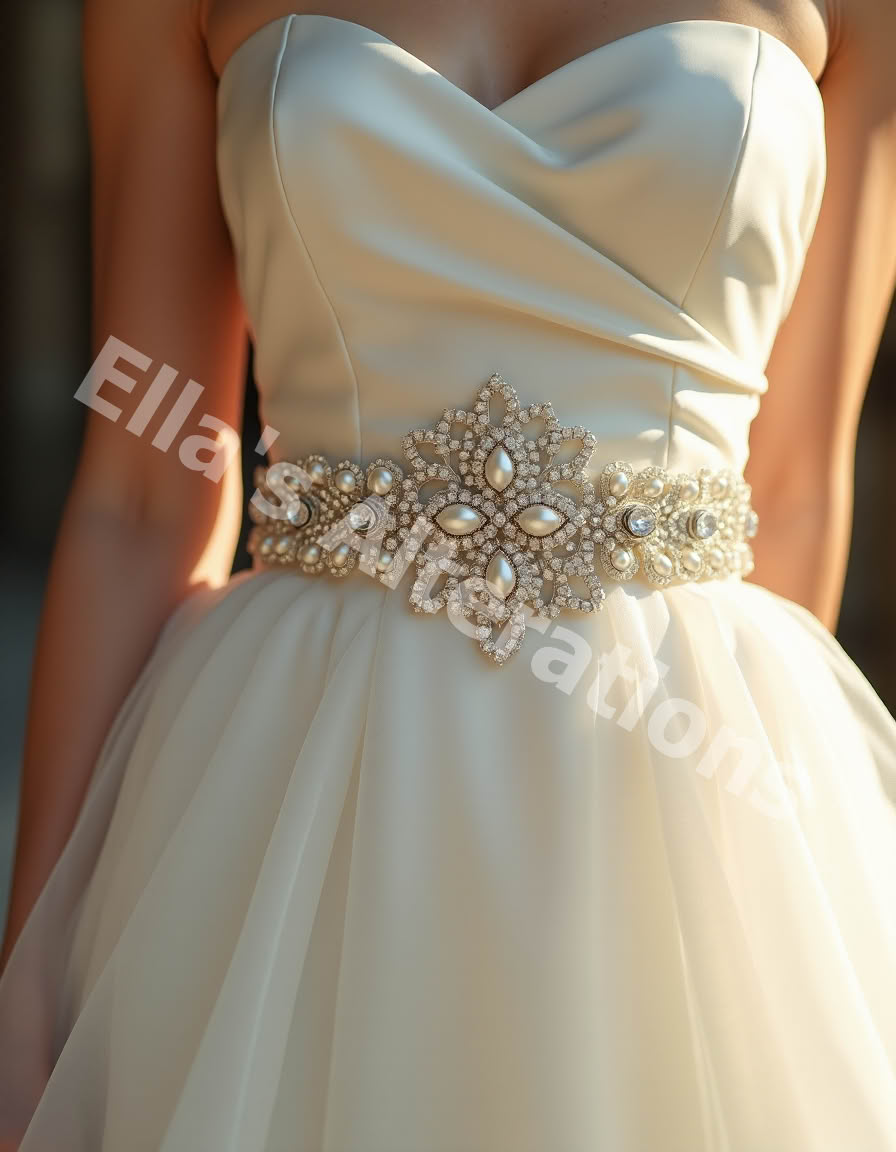
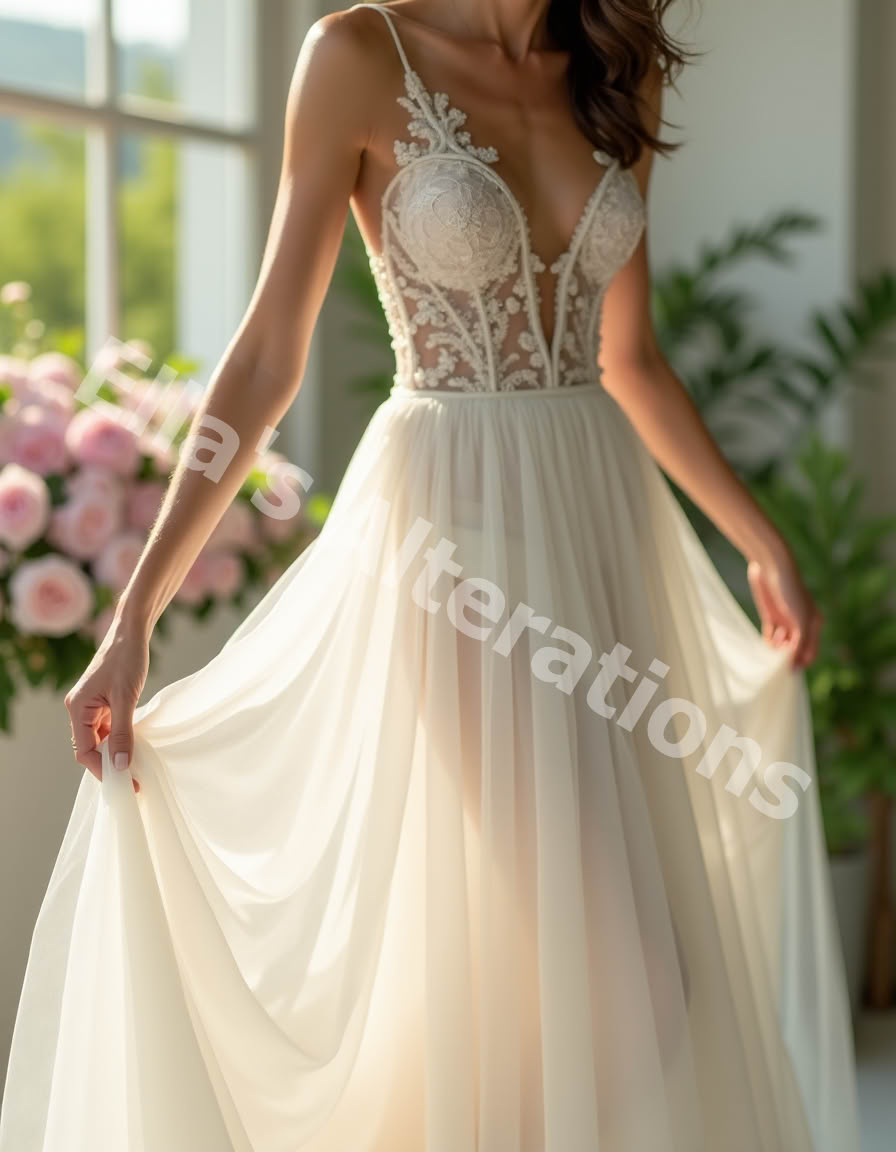
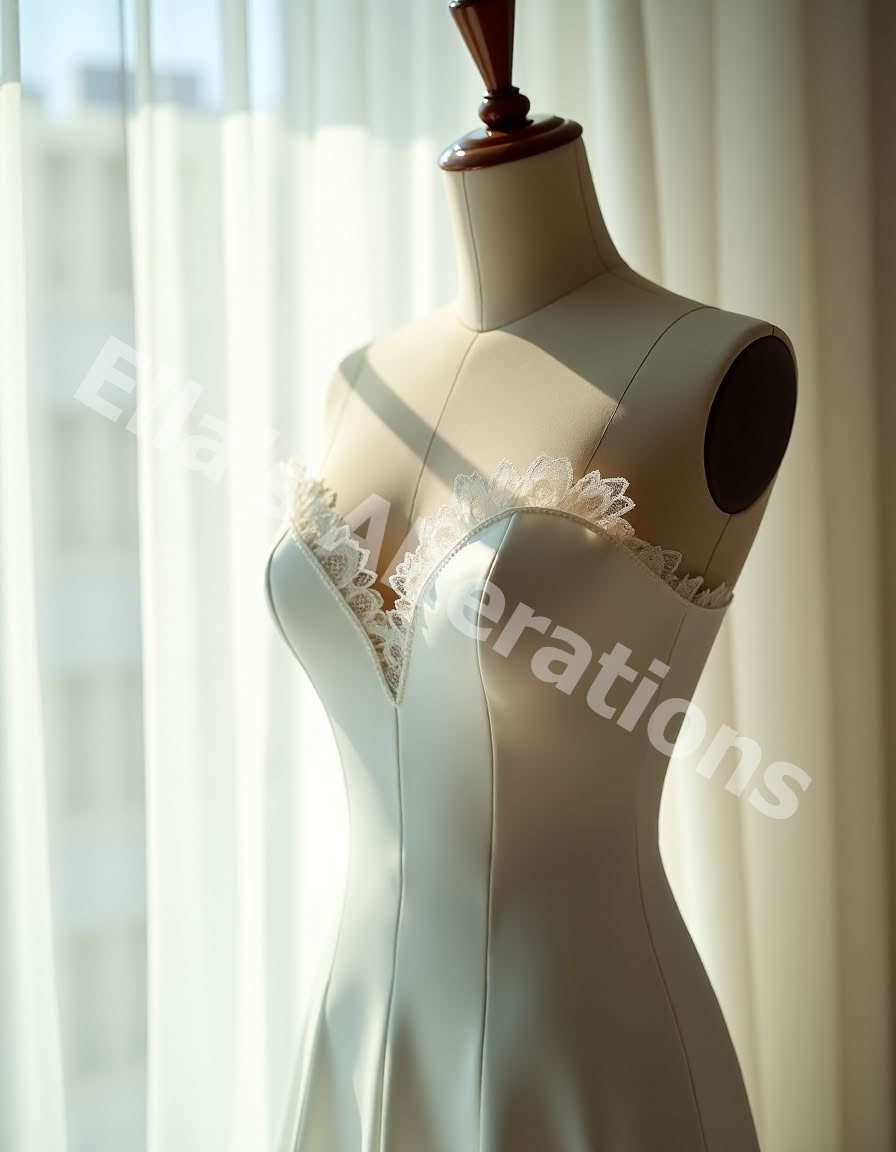
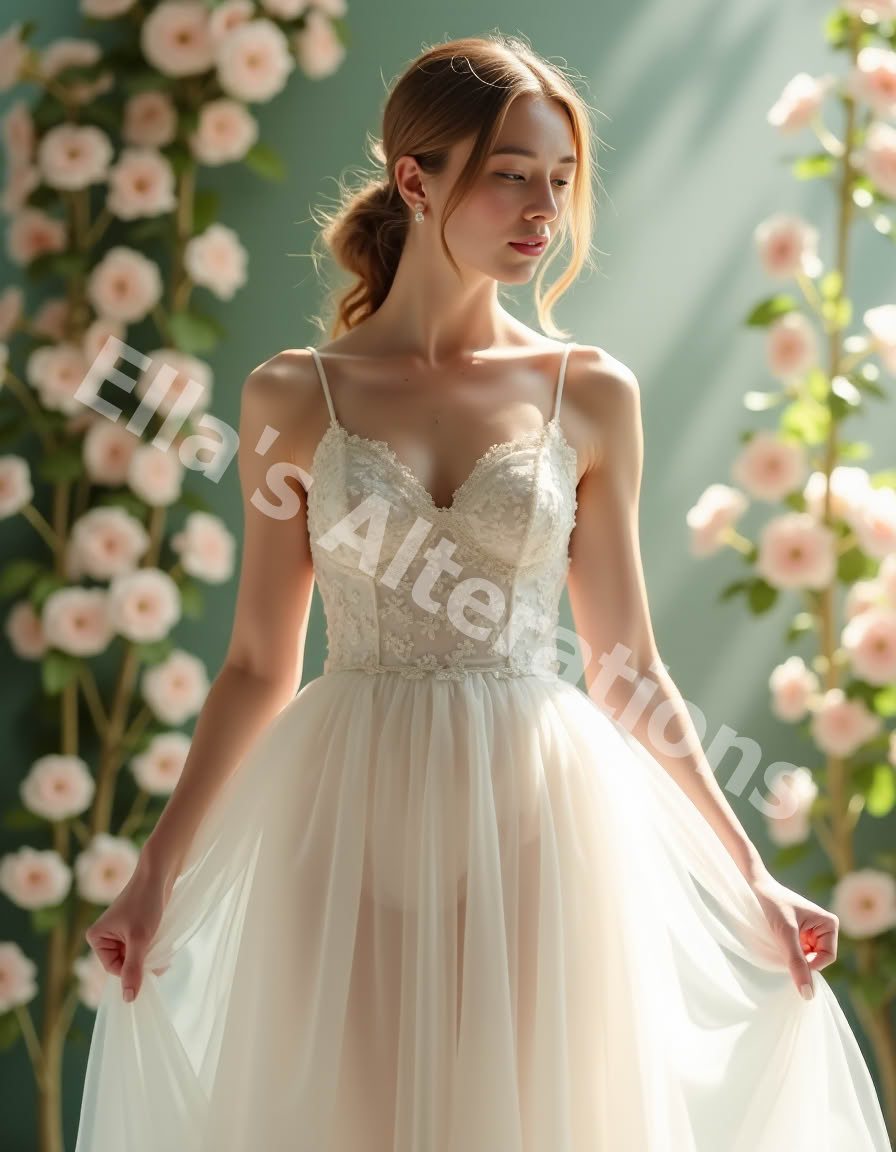
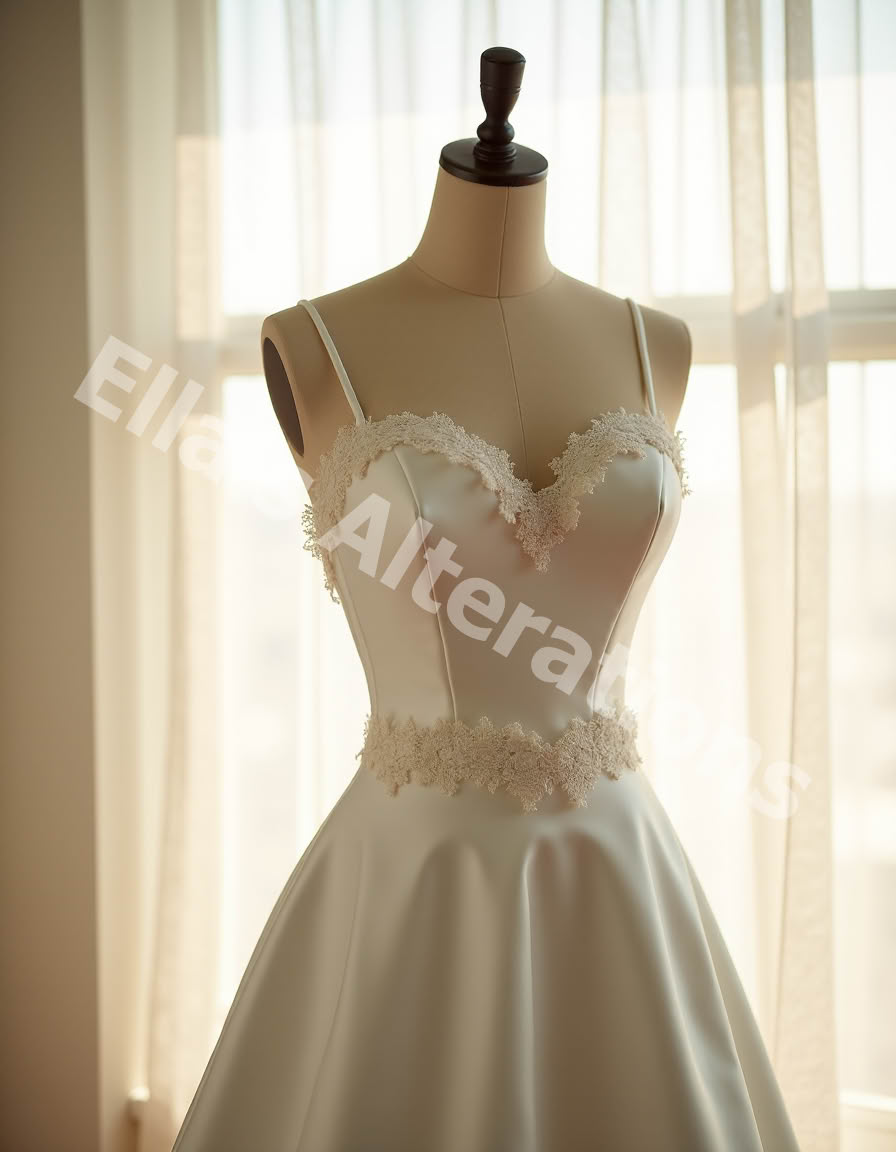
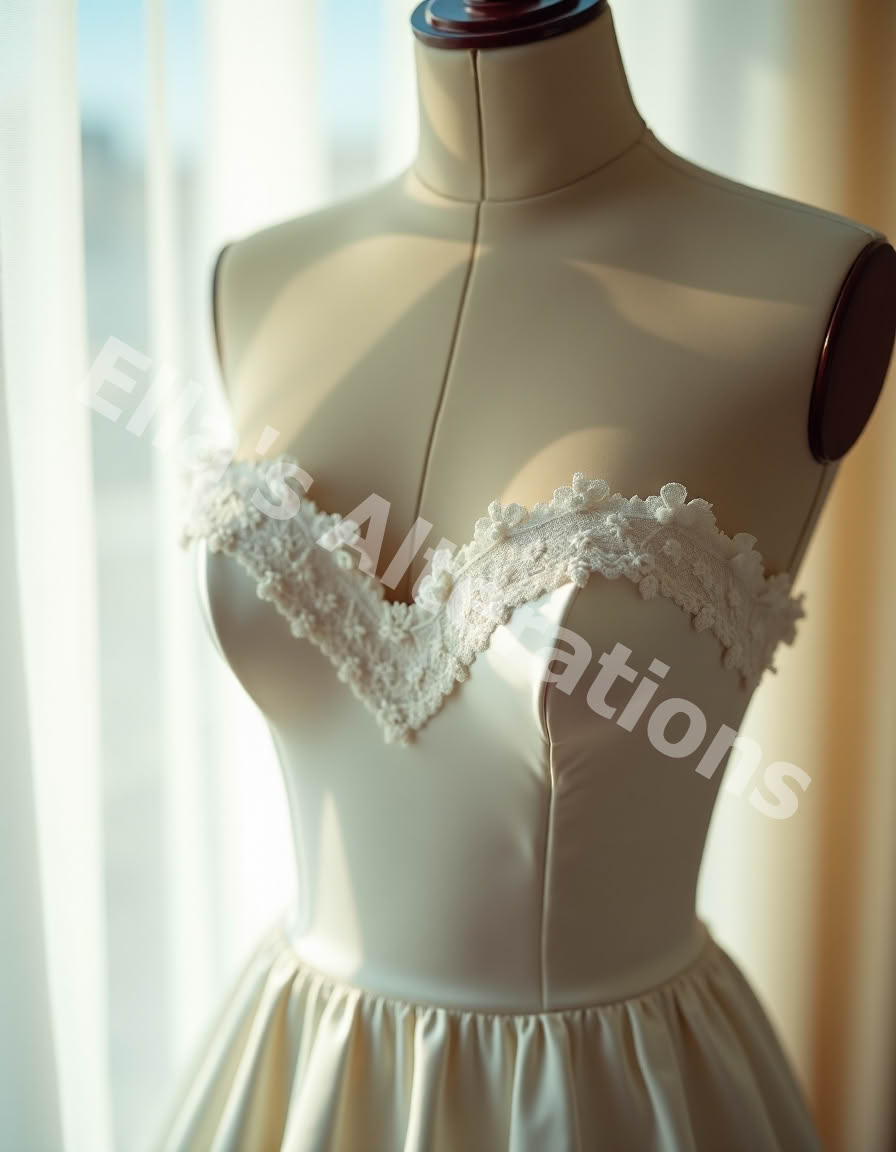
Necklines: The Frame of the Portrait
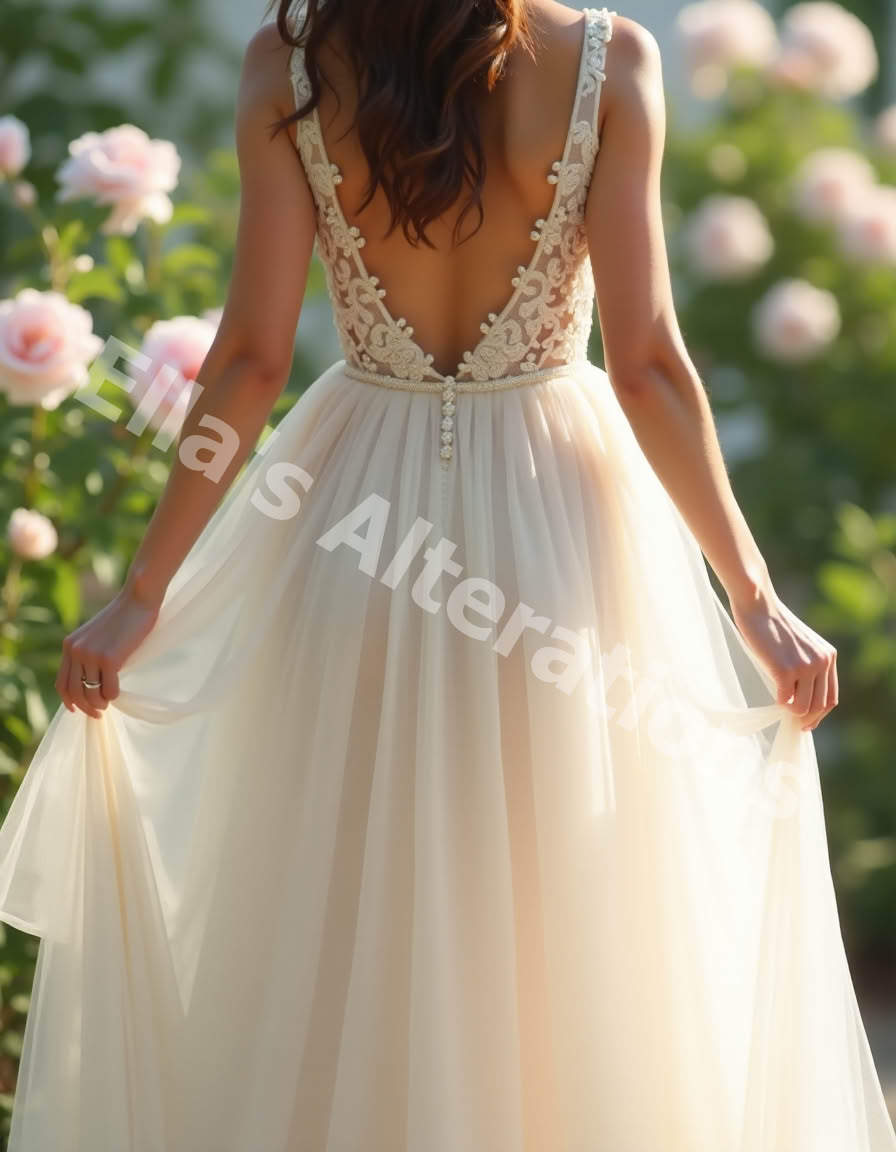
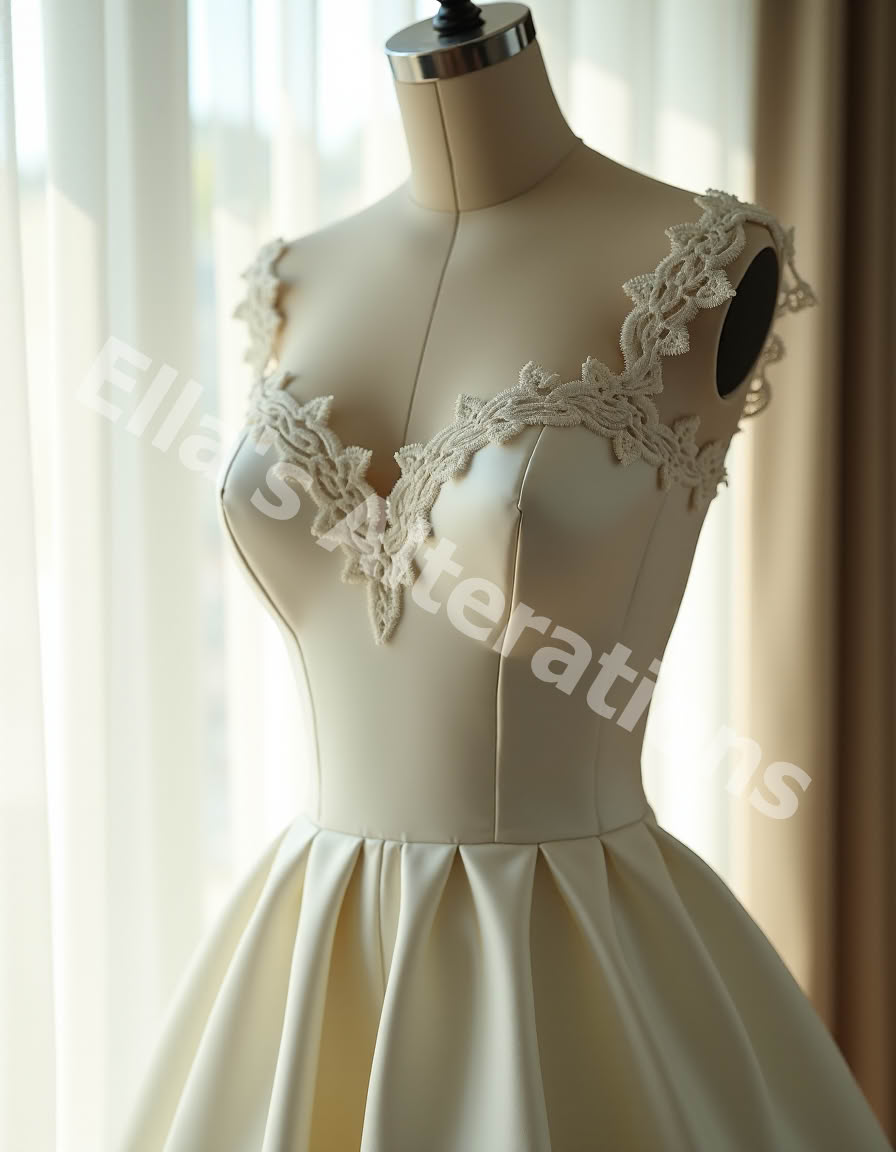
Your neckline is one of the first design features people notice—it shapes your upper body visually and affects your comfort level.
Popular Neckline Types:
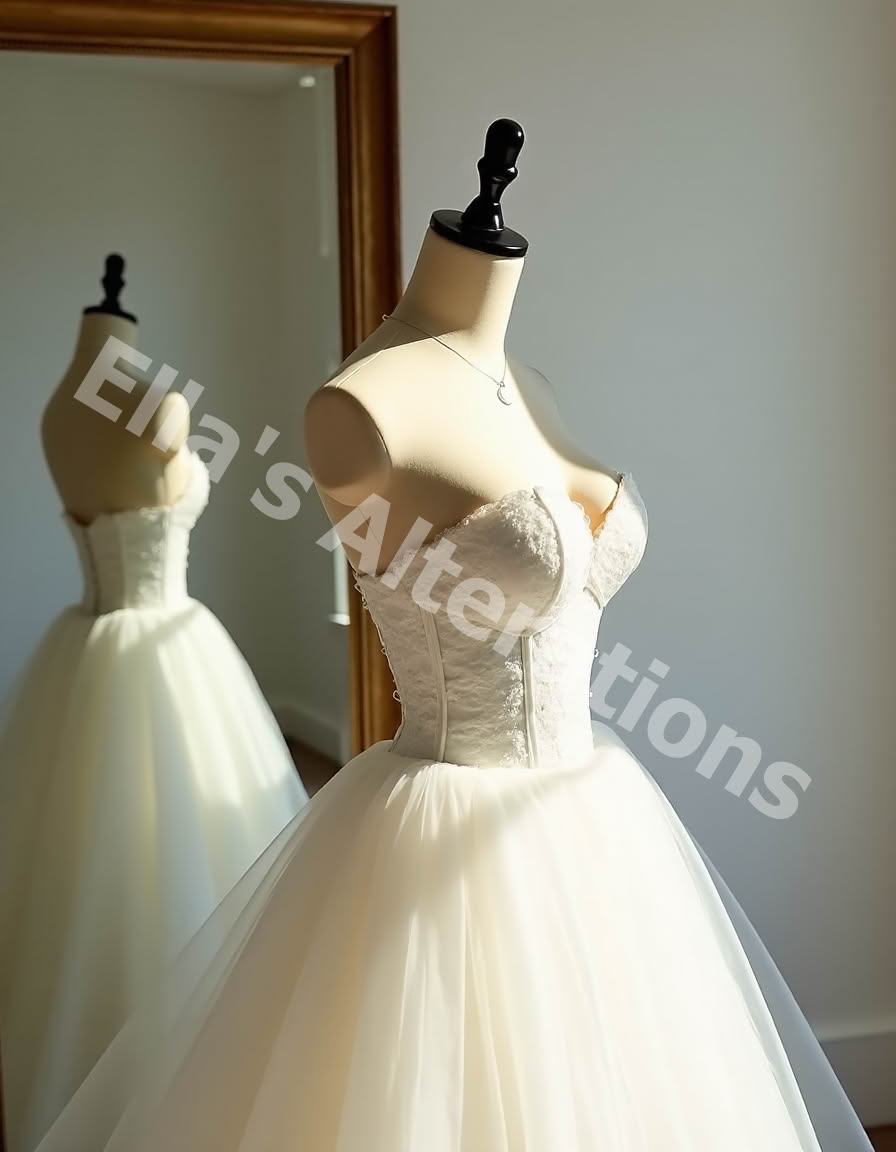
- Sweetheart – Heart-shaped curve over the bust, romantic and flattering.
- V-Neck – Plunging or modest, elongates the torso.
- Bateau/Boat Neck – Runs wide from shoulder to shoulder, elegant and modest.
- Off-the-Shoulder – Sleeves rest below shoulders, showing collarbone.
- Halter – Wraps around the neck, ideal for open-back styles.
- Illusion – Sheer fabric with embellishments for a “floating” neckline.
Tailoring Tip:
Altering a neckline is possible, but it’s often more complex than adjusting a hem. Beading, lace, or illusion mesh require delicate handling.
Uncover all the secrets of A Tailor’s Guide: How Necklines Transform Your Wedding Gown.
Bustles: The Secret to All-Night Elegance
A bustle is the tailor’s magic trick that lifts and secures your wedding dress train after the ceremony, so you can move freely without losing the drama.
It’s functional fashion at its finest—keeping you picture-perfect from “I do” to last dance.
Popular Bustle Styles:
- American/Overbustle – Hooks or buttons lift the train over the skirt, creating soft folds.
- French/Underbustle – Train tucks underneath for a sleek, layered look.
- Ballroom Bustle – Multiple points lift the entire train to floor length, making it disappear.
- Austrian Bustle – Elegant vertical ruching held by ties or ribbons down the back.
- Bow Bustle – Adds a playful bow while securing the train.
Tailoring Tip:
Bustles are customized to your gown’s shape, weight, and fabric.
The right one blends seamlessly with your dress, so test it during fittings to make sure you can walk, twirl, and party comfortably.
Uncover all the secrets of A Tailors Guide: How Bustles Transform Your Wedding Gown.
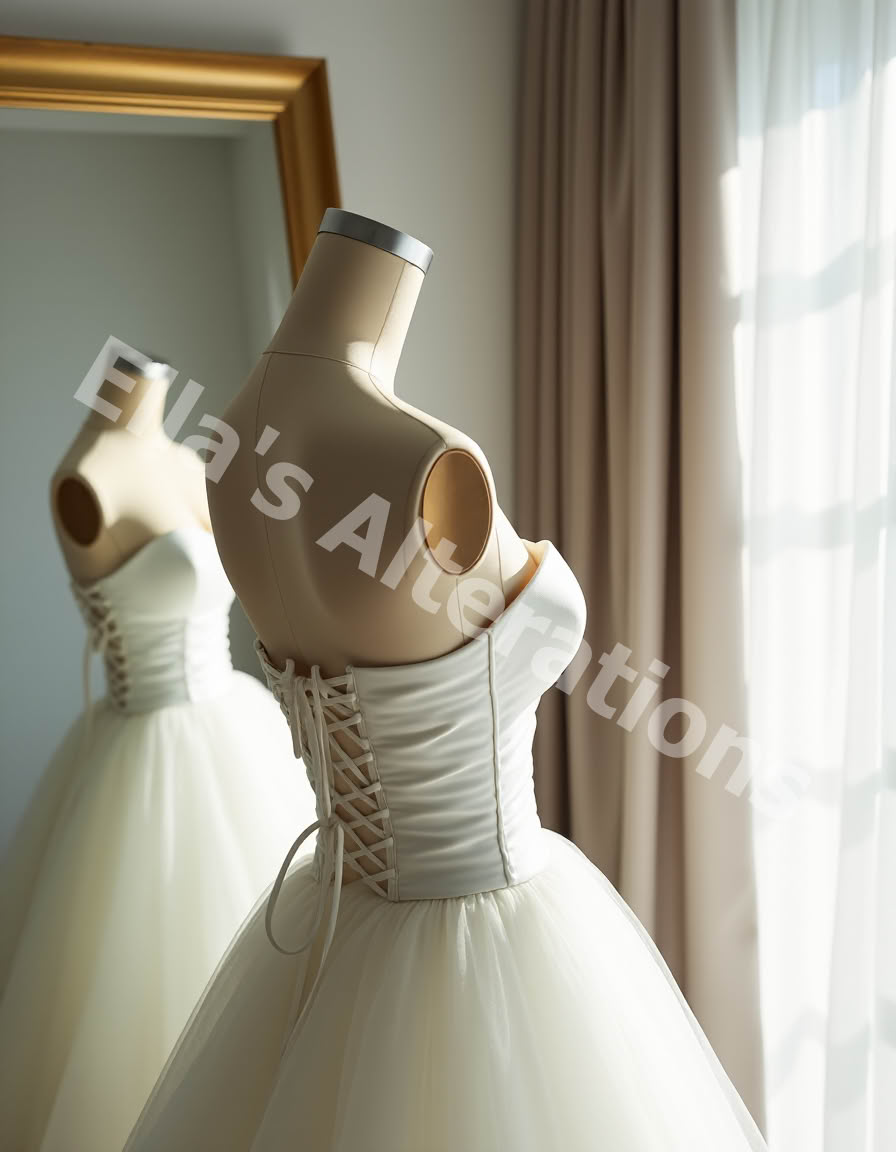
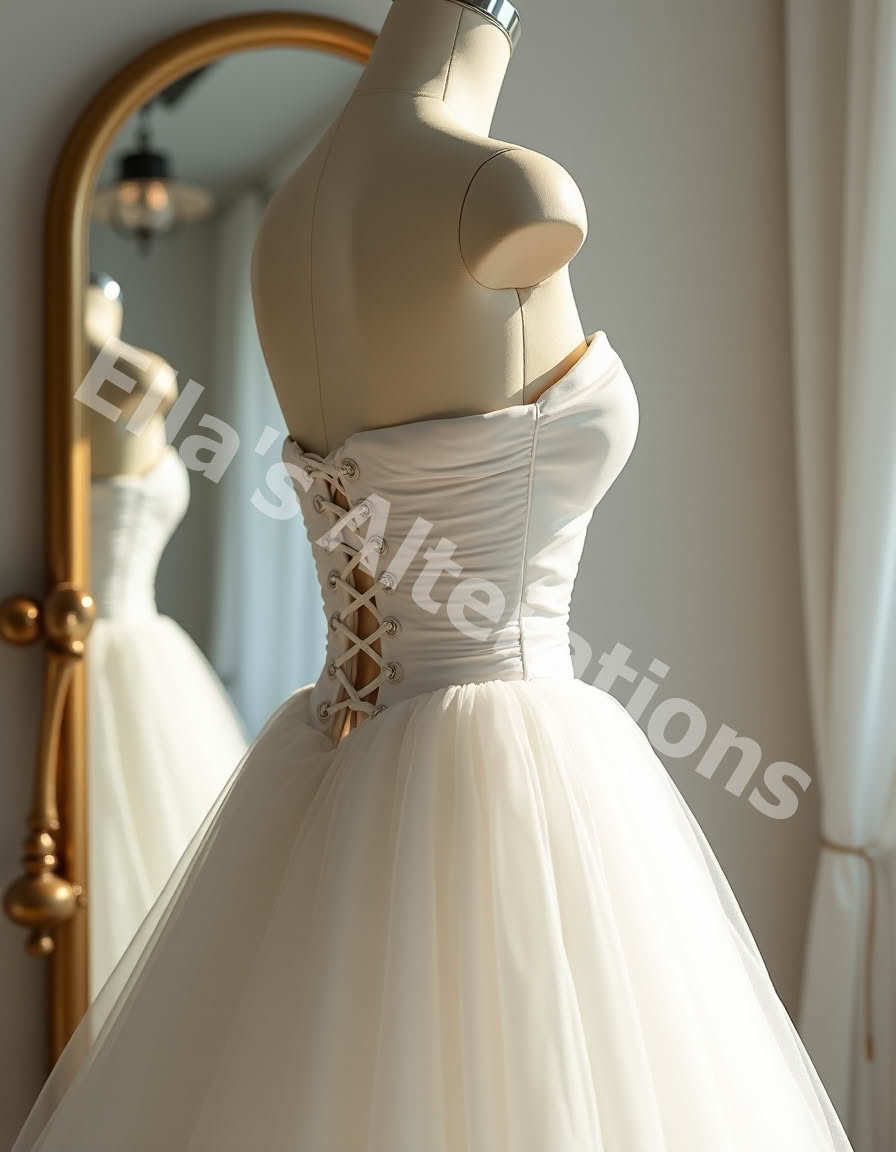
Bodice: The Support System
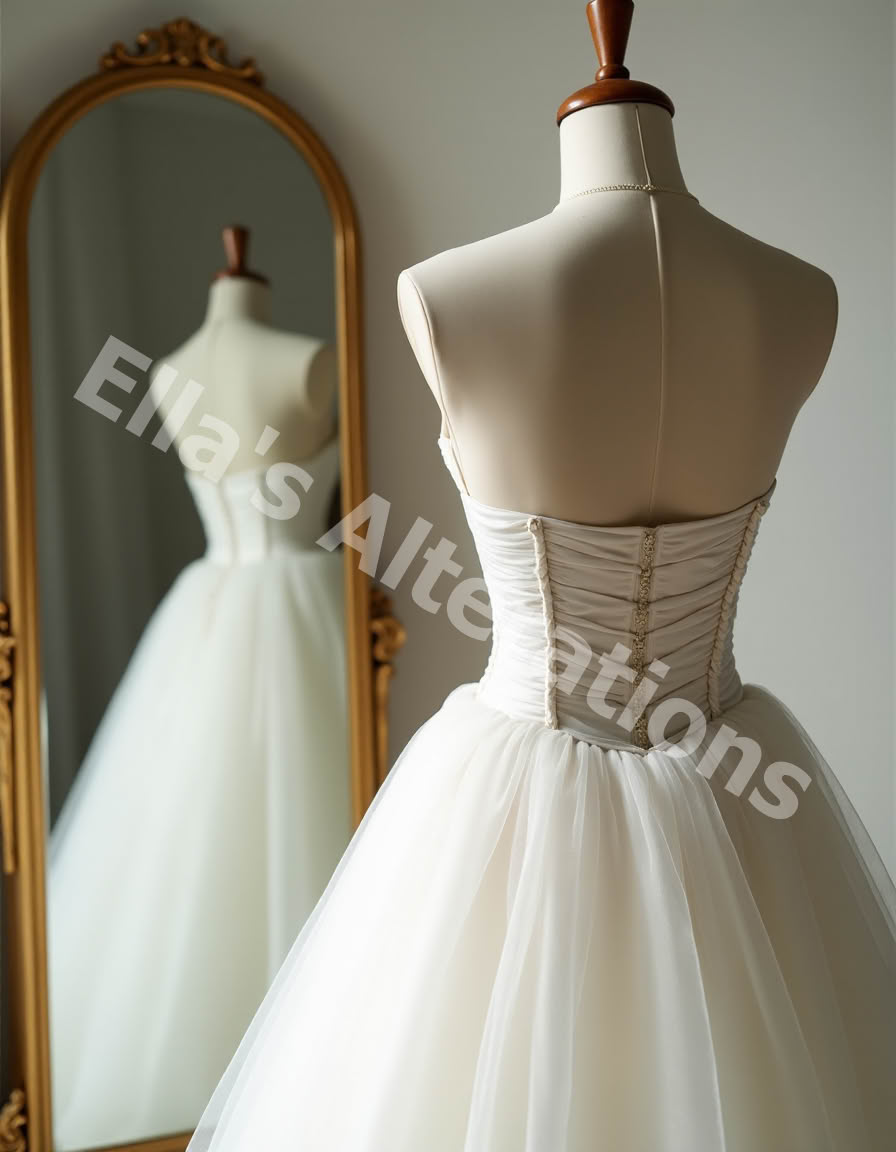
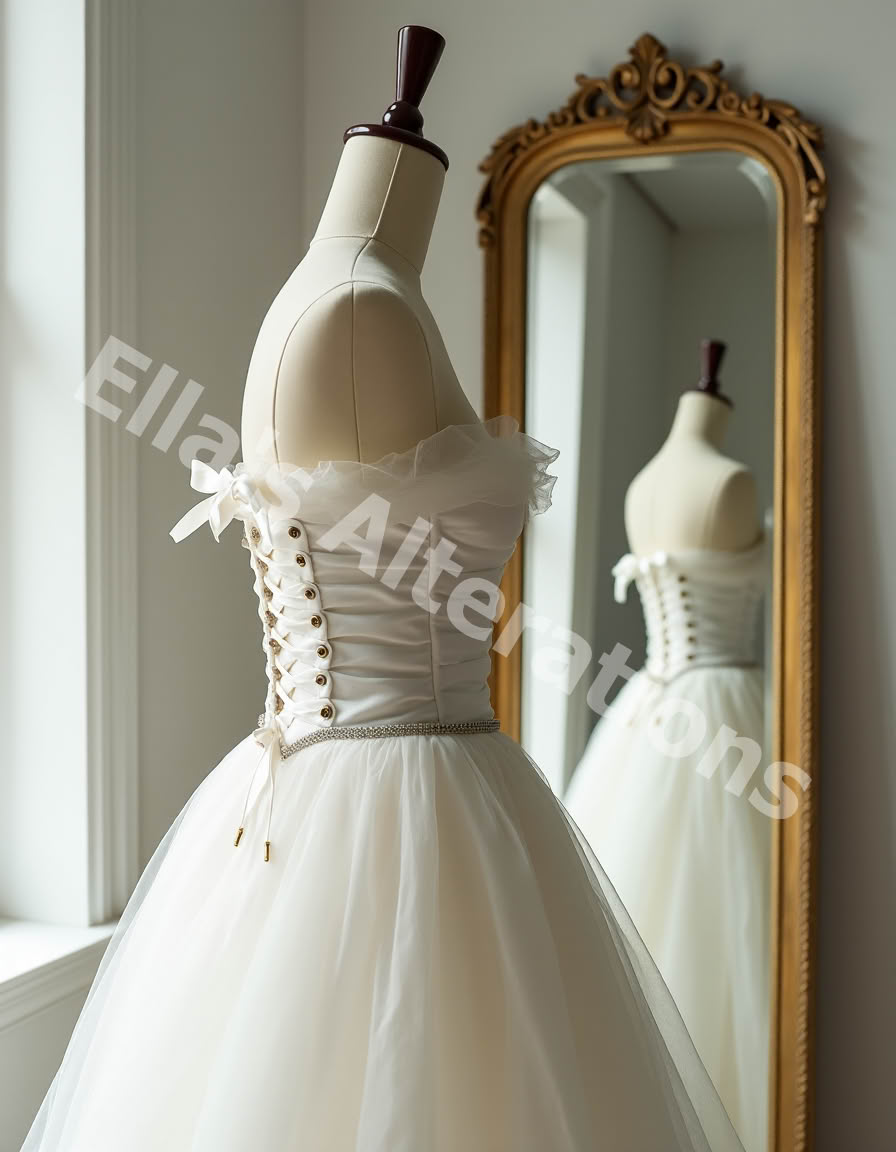
The bodice is the upper portion of your gown, running from shoulders (or bust) to waistline.
It provides both structure and style.
Bodice Types:
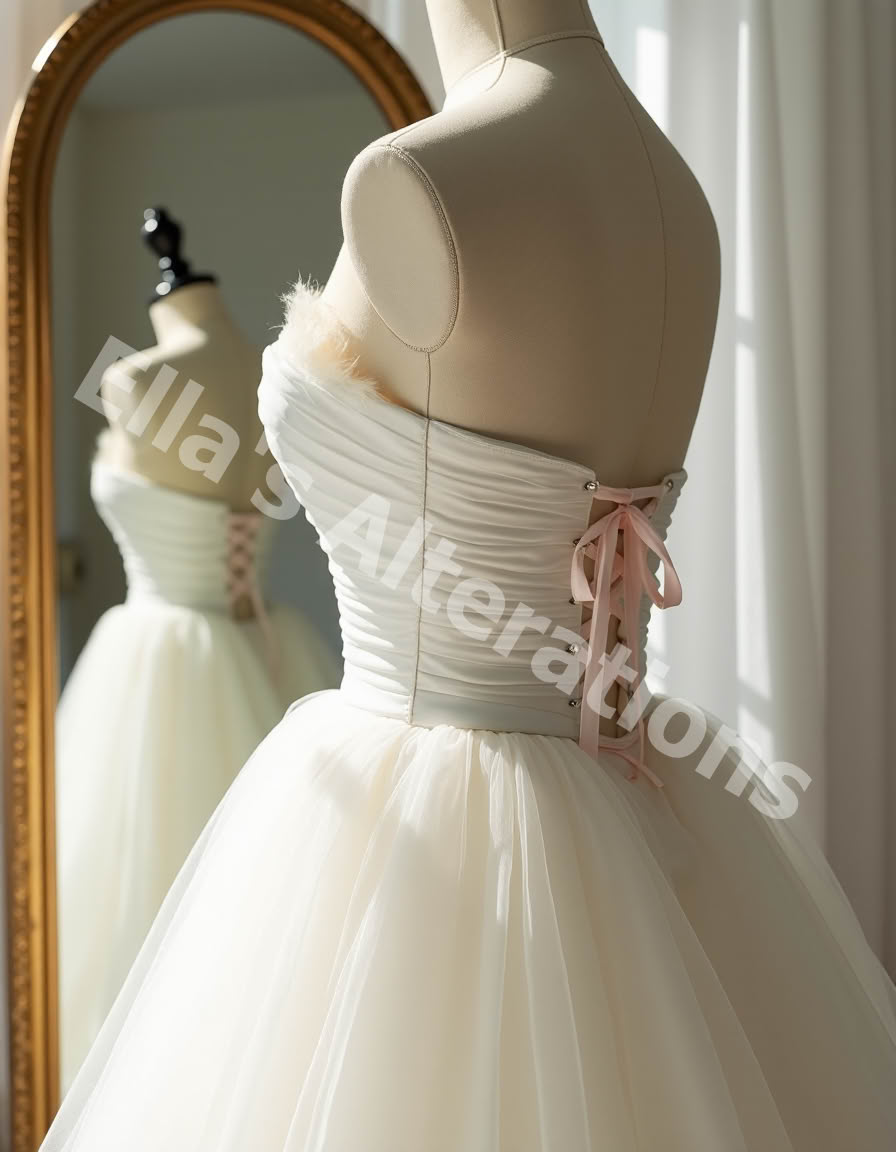
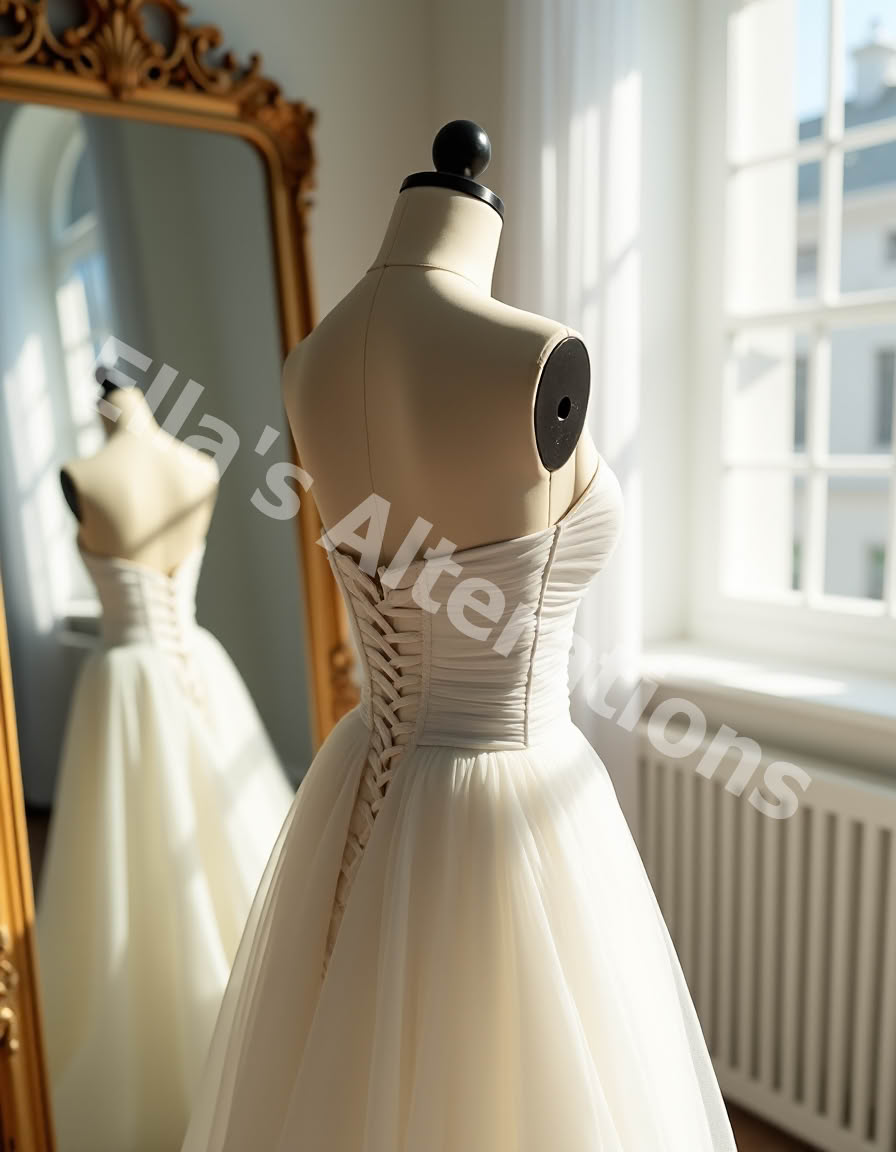
- Corset Bodice – Boned for shape and support, often lace-up.
- Ruched Bodice – Fabric gathered or pleated for texture.
- Sheer Bodice – Uses transparent fabric for a modern, romantic feel.
- Panelled Bodice – Structured with multiple stitched panels for contour.
Fitting Focus:
A well-tailored bodice should feel secure without restricting breathing.
Brides often underestimate how much movement they’ll need—bending, hugging, dancing—so comfort is as important as aesthetics.
Uncover all the secrets of A Tailors Guide: How a Bodice Transforms Your Wedding Gown.
Waistlines: The Silhouette’s Pivot Point
The waistline can transform your proportions.
Waistline Styles:
- Natural Waist – Sits at the narrowest point of your waist.
- Empire Waist – Just below the bust, ideal for elongating the figure.
- Dropped Waist – Sits low, lengthening the torso.
- Basque Waist – Dips into a V or U shape at the front.
Styling Insight:
Waistlines can work magic on body shape.
For example, a petite bride may benefit from an empire waist to appear taller.
Uncover all the secrets of A Tailor's Guide: How Waistlines Transform Your Wedding Gown.
Skirts: Shape and Drama
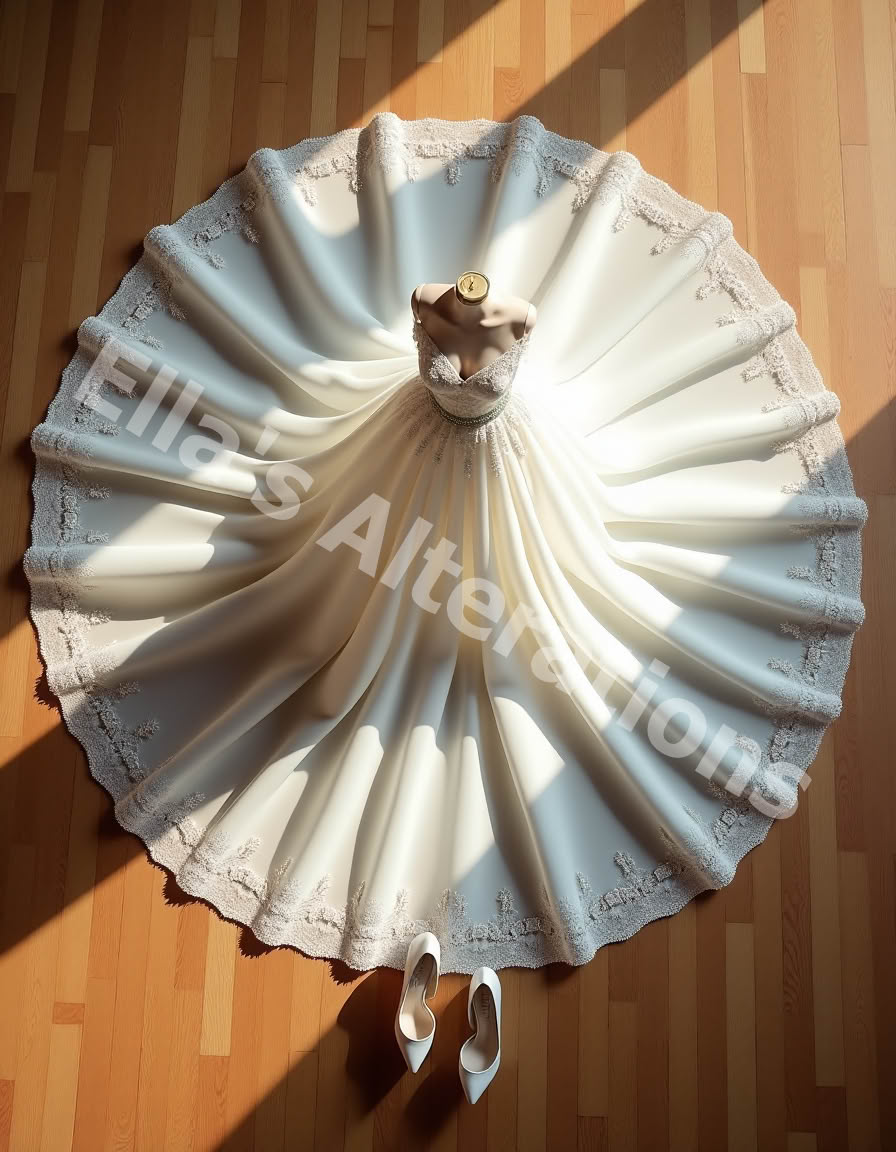
The skirt defines the gown’s silhouette—its overall outline.
Silhouette Types:
- A-Line – Fitted at waist, flares gradually. Universally flattering.
- Ball Gown – Fitted bodice, very full skirt. Classic “princess” style.
- Mermaid – Fitted to knees, then flares. Glamorous and bold.
- Trumpet – Similar to mermaid but flare starts mid-thigh.
- Sheath – Slim and column-like, minimal volume.
Fabric Note:
The skirt’s structure often depends on underlayers like crinolines, petticoats, or hoops.
Uncover all the secrets of A Tailor’s Guide: What's in a Wedding Dress Skirt?
Trains: The Statement Sweep
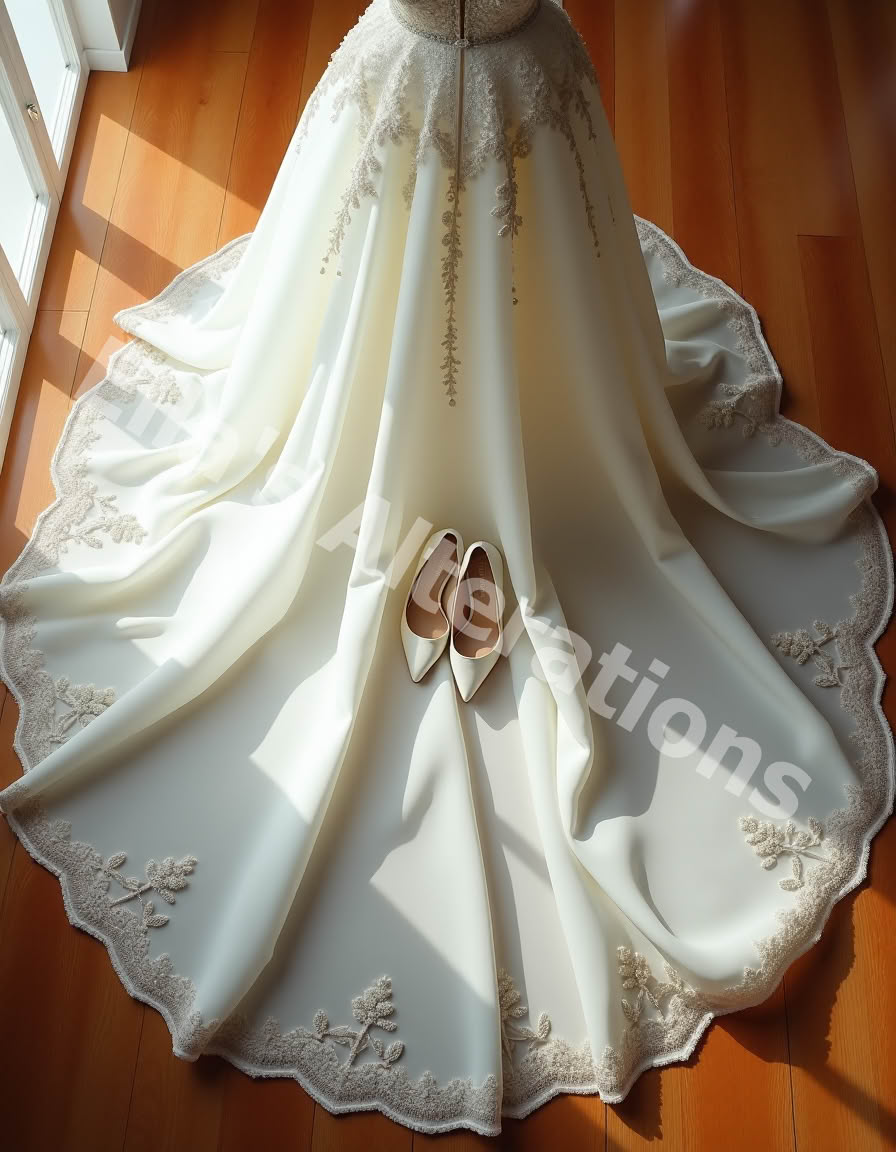
The train is the extra fabric extending from the back of the skirt.
Common Train Styles:
- Sweep/Brush Train – Barely grazes the floor.
- Chapel Train – Medium length, popular for elegance without hassle.
- Cathedral Train – Long and dramatic for formal ceremonies.
- Royal/Monarch Train – Extreme length, highly formal.
Bustles: (See Bustles)
Bustling lifts and secures the train for reception dancing.
Options include French bustle (folds under) and American bustle (folds over).
Uncover all the secrets of A Tailors Guide: How a Statement Trains Transforms Your Wedding Gown.
Sleeves: From Bare to Bold
Wedding sleeves can be entirely absent or statement-making.
Sleeve Styles:
- Cap Sleeves – Minimal coverage at the shoulder.
- Short Sleeves – Ends above elbow.
- ¾ Sleeves – Ends between elbow and wrist.
- Long Sleeves – Full arm coverage, often lace or sheer.
- Detachable Sleeves – Offer style flexibility.
Hemlines: The Final Edge
The hemline is where your skirt meets the floor—or your shoes.
Hemline Types:
- Floor-Length – The bridal standard.
- Tea-Length – Between knee and ankle, retro-inspired.
- High-Low – Short front, long back.
Alteration Note:
Hemming a gown requires precision, especially with lace or beading.
Uncover all the secrets of A Tailor’s Guide: Why Your Hemline Is the Final Touch on a Wedding Gown.
Fabrics: Texture and Flow
Wedding dresses use a mix of base fabrics and decorative overlays.
Common Fabrics:
- The Foundation of Every Gown: Why Fabric Matters
- Bridal Fabric 101: The Essential Materials Explained
- Couture Choices — Luxury & Specialty Fabrics
- Match Your Fabric to Your Wedding Style
- How Fabric Shapes the Gown
- Tailor’s Secrets: Real Advice for Brides Choosing Fabrics
- Bridal Fabric FAQ: Answers from Your Tailor
A Tailor's Guide: What's the Right Wedding Dress Fabric for You?
Embellishments: The Sparkle and Story
From appliqués to beading, embellishments personalize your gown.
Common Embellishments:
- Appliqué – Decorative fabric sewn onto base.
- Sequins & Beads – Add shimmer.
- Embroidery – Thread-based decoration.
Uncover all the secrets of A Tailor’s Guide: How Embellishments Transform Your Wedding Gown.
Structure and Support: Hidden Heroes
- Corset – Shapes waist and bust.
- Crinoline – Adds skirt volume.
- Underlay/Overlay – Base layer vs decorative top layer.
Veils, Sashes, and Accessories
- Veil Lengths – Birdcage, fingertip, cathedral.
- Sash/Belt – Accentuates waistline.
- Overlays – Detachable decorative layer.
Conclusion: Your Gown, Your Story
Knowing your wedding dress parts is like knowing the ingredients of your favorite recipe—you can appreciate it more and make it truly yours.
And when it’s time to tailor, Ella’s Alterations has the local expertise to make your gown fit and flow like it was made for you.
📞 Call Now: 813-445-8894
💻 Book Now: https://www.ellasalterations.com/appointments/
FAQ Section
Can you change a gown’s neckline?
Yes, but it’s not a quick “snip and sew” job—it’s a structural alteration. A neckline frames your entire upper body, and changing it means adjusting the dress’s support, shape, and style. For example, turning a high neck into a sweetheart often requires reshaping the bodice, reworking seams, and possibly adding boning or cups to keep everything in place. Lace, beading, or illusion mesh can add an extra layer of complexity, since every decorative element has to be carefully removed, repositioned, or recreated.
Why would a bride change the neckline? Comfort is a big one—maybe it feels too tight or high. Style is another—you might want a plunge for a modern vibe, an off-the-shoulder look for romance, or a bateau for elegance. The trick is matching the new neckline to the gown’s fabric, structure, and your body shape so it still looks intentional, not like an afterthought.
Keep in mind that this alteration can affect other parts of the dress. Lowering the neckline might expose more of the chest, so straps or sleeves might need adjustment. Changing the cut can also alter the way the gown sits at the waist or bust.
Timeline-wise, give your tailor extra time for this—neckline changes are far more intricate than hemming or taking in seams. The payoff? You’ll end up with a dress that not only looks incredible but feels like it was custom-designed for you from the start.
What’s the difference between a bustle and a crinoline?
Think of a bustle and a crinoline as two totally different wedding dress superheroes—both save the day, but in completely opposite ways.
A bustle is all about tucking up fabric. It’s a set of loops, ribbons, buttons, or hooks sewn into the gown that lift and secure the train after the ceremony. You use it so you can walk, dance, and mingle without tripping over layers of satin or lace. The key is that a bustle changes the function of the gown without adding volume—it’s more about mobility and protecting the fabric from dirt or damage.
A crinoline, on the other hand, is all about puffing out fabric. It’s a structured underskirt made of hoops, stiff netting, or tulle that goes underneath the gown to create fullness. If you’ve ever seen a ballgown with a perfectly round, sweeping skirt—that’s the crinoline doing the heavy lifting. It changes the shape of the dress, making it more dramatic and formal.
In short:
-
- Bustle = picks the train up, keeps you moving freely.
- Crinoline = flares the skirt out, adds volume and shape.
You might actually use both. You could have a crinoline under your dress for the ceremony to get that fairytale poof, and then bustle the train afterward so you can hit the dance floor without fear of face-planting. They serve totally different purposes but both can be customized to your dress and comfort level.
How long do alterations take?
Wedding gown alterations aren’t a “drop it off and grab it next week” kind of deal—good tailoring takes time. On average, expect 6 to 8 weeks for standard alterations like hemming, taking in the sides, and adjusting straps. That timeline gives you room for two to three fittings, which is important because wedding dress alterations are rarely one-and-done.
If you’re planning major changes—like altering the neckline, adding sleeves, or redesigning the back—expect 8 to 12 weeks or more. These changes often require reworking the gown’s structure and making sure everything still fits perfectly afterward.
Why so long? First, many tailors are booked months in advance during peak bridal season. Second, alterations are done in stages. After each fitting, your tailor makes adjustments, and then you try it on again to check the changes. Rushing this process can lead to mistakes that are harder (and more expensive) to fix.
The smartest move? Book your first fitting at least 2 to 3 months before the wedding, and bring the exact shoes, undergarments, and accessories you plan to wear. This way, your tailor can get the fit just right.
If you’re in a last-minute crunch, some tailors offer rush services, but be prepared to pay extra—and remember, the more time they have, the better your gown will look and feel.
Which fabrics are easiest to alter?
Fabric choice can make or break how simple your alterations will be. In general, the easiest fabrics to work with are stable, non-slippery materials like satin, taffeta, crepe, and cotton blends. These fabrics hold their shape, press well, and respond predictably to sewing adjustments.
On the other hand, fabrics like chiffon, organza, georgette, and charmeuse are trickier because they’re lightweight, slippery, and prone to fraying. Lace is a mixed bag—simple lace can be manageable, but heavily beaded or embellished lace requires painstaking handwork to avoid damaging the design.
Stretch fabrics like jersey or stretch crepe can be both a blessing and a curse. They’re forgiving in fit but require special handling so seams don’t ripple or lose elasticity.
If you’re still shopping for a gown and know you’ll need alterations, consider fabric as part of your decision. A heavy satin or matte crepe gown will be much easier (and often cheaper) to adjust than a delicate silk chiffon covered in beads.
That said, a skilled tailor can work with any fabric—it just comes down to time, cost, and complexity. The more delicate or detailed the fabric, the more hours (and precision) it will require.
Do detachable sleeves look seamless?
They absolutely can—but only if they’re well-designed and expertly attached. Detachable sleeves are a huge trend because they let you switch up your look between the ceremony and reception without buying a second dress.
To look seamless, the sleeves need to blend into the gown’s existing structure. That means matching the fabric, lace pattern, beading, and even the stitching style. Invisible snaps, discreet hooks, or hidden elastic loops are common attachment methods. If the sleeves connect to the inside of the bodice, they can be nearly undetectable when worn and completely invisible when removed.
The biggest giveaway that sleeves are detachable is poor alignment—if the lace doesn’t line up, or the fabric color is slightly off, people will notice. That’s why it’s worth having your tailor make or customize them instead of buying a generic pair online.
One pro tip: test the sleeves for comfort and movement during your fittings. You don’t want them digging into your arms, sliding down, or restricting your ability to raise your bouquet for those iconic photos.
Done right, detachable sleeves can give you the drama of a long-sleeve gown for the ceremony and the freedom of a strapless dress for the party—all without compromising style.
Brought to you by Ella’s Alterations
Ella’s Alterations
is trusted by brides, professionals, and families across Central Florida for one reason.
The work is done right.
Proudly serving Zephyrhills, Pasco County, Tampa, Wesley Chapel, Lakeland,
and surrounding Central Florida communities.
Clients travel from across the region for expert alterations that local shops
simply cannot match.
With over 30 years of hands on tailoring experience, Ella works at a master level.
This is not basic hemming or quick fixes. This is true garment engineering.
Wedding gowns with structure, suits that need balance, formalwear that must move
and photograph perfectly. Every adjustment is intentional and precise.
Every fitting is handled with respect, privacy, and patience.
Measurements are double checked. Details are explained.
Nothing is rushed. Nothing is guessed.
Clients return because they feel heard, supported, and confident.
Dresses are protected. Fabrics are handled correctly.
Fit decisions are made with experience, not shortcuts.
This is why generations of clients trust Ella with their most important garments.
When it has to fit perfectly, they choose experience.
Ella’s Style Confidence
If something feels off when you put it on, that does not mean it is wrong for you.
It means it has not been tailored for you yet. Clothes are made for averages.
You are not average.
The smallest adjustments change everything. A lifted waist, a shaped bust,
a clean hem. These details quietly do the heavy lifting so you can walk in
like you own the room.
If you are pulling, tugging, or holding your breath, the garment is failing you.
Real tailoring lets you move, sit, dance, and live without thinking about your clothes.
Styles come and go fast. A perfect fit never goes out of style.
When something fits you correctly, it always looks intentional and expensive.
Hidden structure matters. Boning, cups, straps, and shaping should work with your body,
not against it. When support is done right, no one sees it but everyone notices the result.
Whether it is a wedding dress, a suit, or everyday wear, your clothes should show up for you.
Sharp, polished, and reliable.
The best dressed people are not uncomfortable or flashy.
They look effortless because their clothes fit correctly and feel natural.
Fixing what you already own often gives you more confidence than buying something new.
A tailored piece feels personal. Like it was made just for you.
Posture changes. Shoulders relax. You stop adjusting and start owning your space.
That shift is what people actually notice.
Not just okay. Not just good enough. Amazing.
That is the standard.
Local Credibility
Awards & Recognition
Service Area
Depth of Craft
Proof of Trust & Fitting Care

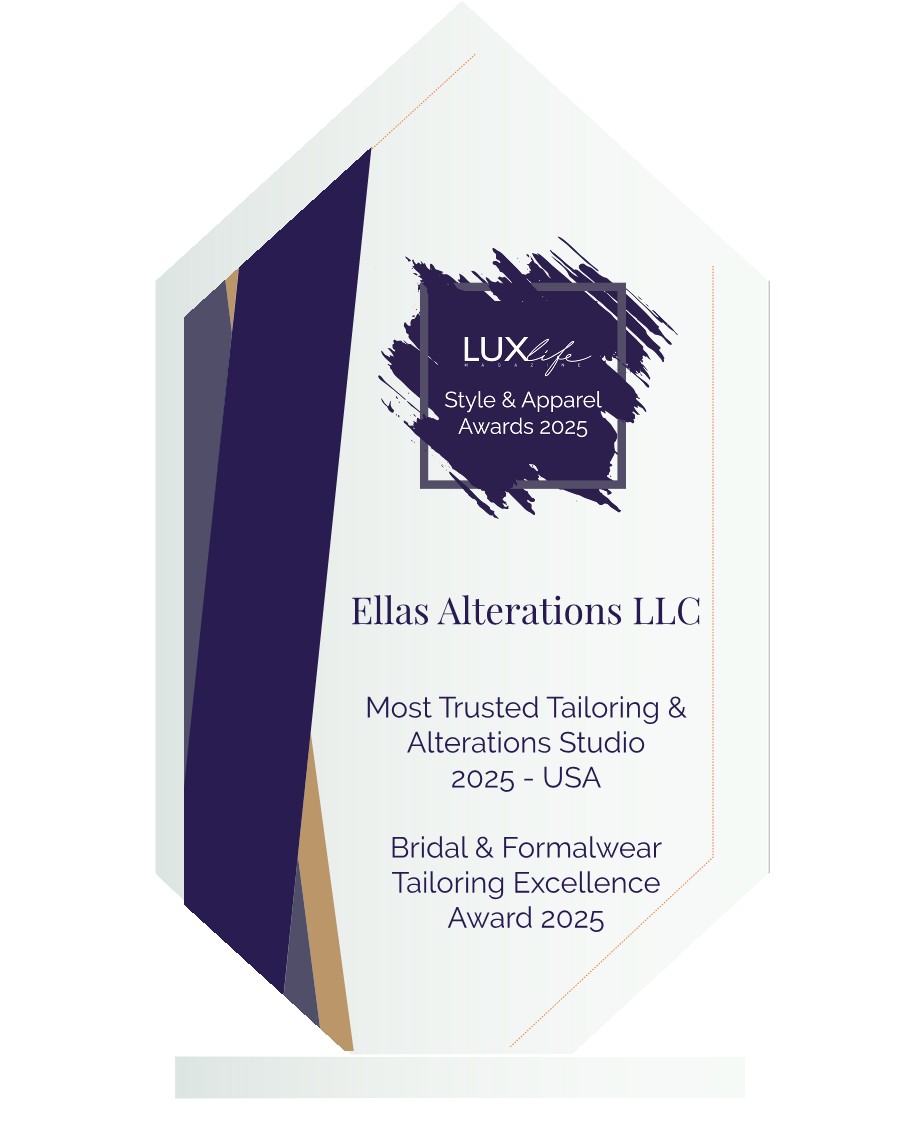
Bridal & Formalwear Tailoring Excellence Award 2025 – USA
Award Winning Bridal & Formalwear Tailoring
Ella’s Alterations is proudly recognized as one of Zephyrhills’ most trusted tailoring studios, specializing in wedding dress and formalwear alterations.

NextDoor Neighborhood Favorite 2023, 2024, 2025

Best Wedding Dress & Formalwear Tailoring Zephyrhills 2026
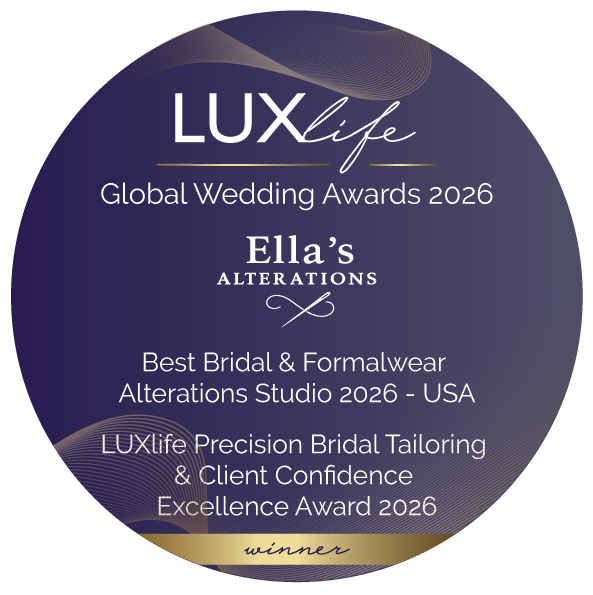
Proud winner: Best Bridal & Formalwear Alterations Studio 2026 - USA
Proud winner: Best Wedding Dress and Formalwear Tailoring, Zephyrhills 2026
Why Clients Trust Ella’s Alterations
- 30 plus Years of Expertise: Master tailoring and formal wear alterations trusted across Florida.
- Award Winning Service: Best of Florida Tailor and Best of Zephyrhills.
- Private Bridal Fittings: Discreet, elegant, and tailored to you.
- Proven Local Reputation: Five star customer reviews and repeat clients from Tampa to Orlando.
- Transparent and Personal: Clear pricing, expert guidance, and no rushed fittings.
- Recognized nationally by LUXlife Magazine for craftsmanship and client trust
- Chosen year after year for precision bridal and formal tailoring
- Best Wedding Dress & Formalwear Tailoring Zephyrhills 2026
- NextDoor Neighborhood Favorite 2023 2024 2025
Address: 6986 Fort King Road, Zephyrhills FL 33541
Phone: +1 813-445-8894 or +1 813-680-5821
Email: admin@ellasalterations.com
Hours:
Get Directions | Book Your Fitting