Wedding Dress decoded: What's REALLY Underneath All That…
Introduction:
We often see the dreamy finish of a wedding dress in photos or fittings, all sparkle and softness, floating effortlessly as the bride moves.
But beneath that cascade of tulle, lace, and satin is a world of expert construction, careful design, and thoughtful support that transforms fabric into fashion.
This post takes you inside that hidden architecture to show exactly what gives a gown its shape, its structure, and its magic.
If you have ever slipped into a bridal gown and felt transformed, there is a reason for that.
The dress is working with your body from the inside out.
Let’s start at the foundation.
Most wedding gowns, whether minimalist or highly embellished, begin with a fitted bodice.
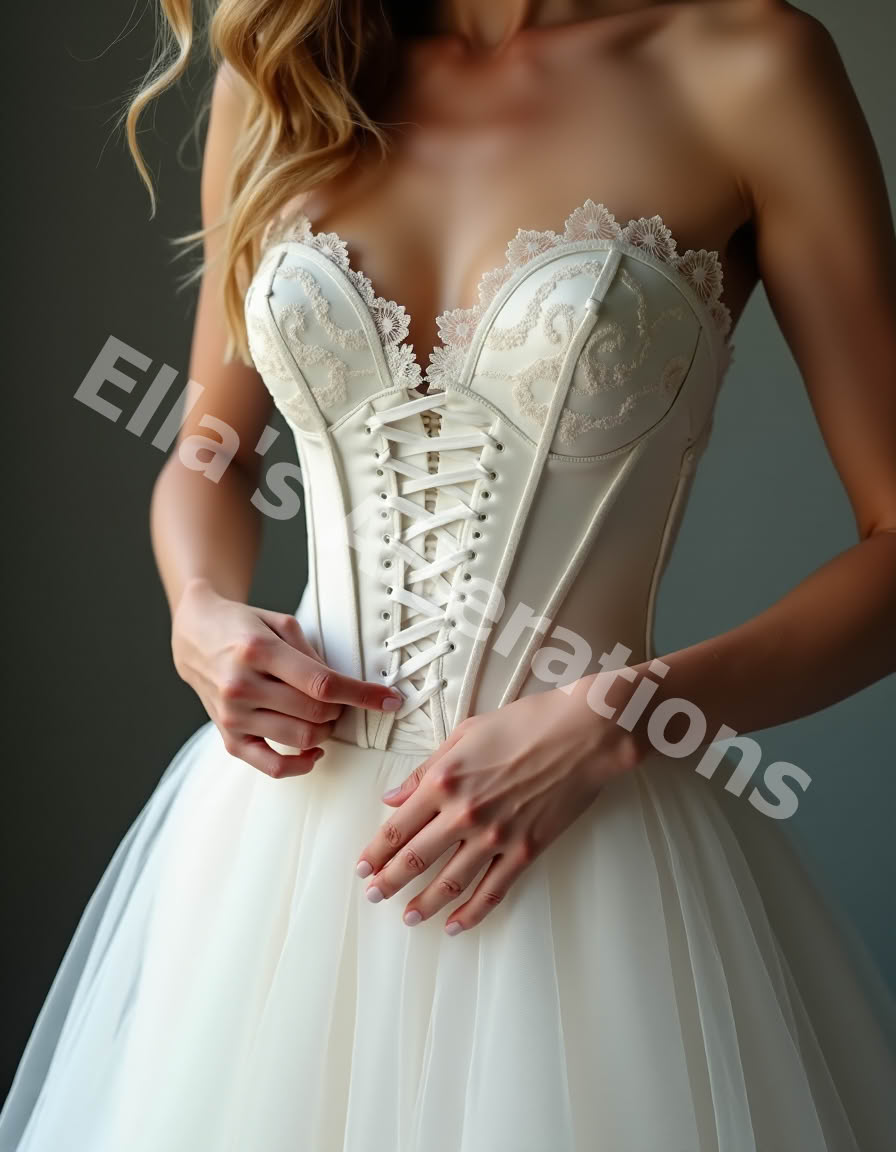
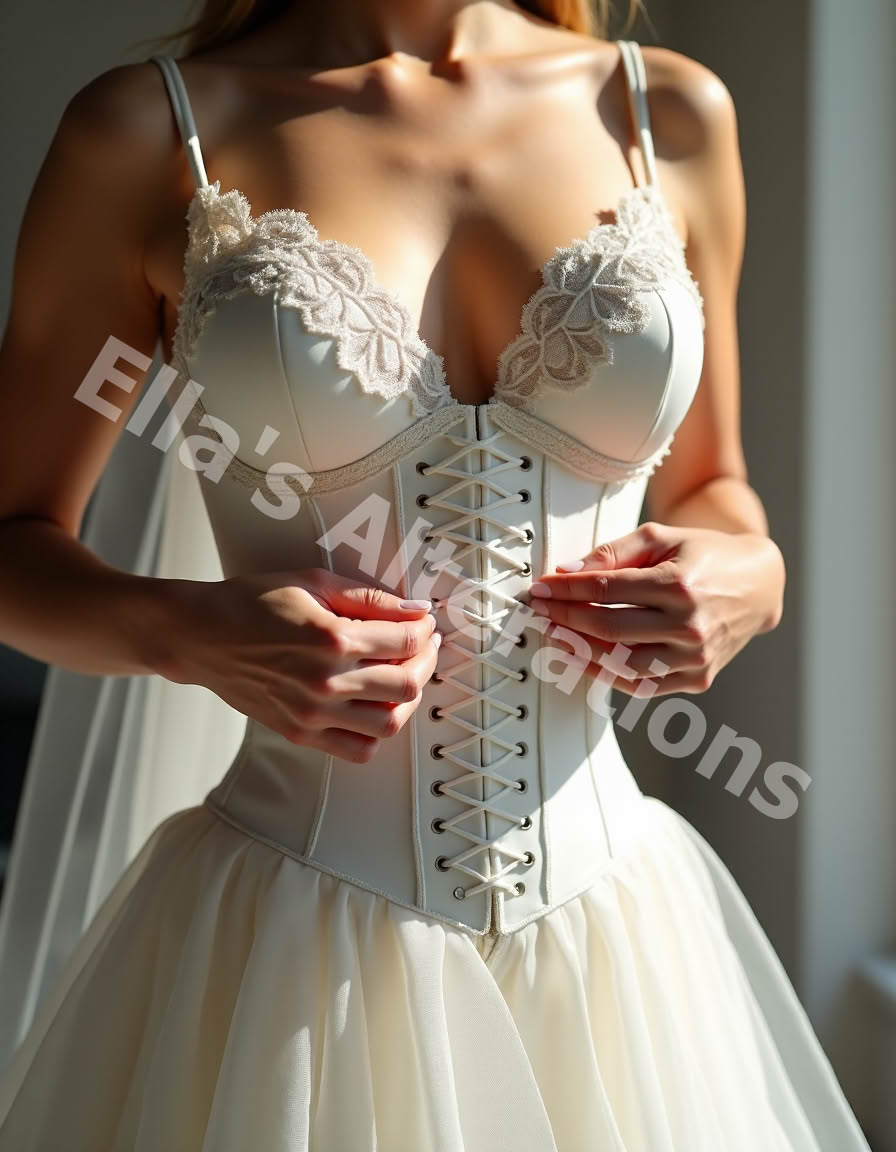
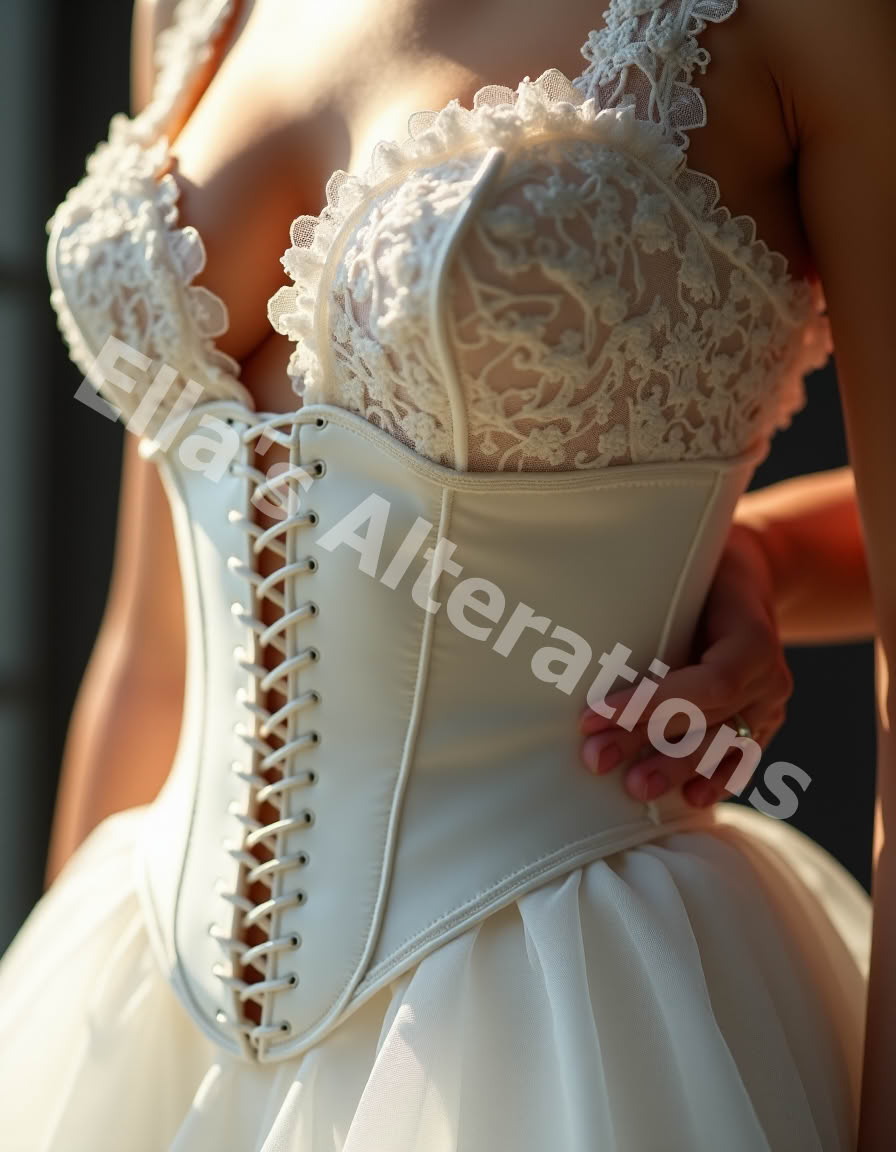
That bodice often includes built-in boning, a corset structure, or a hidden bra.
Boning refers to vertical strips of plastic or steel sewn into the lining to hold the shape of the dress and keep it smooth against your torso.
Plastic boning is lightweight and flexible, perfect for gowns with movement like a flowy chiffon skirt.
Steel boning offers firmer support, ideal for more dramatic silhouettes such as mermaid or trumpet styles.
Built-in bras or full corsets eliminate the need for undergarments, smoothing everything and ensuring the gown stays perfectly in place.
Next, the lining and interlining deserve a closer look.
Lining is the layer that rests closest to your skin, usually made of soft fabric for comfort and breathability.
Interlining is often sandwiched between the lining and the outer fabric, adding structure and helping heavier materials like satin or crepe maintain their shape.
These interior fabrics also affect how the gown moves, feels, and even photographs.
They are rarely seen but make a massive difference in how the dress performs.
Now let’s talk volume.
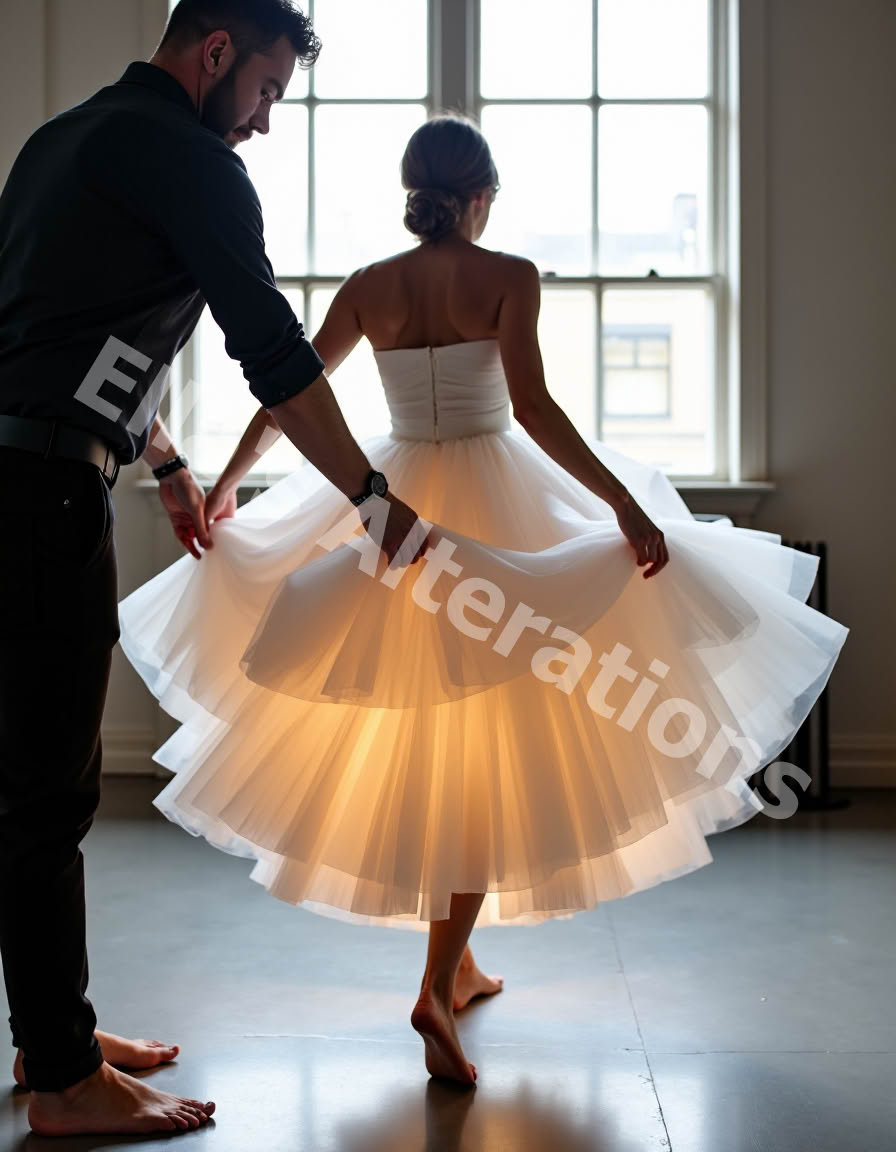
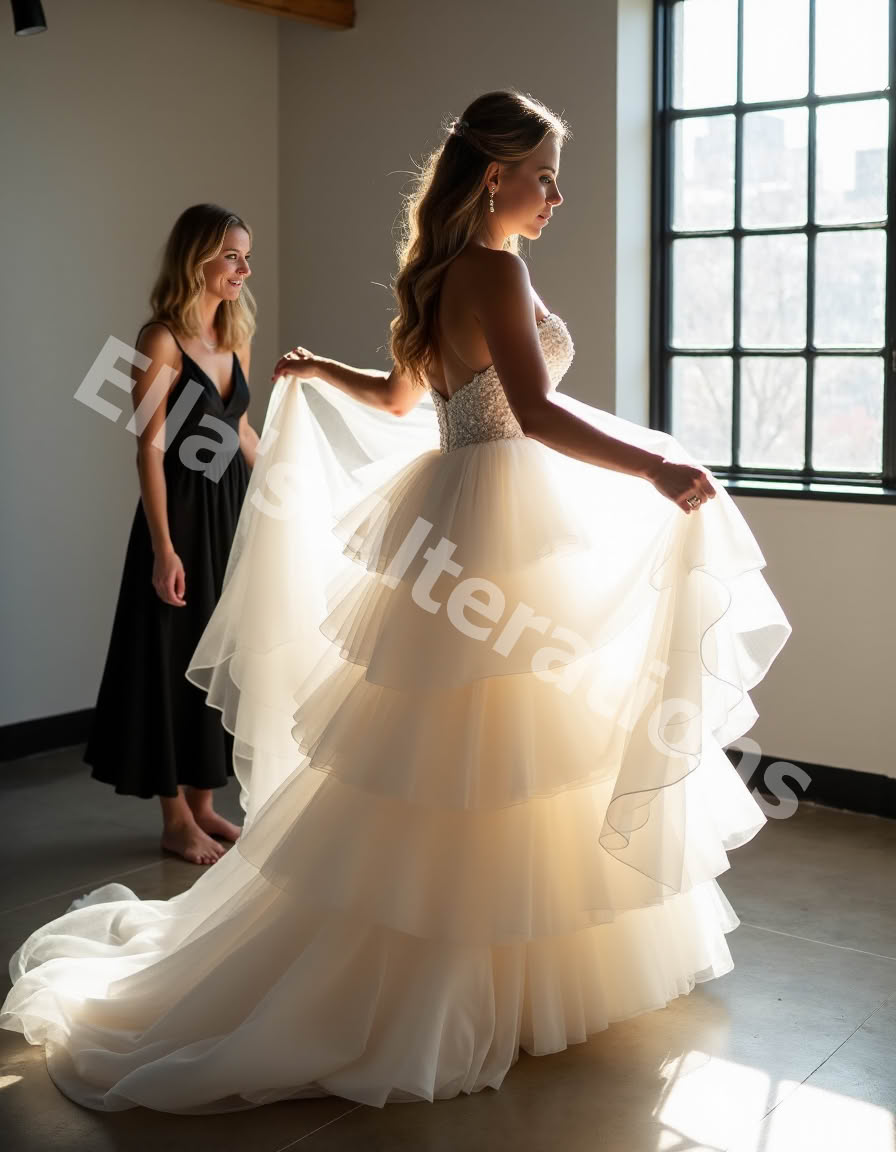
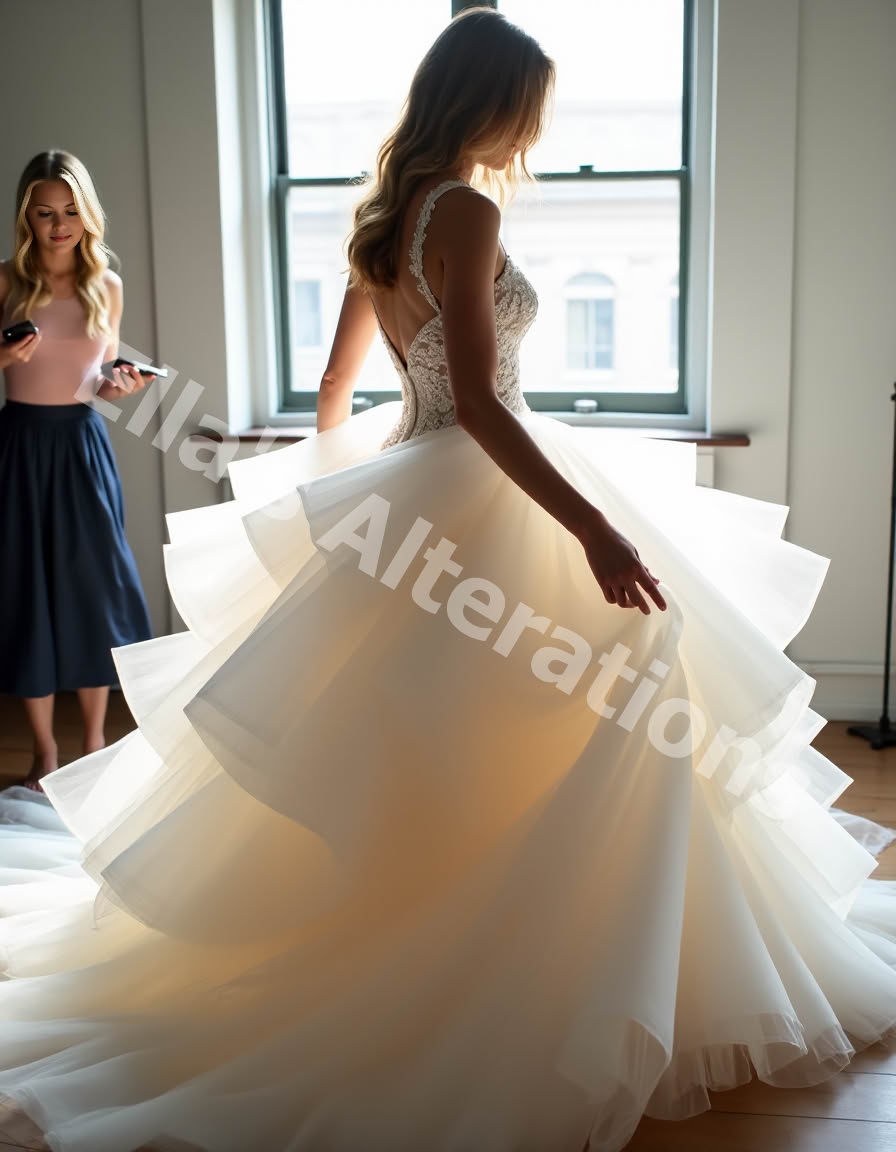
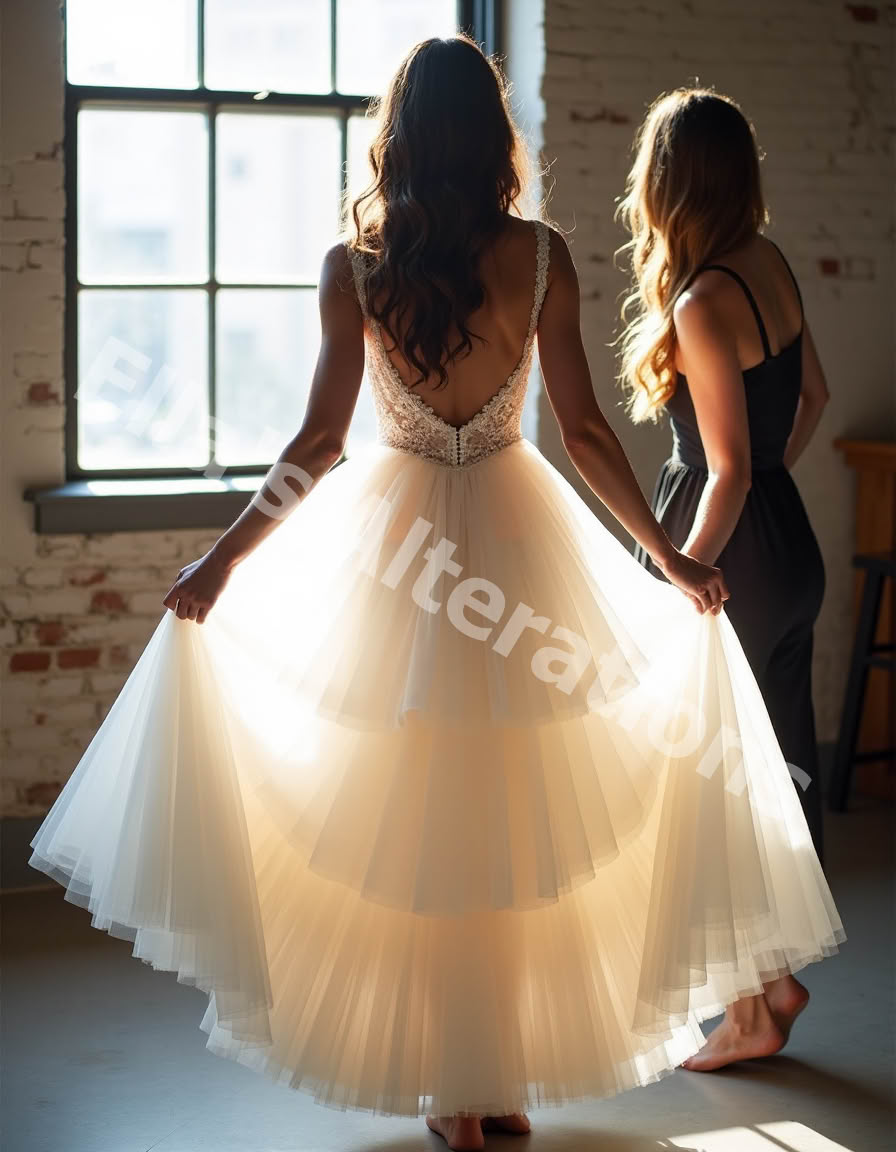
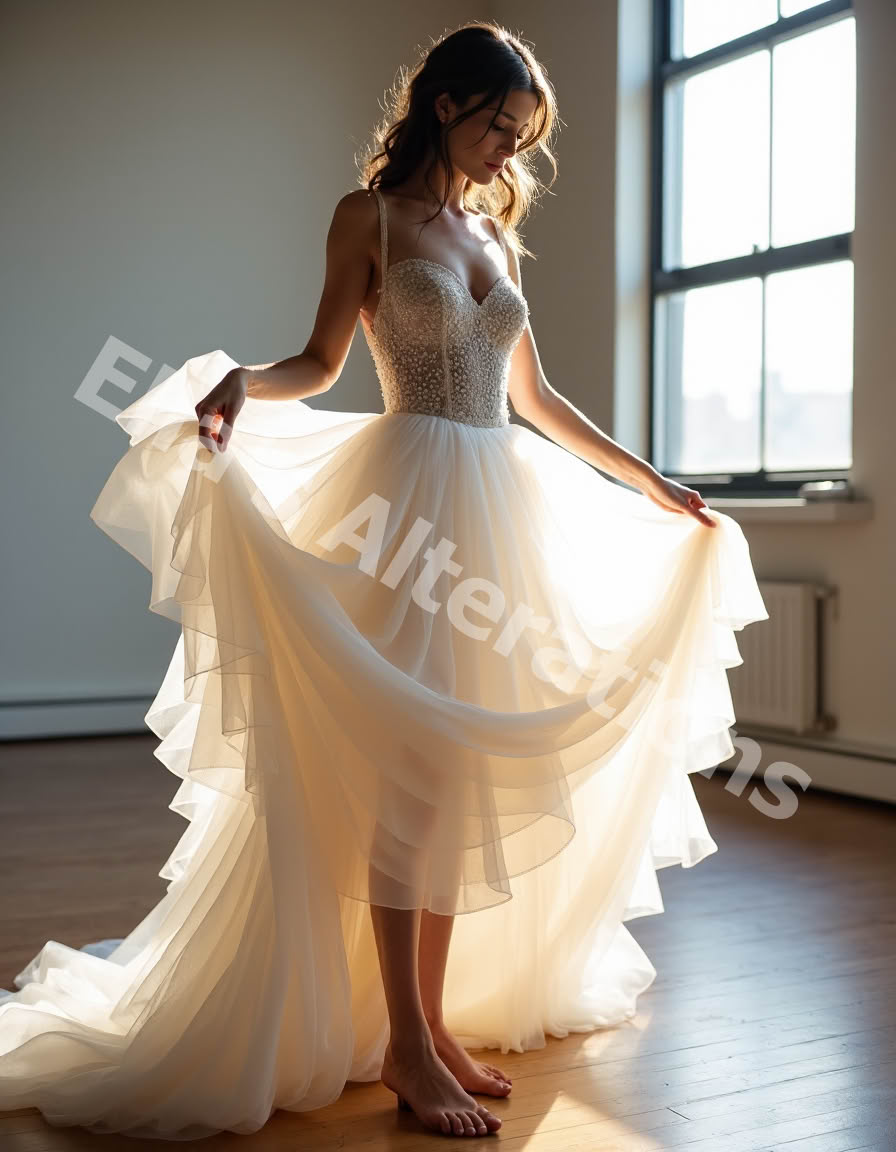
When you see a full ball gown glide across the floor, you can be sure that crinoline, petticoats, or even hoop skirts are creating that grandeur.
Crinoline is a stiffened netting often used in multiple layers to lift the skirt and give it bounce.
Petticoats can be full or subtle, depending on the gown's design, and are tailored to match the silhouette.
Some gowns use removable petticoats for flexibility, while others are built in.
Hoop skirts, which use circular bands to create space and volume, are typically used in gowns that require maximum fullness without extra weight.
Closures are another detail that many brides overlook until the final fitting.
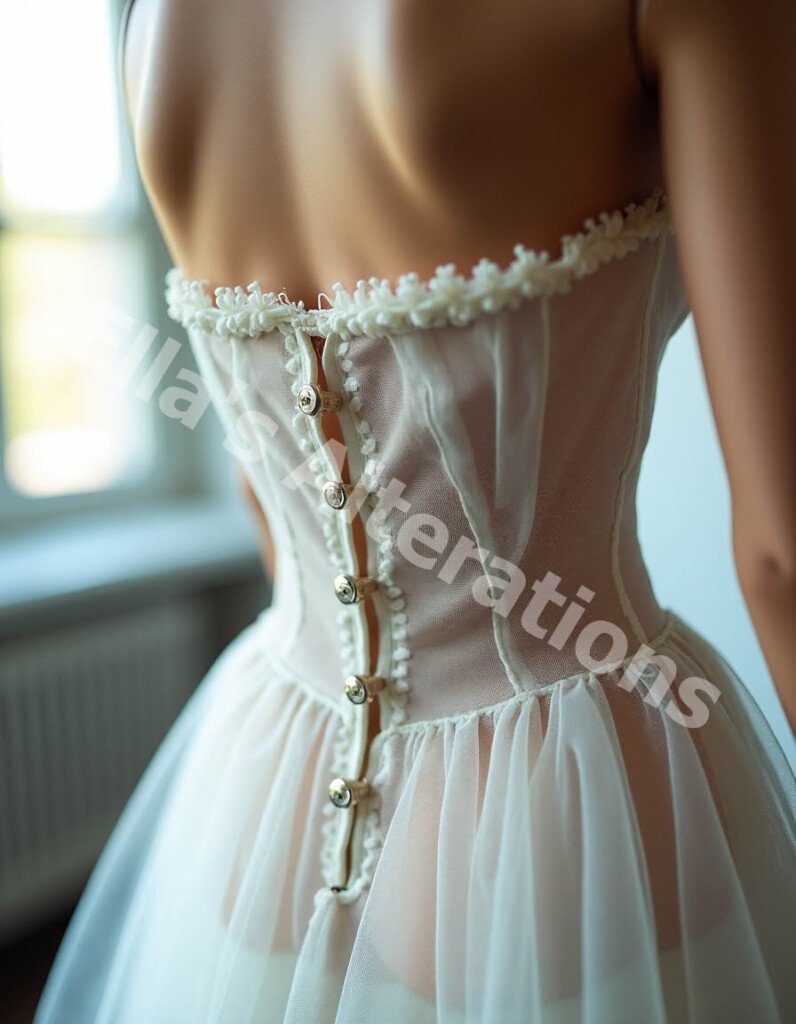
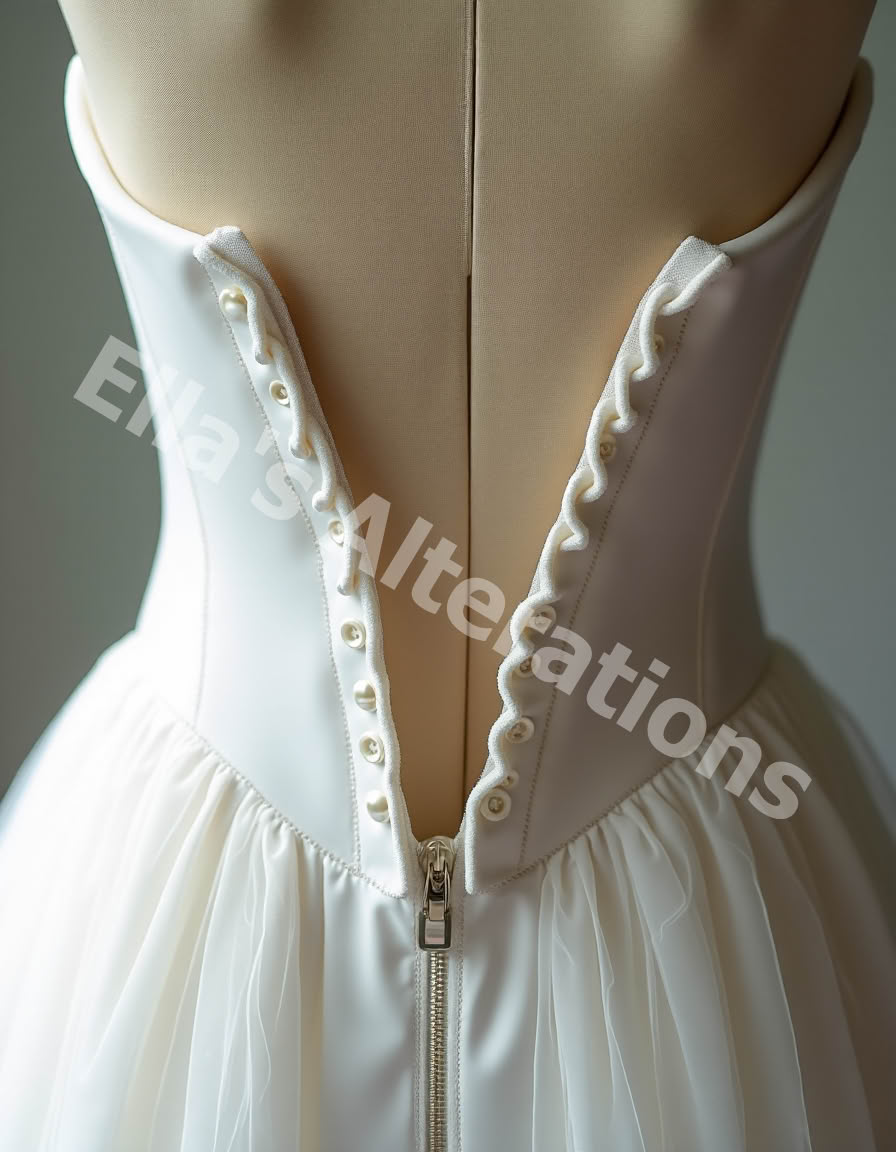
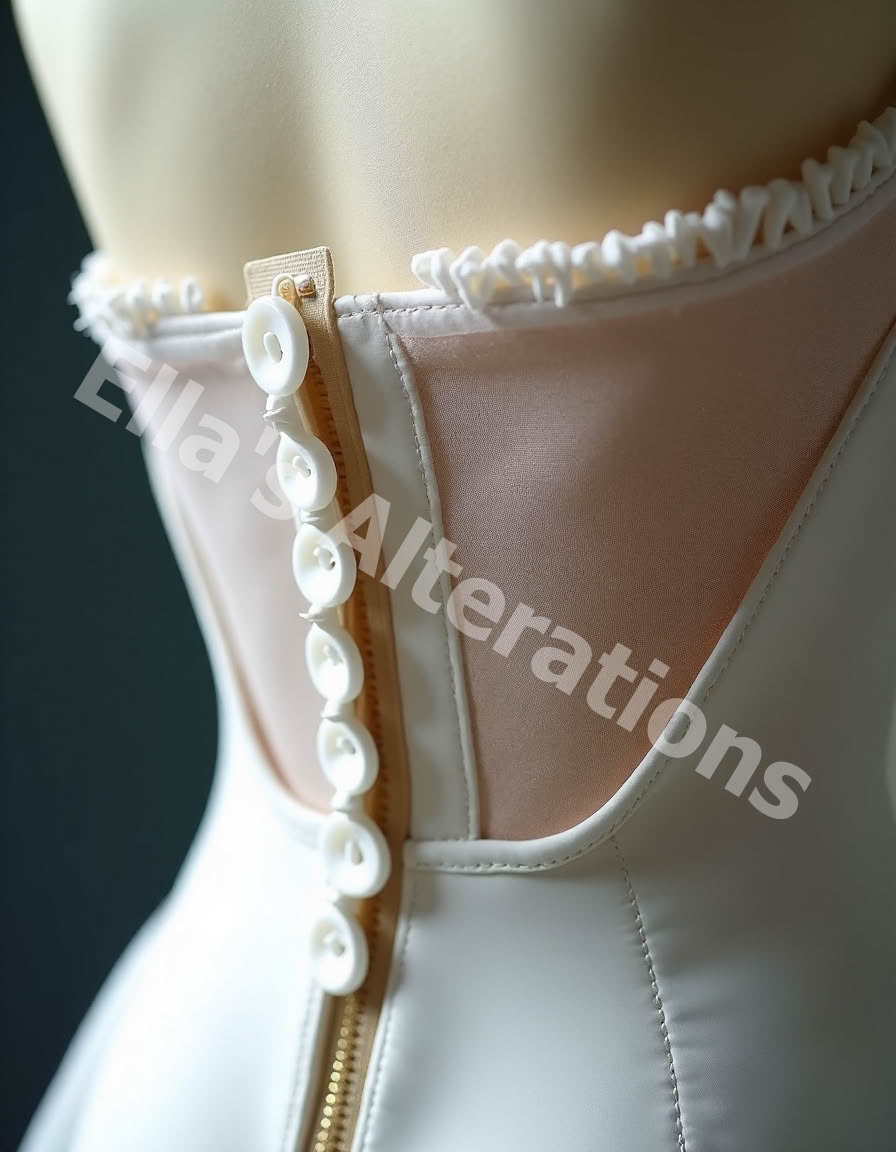
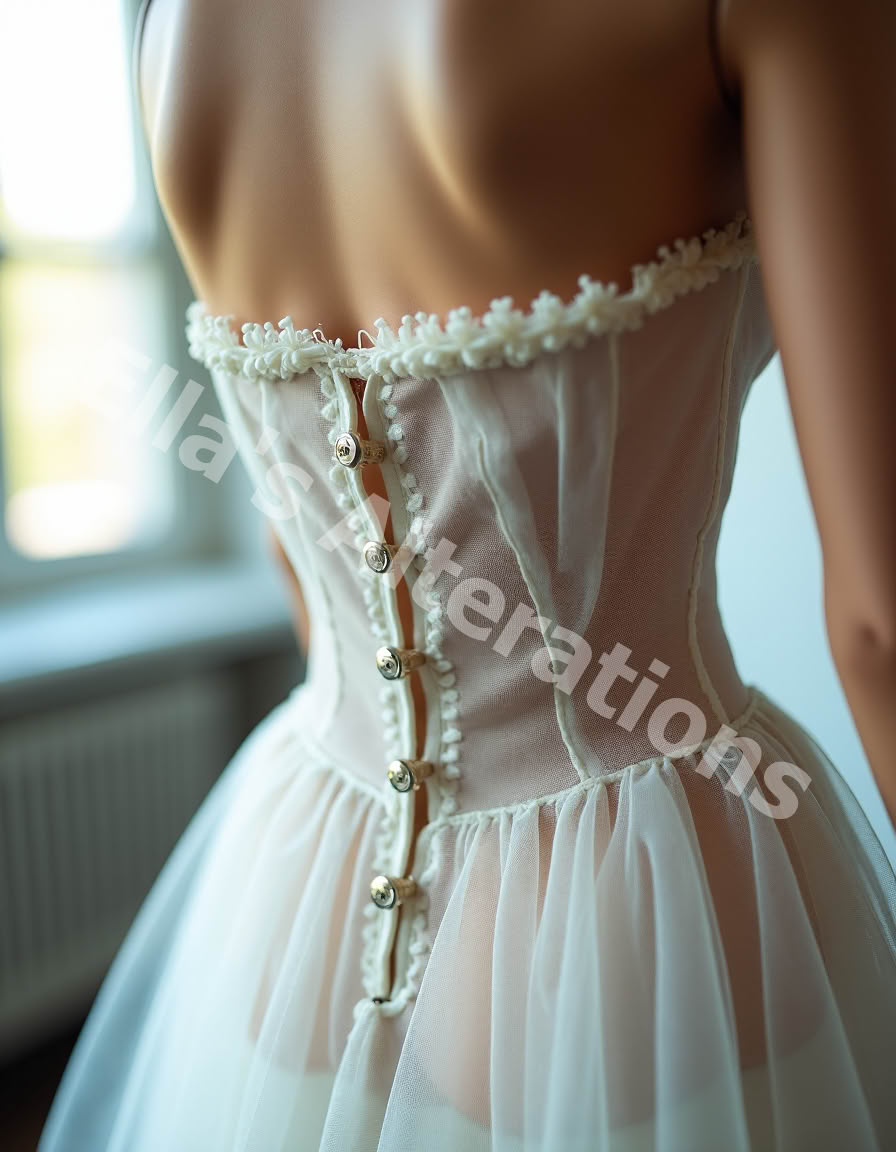
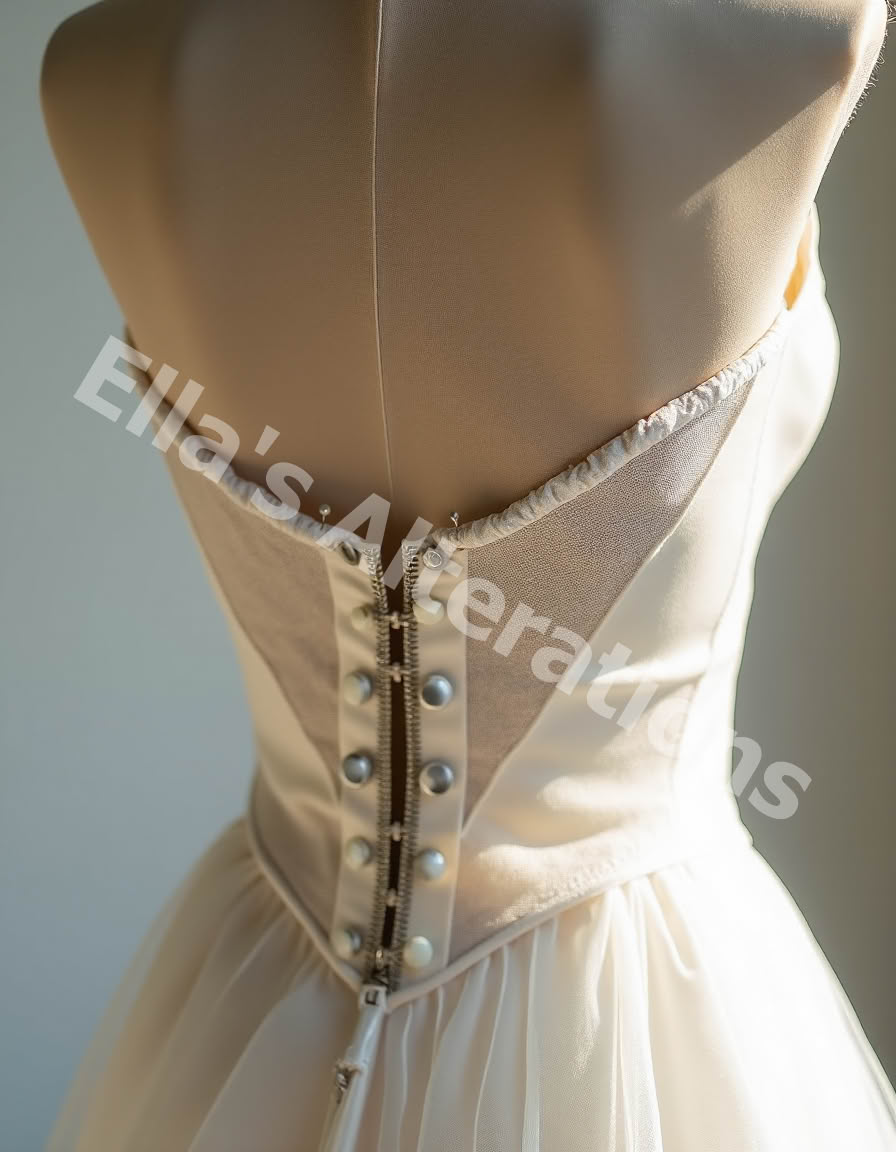
Invisible zippers are often hidden beneath buttons or lace panels, giving a seamless appearance while ensuring a secure fit.
Button closures may be functional or decorative, while hook-and-eye fastenings are frequently used in the bodice or at the top of zippers for added stability.
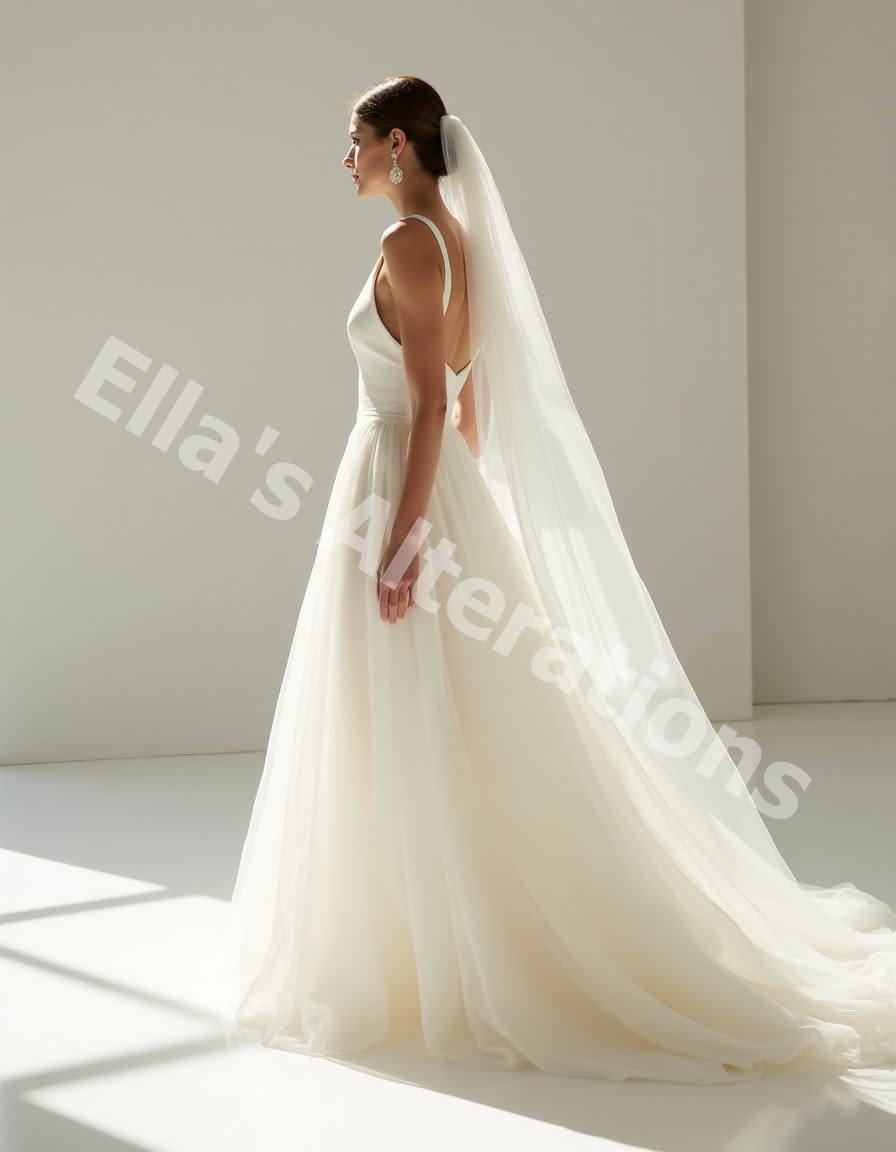
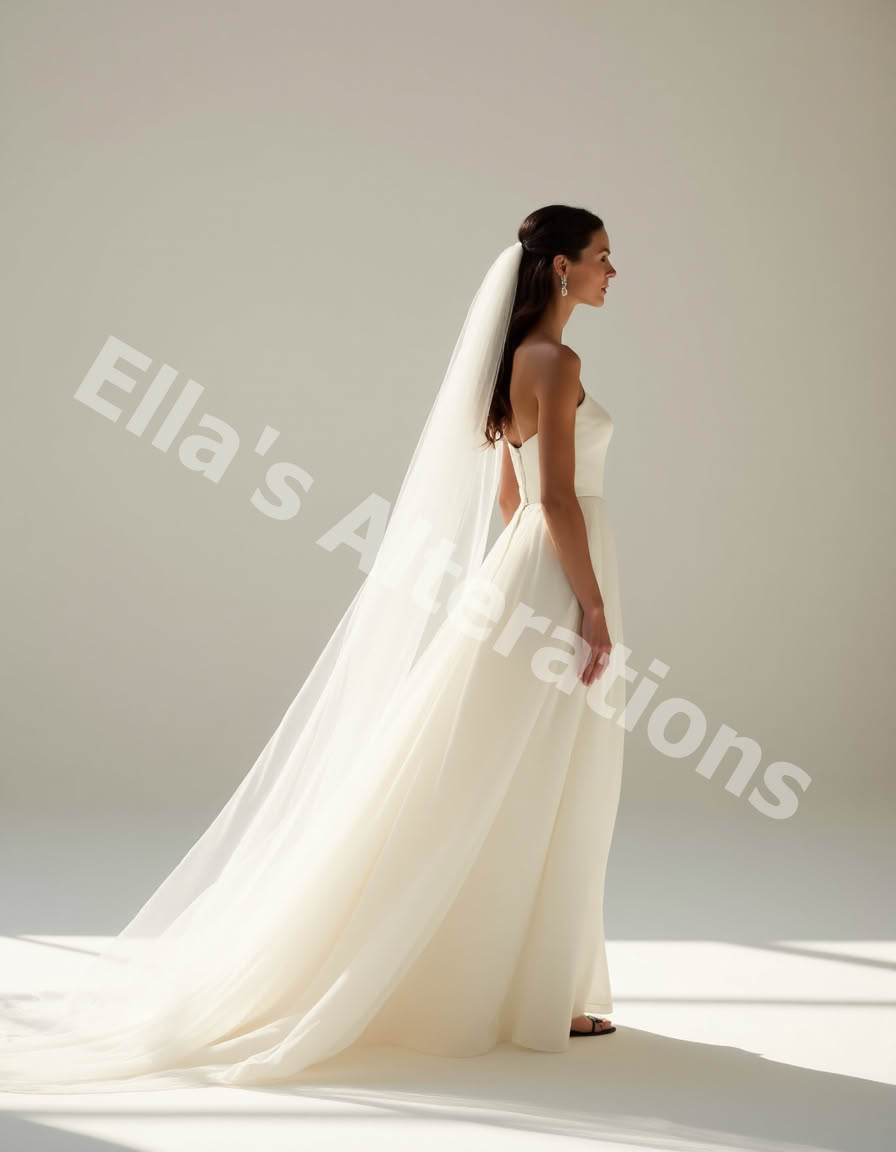
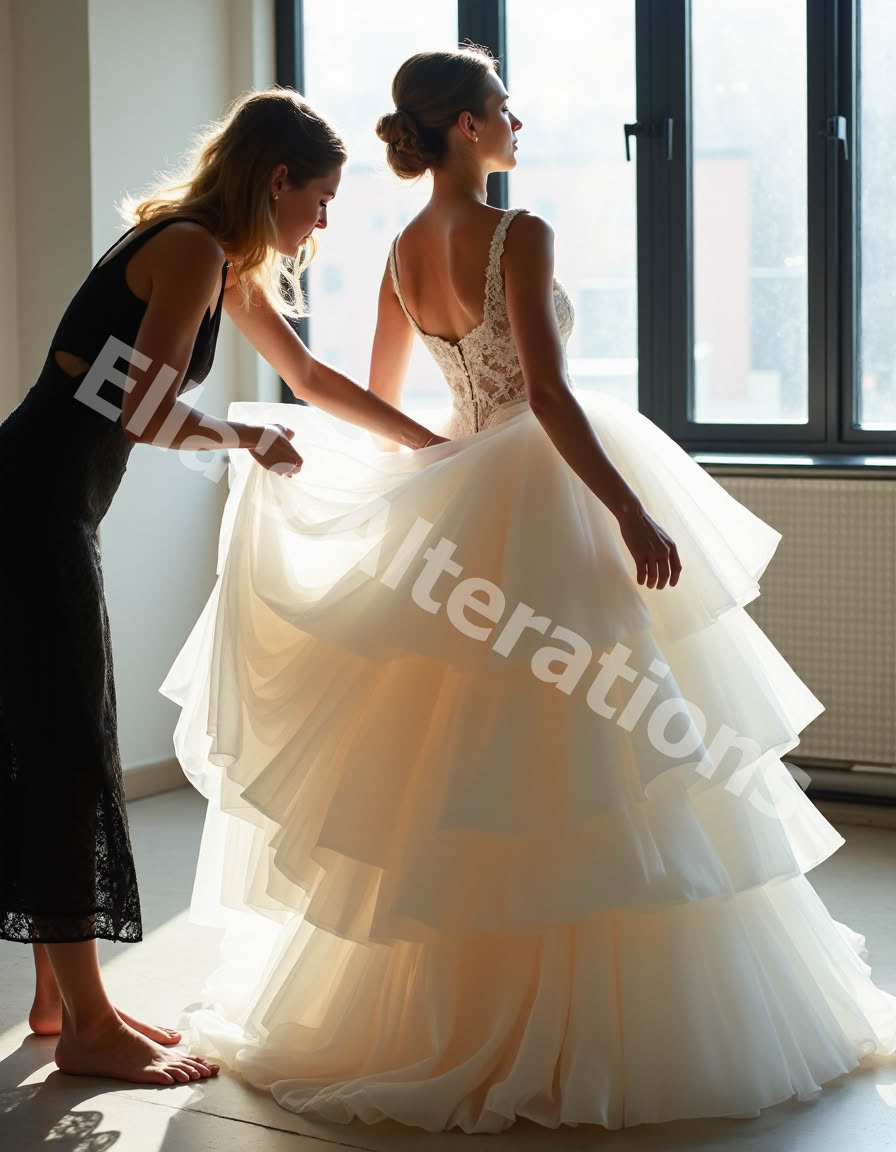
Bustles are another quiet hero, especially for gowns with long trains.
Loops or hooks are sewn into the dress to allow the train to be lifted after the ceremony, giving the bride more freedom to move during the reception.
Fabric layering is where artistry meets engineering.
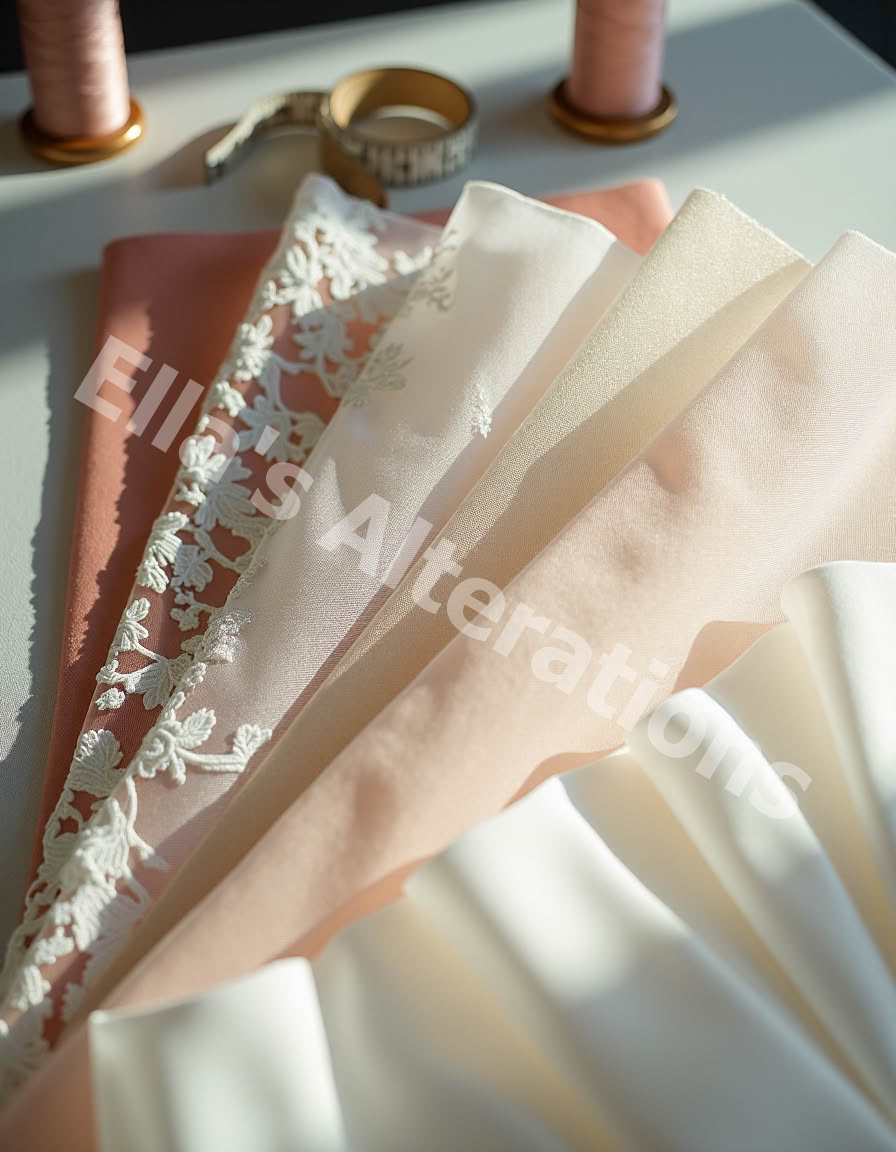
Delicate overlays of lace or tulle float over structured underlays of satin, organza, or crepe to create depth, movement, and light play.
Stabilizers are used to support sheer or stretchy areas, especially in illusion necklines or backless styles.
Netting and mesh may be placed under lace or embroidery to give the design a lifted, three-dimensional look.
Finally, small reinforcements make a big impact.
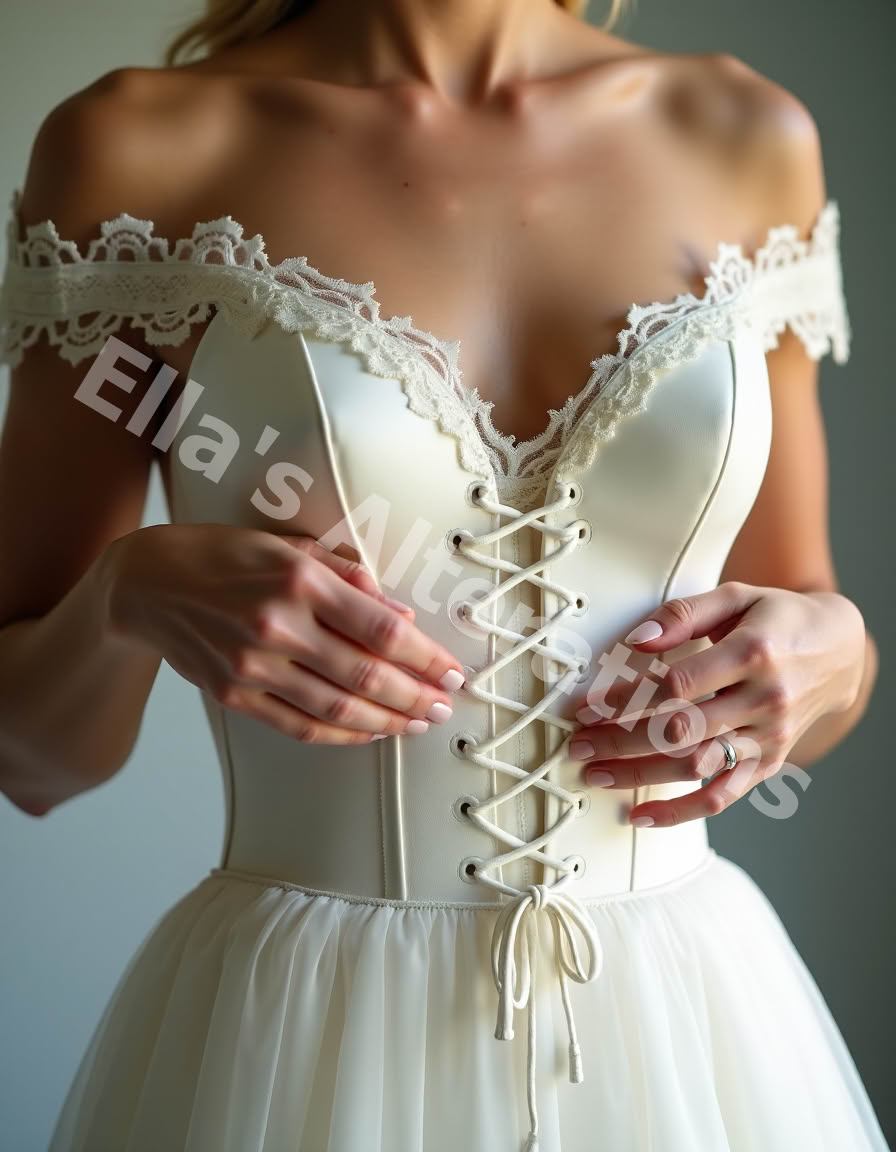
Modesty panels add coverage behind lace-up backs.
Weighted hems ensure the gown falls gracefully and stays grounded, especially in outdoor or windy settings.
Non-slip grippers inside strapless designs prevent slipping and keep everything right where it should be.
So much more goes into a wedding dress than what we see on the surface.
These hidden layers and features create the feeling of being effortlessly beautiful and completely secure.
Knowing what lies beneath the tulle not only deepens your appreciation of bridal fashion but also helps you find the gown that feels made just for you.
The Foundation: Corsetry and Boning:
When it comes to creating that breathtaking bridal silhouette, it is not just the outer fabric doing all the work.
The volume and shape of a wedding gown are often supported by layers you cannot see, but you can absolutely feel.
Whether you are dreaming of a dramatic ball gown or a more subtle A-line shape, much of the dress’s presence comes from what is going on underneath the skirt.
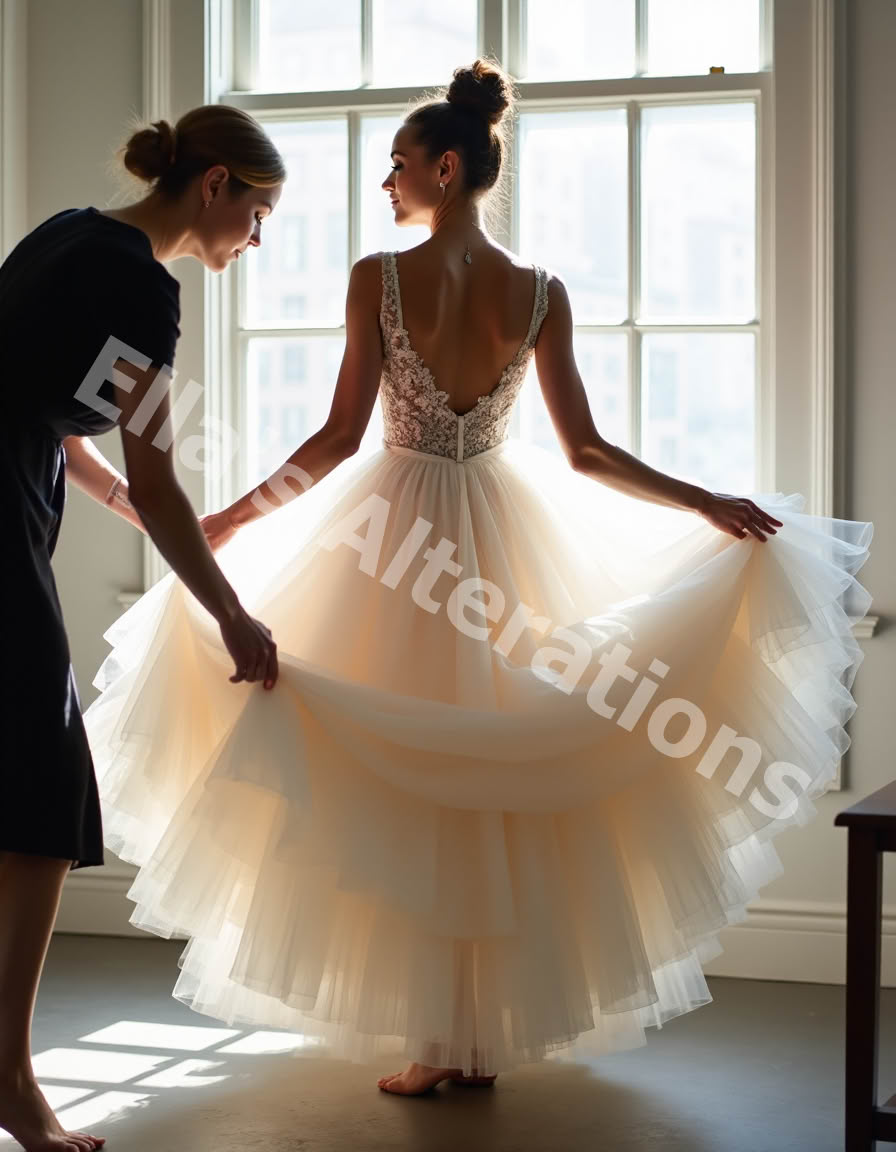
Crinoline, petticoats, and hoop skirts are the hidden heroes that make your gown float, flare, or sweep across the floor with purpose.
Let’s start with petticoats, a bridal classic.
These are skirt-shaped underlayers made from lightweight tulle or netting and are designed to add fullness and movement to the gown.
They come in different cuts and volumes depending on the desired effect.
An A-line petticoat will provide gentle lift and flow, ideal for gowns with a relaxed silhouette like bohemian or beach-inspired styles.
A fuller petticoat creates a more defined shape, perfect for traditional or vintage looks like a satin ball gown or lace long sleeve design.
Many dresses come with a built-in petticoat, while others allow you to wear a removable one, giving you the option to change your look from ceremony to reception.
Next comes crinoline, which is often confused with petticoats but has a distinct role.
Crinoline is a stiffened fabric, usually made of horsehair braid or synthetic mesh, that adds structure rather than softness.
It helps skirts hold their shape without drooping and prevents delicate outer fabrics from collapsing.
Crinoline can be layered in varying levels, from just enough to lift a chiffon skirt to a bold, voluminous base that supports heavy layers of satin or tulle.
Unlike petticoats that are more flexible and flowy, crinoline is about maintaining form and keeping the silhouette consistent throughout the day.
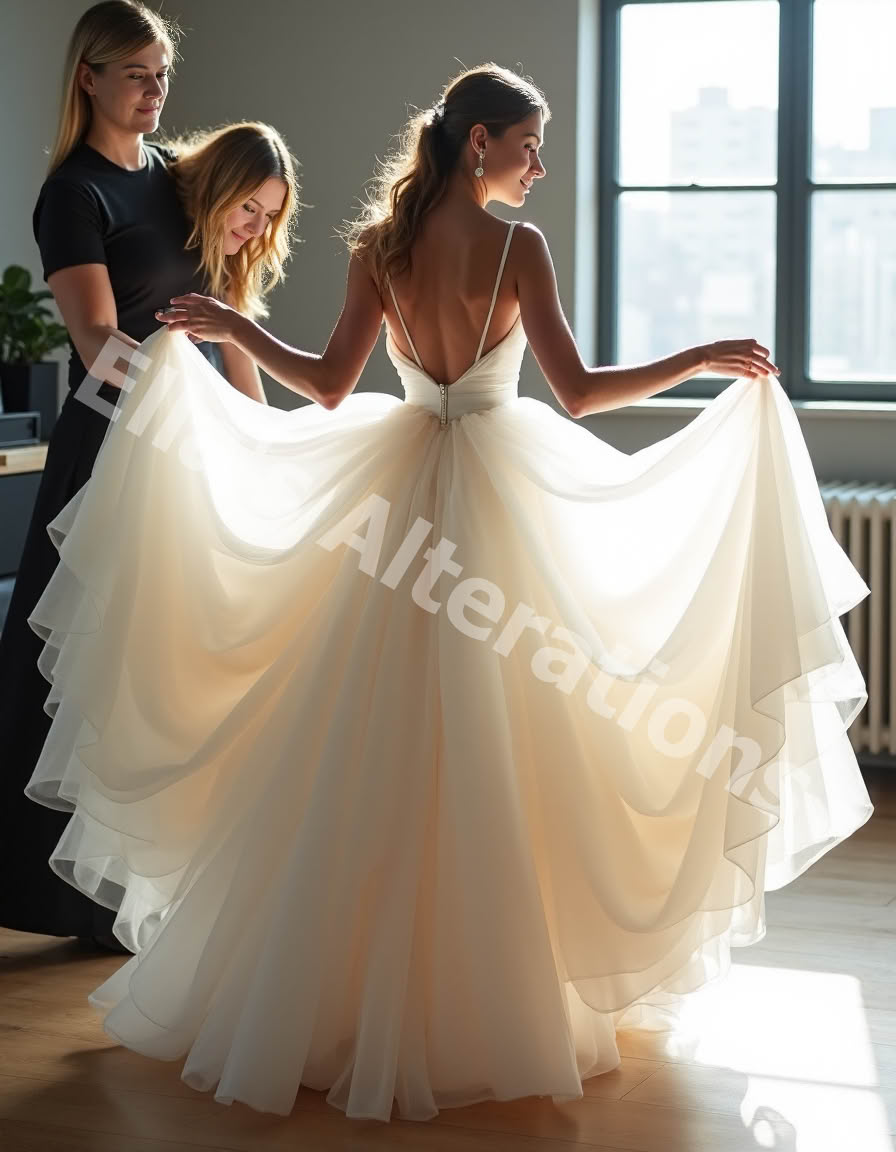
For the bride who wants maximum volume with minimal weight, hoop skirts are a game changer.
A hoop skirt consists of a lightweight petticoat embedded with circular bands, often made of plastic or metal.
These hoops act as a frame, lifting the gown outward and creating space between your legs and the fabric.
This not only allows the dress to move gracefully, but also keeps it from sticking or bunching when walking.
Hoop skirts are especially helpful for full-skirted dresses with many layers or longer trains, like a chapel length or cathedral style gown.
They are ideal for hot climates too, since they allow air to circulate beneath the dress.
Each of these shape creators can be layered, combined, or customized based on your gown and personal comfort.
For example, a gown might include a soft petticoat lined with a layer of crinoline for extra lift.
A hoop can be worn beneath crinoline to give more shape without adding weight.
Alterations experts can even sew these layers into the gown if you want everything streamlined and built-in, which is often done with custom or couture wedding dresses.
One key point many brides overlook is how these layers impact movement and comfort.
While they help with the visual drama of the gown, they also create space and flow that makes walking, sitting, and dancing feel easier.
They lift the outer skirt slightly off the ground, which helps prevent snagging or dragging.
For destination or outdoor weddings, where mud or grass could be a factor, these underlayers can even help keep your hem clean.
Understanding what is underneath your dress gives you the confidence to choose the silhouette that flatters you best.
It also helps you communicate more clearly with your stylist or tailor during fittings.
So the next time you twirl in a gown and feel that swoosh of fabric around you, remember there is more to that moment than meets the eye.
It is structure, design, and thoughtful support all working together to give you your bridal wow moment.
Tulle Temptation: Captivating Looks with Tulle-Adorned Dresses.
Volume and Shape Creators: Crinoline, Petticoats, and Hoops:
Once you understand what petticoats, crinoline, and hoop skirts actually do, you can start to see how much control you have over the shape of your wedding gown.
These elements do not just add volume for the sake of drama.
They help define your silhouette, balance proportions, and create a more polished overall look.
For brides who want to enhance their waistline or elongate the legs, the right support underneath makes all the difference.
Silhouette control is where these layers truly shine.
A ball gown silhouette, for instance, relies on a strong foundation to support the skirt’s width while keeping the bodice snug and defined.
Without proper crinoline or a full petticoat, the skirt may fall flat and lose its impact.
On the other hand, a trumpet or mermaid style dress may include minimal volume layers in the knee area to create that classic flare without making the dress bulky.
The goal is to add fullness exactly where it is needed, and nowhere else.
A key benefit of using removable layers like separate petticoats or hoops is customization.
You might try on a dress at a boutique and feel like something is missing.
Often, the stylist will add a fuller petticoat or adjust the existing layers to help you visualize the gown with more presence.
You may even choose to wear a fuller petticoat for the ceremony, then remove or replace it with a lighter one for dancing later in the evening.
These adjustments can transform the vibe of your gown without requiring a second dress.
Some brides are surprised to learn that movement and comfort are directly tied to the understructure of their dress.
You might think that less volume equals more ease, but in many cases, a well-constructed hoop skirt can actually make walking easier.
It lifts the outer skirt away from your legs and helps the fabric float rather than drag.
For destination weddings or outdoor ceremonies, this can be incredibly helpful in keeping your hemline off wet grass, gravel, or sand.
Weight distribution is another subtle but important point.
A gown with many heavy outer layers may feel more comfortable when supported by a structured underlayer.
Hoop skirts can distribute the weight of the skirt more evenly around your body instead of letting it pull downward.
This can make a heavy satin ball gown feel lighter and easier to wear for extended periods.
Crinoline, when properly placed, also helps prevent the skirt from clinging to your legs or getting tangled as you move.
Brides with unique sizing or alterations needs may also benefit from custom-shaped volume layers.
For example, a plus size bride might want more structure in the hip area while keeping the waistline light and defined.
A petite bride may choose slimmer petticoats to avoid overwhelming her frame.
With expert tailoring, these elements can be sewn into the dress or built on a removable slip that fits your body exactly as it should.
Finally, do not underestimate the effect of underlayers on photos and video.
They keep the dress lifted and shaped even when sitting, kneeling, or dancing.
The fullness from underneath allows light to catch the fabric in a flattering way, creating that ethereal glow brides love.
Without these unseen elements, the gown could lose its shape under the weight of embellishments or simply fall flat on camera.
Volume is never just volume.
It is intention, support, and structure all working together to bring your bridal vision to life.
With the right foundation, your dress will not only look like a dream — it will feel like one too.
The Inner Workings: Seams, Zippers, and Closures:
Once the inner structure and volume layers are in place, it is the seams, zippers, and closures that quietly hold your dress together.
These components may not be glamorous, but they are essential to the gown’s function, fit, and durability.
Whether you are zipping into a sleek satin sheath or buttoning up the back of a lace-covered ball gown, the way a dress is constructed on the inside determines how confidently it wears on the outside.
Let’s start with seams, the invisible lines of support that contour your body and bring the gown to life.
Bridal gowns use carefully placed seams to shape the silhouette and maintain a close, flattering fit.
These seams often follow your body’s natural curves, guiding the eye from the bust to the waist and hips.
Darts are another important feature, especially in the bodice, helping the fabric curve smoothly over the bust and down to the waistline without excess material or gaps.
The quality of seam finishing is a sign of true craftsmanship.
Look for clean, reinforced seams that lie flat against the skin.
Inside the dress, many seams are lined or enclosed to prevent irritation and increase durability.
A well-constructed seam should hold its shape without puckering or pulling, even as you sit, walk, or dance.
Seam allowances — the extra fabric sewn inside the seams — are often added so the dress can be taken in or let out during alterations without compromising the design.
Now let’s talk about zippers, a key component that blends form with function.
Most bridal gowns feature invisible zippers, which are hidden by lace overlays, fabric folds, or rows of buttons.
They offer a seamless finish, making it appear as though the dress simply molds to your body.
These zippers are placed in areas with minimal stress, often along the side or back, to maintain comfort and ease of movement.
Exposed zippers are less common but can be a stylish detail in more modern or minimalist designs.
They offer a clean, contemporary look and are easier to maneuver during fittings.
Some gowns even feature decorative button closures that hide a zipper underneath.
This gives the appearance of traditional bridal elegance while offering the security and speed of a zipper for getting dressed.
Next are hook-and-eye closures, small yet powerful reinforcements typically placed at the top of a zipper or in delicate spots like illusion backs.
They provide extra hold where fabric tension is high, helping keep everything in place.
These closures also allow the zipper to remain hidden, giving a smooth, polished finish to the garment.
One of the most functional and often overlooked details is the bustle system.
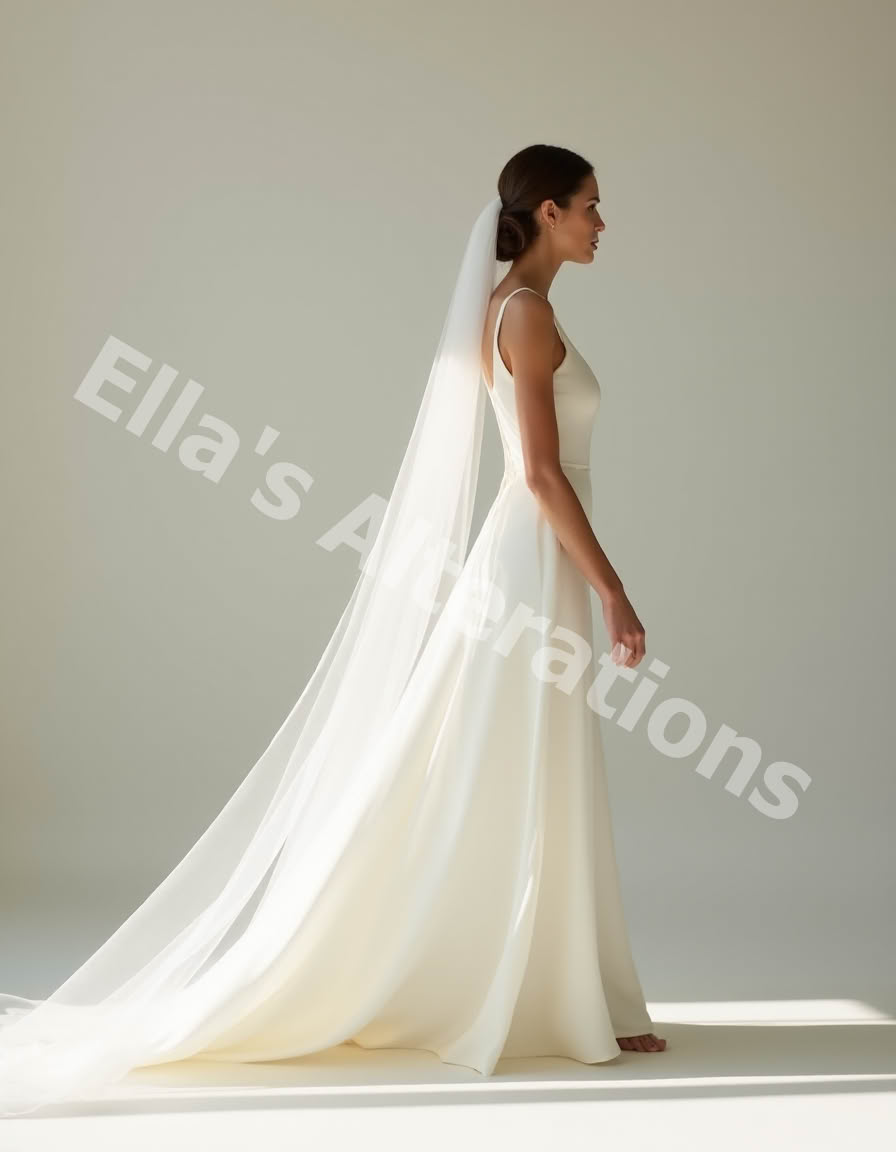
Designed for gowns with long trains, the bustle includes small loops, hooks, or ribbons sewn discreetly into the back of the skirt.
These elements allow the train to be lifted and secured after the ceremony, giving the bride freedom to move during the reception without sacrificing style.
There are many bustle types, such as the American bustle or French bustle, each suited to different dress styles and fabrics.
Closures also affect how easy it is to make adjustments.
Seam placement, zipper style, and built-in fastening systems all play a role in how a gown can be tailored to your exact shape.
During alterations, these inner workings allow for precise tweaks to ensure the dress feels custom made.
A well-placed closure can make slipping into your gown effortless and help it stay secure throughout the entire event.
When you combine smart closures with clean seams and high-quality fastenings, you get a dress that feels as good as it looks.
These inner elements are rarely noticed on their own, but without them, the gown would not hold its shape, move with grace, or feel comfortable for hours on end.
It is the hidden construction that keeps the magic in place.
Formal Wear Dresses Wedding Prom Pageant Mother Of Bride, Bridesmaid Mother of Groom Alterations.
Fabric Layers and Their Purpose:
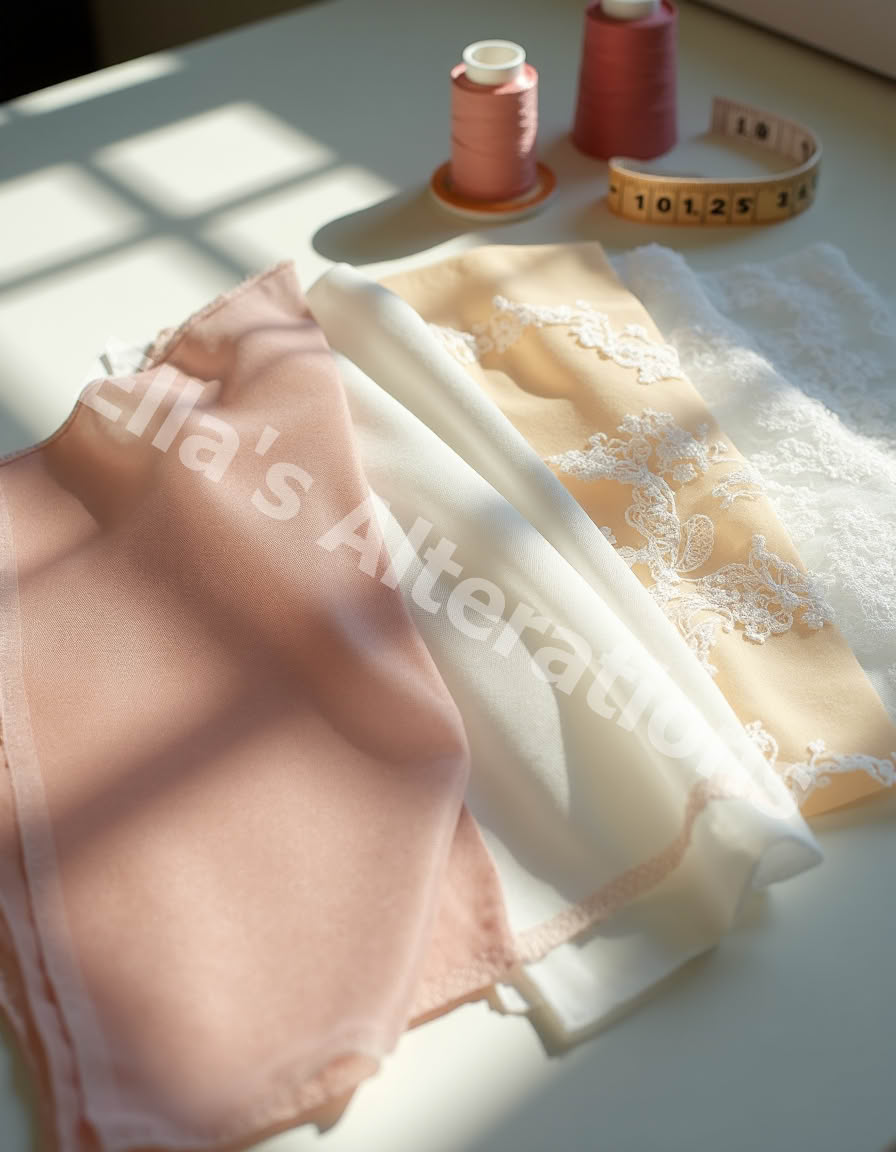
Beneath the surface shimmer of a wedding gown lies a carefully curated blend of fabrics, each layered with intention.
These layers do far more than just look pretty.
They create texture, add dimension, control how the dress moves, and protect delicate areas from stretching or losing shape.
Whether your gown features a full tulle skirt or a sleek crepe silhouette, what lies between the outer and inner layers is where true craftsmanship shines.
At the core of a gown’s beauty is the relationship between underlays and overlays.
The underlay is typically a structured or neutral-colored fabric that provides a foundation for more decorative materials.
Fabrics like satin, crepe, or organza are often used here because they hold shape well and offer a smooth surface.
This underlay serves as a canvas for the top layers, giving a base color and form that enhances the gown’s silhouette.
Overlays, on the other hand, are where texture and detail come alive.
These include tulle, lace, chiffon, or embroidered netting.
These fabrics are chosen not just for their look, but also for how they interact with light and movement.
A lace overlay can create dimension and romance, while a sheer layer of tulle can give the illusion of softness and volume without added weight.
Some gowns feature multiple overlays, especially in more dramatic or couture designs, to create a dreamy, floating effect as the bride moves.
One of the less visible but essential components inside the gown is the use of stabilizers.
These are firm fabrics or sewn-in reinforcements placed in areas that need extra support.
Think of them as hidden anchors.
They are used in spots like the bodice, side seams, neckline, or zipper area to prevent stretching, sagging, or fabric warping.
Stabilizers are especially important in gowns made from delicate or flexible materials, like illusion mesh or lightweight silk, where too much movement could compromise the fit.
In many dresses, you will also find netting or mesh.
These are ultra-light fabrics used for both structure and illusion.
Inside the skirt, netting is layered to create volume and shape while keeping the dress light and breathable.
Around the neckline, back, or sleeves, sheer mesh is often used to create the illusion of a strapless or floating element while offering real support.
This is common in designs with illusion necklines, sheer paneling, or backless silhouettes.
What appears barely there is actually carefully reinforced to hold everything in place.
Another smart feature built into some dresses is soft lining, which sits against the skin.
While not visible to the eye, the lining plays a huge role in comfort.
It prevents itchiness from lace or sequins and helps the gown glide on and off more easily.
Brides wearing heavily embellished dresses will especially appreciate how a good lining can protect the skin from irritation over hours of wear.
The way these fabric layers interact is also a big part of how the dress behaves in real life.
A heavy satin underlay combined with a lightweight tulle overlay gives structure and elegance, while maintaining a soft and romantic flow.
A crepe base with no extra overlay keeps things sleek and minimal, which is ideal for modern bridal styles.
Understanding the role of fabric layers helps brides choose a dress that suits not only their style, but also their comfort and venue.
A beach wedding might call for airy chiffon and minimal layering.
A cathedral ceremony might welcome luxurious satin with rich lace overlay and added volume.
Either way, these layers work together in harmony, delivering both the visual and tactile experience of wearing something truly special.
When it comes to bridal fashion, what touches your skin is just as important as what the world sees.
These fabrics tell a story from the inside out.
They shape the gown’s movement, tone, and personality, all while making sure it stays secure and flattering from the first step down the aisle to the last spin on the dance floor.
Hidden Details and Reinforcements:
While the lace, sparkle, and silhouette get most of the attention, it is often the smallest, most hidden details that make a wedding gown truly functional.
These behind-the-scenes features are designed to keep everything in place, enhance comfort, and ensure your gown moves gracefully from the aisle to the last dance.
They may be invisible, but they are intentional, and they are part of what sets a well-made gown apart from the rest.
Let’s begin with one of the most common yet overlooked details: the modesty panel.
Typically found behind lace-up backs, the modesty panel adds coverage beneath the corset ribbons, ensuring that no skin shows between the laces.
It also helps stabilize the back of the gown, especially when the corset is pulled tight.
For brides who want a fitted look without showing too much skin, this small piece of fabric offers the perfect solution.
It can also make the dress more forgiving in sizing during fittings or alterations.
Next is the weighted hem, an often-unseen detail that plays a big role in the gown’s movement and drape.
Tiny weights are sewn into the bottom hemline, especially on lighter fabrics like chiffon, tulle, or silk.
These weights help the gown hang smoothly and prevent it from flipping or flying up in the breeze.
This feature is especially helpful for outdoor weddings or ceremonies in breezy venues, where fabric can become unruly.
Weighted hems keep the lines of your dress clean and graceful from every angle.
Then we have non-slip grippers, usually found inside strapless or off-the-shoulder gowns.
These are thin silicone strips sewn into the inside edge of the neckline to help the dress grip your skin and stay in place.
Without them, strapless gowns can slide down or shift throughout the day, causing discomfort or the need for constant adjustment.
Grippers add a layer of security, giving you confidence that your dress will stay exactly where it belongs while still looking seamless and elegant.
Another small but mighty detail is the use of inner snaps and loops, especially when it comes to managing trains, sleeves, or detachable elements.
A gown with a detachable train may include loops at the waistline and hidden snaps that allow the train to be removed or reattached without disrupting the look.
Long illusion sleeves might have clear snaps at the wrist or elbow to keep the fabric in place.
These thoughtful design elements keep the gown practical without compromising style.
Internal waist stays are another reinforcement worth noting.
These are firm bands sewn inside the bodice that wrap around your waist and fasten separately from the dress itself.
Think of it like a hidden belt.
This feature helps anchor the gown to your natural waist and can prevent the dress from slipping down throughout the day.
It is especially helpful in strapless or heavily beaded gowns where added support is essential.
Some gowns also include bra strap keepers, small ribbon loops inside the shoulder straps to secure a hidden bra or bralette if needed.
Even in gowns with built-in support, some brides choose to wear additional undergarments, and these loops help keep everything neatly in place.
Finally, certain designer or couture gowns may include hidden corsetry or interior bodice structure that is completely separate from the visible dress.
These internal pieces shape and lift the body, providing sculpted support that allows the outer layer to appear delicate and weightless.
You might never see these layers, but you will definitely feel the difference.
These small reinforcements are the unsung heroes of bridal design.
They do not change the appearance of the dress, but they completely transform how it wears.
From ensuring the hem flows beautifully to keeping your neckline secure, these invisible details are what allow you to move, pose, and celebrate without worry.
They are what make a gown not only look perfect, but feel perfect too.
Conclusion:
By now, it is clear that a wedding dress is far more than a beautiful garment.
It is a highly engineered creation, full of structure, layers, and invisible reinforcements that work in harmony to give you that unforgettable feeling the moment you slip it on.
Beneath every swish of tulle, every sparkle of lace, and every curve-hugging seam lies a system of thoughtful details designed to support your body, flatter your shape, and bring your bridal vision to life.
Understanding what is underneath all that tulle does more than satisfy curiosity.
It empowers you as a bride.
Whether you are choosing your gown, planning your alterations, or simply trying to feel more confident during fittings, knowing the inner workings of a wedding dress helps you ask better questions and make more informed decisions.
You will be able to recognize quality construction, identify what makes one silhouette feel better than another, and understand why some dresses hold their shape from day to night while others fall flat after a few hours.
You now know that boning is not just about structure, but about posture and support.
That lining does not just prevent itching, it creates breathability and comfort.
That a bustle is more than a loop and a hook — it is the freedom to move after you have made your grand entrance.
You know that fabric layering affects how your dress moves in the light and how it photographs, and that a simple detail like a weighted hem can make the difference between elegance and distraction on a windy day.
What is also important to remember is that not every dress includes every feature, and that is perfectly fine.
Some gowns rely on minimalist construction for a sleek, modern effect.
Others are filled with couture-level details, built-in shapewear, and complex volume layers.
There is no one correct formula.
The perfect balance depends on your body, your style, your venue, and your priorities.
Knowing the purpose behind these hidden elements allows you to prioritize the ones that truly matter to you.
If comfort is your top priority, you might focus on soft linings, non-slip grippers, and lighter petticoats.
If you are seeking drama, maybe you go for built-in crinoline, a structured bodice, and layers of embroidered tulle.
Want flexibility for dancing?
A removable train or adjustable bustle system can change your look and give you freedom to move with ease.
Even seemingly small choices, like whether to include a modesty panel or how your gown closes in the back, can shift the way your dress feels and functions.
These are details that many brides do not notice until it is too late, but you now have the inside scoop to make sure your dress works as beautifully behind the scenes as it does in the spotlight.
So as you step into the fitting room, walk down the aisle, or twirl under your reception lights, remember this — the gown you chose is not just a beautiful design.
It is a carefully constructed piece of wearable art that is working with you every step of the way.
From the inside out, it is there to support you, shape you, and let you shine without worry.
Because when you feel secure and supported in your dress, the beauty radiates beyond the fabric.
It becomes part of your story.
And now that you know what lies beneath the magic, you will never look at a wedding dress the same way again.
Volume Up! Stunning Silhouettes For The Modern Bride.
FAQs:
How much is a wedding dress?
The cost of a wedding dress can vary dramatically depending on a few key factors, including the designer, materials, silhouette, embellishments, and whether it is custom made or purchased off-the-rack.
On average, most brides in the United States spend anywhere from $1,000 to $3,500 on their wedding dress, but that number can shift significantly depending on your vision and priorities.
At the lower end of the range, you can find beautiful ready-to-wear gowns at bridal chain stores or online retailers for $500 to $1,000.
These are often made with lighter fabrics, simpler construction, and limited customizations, but they can still deliver an elegant bridal look without the designer price tag.
Mid-range gowns priced between $1,500 and $3,000 are where many brides land.
These dresses typically feature higher quality fabrics like satin, crepe, or layered tulle, detailed embellishments such as lace or beading, and better internal structure like boning, built-in bras, or corsetry.
You’ll often find reputable designers in this price point who offer a balance of style, comfort, and fit.
For designer gowns, custom creations, or couture pieces, prices can start at $4,000 and easily climb into the tens of thousands.
These gowns often include hand-sewn appliqué, intricate beadwork, luxurious fabric combinations, and personalized tailoring.
You are paying not just for a dress, but for craftsmanship, exclusivity, and experience.
It is also important to remember that the sticker price of a gown is just the beginning.
Alterations, accessories, preservation, and undergarments will all add to your total investment.
When budgeting for your dream dress, factor in these extras so you are fully prepared.
The right dress is not about spending the most — it is about finding the one that makes you feel incredible and aligns with your wedding day vision.
How much do wedding dress alterations cost?
Wedding dress alterations can cost anywhere from $100 to over $1,000, depending on the complexity of the changes, the design of the gown, and where you have the work done.
On average, most brides can expect to pay between $300 and $600 for standard alterations, but that number can rise quickly if the dress requires extensive adjustments.
Basic alterations such as hemming the skirt, taking in the sides, adjusting the straps, or adding a bustle are usually considered standard and are priced accordingly.
Hemming alone can range from $75 to $200, especially if the gown has multiple layers of tulle, lace, or crinoline that need to be shortened evenly.
Taking in or letting out the bodice might cost another $100 to $250, depending on the construction and fabric.
More advanced alterations — like reconstructing the neckline, adding sleeves, changing the silhouette, or modifying detailed embellishments — come with higher costs.
Gowns with intricate lace, beading, illusion panels, or corsetry often require a more experienced tailor and more time, which increases the price.
It is also worth noting that plus size gowns, vintage dresses, or heavily embellished designer gowns may cost more to alter because of the additional fabric and craftsmanship involved.
If you are working with a bridal boutique, alterations may be offered in-house at a set rate or packaged into the total gown price.
Independent seamstresses may price by the service or hourly.
Always budget for alterations when shopping for your dress.
Even a gown that fits beautifully off the rack will almost always need a few tweaks to look and feel just right.
Alterations are where the magic happens — turning a beautiful gown into your gown.
How much does a wedding dress cost in total?
The total cost of a wedding dress goes beyond the initial price tag and typically includes several other expenses that many brides do not think about at first.
While the gown itself might range from $1,000 to $3,500 on average, the total cost of wearing your wedding dress on the big day often falls between $1,500 and $5,000, depending on your choices and needs.
Start with the gown.
Ready-to-wear or boutique dresses generally fall in the $1,000 to $2,500 range.
Designer gowns, custom-made dresses, or couture bridal wear can easily reach $4,000 to $10,000 or more.
But once you say yes to the dress, the rest begins.
Alterations are almost always necessary and cost an additional $300 to $600 on average, though intricate work or major fit changes can raise that amount significantly.
Then come the undergarments — a strapless bra, shapewear, or a crinoline slip may be required for comfort and fit, which could add another $50 to $200.
Accessories such as a veil, hairpiece, jewelry, or bridal shoes often add $200 to $800 depending on the level of detail and quality.
For example, a cathedral length veil with lace or embellishments can be nearly as expensive as the dress itself.
Finally, after the wedding, many brides choose dress preservation, which typically costs between $250 and $500.
This service professionally cleans, treats, and boxes the gown for long-term storage.
When planning your wedding budget, consider all these layers.
Your total cost is not just about the gown you choose, but about everything that goes into making it fit, function, and last.
The real value is in how the entire look comes together and how you feel wearing it.
How many wedding dress fittings are needed?
Most brides will need two to three wedding dress fittings, but the exact number depends on the gown’s complexity, your body’s fit needs, and any custom changes you request.
These fittings are essential to ensure that your dress looks and feels perfect from every angle.
While it might seem like over-planning, each fitting plays a specific role in making the gown truly yours.
The first fitting usually happens about 8 to 10 weeks before the wedding.
At this appointment, your tailor or seamstress will assess how the gown fits in its current form.
They will mark areas to take in, let out, shorten, or adjust.
If your dress has a train, they will also start planning for the bustle.
This is the time to speak up about how the dress feels when you sit, walk, and move.
The second fitting typically takes place about 4 to 6 weeks before the big day.
Here, you’ll try the gown on with the initial alterations made.
It should start to feel much closer to your final fit.
Any small tweaks or refinements are noted, such as smoothing seams, adjusting straps, or tightening the bodice.
If needed, a third fitting happens closer to your wedding date — usually 1 to 2 weeks before — for final adjustments.
This ensures your gown still fits perfectly, especially if your body has changed slightly.
Some brides, especially those doing major custom work or experiencing size fluctuations, may require a fourth or even fifth fitting.
The goal is always the same: to feel secure, comfortable, and radiant in your dress.
Each fitting brings you one step closer to wearing the gown with total confidence.
So trust the process, and enjoy watching your dream dress come to life on you.
How long do wedding dress fittings take?
Wedding dress fittings typically take 30 to 90 minutes, depending on the complexity of the alterations and how much needs to be adjusted.
Each fitting serves a specific purpose, and the time required can vary based on the gown’s design, fabric, and how well it fits your body to begin with.
The first fitting is often the longest, usually lasting 60 to 90 minutes.
This is when your seamstress will evaluate the gown in detail, pin areas that need adjusting, and discuss your comfort and movement in the dress.
They may mark spots to take in at the bust, waist, or hips, shorten the hem, or plan the bustle if your gown has a train.
If you're adding sleeves, changing a neckline, or customizing a silhouette, expect to spend a bit more time talking through those changes.
The second fitting tends to be shorter, often 30 to 60 minutes.
You’ll try on the gown with the initial alterations completed.
This is the time to notice how everything feels, especially if any areas still need smoothing or tightening.
Small changes like adjusting straps or correcting seam lines may still happen here.
A final fitting, if needed, typically takes about 30 minutes.
This appointment is your last check to confirm that the gown fits perfectly.
It is also when you practice bustling the train and test how everything holds up as you walk, sit, and move.
Wearing the right undergarments and shoes to each fitting helps make the process quicker and more accurate.
While fittings require a little time and patience, they are what make the difference between a dress that simply fits and one that feels like it was made just for you.
Demystifying Tulle: A Guide to Different Types of Tulle on Wedding Dresses.

About Us
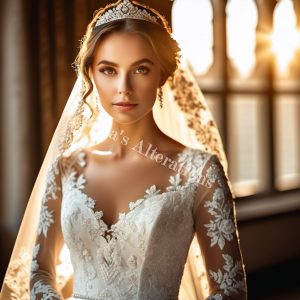
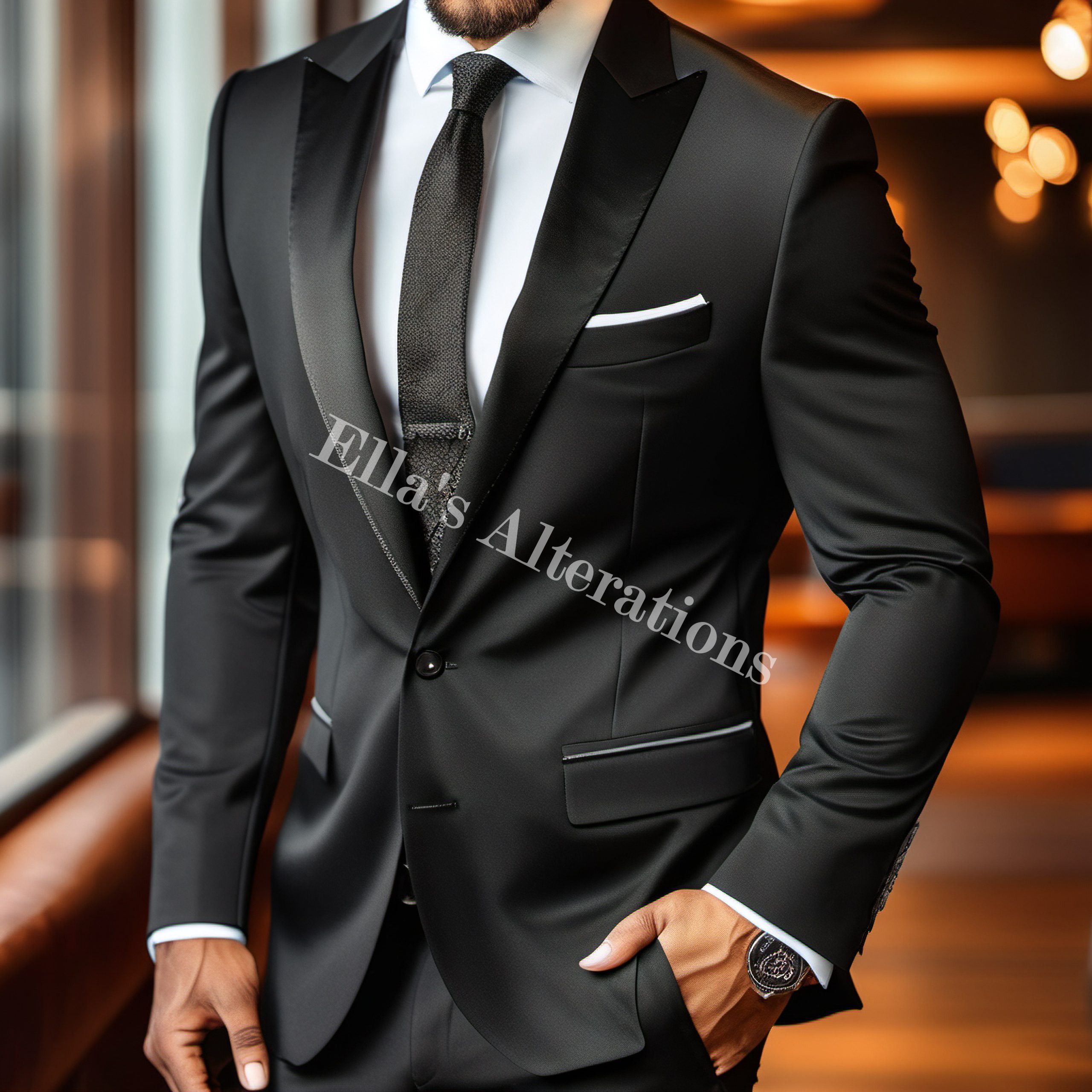
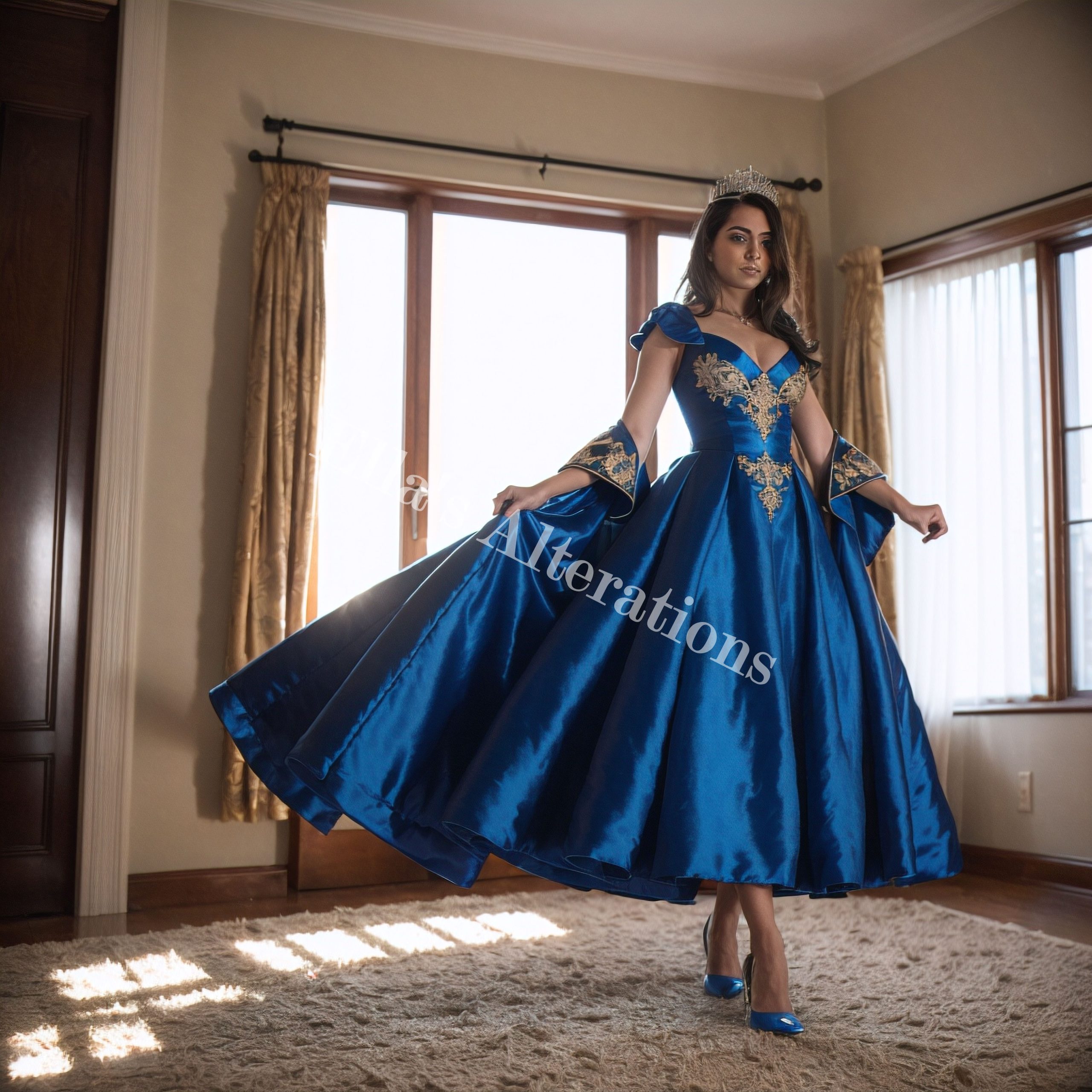
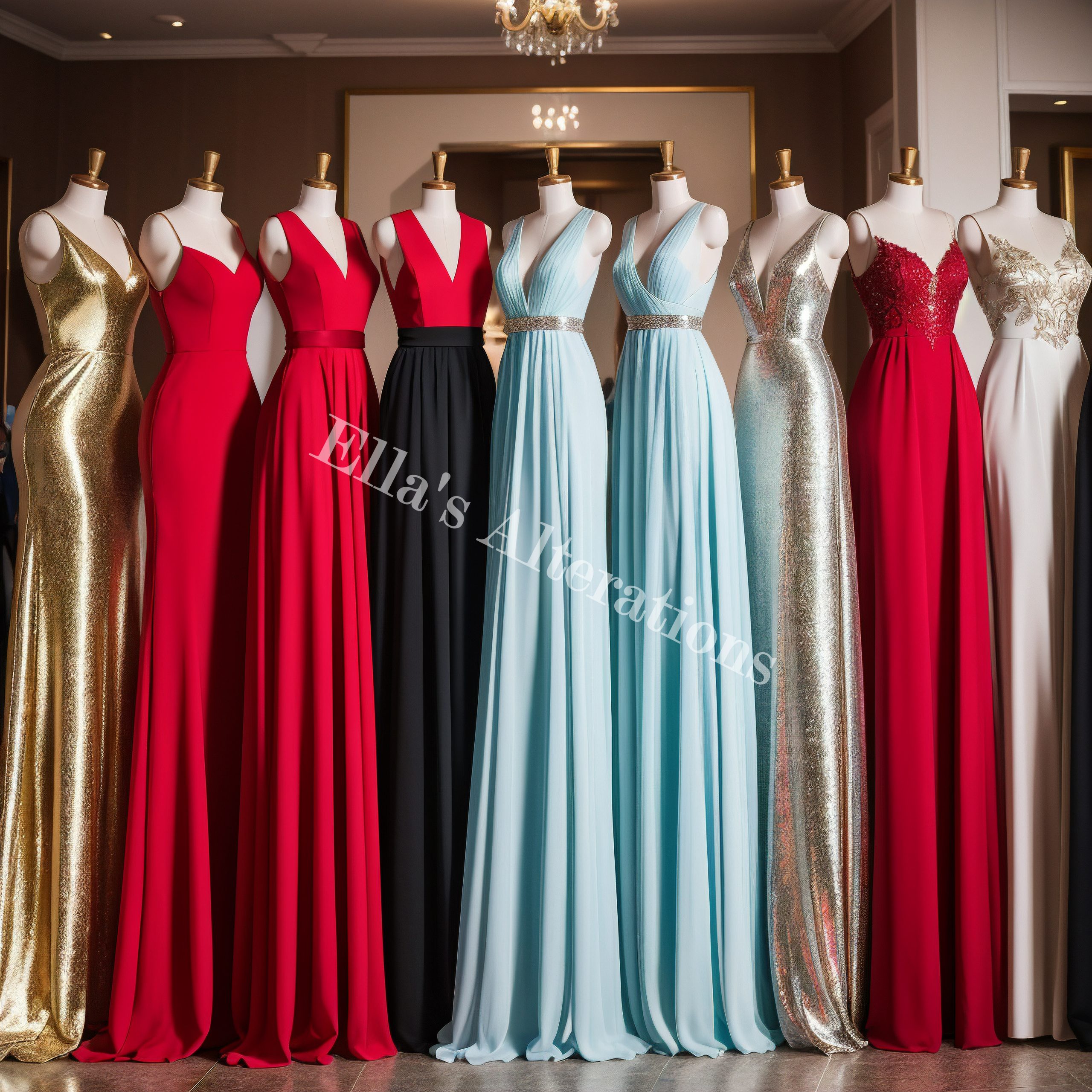
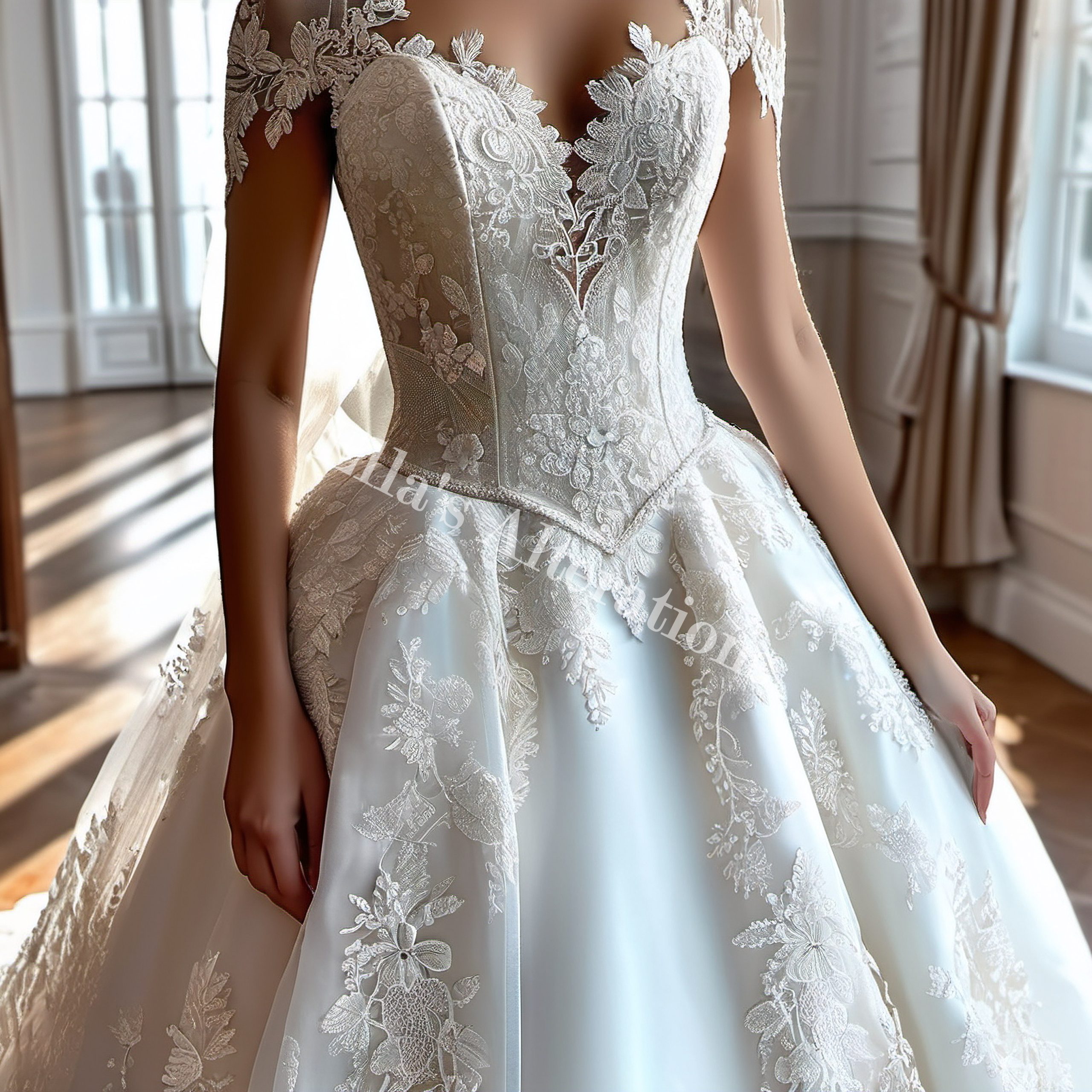
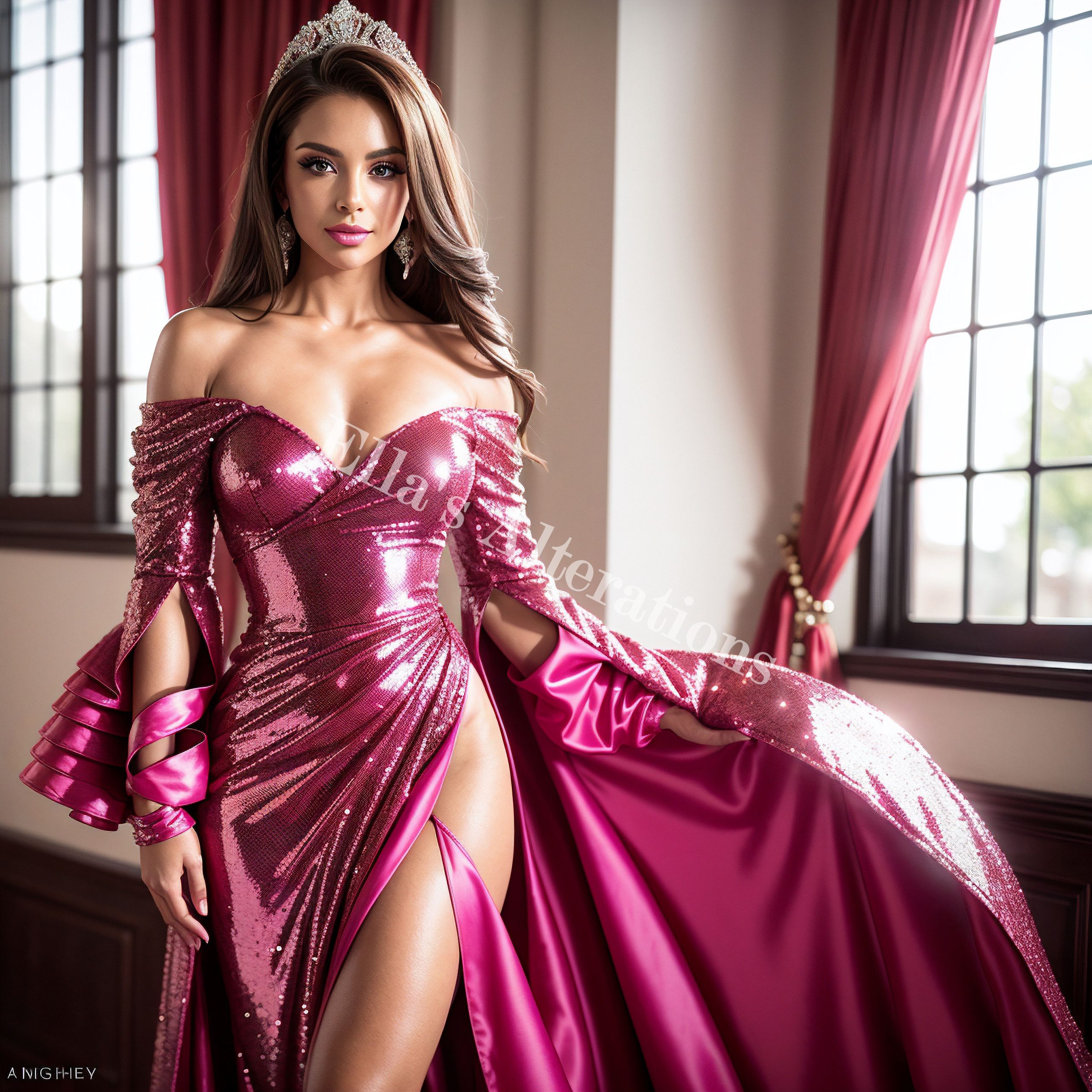
That dreamy tulle wedding gown didn’t just happen. Behind every swoosh and sparkle is a network of hidden details working overtime. In Wedding Dress Decoded: What’s REALLY Underneath All That Tulle?, we’re pulling back the fabric to reveal the real MVPs — boning, bustles, linings, crinolines, and closures that make the dress not just beautiful, but wearable. You’ll finally understand the difference between a hoop skirt and a petticoat, and why a strapless gown stays up all night without a single slip. From illusion necklines to detachable trains, we’re breaking down the unsung heroes of bridal fashion. This is for the bride who wants to feel confident in every layer and understand how her dress works with her body — not against it. Consider this your crash course in wedding gown construction, served with a little style, a lot of insight, and just the right amount of sparkle.
Ella’s Style Confidence
Brought to you by Ella’s Alterations
-
Your body is not the problem. The fit is.
If something feels off when you put it on, that does not mean it is wrong for you. It means it has not been tailored for you yet. Clothes are made for averages. You are not average. -
Confidence starts at the seams.
The smallest adjustments change everything. A lifted waist, a shaped bust, a clean hem. These details quietly do the heavy lifting so you can walk in like you own the room. -
Comfort is not optional.
If you are pulling, tugging, or holding your breath, the garment is failing you. Real tailoring lets you move, sit, dance, and live without thinking about your clothes. -
Trends fade. Fit lasts.
Styles come and go fast. A perfect fit never goes out of style. When something fits you correctly, it always looks intentional and expensive. -
Support should be built in, not added later.
Hidden structure matters. Boning, cups, straps, and shaping should work with your body, not against it. When support is done right, no one sees it but everyone notices the result. -
You deserve clothes that work as hard as you do.
Whether it is a wedding dress, a suit, or everyday wear, your clothes should show up for you. Sharp, polished, and reliable. -
Confidence is quiet, not loud.
The best dressed people are not uncomfortable or flashy. They look effortless because their clothes fit correctly and feel natural. -
One great alteration beats five new outfits.
Fixing what you already own often gives you more confidence than buying something new. A tailored piece feels personal. Like it was made just for you. -
When it fits right, you stand differently.
Posture changes. Shoulders relax. You stop adjusting and start owning your space. That shift is what people actually notice. -
You are allowed to feel amazing in your clothes.
Not just okay. Not just good enough. Amazing. That is the standard.
Local Credibility
Ella’s Alterations is trusted by brides, professionals, and families across Central Florida for one reason. The work is done right.
Awards & Recognition
- Most Trusted Tailoring & Alterations Studio 2025 – USA
- Bridal & Formalwear Tailoring Excellence Award 2025
- Recognized nationally by LUXlife Magazine for craftsmanship and client trust
- Chosen year after year for precision bridal and formal tailoring
- Best Wedding Dress & Formalwear Tailoring Zephyrhills 2026
- NextDoor Neighborhood Favorite 2023 2024 2025
Service Area
Proudly serving Zephyrhills, Pasco County, Tampa, Wesley Chapel, Lakeland, and surrounding Central Florida communities. Clients travel from across the region for expert alterations that local shops simply cannot match.
Depth of Craft
With over 30 years of hands on tailoring experience, Ella works at a master level. This is not basic hemming or quick fixes. This is true garment engineering. Wedding gowns with structure, suits that need balance, formalwear that must move and photograph perfectly. Every adjustment is intentional and precise.
Proof of Trust & Fitting Care
Every fitting is handled with respect, privacy, and patience. Measurements are double checked. Details are explained. Nothing is rushed. Nothing is guessed.
Clients return because they feel heard, supported, and confident. Dresses are protected. Fabrics are handled correctly. Fit decisions are made with experience, not shortcuts.
This is why generations of clients trust Ella with their most important garments. When it has to fit perfectly, they choose experience.

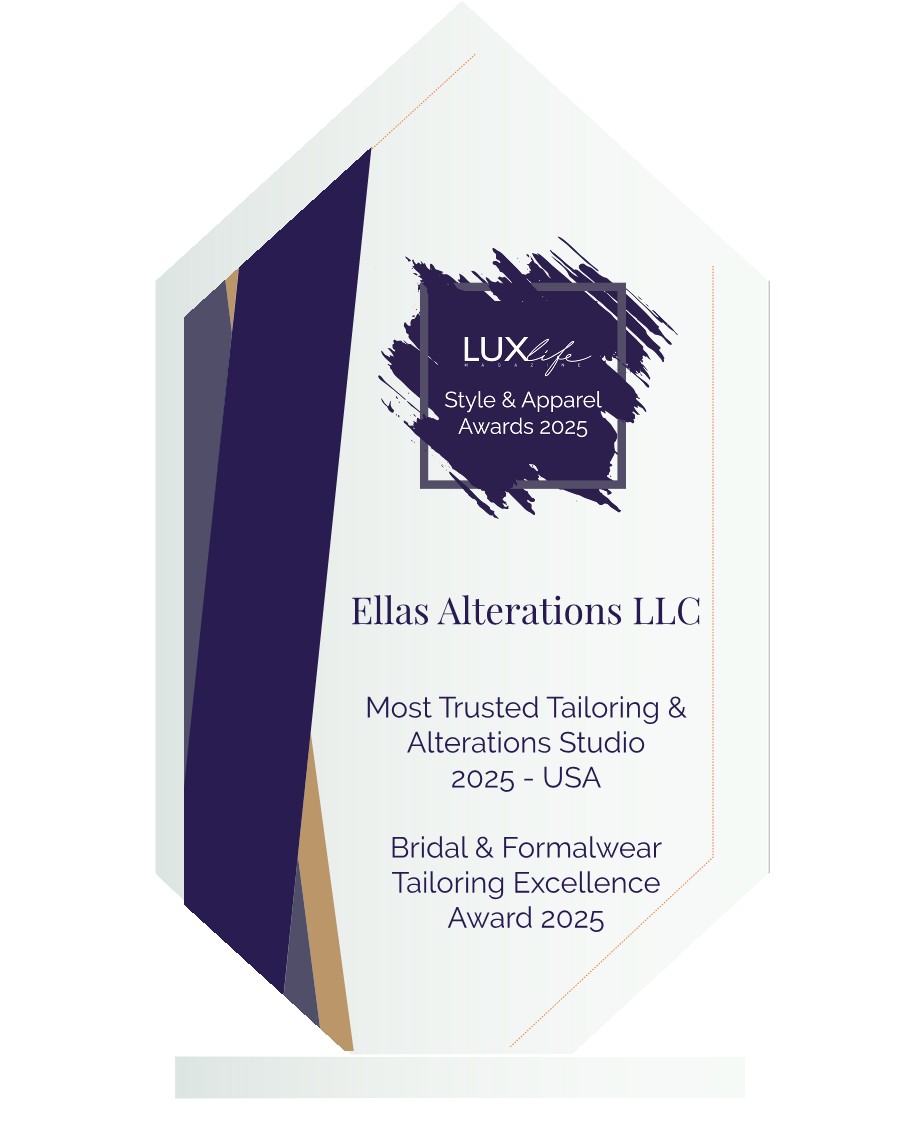
Bridal & Formalwear Tailoring Excellence Award 2025 – USA
Award Winning Bridal & Formalwear Tailoring
Ella’s Alterations is proudly recognized as one of Zephyrhills’ most trusted tailoring studios, specializing in wedding dress and formalwear alterations.

NextDoor Neighborhood Favorite 2023, 2024, 2025

Best Wedding Dress & Formalwear Tailoring Zephyrhills 2026

Proud winner: Best Bridal & Formalwear Alterations Studio 2026 - USA

Proud winner: Best Wedding Dress and Formalwear Tailoring, Zephyrhills 2026
Why Clients Trust Ella’s Alterations
- 30 plus Years of Expertise: Master tailoring and formal wear alterations trusted across Florida.
- Award Winning Service: Best of Florida Tailor and Best of Zephyrhills.
- Private Bridal Fittings: Discreet, elegant, and tailored to you.
- Proven Local Reputation: Five star customer reviews and repeat clients from Tampa to Orlando.
- Transparent and Personal: Clear pricing, expert guidance, and no rushed fittings.
- Recognized nationally by LUXlife Magazine for craftsmanship and client trust
- Chosen year after year for precision bridal and formal tailoring
- Best Wedding Dress & Formalwear Tailoring Zephyrhills 2026
- NextDoor Neighborhood Favorite 2023 2024 2025
Address: 6986 Fort King Road, Zephyrhills FL 33541
Phone: +1 813-445-8894
Email: admin@ellasalterations.com
Hours:
Get Directions | Book Your Fitting