A Tailors Guide: How a Bodice Transforms Your Wedding Gown.
Introduction: The Power of the Bodice:
When it comes to wedding gowns, the bodice is often the unsung hero that quietly defines the entire look, feel, and fit of the dress.
It is the structural core that shapes your silhouette, supports your posture, and brings your chosen style to life.
Without a well-designed and perfectly tailored bodice, even the most exquisite fabrics and elaborate skirts can lose their intended elegance.
The bodice is not just a decorative upper section of a gown, it is a technical masterpiece that blends design, function, and comfort in one seamless creation.
The bodice holds a unique responsibility because it sits closest to the natural shape of the bride’s torso.
It must flatter without restricting, support without feeling rigid, and reflect personal style while working harmoniously with the skirt and other gown elements.
This delicate balance is why professional tailoring is so essential.
A skilled bridal tailor understands that every adjustment, from the curve of a neckline to the placement of a dart, can dramatically influence the overall effect of the gown.
They consider the bride’s body shape, desired silhouette, and even the movement required on the wedding day, ensuring that the bodice is as practical as it is beautiful.
Design plays a huge role in how the bodice transforms a gown.
A strapless sweetheart bodice offers a romantic and feminine feel, while a high-neck lace bodice exudes vintage sophistication.
Structured corset bodices provide a defined waist and lift, creating a classic hourglass figure, whereas softly draped bodices give a more relaxed and ethereal appearance.
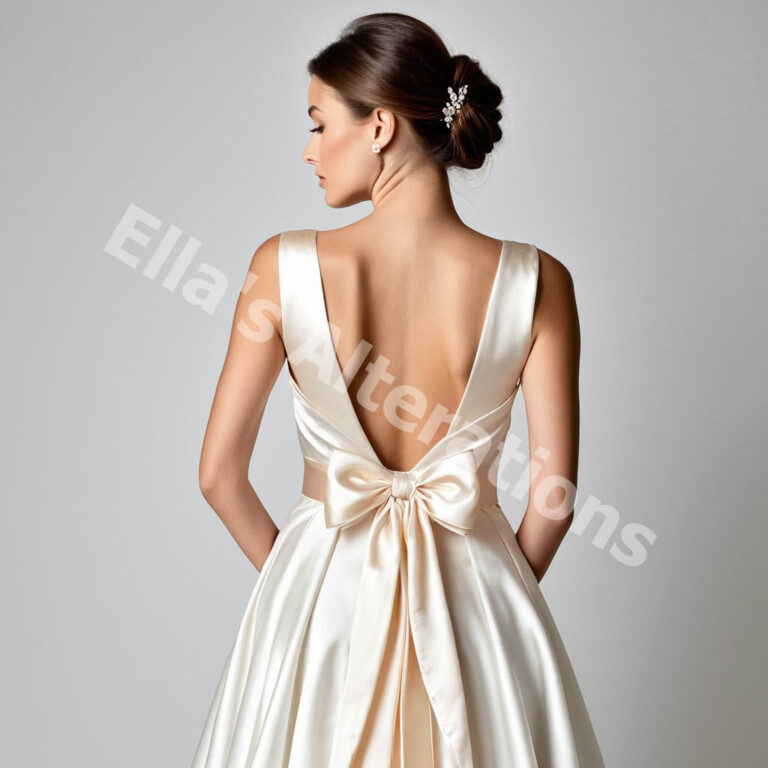
The neckline, sleeve design, and even the depth of the back opening all contribute to the character of the dress.
By understanding these style nuances, brides can choose a bodice that not only complements their features but also aligns with the mood they want to express.
Fabric selection is another crucial aspect of bodice design.
Satin creates a sleek and luxurious finish, lace brings delicate texture and intricate detail, and tulle or chiffon can soften the look with gentle movement.
The fabric must be chosen not only for its visual appeal but also for how it behaves when shaped, sewn, and worn.
Heavier fabrics can provide more structure, while lighter fabrics may require additional inner support to maintain their form throughout the day.
A tailor will often layer fabrics, add linings, or incorporate boning to achieve the ideal balance between beauty and durability.
The structural integrity of the bodice relies heavily on precise construction techniques.
Elements such as princess seams, darts, tucks, and carefully positioned panels work together to mold the bodice to the body.
Boning and built-in corsetry can provide additional shaping and prevent the fabric from wrinkling or shifting.
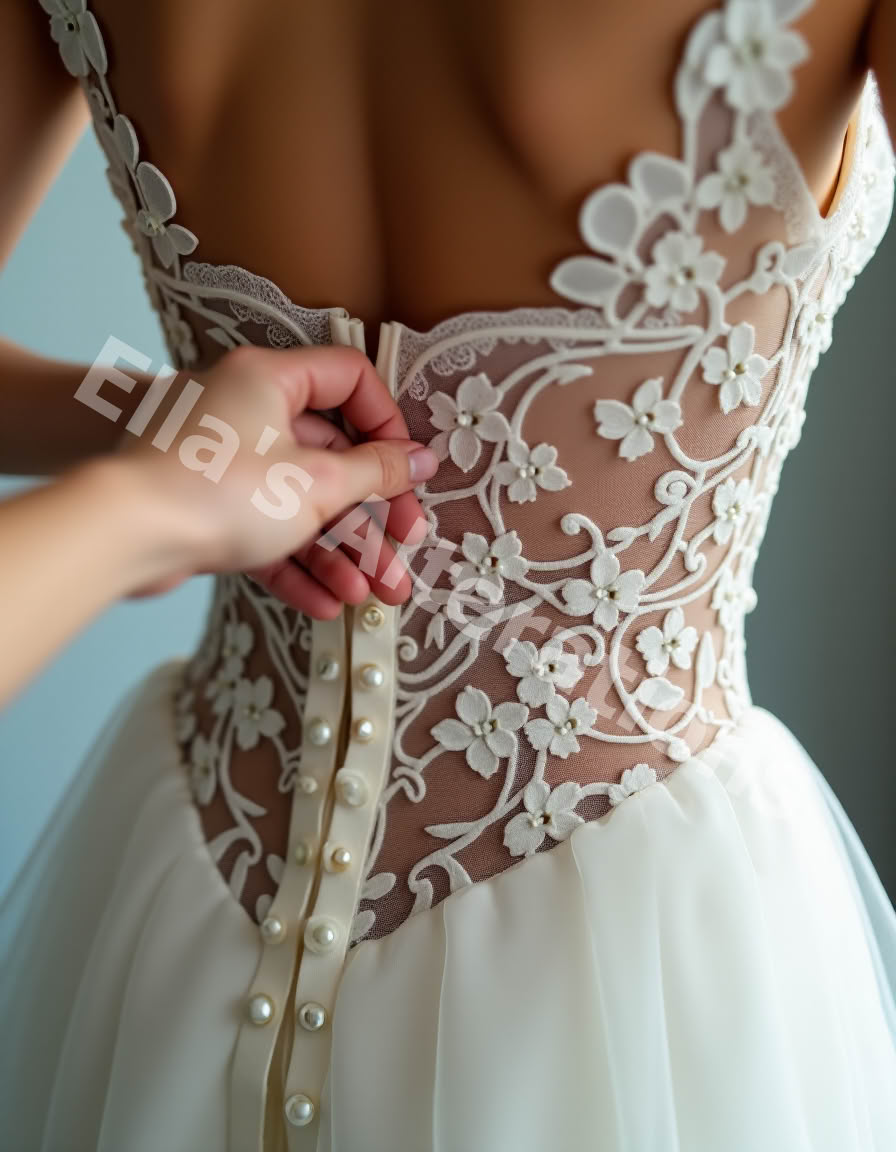
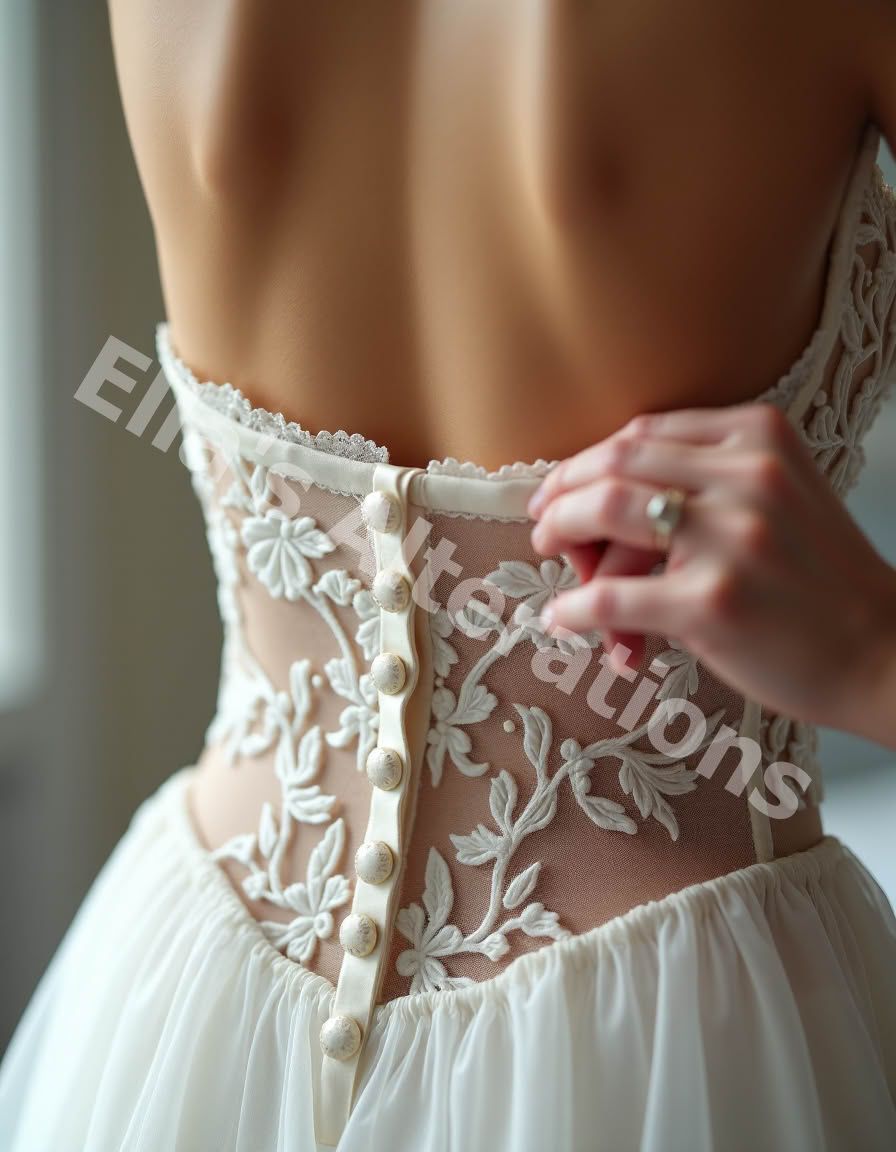
Even the smallest detail, like the spacing of buttons or the alignment of lace motifs, can make a visible difference in the final presentation.
Beyond aesthetics and structure, comfort is a vital consideration.
A perfectly fitted bodice should allow the bride to move, breathe, and dance without constant adjustments.
Achieving this comfort often involves subtle tailoring decisions, such as adjusting strap placement, lowering or raising the neckline for ease, or adding hidden support that distributes pressure evenly.
Brides should never have to choose between feeling comfortable and looking stunning.
Perhaps the most magical quality of a well-crafted bodice is its ability to transform.
Through alterations and customization, a tailor can completely change the mood of a gown.
They can convert a strapless design into one with delicate cap sleeves, reshape a modest neckline into a daring plunge, or enhance a plain satin bodice with intricate beading or lace appliqué.
These transformations are not just cosmetic, they breathe new life into a gown and make it uniquely suited to the bride’s vision.
In essence, the bodice is more than just a section of a wedding gown.
It is the anchor, the framework, and the statement piece that brings the entire bridal look together.
With the right tailoring, it becomes a perfect harmony of style, support, and individuality, ensuring that when a bride walks down the aisle, she feels as breathtaking as she looks.
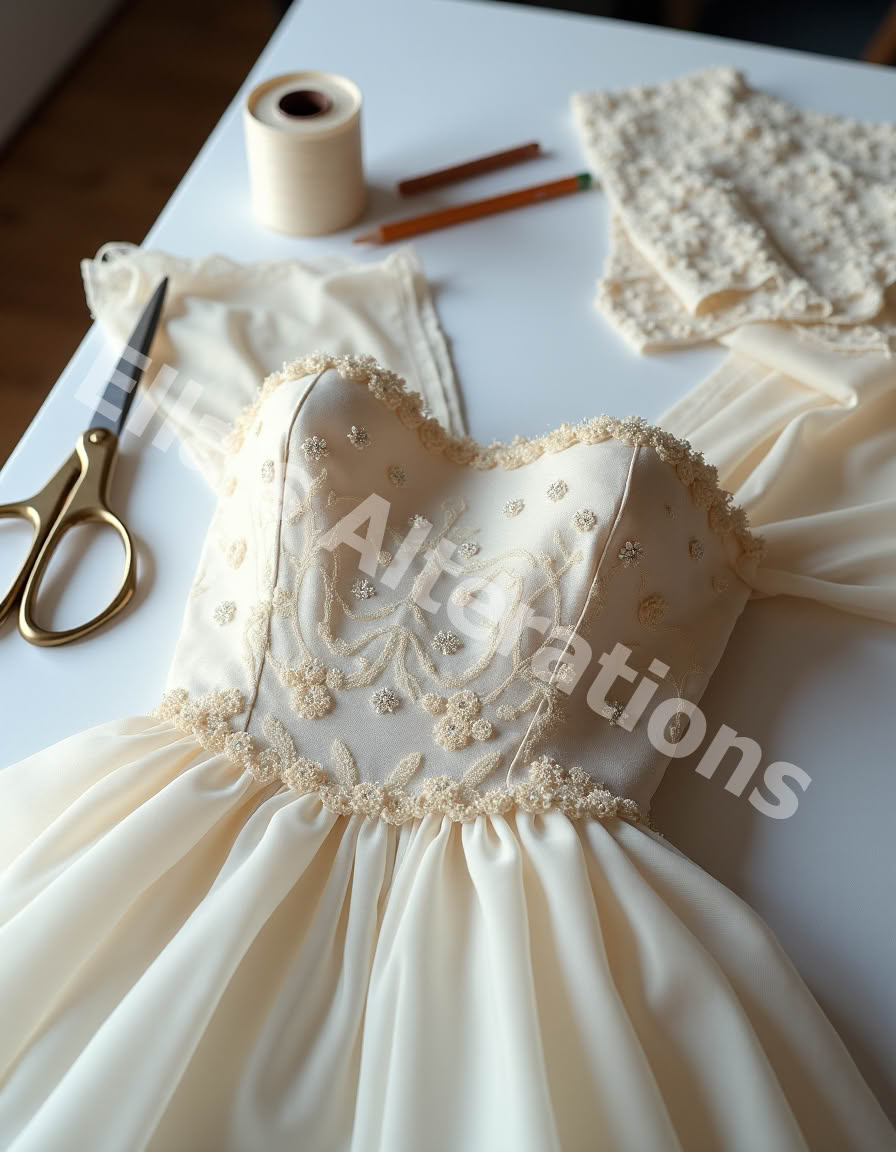
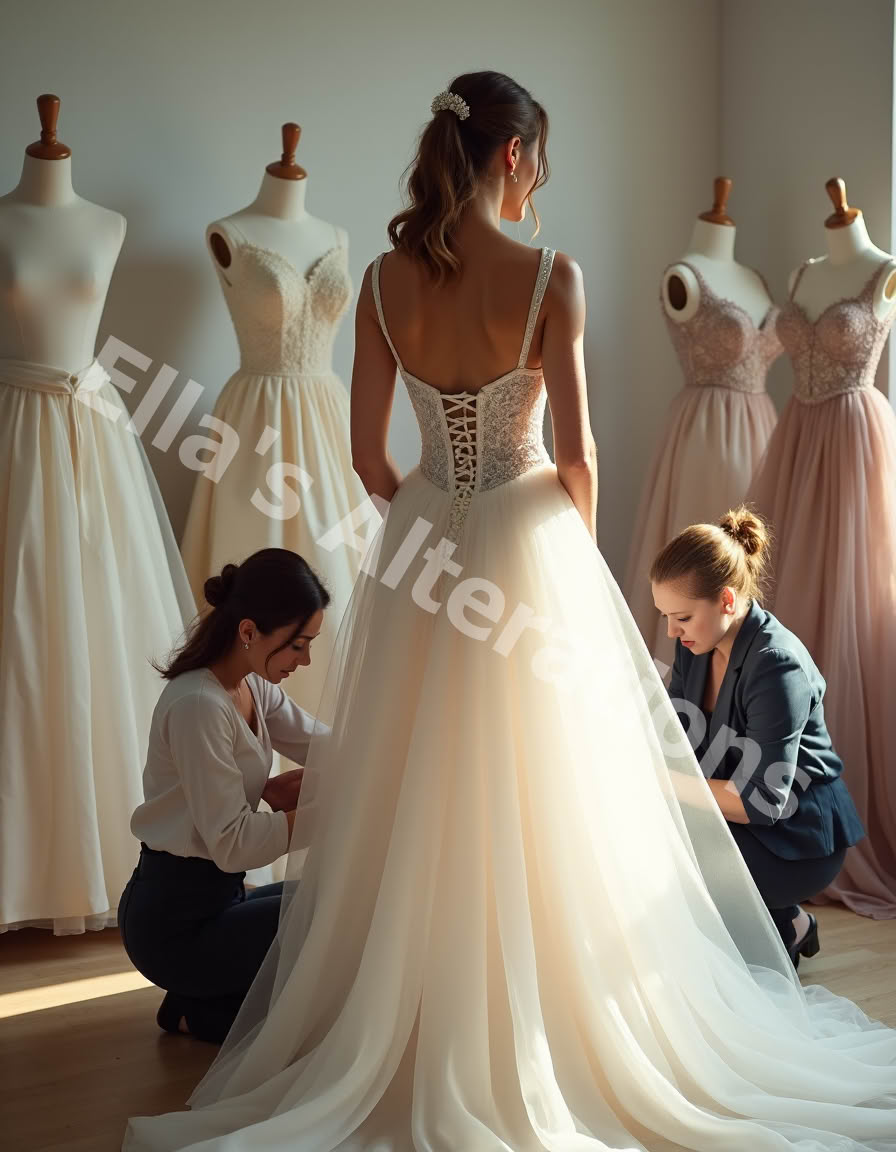
Understanding the Bodice and Its Role in a Wedding Gown:
Wedding gown bodices come in an incredible range of styles, each with its own personality, structure, and way of shaping the bride’s silhouette.
Choosing the right one is not just about what looks beautiful on a hanger, it is about finding the perfect balance between design, body shape, and overall bridal vision.
Each bodice style brings a signature look that can influence the gown’s entire mood, from romantic and soft to dramatic and regal.
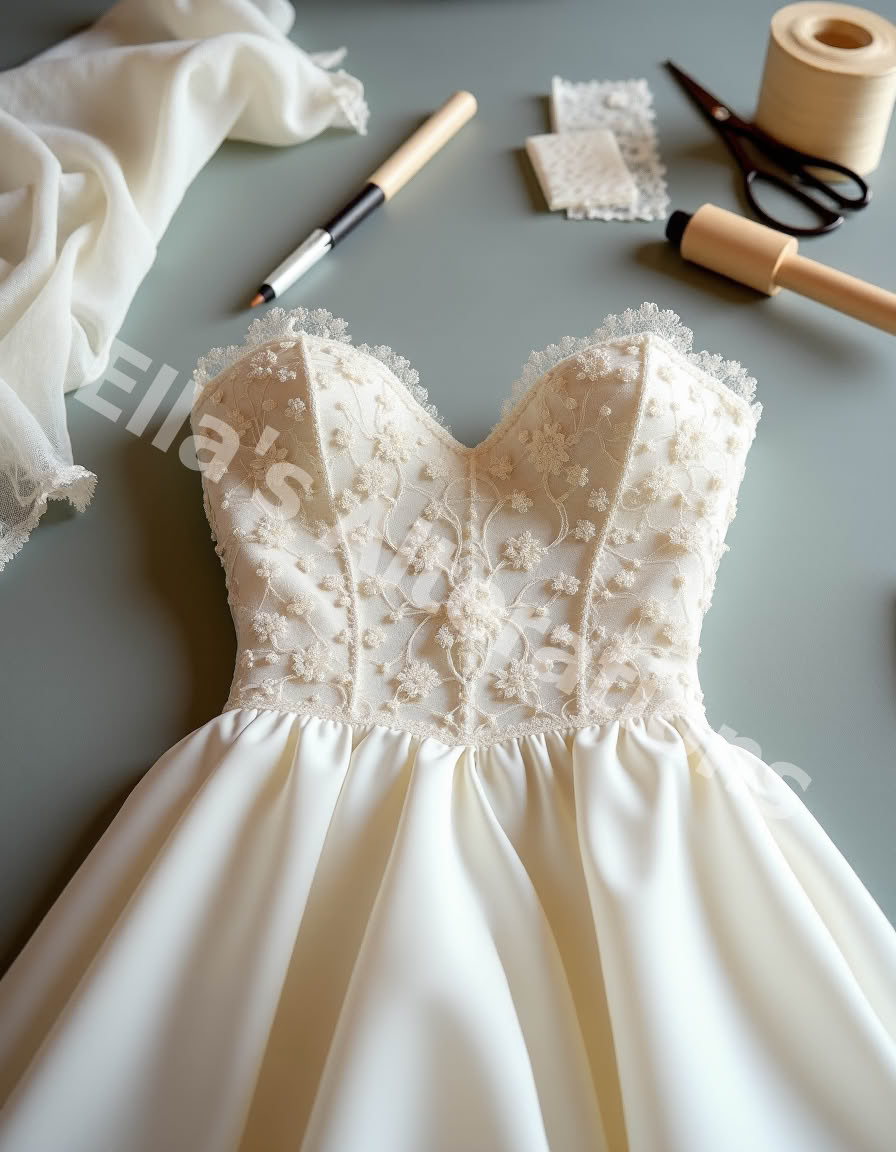
One of the most classic options is the strapless bodice, which remains a favorite for its timeless elegance.
A well-tailored strapless bodice emphasizes the neckline, shoulders, and collarbones while creating a clean, uninterrupted line.
Its success relies heavily on precise construction, often with built-in boning or corset support to keep it secure and smooth.
When paired with a sweetheart neckline, it adds softness and a hint of romance, making it a go-to for brides seeking a feminine yet structured look.
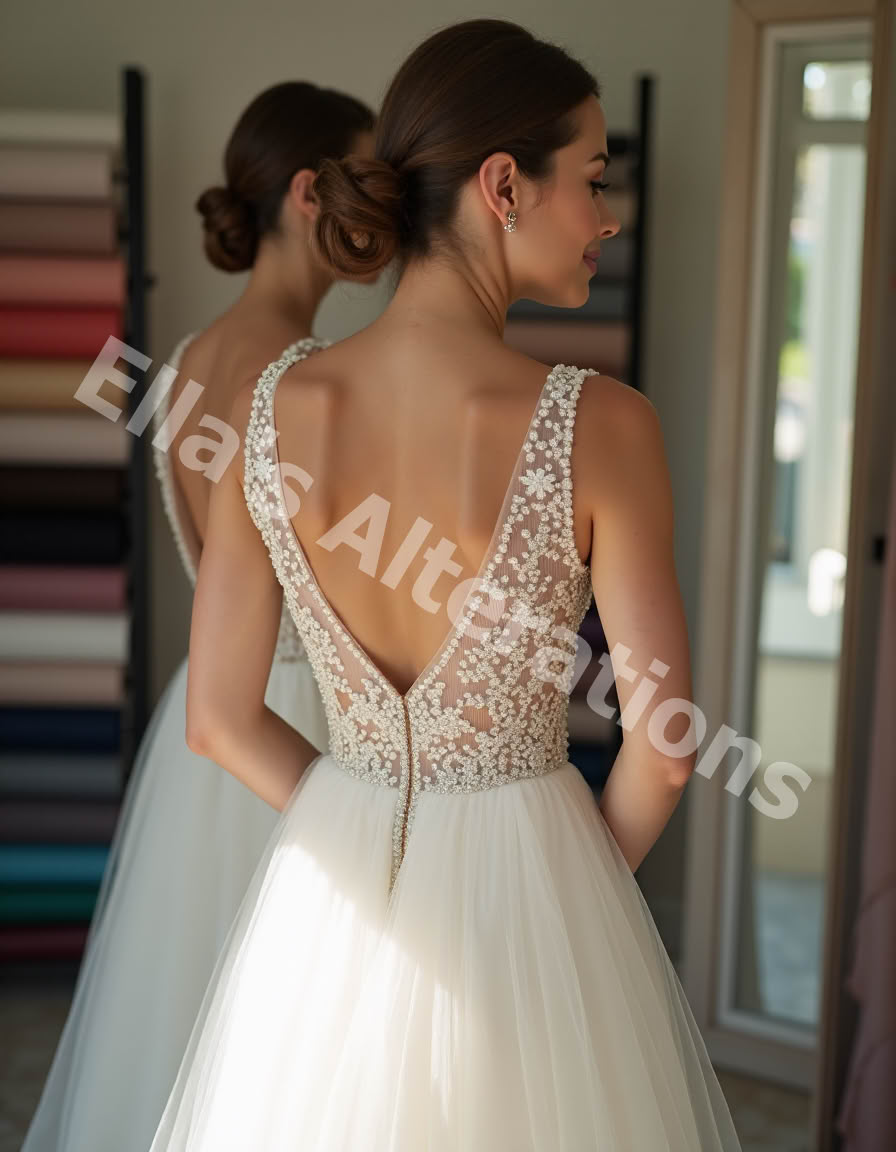
The V-neck bodice offers a flattering elongation of the torso and works beautifully for many body shapes.
Deep plunging V-necks can add a bold, modern edge, while shallower cuts maintain modesty without losing elegance.
Illusion panels are sometimes used to create a daring neckline without compromising comfort or stability.
The V-neck bodice pairs well with both fitted and flowing skirts, making it a versatile choice.
For brides who want a touch of vintage sophistication, the high-neck bodice delivers drama and grace.
Often crafted from lace or illusion tulle, this style covers the décolletage while still offering intricate design details.
It is especially striking in winter weddings or formal ceremonies, where the gown’s elegance is matched by its coverage.
The high-neck bodice can also incorporate keyhole back designs, balancing modesty with visual intrigue.
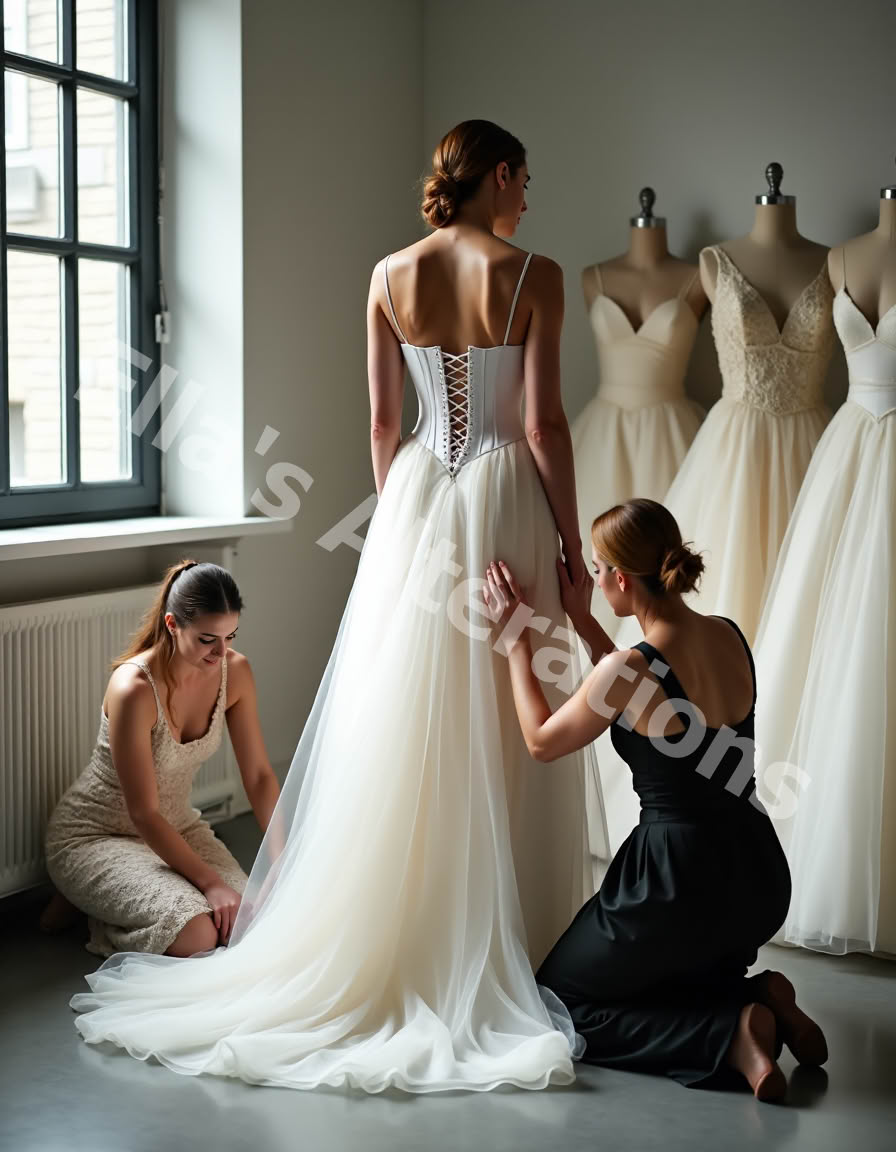
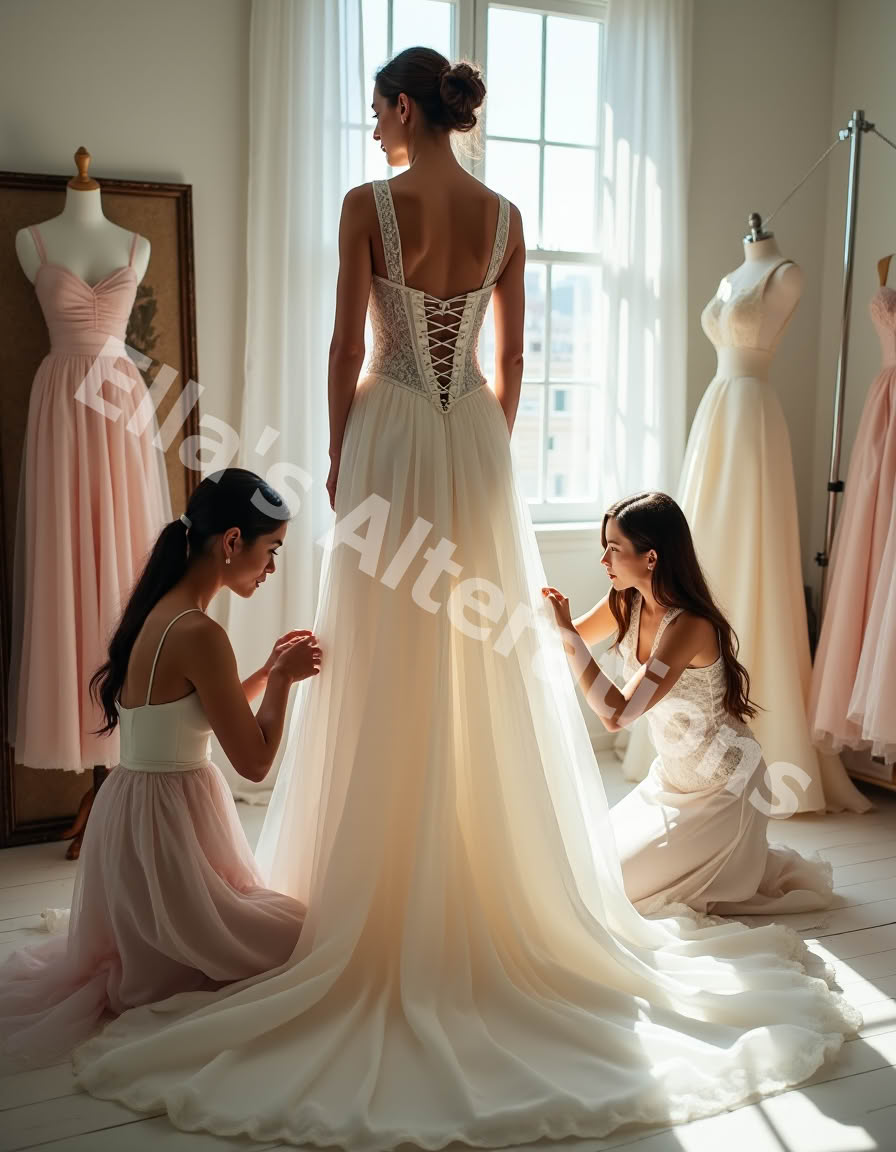
The corset bodice is as much about function as it is about fashion.
It shapes the waist, lifts the bust, and creates a defined hourglass silhouette.
Lace-up backs allow for an adjustable fit, which is particularly helpful for comfort during a long wedding day.
While some corset bodices are heavily structured for maximum shaping, others incorporate softer boning for a gentler, more flexible hold.
Brides who want drama, support, and timeless glamour often gravitate toward this style.
On the opposite end of the spectrum is the draped bodice, known for its soft folds and relaxed elegance.
This style often uses chiffon or lightweight silk to create a romantic, Grecian-inspired effect.
While it may lack the rigid structure of a corset, the draped bodice offers comfort and fluidity, ideal for outdoor weddings or brides who prefer an effortless, ethereal aesthetic.
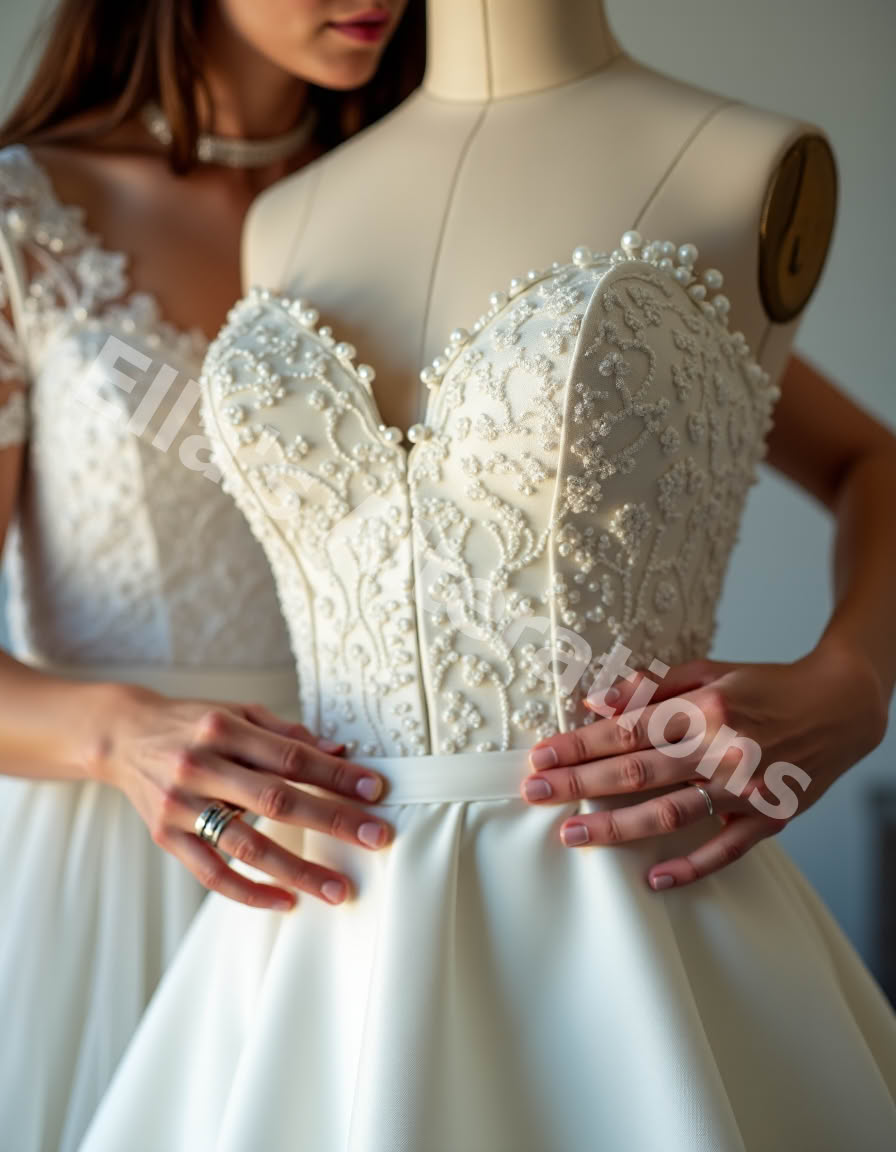
Illusion bodices have surged in popularity for their delicate, barely-there appeal.
These designs often feature sheer tulle or lace overlays embellished with embroidery, beading, or appliqué, creating the appearance of details floating against the skin.
Illusion bodices work well for both daring and demure brides, depending on the level of transparency and embellishment.
For a regal statement, the off-the-shoulder bodice frames the face and shoulders with elegance.
This style blends romance with sophistication and works beautifully for ball gowns or A-line skirts.
It can be paired with lace, satin, or even beaded fabric, and may incorporate detachable straps or sleeves for versatility.
Sleeved bodices, whether with long lace sleeves, cap sleeves, or puffed designs, add personality and coverage.
The sleeve length and fabric choice can completely change the feel of the gown, from vintage-inspired to modern minimalist.
Finally, there are hybrid bodices that combine elements of multiple styles, such as a corset base with illusion panels, or a sweetheart neckline with off-the-shoulder draping.
These blended designs allow brides to customize their gown’s upper half for maximum impact.
Each bodice style has its own signature look, but the magic truly happens when a tailor adjusts it to match the bride’s shape, proportions, and personality.
The right bodice does more than fit, it frames the bride exactly as she wants to be seen on her wedding day.
A Touch of Romance: Adding a Corset Back to Your Wedding Gown.
Types of Wedding Gown Bodices and Their Signature Looks:
From the moment a bride begins envisioning her gown, the bodice often becomes the central focus that shapes the entire design.
Each bodice type carries its own visual language, structural approach, and ability to transform the way a dress looks and feels.
A well-chosen style can highlight a bride’s best features, harmonize with the skirt, and convey the exact mood she wants for her wedding day.
Understanding the different types of bodices and their signature looks is the first step to finding the one that feels made for you.
One of the most universally recognized designs is the sweetheart bodice.
Named for its heart-shaped neckline, this style softens the décolletage and creates a romantic, feminine frame.
It works beautifully with strapless gowns or combined with sheer overlays for added support and detail.
The sweetheart bodice flatters both fuller and smaller busts when tailored properly, making it a versatile choice across many gown silhouettes.
The strapless bodice remains a bridal classic.
Clean, modern, and timeless, it draws attention to the shoulders and collarbones while providing an elegant, uninterrupted line.
Its success depends entirely on impeccable fit and construction.
Structured boning, inner corsetry, and careful seam placement keep it secure, ensuring the bride can move and dance without constant adjustments.
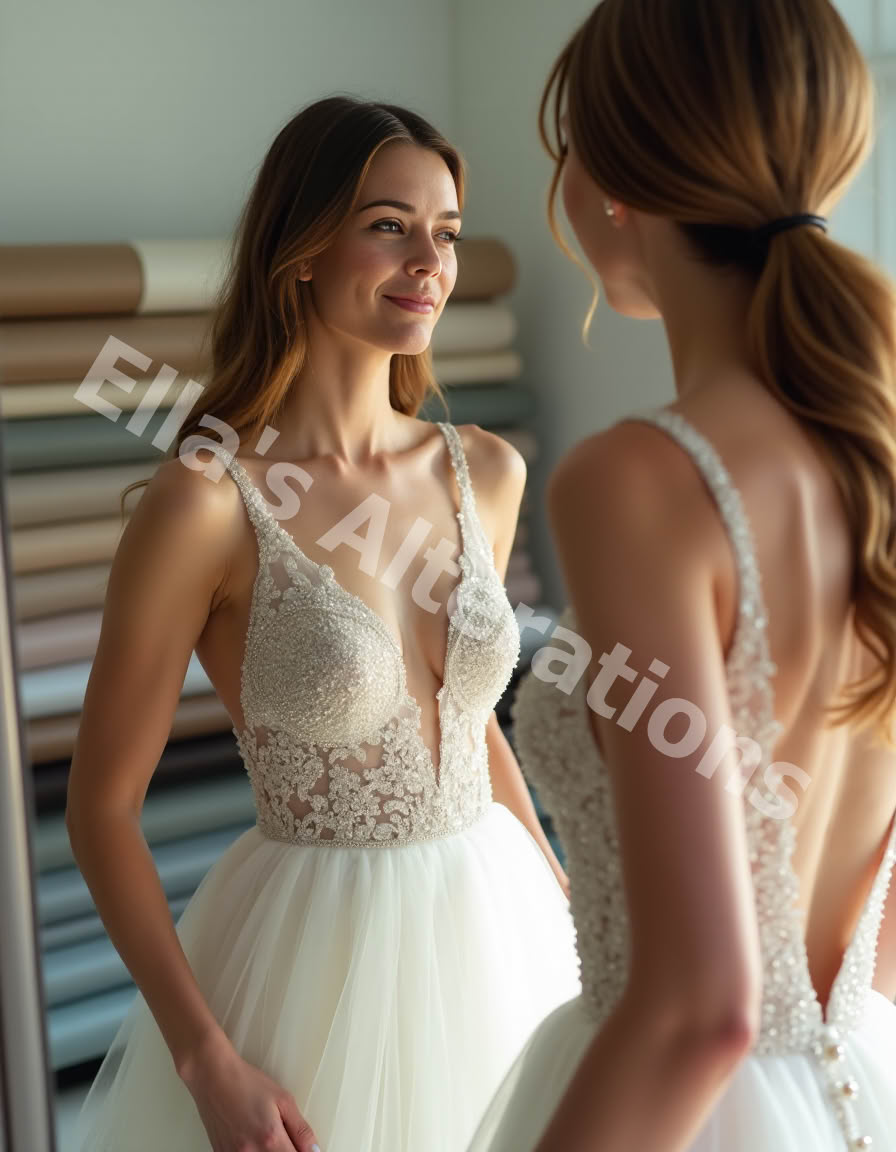
For a sleek and elongating effect, the V-neck bodice is a favorite.
This design adds vertical lines that lengthen the torso and flatter the neckline.
Shallow V-necks exude elegance and restraint, while plunging variations make a bold, fashion-forward statement.
Sheer illusion panels often appear in deeper designs to preserve comfort while maintaining drama.
If timeless sophistication is the goal, the high-neck bodice is an excellent choice.
Frequently crafted from lace or illusion fabrics, this style offers coverage without sacrificing detail.
Brides often choose it for winter weddings or grand, formal ceremonies where a regal presence is desired.
High-neck bodices can also feature open or keyhole backs, balancing modesty with allure.
The corset bodice blends structure and style.
Its lace-up back allows for adjustable shaping, cinching the waist and enhancing curves.
Depending on the desired effect, a corset bodice can be heavily boned for dramatic definition or lightly structured for subtle contouring.
This style works equally well for vintage-inspired gowns or glamorous modern designs.
On the softer side, the draped bodice creates movement and romance.
Often made with chiffon, charmeuse, or silk, the fabric is artfully gathered and layered to produce a fluid, graceful effect.
Draped bodices are perfect for outdoor or destination weddings where a relaxed yet elegant aesthetic suits the setting.
The illusion bodice is a modern favorite for its delicate artistry.
Using sheer fabrics embellished with embroidery, beadwork, or lace, it creates the effect of floating details on the skin.
Illusion bodices range from subtly modest to daringly transparent, offering countless design possibilities.
An off-the-shoulder bodice brings a blend of drama and softness, framing the face while adding a touch of romance.
It is particularly striking on ball gowns and A-line skirts and can be paired with fitted sleeves, detachable draping, or delicate lace trims.
For brides who want added coverage or style detail, sleeved bodices provide endless variety.
Long lace sleeves, structured satin sleeves, or whimsical puffed styles can each change the tone of a gown entirely, from vintage to bohemian to regal.
Finally, hybrid bodices combine elements from multiple designs, allowing complete customization.
A sweetheart neckline might merge with illusion lace sleeves, or a corset base could be topped with draped chiffon.
This flexibility allows the gown to be tailored not just to the bride’s measurements, but to her unique personality and style.
In every case, the bodice is more than a decorative upper half.
It is the architectural foundation that defines the gown’s silhouette, comfort, and style.
With the right design and expert tailoring, it becomes the feature that truly transforms a wedding dress into a once-in-a-lifetime masterpiece.
How a Tailor Customizes a Bodice for the Perfect Fit:
Achieving the perfect fit in a wedding gown bodice is a meticulous process that blends technical precision with artistic intuition.
A skilled tailor or a bridal seamstress understands that every bride’s body is unique, and that no two gowns will require exactly the same adjustments.
The goal is to create a bodice that not only looks flawless but also feels comfortable and supportive throughout the day.
This means considering every curve, angle, and movement the bride will make from the walk down the aisle to the last dance.
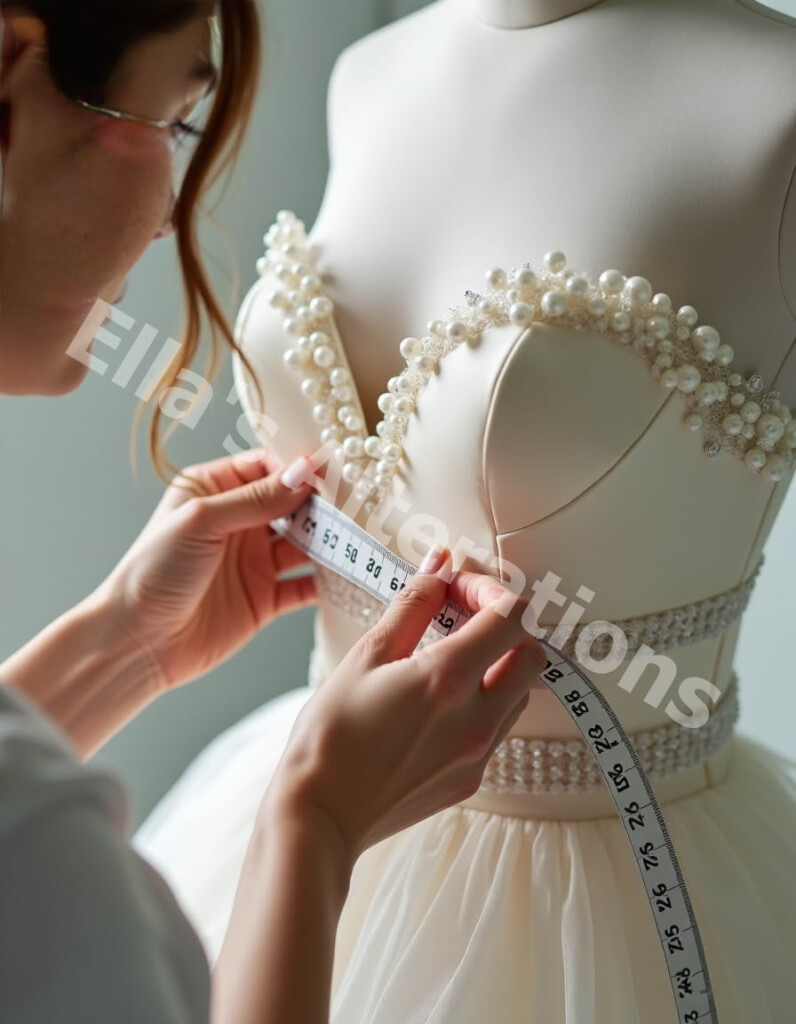
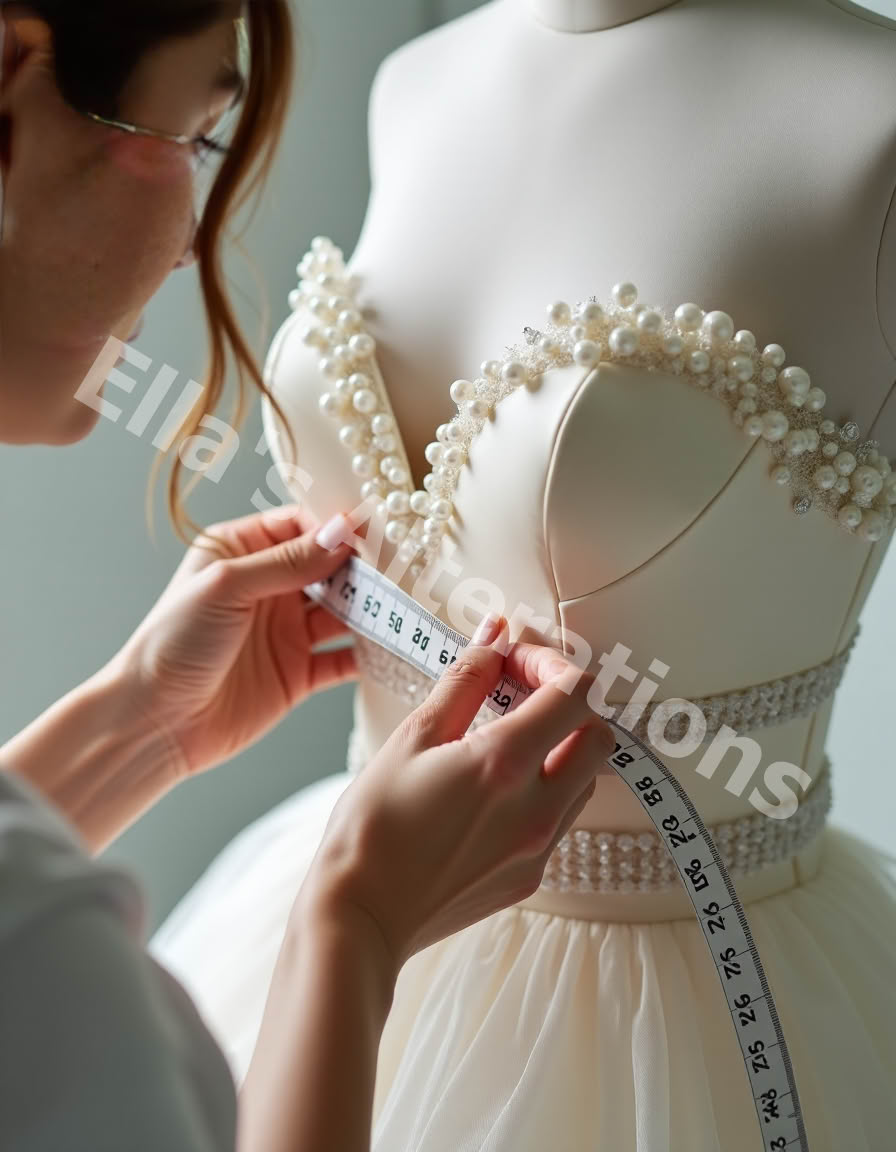
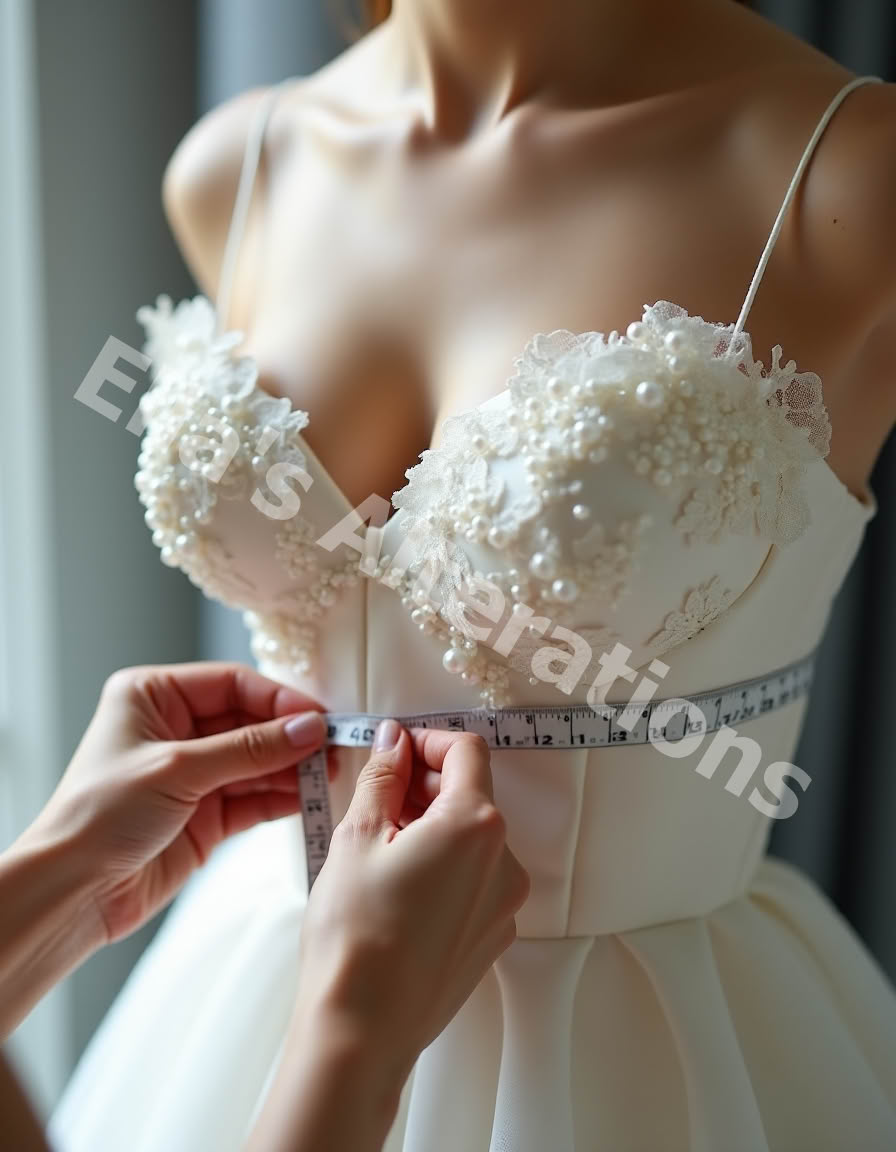
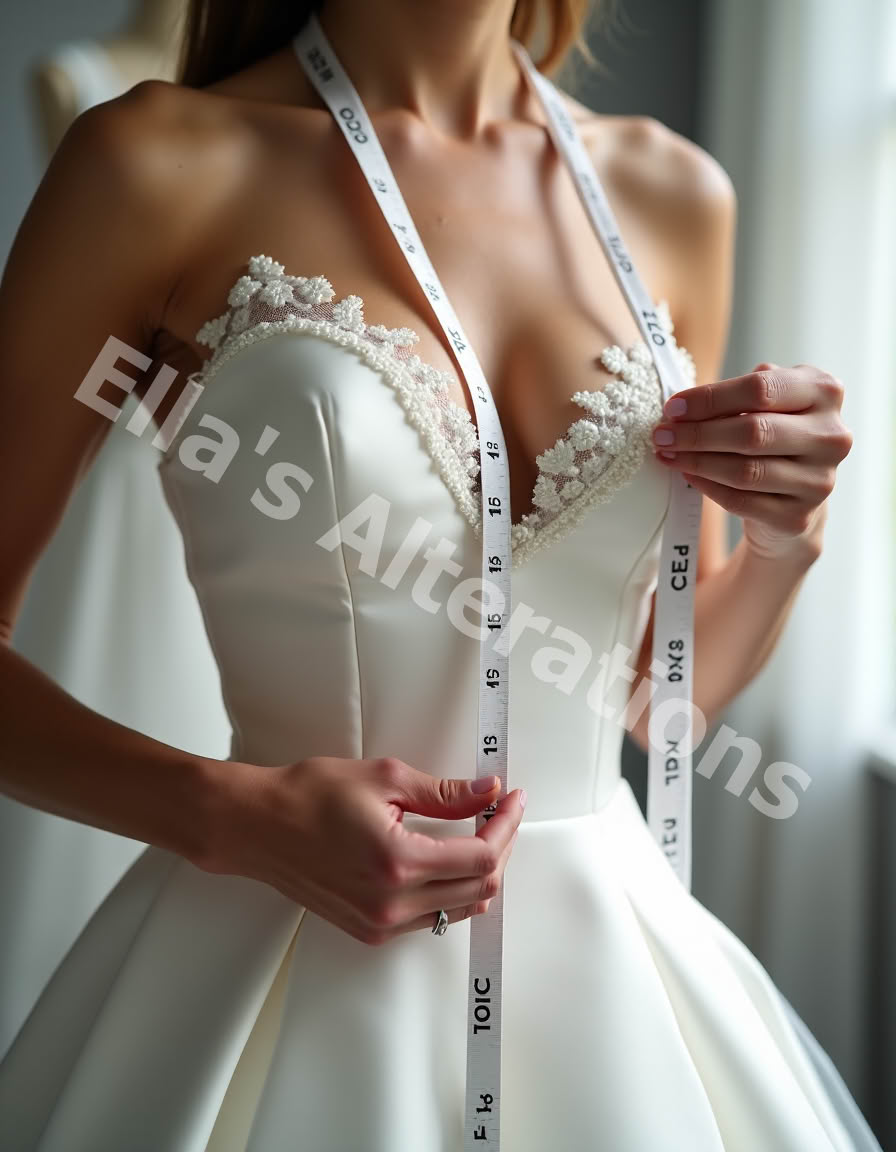
The process begins with precise measurements.
A tailor will measure more than just bust, waist, and hips they will assess shoulder slope, back width, torso length, and even posture.
These subtle details influence how the bodice sits and where the seams, darts, and shaping elements should be placed.
A measurement that is even slightly off can result in gaping, pulling, or discomfort, so accuracy is paramount.
Next comes pattern adjustment or garment reshaping.
For custom gowns, the bodice pattern is drafted to the bride’s measurements, ensuring proportional balance.
For store-bought gowns, the tailor will work with the existing structure, making adjustments to accommodate size changes or body shape differences.
This often involves modifying seam placement, reshaping darts, or reworking princess seams to create a sculpted fit that contours the body.
Seam refinements are where the transformation truly begins.
The tailor uses techniques like taking in at the side seams, adjusting the bust seams for fullness, or tapering the waist for definition.
For brides with smaller busts, light padding or bust cups may be added to enhance shape.
For fuller busts, supportive inner structures such as boning, reinforced seams, or even partial corsetry are incorporated to provide lift and prevent strain on the fabric.
Neckline and sleeve adjustments are another layer of customization.
A neckline might be lowered for a softer, more open frame, or raised for modesty and balance.
Sleeves may be reshaped to flatter the arm’s natural line or adjusted for ease of movement.
These changes not only affect the visual impact but also influence how the bride feels while wearing the gown.
One of the most important aspects is structural support.
Many wedding gowns rely on boning thin, flexible strips sewn into the bodice to maintain shape and prevent wrinkling.
In some cases, an inner corset is added for maximum stability, creating a secure yet comfortable foundation.
The positioning of these supports must be precise so they enhance the gown’s structure without creating stiffness or discomfort.
Fabric behavior plays a huge role in tailoring decisions.
Satin, for example, has minimal stretch and requires careful shaping to avoid puckering, while lace can be more forgiving but demands meticulous alignment of patterns.
Chiffon and tulle may require a sturdier lining to support the bodice without adding bulk.
The tailor’s expertise ensures that each fabric is handled according to its properties, preserving the gown’s beauty while enhancing its fit.
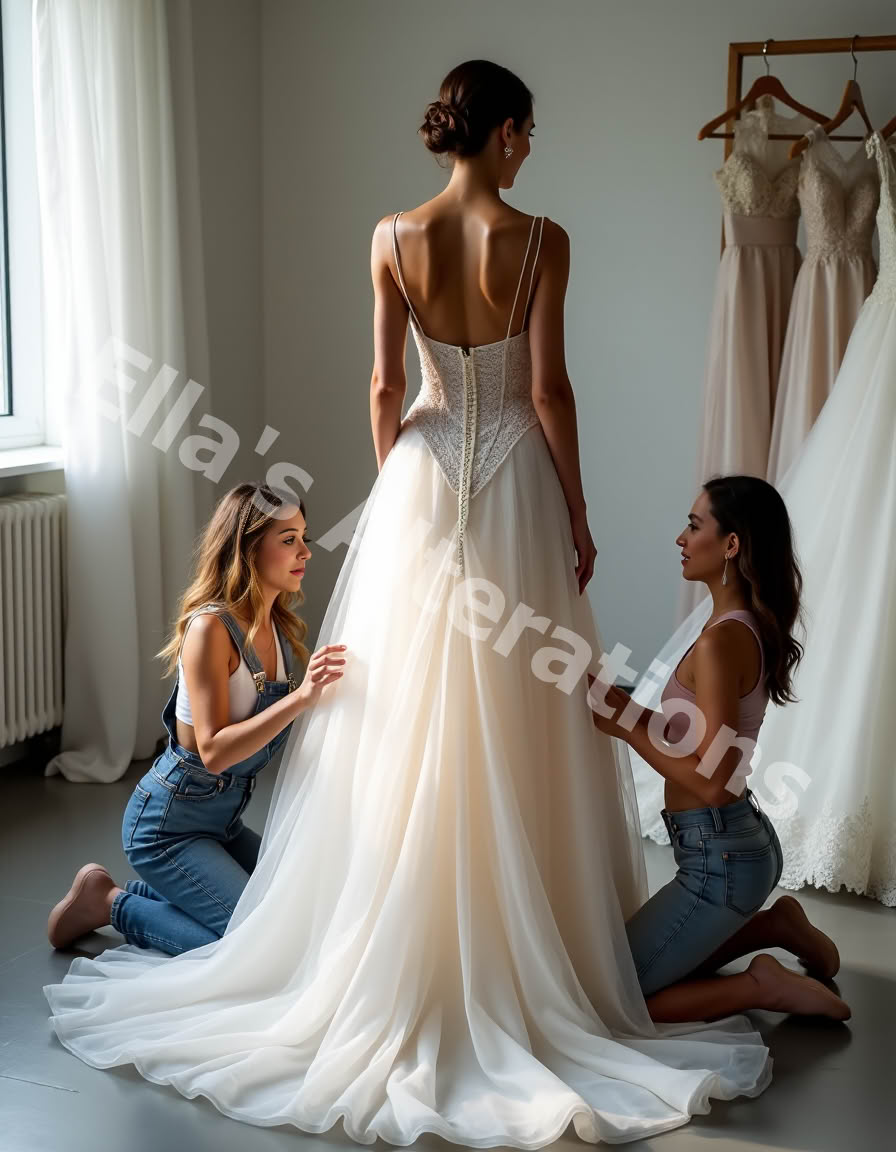
Final touches include closure adjustments such as moving zipper placements, tightening button loops, or refining lace-up backs for smoother lines.
Small, hidden modifications like shortening bodice length to match torso proportions can make an enormous difference in how the gown sits on the body.
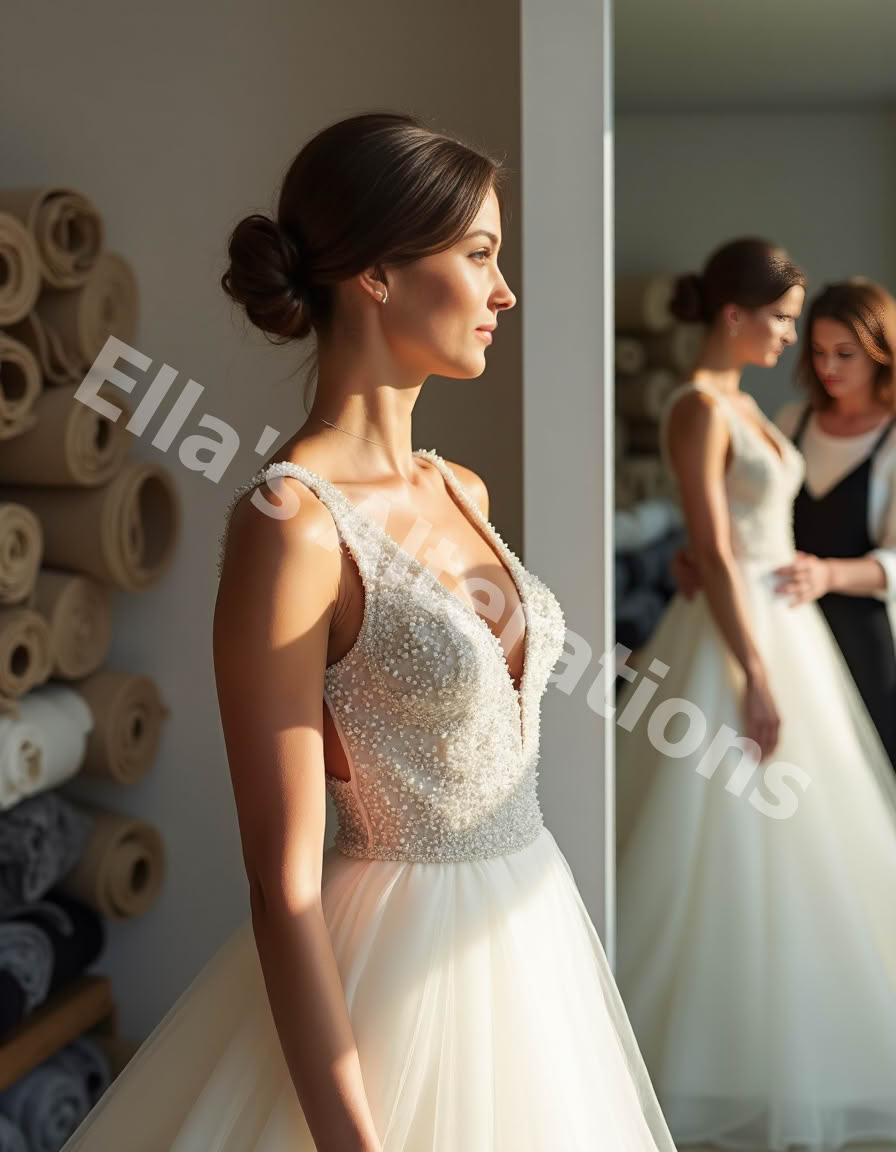
Throughout this process, multiple fittings are essential.
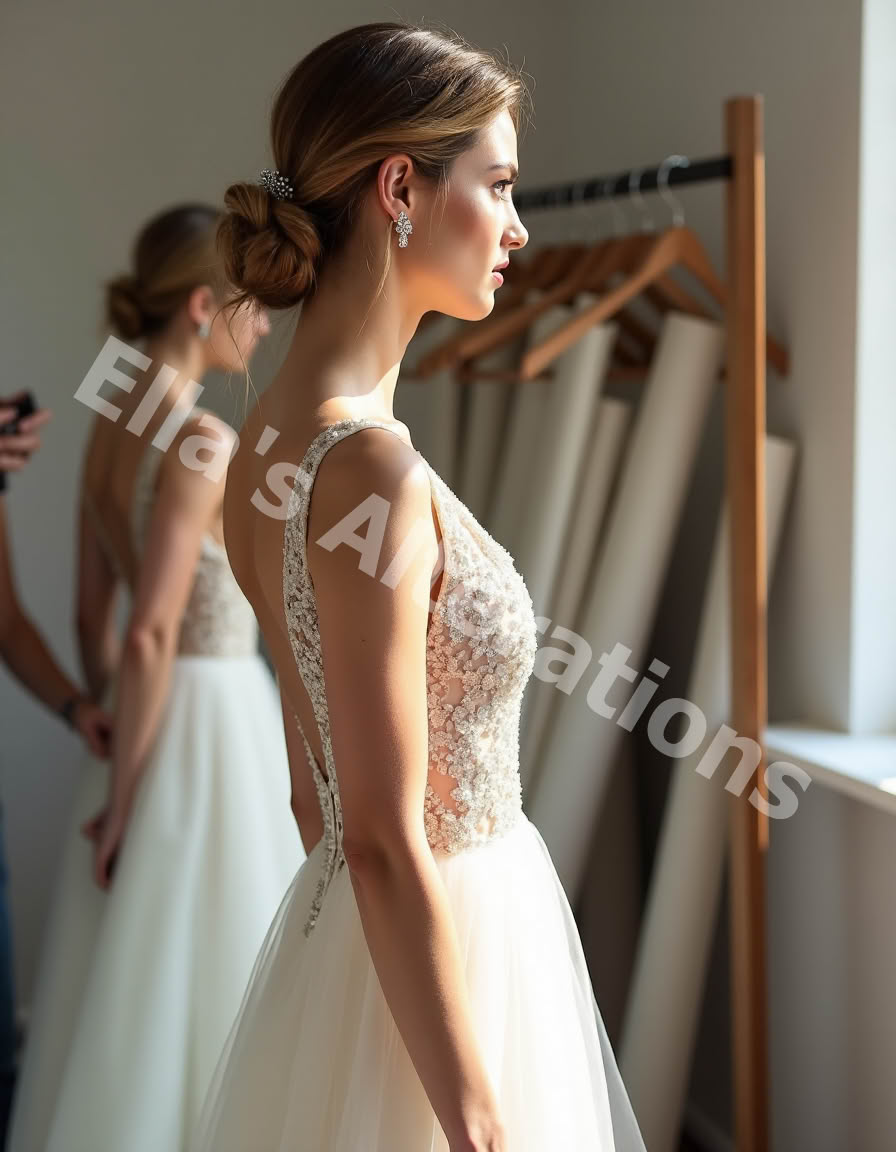
The bride can see and feel the progression, and the tailor can make incremental refinements based on real-time feedback.
This collaboration between bride and tailor ensures the end result is both technically flawless and personally tailored.
A perfectly customized bodice does more than fit it flatters, supports, and transforms.
It allows the bride to move with confidence, knowing her gown feels like it was made just for her, because in the hands of a skilled tailor, it truly is.
Define Your Waist: Why Corset Bodices Are Trending In Wedding Dresses.
Transformations Through Bodice Alterations:
Sometimes, a wedding gown is almost perfect, but not quite there.
Maybe the neckline is higher than you imagined, the sleeves don’t feel quite right, or the bodice just does not give you the shape you were hoping for.
This is where the magic of bodice alterations comes in.
A talented tailor can take what you already love about your dress and elevate it into something that feels truly and uniquely yours.
One of the most common transformations is reshaping the neckline.
Changing a straight-across neckline to a sweetheart can instantly soften the look and add romance.
Lowering a V-neck can create a more modern, elongated silhouette, while raising it slightly might make you feel more comfortable and secure.
Neckline changes are subtle to the eye but powerful in how they change the vibe of the gown.
Sleeve adjustments are another area where a bodice can be reimagined.
A strapless gown can gain delicate cap sleeves for a touch of vintage charm or dramatic off-the-shoulder drapes for a more regal feel.
Sleeves can be shortened, lengthened, or reshaped to balance proportions or suit the season.
For example, long lace sleeves can make a gown feel winter-ready, while removing sleeves altogether can give it a breezy, summer look.
Adding or removing structure is also transformative.
If the gown feels like it lacks support, a tailor can insert boning, add bust cups, or even create an inner corset that shapes the waist and lifts the bust.
On the other hand, if the bodice feels too stiff, the tailor can remove or soften some of the structure to make it more comfortable without losing shape.
Then there’s embellishment work.
This is where your gown can shift from simple elegance to couture-level detail.
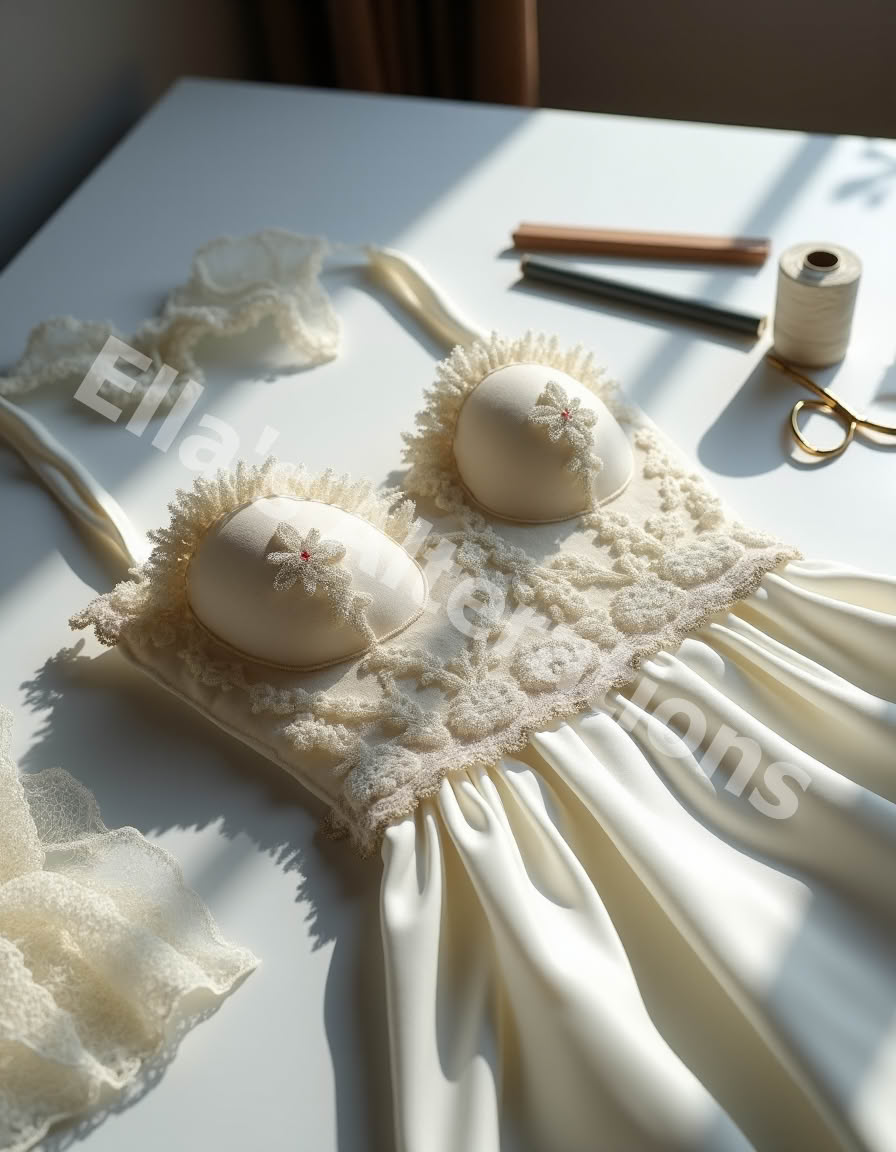
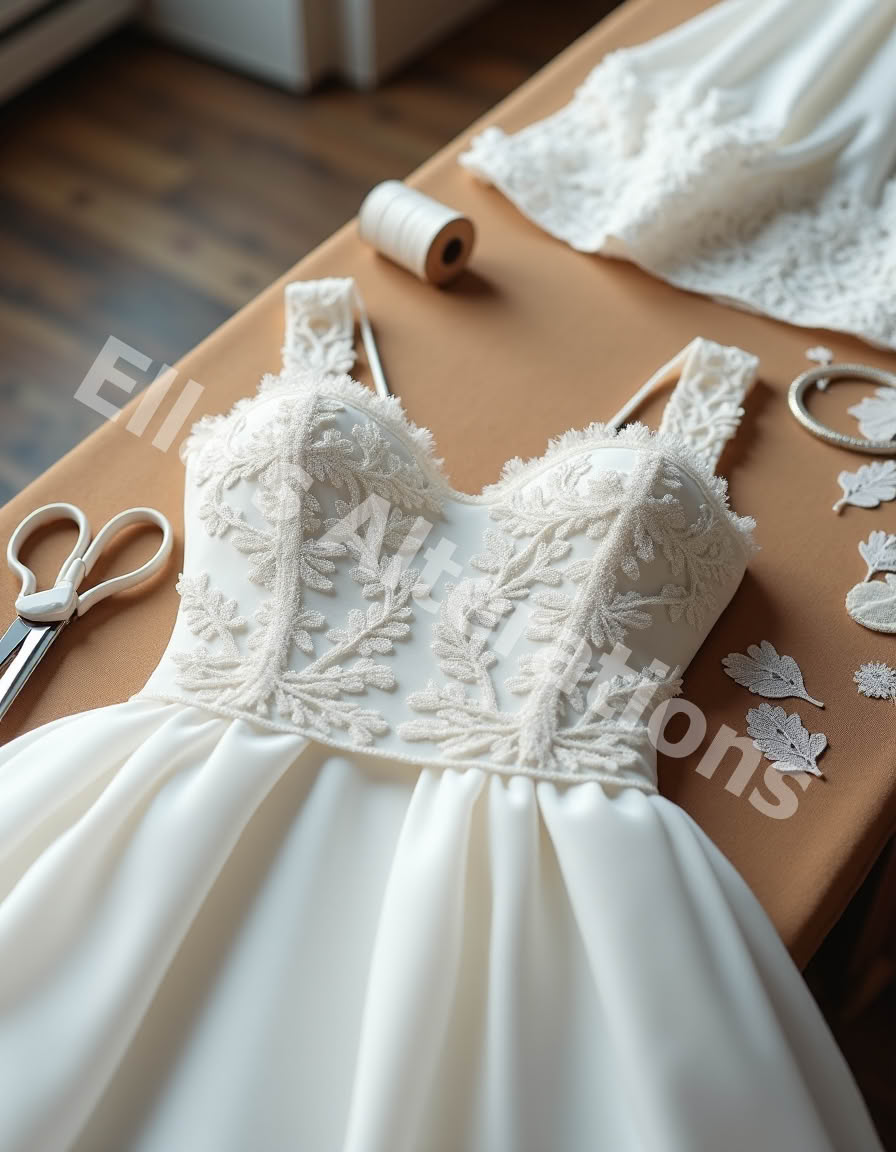
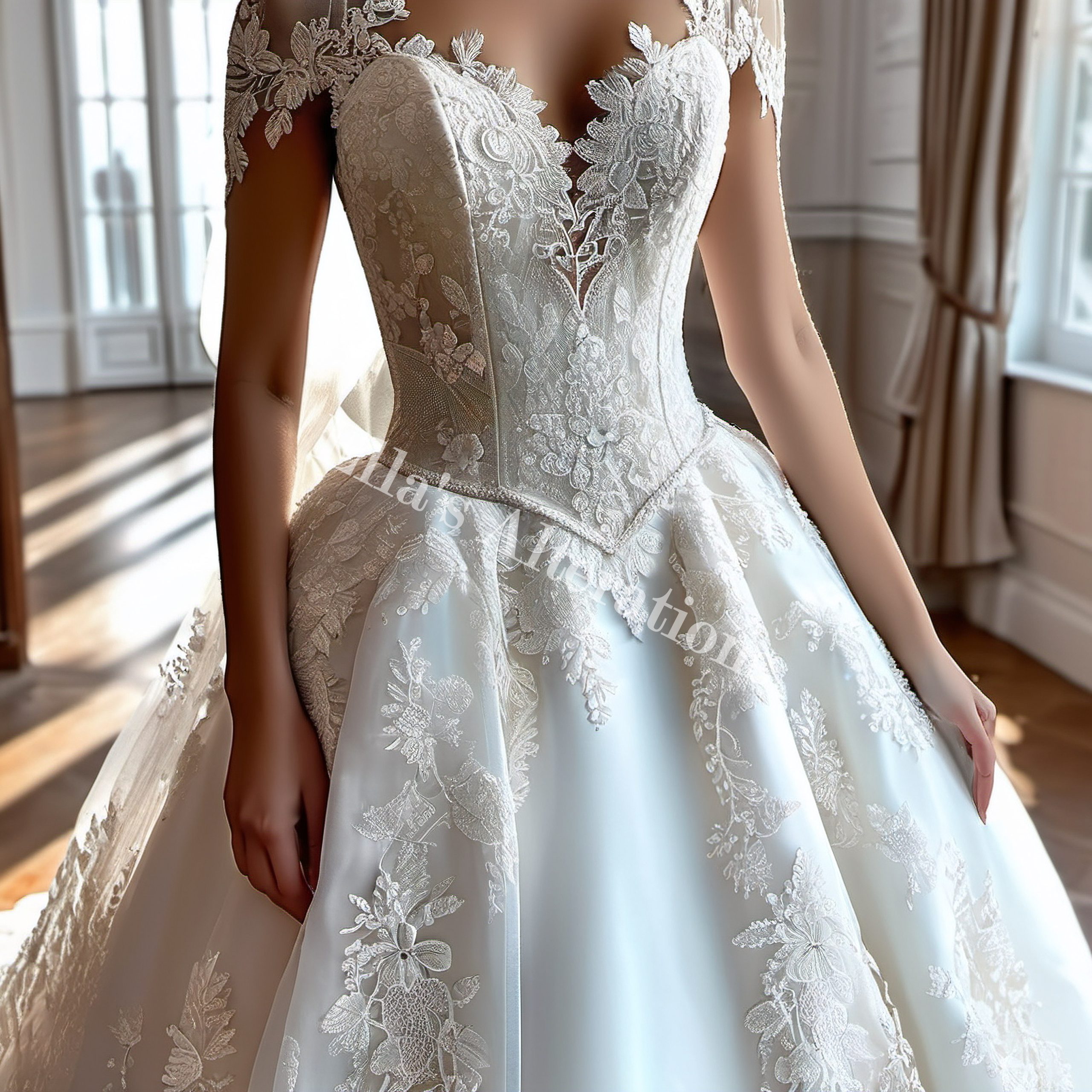
Lace appliqués can be placed along the bodice to add texture and romance.
Beadwork, sequins, or pearls can bring sparkle and richness.
A plain satin bodice can be transformed with floral embroidery, creating a one-of-a-kind statement piece.
Even small details like decorative buttons down the back can make the gown feel more special.
Bodice reconstruction is a more dramatic form of alteration.
This might be needed for vintage gowns that need a modern update or dresses passed down through family that you want to make your own.
A tailor can take apart the original bodice and completely redesign it changing the neckline, reshaping the seams, adjusting proportions, and then reassembling it to flow seamlessly into the skirt.
This type of transformation requires skill and vision but can be the most rewarding, especially when breathing new life into a meaningful gown.
Sometimes the changes are about balance.
Altering the bodice can also involve adjusting its length so it sits exactly where it should on your torso.
Even a half-inch difference can make the waistline look higher, lower, or more proportional.
That little adjustment can completely change how the gown frames your figure.
For brides who fall in love with a gown’s skirt but not its bodice, a tailor can even replace the bodice entirely while keeping the original skirt intact.
This allows you to keep the elements you adore while still making the dress completely your own.
The beauty of bodice alterations is that they are deeply personal.
They allow your gown to reflect your style, fit your body perfectly, and make you feel comfortable and confident.
A well-altered bodice can turn “almost the one” into the dress the one you will remember forever as a true reflection of you.
Unpacking Details: Providing Explanations:
What exactly is bodice boning, and why is it important for a wedding gown?
Boning is a flexible but firm strip traditionally steel or plastic, but now often made from lightweight synthetic materials sewn into channels inside the bodice.
Think of it like the skeleton of your dress, helping it keep its shape and stand upright.
In strapless or heavily structured bodices, boning stops the fabric from rolling down, bunching up, or losing its crisp lines.
It also gives support to your bust and defines your waist without relying solely on tight fabric.
A well-boned bodice feels secure without being rigid, letting you breathe, sit, and dance without fear of wardrobe malfunctions.
How do darts, princess seams, and tucks actually sculpt the bodice to fit my shape?
Darts are small triangular seams that “pinch out” extra fabric to contour your curves.
They usually start at a point (like near your bust) and taper into the seam, creating shape without bulk.
Princess seams do a similar job but run vertically from the shoulder or armhole down to the hem, giving a smooth, elongated contour that’s especially flattering for fitted gowns.
Tucks are more decorative but can also remove excess fabric in strategic areas.
All of these techniques are about turning flat fabric into a three-dimensional form that hugs your body naturally.
Why does my tailor keep checking my posture during fittings?
Because posture changes everything.
When you stand tall, your bust lifts, your waistline shifts, and your shoulders open this subtly changes the way the bodice sits.
If you slouch, the neckline might gape, the side seams could wrinkle, and the waist might dip in the front or back.
A great tailor won’t fit your gown just to “ideal” posture but will watch how you actually stand and move.
That way, your bodice fits you perfectly even when you’re laughing, hugging guests, or dancing all night.
What’s the difference between lining, interfacing, and underlining in a bodice?
Lining is the soft, inner layer that sits against your skin.
It hides seams and makes the bodice comfortable.
Interfacing is stiffer material between the outer fabric and lining, adding shape and stability like a secret layer of armor.
Underlining is a second layer of fabric sewn directly to the main bodice fabric before construction, used to give more body or to prevent sheerness.
In couture gowns, all three might be used together to achieve the perfect combination of structure, smoothness, and comfort.
Can adding a corset to my gown make a big difference?
Absolutely.
A corset inside your bodice can transform the entire shape of your gown and how it feels to wear.
Corsets use lacing, boning, and reinforced panels to define the waist, lift the bust, and create a structured foundation.
They can also help distribute the gown’s weight more evenly, so it feels lighter on your shoulders.
The key is having it built to your exact measurements so it supports without restricting movement or making breathing difficult.
How do neckline changes affect more than just the look of my gown?
Neckline alterations can change the engineering of your bodice.
Lowering a neckline often requires reinforcing the bust area with extra boning or padding so it still provides support.
Raising a neckline might mean redistributing seam shaping to keep the bustline smooth.
Even changing from a straight neckline to a sweetheart shape alters how the fabric stretches across your body, so your tailor must re-balance the fit to prevent gaping or pulling.
What role does fabric choice play in how the bodice fits?
Fabric isn’t just about style it completely changes the tailoring approach.
Satin is firm and smooth, which makes it great for structure but unforgiving of mistakes.
Lace is flexible but requires careful matching at the seams for a seamless look.
Chiffon and tulle are light and airy but need sturdier underlayers to keep their shape.
Heavier fabrics can hold structure on their own, while lightweight fabrics often rely on hidden construction to look their best.
Your tailor will adjust techniques based on the fabric’s weight, drape, and stretch.
Why do some bodices have multiple layers inside?
Multi-layer bodices aren’t just fancy they’re functional.
The outer layer is for beauty, the underlining helps the fabric behave, the interfacing adds firmness, the lining gives comfort, and the inner corset or boning provides support.
Each layer has a job, and together they make the bodice look flawless on the outside while feeling secure on the inside.
Removing any of these without a plan can throw off the balance of the whole dress.
How can sleeve placement or strap width change the bodice’s feel?
Sleeves and straps are like levers that can pull or lift the bodice in different directions.
Straps that are too tight might dig into your shoulders and pull the bodice up unnaturally, while loose straps can let the neckline sag.
Sleeves, especially fitted ones, can affect arm mobility and even distort the bust fit if not attached properly.
That’s why your tailor might re-angle straps or adjust sleeve seams it’s about making the bodice sit naturally while you move.
Is it possible to change just the bodice and keep the skirt?
Yes, and it’s more common than you think.
If you love your skirt’s drape, train, or fabric but not the bodice, a tailor can replace the upper half entirely.
They’ll design a new bodice that integrates seamlessly with your existing skirt, matching fabric, color, and style so it looks like one cohesive gown.
This is a popular choice for vintage updates, family heirloom dresses, or brides who fell for a skirt but want a custom top.
Why are multiple fittings necessary for bodice alterations?
A bodice is all about precision, and precision takes time.
The first fitting is usually for marking changes, the second is to refine them, and the final fitting ensures everything sits perfectly after adjustments.
Each fitting allows you to try the gown in real time, so your tailor can fine-tune the shaping, strap tension, and seam placement until it feels flawless.
Even a few millimeters can make a huge difference in the way your bodice looks and feels.
Pro Tips from Bridal Tailors: Bodice Edition1.
Always bring your exact wedding undergarments to every fitting
Even a slightly different bra, shapewear, or corset will change the way your bodice fits.
The tailoring will be done to exactly what you wear underneath.
Switch later, and seams may gap or pinch.
Bodice length matters as much as bust fit
A half-inch too long in the bodice can cause wrinkling above the waistline.
Too short, and the waist seam rides up uncomfortably.
Your tailor will check torso length early so adjustments blend seamlessly with the skirt.
You can hide functional support in beautiful details
Want more bust lift without visible corsetry?
Tailors can sew discreet support panels or lightweight boning under lace appliqué or beadwork so structure hides in the design.
A looser bodice is not “safer”
Some brides request more room to avoid feeling restricted, but a loose bodice will shift, rub, and wrinkle more.
A snug but well-balanced fit is more comfortable and secure over the whole day.
Fabric choice dictates alteration limits
Heavy satin can be reshaped more dramatically than delicate chiffon.
Lace needs pattern matching, which can limit seam changes.
Discuss fabric flexibility before committing to major design alterations.
Strap and sleeve tension is everything
Too tight, and straps can pull the bodice upward or distort the neckline.
Too loose, and the bodice can collapse at the bust.
Your tailor will tweak strap placement millimeter by millimeter for balance.
A new neckline might require hidden reinforcements
Lowering or reshaping a neckline changes stress points on the bodice.
Without reinforcement, fabric can stretch out by the reception.
Good tailors will discreetly stabilize the edges.
Don’t skip a “movement test” in fittings
Sit, bend, hug, raise your arms, and even dance during fittings.
This helps your tailor see if the bodice shifts or digs in once you’re actually moving.
Altering bodice seams can impact skirt flow
When seams are taken in or let out at the waist, it can change how the skirt hangs.
Your tailor may need to rebalance the skirt’s drape so it looks effortless.
Small changes add up to big transformations
Even if you are not replacing the bodice entirely, combining several subtle changes reshaped bust seams, strap adjustment, neckline refinement can make your gown feel entirely custom.
Choosing the Right Bodice for Your Body Shape and Style:
Finding the right bodice is a mix of style preference, body awareness, and an understanding of how design elements work together to create balance.
A wedding gown should celebrate your figure, not fight against it, and the bodice is the key player in that harmony.
The right choice can highlight your best features, create proportion, and give you the confidence to move through your day with ease.
For brides with an hourglass figure, the bodice’s job is to enhance the natural waistline and keep proportions balanced.
Structured corset bodices, sweetheart necklines, and V-necks work beautifully because they draw attention to the waist and elongate the neck.
A fitted bodice that flares at the hip like on a mermaid or trumpet gown can emphasize curves without overwhelming them.
If you have a pear-shaped figure, the goal is often to balance the upper and lower body.
Bodices with embellishment, lace overlays, or bold necklines can draw the eye upward.
Off-the-shoulder designs, bateau necklines, and illusion detailing add volume and interest at the top, which visually balances wider hips.
Pairing this with a simple, flowing skirt creates a harmonious silhouette.
For apple-shaped brides, comfort and structure are key.
A well-boned bodice with strategic seams can define the waist and shape the midsection.
Empire waistlines, which place the seam just under the bust, can create a lengthening effect.
V-necks and wrap-style bodices also work well, as they guide the eye vertically and help elongate the torso.
Petite brides often benefit from bodices that create the illusion of height.
Deep V-necks, narrow straps, and continuous vertical seam lines can elongate the frame.
Overly heavy or wide necklines can overwhelm smaller proportions, so lighter fabrics and cleaner lines often work best.
High-waist bodices paired with slightly flared skirts can also make legs appear longer.
For tall brides, the bodice becomes an opportunity to play with proportion.
You can afford more dramatic necklines, wider straps, and even drop-waist designs without shortening your frame.
Textured fabrics, bold embellishments, and layered bodice details work well because they create visual interest without overcrowding the design.
Beyond body shape, personal style plays a huge role.
A romantic bride might gravitate toward lace-covered bodices, soft draping, or delicate embroidery.
A modern minimalist might prefer clean satin with architectural seams.
A vintage-inspired bride could choose a high-neck bodice with long lace sleeves, while a bohemian bride might opt for an illusion bodice with floral appliqué.
It is also important to think about movement and comfort.
A bodice that looks stunning in photos but restricts your arms or feels tight when sitting will be distracting on your wedding day.
This is why working closely with a tailor is essential they will fine-tune every element to ensure the bodice not only looks good but feels effortless.
The neckline, sleeve design, fabric, and internal structure all work together to create your overall look.
The right bodice for your body shape and style is the one that makes you feel like the best version of yourself.
When these elements align, your gown will not just fit it will flatter, support, and express your unique bridal personality.
Choosing the Perfect Wedding Dress: A Guide to the Best Styles for Different Body Types
The Bridal Couture Process: Tailor Tips for Bodice Perfection:
Creating the perfect bridal bodice in a couture setting is a process that blends technical skill, artistry, and constant collaboration between bride and tailor.
Couture tailoring is all about customization every stitch, seam, and structural element is planned with the bride’s exact measurements, style preferences, and comfort in mind.
The bodice, being the foundation of the gown, is where this process becomes most precise and personal.
It begins with an in-depth consultation and design review.
The tailor will ask questions about your vision, your venue, and how you want to feel in your gown.
This helps them understand not just the look you’re going for but also the practical needs like how much support you’ll need or how freely you want to move.
At this stage, fabric swatches are often presented, and sketches may be created to help visualize different neckline shapes, seam placements, and embellishment options.
Next comes the measurement stage, which goes far beyond bust, waist, and hip numbers.
Couture tailoring involves taking dozens of measurements, including torso length, bust point to bust point, back width, armhole depth, and even shoulder slope.
These details are what ensure the bodice hugs your body perfectly without pulling, gaping, or twisting.
Once the measurements are complete, the tailor creates a mock-up bodice, often called a toile or muslin.
This is a prototype made from inexpensive fabric so adjustments can be made before cutting into the real materials.
The toile fitting is where the tailor can test the neckline, sleeve placement, and seam shaping.
They also study how you move whether the straps slide when you lift your arms or the waist seam shifts when you sit.
These observations guide refinements for the final version.
In the construction phase, the tailor works layer by layer.
The inner structure is built first this might include boning channels, interfacing for stability, and an inner corset for shaping.
Then comes the outer fabric, which is carefully cut to match patterns or grainlines so it lies perfectly smooth.
Any lace, beadwork, or appliqué is added at this stage, either by hand or with careful machine stitching.
Fittings are essential throughout.
The first gown fitting with the real fabric allows the tailor to check the drape, tension, and placement of the bodice.
The second fitting often focuses on refinements adjusting strap angles, fine-tuning the bust shaping, or slightly altering the waistline for a flawless transition into the skirt.
A final fitting ensures everything is locked in place and that the bodice feels as good as it looks.
Tailors also pay attention to hidden comfort elements.
This can include adding soft lining so boning doesn’t rub, using breathable fabrics to prevent overheating, or adding small elastic inserts in sleeve seams for better mobility.
The goal is for the bride to feel secure yet completely at ease.
Finally, couture bodice perfection is about integration with the skirt and train.
The bodice can affect how the skirt flows, how the bustle works, and how the hemline sits.
Skilled tailors make sure every part of the gown works together so there is no pulling, bunching, or imbalance.
By the end of the couture process, the bodice is not just tailored to your body it is tailored to your personality, your movement, and the memories you want to create.
It becomes the ultimate expression of bespoke craftsmanship, ensuring that on your wedding day, your gown feels like it was made for no one else but you.
FAQs:
Is it possible to replace just the bodice of a gown and keep the skirt?
Yes in many cases, you can replace only the bodice of a gown while keeping the original skirt intact.
This type of alteration or redesign is more advanced than simple adjustments, but it’s a common solution for brides who love the flow, shape, or fabric of their skirt but want a completely different top half.
It’s also a popular choice for updating vintage or heirloom gowns.
The process starts with carefully separating the bodice from the skirt along the waist seam.
This requires precision so that the skirt’s structure, pleating, or drape isn’t damaged.
Once detached, the tailor will either design a new bodice from scratch or adapt an existing bodice pattern to fit your measurements and style vision.
Fabric matching is one of the most important steps.
If you want your gown to look cohesive, the new bodice’s fabric must match the skirt in color, texture, and weight.
Sometimes this means sourcing fabric from the original dress itself extra length in the skirt, a wide hem allowance, or even the original sleeves can provide matching material.
The new bodice is then constructed and carefully joined to the skirt, ensuring the waist seam is smooth, even, and secure.
If the new design changes the waistline height or shape, the skirt may need minor adjustments so it hangs correctly.
While replacing a bodice is a more labor-intensive alteration, it can completely transform your gown into something that feels like it was custom-made for you.
With a skilled bridal tailor, the finished piece will look intentional, not pieced together giving you the best of both worlds: the skirt you fell in love with and a bodice that feels entirely your own.
Can I change the neckline of my wedding dress bodice after buying it?
Yes in most cases, you can change the neckline of your wedding dress bodice after purchase, but the feasibility and results depend on the dress’s design, construction, and fabric.
Neckline alterations are one of the most transformative changes a tailor can make, because even a subtle adjustment can completely shift the mood of your gown.
If your dress has extra seam allowance and enough structural stability, a tailor can lower, raise, or reshape the neckline to suit your style.
For example, you could turn a straight-across strapless neckline into a romantic sweetheart, convert a high neck into a deep V for a modern edge, or add an illusion panel for coverage without losing elegance.
Changing the neckline can also help balance proportions lowering it can elongate the neck and create openness, while raising it can make the bodice more modest and formal.
However, there are technical considerations.
Lowering a neckline removes fabric, which can reduce the support in the bust area.
To compensate, your tailor might need to add boning, cups, or reinforced seams.
Raising a neckline requires additional matching fabric or lace, which may need to be sourced from extra hem length or a matching swatch.
Fabric type matters too.
Satin, crepe, and mikado are easier to reshape cleanly, while heavily beaded or lace designs require delicate, detailed work to maintain symmetry and pattern flow.
A neckline change is best handled by a bridal tailor experienced in structural gown work.
With careful planning, this alteration can make your dress feel completely custom while still looking as though it was designed that way from the start.
It’s one of the most effective ways to make your gown truly yours.
How many fittings do I need for a custom bodice alteration?
For most brides, a custom bodice alteration will require at least three fittings, though complex redesigns may need four or more.
Each fitting has a specific purpose, and spacing them out allows your tailor to make precise adjustments while giving you the chance to test comfort, movement, and overall look at every stage.
The first fitting is the planning and marking stage.
You’ll try on your gown, and the tailor will pin, chalk, or mark where adjustments are needed.
This might include reshaping the neckline, taking in or letting out seams, repositioning straps, or adjusting bodice length.
If the alteration is extensive such as adding boning or changing the overall structure the tailor may also create a temporary lining or mock-up to test the new shape before committing to the real fabric.
The second fitting is where you see the first round of changes.
At this stage, the bodice will be closer to its intended fit, but fine-tuning is essential.
This may involve adjusting seam tension, refining bust shaping, or ensuring symmetry in design details like lace or beading.
You should move naturally sit, bend, hug, and lift your arms to check if the fit feels secure and comfortable.
The final fitting is your last check before the gown is finished.
The bodice should now fit perfectly, with all reinforcements, closures, and embellishments complete.
Your tailor will confirm that everything sits smoothly, the skirt hangs correctly from the bodice, and there are no issues with comfort or movement.
For highly detailed couture work or major redesigns, an additional fitting may be scheduled to address structural adjustments before the finishing touches.
In short, the more custom your bodice alteration, the more fittings you should expect for flawless results.
Will adding boning or a corset make my dress uncomfortable?
Not necessarily in fact, when done correctly by an experienced bridal tailor, adding boning or a corset can actually make your gown more comfortable by providing better support and stability.
The key lies in proper placement, balanced structure, and thoughtful finishing.
Boning consists of flexible strips (often steel, plastic, or synthetic whalebone) sewn into channels inside the bodice.
When positioned correctly, boning helps the bodice hold its shape, prevents wrinkling, and keeps the gown in place without the need for constant tugging.
Instead of relying on tight fabric alone to keep your dress secure, the boning carries some of that load, reducing pressure points and allowing for a more even fit across your torso.
A corset takes support a step further.
Built with multiple boning channels and an adjustable lacing system, it can shape the waist, lift the bust, and distribute the gown’s weight more evenly.
For many brides, this results in a gown that feels lighter and more secure.
The adjustable fit is also helpful if your body changes slightly between fittings and the wedding day.
That said, comfort depends on precision.
Poorly placed boning or overly tight corsetry can dig into the ribs, restrict movement, or cause discomfort during long wear.
This is why it’s crucial to work with a tailor who understands bridal construction and will line the bodice with soft, breathable fabric to protect your skin.
During fittings, you should move naturally sit, bend, dance to ensure the added structure feels supportive but not restrictive.
When done right, boning or a corset will make your dress feel like it’s working with you, not against you, so you can focus on enjoying your day instead of adjusting your gown.
Is it possible to replace just the bodice of a gown and keep the skirt?
Yes in many cases, you can replace only the bodice of a gown while keeping the original skirt intact.
This type of alteration or redesign is more advanced than simple adjustments, but it’s a common solution for brides who love the flow, shape, or fabric of their skirt but want a completely different top half.
It’s also a popular choice for updating vintage or heirloom gowns.
The process starts with carefully separating the bodice from the skirt along the waist seam.
This requires precision so that the skirt’s structure, pleating, or drape isn’t damaged.
Once detached, the tailor will either design a new bodice from scratch or adapt an existing bodice pattern to fit your measurements and style vision.
Fabric matching is one of the most important steps.
If you want your gown to look cohesive, the new bodice’s fabric must match the skirt in color, texture, and weight.
Sometimes this means sourcing fabric from the original dress itself extra length in the skirt, a wide hem allowance, or even the original sleeves can provide matching material.
The new bodice is then constructed and carefully joined to the skirt, ensuring the waist seam is smooth, even, and secure.
If the new design changes the waistline height or shape, the skirt may need minor adjustments so it hangs correctly.
While replacing a bodice is a more labor-intensive alteration, it can completely transform your gown into something that feels like it was custom-made for you.
With a skilled bridal tailor, the finished piece will look intentional, not pieced together giving you the best of both worlds: the skirt you fell in love with and a bodice that feels entirely your own.
The Ultimate Guide to Wedding Dress Bodices: Types and Alterations by Ella's Alterations

About Us
Brought to you by Ella’s Alterations
Ella’s Alterations
is trusted by brides, professionals, and families across Central Florida for one reason.
The work is done right.
Proudly serving Zephyrhills, Pasco County, Tampa, Wesley Chapel, Lakeland,
and surrounding Central Florida communities.
Clients travel from across the region for expert alterations that local shops
simply cannot match.
With over 30 years of hands on tailoring experience, Ella works at a master level.
This is not basic hemming or quick fixes. This is true garment engineering.
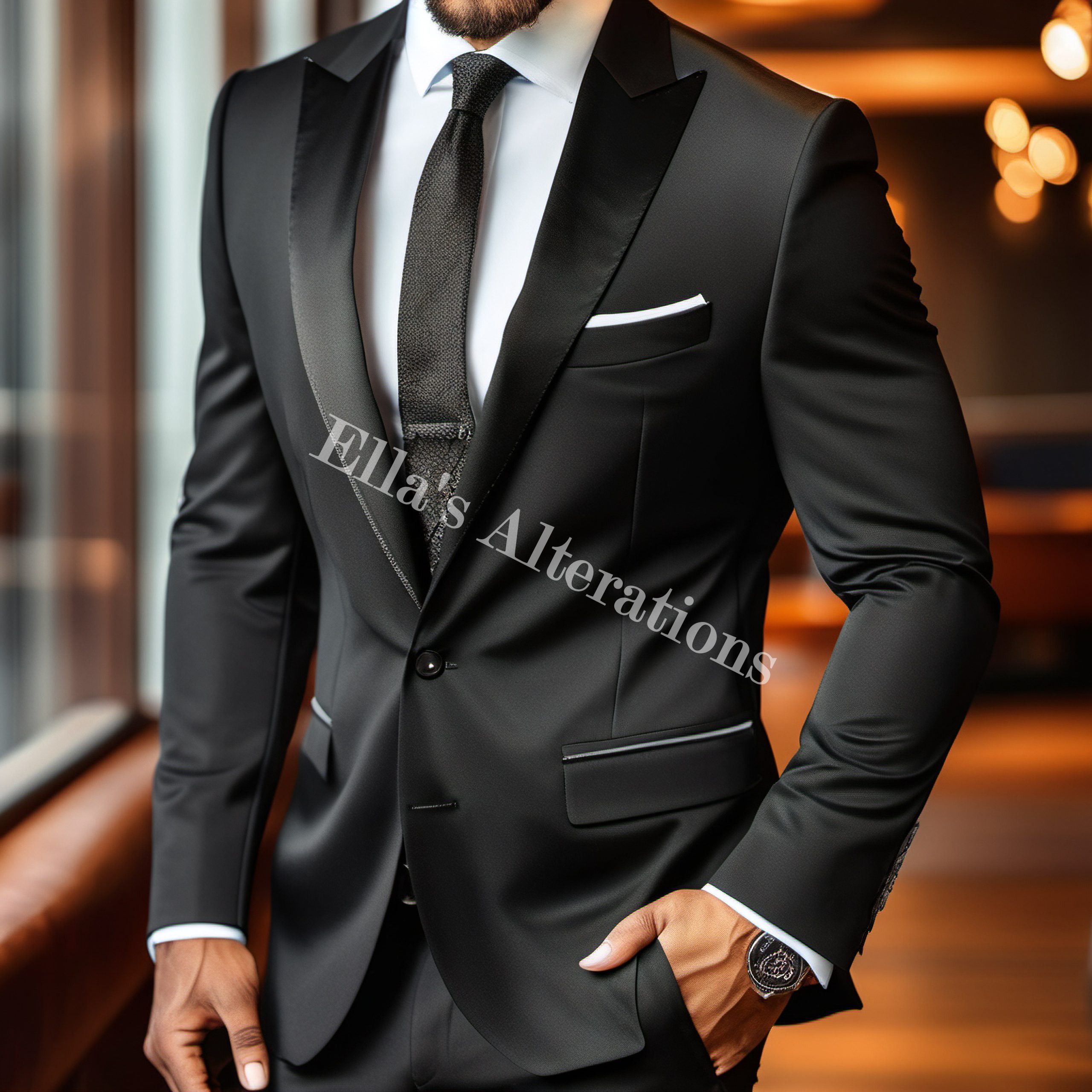
Wedding gowns with structure, suits that need balance, formalwear that must move
and photograph perfectly. Every adjustment is intentional and precise.
Every fitting is handled with respect, privacy, and patience.
Measurements are double checked. Details are explained.
Nothing is rushed. Nothing is guessed.
Clients return because they feel heard, supported, and confident.
Dresses are protected. Fabrics are handled correctly.
Fit decisions are made with experience, not shortcuts.
This is why generations of clients trust Ella with their most important garments.
When it has to fit perfectly, they choose experience.
Ella’s Style Confidence
If something feels off when you put it on, that does not mean it is wrong for you.
It means it has not been tailored for you yet. Clothes are made for averages.
You are not average.
The smallest adjustments change everything. A lifted waist, a shaped bust,
a clean hem. These details quietly do the heavy lifting so you can walk in
like you own the room.
If you are pulling, tugging, or holding your breath, the garment is failing you.
Real tailoring lets you move, sit, dance, and live without thinking about your clothes.
Styles come and go fast. A perfect fit never goes out of style.
When something fits you correctly, it always looks intentional and expensive.
Hidden structure matters. Boning, cups, straps, and shaping should work with your body,
not against it. When support is done right, no one sees it but everyone notices the result.
Whether it is a wedding dress, a suit, or everyday wear, your clothes should show up for you.
Sharp, polished, and reliable.
The best dressed people are not uncomfortable or flashy.
They look effortless because their clothes fit correctly and feel natural.
Fixing what you already own often gives you more confidence than buying something new.
A tailored piece feels personal. Like it was made just for you.
Posture changes. Shoulders relax. You stop adjusting and start owning your space.
That shift is what people actually notice.
Not just okay. Not just good enough. Amazing.
That is the standard.
Local Credibility
Awards & Recognition
Service Area
Depth of Craft
Proof of Trust & Fitting Care

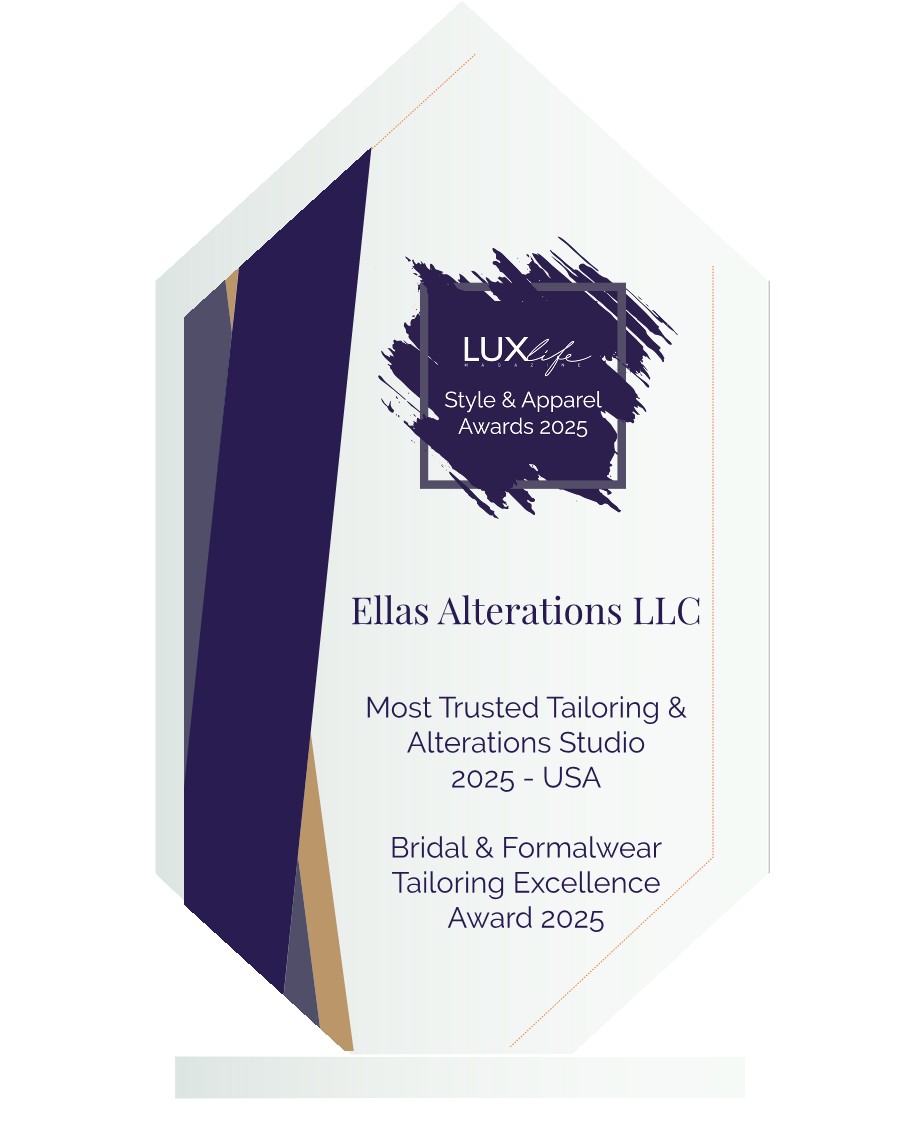
Bridal & Formalwear Tailoring Excellence Award 2025 – USA
Award Winning Bridal & Formalwear Tailoring
Ella’s Alterations is proudly recognized as one of Zephyrhills’ most trusted tailoring studios, specializing in wedding dress and formalwear alterations.

NextDoor Neighborhood Favorite 2023, 2024, 2025

Best Wedding Dress & Formalwear Tailoring Zephyrhills 2026

Proud winner: Best Bridal & Formalwear Alterations Studio 2026 - USA

Proud winner: Best Wedding Dress and Formalwear Tailoring, Zephyrhills 2026
Why Clients Trust Ella’s Alterations
- 30 plus Years of Expertise: Master tailoring and formal wear alterations trusted across Florida.
- Award Winning Service: Best of Florida Tailor and Best of Zephyrhills.
- Private Bridal Fittings: Discreet, elegant, and tailored to you.
- Proven Local Reputation: Five star customer reviews and repeat clients from Tampa to Orlando.
- Transparent and Personal: Clear pricing, expert guidance, and no rushed fittings.
- Recognized nationally by LUXlife Magazine for craftsmanship and client trust
- Chosen year after year for precision bridal and formal tailoring
- Best Wedding Dress & Formalwear Tailoring Zephyrhills 2026
- NextDoor Neighborhood Favorite 2023 2024 2025
Address: 6986 Fort King Road, Zephyrhills FL 33541
Phone: +1 813-445-8894 or +1 813-680-5821
Email: admin@ellasalterations.com
Hours:
Get Directions | Book Your Fitting