A Tailor’s Guide: What's in a Wedding Dress Skirt?
Introduction:
Choosing a wedding dress is one of the most emotionally charged and stylistically significant decisions a bride will make
While much of the attention often centers on the neckline or the bodice, it's the skirt that often carries the soul of the gown
From the first fitting to the final walk down the aisle, the skirt holds the power to transform not only the silhouette but the entire mood of the dress
Whether it flows, hugs, flares, or floats, the wedding dress skirt is the foundation of your bridal style
So what exactly goes into a wedding dress skirt? The answer lies in a combination of structure, fabric, shape, and fine tailoring
Each element works together to create a cohesive look that flatters the body, suits the setting, and speaks to the bride’s personal style
It’s not just about how a skirt looks, but how it moves, how it feels, and how it frames the moment when all eyes are on you
Let’s start with silhouette
The skirt plays a major role in determining the overall shape of the gown
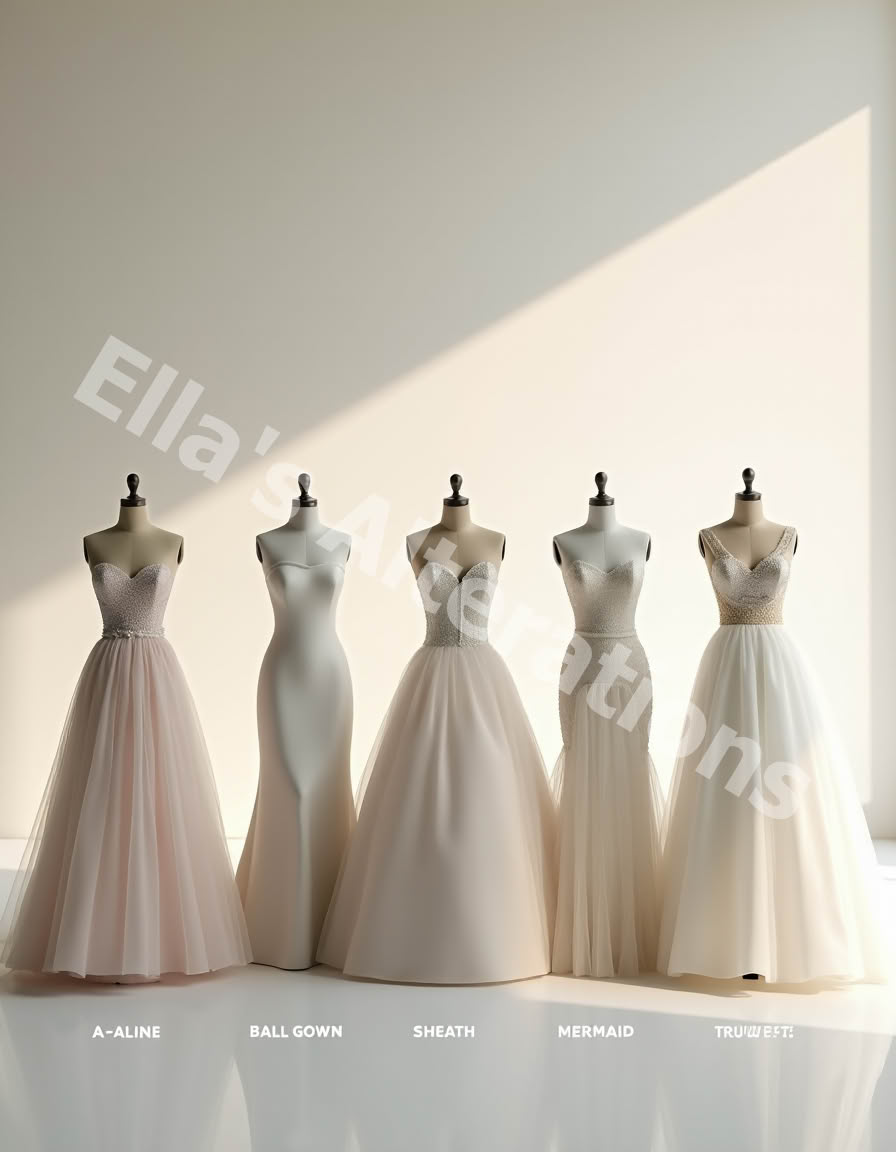
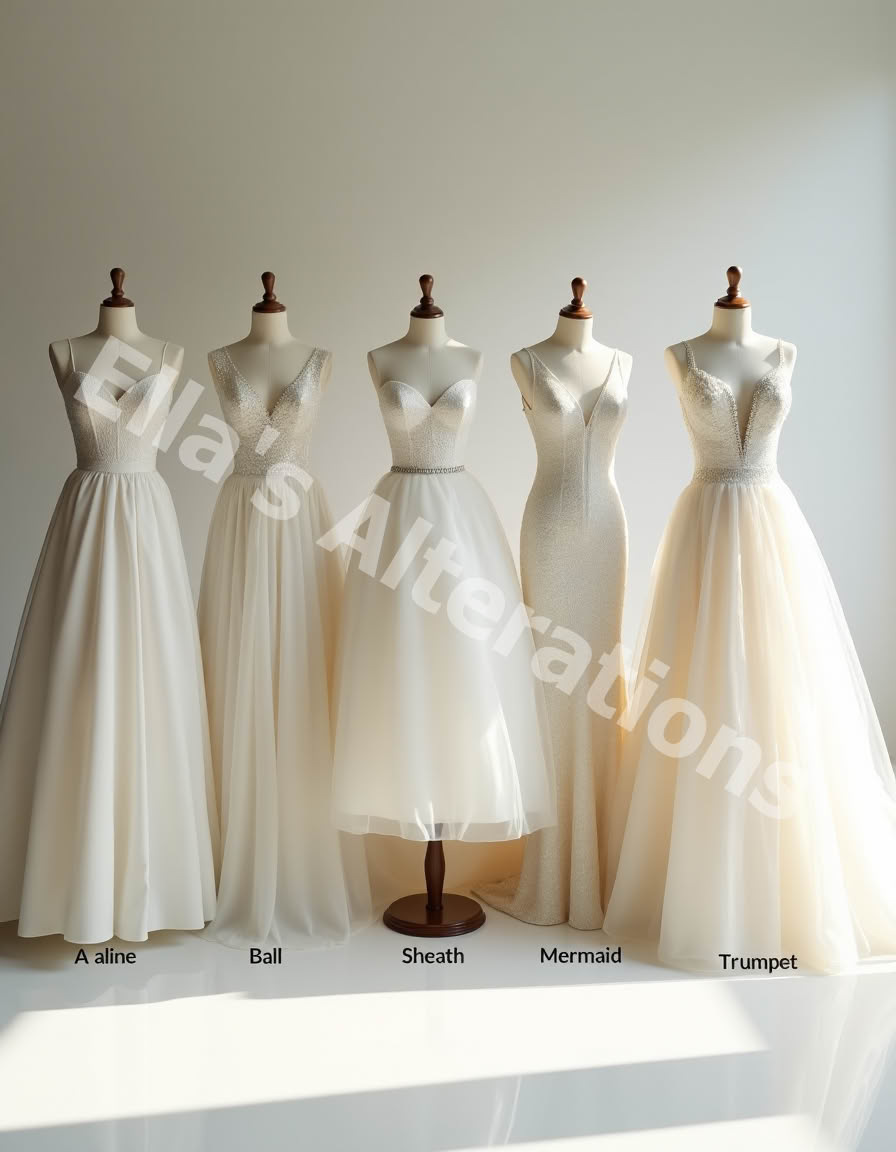
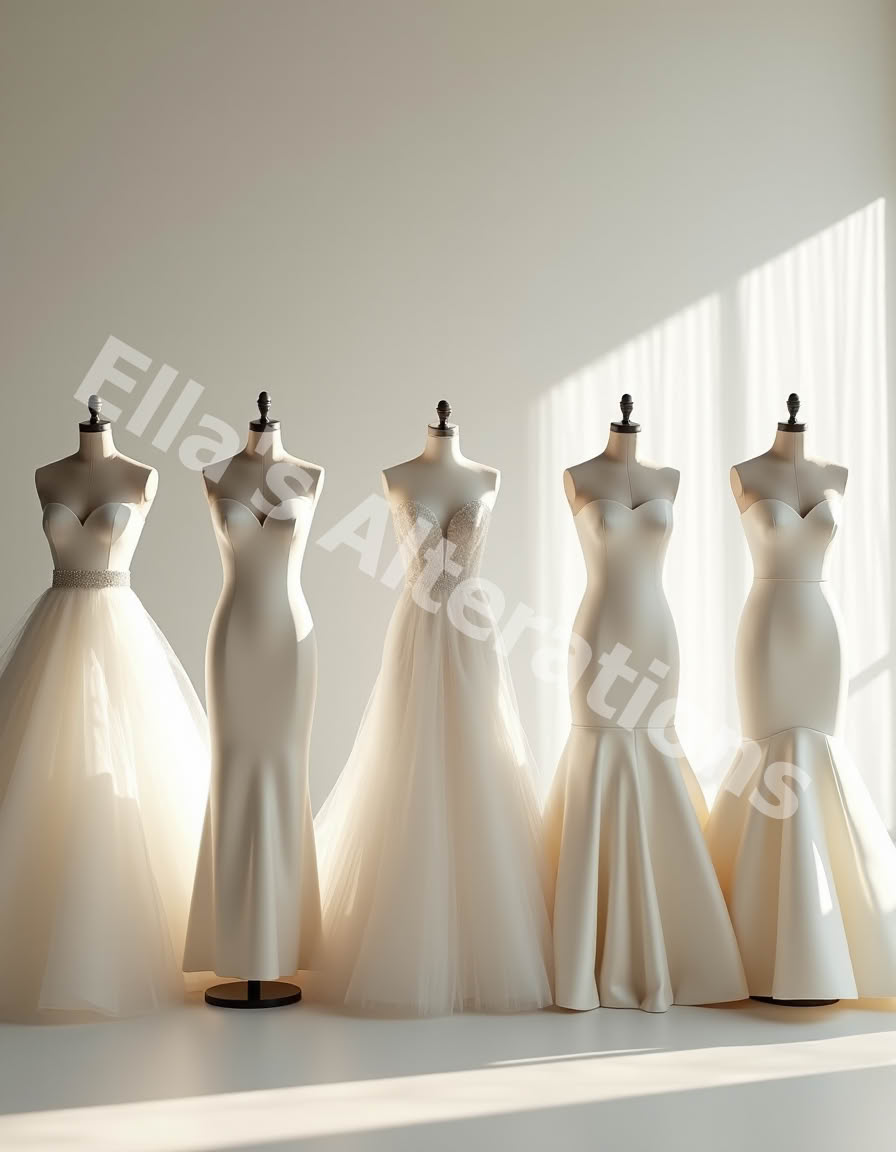
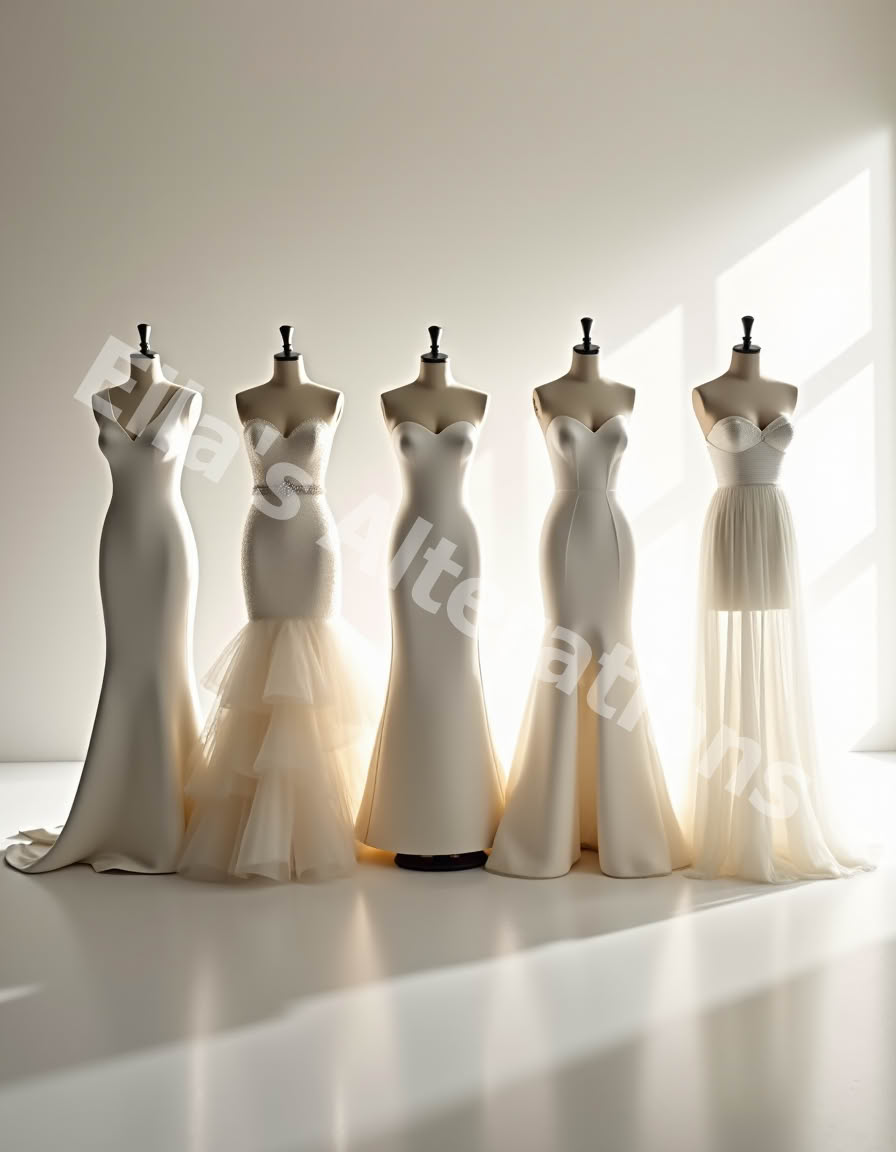
Whether you’re drawn to a classic A-line, a voluminous ballgown, a sleek sheath, or the va-va-voom of a mermaid or trumpet cut, your skirt defines how the dress falls from the waist down
This single design choice can change the entire vibe of a gown from soft and romantic to dramatic and regal
It’s also one of the most visual ways a bride can express her personal style and flatter her unique body type
But the silhouette is just the beginning
What’s under the skirt matters just as much as what’s visible
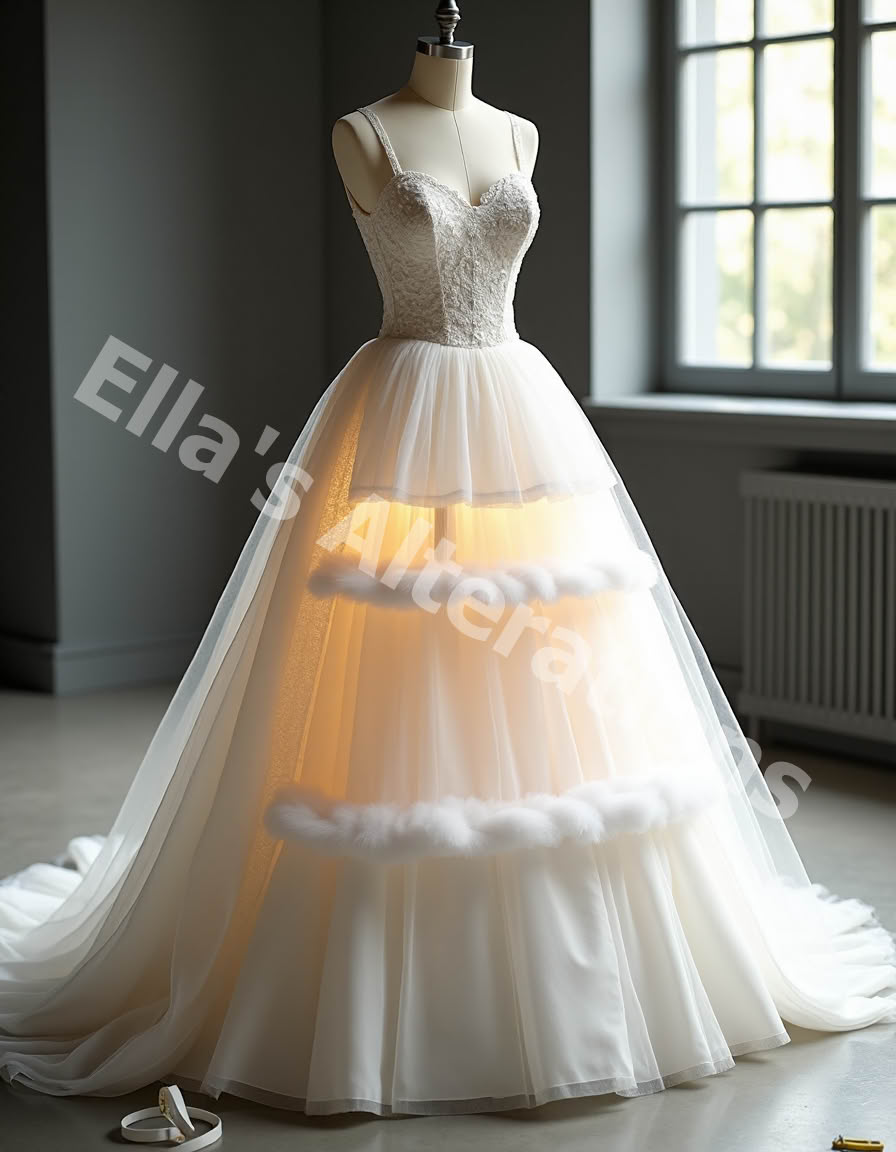
Underskirts, crinolines, petticoats, and even built-in hoops help achieve the desired volume and support
Without this inner structure, a ballgown may fall flat or a mermaid silhouette might lose its shape
These hidden layers create movement and hold the form, whether the goal is a gentle flare or a full-blown royal effect
Then comes the fabric, and this is where things get truly personal
The texture, weight, and flow of the fabric all contribute to the look and feel of the skirt
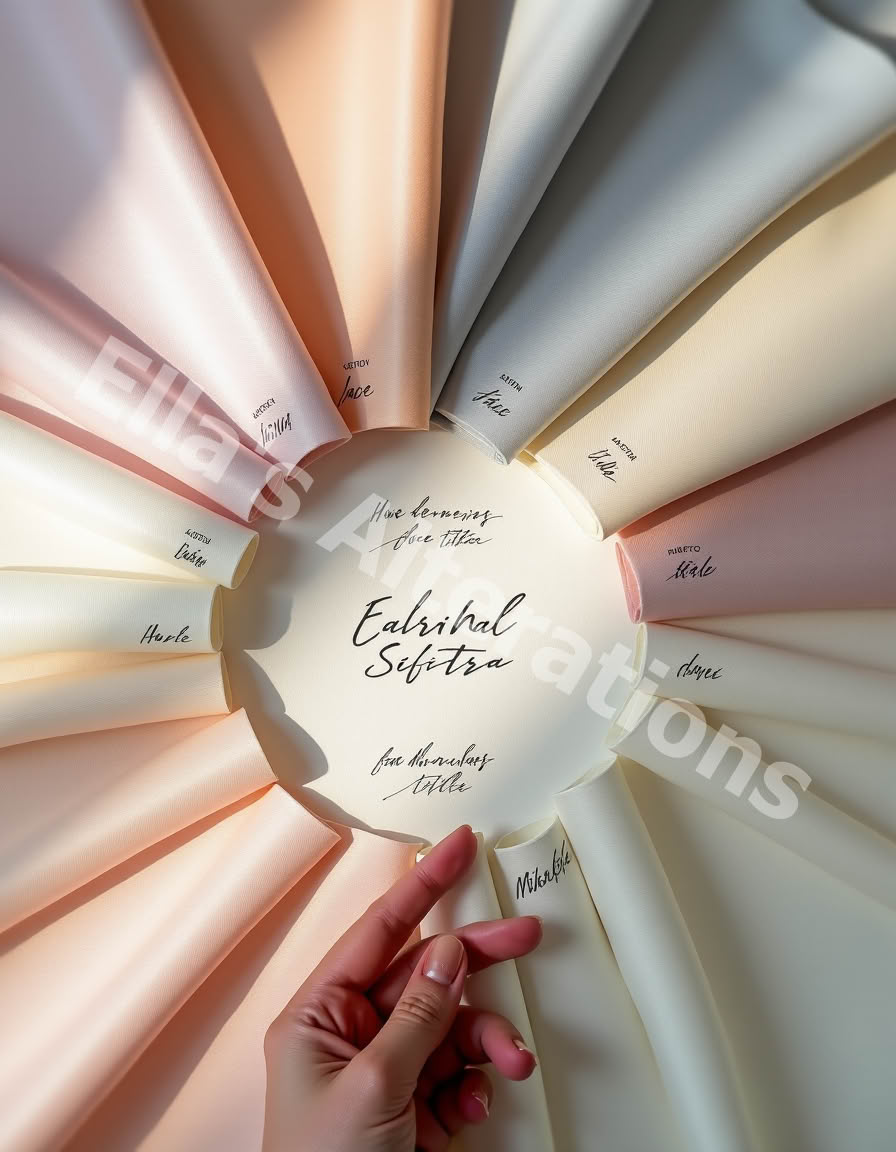
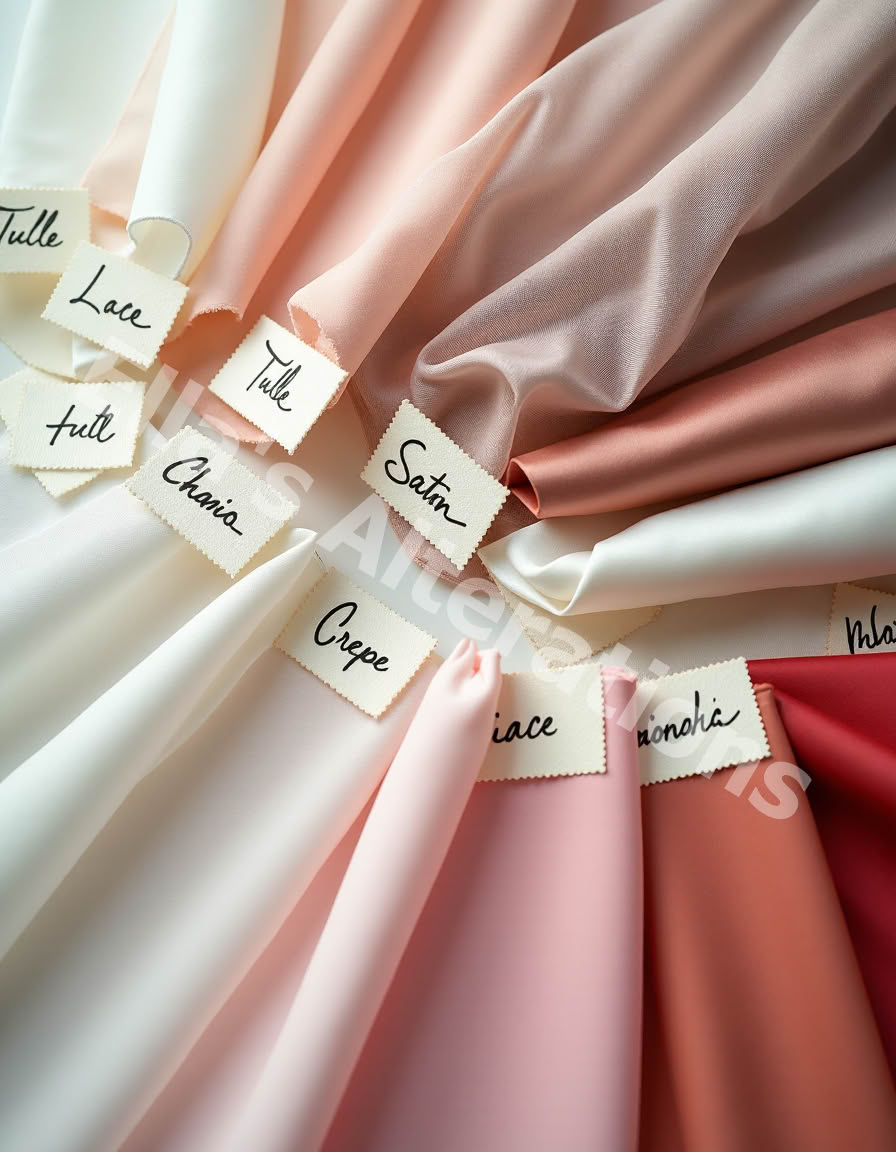
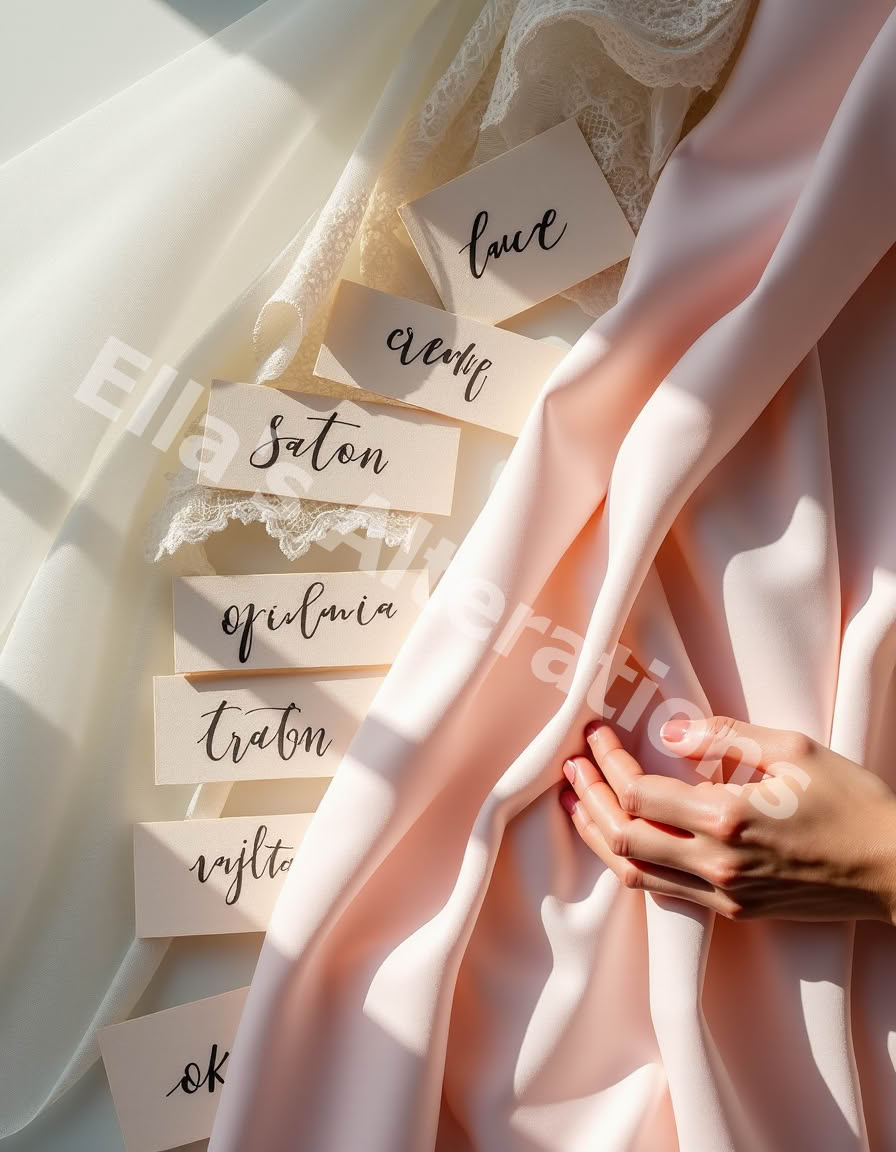
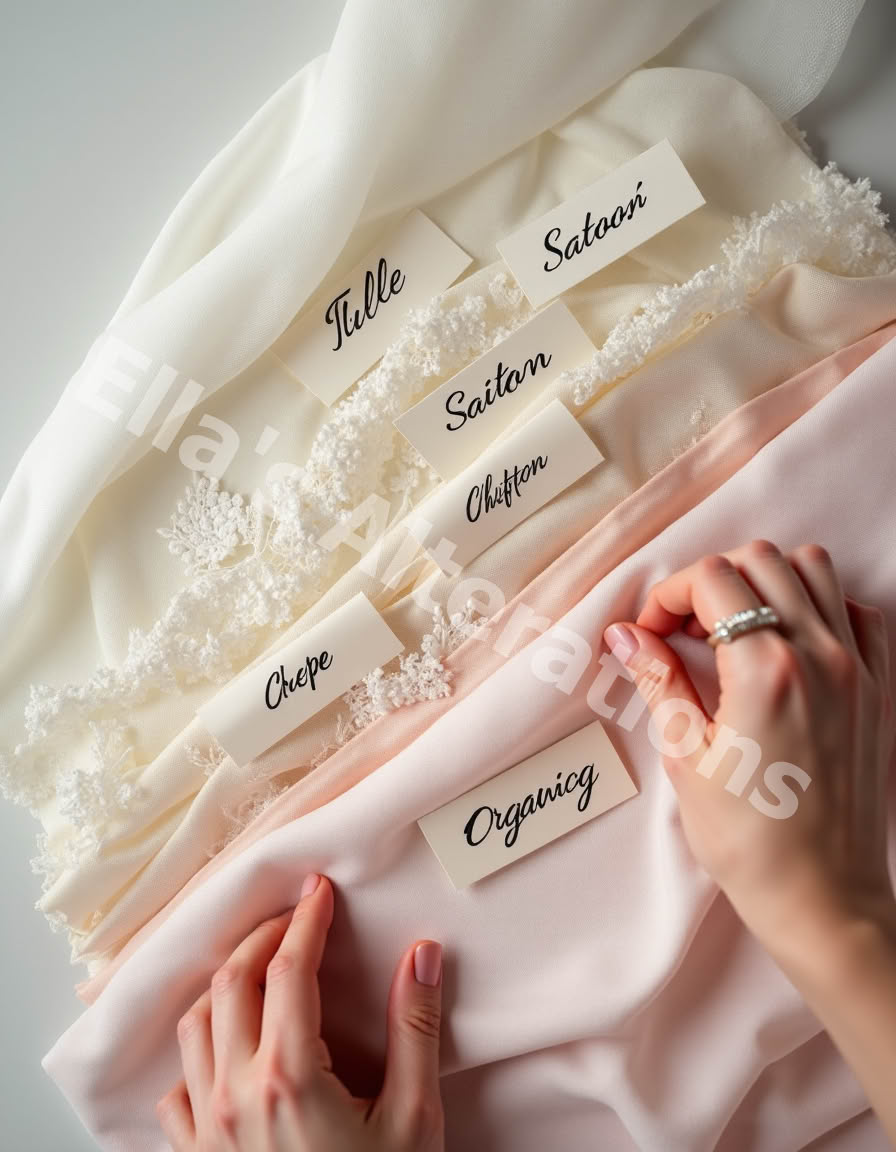
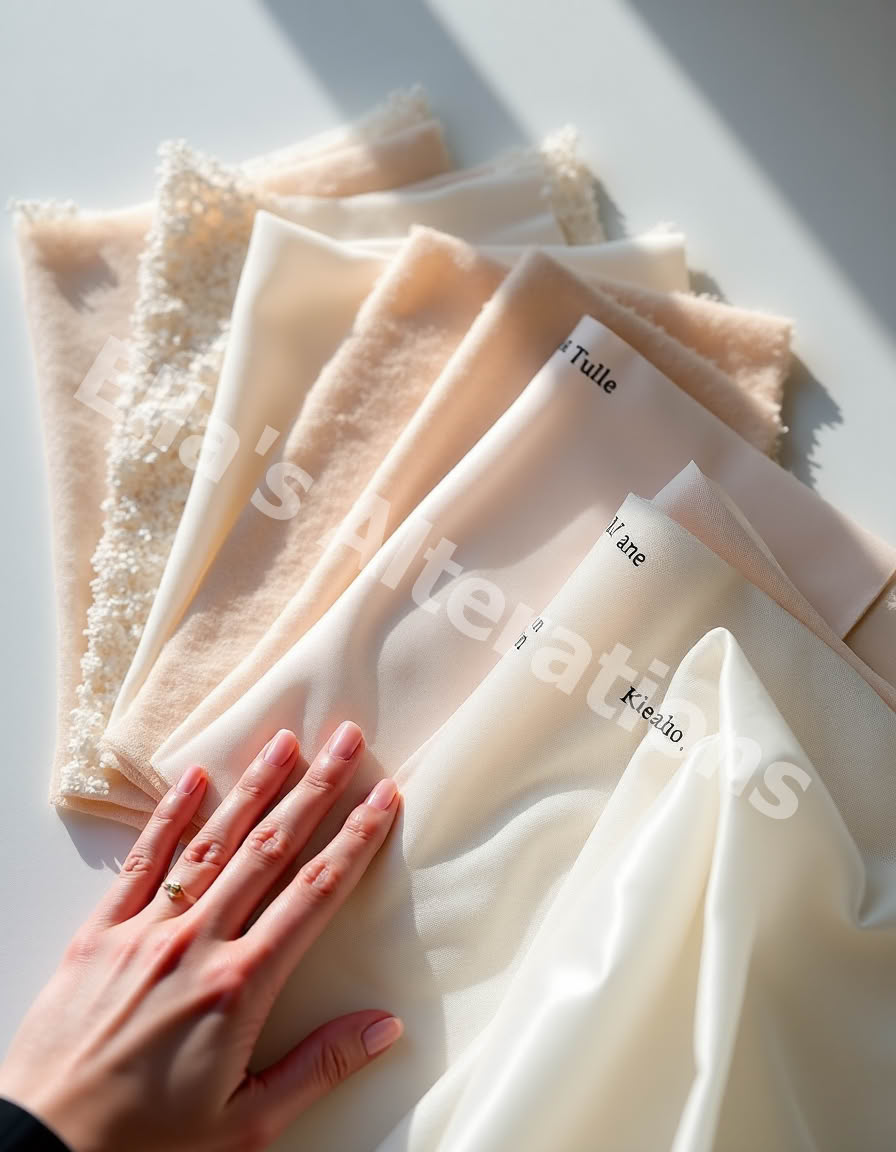
- Tulle is soft, floaty, and perfect for layering
- Satin is smooth and lustrous with a formal edge
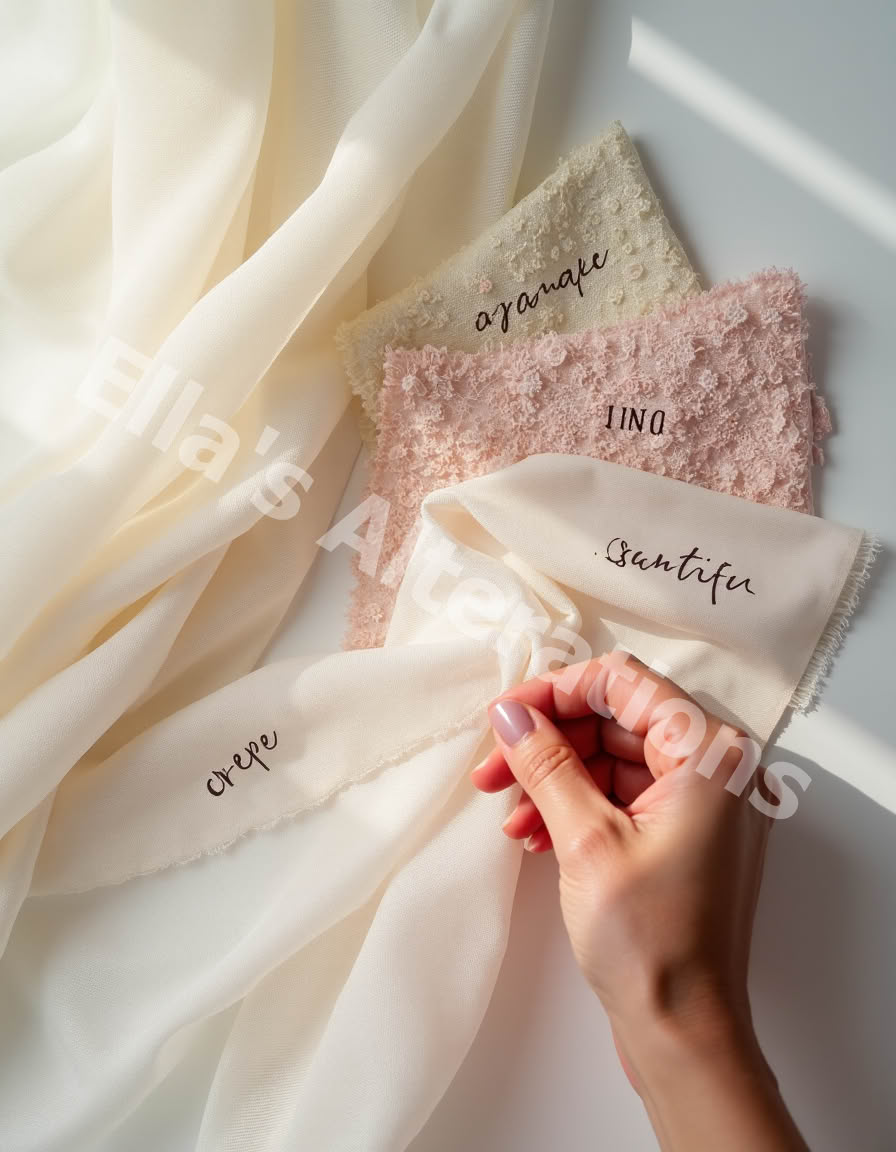
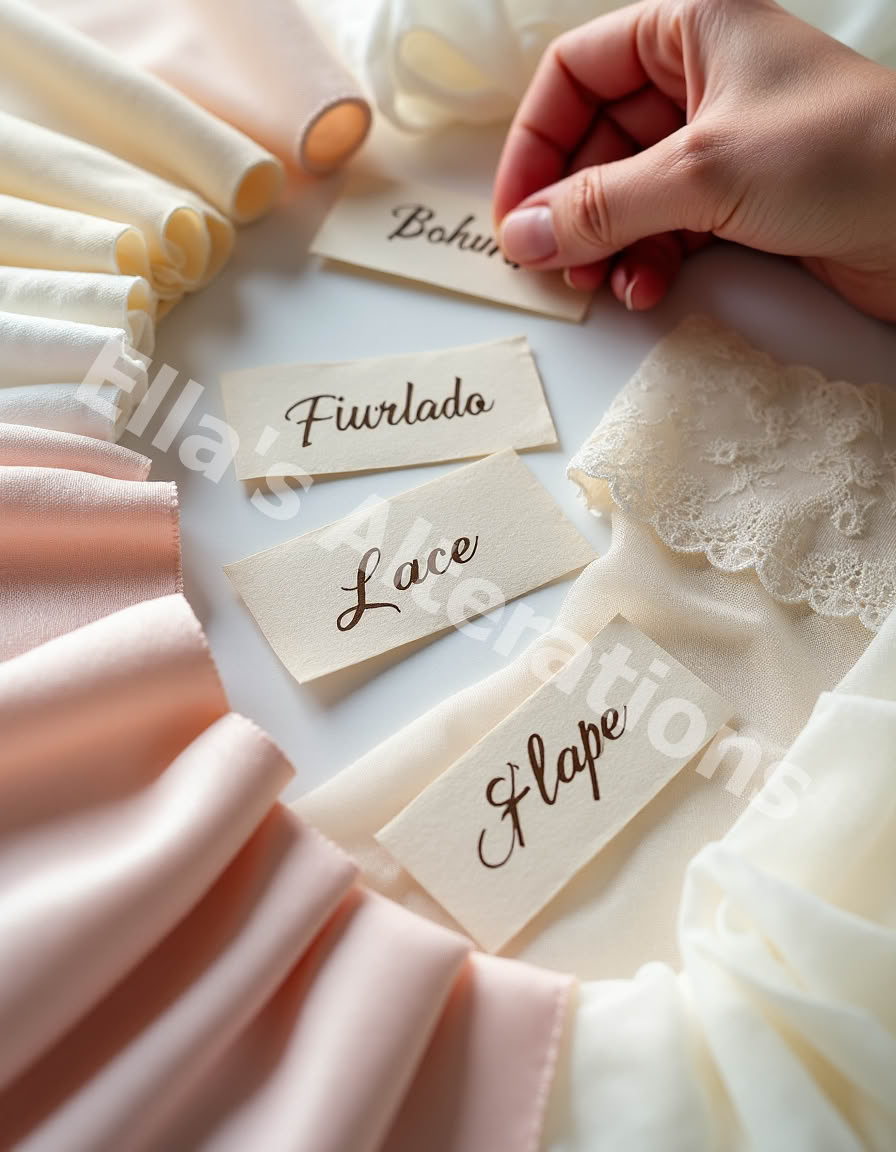
- Lace brings vintage charm and detail, while organza offers lightweight structure with a touch of sheen
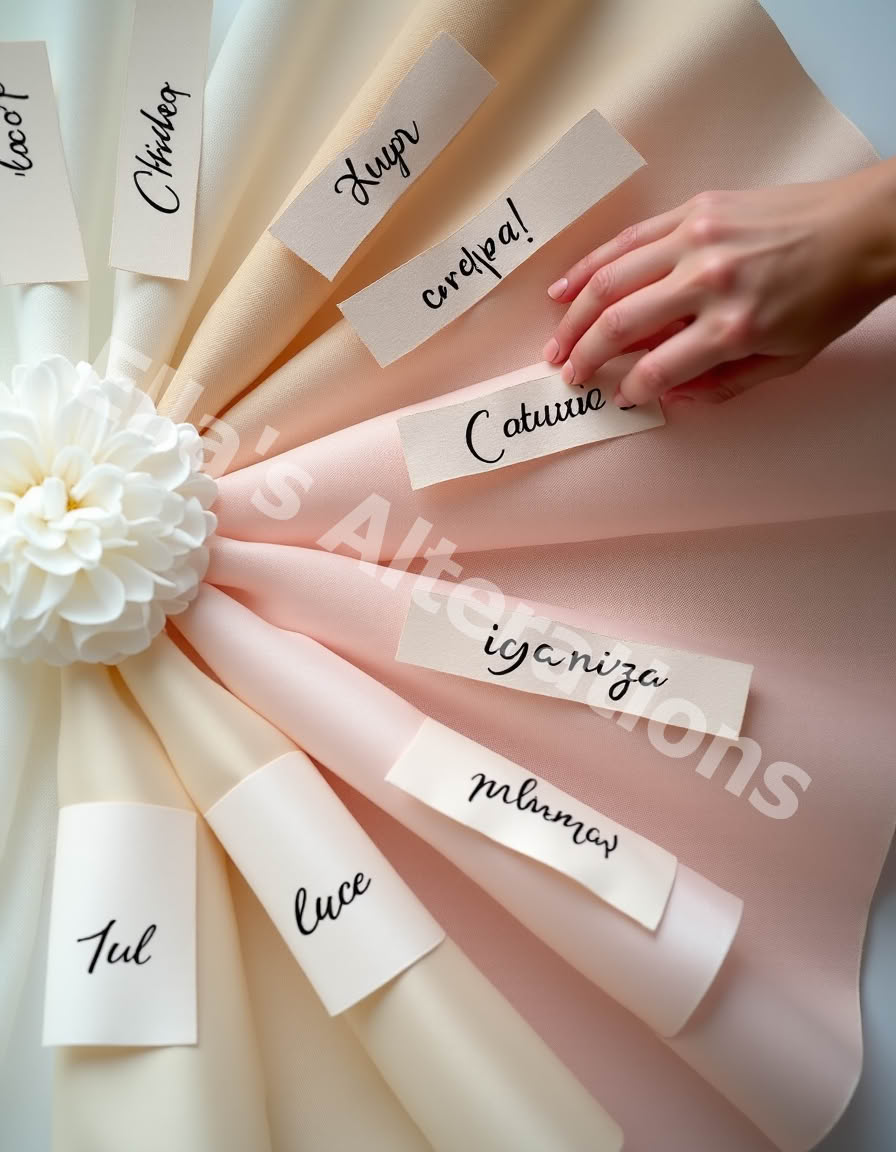
- Chiffon glides with a whisper, crepe lends stretch and fluidity, taffeta adds volume and crispness, and mikado delivers richness with a modern edge
The fabric doesn't just impact how the skirt looks; it influences how it feels when you walk, sit, dance, and twirl
Tailoring is the final, crucial layer in the artistry of a wedding skirt
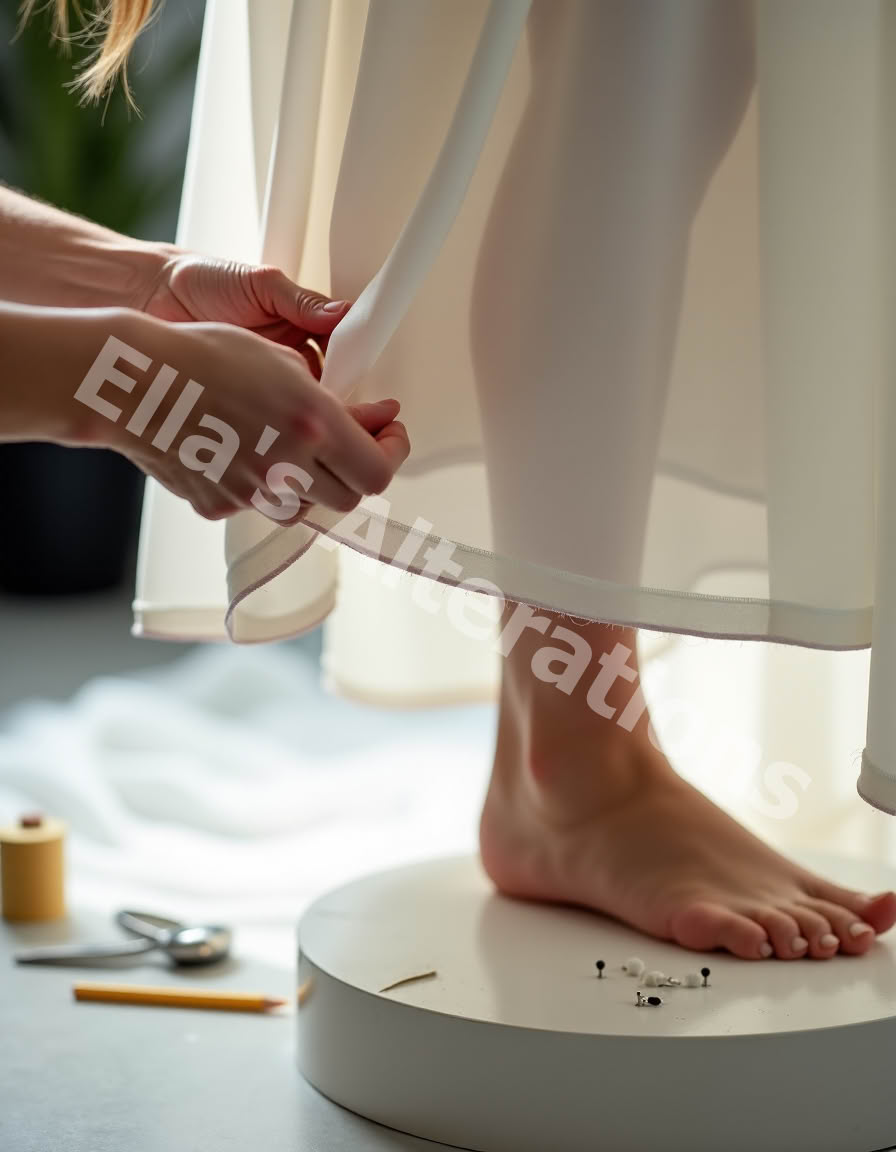
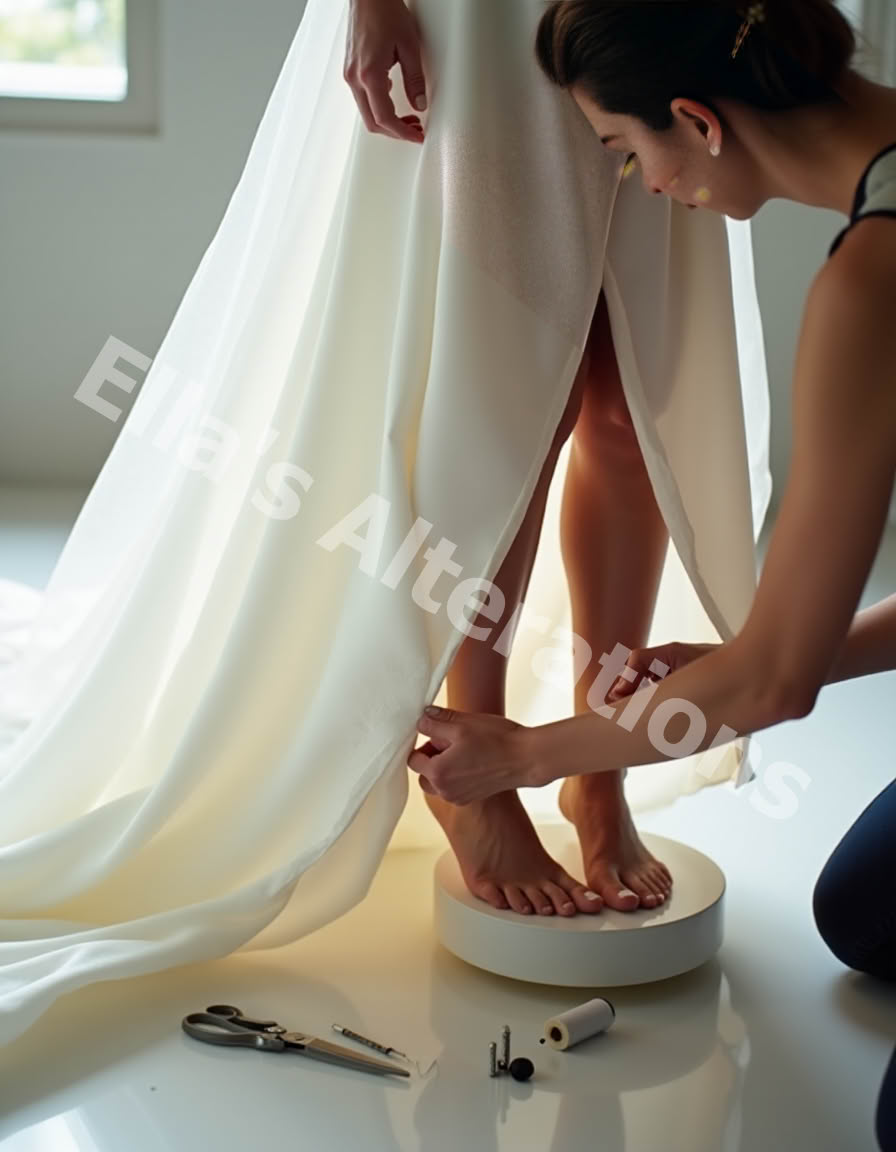
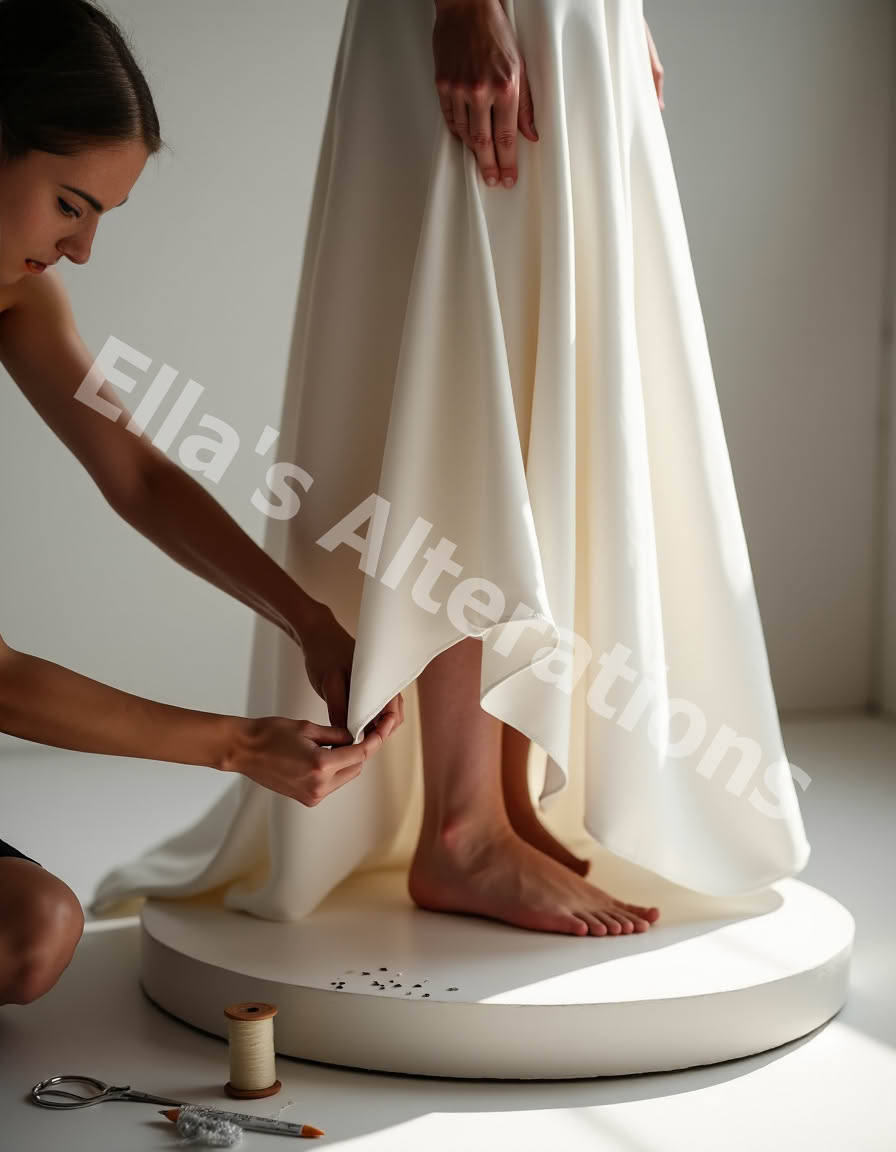
Hemlines must be cut precisely to avoid tripping or dragging
Seams need to support the silhouette without adding unnecessary bulk
A bustle might be added to lift the train during the reception, offering both function and beauty
Even subtle details like pleats, godets, or panels can dramatically change the way a skirt moves or flows
Every stitch, every tuck, every fold is intentional
A tailor doesn’t just fit a skirt to your body, they sculpt it to your moment
And when all these elements come together, the result is more than just a piece of clothing
It’s a memory in motion
A statement of who you are, how you feel, and how you want to be remembered as you make that walk in full, fierce bridal glory
So yes, the skirt may be the lower half of the gown, but its impact is anything but small
The Skirt: Where the Silhouette Begins:
When it comes to wedding gowns, the skirt is where everything truly begins.
It shapes not just the physical outline of the dress but the emotion it carries.
The moment a bride slips into her gown, it’s often the skirt that makes her pause, breathe in, and feel the full weight of the moment.
It sweeps, hugs, flares, or floats, and that motion is part of the magic.
From the outside, it may seem like a simple design feature, but to a tailor, the skirt is a carefully engineered blend of artistry, structure, and storytelling.
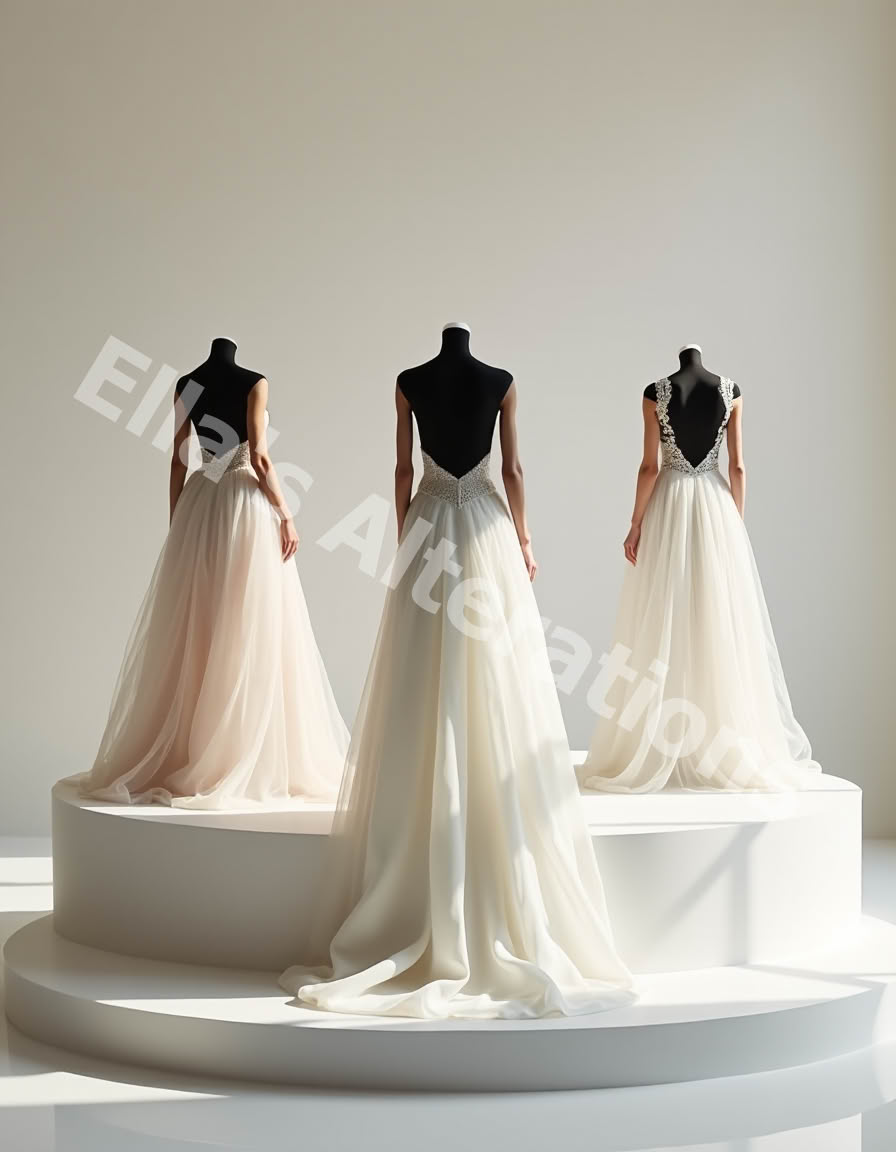
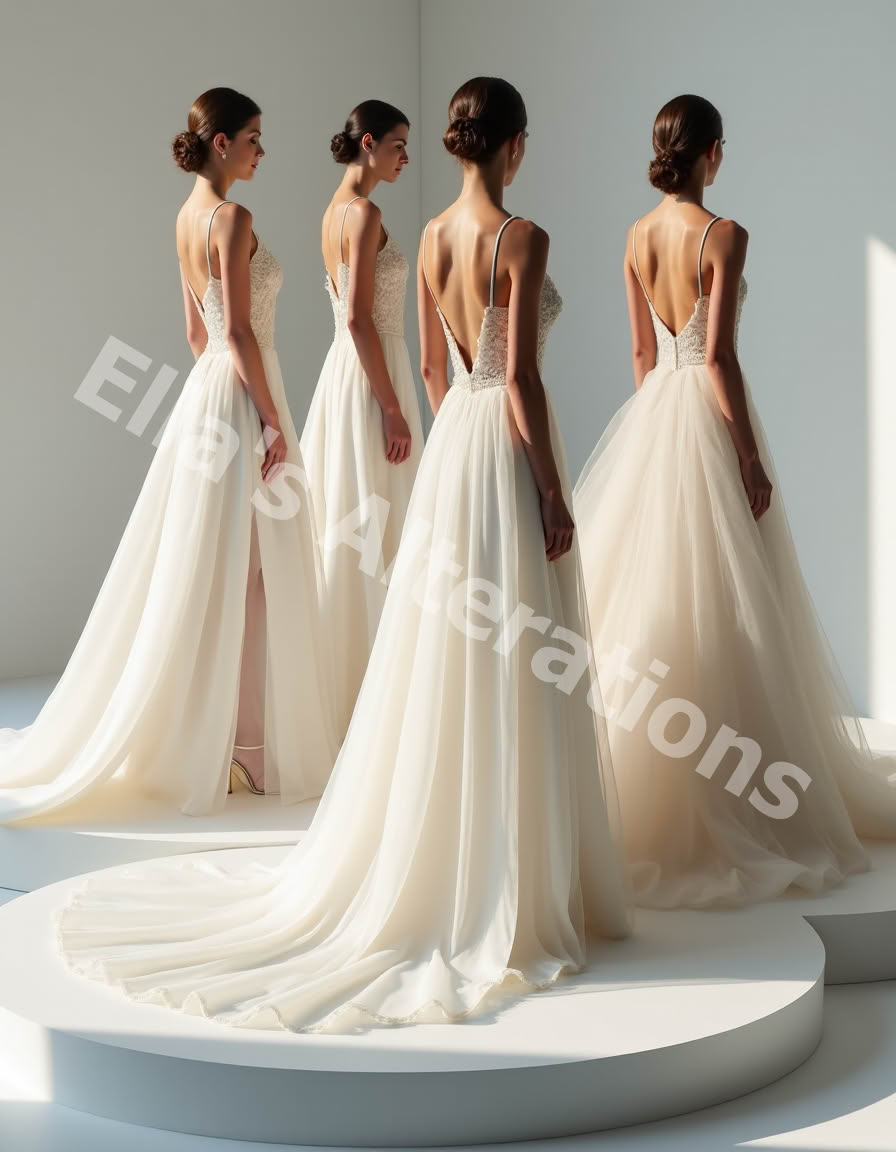
At its core, the skirt defines the silhouette, which is the overall shape or contour of the dress when viewed from a distance.
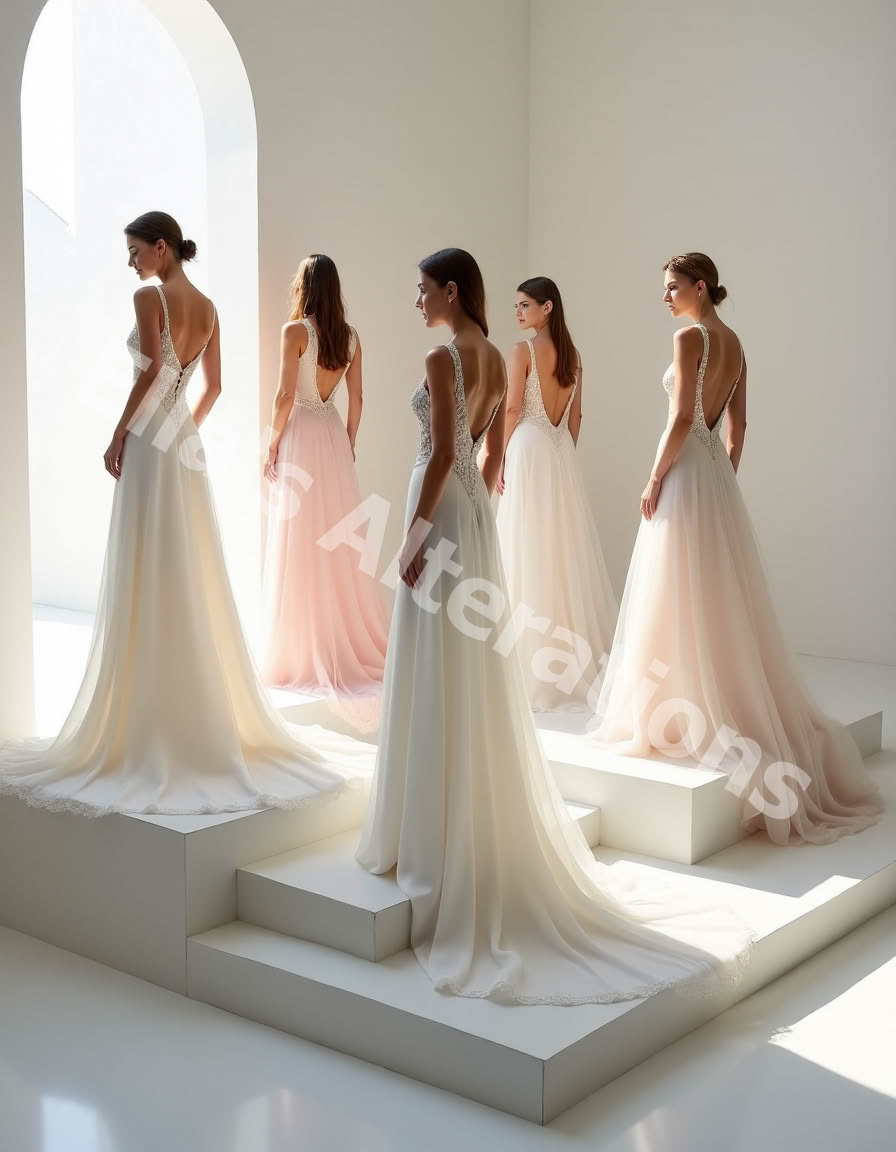
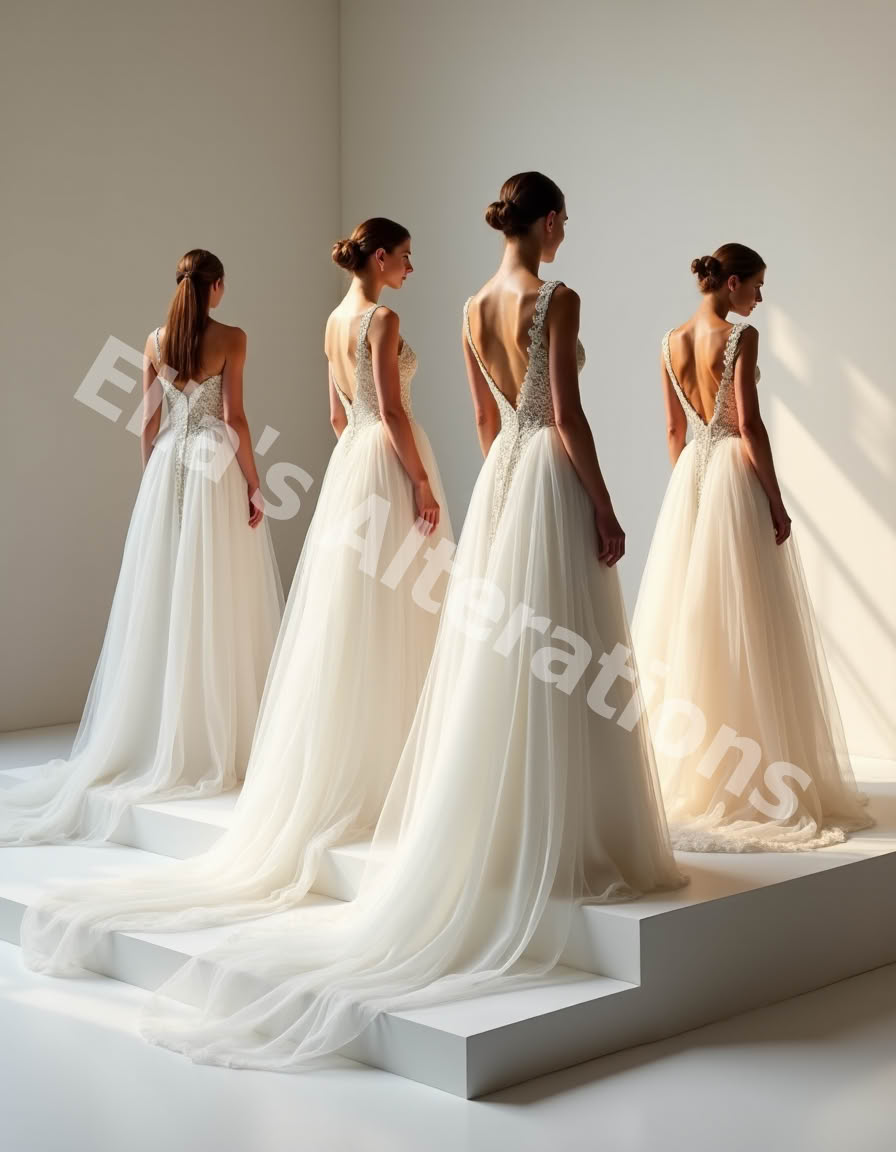
It’s what people see when you’re walking down the aisle, standing at the altar, or captured in photos from behind.
Whether it’s grand and voluminous or sleek and sculpted, the skirt sets the tone for the entire look.
And the key to achieving that silhouette lies in how the skirt is cut, constructed, and styled.
Take, for example, the beloved A-line.
It’s universally flattering, thanks to its gentle flare from the waist down.
It follows the natural curves of the body without clinging, which makes it a favorite for many body types and bridal styles.
The A-line skirt is elegant without being overwhelming and can be as formal or relaxed as the bride desires depending on the fabric and detailing.
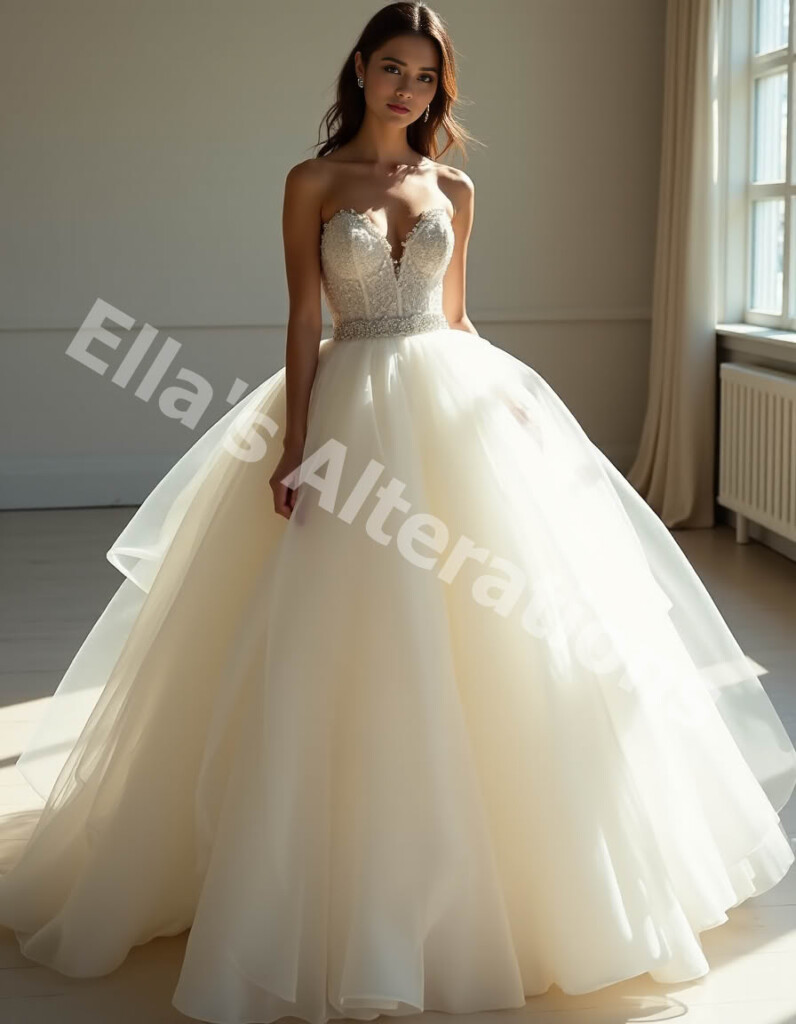
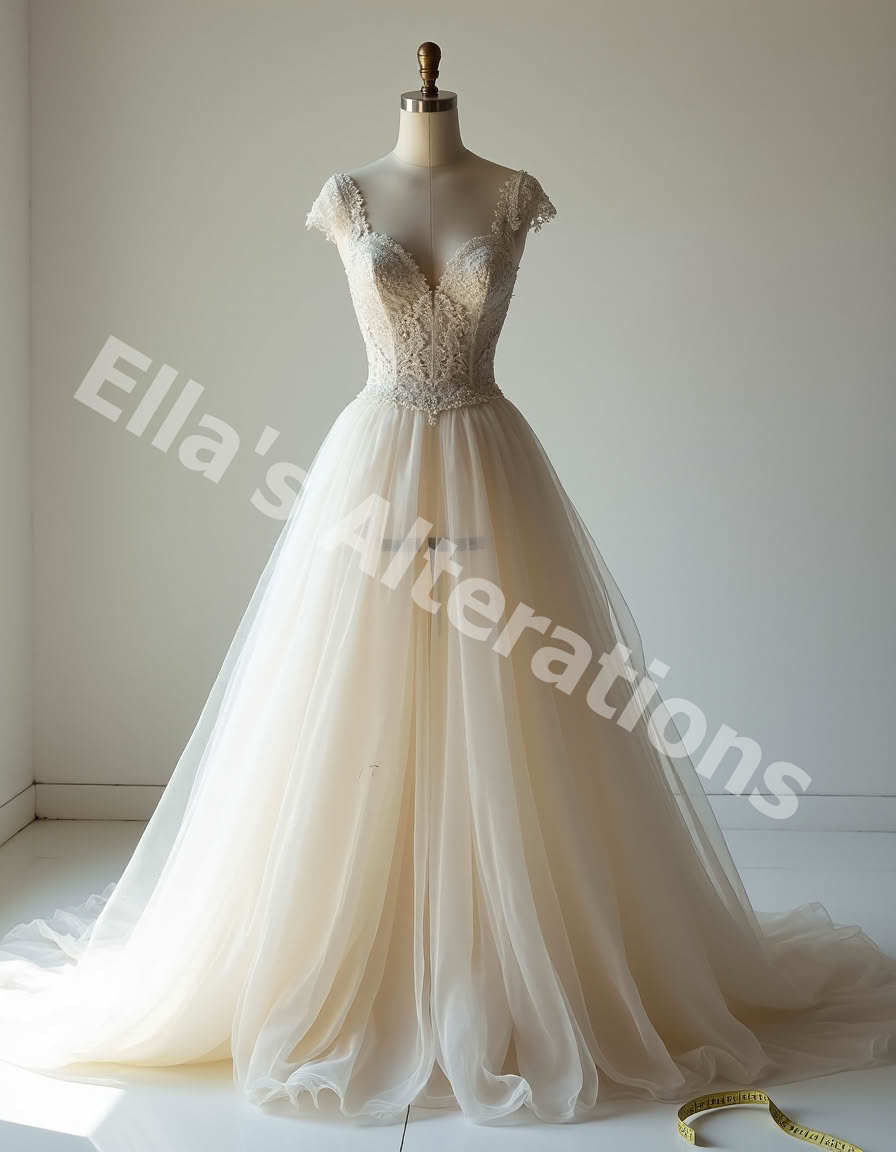
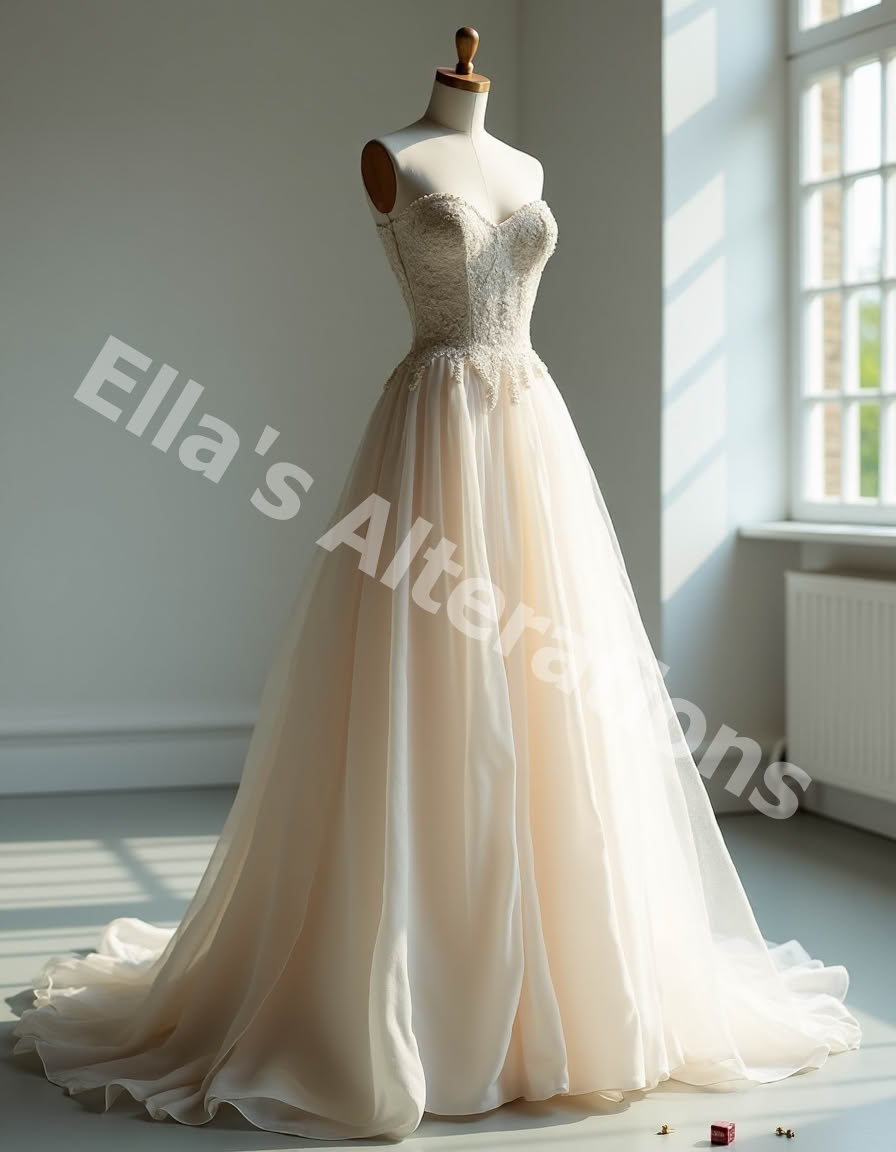
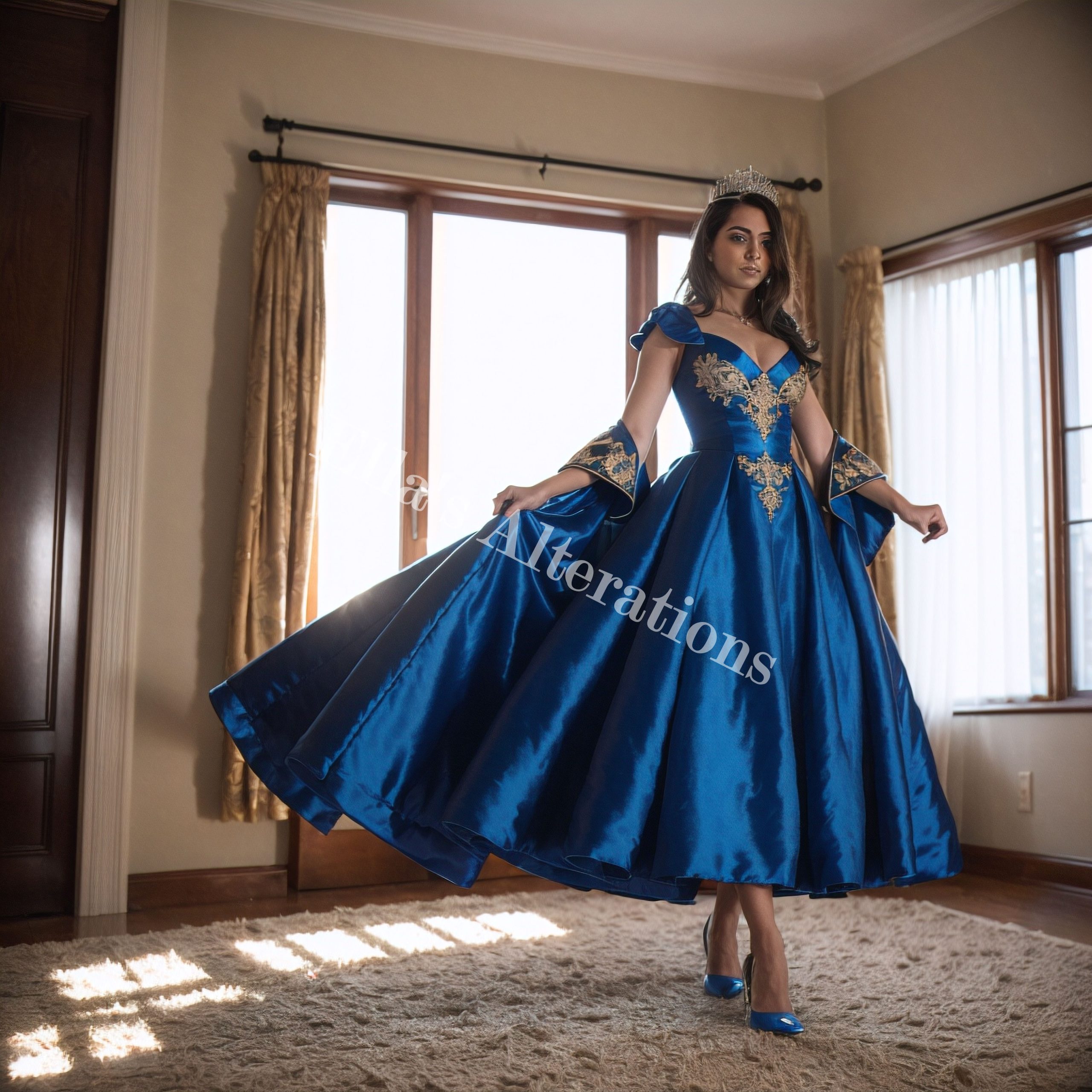
Then there’s the ballgown, the ultimate in bridal drama.
With a fitted bodice and a full, voluminous skirt, this silhouette commands attention.
The fullness of the skirt typically comes from structured underlayers like crinoline or a built-in petticoat.
From a tailoring perspective, constructing a ballgown requires careful layering to ensure the skirt holds its shape without becoming too heavy or restrictive.
The placement of pleats or gathers is essential to distributing volume evenly so it flatters the waist and creates that classic princess feel.
For brides looking to show off their curves, mermaid and trumpet skirts offer bold silhouettes with flair.
Both styles are fitted through the hips and thighs before flaring out.
The mermaid flares at or just below the knee, while the trumpet typically flares around mid-thigh, creating a slightly softer effect.
These silhouettes are stunning but require precise tailoring to ensure comfort and ease of movement.
Since the skirt is fitted through the body, every seam and dart must be perfect.
- Too tight, and it can restrict walking
- Too loose, and the intended shape is lost
On the opposite end, the sheath skirt offers a minimal, modern silhouette.
It falls straight from the hips, often with no flare at all.
The beauty of a sheath lies in its simplicity, but this simplicity can be deceptive.
Without the support of layers or embellishment, the tailoring must be flawless.
The hem must fall clean and smooth, the seams must be perfectly aligned, and the fabric must drape without bunching or sagging.
This style demands expert cutting and often relies on high-quality fabrics with natural movement like silk or crepe.
Even beyond these primary silhouettes, there are endless variations and hybrid styles that blend elements together, like fit-and-flare, empire, or modified A-line.
Each variation adds nuance to the way the skirt behaves and how it balances with the rest of the gown.
Ultimately, the skirt is more than just a design choice.
It’s the starting point for shaping your entire look.
For tailors or trained bridal seamstresses, it’s the foundation we build everything else upon.
For brides, it’s the part of the gown that makes the dream feel real.
Whether soft and romantic or bold and sculptural, the skirt defines your walk, your presence, and your bridal identity from the first step forward.
From the Bodice to the Train: A Guide to All Wedding Dress…
Wedding Skirt Silhouettes: Shape Meets Style:
Wedding skirt silhouettes are the backbone of bridal style.
They’re the first visual cue of a bride’s personality, presence, and confidence.
Each silhouette tells a different story.
Some whisper romance, others scream drama.
But every single one starts with a precise cut and careful design.
Understanding silhouettes is essential to appreciating how style meets shape—and how tailoring brings that vision to life.
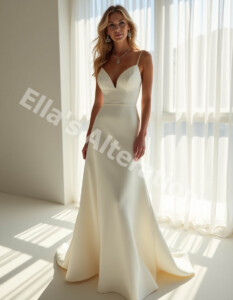
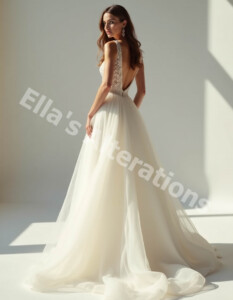
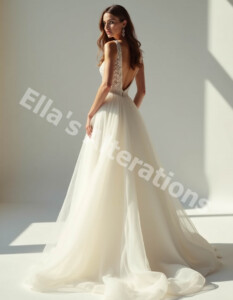
Let’s begin with the A-line skirt, a timeless favorite.
It’s called A-line because it forms a soft “A” shape from the waist down.
This silhouette is beloved for its universally flattering effect.
It gently skims over the hips and flares with just enough volume to feel bridal without feeling heavy.
From a tailor’s perspective, it’s also one of the most versatile bases to work with.
Whether crafted from breezy chiffon for a beach wedding or layered with lace for a romantic garden ceremony, the A-line adapts beautifully to fabric, body type, and occasion.
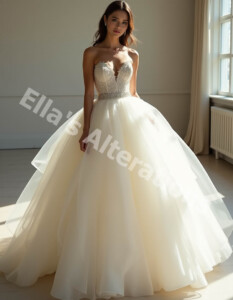
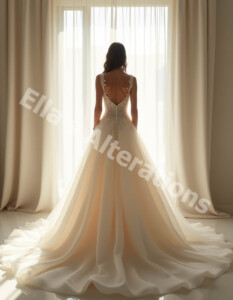
Next is the ballgown, the epitome of fairytale glamour
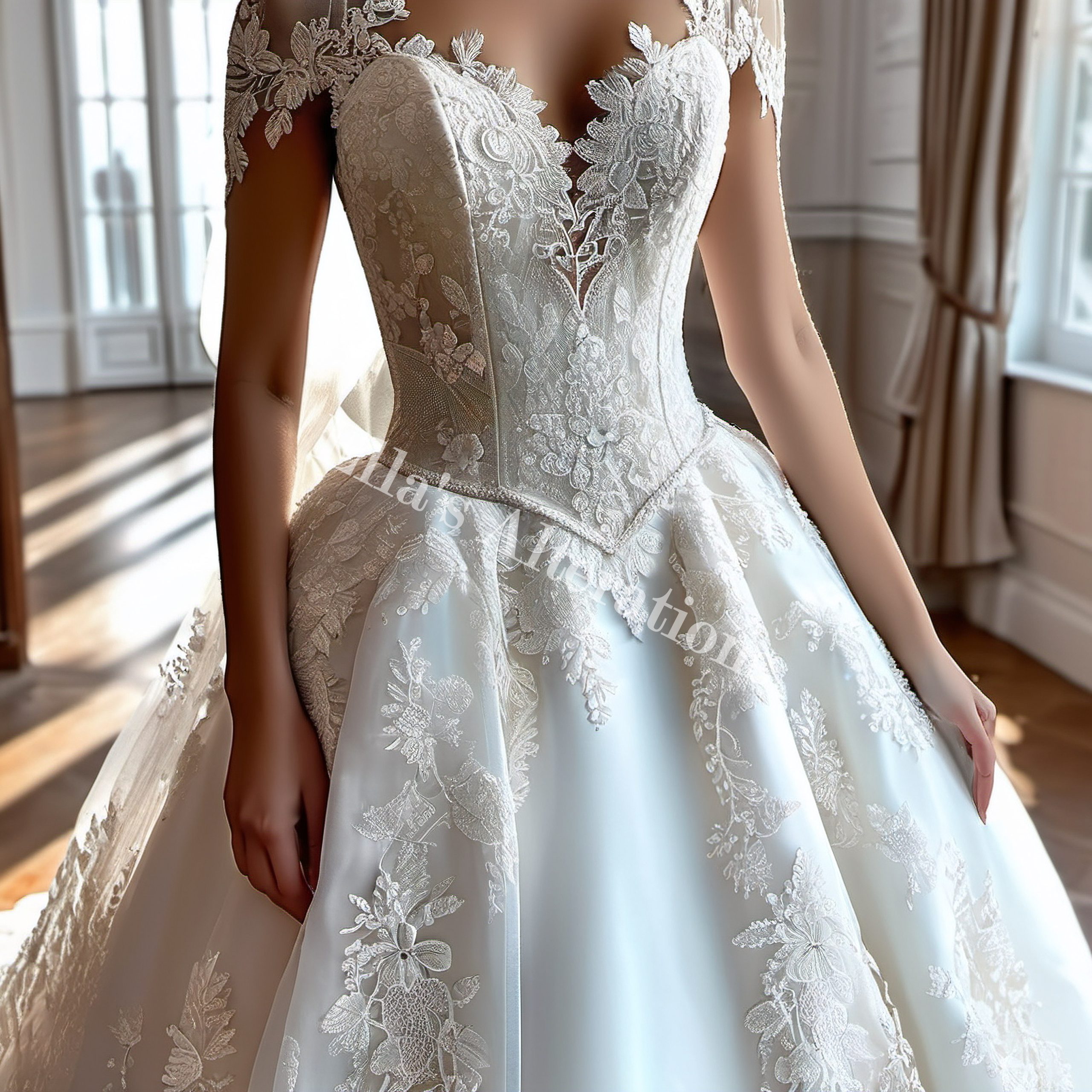
This silhouette features a structured, fitted bodice and a full, dramatic skirt.
It’s all about volume and elegance.
Achieving that fullness requires more than just yards of fabric.
Tailors build this look with layers of crinoline, tulle, or even structured hoops.
Every layer needs to sit precisely, so the skirt flares evenly and gracefully.
Placement of pleats or gathers also plays a critical role in where and how the skirt expands.
- For petite brides, we often reduce bulk in certain areas to avoid overwhelming the frame.
- For taller brides, a bit more volume balances the silhouette beautifully.
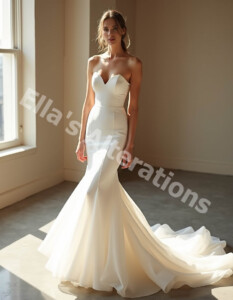
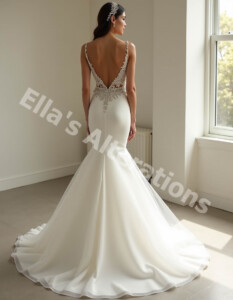
Now let’s talk about the mermaid skirt—a bold, sculpted silhouette that hugs the body through the bodice, waist, hips, and thighs, then flares out at or just below the knees.
The result is a sultry, red carpet-ready look that accentuates every curve.
From a tailoring standpoint, this silhouette requires precision and structure.
Seams must contour the body closely while still allowing movement.
Brides choosing this style often request strategic stretch in the fabric or subtle godets added to the flare to increase comfort and flexibility.
The trumpet skirt is a close cousin of the mermaid.
The difference lies in where the flare begins.
While mermaid skirts flare at the knee or below, trumpet skirts start their flare around mid-thigh, creating a slightly softer and more wearable version of the silhouette.
The tailoring approach here is similar but allows a bit more ease through the lower body.
Brides love this style for its balance between body-hugging glamour and graceful movement.
The sheath skirt is the ultimate minimalist silhouette.
It falls straight from the hips with little to no flare, giving off a sleek, modern vibe.
Sheath dresses are often chosen for destination weddings, city ceremonies, or modern bridal looks.
But simplicity requires precision.
With minimal volume or distraction, every seam, dart, and drape is visible.
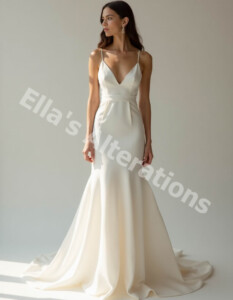
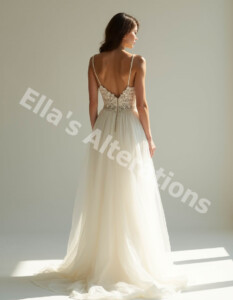
A well-tailored sheath will contour the body gently, with fabric that flows cleanly and effortlessly.
It’s a favorite for tall or slender brides, but it can be tailored to suit many body types with thoughtful adjustments.
Lastly, we can’t forget the fit-and-flare, which blends elements of the sheath and mermaid.
It hugs the torso and hips but begins its flare just below the hips, offering movement without full commitment to drama.
It’s flattering, feminine, and popular for brides who want shape without restriction.
Every silhouette has its own energy, and tailoring is what brings that energy to life.
Whether soft and sweeping or sculpted and bold, the wedding skirt silhouette is more than a fashion statement—it’s the bride’s story, written in fabric and formed by hand
Layers and Structure: What’s Underneath It All?:
What gives a wedding dress skirt its shape, its movement, and that signature swoosh as the bride walks down the aisle? The secret lies beneath the surface
While the top layer may steal the spotlight with lace, satin, or tulle, the real architecture of a wedding skirt is built underneath
This section dives into the hidden layers and structural components that give the skirt its signature silhouette and function
Every skirt, from the voluminous ballgown to the barely-there sheath, relies on a unique inner construction
Let’s start with the underskirt, often overlooked but absolutely essential
The underskirt is the foundation that supports the shape of the gown
It can be sewn in or worn separately, depending on the design and desired silhouette
Without it, a full skirt could collapse or lose its intended structure, and a fitted skirt might cling uncomfortably instead of gliding with grace
Crinolines are one of the most common underlayers used to create volume
Made from stiffened netting or tulle, crinoline adds body without much weight
It’s usually tiered or layered, with more volume at the bottom to help the skirt flare
A tailor will often customize the crinoline to suit the bride’s proportions, making sure it balances the skirt evenly and doesn’t overwhelm the frame
For gowns that require more dramatic fullness, hoops may be added
These are circular bands, usually sewn into the lining of the skirt or worn as part of a hoop skirt slip
They create a bell-like shape and are perfect for ballgowns
Tailors take extra care with hoop skirts to ensure the dress moves naturally, rather than bouncing or becoming too rigid
The diameter and placement of each hoop are carefully measured so the silhouette remains flattering and wearable
Some skirts also feature petticoats, which are softer than crinoline and offer gentle volume
They’re made from tulle, organza, or cotton blends and are often used in combination with crinoline for a layered effect
Petticoats add structure while also preventing the outer fabric from sticking to the legs or shifting out of place as the bride moves
Now let’s talk about bustles
These are not exactly underlayers, but they are essential components for managing a skirt’s structure, especially after the ceremony
A bustle is a series of hooks, ribbons, or buttons sewn into the back of the skirt to lift the train off the ground
This allows the bride to move freely during the reception without dragging her gown
There are different types of bustles—French, American, ballroom, and more—and choosing the right one depends on the fabric, weight, and style of the skirt
A good bustle is practically invisible when in place and blends seamlessly into the design of the gown
Another structural detail is the use of godets, which are triangular panels of fabric inserted into the skirt to add flare and movement
Godets are often placed at the back or sides of fitted skirts like mermaid or trumpet styles
They give the illusion of more volume and create beautiful motion without adding bulk to the waist or hips
Beneath it all, there’s a layer of tailoring magic
The seams, linings, and internal boning of a skirt all work together to support its outer appearance
Even the way a hem is finished affects how the skirt falls and whether it feels light or heavy as you walk
The beauty of a wedding skirt might be in its surface, but its strength and elegance come from what’s underneath
Tailors understand that structure is not about stiffness—it’s about support, balance, and movement
Every hidden stitch, every inner layer, plays a part in creating that unforgettable bridal moment where the skirt sways perfectly with every step
Sheath Wedding Dresses for Every Budget: From Affordable to…
Skirt Fabrics: Flow, Texture, and Drape:
Fabric is the lifeblood of a wedding dress skirt
It determines how the skirt moves, how it feels, and how it photographs
The fabric is never just a detail—it’s the language the skirt speaks
Texture, weight, sheen, and drape all work together to bring the silhouette to life and help brides connect emotionally with their gown
You can have the perfect cut and a flawless fit, but without the right fabric, the skirt won’t sing
Each fabric brings something unique to the table
Some fabrics are soft and fluid, others are structured and crisp
Some create romance with every sway, while others sculpt drama into every fold
Let’s take a closer look at the most common bridal skirt fabrics and how each one transforms the look and feel of a gown
Tulle is light, airy, and full of whimsy
It’s often used in layers to create volume without weight, making it a go-to choice for ballgowns and A-line skirts
Tulle can be soft or stiff, depending on the finish, and can be layered for texture or left sheer for a dreamy, ethereal effect
While beautiful, tulle can be delicate and snag easily, so tailors handle it with care, using hidden seams and reinforced linings for durability
Lace is the fabric of romance
While it’s often used for bodices and sleeves, lace skirts—either as an overlay or in full—add intricate texture and a vintage or bohemian feel
There are many types of lace, from delicate Chantilly to bold Alençon, and the pattern you choose can shape the gown’s personality
Tailors take care to align lace patterns perfectly at seams and hems so the motifs remain uninterrupted and symmetrical
Satin is one of the most traditional and luxurious options
Smooth and glossy, it has a heavier weight that creates clean lines and a defined silhouette
Satin skirts hold their shape well, making them perfect for structured ballgowns and dramatic fit-and-flares
Tailors love satin for its elegance but are meticulous in handling it since it can show every fold, seam, or wrinkle
Pressing, stitching, and cutting must be executed flawlessly to maintain its polished finish
Chiffon is soft, light, and perfect for creating movement
Unlike satin, chiffon flows freely and doesn’t hold shape on its own, which makes it ideal for sheath or A-line skirts that need fluidity
It’s often layered or used over a lining, since it’s semi-transparent
Chiffon’s delicate weave requires skilled hands to prevent puckering at seams and to maintain its graceful drape across the body
Organza offers a balance between structure and lightness
It’s sheer like chiffon but stiffer, giving skirts a voluminous look with a touch of texture
Organza is often used in ballgowns to add body without the weight of satin
It can also be shaped into ruffles, pleats, or layered to create architectural interest in modern designs
Crepe is a favorite for modern brides
With a smooth surface and a gentle stretch, crepe hugs the body in a way that feels both comfortable and couture
It’s commonly used in fit-and-flare and sheath skirts
While it doesn’t offer volume, it creates beautiful clean lines and understated elegance
Tailors appreciate crepe for its versatility but must watch for stretching during construction
Taffeta is crisp, lightweight, and subtly shiny
It rustles as it moves, giving the skirt a dramatic, almost regal feel
Taffeta holds shape well, making it a smart choice for ballgowns or structured A-lines
It’s less flowy than other fabrics, but it brings volume with personality
Mikado is a heavyweight blend, usually of silk and nylon, that feels rich and structured
It’s perfect for clean, modern skirts that need body without bulk
Mikado is smooth with a slight sheen and doesn’t wrinkle as easily as satin
Tailors love it for architectural shapes and minimalist designs
Ultimately, the fabric you choose tells your story
It influences how your skirt moves through space and how it feels against your skin
It can bring softness or structure, drama or simplicity
In the hands of a skilled tailor, fabric becomes more than material—it becomes the brushstroke that paints the bridal vision into reality
Unpacking Details: Providing Explanations:
Wedding Skirt Styles?
Wedding skirt styles refer to the various shapes, cuts, and designs that define the lower half of a bridal gown
The most iconic styles include A-line, ballgown, mermaid, trumpet, and sheath
Each one offers a different silhouette, creating a distinct mood
- A-line skirts are soft and flattering on almost every body type
- Ballgown skirts are full and regal, often layered with tulle or satin
- Mermaid and trumpet skirts are curve-hugging and flared for bold, glamorous brides
- Sheath skirts are minimalist and elegant, great for modern weddings or destination ceremonies
Designers sometimes combine these styles for unique hybrids, like a fit-and-flare with an A-line overlay
Tailors pay close attention to skirt style when altering a gown, as even slight changes can shift the entire silhouette
Ultimately, the skirt style you choose sets the tone for your entire look—from romantic to fashion-forward
Wedding Dress Skirt Styles?
Wedding dress skirt styles focus specifically on how the skirt portion of the gown is designed to complement the upper bodice and overall dress
These styles not only define the silhouette but also influence movement, comfort, and visual impact
Common skirt styles include tiered skirts, which add texture and volume; ruffled skirts, for playful romance; and pleated skirts, which bring structured elegance
Some brides opt for asymmetrical skirts or high-low hemlines to show off shoes or make a modern statement
Detachable skirts are also trending, offering brides the option to change from ceremony to reception without a full outfit switch
A lace or chiffon overlay can add softness, while a structured mikado or taffeta base gives dramatic shape
Tailors may adjust skirt styles with added godets, fabric inserts, or bustles to enhance movement or customize flair
The key is finding a skirt style that reflects your vibe and fits seamlessly into your overall wedding vision
Can You Wear A Skirt To A Wedding?
Absolutely
Wearing a skirt to a wedding is completely appropriate—as long as it aligns with the dress code and the setting
Whether you’re a guest or part of the wedding party, a thoughtfully styled skirt can be just as formal and fabulous as a dress
The key is balance and polish
A midi-length satin or pleated skirt paired with a silk blouse can feel elegant and wedding-ready
For a more casual celebration, a chiffon or floral maxi skirt is light, lovely, and appropriate
Always avoid skirts that are too short, sheer, or overly flashy unless the invite specifically calls for a bold dress code
Also, keep in mind the location
A beach wedding calls for lighter fabrics, while a formal ballroom event might warrant a structured or embellished look
When in doubt, a tailored skirt with elevated accessories can strike the perfect balance between stylish and respectful
What Wedding Dress Style Suits Me?
Choosing the right wedding dress style is all about balancing body shape, personal taste, and wedding theme
A good starting point is your silhouette
- Brides with hourglass figures often shine in mermaid or trumpet styles, which accentuate curves
- Pear-shaped brides look stunning in A-line gowns, which highlight the waist and flow over the hips
- Apple-shaped brides often feel their best in empire waists or ballgowns, which draw attention upward and balance proportions
- Petite brides may prefer sheath or fit-and-flare styles to elongate the body, while taller brides can embrace dramatic shapes like ballgowns or high-fashion fit-and-flares
Beyond shape, consider your comfort and confidence
Do you love structure or flow? Do you want to glide or twirl? The best style is the one that makes you feel like the most powerful, radiant version of yourself
A good tailor can adjust almost any gown to fit your body beautifully
How To Wear A Skirt To A Wedding?
Wearing a skirt to a wedding is all about curating a polished, event-appropriate outfit that respects the tone of the celebration
First, check the invitation
If the dress code is formal, pair a long or midi-length skirt with an elegant blouse, a structured top, or even a tailored blazer
Fabrics like satin, silk, chiffon, and crepe work beautifully for weddings
For semi-formal or outdoor settings, a flowy A-line or pleated skirt in floral or pastel tones is light, lovely, and guest-appropriate
Always consider your footwear—heels, strappy sandals, or chic flats can elevate the whole look
Avoid anything too casual like denim or mini skirts unless it’s a very laid-back affair
Don’t forget accessories
A statement earring, clutch, and soft makeup can help your skirt-based outfit feel intentional and dressy
With the right styling, a skirt can be just as refined as a dress, and a lot more comfortable
White Wedding Skirts?
White wedding skirts are having a serious fashion moment, especially for modern brides who want a non-traditional twist
Instead of a full gown, many are choosing bridal skirt and top separates, which allow for personal expression, comfort, and even outfit changes throughout the day
A white tulle or satin skirt paired with a beaded or lace bodice can feel just as bridal as a one-piece gown
The beauty of a white wedding skirt lies in its versatility—you can create drama with a high-volume silhouette or go sleek and minimalist with a crepe sheath
White skirts also make amazing second looks for receptions or after-parties
From a tailoring perspective, a separate skirt offers flexibility in fit and styling
Just remember to choose your fabric carefully—satin, mikado, or crepe will hold structure, while chiffon or organza offers a softer flow
A well-cut white skirt delivers all the bridal feels, with a modern, fashion-forward edge
Which Wedding Dress Style?
There is no one-size-fits-all answer to which wedding dress style is best—it’s all about you
The key factors to consider are your body shape, personal taste, and venue vibe
If you're a romantic bride, a lace A-line or ballgown might suit you
Prefer sleek and modern? A crepe sheath or satin slip dress could be your perfect match
Want to show off your curves? Go for a mermaid or trumpet silhouette
Outdoor wedding? Think chiffon or organza for breathability and movement
From a tailor’s standpoint, we also consider posture, proportions, and how the fabric will behave when walking, sitting, and dancing
It’s not just about how the dress looks—it’s about how you feel in it
Some brides fall in love with a style they never expected, simply because it flatters them in all the right places
The best dress style is the one that makes you feel like yourself, but elevated
What Wedding Dress Style For Body Type?
Choosing the right wedding dress for your body type can highlight your best features and enhance comfort on your big day
- If you’re hourglass-shaped, fitted styles like mermaid, trumpet, or fit-and-flare will emphasize your balanced proportions
- For pear-shaped brides, A-line or ballgown skirts can highlight your waist while offering flow over the hips
- Apple-shaped brides may find empire waist or A-line styles flattering, as they define the bust and elongate the torso
- If you’re petite, sheath or column dresses can lengthen your frame without overwhelming your stature
- Tall brides have more freedom to experiment with fuller skirts, dramatic trains, or high-fashion designs
Keep in mind, body type is a helpful starting point—not a limitation
With expert tailoring, almost any silhouette can be adjusted to flatter your shape
Confidence comes from fit, not size, and a tailor’s hand can transform a good dress into your dream dress
Which Wedding Dress Style Suits Me?
The best wedding dress style for you is the one that highlights your natural beauty and makes you feel radiant
While body shape plays a role in guiding silhouette choices, personal style, comfort, and venue also matter
For example, if you want drama and tradition, a ballgown with layers of tulle and a structured underskirt delivers that royal moment
- If you love clean lines and sophistication, a crepe sheath or fit-and-flare might be perfect
- If you're petite, avoid overwhelming volume and opt for a simple A-line
- For curvier brides, mermaid or trumpet styles can celebrate your shape, while still giving you room to move
But here’s the truth—your energy in the gown matters more than the rules
Try on different silhouettes with an open mind
A tailor can always refine the fit to suit your unique figure
When you know, you know—and your dress should feel like an extension of your best self
What Wedding Dress Styles Are In?
Current wedding dress trends are all about individual expression, comfort, and intentional detail
Brides are moving away from cookie-cutter gowns and embracing mix-and-match separates, detachable skirts, and unexpected fabrics like crepe, stretch satin, and soft tulle
Popular silhouettes include modern sheath dresses, minimalist ballgowns, and bold mermaid gowns with clean lines
Many designers are leaning into high slits, dramatic trains, and unique back details
In skirts, we’re seeing a lot of layered textures, soft pleating, and lightweight volume that allows movement without bulk
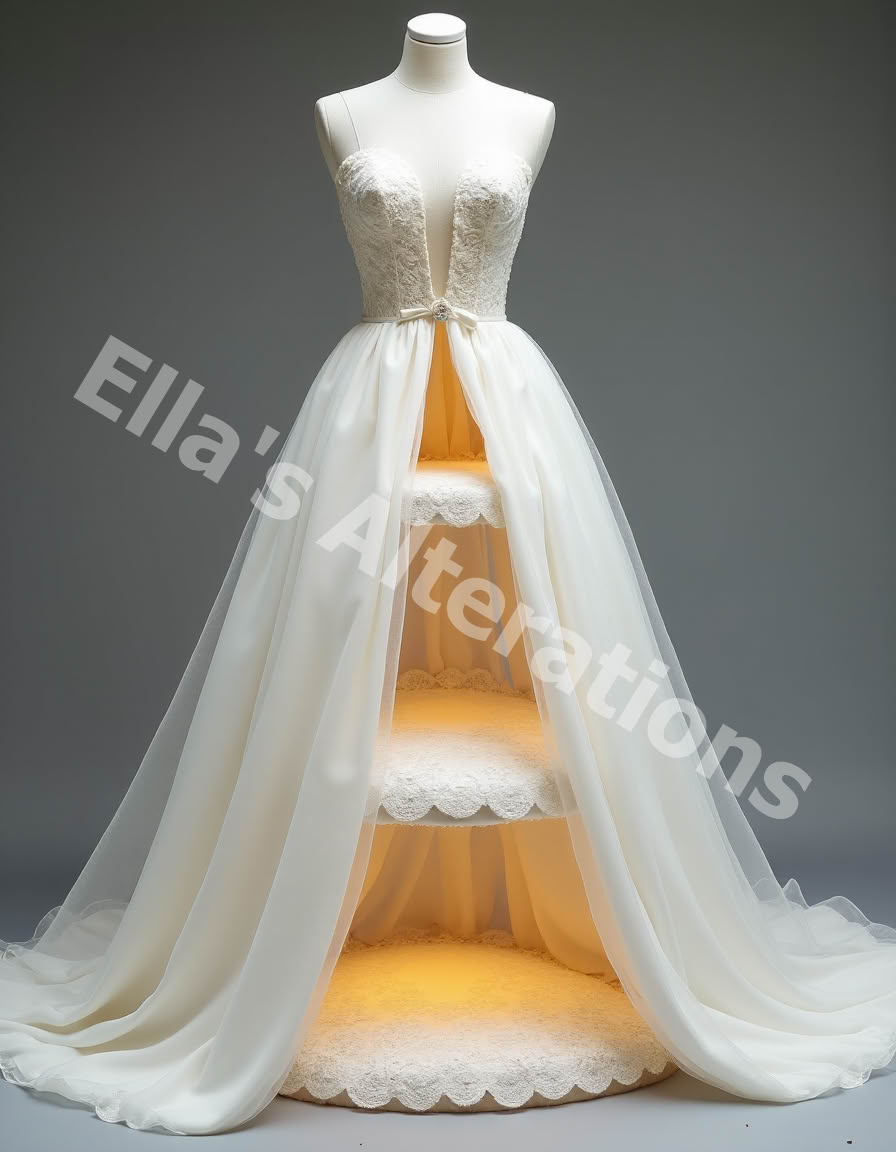
Overskirts are also trending, giving brides the option to switch from ceremony grandeur to reception ease
Tailors love this era of bridal because it invites personalization—more brides are adding custom godets, colored linings, or even pockets
Whether you want timeless elegance or runway flair, today’s wedding skirt styles offer endless possibilities to craft a look that feels completely yours
What Wedding Dress Style Is Best For A Plus Size?
There is no single best style for plus-size brides—there are many that can flatter, support, and empower
The goal is to enhance your natural shape and make sure the gown feels comfortable and secure
A-line silhouettes are often a favorite, as they cinch at the waist and gently flare out, creating balance and elegance
Ballgowns can also look stunning, especially with a structured bodice and soft, layered skirt
For brides who want to accentuate curves, fit-and-flare or trumpet styles with supportive fabrics like mikado or stretch crepe can sculpt beautifully
Tailors may recommend strategic boning, corseted backs, or custom bust support for comfort and shaping
The fabric also plays a huge role—thicker materials like satin and taffeta offer support, while lighter ones like chiffon should be layered thoughtfully
The most important thing? The dress should fit you, not the other way around
With the right tailoring, any style can flatter your figure and boost your confidence
What Are Wedding Dress Styles?
Wedding dress styles refer to the various combinations of silhouettes, fabrics, neckline shapes, sleeve options, and skirt cuts that make each gown unique
Silhouette is one of the most defining factors and includes shapes like A-line, ballgown, sheath, mermaid, and trumpet
Then there are the design details that layer on personality: lace or beaded overlays, illusion necklines, dramatic trains, and corseted bodices
Some styles are soft and romantic, others bold and architectural
The skirt itself can be minimal or full, structured or flowy, long or tea-length
Dress styles also evolve with time and trend, from vintage-inspired Victorian designs to modern minimalist looks
Tailors often work closely with brides to blend style elements—for instance, combining a fitted crepe sheath with a detachable tulle overskirt for drama and ease
Whether classic, bohemian, glam, or edgy, every dress style tells a story
Choosing yours is about finding the one that feels like you
Is It Appropriate To Wear A Skirt To A Wedding?
Yes, it’s absolutely appropriate to wear a skirt to a wedding—as long as it fits the tone, dress code, and formality of the event
A well-styled skirt outfit can be just as elegant and respectful as a dress or suit
For a formal or black-tie wedding, choose a long satin or tulle skirt and pair it with a silk blouse or fitted top, then finish the look with heels and statement accessories
For a casual or outdoor celebration, a floral midi skirt or pleated chiffon skirt is perfect with a light top or cardigan
If the wedding has a specific theme or cultural dress code, tailor your look accordingly and avoid colors like all-white or ivory unless directed otherwise
The key to wearing a skirt is intentional styling—make sure the fabrics, lengths, and accessories feel dressy and thoughtful
Done right, a skirt can be a fresh, flattering alternative for wedding guests or even bridesmaids
Tailor’s Notes: How Construction Shapes the Fit:
The true magic of a wedding dress skirt doesn’t lie only in its silhouette or fabric—it’s found in the construction
Every stitch, seam, dart, and hem is carefully planned and expertly executed to create that flawless bridal fit
In A Tailor’s Guide: What’s in a Wedding Dress Skirt? , construction is where design becomes reality
It’s the hidden language of the gown, shaping how the skirt moves, how it falls, and how it flatters
Let’s start with seam placement
Skirt seams are not just functional—they sculpt the shape of the gown
A princess seam can elongate the body, while strategically placed side seams can create the illusion of a smaller waist or balanced hips
Tailors often adjust seam angles based on the bride’s height, proportions, and desired fit
Even the slightest shift in seam direction can completely change how the skirt flatters the figure
Next comes draping, one of the most nuanced skills in bridal tailoring
Draping refers to how the fabric is arranged and flows from the waist
A soft chiffon might be hand-gathered to create gentle movement, while a crisp taffeta could be pleated or folded to create structure and definition
Draping must always enhance, never overwhelm
It’s especially important in asymmetrical skirts, layered styles, or gowns with high-low hems, where movement and volume must be perfectly balanced
Boning and inner support layers also play a major role in skirt construction, particularly in heavier or more structured styles like ballgowns or trumpet skirts
While boning is more commonly associated with bodices, it sometimes extends slightly into the skirt to maintain a clean transition from bodice to flare
This support helps the skirt keep its shape throughout the event, even with hours of wear, movement, and dancing
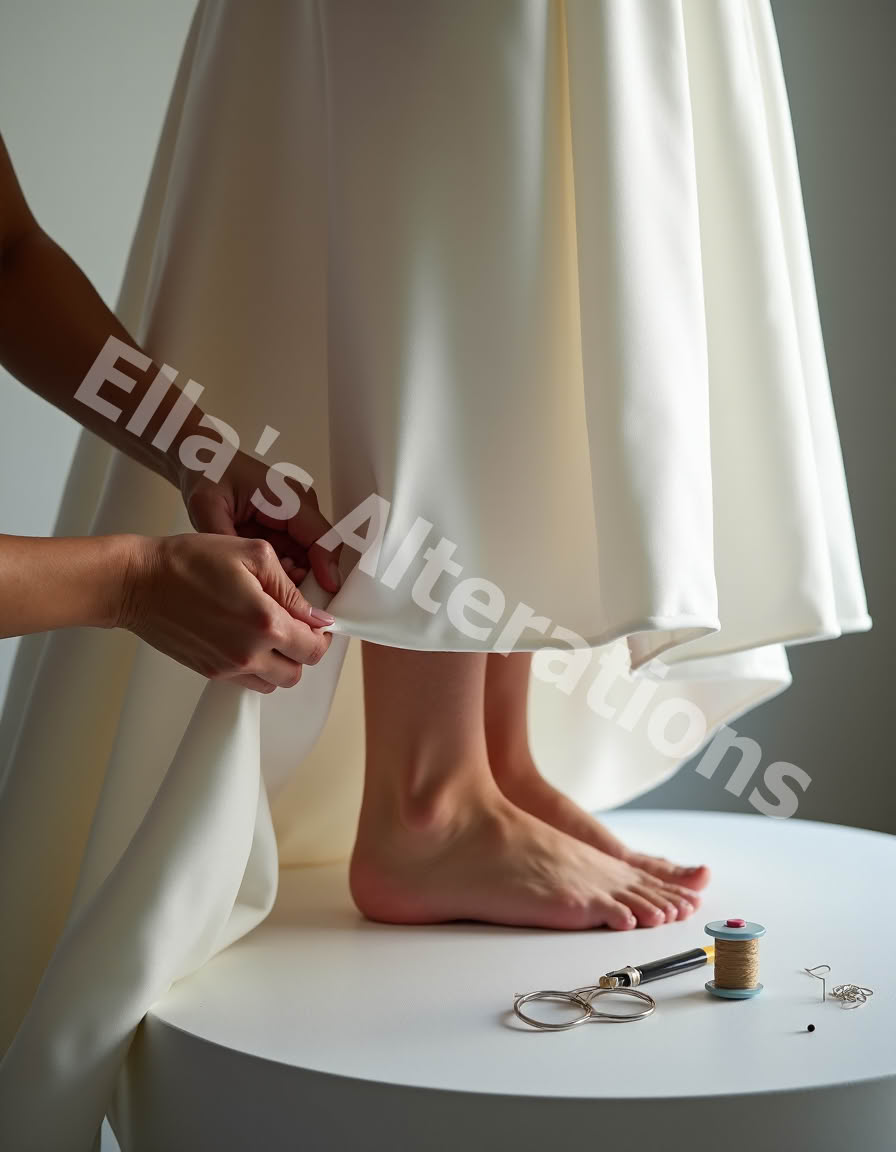
Then there’s the hemline, a detail that many overlook but tailors treat with absolute precision
The hem must be measured while the bride is wearing her shoes, standing naturally
- If the hem is too short, it disrupts the line of the gown
- Too long, and it becomes a tripping hazard
Tailors often build in subtle height adjustments, especially in layered skirts or those with delicate lace or scalloped edges
With high-low or tea-length skirts, the hemline becomes a design feature on its own and must be perfectly symmetrical and smooth
One of the most functional aspects of skirt construction is the bustle, a clever technique that allows a bride to lift her train for the reception without compromising the design of the dress
There are several types of bustles—American (over-bustle), French (under-bustle), ballroom, and more
Choosing the right one depends on the train’s length, weight, and fabric
Tailors carefully hide bustle points along seams or embellishments, ensuring they’re invisible when not in use
Let’s not forget linings, which may not be visible, but are crucial for comfort and flow
A well-constructed skirt will have a soft, breathable lining that prevents irritation and helps the outer fabric glide rather than stick
In multi-layered skirts, linings also reduce bulk and weight, making the gown more wearable
Finally, construction is what allows the gown to feel like it was made just for you
Off-the-rack dresses are a starting point, but a tailor’s touch molds the skirt to your shape and movement
Through subtle adjustments in flare, length, fullness, and balance, construction transforms a beautiful dress into your dress
It’s the difference between something that looks good and something that moves with you, supports you, and becomes part of your story
At the end of the day, what’s beneath the beauty of the skirt is a foundation built with skill, intention, and an eye for detail
And that’s where the real bridal magic lives
Tailored Sheath Bridal Dress Silhouettes.
Conclusion: Choose Your Skirt, Own Your Story:
The wedding skirt is more than just fabric flowing from the waist—it’s the anchor of your entire bridal look
We’ve explored every layer, silhouette, fabric, and stitch that shapes the most expressive part of a gown
But now it all comes down to this: choosing your skirt isn’t just a design decision, it’s a reflection of your story
It’s how you carry your memories, your confidence, and your personality into one of the most meaningful moments of your life
Whether you're drawn to a voluminous ballgown that sweeps the floor or a sleek sheath that whispers sophistication, your skirt says something before you ever do
It can feel bold, romantic, timeless, edgy, playful, or deeply personal
And the best part? There’s no right or wrong
There’s only what feels right for you
Forget the trends, the rules, the comparisons
What matters most is how the skirt makes you feel when you move, when you turn, and when you look in the mirror and see yourself—not just dressed up, but elevated
It’s easy to get caught up in the excitement of lace patterns, color swatches, or designer names, but a truly perfect skirt goes beyond all that
- It fits your body the way you need it to
- It balances comfort and style
- It walks with you—not against you
- It responds to movement with grace and holds its shape with strength
And that harmony comes from both thoughtful design and careful tailoring
Every flare, every hemline, every underlayer is there to support you—not just physically, but emotionally
This is why working with a skilled tailor matters so much
The magic of a wedding skirt isn’t just in how it’s made, but in how it’s fitted to you
Your body is one-of-a-kind, and your skirt should be too
Alterations bring the fabric to life
They refine the silhouette, shape the flow, and ensure that nothing feels too tight, too long, or too loose
Tailoring turns a beautiful skirt into your skirt
- It lets you move with freedom, poise, and confidence
- It lets you dance
- And yes, it even lets you breathe
For brides exploring modern options like two-piece sets, detachable overskirts, or dramatic trains, this is your invitation to experiment
Today’s bridal world offers more freedom than ever before to create a look that’s uniquely yours
Maybe that’s a sleek satin skirt for the ceremony and a ruffled tulle overskirt for the reception
Or maybe it’s a short lace skirt that breaks all the rules—and does it with style
Whatever direction you choose, your skirt should reflect your energy and your story
So if you’re standing in a fitting room wondering if this is “the one,” don’t just ask yourself how it looks
- Ask how it makes you feel
- Does it match your mood?
- Does it let you be fully present in the moment?
- Can you imagine stepping into your celebration, into your new chapter, and feeling completely yourself in it?
Because that’s what the skirt is really about
It’s not just part of the dress
It’s part of the memory
It’s part of the movement, the walk, the photos, the laughter, the love
When you choose your skirt, you’re choosing how you show up on a day that’s entirely your own
And when that skirt fits just right, when it flows the way you imagined, when it catches the light and moves with you—there’s no mistaking it
You’ve found the one
FAQs:
How do tailors adjust skirt length or volume?
Adjusting the length or volume of a wedding dress skirt is one of the most common and important tailoring tasks—and it’s all about precision, balance, and the bride’s vision.
Whether you need to shorten a hemline, reduce fullness, or add more drama, a skilled tailor can shape the skirt to fit your height, proportions, and style without compromising the gown’s design.
To adjust skirt length, tailors typically begin with a hem fitting.
You’ll stand in your wedding shoes, and the tailor will carefully pin the skirt so it just grazes the floor or meets your preferred length.
For layered skirts, like those with tulle, chiffon, or lace, each layer is hemmed individually to maintain a natural flow.
In structured fabrics like satin or mikado, the hem may be taken up from the bottom or the waist, depending on the design.
Special attention is given to skirts with scalloped lace, beading, or decorative trims, as these require meticulous detachment and reapplication.
When it comes to adjusting volume, tailors have a few options.
If you want less fullness, they may remove layers of crinoline, tulle, or lining from the underskirt.
If you want more, they can add structured layers, like a hoop skirt, or sew in additional petticoats for lift.
Some brides even request detachable volume—a custom overskirt or added godets that can be removed for the reception.
Volume and length are never one-size-fits-all.
These adjustments are made with your body, your movement, and your moment in mind.
A well-balanced skirt will not only look stunning from every angle, it will let you walk, dance, and twirl with ease.
The right tailoring ensures your gown doesn’t just fit—it flows.
Do I need a crinoline or underskirt?
Whether you need a crinoline or underskirt depends on the silhouette of your wedding dress, the amount of volume you want, and how you want your gown to move.
These hidden elements can completely transform the shape of your skirt, giving it more body, lift, and drama—or just enough structure to prevent it from clinging to your legs.
A crinoline is a stiffened petticoat made from layers of netting or tulle, designed to add volume and support to a skirt.
It’s commonly used under ballgowns, A-line skirts, and princess-style dresses to create fullness and a more dramatic silhouette.
If you’re wearing a gown that’s meant to be voluminous but looks flat or heavy when you try it on, a crinoline can bring that skirt to life.
It lifts the outer layers away from your legs and adds beautiful movement when you walk or dance.
An underskirt, meanwhile, can be anything from a simple lining to a built-in layer of soft tulle or satin.
Its job is to create a smooth base, prevent static cling, and help the dress glide.
Even slimmer silhouettes like sheath or fit-and-flare styles can benefit from a lightweight underskirt for added comfort and subtle shaping.
Tailors often recommend a crinoline or underskirt if your dress seems to sag, lacks shape, or needs extra structure for photos or walking down the aisle.
However, if your gown is already fully structured or you’re aiming for a sleek, modern vibe, you may not need one at all.
Bottom line: it depends on the look you’re going for.
- Crinolines bring drama.
- Underskirts bring polish.
Neither are mandatory—but both can make a major difference in how your skirt fits, feels, and flows.
Which fabric is best for a beach wedding?
The best fabric for a beach wedding is one that’s lightweight, breathable, and moves effortlessly in the breeze.
Think flowy, soft, and comfortable—because on the sand, comfort and ease are everything.
The goal is to find a fabric that looks beautiful without weighing you down or trapping heat.
Fortunately, there are several bridal-friendly options that are perfect for a beach setting.
Chiffon is one of the top choices for a beach wedding skirt.
It’s incredibly lightweight, sheer, and airy.
Chiffon flows beautifully as you walk and catches the ocean breeze in the most romantic way.
It’s often layered over a soft lining for modesty and structure, without adding bulk.
This fabric works well for A-line, sheath, and fit-and-flare silhouettes.
Organza is another strong contender.
It’s slightly stiffer than chiffon but still light enough for the beach.
Organza gives a bit more structure to the skirt without being heavy or rigid, making it great for brides who want a little shape while still embracing a breezy look.
Tulle can also work beautifully if it’s soft and layered lightly.
It adds a dreamy, ethereal effect—especially in minimalist or boho styles.
Just keep in mind that stiff or multi-layered tulle can become too warm or bulky in tropical weather.
Crepe is ideal for brides who prefer a more modern, clean-lined silhouette.
It has a soft stretch and a lovely drape without being too thick, making it perfect for a sleek beach bridal look.
Ultimately, you’ll want to avoid fabrics like satin, mikado, or taffeta, which tend to be heavier and can feel hot and restrictive in a beach environment.
Stick with breathable, natural-feeling fabrics that let you move freely, stay cool, and feel effortlessly beautiful by the shore.
Can I remove the skirt for the reception?
Yes, absolutely—you can remove the skirt for the reception, and it’s actually one of the most popular bridal trends right now.
Many modern gowns are designed with detachable skirts, overskirts, or two-in-one styles that let you switch up your look between ceremony and celebration.
It’s the perfect solution for brides who want drama for the aisle and comfort for the dance floor.
Detachable skirts are usually worn over a more fitted base dress, such as a sheath, mini, or fit-and-flare silhouette.
During the ceremony, the overskirt adds volume and formality—often styled in tulle, organza, or chiffon for that dreamy effect.
After the vows and photos, it can be carefully unhooked or unsnapped to reveal a sleeker, lighter look underneath.
The transformation feels fresh, fun, and instantly reception-ready.
From a tailoring perspective, detachable skirts are a dream when done right.
They’re typically secured at the waist or hips using invisible snaps, hooks, ribbons, or hidden zippers that blend seamlessly with the dress.
A skilled tailor can also customize or adjust the overskirt for the perfect fit, ensuring it stays secure without bulk or awkward bunching.
This option gives you the best of both worlds—elegance and ease.
You get the wow factor of a full gown for your walk down the aisle, followed by the freedom to move, mingle, and dance the night away without dragging a heavy skirt behind you.
Some brides even take it further by swapping shoes or jewelry to match their “second look.”
So if you’re the type who wants a grand entrance and a carefree party vibe, a removable skirt could be the bridal fashion move that checks every box.
How do tailors adjust skirt length or volume?
Adjusting the length or volume of a wedding dress skirt is one of the most common and important tailoring tasks—and it’s all about precision, balance, and the bride’s vision.
Whether you need to shorten a hemline, reduce fullness, or add more drama, a skilled tailor can shape the skirt to fit your height, proportions, and style without compromising the gown’s design.
To adjust skirt length, tailors typically begin with a hem fitting.
You’ll stand in your wedding shoes, and the tailor will carefully pin the skirt so it just grazes the floor or meets your preferred length.
For layered skirts, like those with tulle, chiffon, or lace, each layer is hemmed individually to maintain a natural flow.
In structured fabrics like satin or mikado, the hem may be taken up from the bottom or the waist, depending on the design.
Special attention is given to skirts with scalloped lace, beading, or decorative trims, as these require meticulous detachment and reapplication.
When it comes to adjusting volume, tailors have a few options.
If you want less fullness, they may remove layers of crinoline, tulle, or lining from the underskirt.
If you want more, they can add structured layers, like a hoop skirt, or sew in additional petticoats for lift.
Some brides even request detachable volume—a custom overskirt or added godets that can be removed for the reception.
Volume and length are never one-size-fits-all.
These adjustments are made with your body, your movement, and your moment in mind.
A well-balanced skirt will not only look stunning from every angle, it will let you walk, dance, and twirl with ease.
The right tailoring ensures your gown doesn’t just fit—it flows.
Tailored Formal and Custom Skirts.

About Us
#EllasAlterationsLLC #weddingdressskirt #bridalstyle #weddingdress #bridalgown #tailorsguide #weddingfashion #skirtstyles #bridaldesign #weddingtips #weddingplanning #weddinginspo #aline #ballgown #mermaid #sheath #tulle #lace #satin #weddingfabric #bridalfashion #dressdetails #customdress #couture #handmade #sewing #fashiondesign #weddingideas #bridaldesigner #dreamdress #weddinglook
A Tailor’s Guide: What’s in a Wedding Dress Skirt? is your go-to breakdown of one of the most important elements of a bridal gown: the skirt. This post explores how skirt silhouettes like ballgown, A-line, mermaid, trumpet, and sheath define the entire wedding day look. It also touches on what goes on underneath—underskirts, bustles, crinoline, and layers that help create that iconic bridal drama. You’ll learn how fabrics such as chiffon, mikado, satin, and lace affect the drape, flow, and formality of a dress. Plus, it’s full of tailoring tips straight from a professional eye: how hemline, fabric weight, and structure come together to enhance both fit and movement. Whether you're a bride-to-be or a bridal enthusiast, this guide offers the stylish clarity you need to truly understand the art and function behind every swirl-worthy skirt.
Ella’s Style Confidence
Brought to you by Ella’s Alterations
-
Your body is not the problem. The fit is.
If something feels off when you put it on, that does not mean it is wrong for you. It means it has not been tailored for you yet. Clothes are made for averages. You are not average. -
Confidence starts at the seams.
The smallest adjustments change everything. A lifted waist, a shaped bust, a clean hem. These details quietly do the heavy lifting so you can walk in like you own the room. -
Comfort is not optional.
If you are pulling, tugging, or holding your breath, the garment is failing you. Real tailoring lets you move, sit, dance, and live without thinking about your clothes. -
Trends fade. Fit lasts.
Styles come and go fast. A perfect fit never goes out of style. When something fits you correctly, it always looks intentional and expensive. -
Support should be built in, not added later.
Hidden structure matters. Boning, cups, straps, and shaping should work with your body, not against it. When support is done right, no one sees it but everyone notices the result. -
You deserve clothes that work as hard as you do.
Whether it is a wedding dress, a suit, or everyday wear, your clothes should show up for you. Sharp, polished, and reliable. -
Confidence is quiet, not loud.
The best dressed people are not uncomfortable or flashy. They look effortless because their clothes fit correctly and feel natural. -
One great alteration beats five new outfits.
Fixing what you already own often gives you more confidence than buying something new. A tailored piece feels personal. Like it was made just for you. -
When it fits right, you stand differently.
Posture changes. Shoulders relax. You stop adjusting and start owning your space. That shift is what people actually notice. -
You are allowed to feel amazing in your clothes.
Not just okay. Not just good enough. Amazing. That is the standard.
Local Credibility
Ella’s Alterations is trusted by brides, professionals, and families across Central Florida for one reason. The work is done right.
Awards & Recognition
- Most Trusted Tailoring & Alterations Studio 2025 – USA
- Bridal & Formalwear Tailoring Excellence Award 2025
- Recognized nationally by LUXlife Magazine for craftsmanship and client trust
- Chosen year after year for precision bridal and formal tailoring
- Best Wedding Dress & Formalwear Tailoring Zephyrhills 2026
- NextDoor Neighborhood Favorite 2023 2024 2025
Service Area
Proudly serving Zephyrhills, Pasco County, Tampa, Wesley Chapel, Lakeland, and surrounding Central Florida communities. Clients travel from across the region for expert alterations that local shops simply cannot match.
Depth of Craft
With over 30 years of hands on tailoring experience, Ella works at a master level. This is not basic hemming or quick fixes. This is true garment engineering. Wedding gowns with structure, suits that need balance, formalwear that must move and photograph perfectly. Every adjustment is intentional and precise.
Proof of Trust & Fitting Care
Every fitting is handled with respect, privacy, and patience. Measurements are double checked. Details are explained. Nothing is rushed. Nothing is guessed.
Clients return because they feel heard, supported, and confident. Dresses are protected. Fabrics are handled correctly. Fit decisions are made with experience, not shortcuts.
This is why generations of clients trust Ella with their most important garments. When it has to fit perfectly, they choose experience.

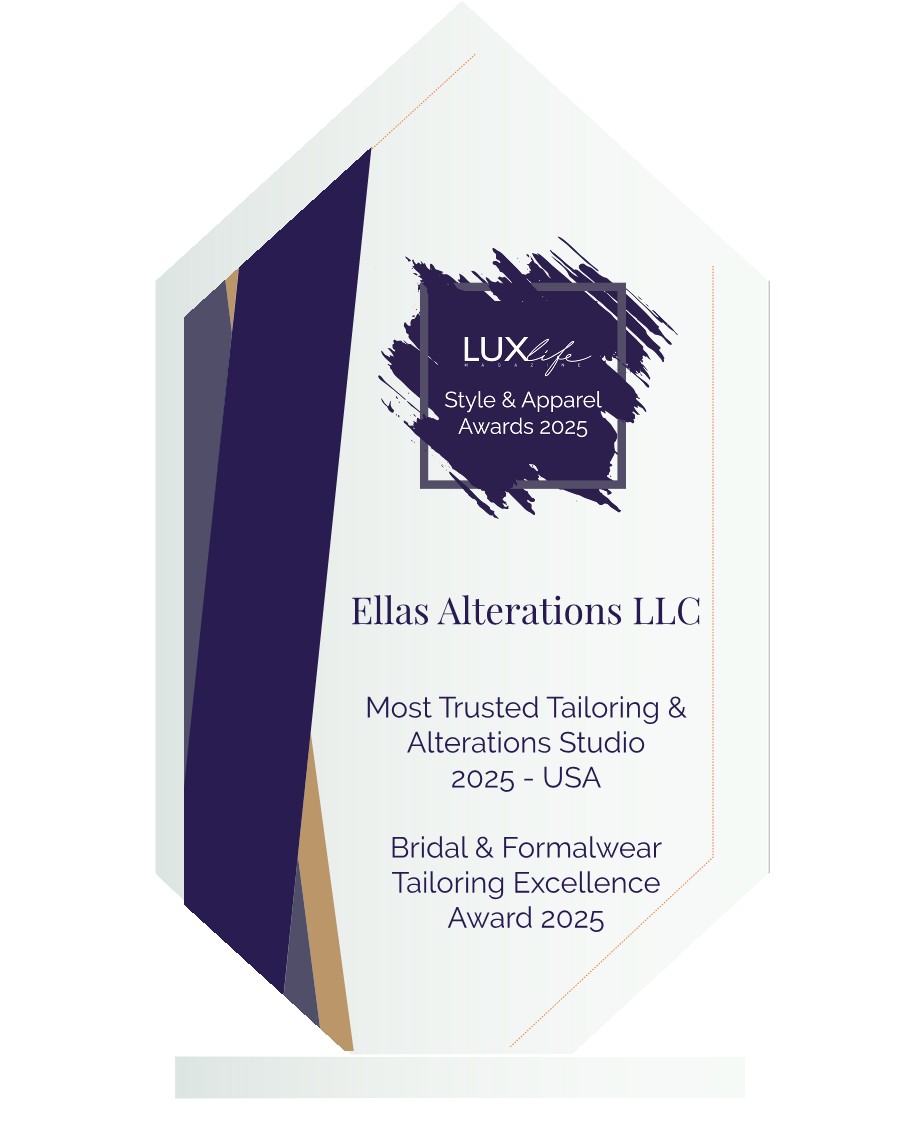
Bridal & Formalwear Tailoring Excellence Award 2025 – USA
Award Winning Bridal & Formalwear Tailoring
Ella’s Alterations is proudly recognized as one of Zephyrhills’ most trusted tailoring studios, specializing in wedding dress and formalwear alterations.

NextDoor Neighborhood Favorite 2023, 2024, 2025

Best Wedding Dress & Formalwear Tailoring Zephyrhills 2026
Why Clients Trust Ella’s Alterations
- 30 plus Years of Expertise: Master tailoring and formal wear alterations trusted across Florida.
- Award Winning Service: Best of Florida Tailor and Best of Zephyrhills.
- Private Bridal Fittings: Discreet, elegant, and tailored to you.
- Proven Local Reputation: Five star customer reviews and repeat clients from Tampa to Orlando.
- Transparent and Personal: Clear pricing, expert guidance, and no rushed fittings.
- Recognized nationally by LUXlife Magazine for craftsmanship and client trust
- Chosen year after year for precision bridal and formal tailoring
- Best Wedding Dress & Formalwear Tailoring Zephyrhills 2026
- NextDoor Neighborhood Favorite 2023 2024 2025
Address: 6986 Fort King Road, Zephyrhills FL 33541
Phone: +1 813-445-8894
Email: admin@ellasalterations.com
Hours:
Get Directions | Book Your Fitting