A Tailors Guide: How a Statement Trains Transforms Your Wedding Gown.
Introduction:
When it comes to bridal fashion, there’s one feature that never fails to steal the show: the train.
It trails behind the bride like a soft whisper of drama, grace, and elegance.
But a train is not just an accessory or decorative add-on.
It’s a statement.
A carefully crafted extension of the gown that speaks volumes before the bride even says “I do.”
In this guide, we explore the artistry behind tailoring wedding dress trains, revealing how this single design choice can completely transform your gown, your silhouette, and your entire bridal presence.
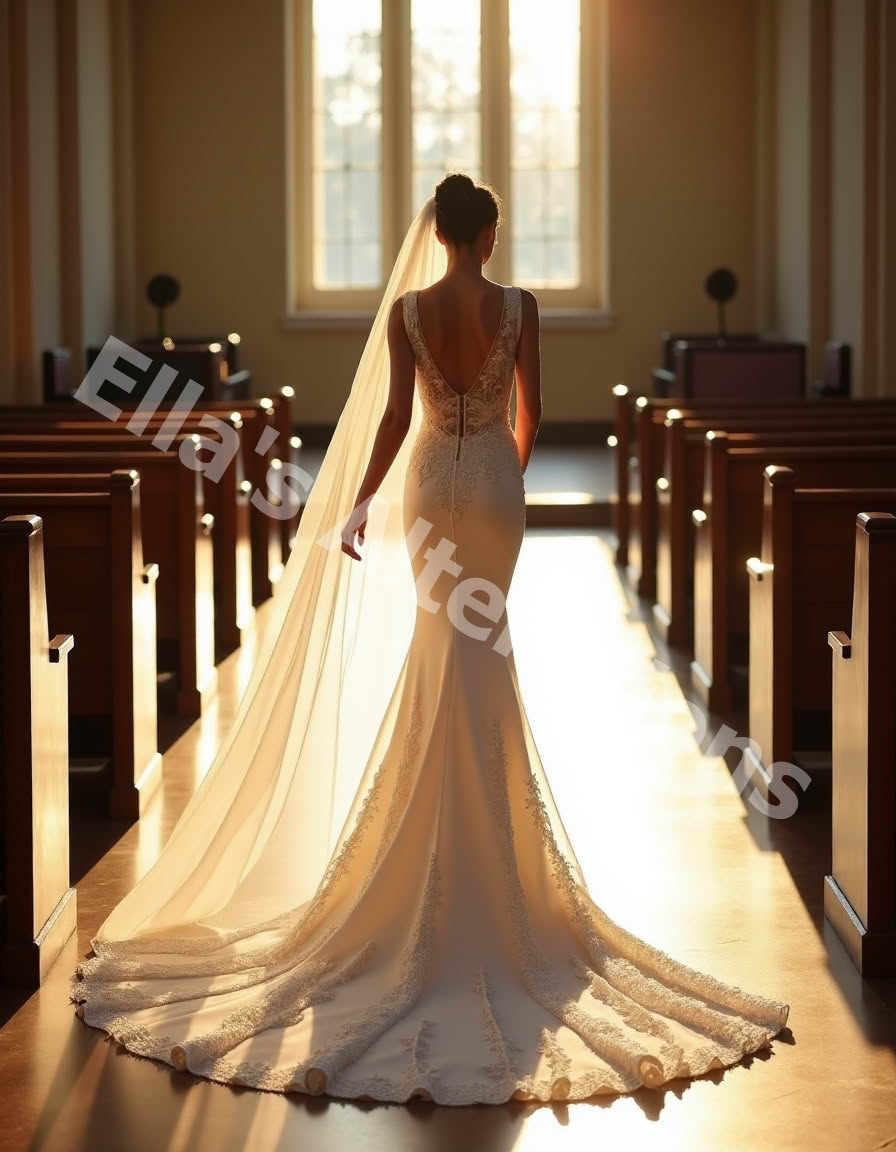
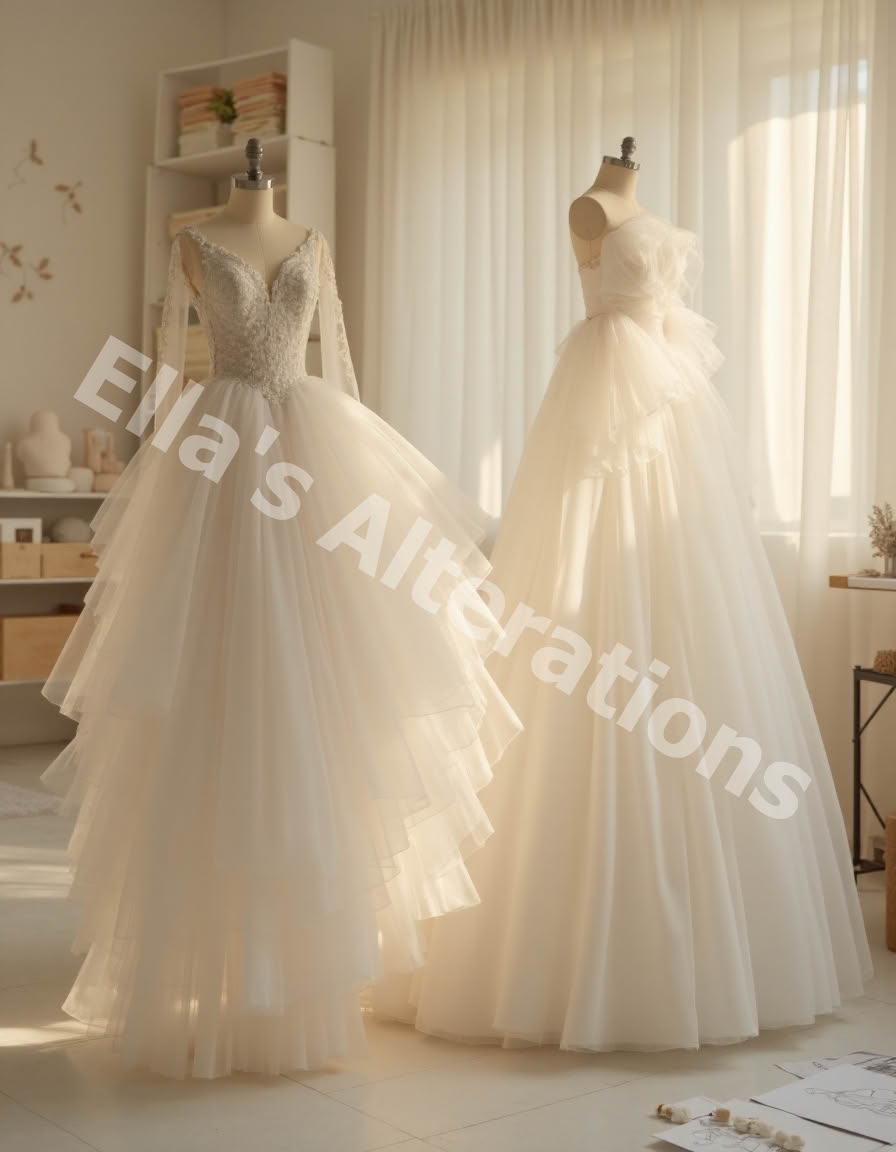
Trains come in all shapes and lengths, from subtle sweeps that gently kiss the floor to cathedral and royal styles that stretch for feet behind the bride, commanding attention and creating a regal effect.
Each type has its own personality.
- A brush train offers simplicity and ease.
- A chapel train finds the balance between tradition and movement.
- A cathedral train brings grandeur to formal settings, while a monarch train creates an almost theatrical experience.
The right train amplifies your vision and enhances your venue, whether it’s a romantic garden ceremony or a black-tie ballroom affair.
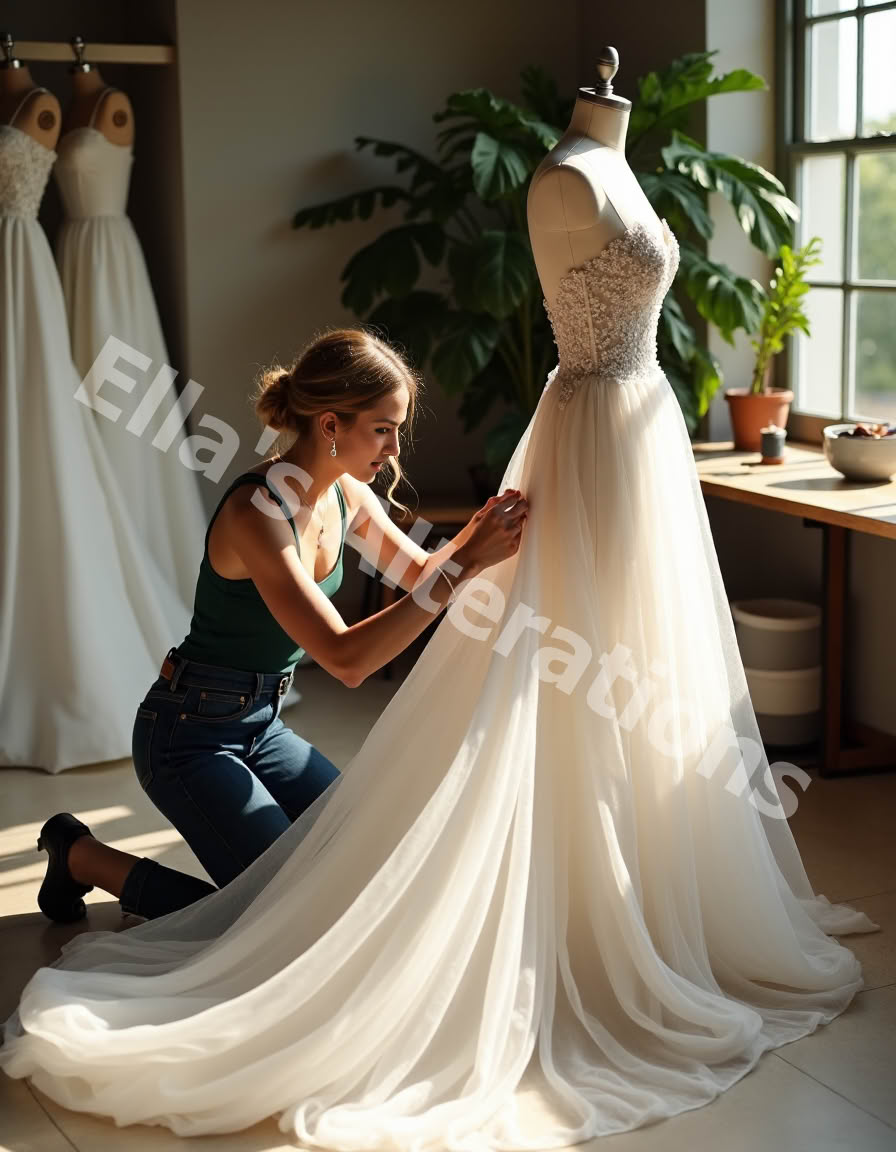
Tailors play a critical role in transforming the gown and ensuring the train not only looks stunning but also functions beautifully.
This transformation is more than just stitching on extra fabric.
It involves a deep understanding of balance, proportion, fabric behavior, and the bride’s movement.
A train must follow the gown’s natural silhouette without disrupting its shape.
It should drape in harmony, create visual flow, and add drama without overwhelming the dress or the bride.
Fabric selection is equally important.
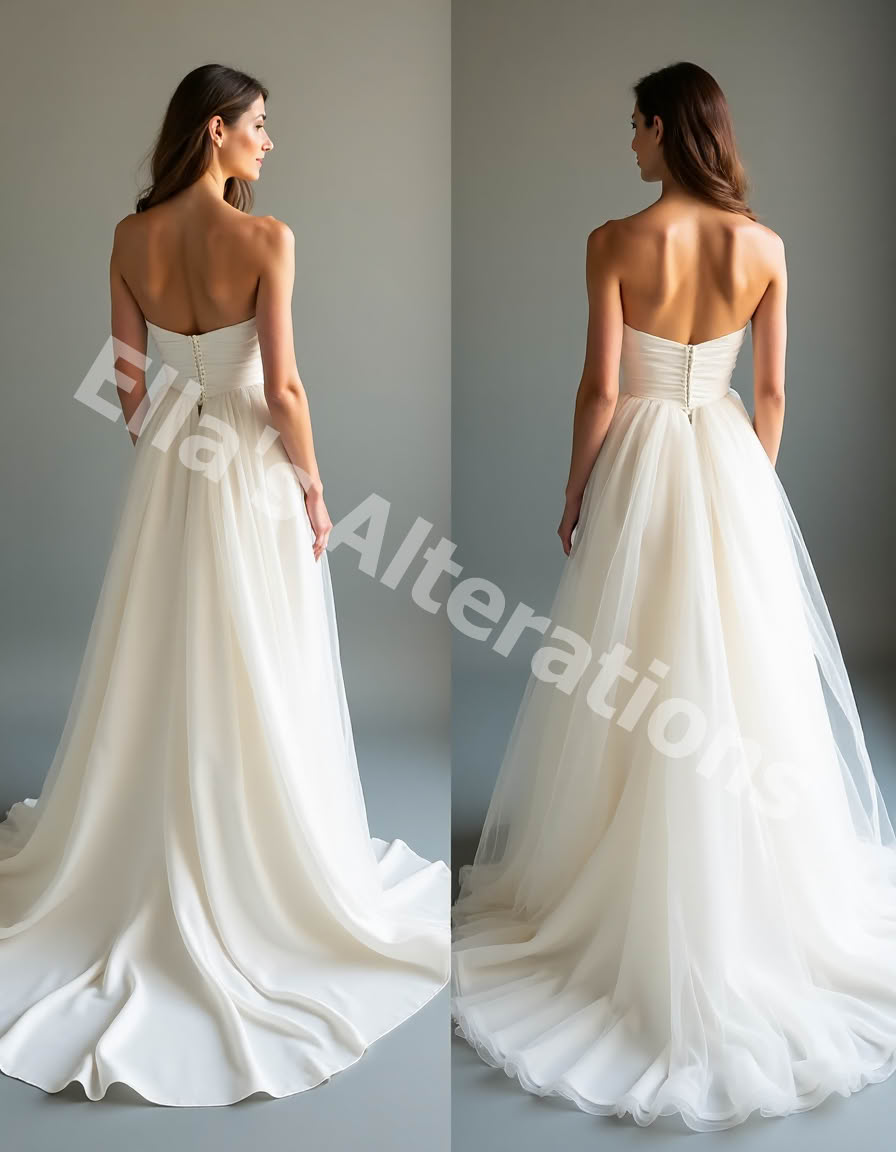
- A stiffer fabric like mikado or duchess satin will hold structure and shape, ideal for architectural trains.
- Lighter fabrics like chiffon or tulle offer fluidity and softness, perfect for romantic or bohemian looks.
- Lace trains allow for intricate detail and timeless beauty.
The tailor must assess how the fabric will move, how it photographs, and how it works with the dress’s existing structure.
Embellishments also elevate the statement.
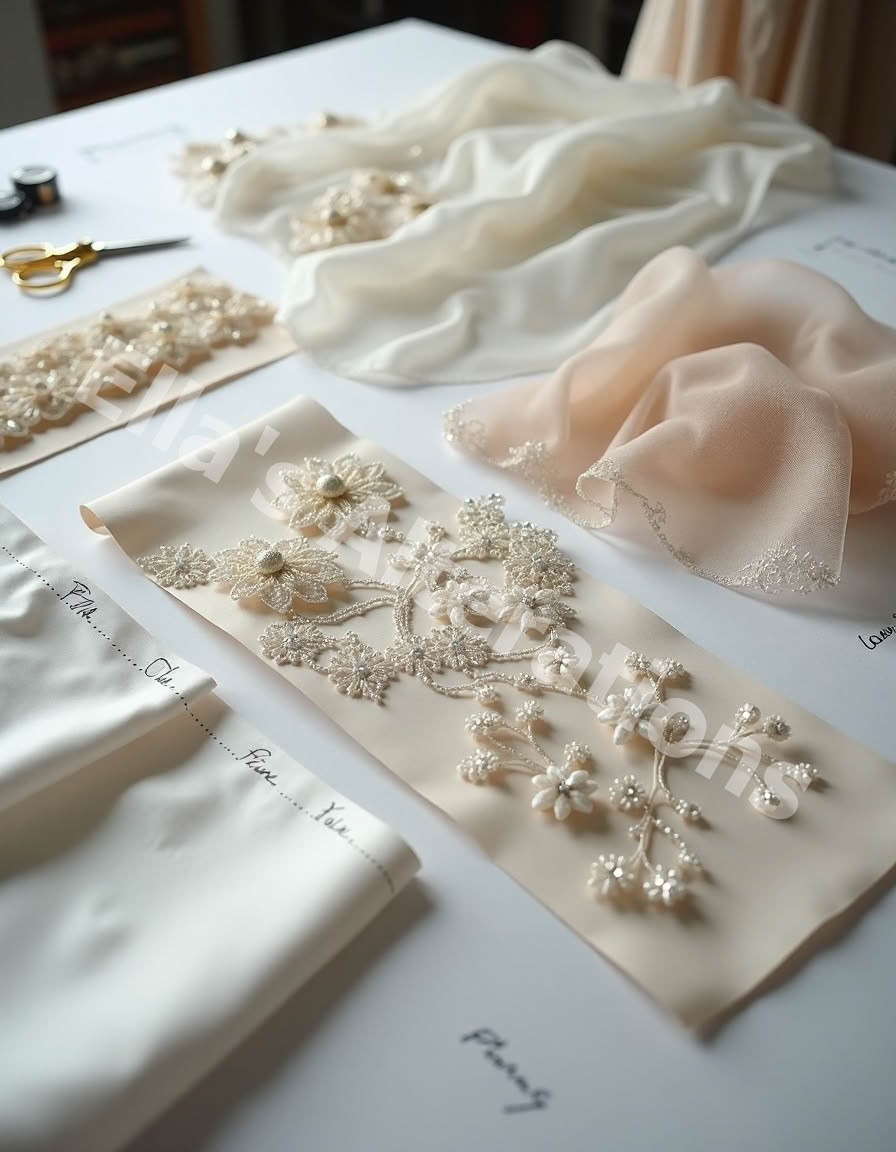
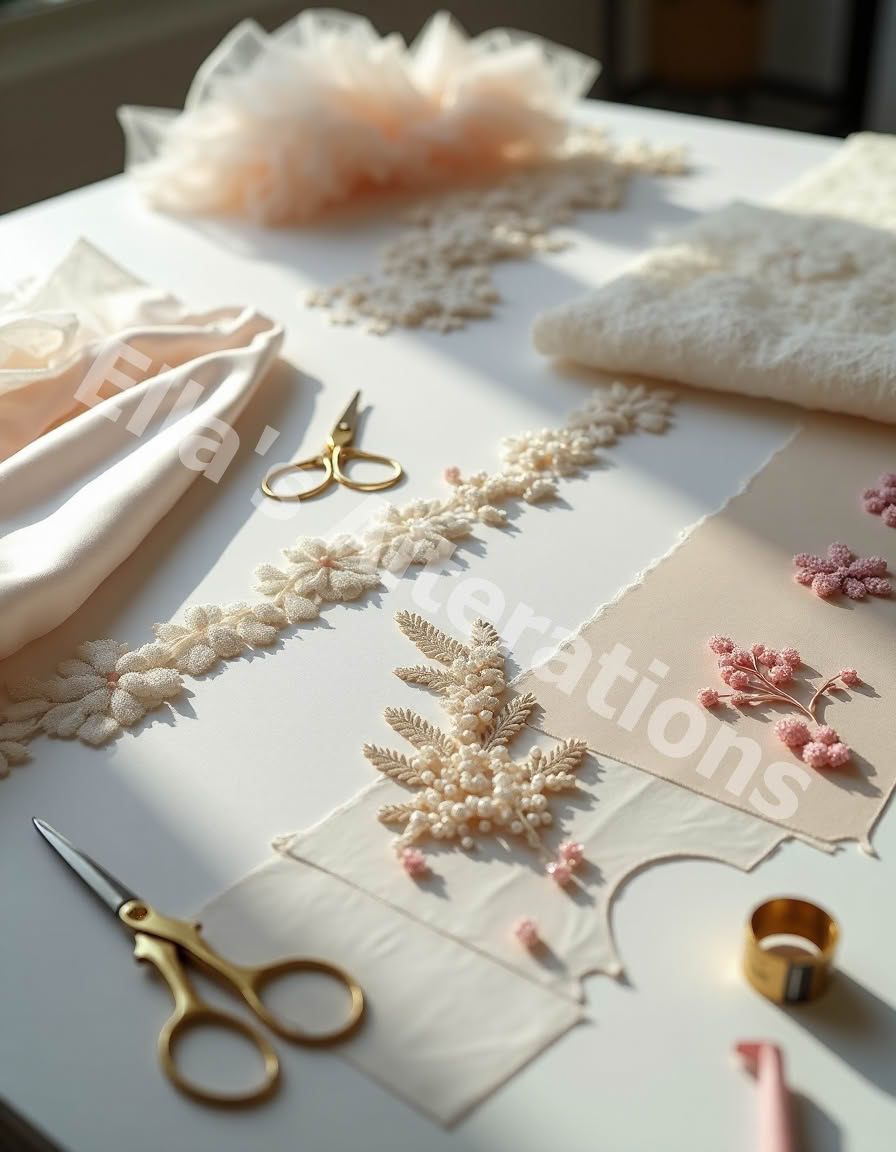
Think hand-applied lace appliqués that trail from the bodice into the train, or beaded vines that shimmer as you move.
A skilled tailor or trained bridal seamstress knows how to blend embellishments so the transition from gown to train feels seamless and intentional.
Every detail, from where the train attaches to how it flows when you walk, contributes to the gown’s final impact.
One of the most brilliant tailoring elements in train customization is the bustle.
Bustling allows the train to be lifted and secured after the ceremony, so the bride can move freely and enjoy the reception without stepping on her own dress.
There are multiple styles of bustles, each designed to suit specific train types and dress structures.
A tailor can create a bustle that’s almost invisible when not in use, preserving the drama for the ceremony and the ease for the celebration.
For brides who want versatility, detachable trains are a popular and practical solution.
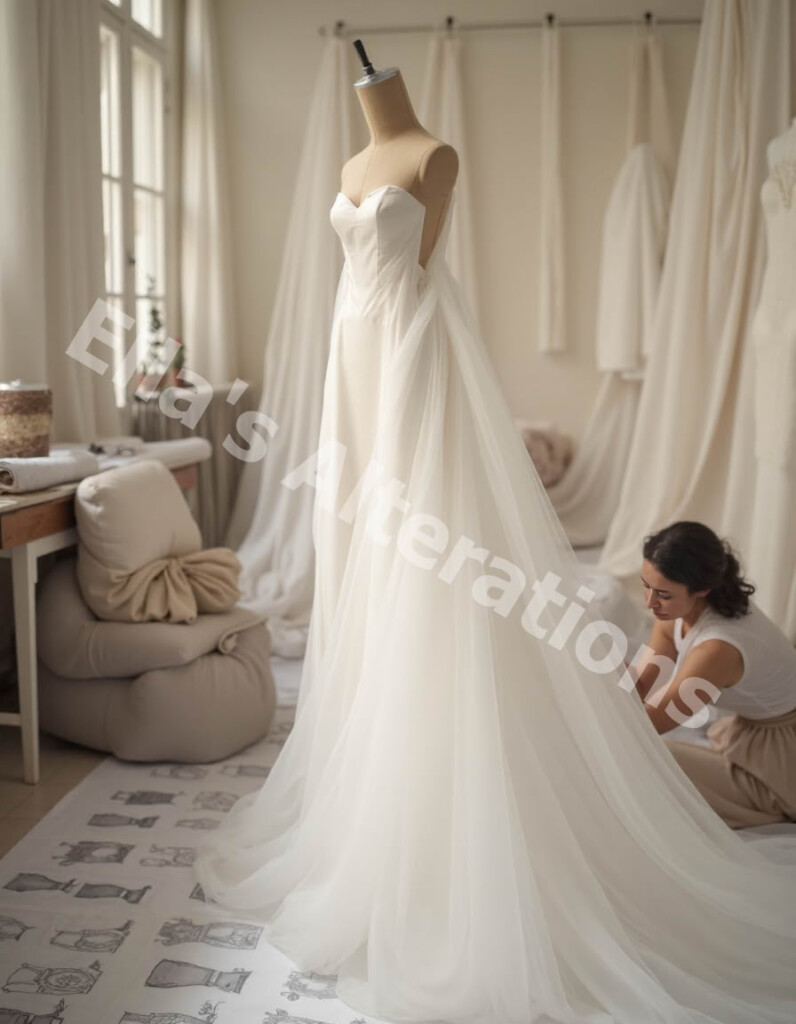
These allow for a dramatic entrance and the ability to remove the train for a second look or dancing.
Detachable overskirts, capes, or trailing panels offer flexibility without compromising style.
Tailors can design these pieces to blend perfectly with the gown’s lines, maintaining cohesion and elegance.
Ultimately, the train is not just an add-on.
It is an extension of your bridal identity.
Whether you dream of something classic, modern, romantic, or bold, your train helps you express that vision with confidence and flair.
With the right tailoring and thoughtful design, your wedding gown transforms into a personal work of art.
It tells your story, elevates your look, and creates a moment you’ll remember forever.
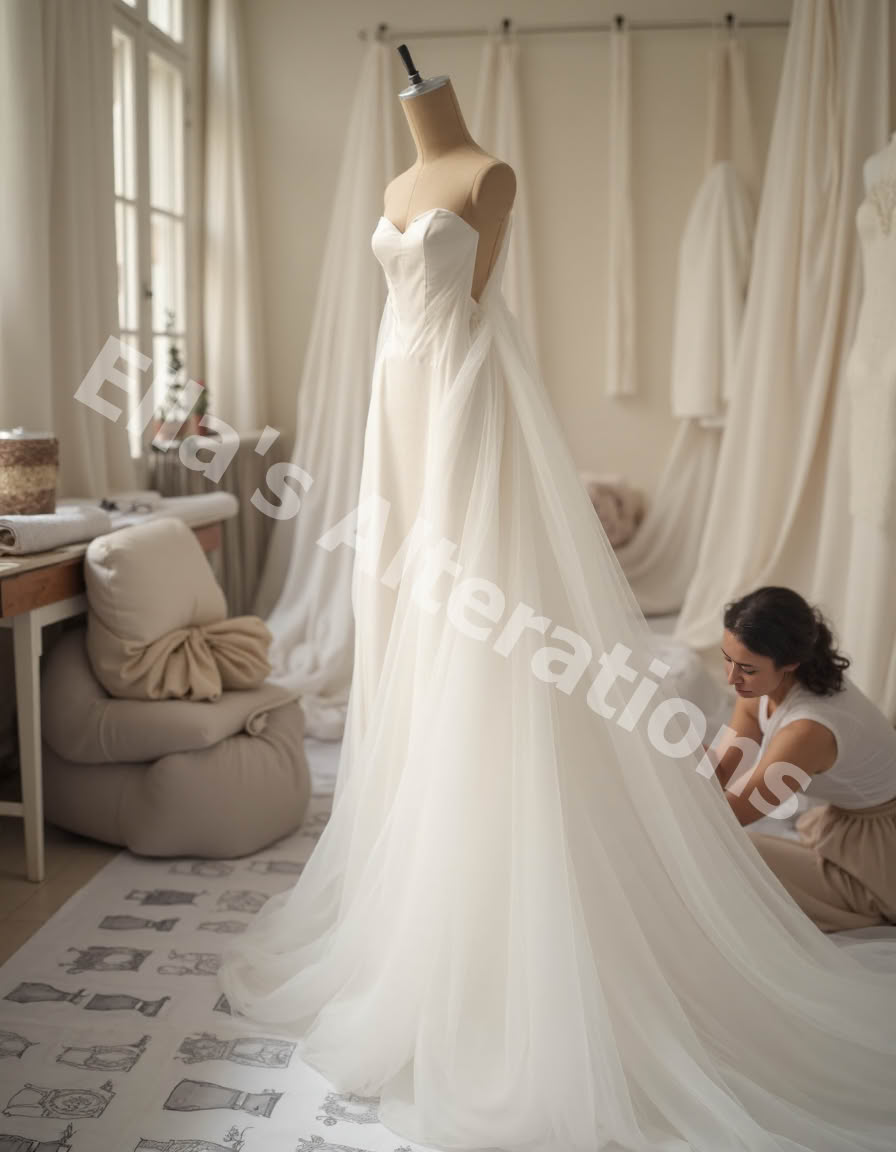
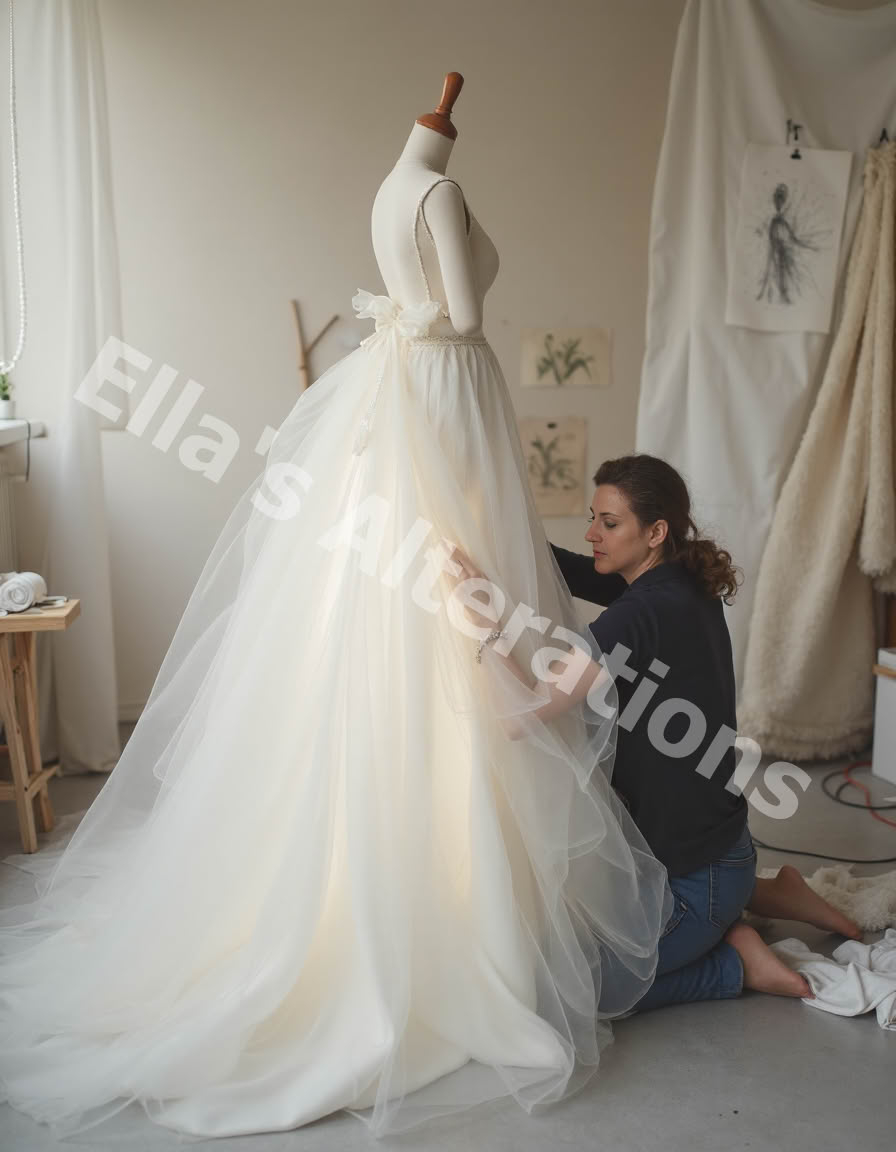
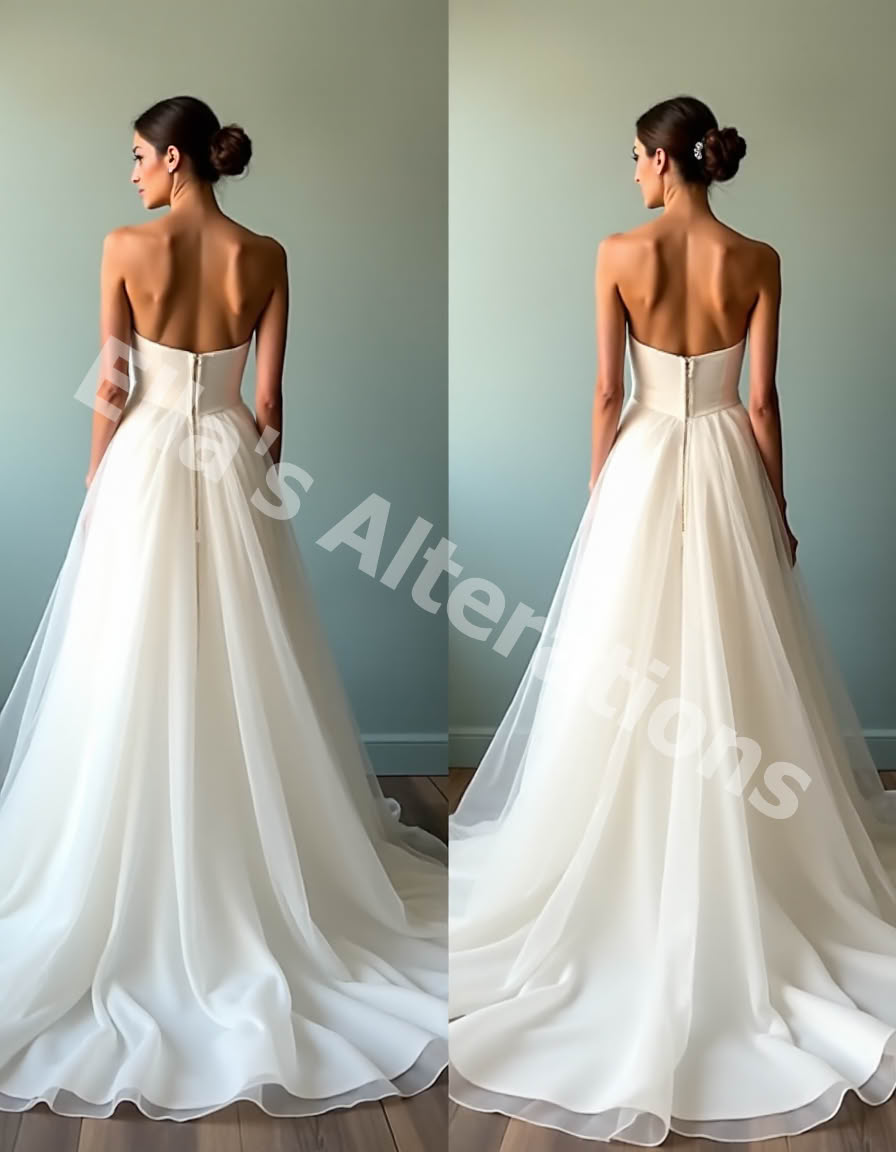
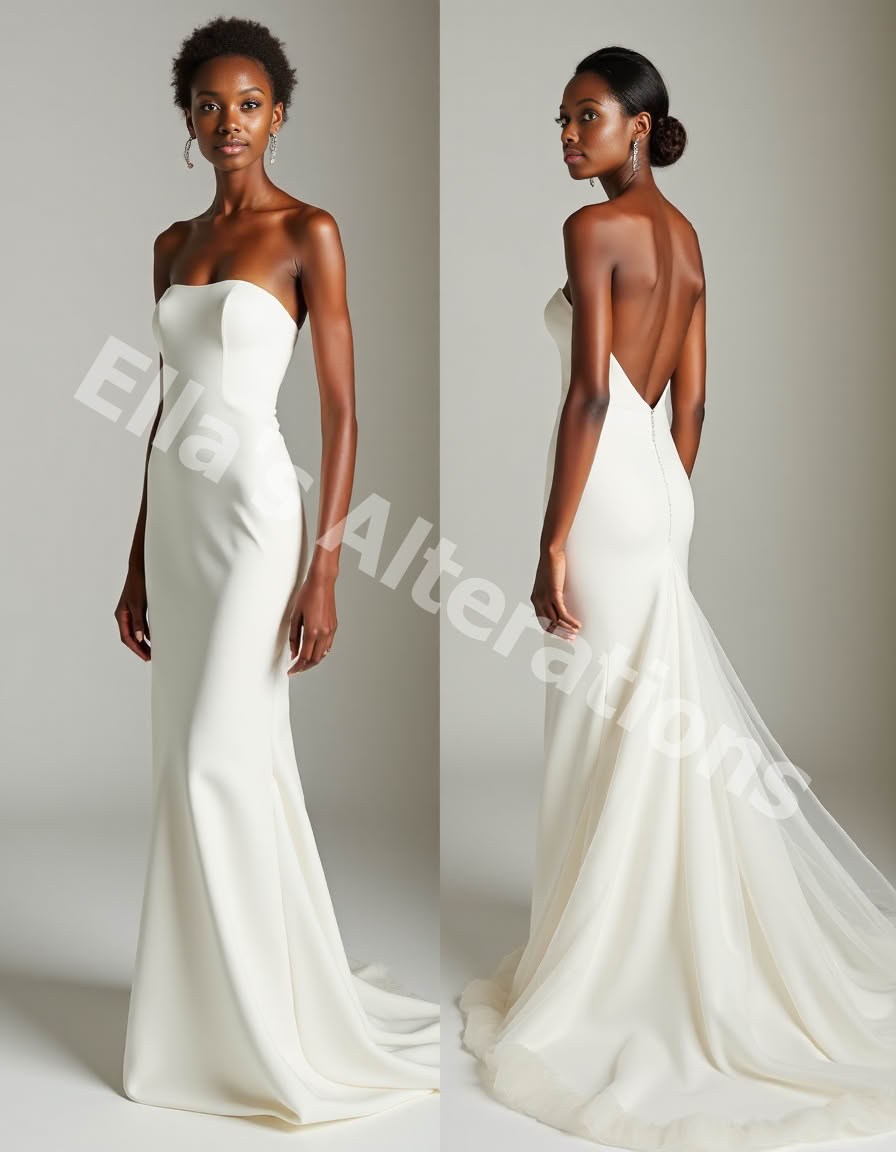
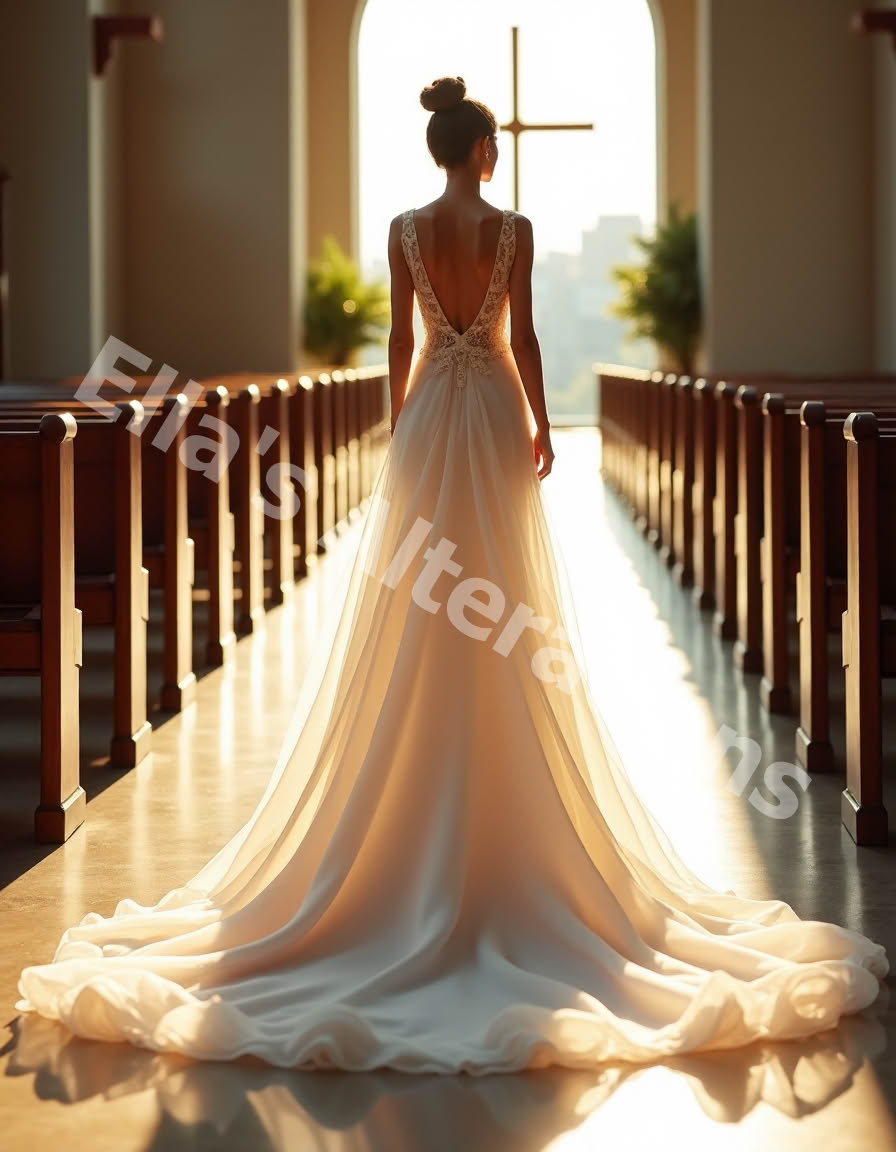
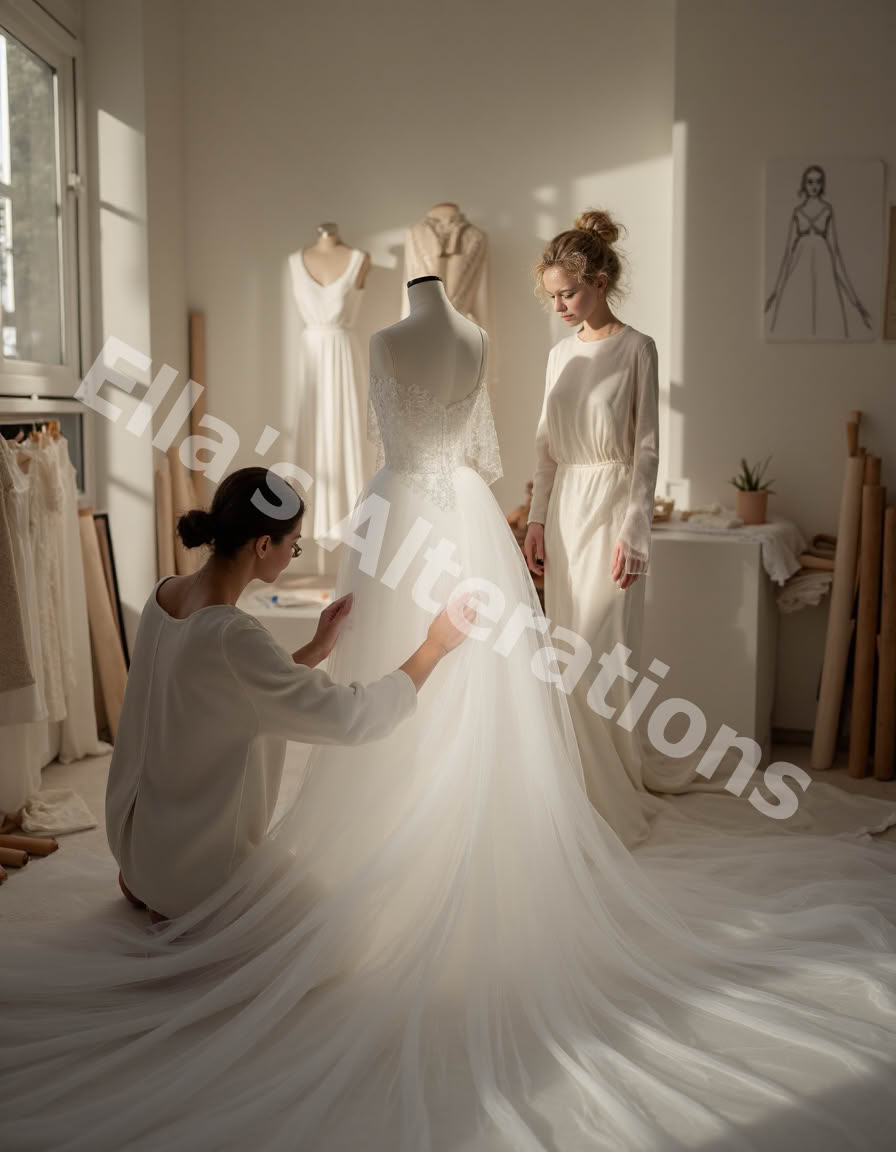
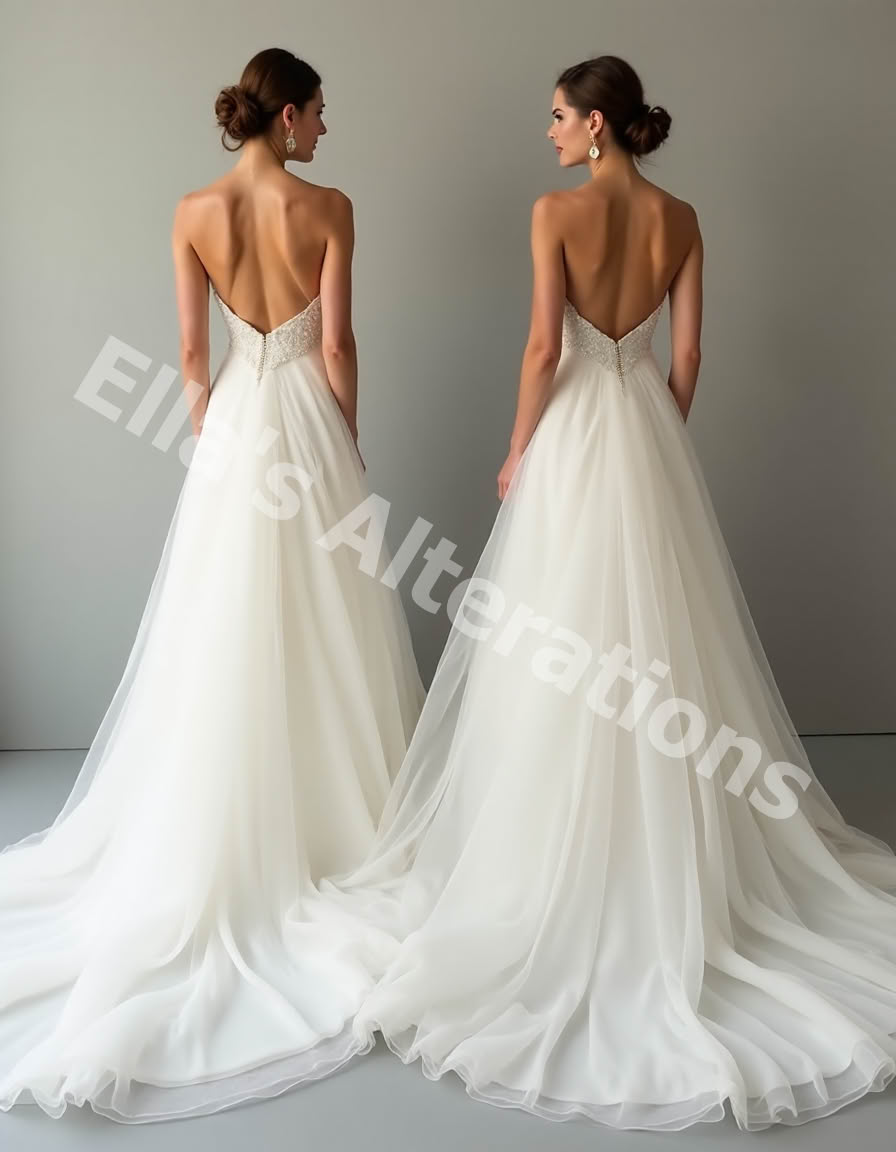
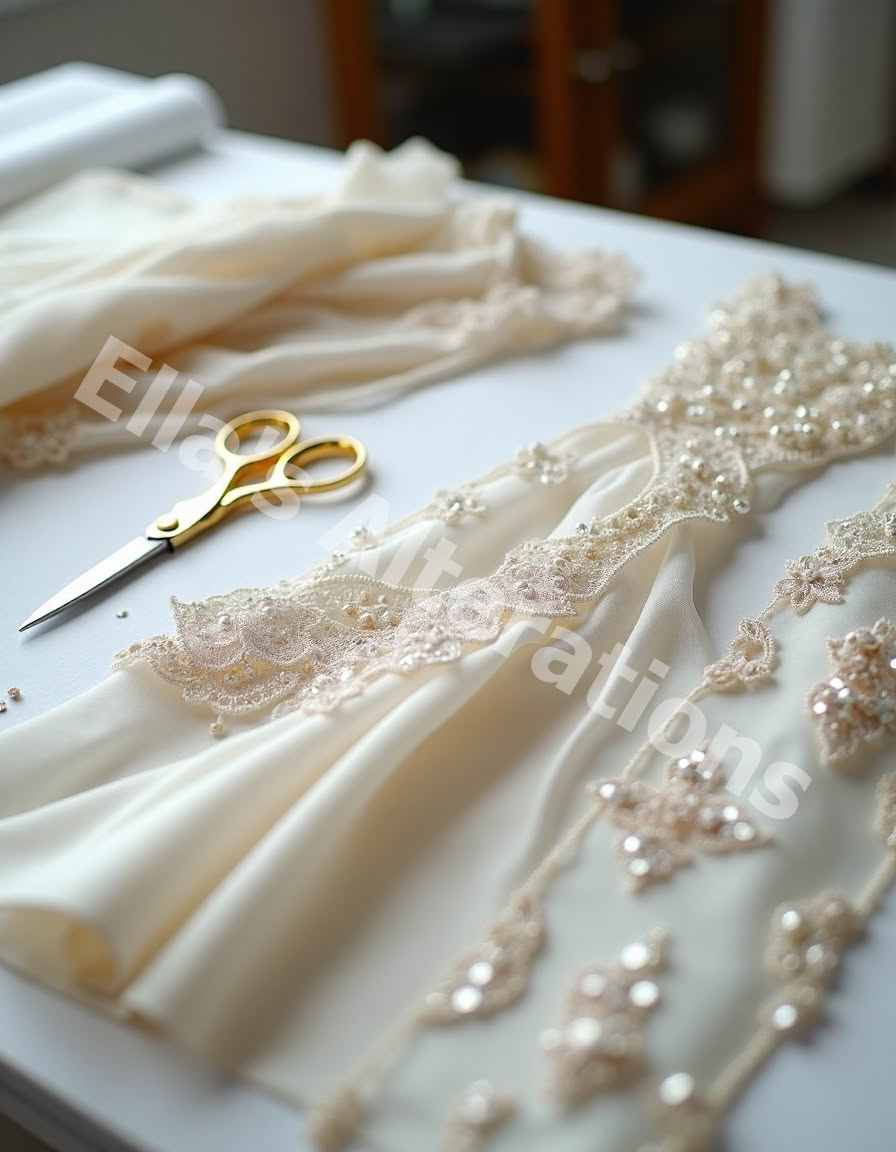
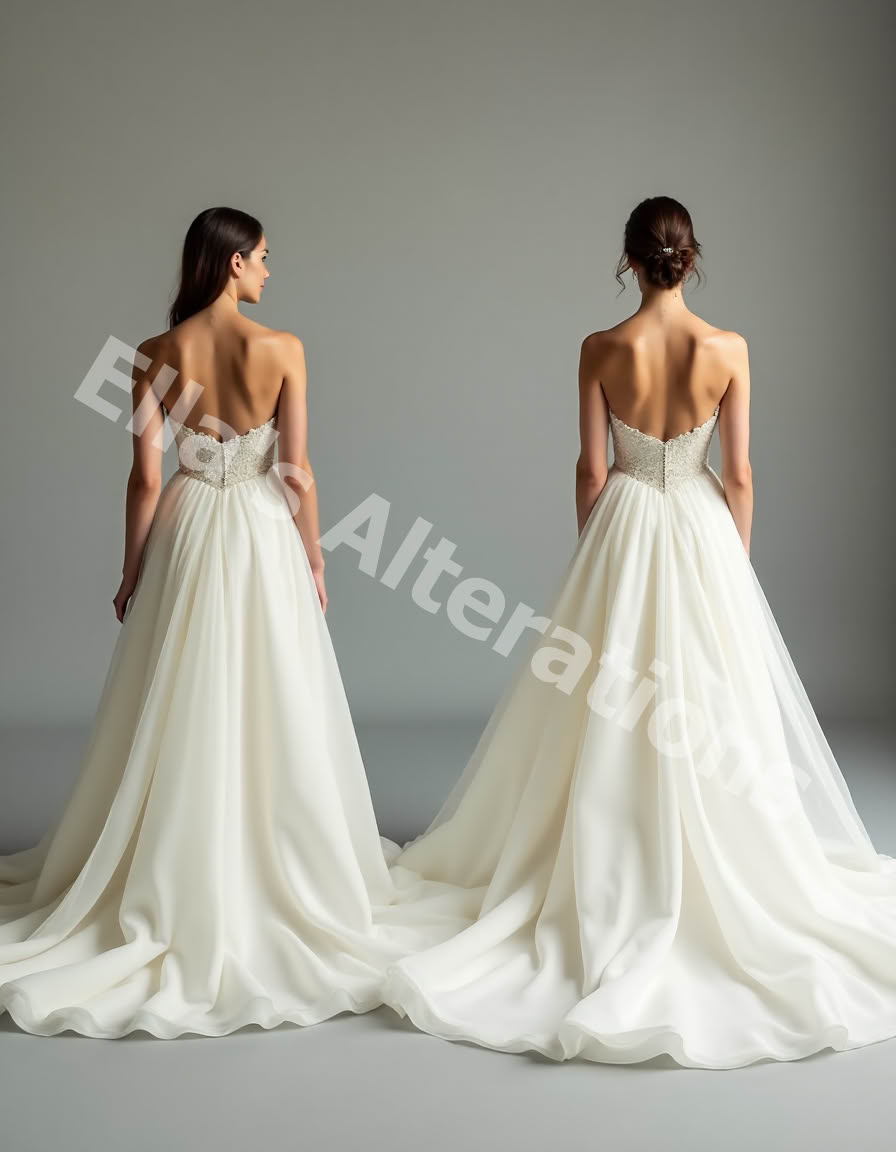
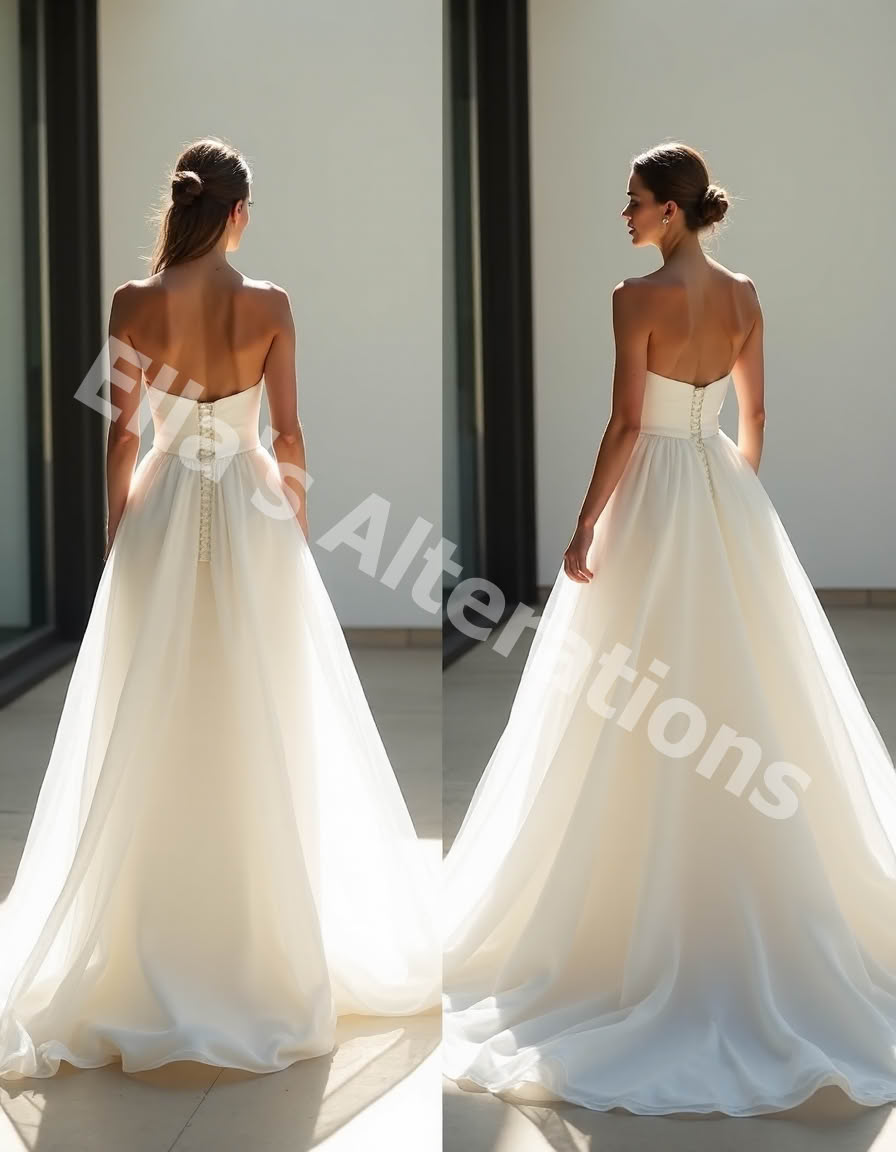
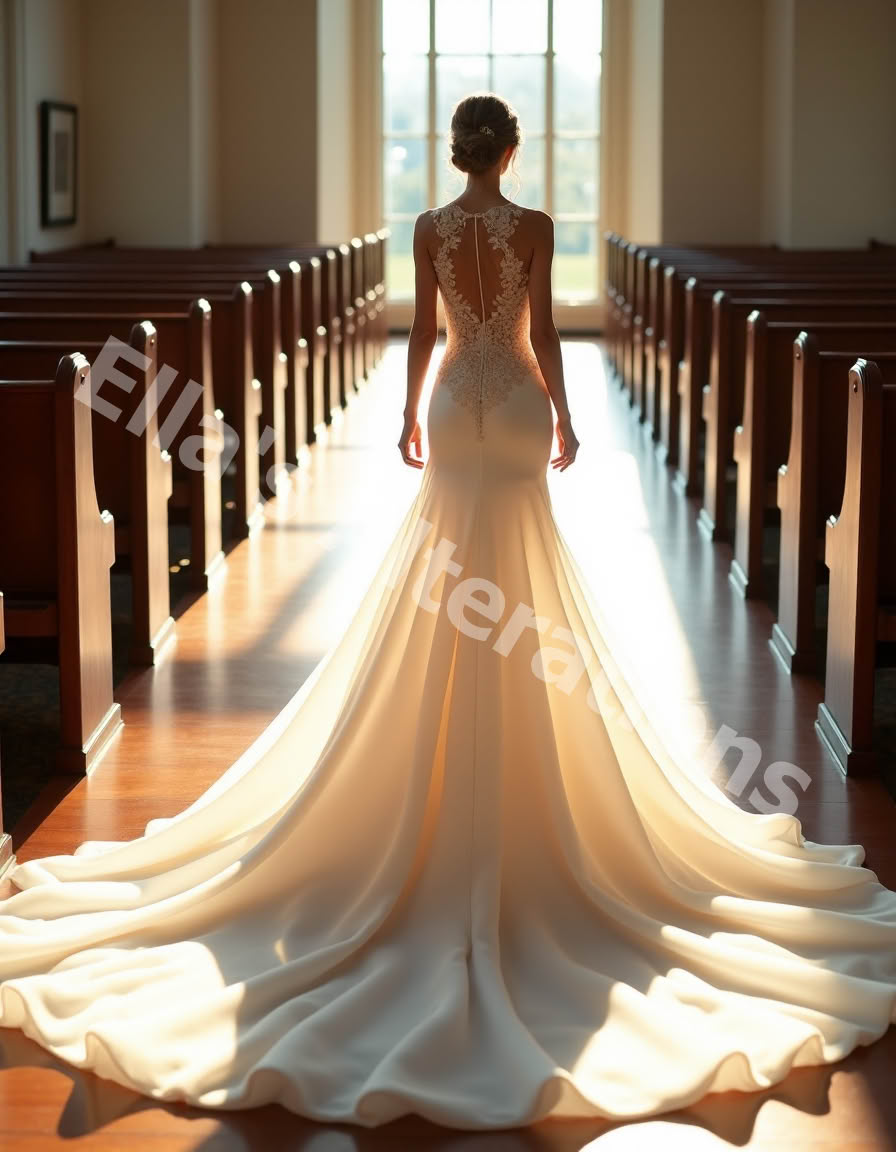
Trains: The Statement Sweep:
The train is one of the most iconic and expressive elements of a wedding gown.
It’s not simply an extra panel of fabric at the back , it’s a symbol of elegance, tradition, and individuality.
In the world of bridal tailoring, the train is affectionately referred to as “the statement sweep” because of the way it gracefully trails behind the bride, making an unforgettable impression with every step.
The basic definition of a train is straightforward: it’s the fabric that extends beyond the hemline at the back of a wedding dress.
But beyond that simplicity lies endless variety.
Trains range in length, style, material, and embellishment.
Some are subtle and barely brush the floor.
Others are long enough to cascade dramatically down the aisle, requiring coordination, care, and sometimes a team to carry.
A well-designed train does more than trail , it floats, it glides, and it transforms.
Different types of trains serve different purposes.
The sweep train or brush train is the shortest.
It extends only a few inches beyond the dress and adds just a touch of flair without overwhelming the bride’s movement.
This style is perfect for intimate weddings, destination ceremonies, or brides who want to keep things understated yet elegant.
It's easy to manage and doesn’t require bustling.
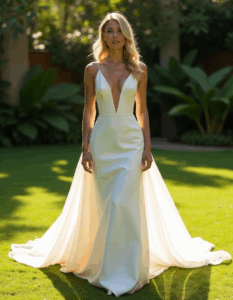
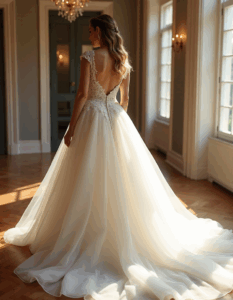
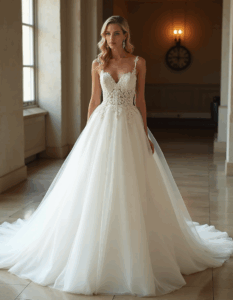
The chapel train is the most common choice among modern brides.
It measures roughly 12 to 18 inches from the hem and provides a happy medium between drama and wearability.
It gives that traditional bridal vibe while still being practical enough for semi-formal venues and light dancing.
This train is often used in A-line and ball gown silhouettes, offering just enough length to add presence without becoming cumbersome.
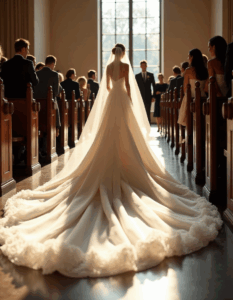
If your vision includes grand entrances and fairytale-worthy photos, the cathedral train may be your match.
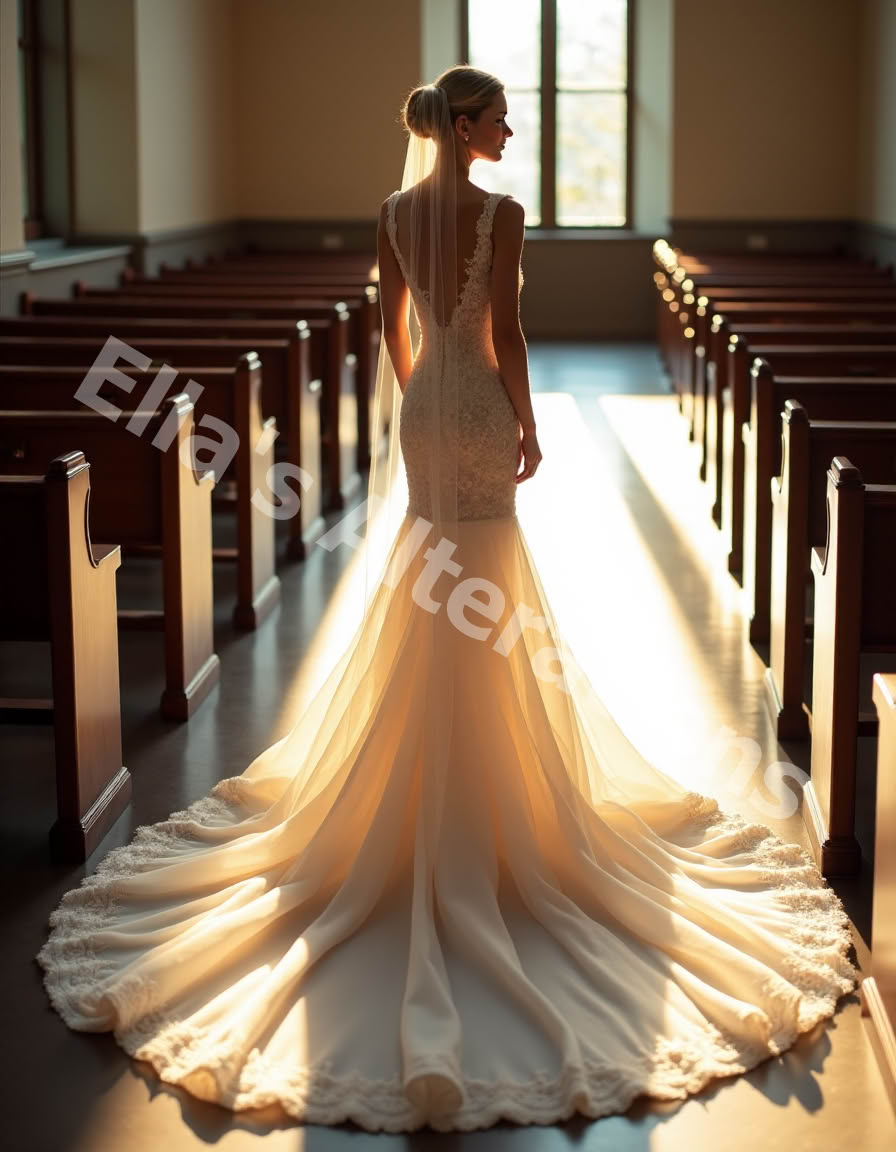
This dramatic extension flows anywhere from 22 inches to several feet beyond the hem, creating a sweeping silhouette that commands attention.
Cathedral trains are typically paired with more formal gowns and venues , think cathedral ceremonies, luxury hotels, and black-tie receptions.
Because of their length and structure, cathedral trains often require bustling or assistance to keep them pristine throughout the celebration.
For those who want to go full royal, the monarch train or royal train goes to the extreme.
These trains can stretch well over ten feet and are often reserved for the most elaborate weddings.
They bring an unmatched level of sophistication, but they also demand serious tailoring and styling.
Royal trains need to be balanced with strong gown structure, expert layering, and often detachable options for comfort.
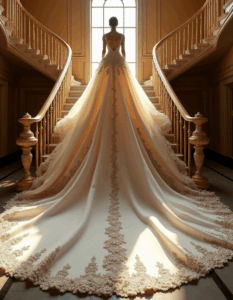
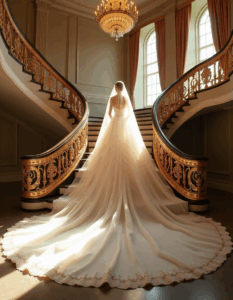
Choosing the right train isn’t only about style , it’s about how it works with your gown’s silhouette and your body type.
- A mermaid gown with a cathedral train creates a striking hourglass shape.
- A ball gown with a royal train becomes a true statement of grandeur.
- A sheath dress with a sweep train gives a minimalist, fashion-forward vibe.
Tailors evaluate not just the visual effect, but also the gown’s weight, the bride’s movement, and the fabric’s natural drape.
Material plays a key role in the success of a train.
Heavier satins and mikado fabrics hold structured shapes beautifully, while lighter tulles, chiffons, and laces offer softness and fluidity.
Some brides choose unembellished trains for a clean, architectural line.
Others opt for detailed trains that sparkle with every step, adorned with lace appliqués, hand-beading, or intricate embroidery.
In the hands of a skilled tailor, a train becomes more than a piece of fabric.
It becomes the part of the gown that turns heads, sets the tone, and transforms your walk down the aisle into a true moment.
A Tailors Guide: How Bustles Transform Your Wedding Gown.
Common Train Styles and What They Say About You:
In the world of bridal fashion, your train is not just a design detail , it’s a reflection of your personality, your wedding style, and the mood you want to set for your big day.
In A Tailor’s Guide: How a Statement Train Transforms Your Wedding Gown, this section breaks down the most common train styles and reveals what each one says about you as a bride.
Whether you're going for timeless, bold, romantic, or modern, there’s a train to match your vision , and your vibe.
Let’s start with the sweep train, also known as the brush train.
It’s the shortest of all, extending just a few inches beyond the gown’s hemline.
Brides who choose a sweep train tend to favor simplicity and ease.
They’re often modern minimalists or lovers of subtle elegance.
This style is ideal for outdoor weddings, beach ceremonies, and intimate elopements.
It’s easy to walk in, requires no bustling, and keeps the silhouette sleek and unfussy.
But don’t let its length fool you , the sweep train still brings that bridal magic, just with a softer whisper.
Next up is the beloved chapel train, one of the most popular and versatile train lengths.
Chapel trains usually extend about 12 to 18 inches past the hem and strike a balance between romance and practicality.
Brides who choose this style often appreciate tradition but don’t want to be weighed down by excessive fabric.
A chapel train brings just enough drama to elevate the gown without overwhelming it.
This train suits a wide range of silhouettes, from A-line to trumpet, and works beautifully in both church and outdoor venues.
It’s graceful, classic, and effortlessly photogenic.
If you want all eyes on you the moment you step into the room, the cathedral train delivers that wow factor.
This train can extend up to 72 inches or more, making it a showstopper fit for a grand entrance.
Brides drawn to cathedral trains are often romantics at heart with a love for elegance and formality.
This style pairs beautifully with traditional ball gowns or fitted silhouettes with dramatic flair.
Think high-ceiling venues, sweeping staircases, and aisle shots that will live in your photo album forever.
Cathedral trains often require bustling or assistance, but the payoff is pure regal drama.
Then there’s the ultimate train for brides who want to go big: the Royal Or Monarch Train.
Often stretching over ten feet long, this train is reserved for formal, high-impact weddings.
Brides who choose this style often lean into opulence, fantasy, and unapologetic glamour.
You’re not just walking down the aisle , you’re owning it.
This kind of train demands expert tailoring, strategic styling, and often custom design.
It’s the red carpet moment of bridal fashion and transforms even a minimalist dress into a couture statement.
But the train isn’t just about length , it’s also about what it communicates.
- A soft lace train with floral appliqués says romantic and feminine.
- A sleek satin chapel train says timeless and elegant.
- A cathedral train with ornate beadwork and embroidery screams luxury and drama.
Even the way the train is attached , whether it flows seamlessly from the skirt or begins as a detachable overskirt , can say something about your style, your priorities, and your wedding-day energy.
Tailors understand how to align these style choices with your personality, your body type, and your venue.
They know that a petite bride might feel overwhelmed by a monarch train, or that a minimalist gown may call for a simpler sweep.
But they also know how to break the rules, if you want to.
With the right structure, fabric, and styling, any bride can wear any train , it just needs to be done with intention.
Your train speaks before you say a word.
It frames your silhouette, transforms your movement, and sets the mood for your entrance.
From the barely-there brush to the jaw-dropping royal, each train carries its own message.
The question is, what do you want yours to say?.
Tailoring Magic: How Trains Transform the Gown:
There’s something extraordinary about how a train can take a wedding gown from beautiful to breathtaking.
It’s not just about adding fabric to the back of a dress.
It’s about sculpting movement, creating visual balance, enhancing drama, and tailoring every inch to the bride’s body and style.
At first glance, a train might seem like a simple addition , just an extension of the skirt.
But the way it’s attached, shaped, and finished can completely redefine the gown’s silhouette.
- A fitted dress with no train might read sleek and minimal, but the moment a dramatic chapel train is added, it gains presence and sophistication.
- A ball gown becomes even more regal with a sweeping royal train that commands the room.
- A sheath dress gets elevated with a detachable lace train, giving it dimension without compromising its clean lines.
Tailors approach train customization with both creativity and precision.
One of the first things they consider is the balance of the gown.
A train alters how fabric drapes and flows, which affects how the gown fits and moves.
Too much weight can pull the dress backward, change the hemline, or shift the way it hugs the body.
That’s why skilled tailoring matters.
A trained eye will know how to redistribute that weight, reinforce the seams, and adjust the bodice or skirt so the entire dress remains flattering and functional.
Proportion is equally important.
A train should complement the shape of the dress, not overwhelm it.
For example, a massive train on a lightweight sheath dress could look disconnected or heavy unless it’s thoughtfully designed to taper from the hip and blend with the gown’s existing lines.
Similarly, a short or narrow train might look underwhelming on a grand ball gown unless it’s balanced with the right flare or detailing.
Fabric choice plays a major role in how the train looks and moves.
Stiff materials like mikado and duchess satin hold their structure beautifully, making them ideal for dramatic, sculpted trains.
Lightweight options like tulle, chiffon, or organza bring softness and fluidity, often used for romantic or ethereal styles.
Lace trains can be light or intricate, depending on how they’re layered and finished.
A tailor will help match the train fabric to the body of the dress so it flows seamlessly , both visually and physically.
Embellishments can also be strategically added to amplify the transformation.
Lace appliqués that cascade from the bodice into the train create a cohesive, elegant effect.
Beaded details that glimmer along the train’s edge can highlight the movement and light, giving the train even more life.
Whether it’s embroidery, 3D floral elements, or layered textures, these additions are more than decorative , they’re intentional touches that bring personality and depth.
One of the most magical techniques a tailor might use is the detachable train.
This offers all the grandeur of a full-length train with the practicality of removing it after the ceremony.
It’s perfect for brides who want two looks in one: a traditional walk down the aisle followed by a chic, dance-ready silhouette for the reception.
Tailors can create these additions so they feel like part of the gown, using discreet fastenings, covered seams, or hidden closures to maintain a flawless finish.
Ultimately, tailoring a train is about creating a custom moment.
It’s not just sewing fabric to a hem.
It’s reimagining the entire gown’s presence and helping the bride feel like the best, boldest version of herself.
With the right touch, a train becomes the piece that completes the look, elevates the silhouette, and tells the story the bride wants to share , in every step, swirl, and unforgettable entrance.
Professional Touch Adding Long Train Bustle Vintage Gowns
The Bustle Breakdown: Elegance Meets Function:
Once the ceremony ends and the reception begins, there’s one often-overlooked element that quietly steps in to save the day: the bustle.
In A Tailor’s Guide: How a Statement Train Transforms Your Wedding Gown, this section highlights how a well-crafted bustle blends beauty with functionality, allowing your gown to move effortlessly from aisle to dance floor.
It’s the secret to keeping your train, and your look, elegant, manageable, and picture-perfect long after you’ve said “I do.”
At its core, a bustle is a series of hidden hooks, loops, ribbons, or buttons that lift the train off the ground and secure it to the gown’s skirt.
It transforms a floor-length or sweeping train into a manageable shape so the bride can walk, dance, and celebrate freely without tripping or dragging the fabric.
And while bustling may sound like a purely practical fix, the truth is, it’s a highly tailored art form.
A good bustle is both secure and subtle, designed to match the dress’s style and preserve the overall silhouette.
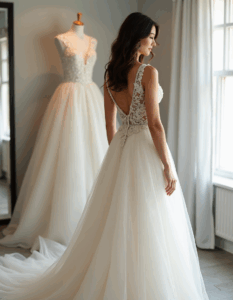
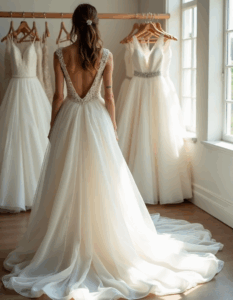
There are several different types of bustles, and each has its own benefits depending on the gown’s fabric, train length, and structure.
One of the most popular is the American bustle, also called an over bustle.
This style gathers the train and pins or buttons it to the outside of the dress, typically at several points along the back seam.
It’s great for gowns with a lot of volume or layers and gives a dramatic, almost cascading effect.
Then there’s the French bustle, or under bustle, which tucks the train underneath the skirt, attaching it from the inside.
This creates a more seamless look, ideal for fitted gowns or dresses with a cleaner, minimalist aesthetic.
The French bustle is especially loved for how it lifts the fabric without changing the shape of the gown too drastically.
It’s elegant, discreet, and beautifully tailored when done right.
Another option is the ballroom bustle, designed to completely hide the train by tucking it into the inside of the dress, making it look as if the gown was always floor-length.
This is a great solution for brides who want no trace of their train during the reception.
It keeps everything streamlined and smooth, while still preserving the integrity of the original silhouette.
Some dresses may even require a hybrid bustle, combining techniques to manage unique train shapes or multiple fabric layers.
And for gowns with extremely long or royal-style trains, the bustle might be supported with additional hidden ties or reinforced stitching to handle the added weight.
This is where your tailor’s expertise is key.
The right bustle is custom-designed to suit your dress, your movement, and your style.
Beyond function, bustles can also add a new layer of visual interest.
Multiple bustling points can create soft pleats, ruffles, or draping that change the look of the gown in a beautiful way.
For brides who love the idea of a second look without a full outfit change, a bustle can create that transformation.
It’s your ceremony gown and your party gown, all in one.
Timing is another reason the bustle matters.
After the ceremony, you’ll want to move freely during your reception, whether you're mingling with guests or owning the dance floor.
A trailing train, no matter how beautiful, can quickly become a hazard.
A great tailor will not only create the bustle but show you, or your bridal party, how to secure it properly, so there’s no last-minute confusion or dress wrangling mid-reception.
In the end, the bustle is where elegance meets function.
It lets your train shine when it needs to, then quietly steps in to support you for everything that follows.
With the right design and expert tailoring, the bustle becomes invisible to everyone but indispensable to you.
It’s a behind-the-scenes hero that helps your gown move with you, from one magical moment to the next.
Additional Perspectives: Clarifying Points:
Can a Wedding Dress Train Be Shortened?
Yes, a train can absolutely be shortened by a professional tailor.
Brides often choose this option when the original train feels too long for their venue, walking path, or comfort level.
Shortening a train involves carefully removing or trimming excess fabric, then blending the new hemline into the gown’s design so the adjustment is invisible.
Depending on the fabric and embellishments, the tailor may need to reattach lace appliqués, beading, or other details to maintain a seamless look.
This alteration is especially helpful for brides having outdoor or casual weddings where a long train might be impractical.
It's also a great way to repurpose a secondhand or heirloom gown.
Whether you're going from cathedral to chapel length or just want a soft sweep, your tailor can help adjust the proportions while keeping the gown balanced and flattering.
Keep in mind that once shortened, the train can't easily be restored to its original length, so it's best to be sure before making the change.
Can You Make a Wedding Dress Train Longer?
Yes, lengthening a train is possible and often requested by brides who want to enhance the drama or elegance of their gown.
This can be done by adding matching or complementary fabric to extend the original train or by attaching a custom-designed overskirt or detachable train.
A professional tailor will assess your gown’s fabric, silhouette, and structural seams to determine the best way to integrate the extension.
If the dress is made from a common bridal fabric like tulle, chiffon, or satin, finding a close match is usually straightforward.
For intricate lace or embellished gowns, your tailor may need to source specialty materials or repurpose elements from other areas of the gown to ensure a seamless look.
Lengthening the train not only changes the gown’s overall feel, it can also impact how the dress moves and fits, so structural support may be needed.
This is especially important for fitted or strapless gowns.
Whether you’re going from chapel to cathedral or dreaming of a royal statement, extending your train can give your gown a more custom, couture finish.
Can You Alter a Wedding Dress Train?
Absolutely.
Altering a wedding dress train is a common part of the bridal tailoring process and allows for total customization based on your preferences.
Whether you want to shorten, lengthen, narrow, widen, bustle, or reshape your train, an experienced tailor can guide you through the options and help you achieve the look you want.
Train alterations can adjust the way your gown drapes, flows, and functions.
For example, if you love the look of a cathedral train but need more mobility, a tailor can reduce the length and create a bustle system to secure it during the reception.
Or if your gown feels too flat, additional layers or a flare can be added to the train for more volume and movement.
Train alterations require a delicate hand, especially when the gown includes lace, embroidery, or beadwork.
Matching patterns and maintaining proportion are key.
If you’re altering a pre-loved gown or making a last-minute adjustment, be sure to schedule fittings well in advance.
Trains can be tailored to reflect your vision perfectly , you just need the right professional on your side.
Can You Add a Train to a Wedding Dress?
Yes, you can absolutely add a train to a wedding dress , and it’s one of the most impactful ways to personalize your gown.
This is especially popular for brides who choose simpler silhouettes but want to elevate their look with added drama.
A train can be sewn directly into the gown or created as a detachable piece, offering both style and flexibility.
Adding a train involves careful tailoring to ensure the new element feels like a natural part of the dress.
The tailor will match fabrics, align the seams, and consider how the gown moves to keep everything cohesive.
Lace overlays, satin panels, tulle layers, or even embroidered accents can be used to make the train feel rich and luxurious.
A well-designed train can balance proportions, enhance the silhouette, and add elegance without requiring a completely custom gown.
This is a great solution for brides working with an off-the-rack dress or looking to refresh a secondhand style.
If you're going for a one-of-a-kind look, adding a train is your chance to truly transform the gown into your own masterpiece.
Can You Wear a Dress With a Train to a Wedding?
If you're attending a wedding as a guest, wearing a dress with a train can be tricky.
While it’s not an outright no, there are some strong guidelines.
Traditionally, dresses with noticeable trains are reserved for the bride.
Wearing one as a guest may come across as overly formal or even attention-seeking, especially if the train is long or dramatic.
That said, short or subtle trains, like a soft sweep or a layered hem that trails slightly, can be appropriate if styled thoughtfully and suited to the venue.
For example, a garden maxi dress with a soft train might work for an outdoor ceremony, but a cathedral-style extension at a guest’s dress would feel out of place.
Always consider the couple’s style, the formality of the wedding, and the cultural context.
If you're unsure, opt for something elegant that won’t compete with the bride’s moment.
When in doubt, save the train for your own future bridal debut.
Can a Train Be Added to a Wedding Dress?
Yes, a train can definitely be added to almost any wedding dress, even if it was originally designed without one.
This is a popular tailoring request, especially for brides who fall in love with a simpler gown but still want that sweeping bridal moment.
Adding a train gives your dress elegance, flow, and a custom-designed edge that can make your entire look feel more luxurious and intentional.
Tailors can sew the train directly into the skirt or design it as a detachable piece, allowing you to enjoy a dramatic entrance and then remove it later for dancing and mingling.
The process involves matching fabric, texture, and color so the addition looks seamless.
Embellishments, lace edging, or appliqués can be added to blend the new train with your gown’s original design.
Adding a train not only elevates your gown but also transforms your silhouette.
Whether you’re adding just a touch of length or going full cathedral, it’s a creative way to personalize your bridal style.
Can You Take a Train Off a Wedding Dress?
Yes, it is entirely possible to remove a train from a wedding dress, either temporarily or permanently.
If the train is detachable, your tailor can simply design it with hidden fasteners, buttons, snaps, or hooks, allowing you to wear it during the ceremony and take it off for the reception.
This is an excellent option for brides who want two looks in one gown.
For permanent removal, your tailor can carefully unpick the seams, trim the excess fabric, and reshape the skirt hem to maintain the gown’s silhouette.
This option is often chosen by brides who want to repurpose or simplify a pre-loved gown or make their dress more comfortable and versatile.
Train removal must be done with precision to preserve the structure of the skirt and ensure nothing looks unfinished.
It may also involve rebalancing the dress or adding details to replace what’s lost with the train.
When done professionally, your gown will look like it was always meant to be train-free.
How to Hold a Wedding Dress Train Up?
Holding your train up during the ceremony or photos can help preserve its shape and keep it clean, especially if you’re outdoors.
The most elegant way to manage your train is by using a bustle, which secures it to your gown.
However, before the bustle is fastened, you may want to hold the train manually.
For photos or a grand entrance, your maid of honor or bridal party can help lift and arrange the train behind you.
You can also use a wrist loop, which is a small sewn-in strap on the inside of the train.
Simply slip your hand through the loop, letting you carry the train gracefully without dragging it.
Some trains also come with detachable overskirts that can be folded over the arm.
Just be mindful of posture and weight , you want the movement to feel natural and not interfere with your stride or comfort.
Your tailor can design the loop or train to suit your specific dress and style.
How to Pin a Wedding Dress Train?
Pinning a train is a temporary solution often used during fittings or last-minute prep before bustling.
If you don’t have a bustle installed yet, or if you need to lift the train quickly, you can pin it using small, strong safety pins or bridal garment clips.
Always pin from the inside, either to the gown’s waist seam, the skirt lining, or a reinforced bustle loop if one has been sewn in.
Be very cautious with delicate fabrics like tulle or lace , pinning in the wrong place can cause visible holes or damage.
Use pins only when absolutely necessary, and never as a long-term fix.
If you're in a pinch, wrap a piece of tissue or fabric around the area before pinning to protect it.
Better yet, consult your tailor during your fittings about adding a bustle system or detachable option.
These are safer, more stylish ways to lift and secure the train without the risk of tearing or creasing your dress.
How to Fluff a Wedding Dress Train?
Fluffing your wedding dress train is all about enhancing its volume, shape, and presence before walking down the aisle or posing for photos.
Start by lifting the train gently with both hands and giving it a few light shakes to loosen any folds or wrinkles.
This works especially well with lightweight fabrics like tulle or organza.
If you’re wearing a gown with multiple layers, you can separate the layers by hand and gently lift and fan them out behind you.
For lace or embellished trains, avoid tugging , instead, smooth and position the fabric carefully to highlight the detailing.
You can also sweep the train outward in a semicircle to create a dramatic backdrop in photos.
Your maid of honor or stylist should be on fluffing duty before big moments like your walk down the aisle or first-look photos.
Some brides even use a soft steamer the morning of to relax any creases in the train.
A well-fluffed train sets the tone and completes your bridal moment beautifully.
Couture-Level Customization: Tailors Know Best:
When it comes to crafting the wedding gown of your dreams, nothing compares to couture-level customization.
This is where artistry, technical mastery, and personal style converge to create something entirely your own.
Couture customization goes far beyond simple alterations.
It’s not just about adjusting hemlines or letting out seams.
It’s about interpreting your style, understanding your body, and building a gown that moves, fits, and flatters like it was designed just for you , because it is.
When you add a statement train into this process, the transformation becomes even more powerful.
A train isn’t just extra fabric.
It’s a canvas for creativity.
It’s the detail that elevates your gown from beautiful to breathtaking.
Tailors begin with a consultation, which is much more than just taking measurements.
They ask about your venue, your bridal vision, your comfort preferences, and how you want to feel on your wedding day.
From there, they begin sketching possibilities: flowing lace panels, detachable overskirts, chapel-length layers that blend into your silhouette, or grand cathedral trains that sweep the floor with grace.
The design is not just about looks.
It’s about storytelling.
Every person's body is different, and tailors know how to honor that.
They shape the gown and train to highlight your best features and minimize distractions.
A petite bride might benefit from a train that flares gently without too much volume, while a taller bride may carry a cathedral or monarch train with effortless balance.
These details are tailored to you , your proportions, your posture, your movement.
The goal is to make you feel like the best version of yourself, not like you’re wearing someone else’s dream.
Fabric is chosen with purpose.
A custom train in rich satin creates a sleek, modern profile.
Layers of silk tulle bring romance and softness.
For a touch of drama, tailors may use mixed materials, layering sheers with structured fabric or edging a soft train with hand-beaded appliqués.
The way the fabric catches light, flows with movement, and frames the gown is carefully considered.
Your tailor sees it all , how it looks standing still, how it photographs, how it follows you down the aisle.
Embellishments are another level of customization that can transform a train into wearable art.
Think floral lace cascading from your waist into a sweeping design.
Think crystals or pearls lining the edge of a detachable piece that glitters with every step.
Think 3D appliqués that add dimension and depth.
Tailors position these details strategically to lead the eye and define the shape of the train.
Detachable trains are also a couture favorite, offering brides versatility without compromising design.
Tailors can craft hidden buttons, hooks, or snaps that allow you to wear a dramatic train during the ceremony and remove it later for a lighter, more playful reception look.
It’s two gowns in one, seamlessly styled and effortlessly stunning.
Ultimately, couture customization is about confidence.
It’s about putting your trust in someone who understands fashion and fit on a deeper level.
A tailor is not just altering a gown.
They are sculpting an experience, creating a moment, and helping you own your aisle in a way that feels entirely you.
When done right, your gown doesn’t just fit , it speaks.
And your train?
It says everything without you needing to say a word.
From Bodice Train Guide Wedding Dress Parts
Conclusion: All Aboard the Statement Train:
There’s something undeniably powerful about the way a wedding dress train follows behind a bride.
It doesn’t just trail along the floor , it announces her arrival, commands attention, and lingers long after she’s passed.
Now, it’s time to pull it all together , and board the statement train with full confidence.
Your train is more than fabric.
It’s an extension of your bridal identity.
Whether you’re going for romantic, modern, vintage, classic, or somewhere in between, your train helps define that look and carry it through with intention.
From the soft sweep of a brush train to the commanding presence of a royal one, this single detail shapes not only your silhouette but also the entire energy of your walk down the aisle.
Throughout this guide, we’ve shown how a train can be added, altered, or completely reimagined to fit your unique vision.
Maybe your original gown didn’t come with a train, or maybe the one it had didn’t feel quite right.
That’s where tailoring comes in , not just to fix, but to transform.
Tailors don’t simply adjust the length of your dress.
- They design movement.
- They shape silhouettes.
- They use fabric and detail to tell your story in every step, every turn, and every unforgettable entrance.
We’ve also covered the practical magic of bustles and detachable designs.
These functional additions prove that elegance and ease can exist in the same gown.
Want to glide down the aisle in a grand cathedral train, then hit the dance floor without worrying about stepping on your hem?
That’s the beauty of a bustle.
Want to rock two looks in one night?
A detachable train gives you ceremony glamour and reception freedom in one seamless switch.
With the right tailor, these elements disappear into the design, supporting your look rather than disrupting it.
What makes a train truly transformative is how it makes you feel.
That’s something no price tag or label can capture.
A custom train designed specifically for your body and your vision turns your dress into something personal, powerful, and unforgettable.
- It’s not about trends.
- It’s not about tradition.
It’s about feeling that moment when you look in the mirror and say, “This is it.”
- It’s giving confidence.
- It’s giving elegance.
It’s giving main character energy from the first step to the last twirl.
And that’s the kind of feeling every bride deserves.
So if you’re on the fence about whether or not to add a train, alter an existing one, or explore a custom piece altogether, let this be your sign.
Your gown should rise to the moment , and the right train will take it there.
Find a tailor who understands your vision.
- Ask the questions.
- Try the styles.
- Trust your instincts.
Because when that train falls behind you just right, when it sways as you move and flows like it was made for you, you’ll know.
You didn’t just find the dress.
You found the one.
And when that train sweeps behind you?
That’s not just fabric.
That’s your bridal story unfolding , one elegant step at a time.
FAQs:
How Much Should I Budget for Customizing a Train on My Wedding Gown?
The cost of customizing a train on your wedding gown can vary widely depending on several key factors, but a good rule of thumb is to budget anywhere from $150 to $800 or more for this kind of detail-focused tailoring.
The final price will depend on the complexity of the design, the type of fabric used, and whether the train is being added, altered, or made detachable.
If you’re adding a simple sweep or chapel-length train in a standard fabric like tulle or chiffon, your cost will likely be on the lower end.
These materials are lightweight, easy to work with, and don’t require extensive structural changes.
However, if you’re going for a cathedral or royal train that involves rich fabrics like satin or lace, especially with hand-sewn embellishments, beading, or appliqués, the price will increase significantly.
For gowns that already have a train, altering the length or adding a bustle system (which is often necessary to lift the train for the reception) can range between $50 to $300, depending on the type and number of bustle points required.
Creating a detachable train is a more intricate process and may cost more, especially if you’re working with custom fabric or detailed triMs. Your tailor may also need to reinforce the dress structure to support the added weight and ensure everything flows seamlessly.
Ultimately, the best way to plan your budget is to consult with your tailor early, bring inspiration photos, and ask for a quote based on your gown’s design.
This ensures there are no surprises — and that your train not only looks stunning but also fits beautifully into your wedding day vision.
Can a Tailor Add a Train to a Wedding Gown That Originally Has None?
Yes, a skilled tailor can absolutely add a train to a wedding gown that originally doesn’t have one — and it’s one of the most exciting ways to transform a simple dress into a dramatic, couture-inspired statement.
Whether you fell in love with a minimalist gown or you’re customizing an off-the-rack piece, adding a train can give your bridal look a stunning, elevated finish.
The process begins with selecting the right type of train for your gown’s fabric, silhouette, and structure.
For example, if you have a sleek sheath or A-line dress, a lightweight chiffon or tulle chapel train may add just enough romance without overwhelming the shape.
If your gown is more structured or formal, a cathedral-length satin train could create that showstopping effect.
Your tailor will help you match the added train fabric as closely as possible to the original gown, making sure the texture, tone, and weight align.
There are also multiple ways to add the train: it can be sewn directly into the skirt for a seamless finish or attached as a detachable piece using hidden hooks, snaps, or buttons.
Detachable trains are perfect for brides who want that dramatic aisle moment but also need freedom to move during the reception.
A tailor will also consider how the new train affects the fit and flow of your gown.
They may reinforce seams, adjust the skirt shape, or add a bustle for easy lifting after the ceremony.
Adding a train is more than just an alteration — it’s a creative decision that lets you express your personal style.
With the right vision and expert tailoring, even the simplest gown can become a statement piece that feels entirely you.
What’s the Difference Between a Bustle and a Detachable Train?
While both a bustle and a detachable train are designed to help manage a wedding gown’s train, they serve very different purposes — and knowing the difference can help you decide which option works best for your wedding day flow and style goals.
A bustle is a tailoring technique used to lift and secure the existing train of your gown after the ceremony.
It involves sewing in discreet hooks, buttons, ribbons, or loops onto the gown so the train can be gathered and fastened up, allowing you to move freely during the reception without stepping on your dress.
There are several types of bustles — American (over bustle), French (under bustle), ballroom, and more — each offering a different visual effect depending on the gown’s silhouette and fabric.
The bustle keeps your original train intact but repositions it for comfort and practicality.
On the other hand, a detachable train is a separate, custom-made piece that is added to a gown, often to create a dramatic entrance for the ceremony.
It can be made of tulle, lace, satin, or even matching fabric from the dress and is attached using hidden buttons, snaps, hooks, or velcro.
Once the ceremony and photos are done, you simply remove it to reveal a second look — typically a lighter, more manageable dress for the reception.
Think of it like this: a bustle hides the train you already have, while a detachable train adds one when you want it, and removes it when you don’t.
Both offer elegance and ease, but the choice depends on your dress style, venue, and how many looks you want to create.
Many brides even choose to combine both — starting with a detachable train and bustling the original one for dancing.
Are Certain Fabrics Better for Dramatic Trains?
Yes, certain fabrics are much better suited for dramatic wedding dress trains, especially when it comes to movement, structure, and visual impact.
Choosing the right fabric is key to creating a train that flows beautifully, holds its shape, and complements your gown’s overall silhouette.
If you're going for volume and grandeur, structured fabrics like mikado, duchess satin, or faille are excellent choices.
These heavier materials hold shape well and create crisp, architectural lines that look especially stunning in cathedral or royal trains.
They give off a regal, formal vibe and photograph beautifully, especially in grand indoor venues.
These fabrics also add weight to the gown, so they’re ideal for brides who want a statement train that stays in place and makes a bold impression.
For brides craving softness and movement, lighter fabrics like tulle, chiffon, or organza create an ethereal, romantic feel.
These are perfect for chapel or sweep trains and work well for outdoor or destination weddings.
When layered, they offer dimension and flow without feeling too heavy, and they flutter beautifully in the breeze — perfect for photos and gentle drama.
Lace trains offer timeless elegance and can range from delicate and subtle to bold and ornate, depending on the design.
Lace can be layered over tulle or satin to add texture and detail, especially when hand-appliquéd or paired with embellishments like beading or sequins.
The best fabric for your train will depend on your dress structure, wedding venue, personal style, and comfort level.
A skilled tailor can guide you toward the right material, blending beauty with function.
The goal is to create a train that feels like an extension of your gown — dramatic, yes, but also cohesive, comfortable, and unforgettable.
How Much Should I Budget for Customizing a Train on My Wedding Gown?
The cost of customizing a train on your wedding gown can vary widely depending on several key factors, but a good rule of thumb is to budget anywhere from $150 to $800 or more for this kind of detail-focused tailoring.
The final price will depend on the complexity of the design, the type of fabric used, and whether the train is being added, altered, or made detachable.
If you’re adding a simple sweep or chapel-length train in a standard fabric like tulle or chiffon, your cost will likely be on the lower end.
These materials are lightweight, easy to work with, and don’t require extensive structural changes.
However, if you’re going for a cathedral or royal train that involves rich fabrics like satin or lace — especially with hand-sewn embellishments, beading, or appliqués — the price will increase significantly.
For gowns that already have a train, altering the length or adding a bustle system (which is often necessary to lift the train for the reception) can range between $50 to $300, depending on the type and number of bustle points required.
Creating a detachable train is a more intricate process and may cost more, especially if you’re working with custom fabric or detailed triMs. Your tailor may also need to reinforce the dress structure to support the added weight and ensure everything flows seamlessly.
Ultimately, the best way to plan your budget is to consult with your tailor early, bring inspiration photos, and ask for a quote based on your gown’s design.
This ensures there are no surprises — and that your train not only looks stunning but also fits beautifully into your wedding day vision.
Dress Train Lengths Demystified: From Sweep to Cathedral, What’s Your Pick?

About Us
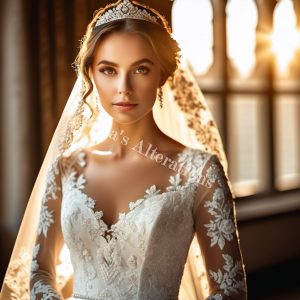
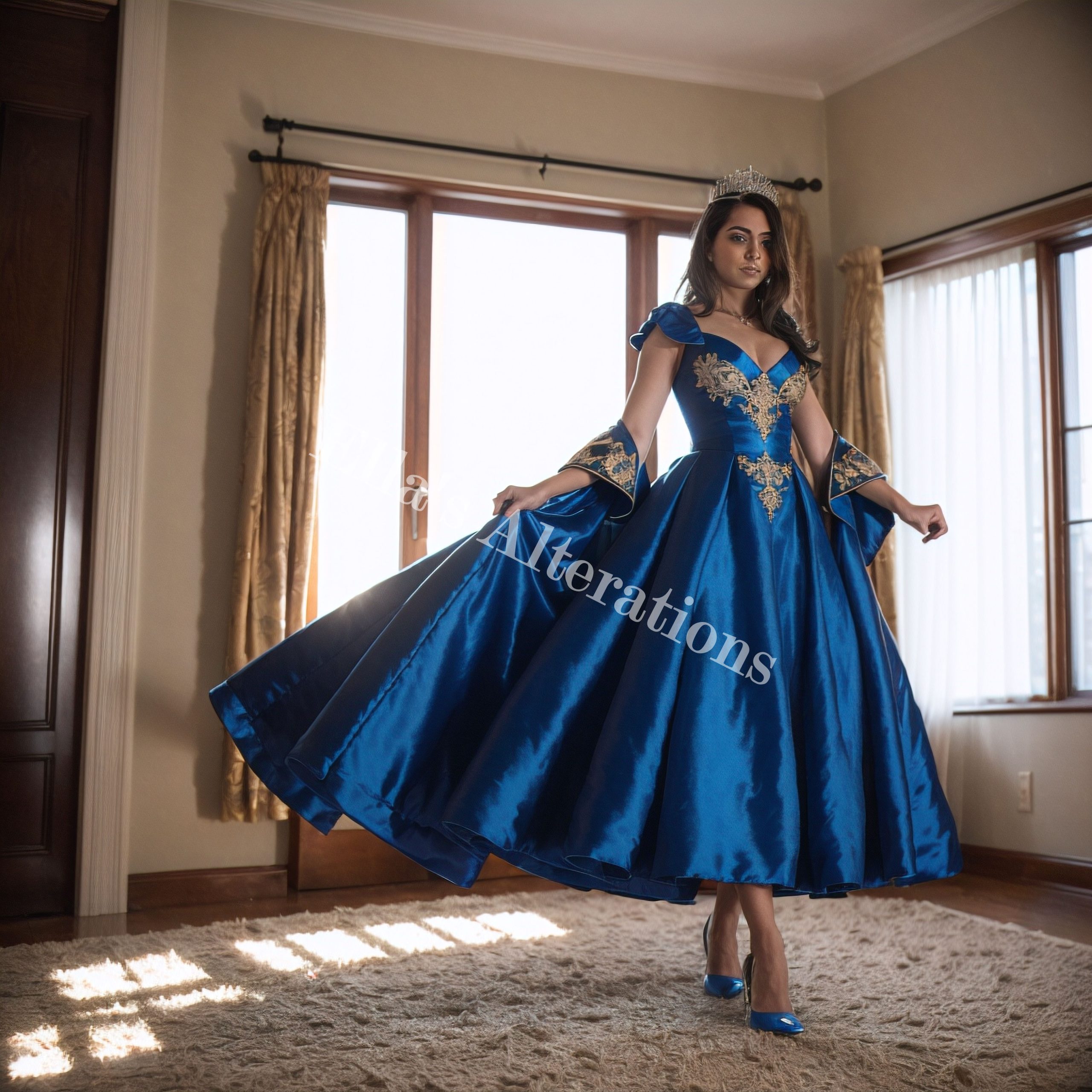
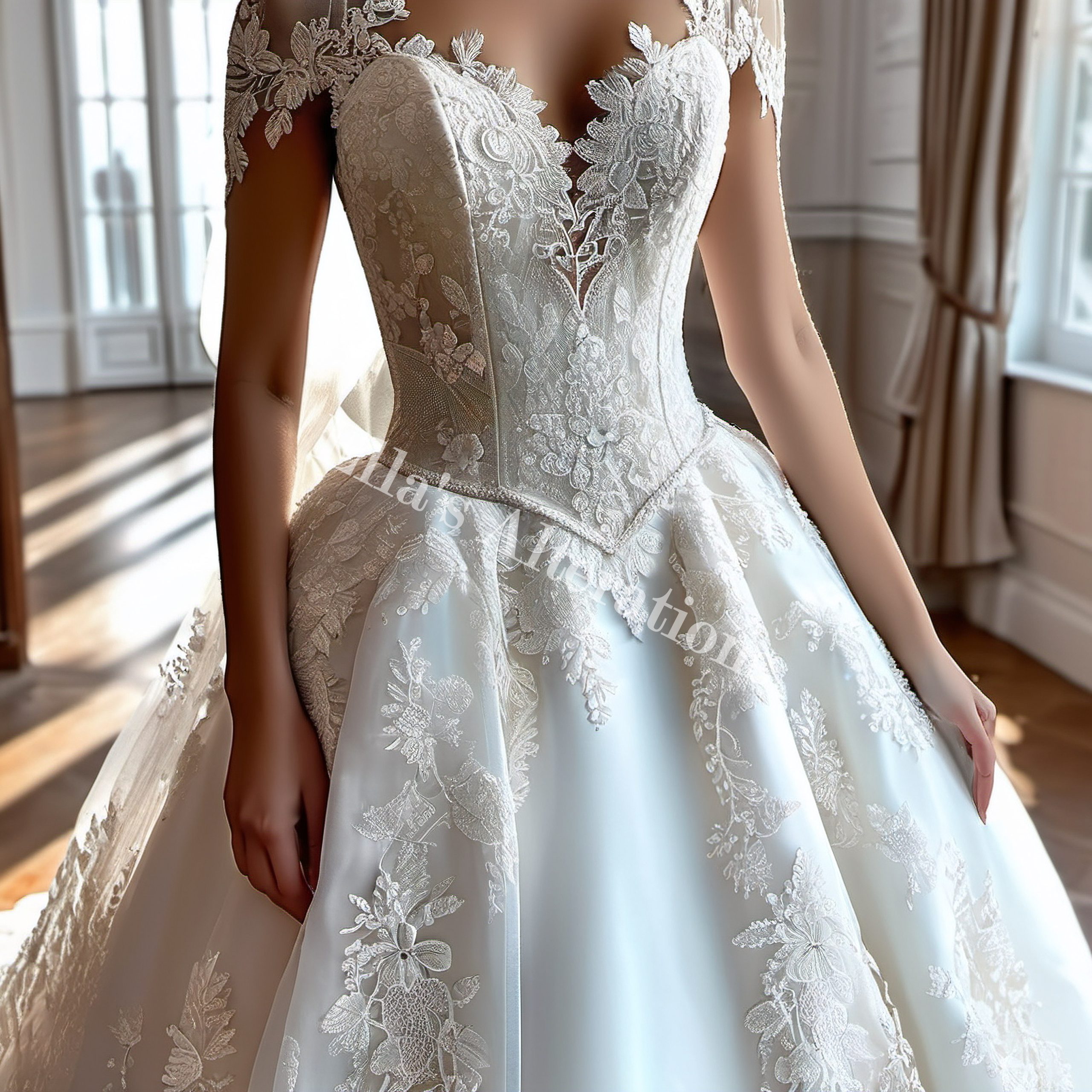
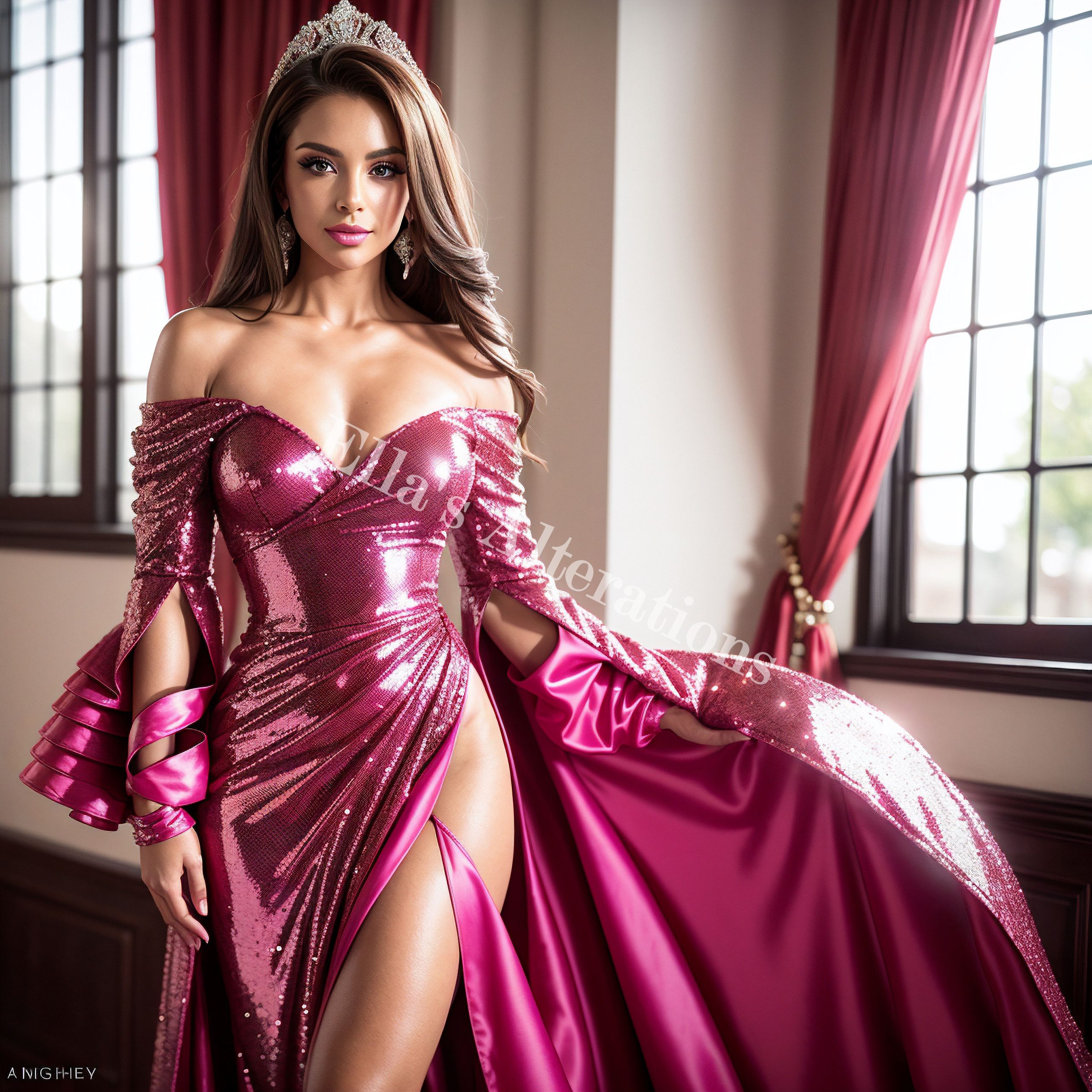
Adding or altering a train is one of the most powerful ways to customize your wedding gown. This guide breaks down everything a bride needs to know about tailoring a train that matches her personal style, dress silhouette, and wedding vibe. It covers popular train types — from subtle sweeps to grand cathedral lengths — and explains how each style affects movement, presence, and photography. It also dives into bustles and detachable options, which offer comfort without sacrificing drama. A good tailor doesn’t just attach fabric — they design flow, support, and elegance, ensuring the gown is as functional as it is stunning. This guide includes expert tips on fabric choices, body type compatibility, and how to work with a tailor to bring your vision to life. Whether you're going for modern minimalism or classic romance, a statement train is the ultimate way to transform your gown into something uniquely yours.
Ella’s Style Confidence
Brought to you by Ella’s Alterations
-
Your body is not the problem. The fit is.
If something feels off when you put it on, that does not mean it is wrong for you. It means it has not been tailored for you yet. Clothes are made for averages. You are not average. -
Confidence starts at the seams.
The smallest adjustments change everything. A lifted waist, a shaped bust, a clean hem. These details quietly do the heavy lifting so you can walk in like you own the room. -
Comfort is not optional.
If you are pulling, tugging, or holding your breath, the garment is failing you. Real tailoring lets you move, sit, dance, and live without thinking about your clothes. -
Trends fade. Fit lasts.
Styles come and go fast. A perfect fit never goes out of style. When something fits you correctly, it always looks intentional and expensive. -
Support should be built in, not added later.
Hidden structure matters. Boning, cups, straps, and shaping should work with your body, not against it. When support is done right, no one sees it but everyone notices the result. -
You deserve clothes that work as hard as you do.
Whether it is a wedding dress, a suit, or everyday wear, your clothes should show up for you. Sharp, polished, and reliable. -
Confidence is quiet, not loud.
The best dressed people are not uncomfortable or flashy. They look effortless because their clothes fit correctly and feel natural. -
One great alteration beats five new outfits.
Fixing what you already own often gives you more confidence than buying something new. A tailored piece feels personal. Like it was made just for you. -
When it fits right, you stand differently.
Posture changes. Shoulders relax. You stop adjusting and start owning your space. That shift is what people actually notice. -
You are allowed to feel amazing in your clothes.
Not just okay. Not just good enough. Amazing. That is the standard.
Local Credibility
Ella’s Alterations is trusted by brides, professionals, and families across Central Florida for one reason. The work is done right.
Awards & Recognition
- Most Trusted Tailoring & Alterations Studio 2025 – USA
- Bridal & Formalwear Tailoring Excellence Award 2025
- Recognized nationally by LUXlife Magazine for craftsmanship and client trust
- Chosen year after year for precision bridal and formal tailoring
- Best Wedding Dress & Formalwear Tailoring Zephyrhills 2026
- NextDoor Neighborhood Favorite 2023 2024 2025
Service Area
Proudly serving Zephyrhills, Pasco County, Tampa, Wesley Chapel, Lakeland, and surrounding Central Florida communities. Clients travel from across the region for expert alterations that local shops simply cannot match.
Depth of Craft
With over 30 years of hands on tailoring experience, Ella works at a master level. This is not basic hemming or quick fixes. This is true garment engineering. Wedding gowns with structure, suits that need balance, formalwear that must move and photograph perfectly. Every adjustment is intentional and precise.
Proof of Trust & Fitting Care
Every fitting is handled with respect, privacy, and patience. Measurements are double checked. Details are explained. Nothing is rushed. Nothing is guessed.
Clients return because they feel heard, supported, and confident. Dresses are protected. Fabrics are handled correctly. Fit decisions are made with experience, not shortcuts.
This is why generations of clients trust Ella with their most important garments. When it has to fit perfectly, they choose experience.

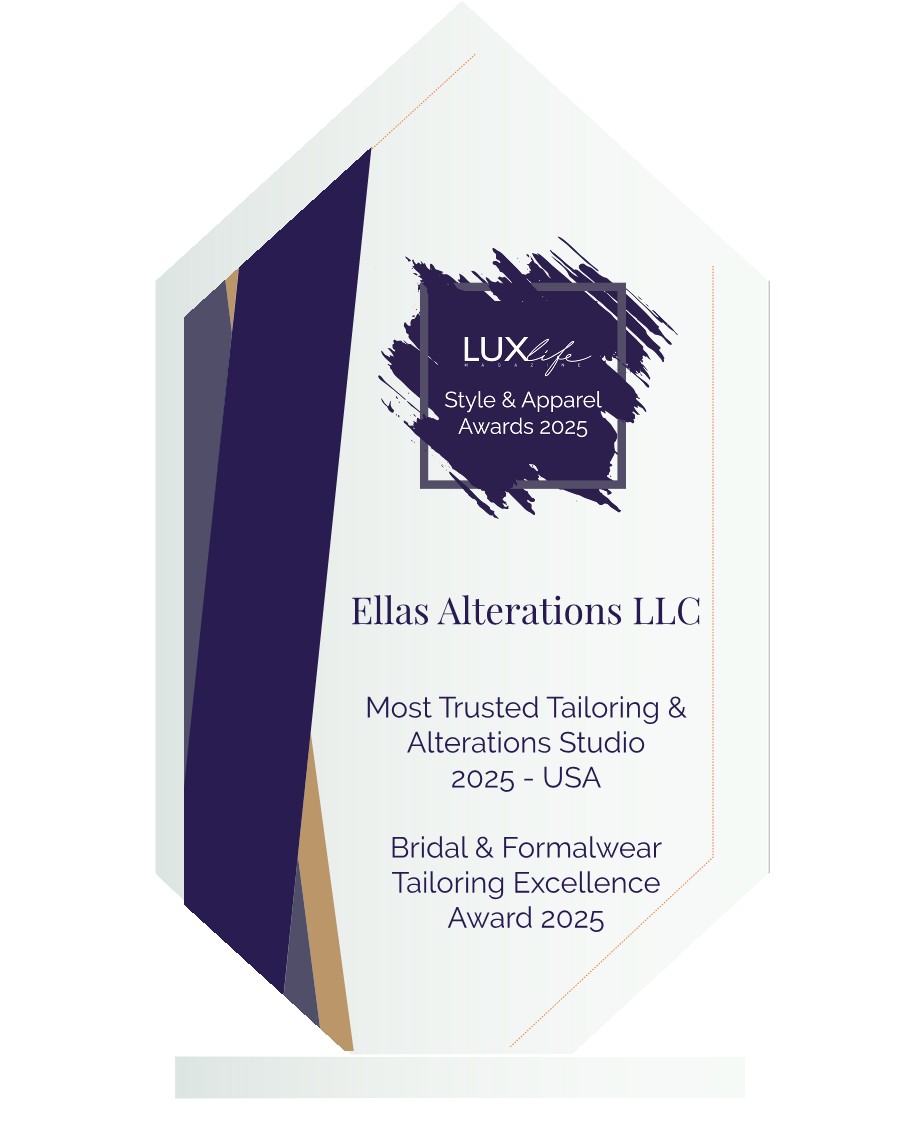
Bridal & Formalwear Tailoring Excellence Award 2025 – USA
Award Winning Bridal & Formalwear Tailoring
Ella’s Alterations is proudly recognized as one of Zephyrhills’ most trusted tailoring studios, specializing in wedding dress and formalwear alterations.

NextDoor Neighborhood Favorite 2023, 2024, 2025

Best Wedding Dress & Formalwear Tailoring Zephyrhills 2026
Why Clients Trust Ella’s Alterations
- 30 plus Years of Expertise: Master tailoring and formal wear alterations trusted across Florida.
- Award Winning Service: Best of Florida Tailor and Best of Zephyrhills.
- Private Bridal Fittings: Discreet, elegant, and tailored to you.
- Proven Local Reputation: Five star customer reviews and repeat clients from Tampa to Orlando.
- Transparent and Personal: Clear pricing, expert guidance, and no rushed fittings.
- Recognized nationally by LUXlife Magazine for craftsmanship and client trust
- Chosen year after year for precision bridal and formal tailoring
- Best Wedding Dress & Formalwear Tailoring Zephyrhills 2026
- NextDoor Neighborhood Favorite 2023 2024 2025
Address: 6986 Fort King Road, Zephyrhills FL 33541
Phone: +1 813-445-8894
Email: admin@ellasalterations.com
Hours:
Get Directions | Book Your Fitting