A Tailor's Guide: How Waistlines Transform Your Wedding Gown.
The waistline is the control center of your wedding gown, it decides your shape, balance, and overall vibe.
Ella’s Alterations, Best of Florida Tailor three years running, fits waistlines to perfection for Tampa, Lakeland, and Zephyrhills brides.
A Tailor’s Guide: How Waistlines Transform Your Wedding Gown
What does the waistline actually do for your gown?
It is not just a seam. It is the pivot that sets your proportions, guides the eye, and makes your silhouette read elegant, modern, or romantic. Get the waist right and the whole dress sings.
- Quick Fact: A quarter inch shift can change your posture in photos.
- Quick Fact: Natural waist reads classic and balanced.
- Quick Fact: Empire waist lengthens legs and softens midsection.
- Quick Fact: Dropped waist stretches the torso for a sleek vibe.
- Quick Fact: Basque waist sculpts with a gentle V or U dip.
- Quick Fact: Internal structure decides whether the shape holds all night.
- The waistline is where structure meets style.
- Shift the waist and you shift the whole story.
- A clean waist seam is confidence stitched in.
- Want height: try empire.
- Want curves: try natural or basque.
- Want modern edge: try dropped.
Stylist Tip: During fittings, sit, reach, and do a slow spin. Your waist should feel secure and invisible, never pinchy or floaty.
Keep Reading: What does the waistline actually do for your gown?
When it comes to choosing your wedding gown, there’s one element that often gets overlooked, yet has the power to shape your entire look: the waistline.
It’s more than just a seam where the bodice meets the skirt.
It’s the point where structure and style meet, where a dress transforms from beautiful to breathtaking.
The waistline is the silhouette’s pivot point, quietly controlling balance, proportion, and the overall impact of your gown.
It defines your shape, frames your figure, and influences how the rest of the design flows.
Whether you're stepping into a romantic A-line, a sleek sheath, or a dramatic mermaid, the waistline is what ties it all together.
It determines where the eye lands and how your body moves in the dress.
A perfectly placed waistline can elongate your torso, accentuate your curves, or add softness where it’s needed.
It can turn volume into grace or simplicity into sophistication.
It’s subtle, but its influence is profound.
Tailors and designers alike know that the waistline is the cornerstone of gown construction.
When a dress fits beautifully through the waist, everything else falls into place.
It’s the part of the gown that needs to work with your natural proportions, not against them.
That’s why even the most stunning off-the-rack gown might not quite sing until the waist has been altered to perfection.
A quarter inch too high or too low can completely change the way the gown sits on your body.
The right waistline isn’t just a matter of aesthetics.
It’s a matter of comfort, movement, and confidence.
There are several waistline styles to consider, and each brings a different kind of energy to the dress.
- The natural waist, sitting at the narrowest part of your torso, offers a timeless, balanced look.
- It creates the classic hourglass silhouette and pairs beautifully with both traditional and modern designs.
- The empire waist, placed just under the bust, gives a romantic, floaty vibe that’s ideal for elongating the frame.
- It’s especially flattering for petite figures or brides who want to soften the midsection.
- On the opposite end, the dropped waist sits lower on the body, often near the hips.
- It creates a long, elegant torso and adds a contemporary, fashion-forward feel.
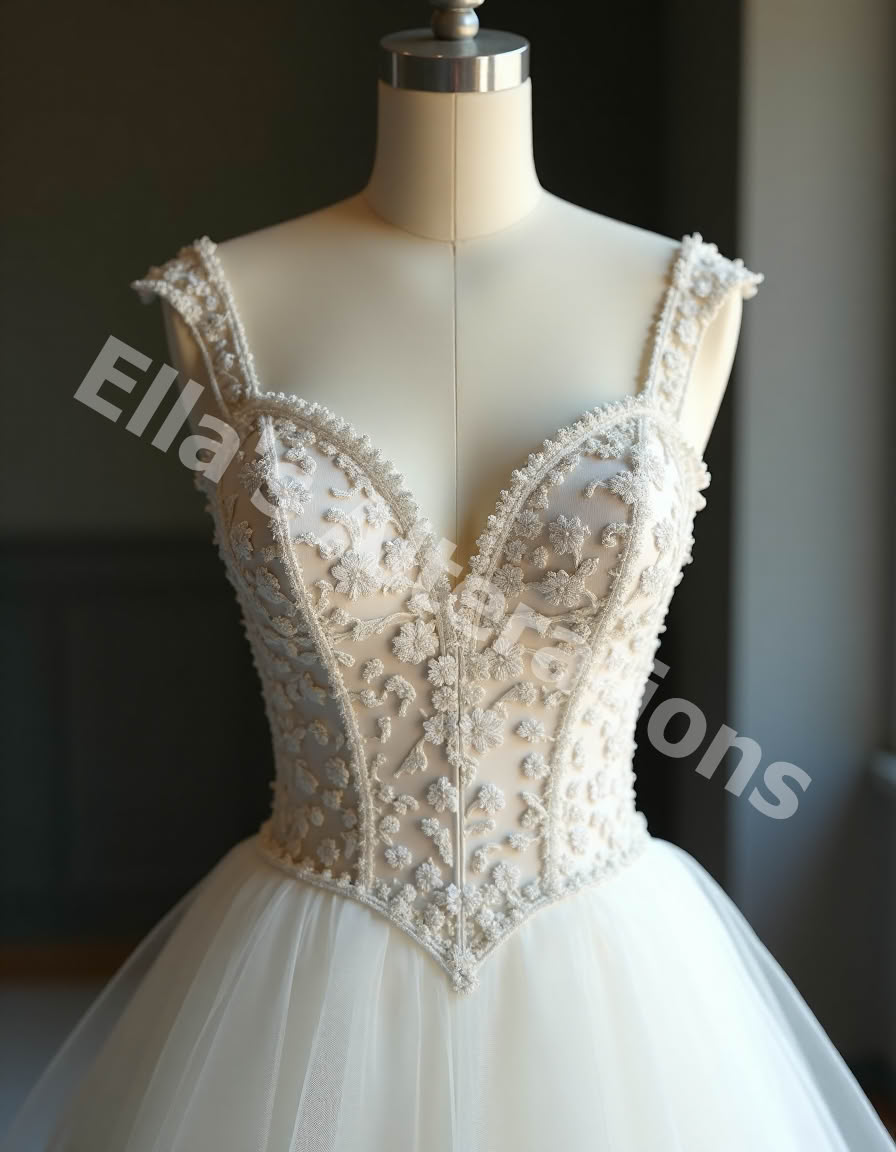
- Then there’s the basque waist, which dips into a V or U shape at the front.
- It adds definition and structure, while drawing the eye downward in a very sculpted, flattering way.
Each of these waistlines can dramatically shift how your dress interacts with your figure, which is why understanding them is so essential.
But it’s not just about where the waistline sits.
It’s also about how it’s constructed.
Elements like corsetry, boning, and shaping seams work together to sculpt and support the waist.
Pleats, tucks, ruching, and draping can all alter the look and feel of the waist area, adding dimension or creating the illusion of a smaller middle.
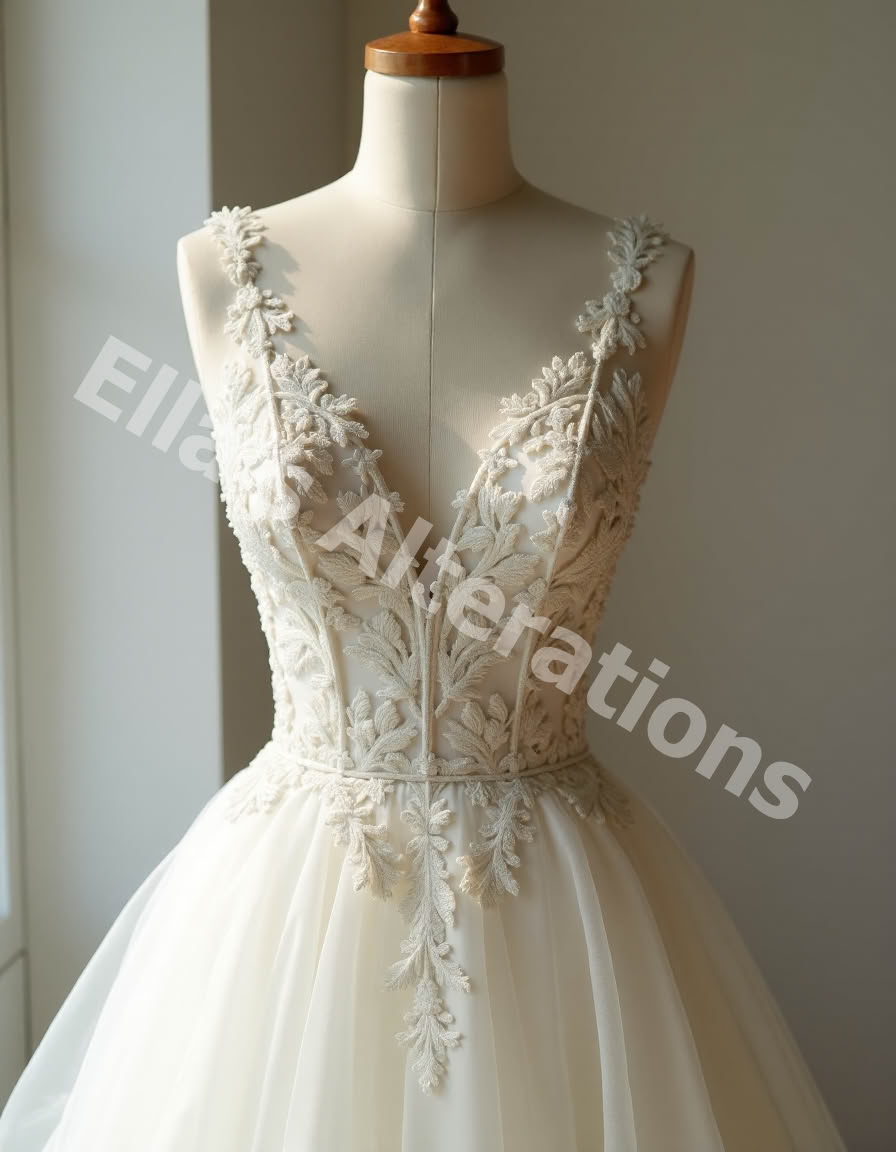
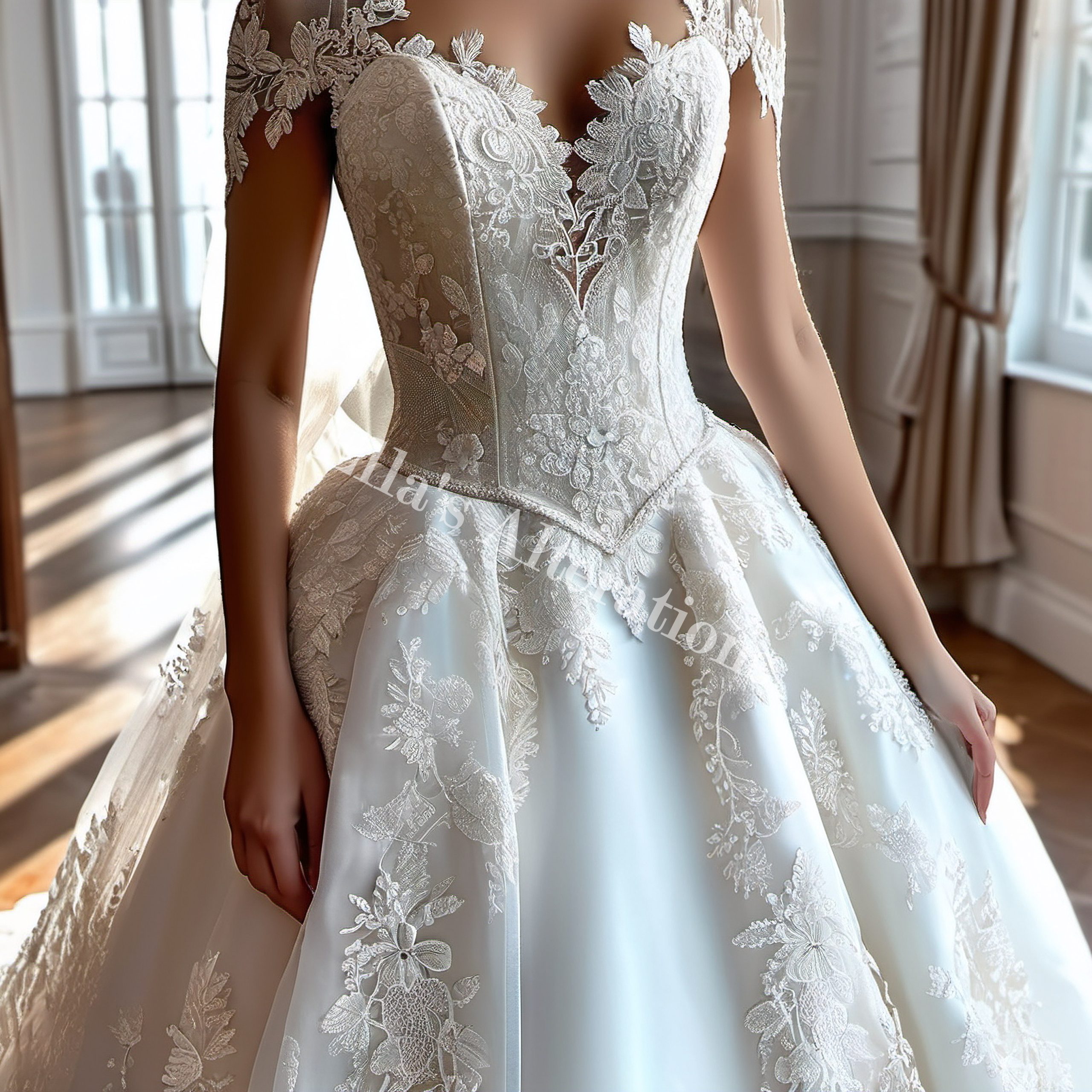
Embellishments like sashes, belts, beading, or lace appliqués can bring attention to the waist or artfully conceal it, depending on the effect you’re going for.
Ultimately, the waistline isn’t just a part of your dress.
It’s part of your story.
It reflects your personal style, complements your body, and plays a central role in how you’ll feel walking down the aisle.
That’s why tailors treat the waistline with such care and precision.
They know it’s where the magic happens.
Whether you're going for classic romance, modern elegance, or vintage charm, the right waistline can bring your vision to life, frame your figure with intention, and make your gown feel truly, unapologetically yours.
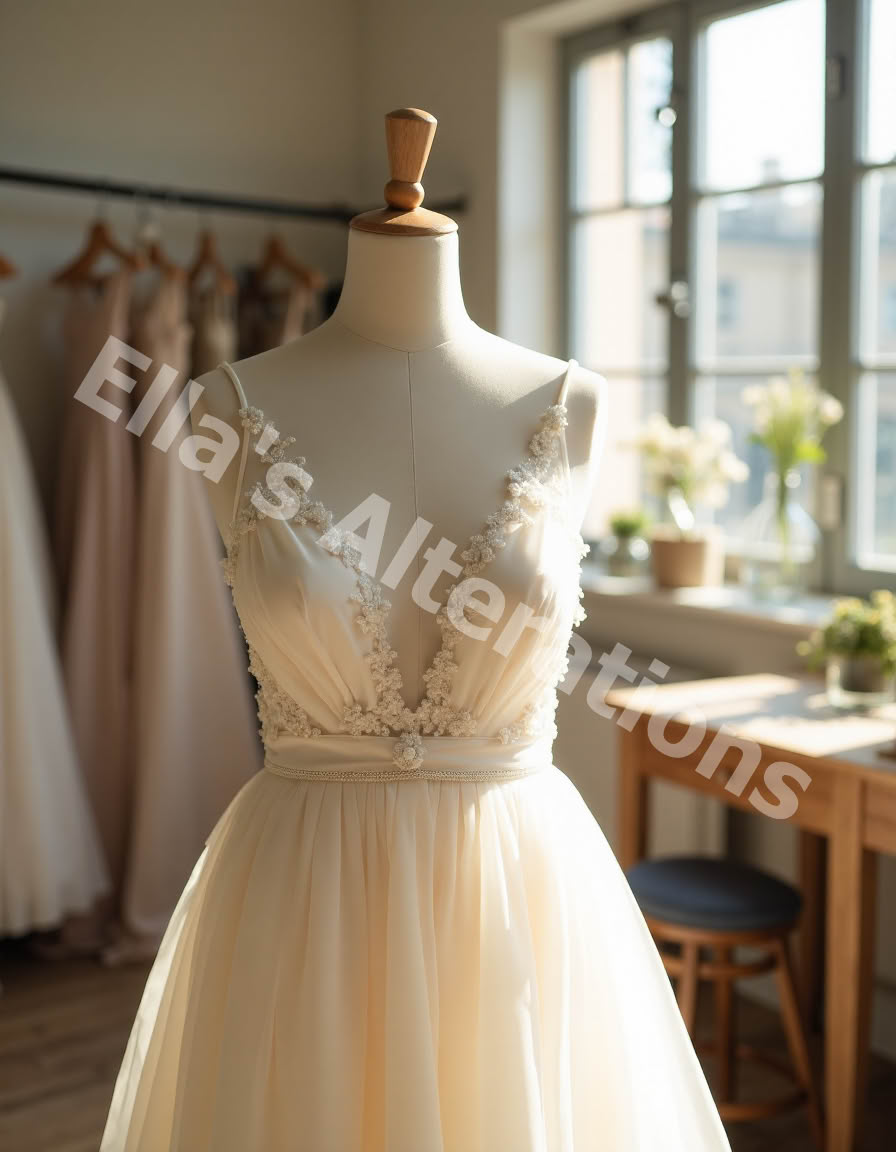
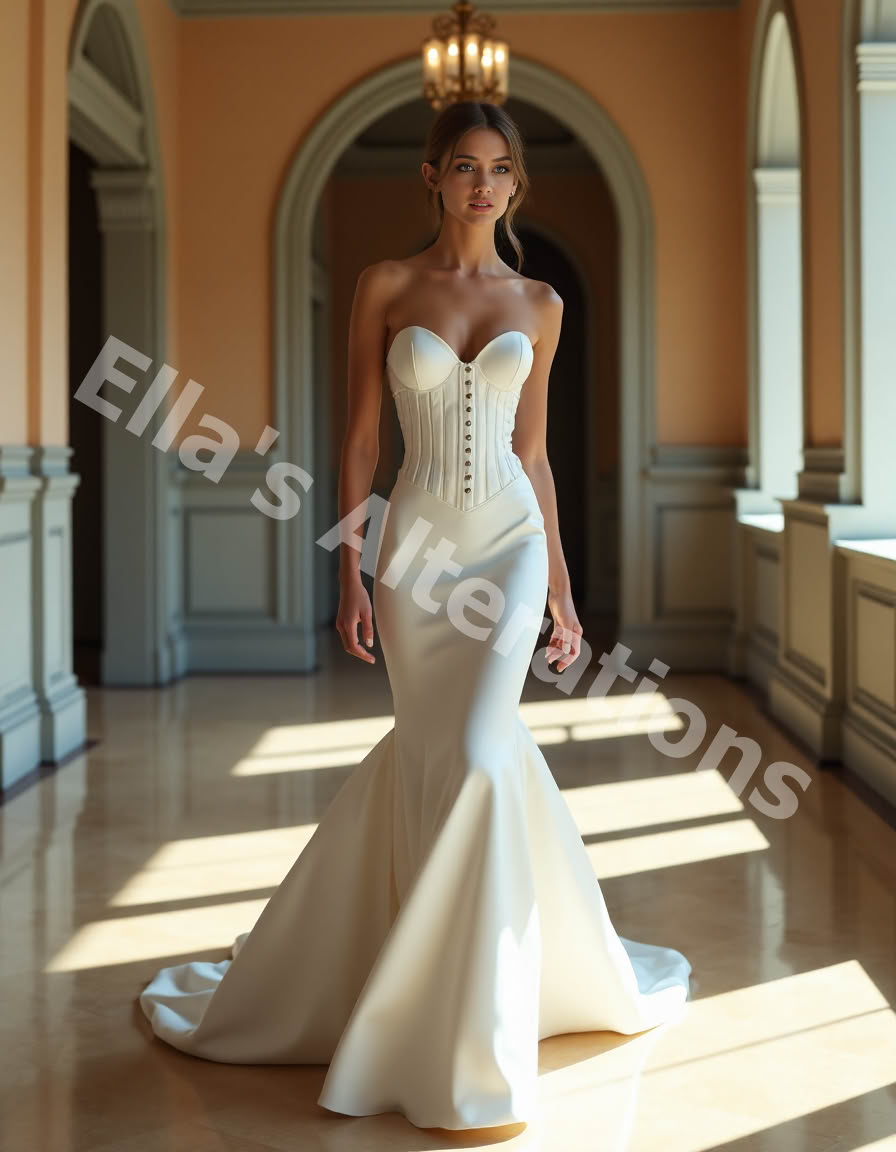
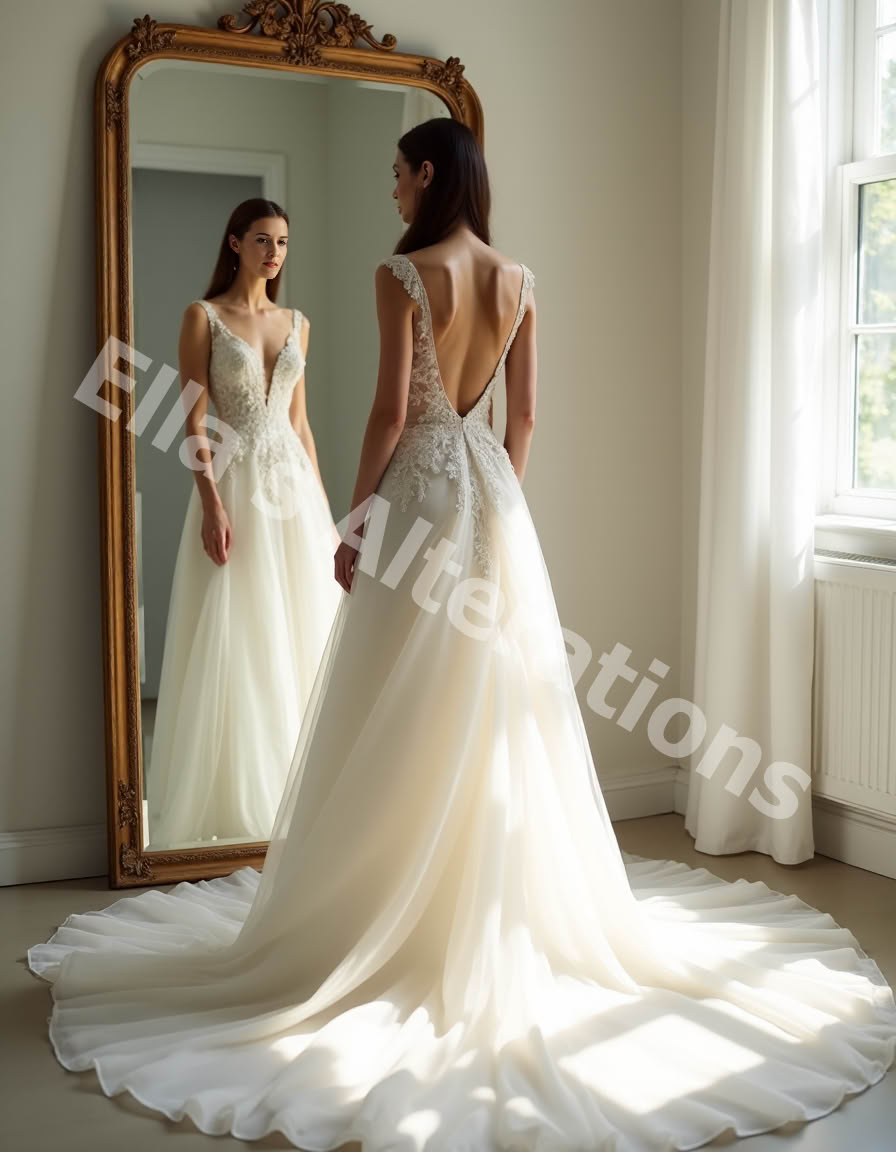
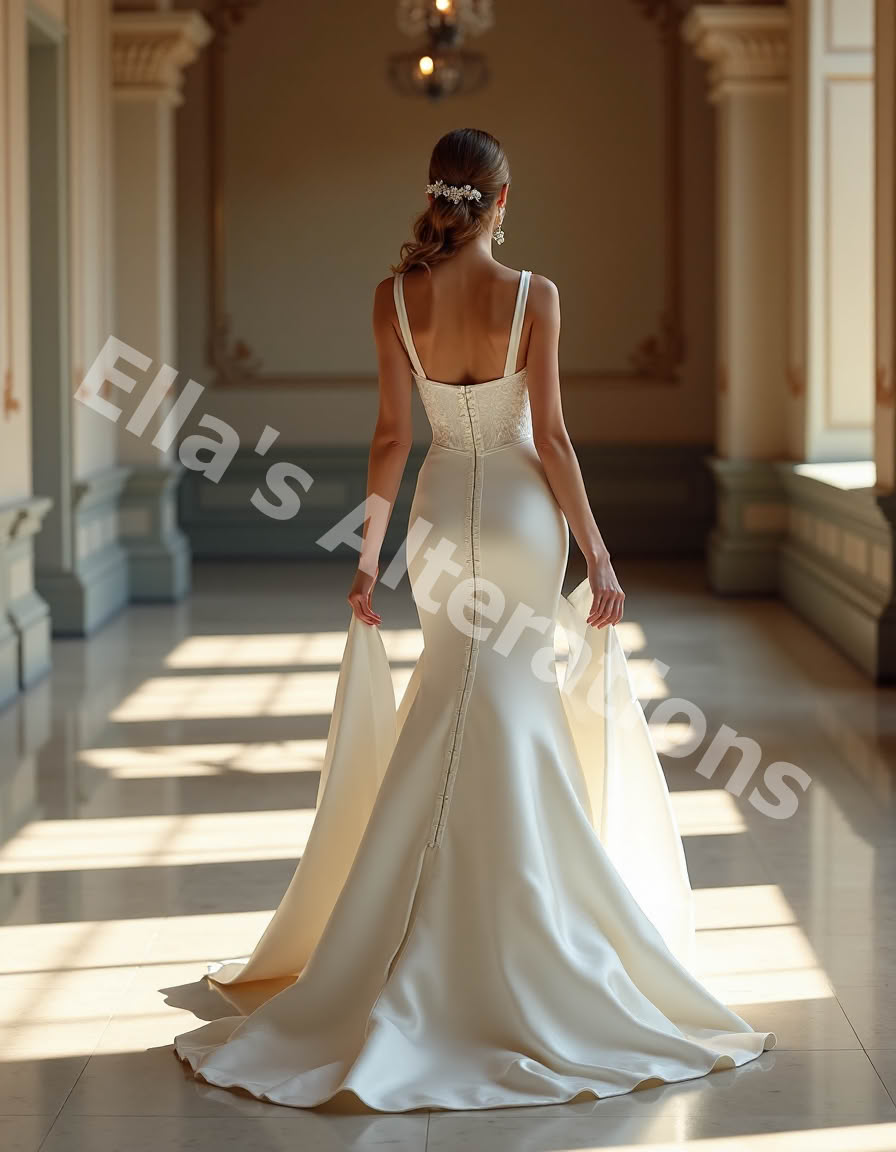
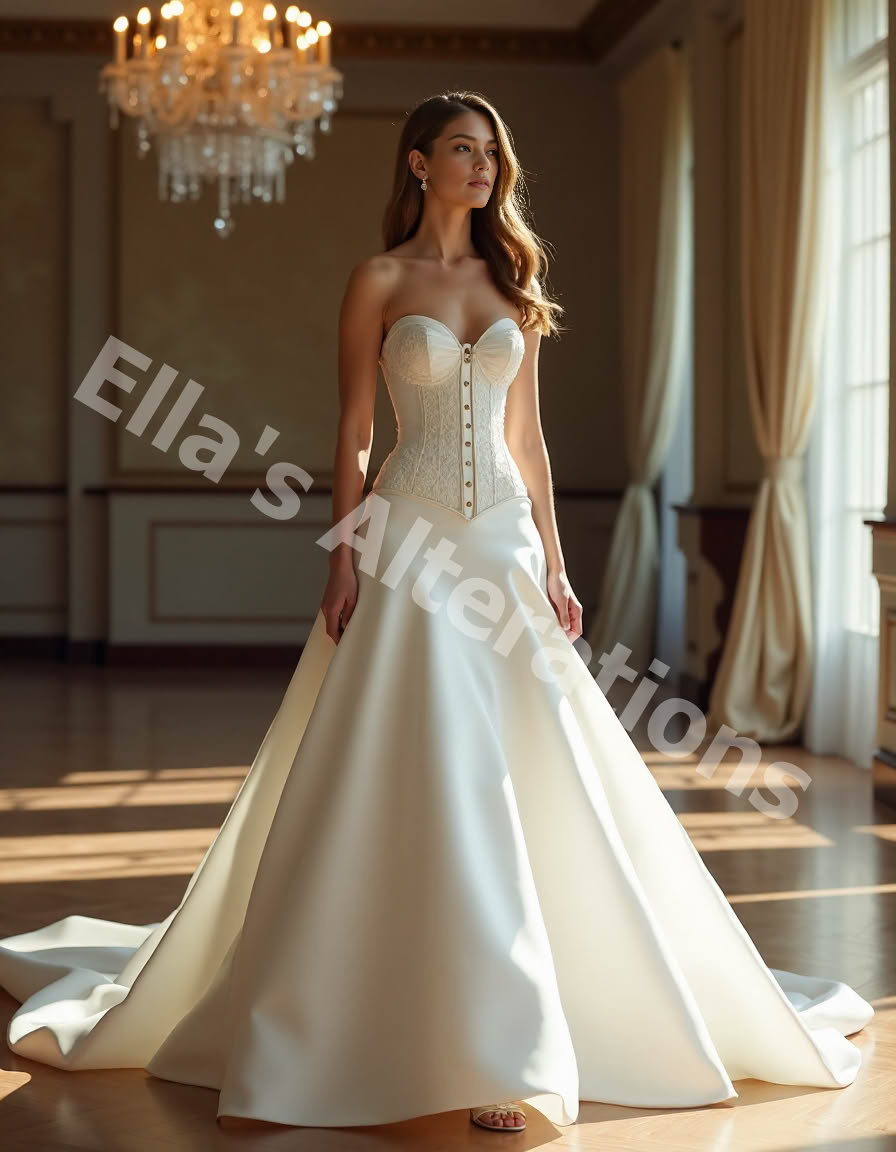
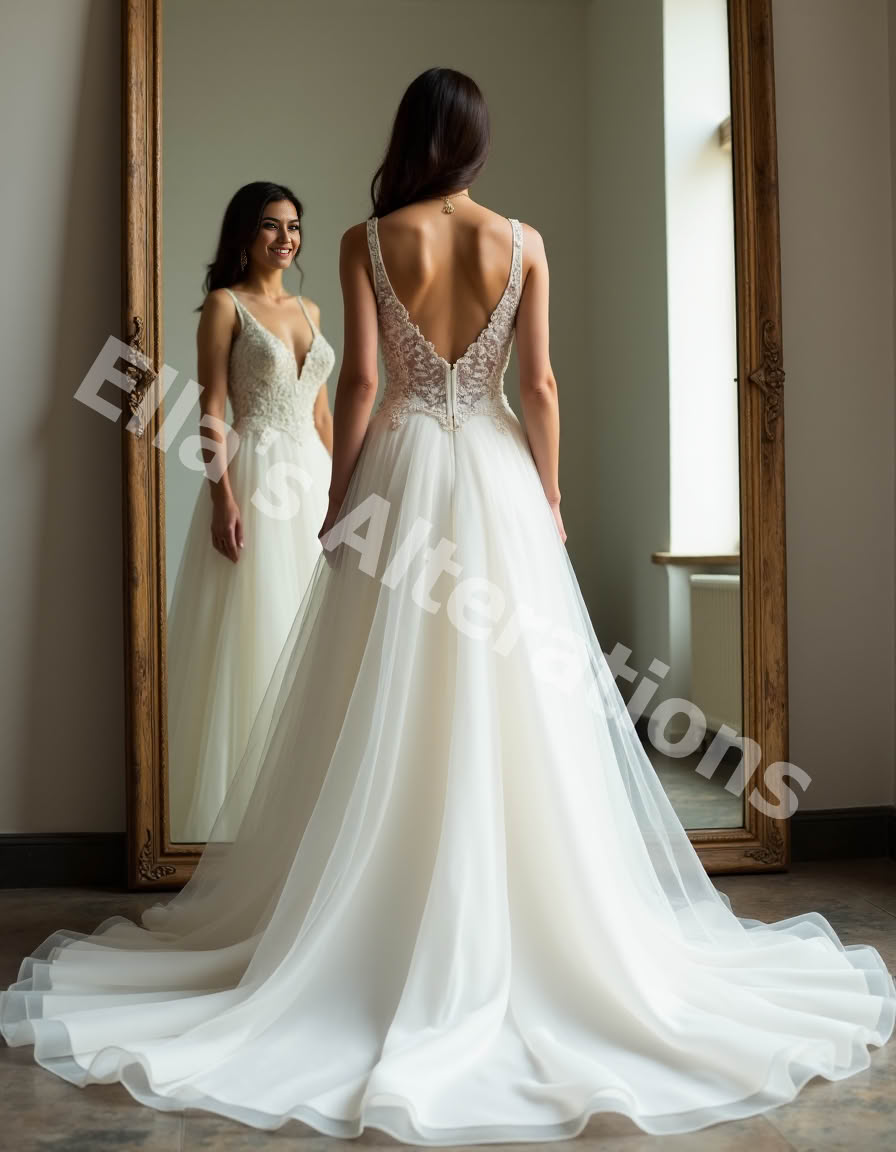
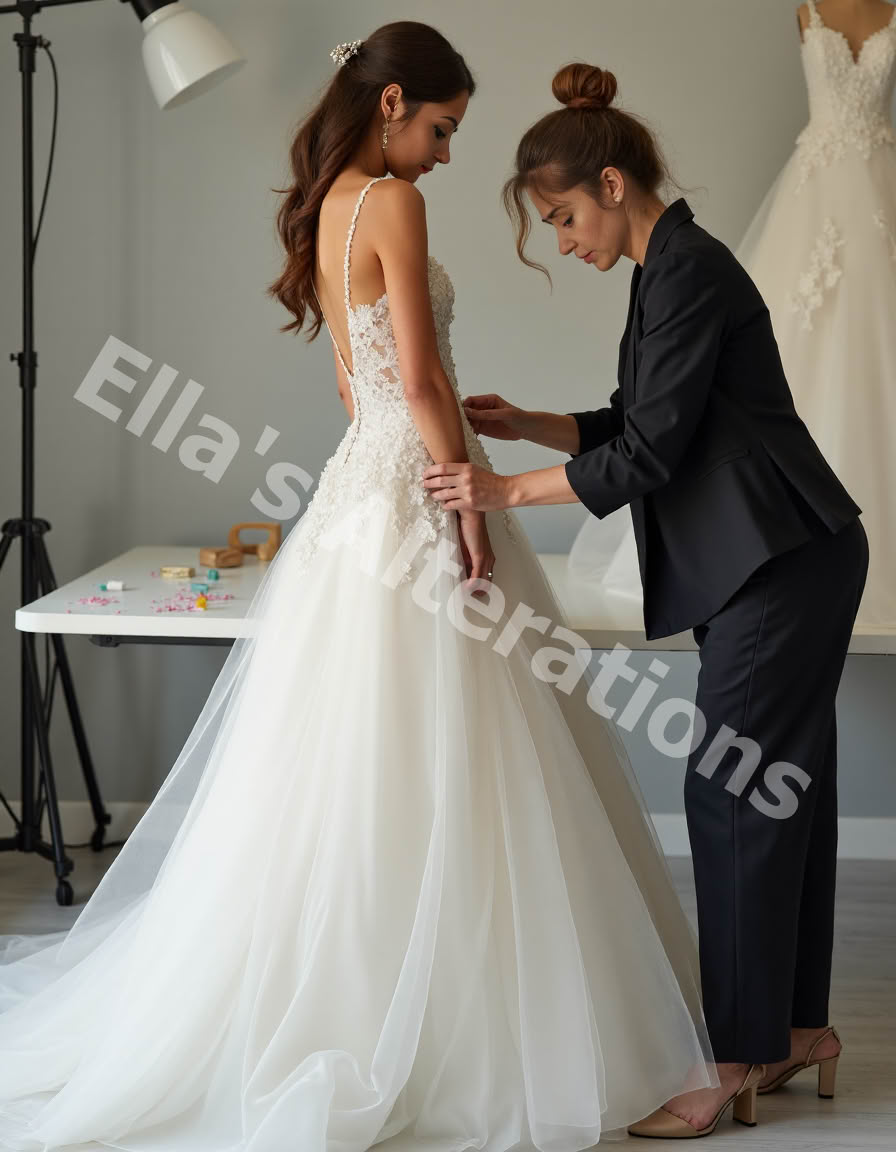
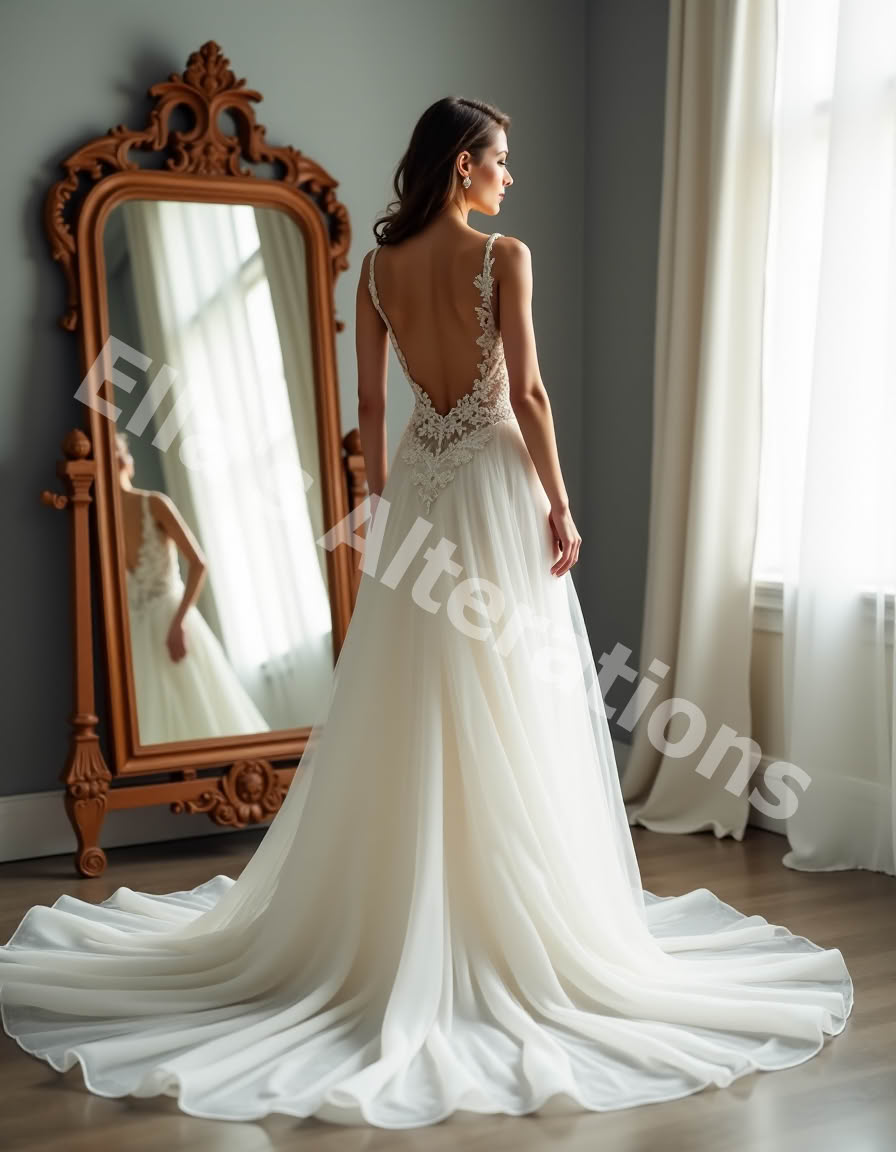
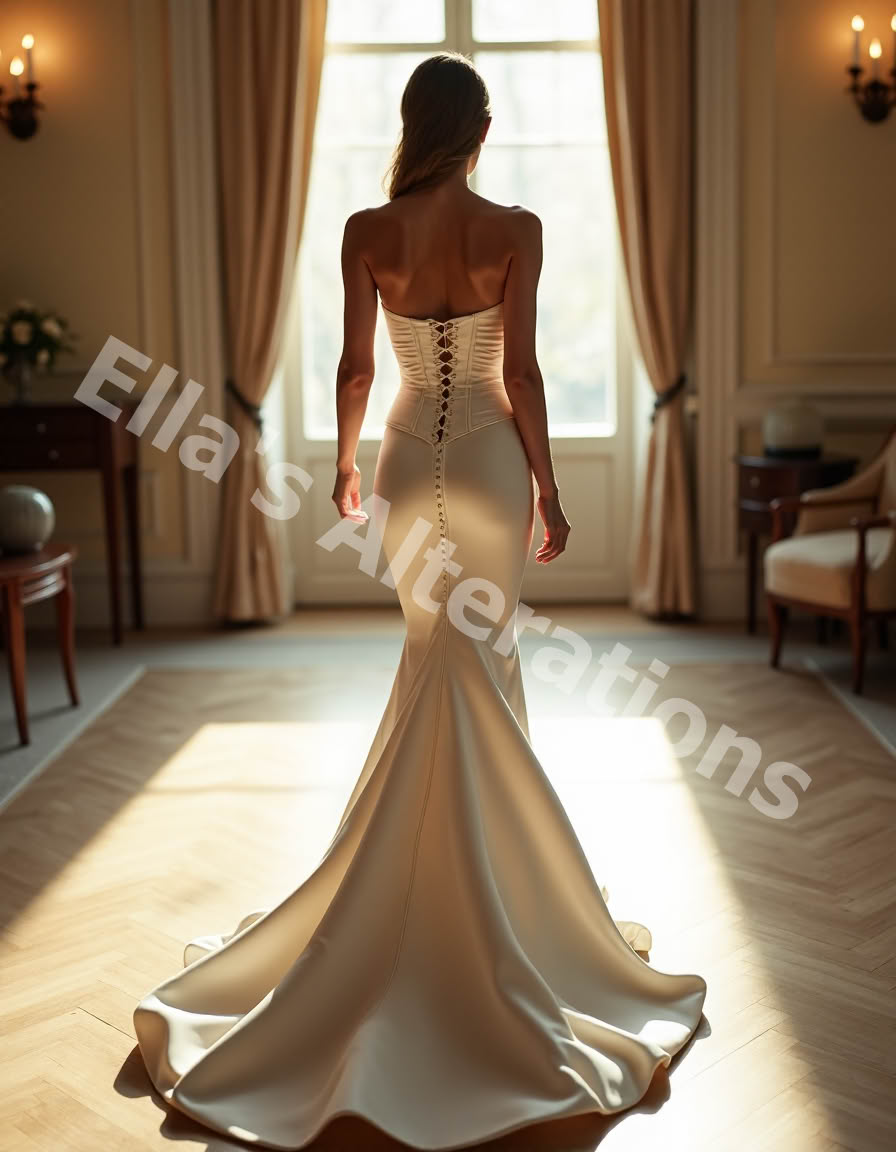
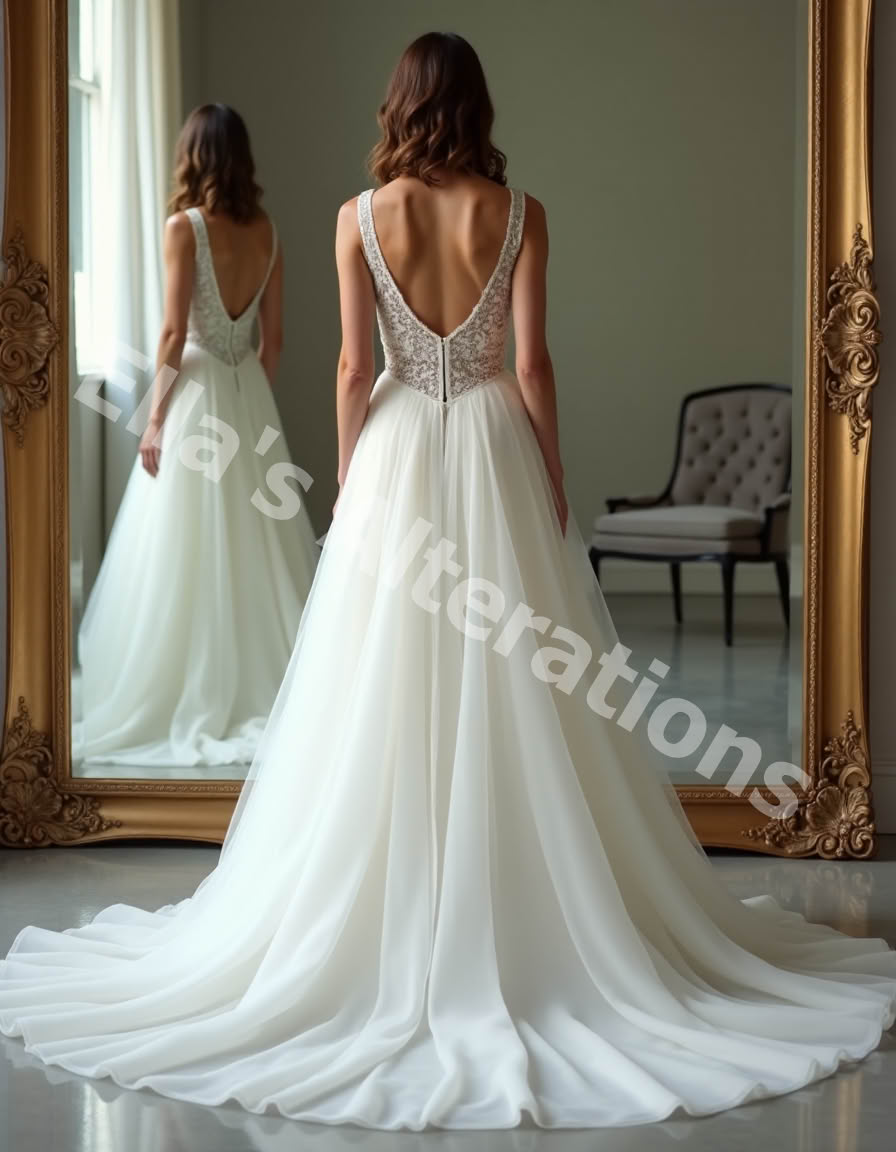
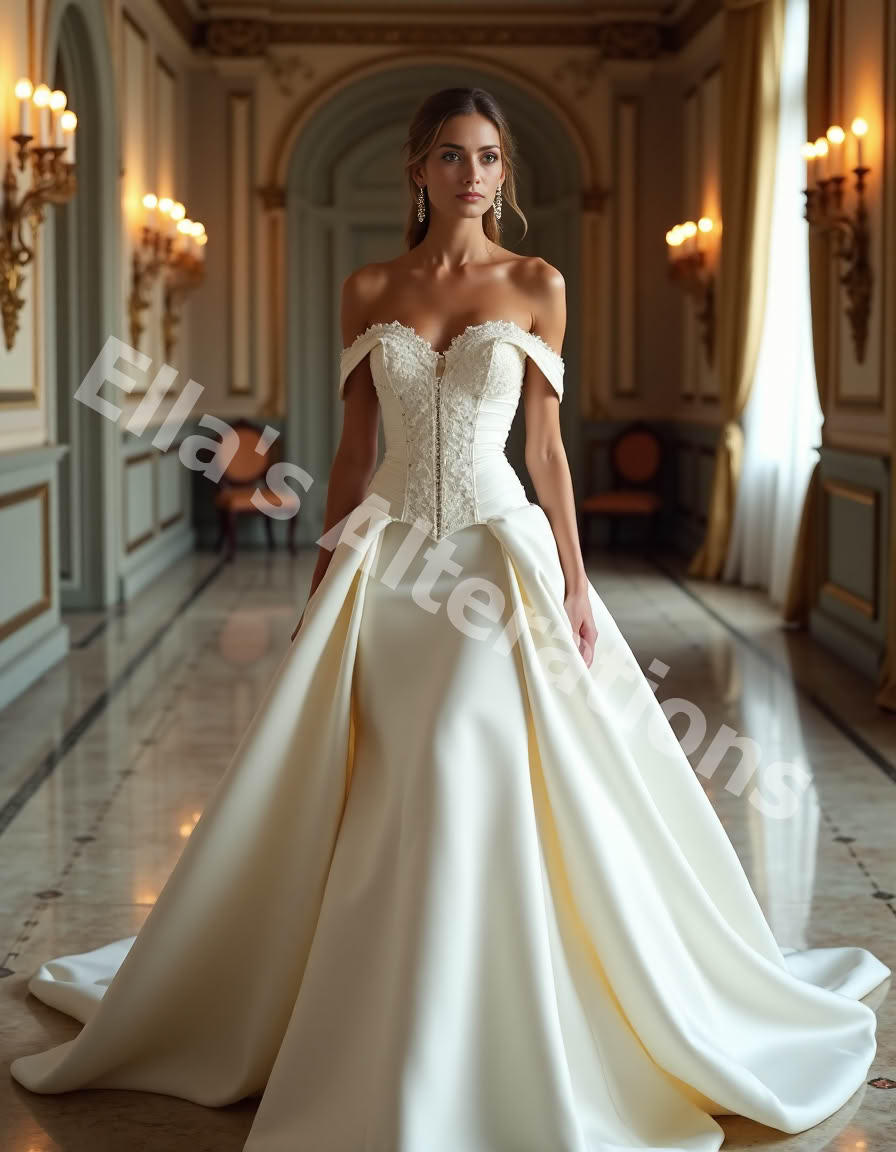
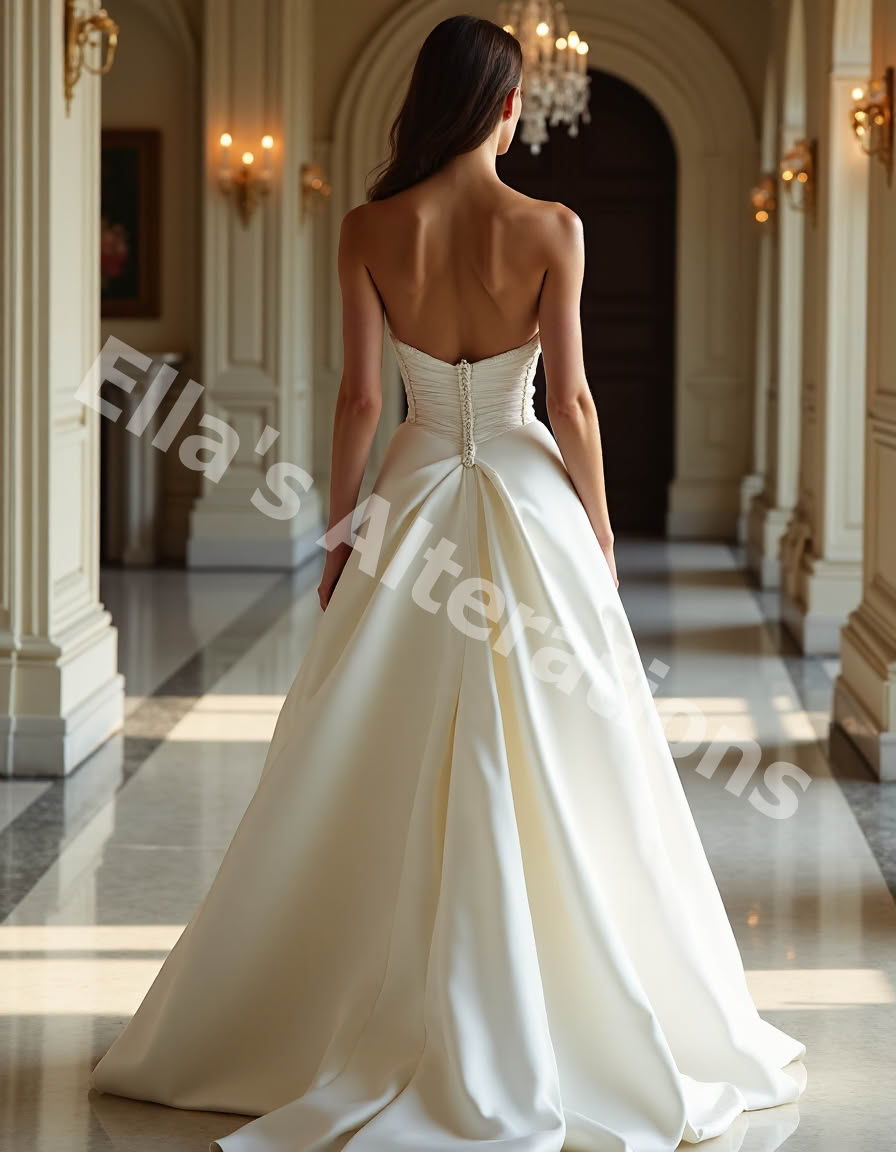
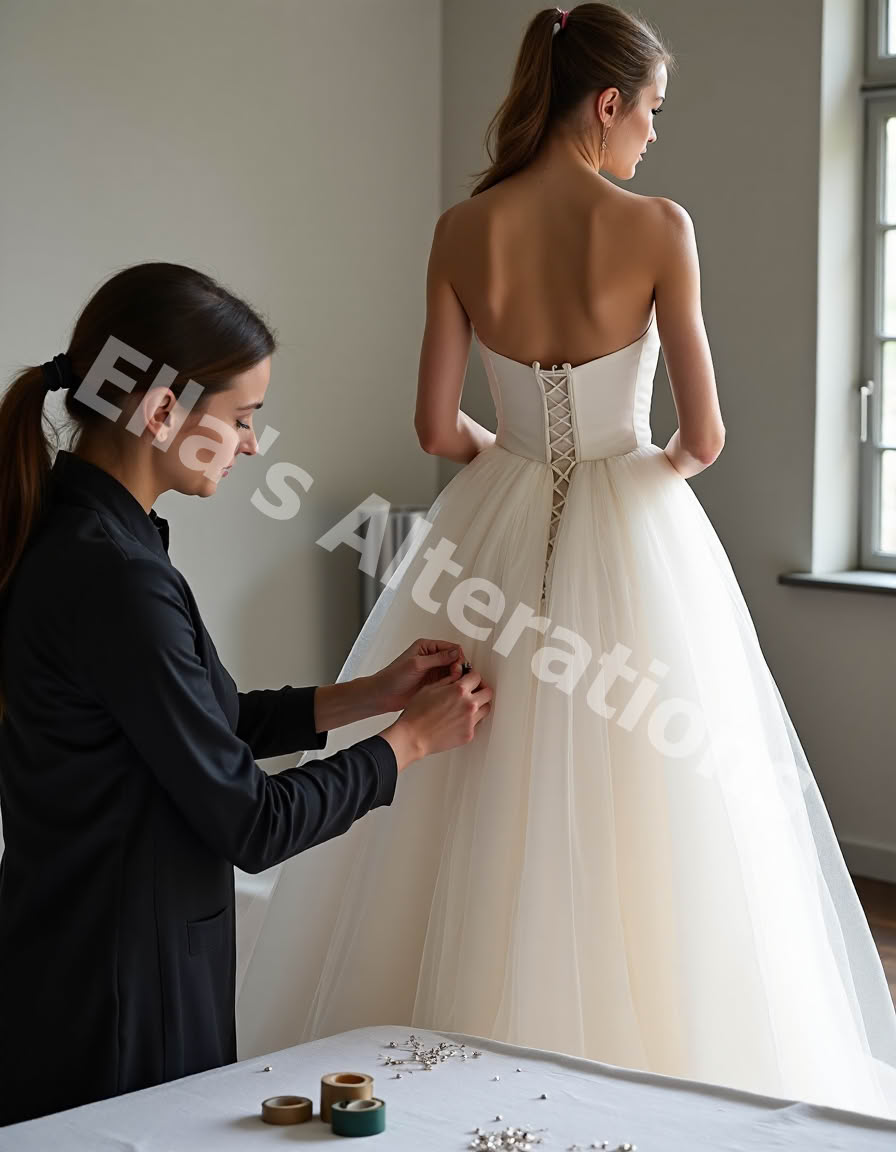
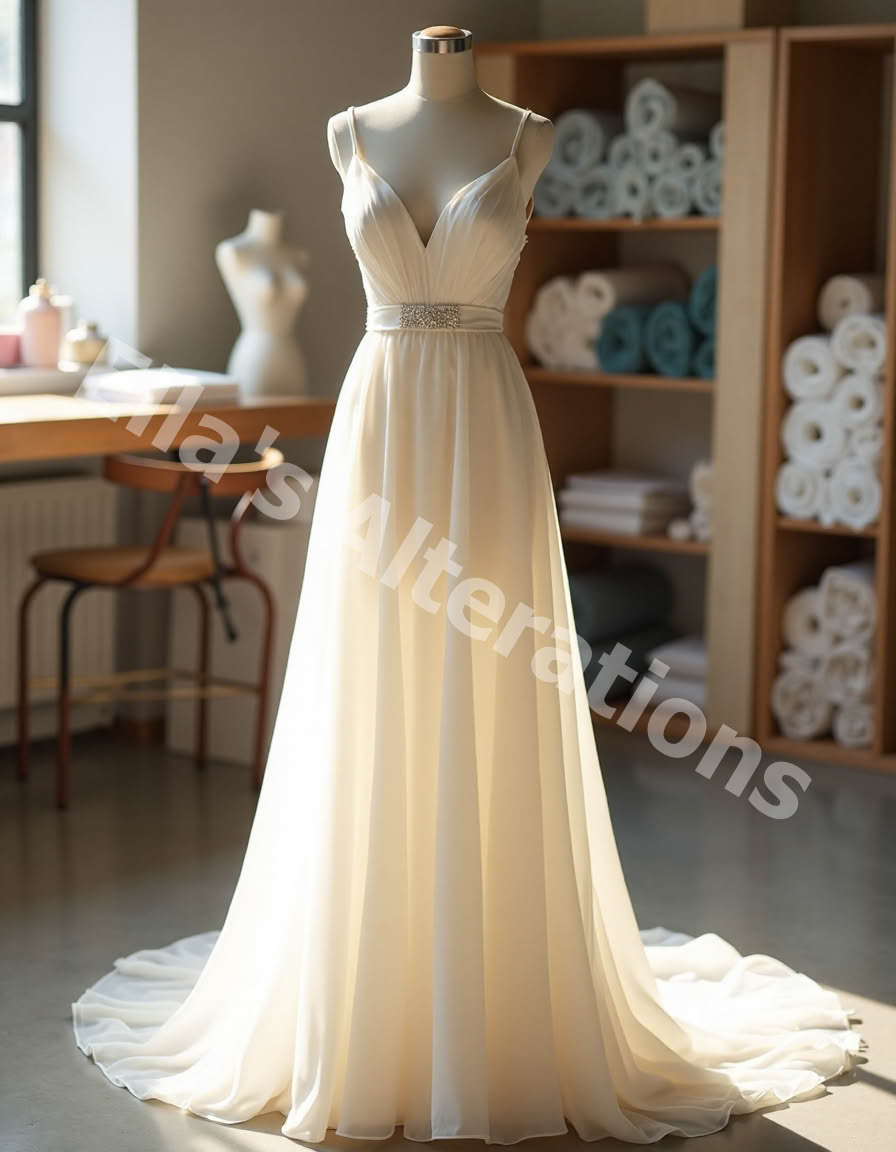
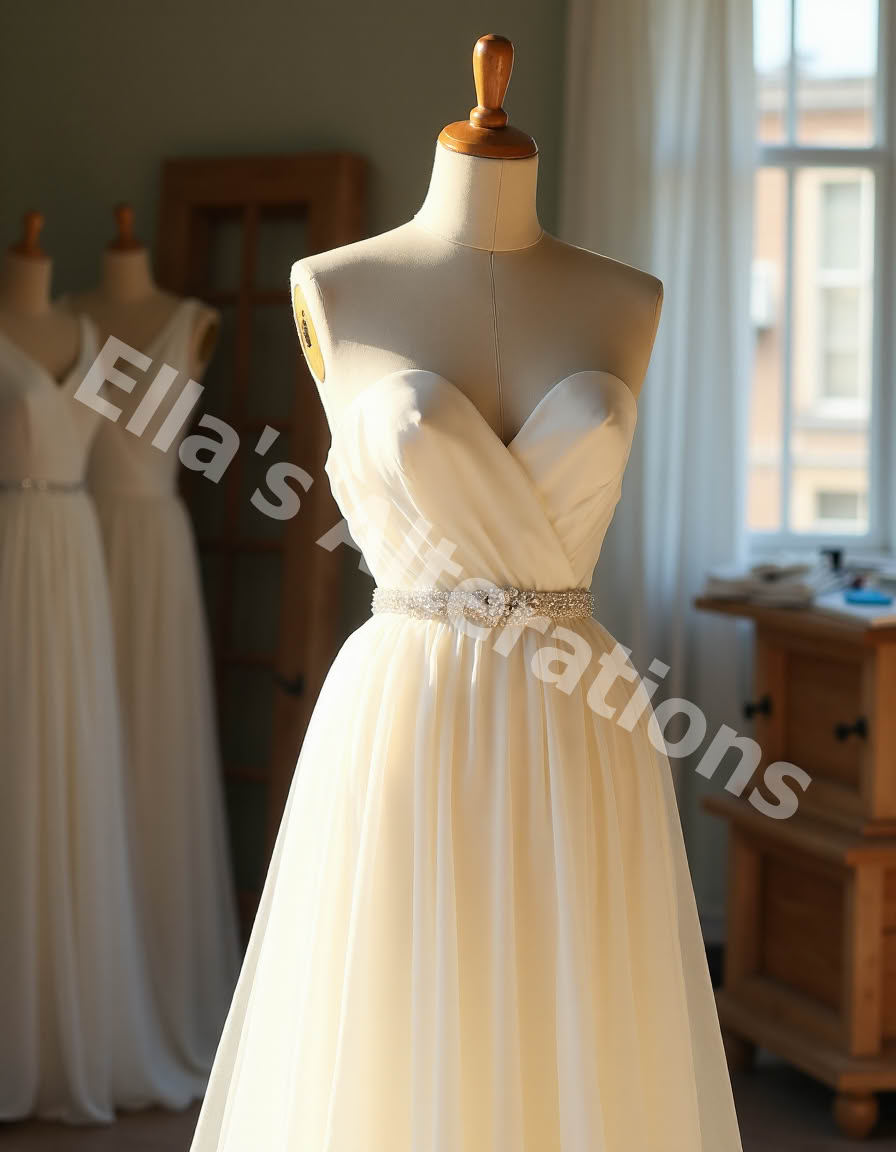
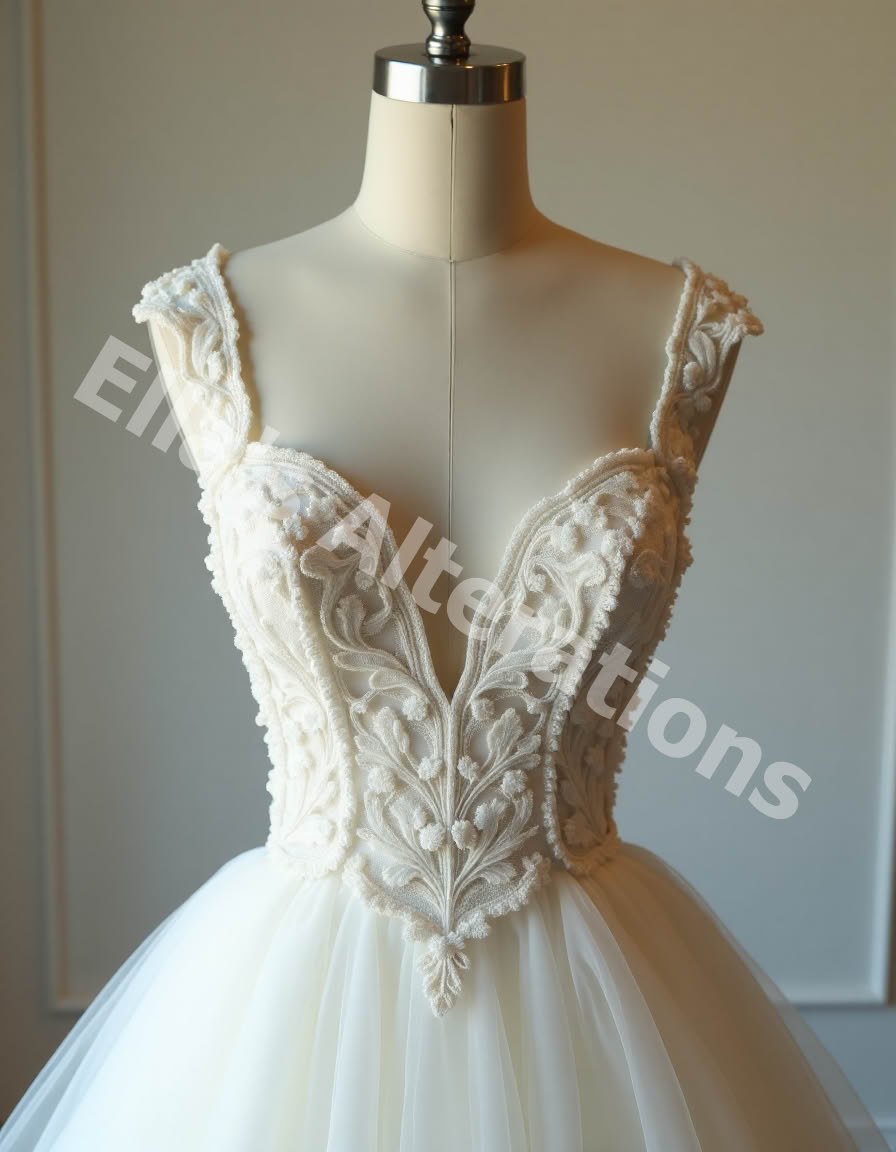
What happens where the bodice meets the skirt?
This junction controls drape, support, and movement. Place it right and your torso reads long, your skirt releases clean, and the balance feels effortless.
- Quick Fact: Natural waist pairs best with A line and ballgown shapes.
- Quick Fact: Empire shifts attention to neckline and face.
- Quick Fact: Dropped waist suits taller frames and long torsos.
- Quick Fact: Basque adds sculpture and a subtle corset effect.
- Quick Fact: Boning keeps the waist smooth under strain.
- Quick Fact: The zipper angle can change how flat the waist lies.
| Goal | Try |
|---|---|
| Longer legs | Empire waist |
| Defined curves | Natural or basque |
| Modern lines | Dropped waist |
- The waist seam is your silhouette’s on switch.
- Lift the seam and legs go long.
- Drop the seam and the torso turns runway sleek.
Stylist Tip: If your skirt is heavy, ask for extra waist stay tape. It keeps the seam from sinking during photos and dancing.
Keep Reading: What happens where the bodice meets the skirt?
In A Tailor’s Guide: How Waistlines Transform Your Wedding Gown, understanding where the bodice meets the skirt is key to unlocking the perfect fit.
This meeting point is not just a seam or a structural transition.
It’s where your dress takes shape, where your silhouette is either enhanced or compromised, and where your gown begins to communicate your style.
The waistline serves both a functional and aesthetic purpose, acting as the central anchor for the dress and defining how it drapes, flows, and flatters the body.
From a construction standpoint, the waistline is where the upper and lower halves of the gown converge.
This isn’t simply a dividing line.
It’s a control point that influences how the fabric moves, how the bodice supports the bust, and how the skirt complements the hips.
When done right, it creates harmony across the entire gown.
The placement of the waistline can either lengthen or shorten the torso, highlight or downplay curves, and change the visual proportion of the figure.
A slight shift up or down can dramatically affect the overall balance of the dress.
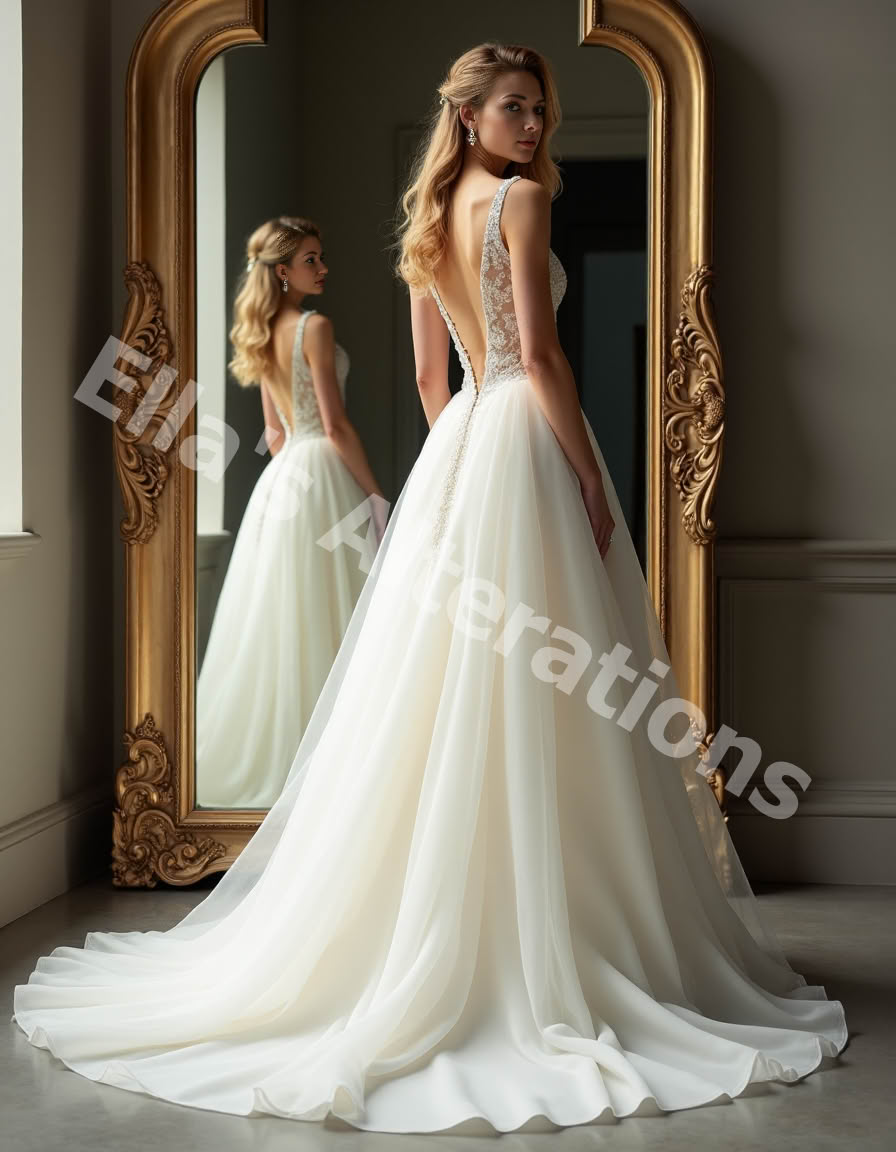
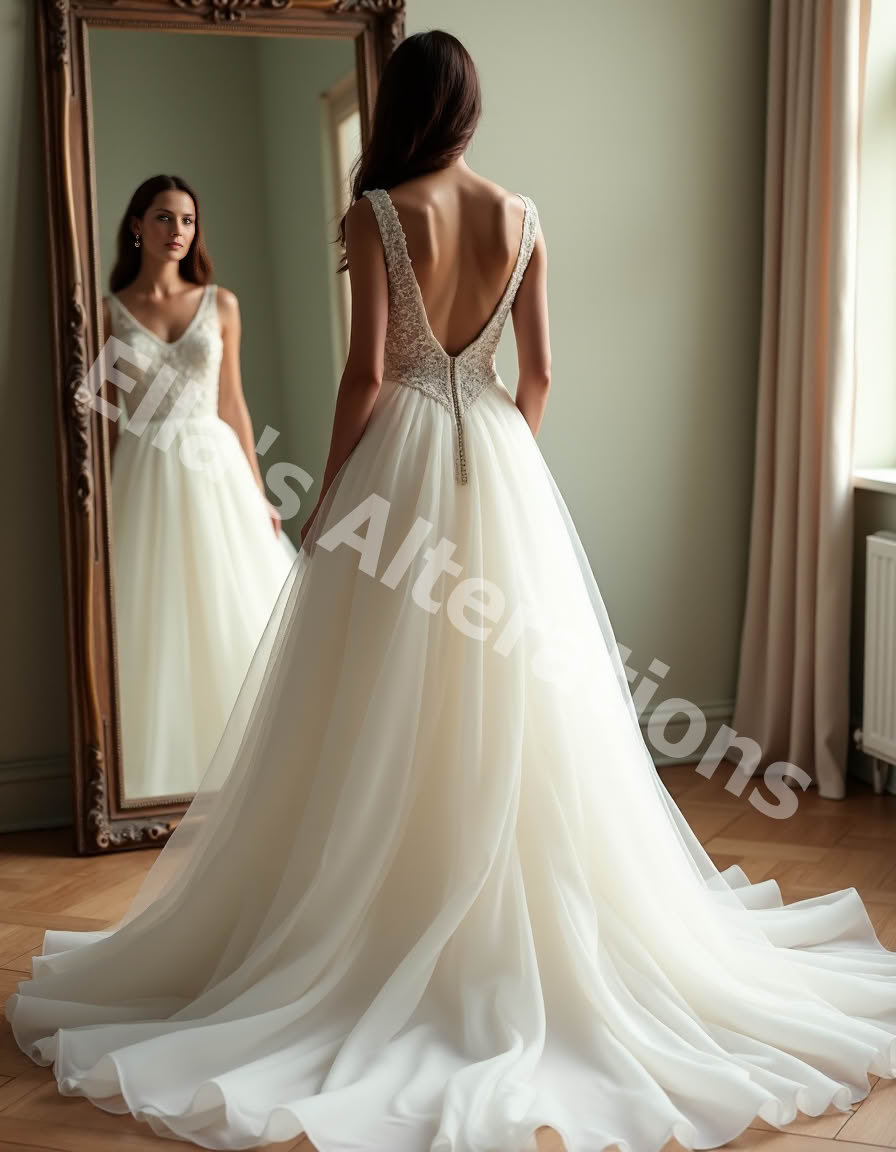
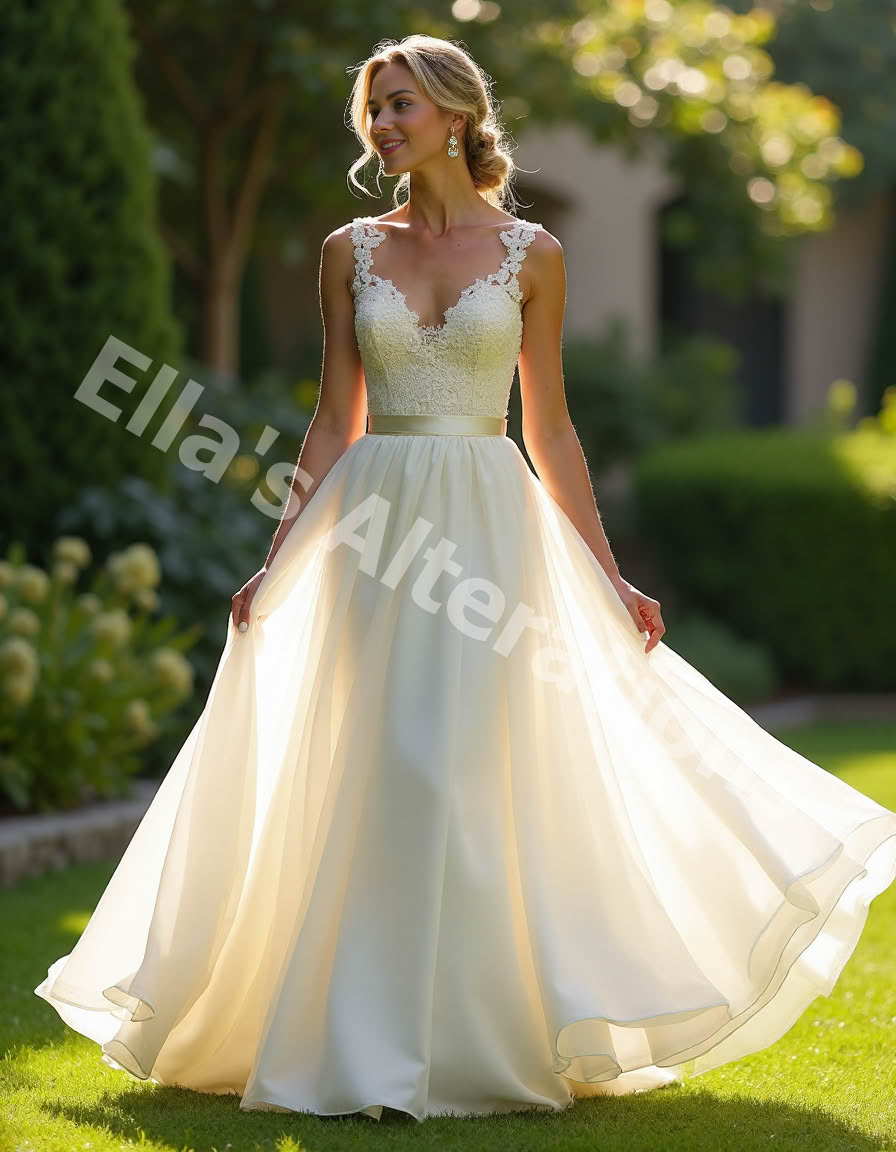
A natural waistline, for example, typically aligns with the narrowest part of the torso.
This placement creates a classic, feminine shape that works well for most body types.
It helps define the bust and the hips without overpowering either.
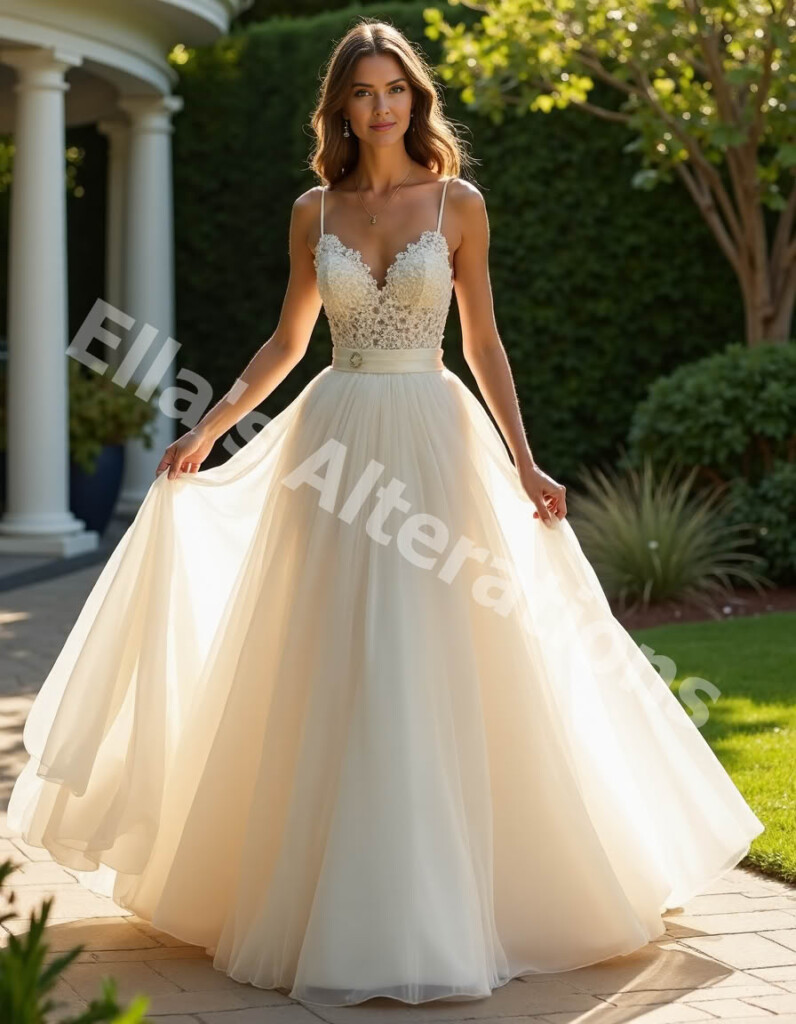
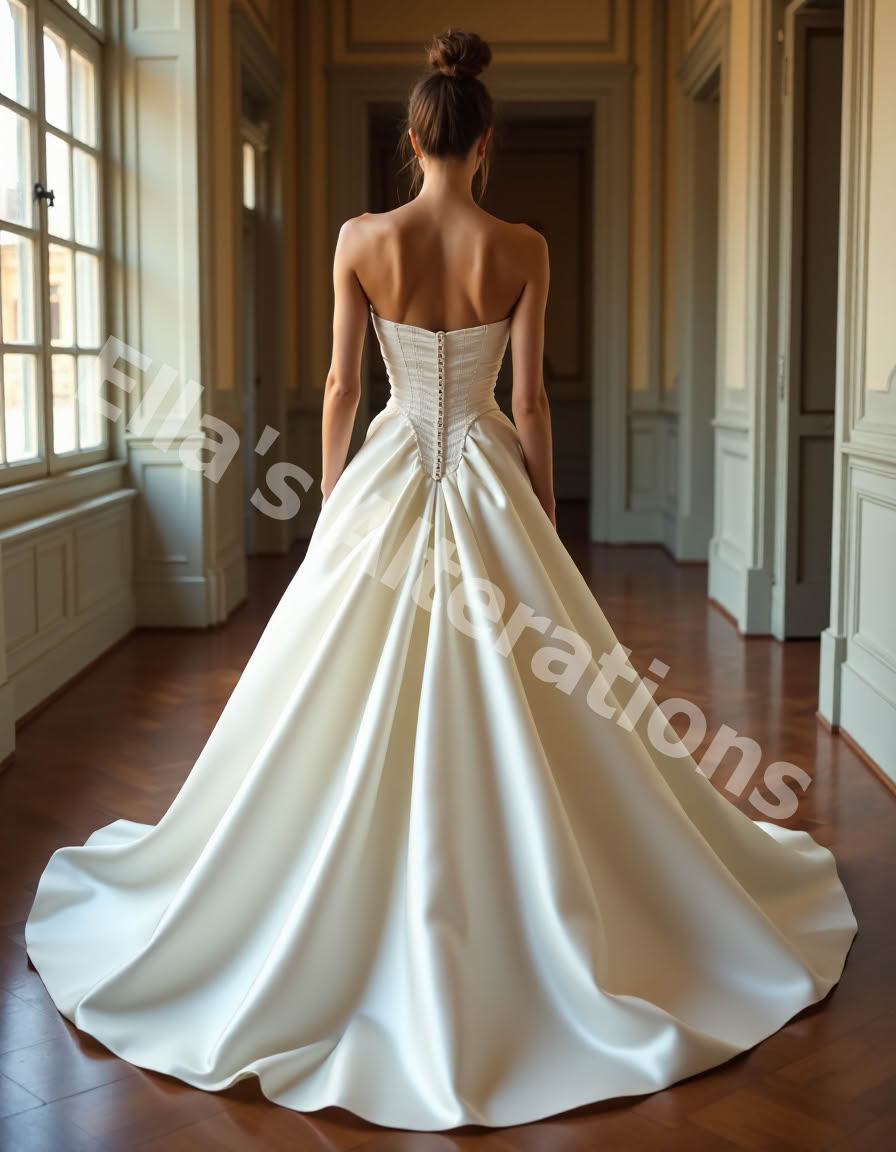
This style works beautifully with full skirts like ballgowns or A-lines, where the flare begins right at that cinched waist, offering graceful movement and traditional appeal.
For brides who want to emphasize an hourglass silhouette, this is often the go-to option.
But not all gowns are designed with a natural waist in mind.
In some silhouettes, like empire or dropped waist dresses, the bodice and skirt connect in a way that reimagines the body's proportions.
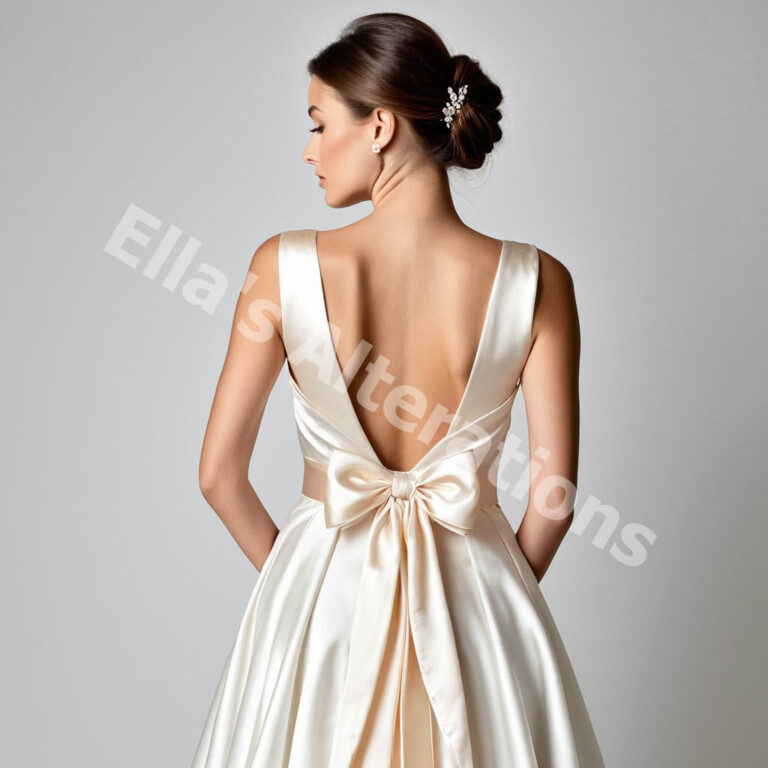
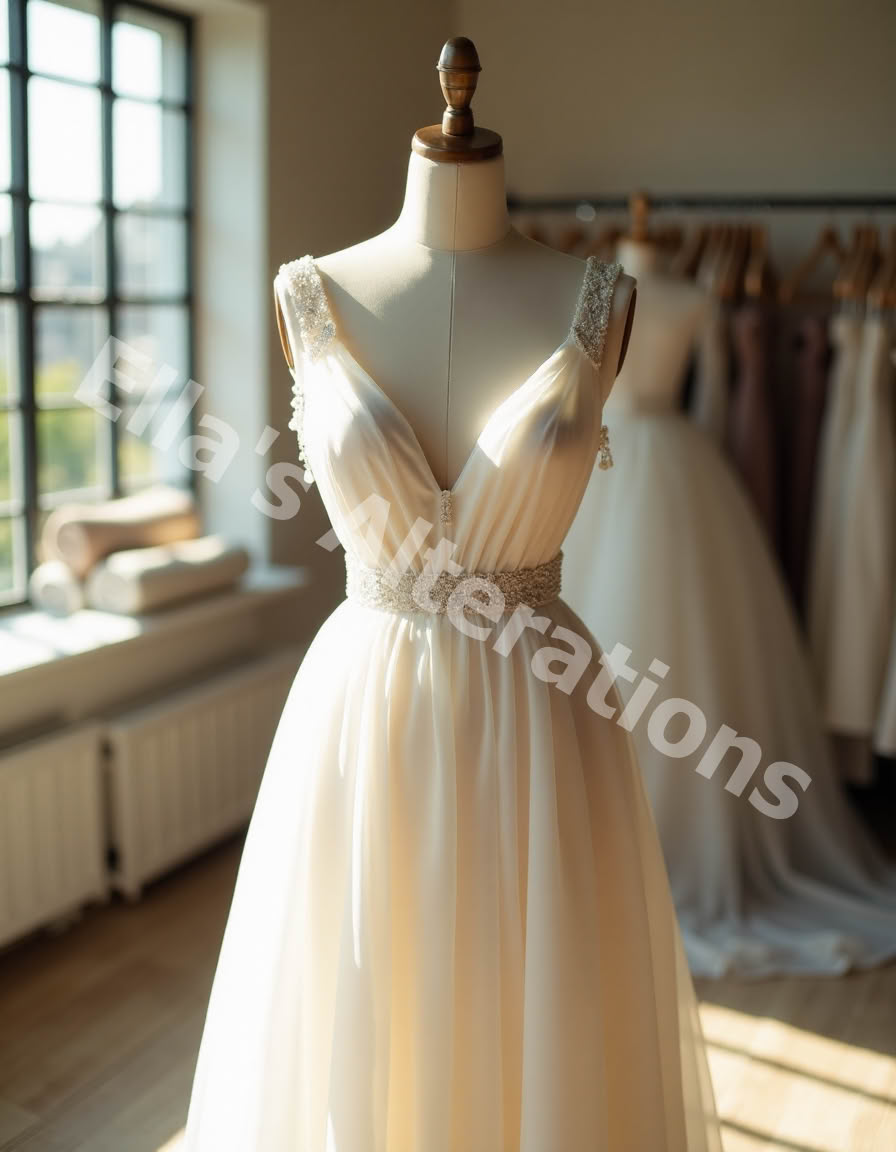
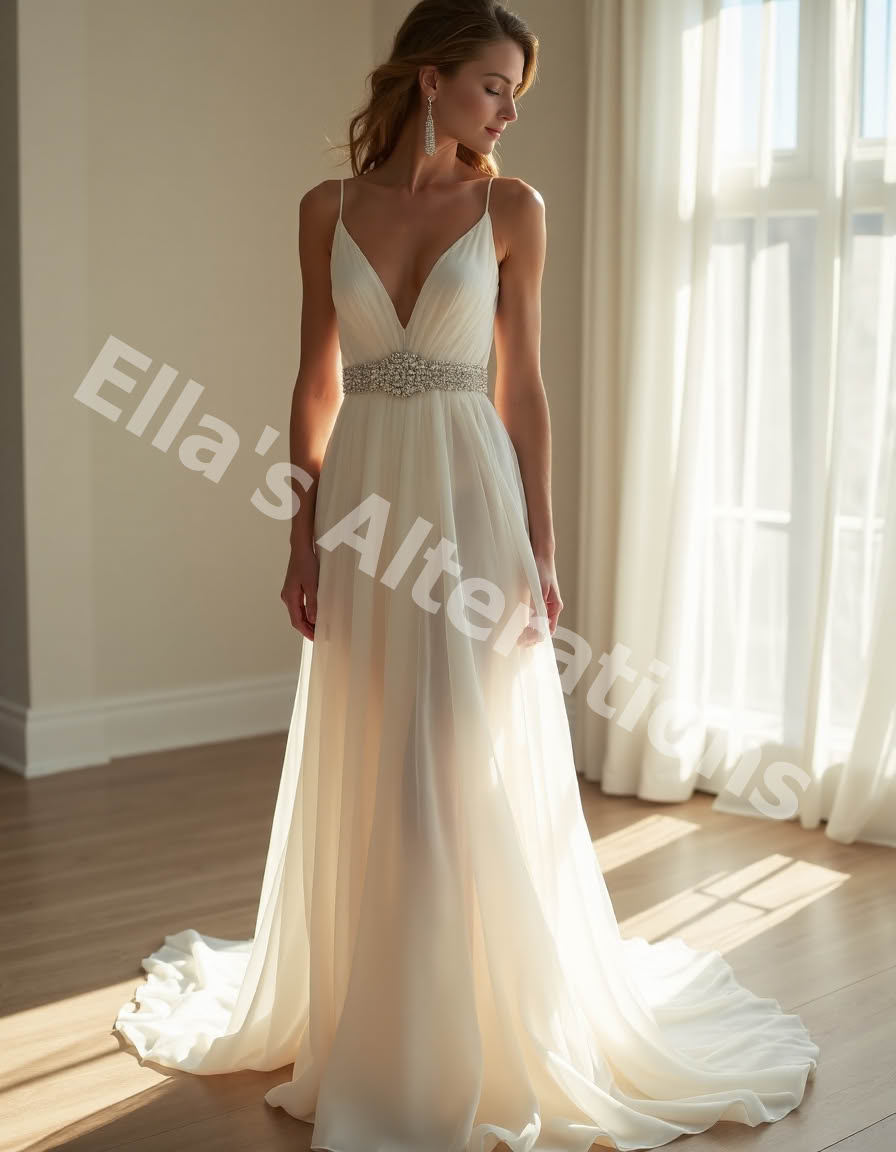
An empire waistline rises above the natural waist and lands just below the bust.
It elongates the legs and creates a soft, flowing shape that’s ideal for brides who prefer less emphasis on the midsection.
It can feel airy, romantic, and comfortable, especially when paired with light fabrics like chiffon or silk charmeuse.
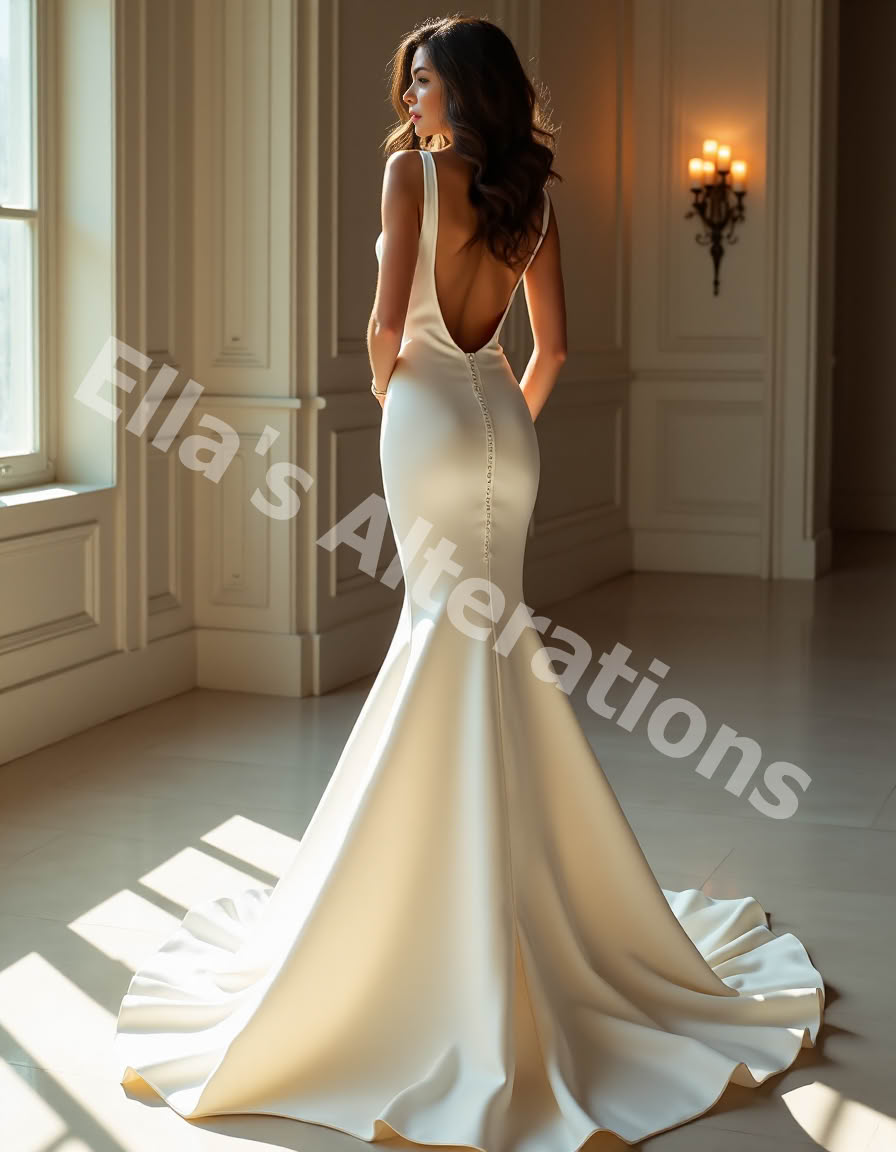
In contrast, the dropped waist sits lower on the body, often near the hips.
This elongates the torso and draws the eye downward, creating a sleek and contemporary silhouette.
It’s a popular choice for structured gowns, especially those in satin or mikado, where the fabric maintains its form and complements the elongated lines of the dress.
This style works well for taller brides or those with longer torsos, as it creates drama without overwhelming the figure.
Then there’s the more tailored option: the basque waist.
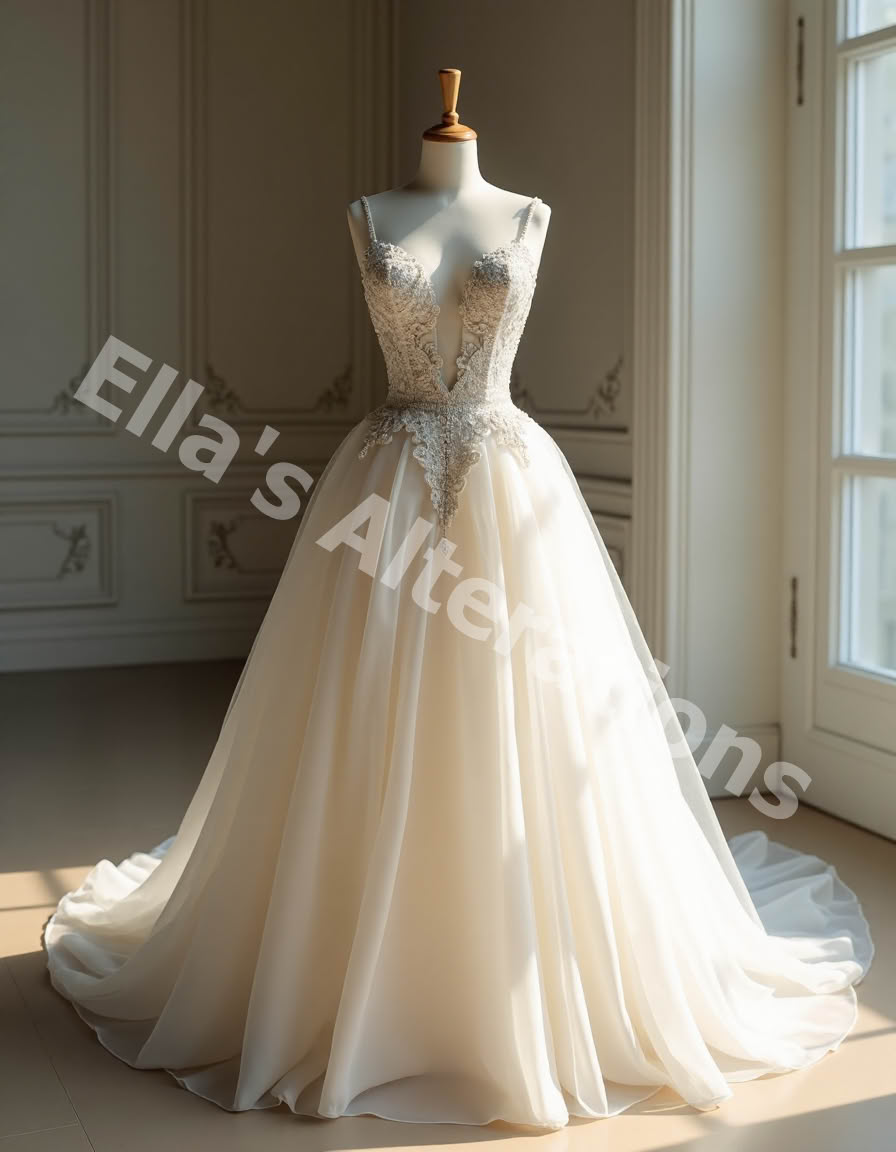
This one dips into a V or U shape at the front, offering a touch of historical elegance and structure.
It combines the shaping benefits of a corset with the elongation effect of a dropped waist.
Often seen in vintage-inspired or couture gowns, the basque waist highlights the waistline while also drawing attention to the hips, creating a very defined, sculpted silhouette.
Tailors approach the waistline with technical precision.
Whether the waist is being constructed from scratch or adjusted during a fitting, everything from fabric choice to seam placement plays a role in its success.
Boning adds structure, darts provide shaping, and closures ensure security.
Even the smallest detail, like the angle of a seam or the placement of a zipper, can affect how the waist fits and feels.
Ultimately, the waistline is where structure meets flow, where the dress becomes one with the bride.
It determines how the gown will move with you, how it will frame your body, and how it will tell your story.
In the hands of a skilled tailor, that meeting point between bodice and skirt becomes a masterpiece of design and fit, setting the tone for everything else that follows.
Why do tailors call the waistline the pivot point?
Because every proportion reads from that line. Raise it to lengthen legs, drop it to lengthen torso, define it to stage an hourglass, soften it to float.
- Quick Fact: A line relies on a clear waist to release volume.
- Quick Fact: Sheath can fake a waist with darts and seams.
- Quick Fact: Mermaid needs precision through waist and hip.
- Quick Fact: Ballgown waist is a visual focal point.
- Quick Fact: Support layers keep the pivot from collapsing.
- Quick Fact: Belts or sashes direct the viewer’s eye.
- Stand tall, breathe, then exhale. Does the waist still sit flat.
- Walk ten steps. Does the skirt drag at the seam.
- Raise arms. Does the bodice lift the waist seam.
- The waistline steers the whole silhouette.
- Define the pivot and you define the presence.
- Balance starts and ends at the waist.
Stylist Tip: If your waist looks perfect only when you are frozen, ask for hidden elastic stays for real world movement.
Keep Reading: Why do tailors call the waistline the pivot point?
In A Tailor’s Guide: How Waistlines Transform Your Wedding Gown, one truth becomes clear: the waistline is not just a design feature.
It is the silhouette’s pivot point, the line that guides how the entire gown moves, shapes, and speaks.
The way a waistline is placed and constructed changes everything about how a dress looks on the body.
It influences not only proportion but also posture, presence, and the subtle art of visual balance.
In tailoring terms, it is the axis around which every element of the dress must align.
When you stand in a wedding gown, your silhouette is what creates that first breathtaking moment.
Whether it’s soft and flowing or structured and sculpted, the waistline is the central element that pulls it all together.
- Raise it, and you lengthen the legs.
- Drop it, and you elongate the torso.
Define it with boning or soften it with draping, and you instantly shift the entire vibe of the dress.
That’s the transformative power of a well-placed waistline.
Every silhouette begins with a decision: where should the waistline fall to best suit the body and the vision?
In an A-line gown, the natural waistline serves as a graceful midpoint.
It allows the bodice to hug the torso, then flows outward into a skirt that adds gentle volume without overwhelming.
This creates a balanced, elegant look that flatters most shapes and is especially suited for romantic or classic bridal styles.
In contrast, a sheath or column gown often follows the body's natural line without a defined waist, yet the illusion of a waist is still created through darting, seams, or subtle shaping.
These gowns rely on proportion and clean design to keep the figure long and fluid, which is why even the smallest tailoring adjustments around the waistline can make a major difference.
- Too tight, and the line breaks.
- Too loose, and the silhouette becomes shapeless.
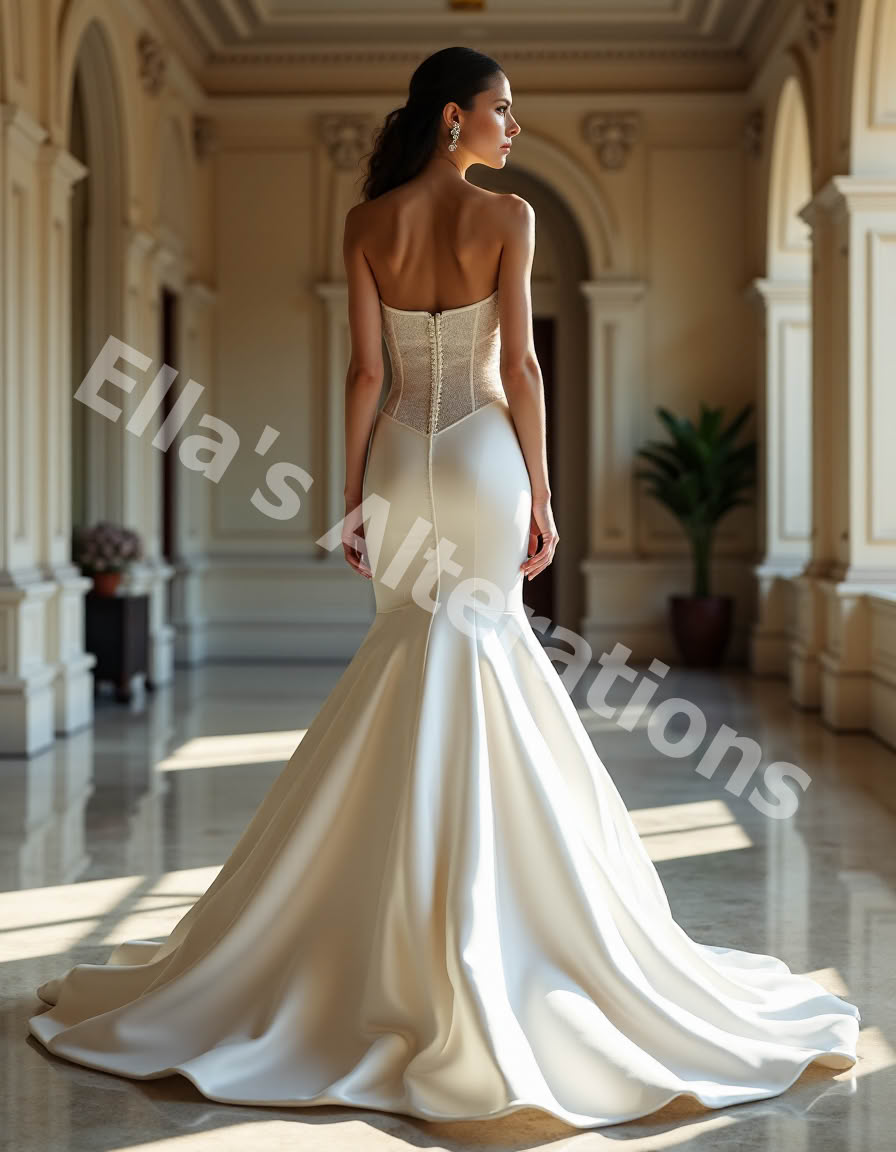
Then there’s the mermaid or trumpet silhouette, which is built around a sculpted waistline.
This style emphasizes the natural or slightly dropped waist before flaring at or below the knee.
The fit through the waist and hips must be precise, as this is where the gown defines the body most dramatically.
The waistline is responsible for showcasing the hourglass figure, and it demands support through corsetry, boning, or internal structuring to hold its shape beautifully.
In ballgowns, the waistline is often a point of dramatic contrast.
A structured bodice meets a voluminous skirt, and the seam between the two becomes a focal point.
Some gowns highlight this with a belt or sash, while others keep it seamless and sleek.
The tailoring here must account for proportion, especially if the skirt has substantial weight or the bodice is intricately detailed.
A slight misplacement can throw off the balance of the entire look.
Beyond silhouette, waistlines affect movement.
A higher waist allows for more flow and airiness, ideal for beach or garden weddings.
A fitted natural or dropped waist adds drama and elegance, perfect for formal or evening ceremonies.
The way the skirt falls from the waistline influences how the dress glides with each step.
When designed with intention, the waistline can even help a bride feel more graceful, more poised, more aligned with her personal style.
Ultimately, a wedding gown is more than fabric.
It is a construction of art and engineering, and the waistline is at the heart of it.
It anchors the gown to the body while letting everything else flow.
It shapes the story the dress is telling, whether that’s romantic and soft, bold and confident, or timeless and classic.
That’s why in tailoring, the waistline isn’t an afterthought.
It’s the starting point for everything.
Which waistline style should I choose for my body and vibe?
Match the line to the feeling you want. Natural for balance, empire for ease, dropped for edge, basque for sculpture. Fabric and structure finish the story.
- Quick Fact: Natural waist loves belts and satin sashes.
- Quick Fact: Empire works with chiffon and soft crepe.
- Quick Fact: Dropped waist pairs with trumpet or mermaid.
- Quick Fact: Basque shines with corsetry and beadwork.
- Quick Fact: Clean lines highlight modern silhouettes.
- Quick Fact: Appliqués can guide the eye along the waist curve.
- Petite and want length: choose empire.
- Defined waist and curves: choose natural or basque.
- Tall or long torso and love sleek lines: choose dropped.
- Choose the line that matches the mood.
- Style speaks through seam placement.
- A waist can whisper or it can wow.
Stylist Tip: Try the same silhouette in two fabrics. The waist can read totally different in mikado versus chiffon.
Keep Reading: Which waistline style should I choose for my body and vibe?
Every bride has a unique shape, style, and vision for her wedding day look.
Choosing the right waistline is one of the most powerful ways to bring that vision to life.
Waistline styles don’t just sit at different points on the body, they sculpt, define, and express.
They can elongate the frame, accentuate curves, soften angles, or bring in structure where it’s needed most.
Each style tells a different story and creates a completely different visual impact.
The natural waist is the most classic of them all.
It sits at the narrowest part of the torso and creates a balanced, timeless silhouette.
This placement is ideal for brides who want a traditional feel with a flattering shape.
It works beautifully with A-line, ballgown, and even mermaid silhouettes, offering a smooth transition from bodice to skirt.
Because it hits where your body naturally curves inward, it highlights the waist without needing heavy embellishments or structure.
For brides who love simplicity with elegance, this is often the go-to style.
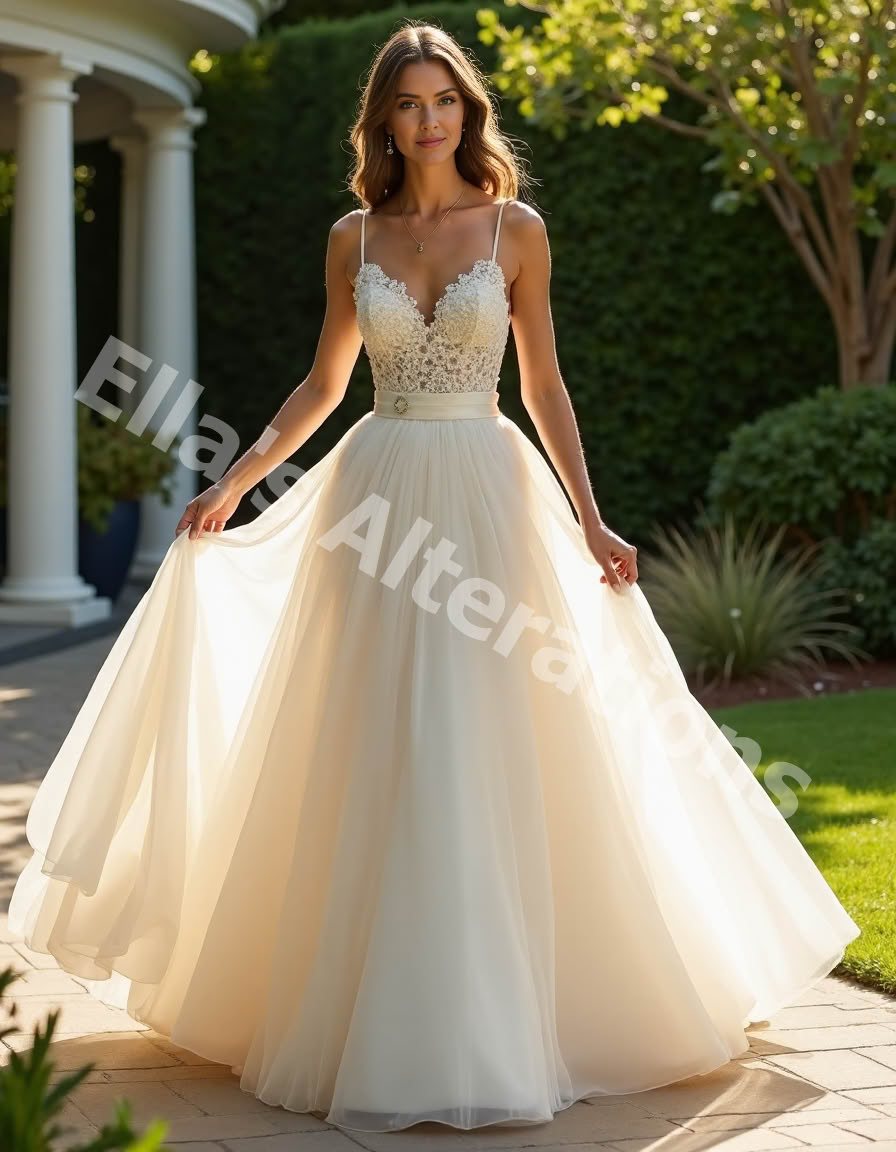
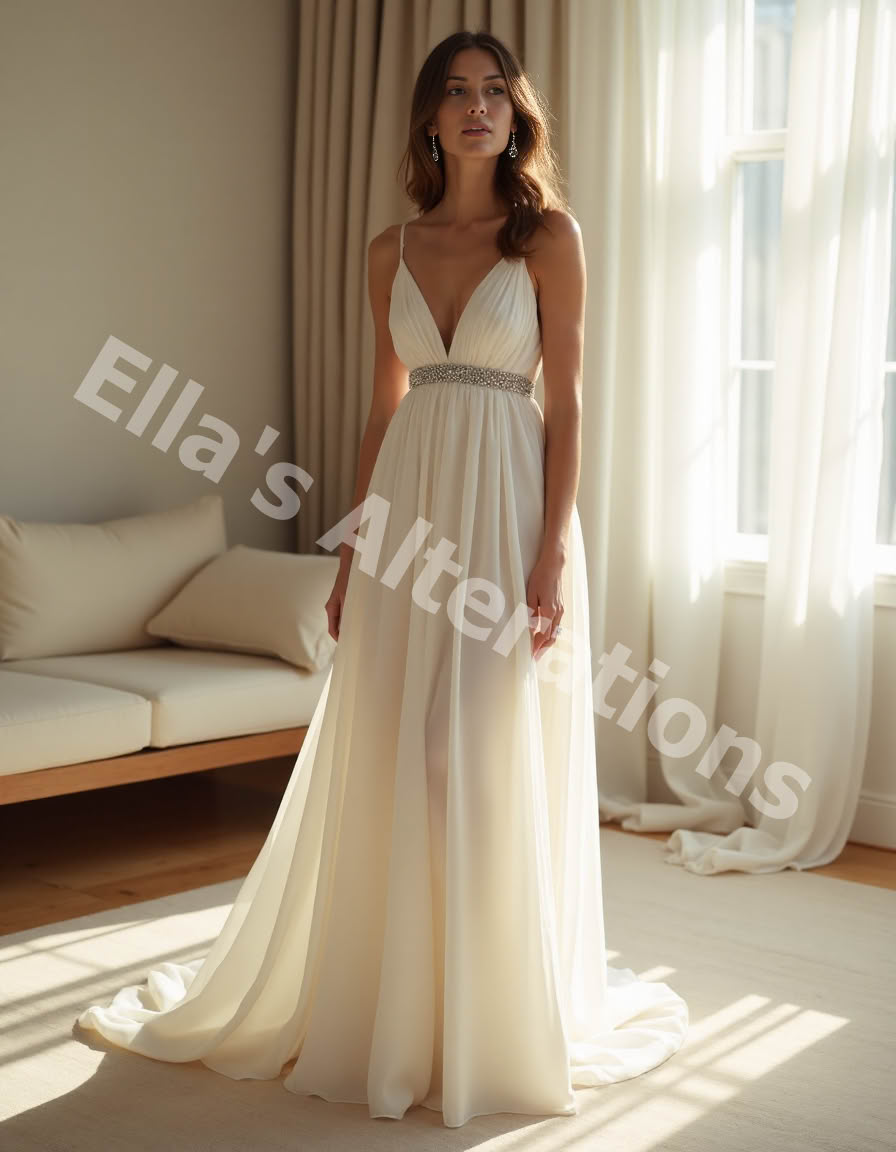
For those who prefer something lighter and more ethereal, the empire waist offers a romantic alternative.
Positioned just below the bust, it allows the fabric to flow freely over the midsection and hips.
This waistline is perfect for petite brides or those looking to create the illusion of longer legs.
It’s also a gentle, forgiving shape that feels soft and unrestrictive.
Ideal for chiffon, silk, or other airy fabrics, the empire waist often appears in bohemian, Grecian, or garden-inspired designs.
It draws the eye upward and feels light and dreamy from every angle.
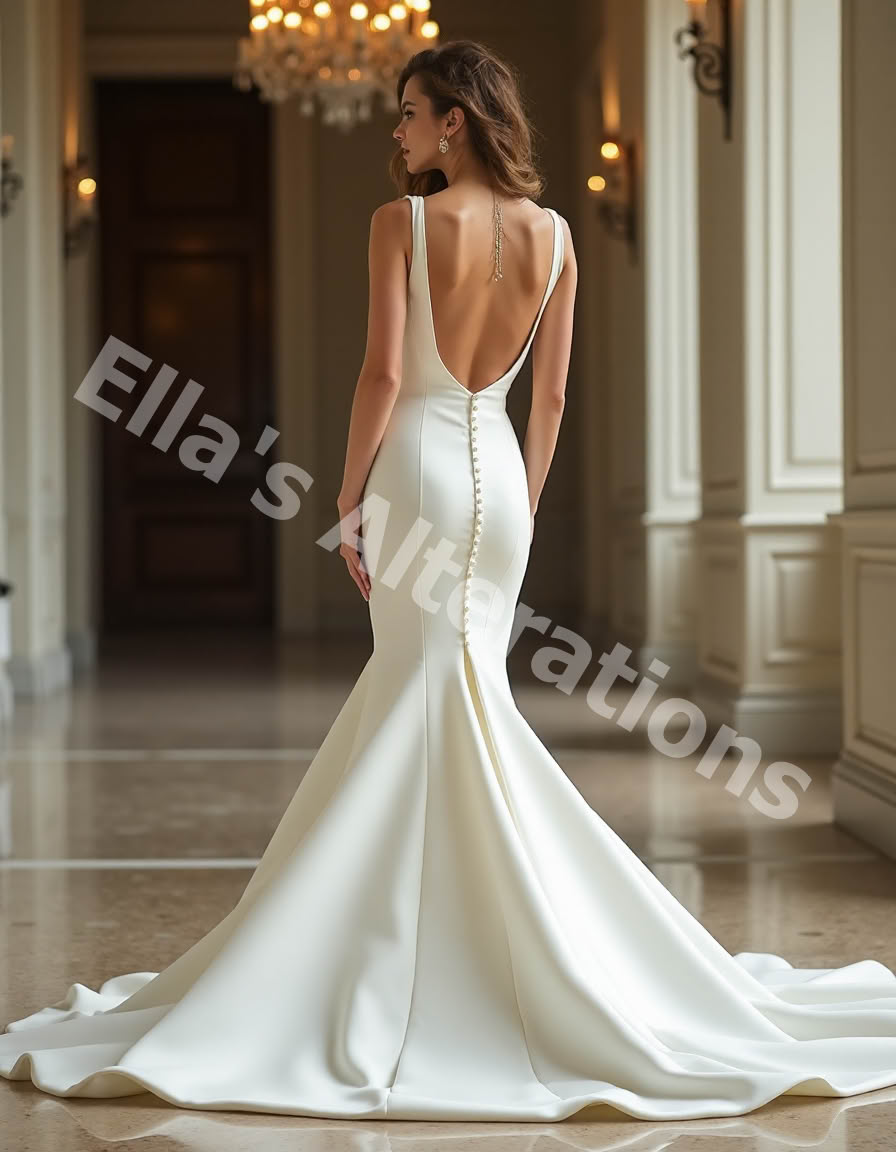
On the other side of the spectrum is the dropped waist, which sits lower on the torso, often near the upper hip.
This style is all about elongation and sophistication.
It visually stretches the upper body and creates a sleek, modern line.
When paired with a fitted bodice and a flared skirt, like in mermaid or trumpet gowns, the dropped waist brings drama and impact.
It’s particularly stunning on taller brides or those with longer torsos.
While this style can be less forgiving around the hips, a skilled tailor can create seamless shaping with the right internal support, using boning and strategic seaming.
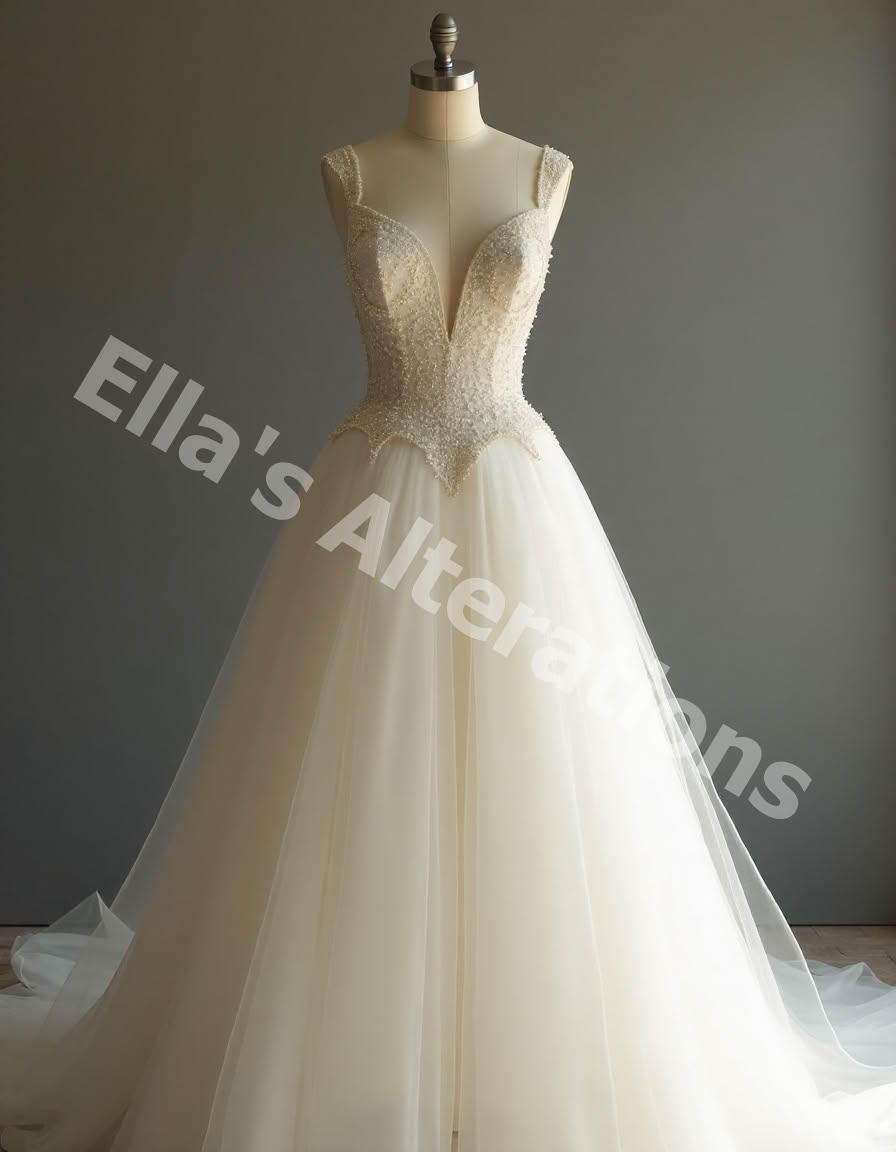
Then there’s the basque waist, a style that dips into a V or U shape at the center front, just below the natural waist.
This look is rooted in historical and couture design, bringing a regal, structured feel to any gown.
The basque waist not only defines the waist but also draws attention to the hips in a flattering, sculpted way.
It’s often paired with corseted bodices for extra support and precision.
When done right, this waistline carves out a stunning silhouette and adds just the right amount of old-world romance.
Each of these waistlines can be customized and tailored to fit the bride’s figure and style preferences.
A natural waistline can be highlighted with a satin sash or delicate belt.
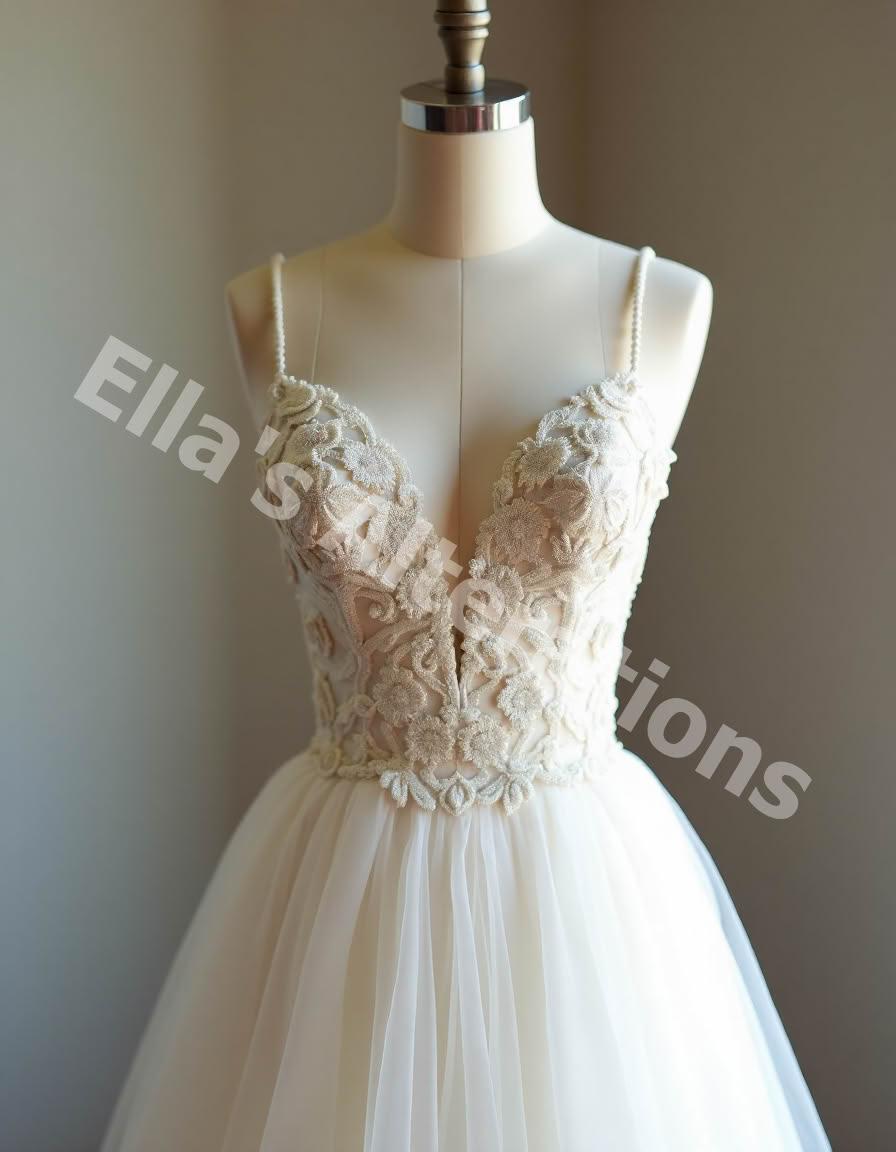
An empire waist might be adorned with lace appliqué or pearl trim.
Dropped waist gowns often feature bold seams or clean lines, while basque waists shine with embroidery or beading that follows the contour of the dip.
These elements aren’t just decorative, they help guide the eye and reinforce the shape the waistline creates.
Choosing your signature shape is more than picking a design you like.
It’s about understanding how your body moves, what areas you want to highlight, and how you want to feel when you step into the room.
With the right waistline, your dress becomes more than fabric, it becomes a frame for your confidence, your style, and your once-in-a-lifetime moment.
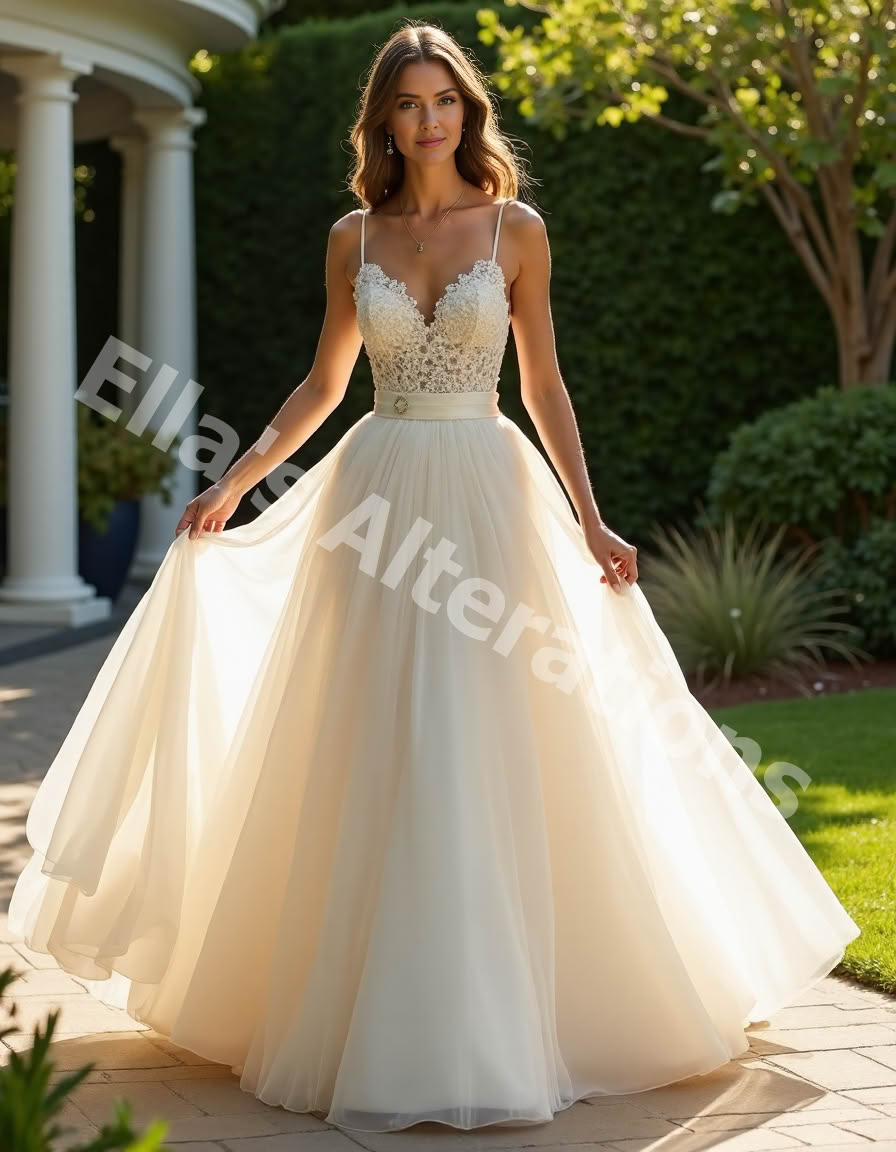
What inside work makes a waistline look flawless on the outside?
Boning, corsetry, strategic seams, and closures do the heavy lifting. Then draping, tucks, and embellishments refine the shape so it reads clean in motion and still.
- Quick Fact: Boning prevents collapse at the waist seam.
- Quick Fact: Corsets distribute pressure so you can breathe and move.
- Quick Fact: Tucks and pleats contour without bulk.
- Quick Fact: Belts define, lace motifs guide the eye.
- Quick Fact: Invisible zippers need precise seam allowance.
- Quick Fact: Waist stay tape stops the skirt from dragging the bodice.
- Ask for internal waist stay.
- Test closures with a full breath.
- Check for ripple at side seams under bright light.
- The best waistlines are engineered, then embellished.
- Support first, sparkle second.
- Structure is the secret behind every smooth seam.
Stylist Tip: If your gown is strapless, upgrade the inner corset. The waist reads cleaner and the neckline sits calmer.
Keep Reading: What inside work makes a waistline look flawless on the outside?
Behind every perfectly fitted waistline lies a set of tools, techniques, and tailor’s secrets that work together to create structure, shape, and support.
What looks effortless from the outside is actually the result of careful planning and construction from the inside.
A gown’s waistline doesn’t simply hold the bodice and skirt together, it anchors the entire silhouette.
To achieve a flawless fit that flatters and moves with the body, tailors rely on a combination of design strategies and technical elements that bring strength, smoothness, and shape to the gown.
One of the most important tools in the tailor’s toolbox is boning.
Boning refers to narrow strips of plastic, steel, or synthetic material sewn into the lining or seams of the bodice.
These strips act like gentle scaffolding, helping the fabric maintain its shape while giving the waistline structure.
Boning prevents fabric from bunching, keeps the bodice upright, and helps define the waist without relying on tight pulling or constant adjusting.
It’s essential for strapless gowns, corset bodices, and any dress where a sculpted waistline is the goal.
Closely related to boning is corsetry, a more advanced and often more visible form of internal structure.
A corseted bodice goes beyond basic support.
It shapes the torso, enhances the waistline, and can even change the posture of the bride in a subtle but powerful way.
A well-constructed corset distributes pressure evenly across the waist and bust, making the gown feel secure while also emphasizing a dramatic silhouette.
Corsetry can be built into the dress or added during alterations, depending on the design and desired level of shaping.
Beyond the inner structure, tailors also work with external shaping tools like tucks, pleats, and draping.
These are strategic fabric manipulations that add texture, dimension, or visual illusion to the waistline area.
A tuck folds the fabric inward to create subtle contouring, while pleats add controlled volume that can either define or soften the waist.
Draping, on the other hand, allows fabric to flow loosely while still guiding the eye along the waist, making it an excellent choice for brides who want movement without losing shape.
These elements are not just decorative, they work in harmony with internal structure to create a gown that flatters in motion and in stillness.
Another valuable tool is the use of embellishments to define the waist.
Think of satin belts, beaded sashes, or even strategically placed lace motifs.
These details draw the eye to the waist and enhance its appearance.
For example, a gown with a simple fabric base might benefit from a sparkling belt to add interest and definition.
In contrast, a heavily embellished bodice might transition into a plain skirt with a clean seam to avoid overwhelming the silhouette.
Tailors know how to balance these design choices for maximum impact.
Then there are the closures, zippers, buttons, and hidden hooks, that ensure the gown fits securely around the waist.
These are often hand-finished to maintain a smooth line and to hide any signs of structure.
A well-placed zipper can be completely invisible, while a row of delicate buttons can add vintage charm or romantic detail.
These elements must function perfectly, especially when the waistline is under tension from a fitted bodice or corset.
Tailors test these closures repeatedly during fittings to ensure comfort and durability.
Finally, achieving the perfect waistline requires a close collaboration between the bride and the tailor.
This is where customization becomes key.
Every bride has a unique body, and no dress, even a made-to-measure one, is complete without adjustments.
Waistlines may need to be raised, lowered, reshaped, or reinforced to create the right fit.
This is especially important when modifying a ready-to-wear gown or adapting a sample to fit new proportions.
In the end, the waistline is never just a single stitch or seam.
It’s a carefully crafted area of the gown that combines support, style, and technical mastery.
When done right, it creates a silhouette that looks effortless, feels secure, and brings your bridal vision to life.
Know Your Gown: Essential Parts of a Wedding Dress.
Can a tailor move or reshape the waistline after you buy the dress?
Yes, with skill. We can raise or lower the seam, refine the fit, or redesign the waist shape, then blend the details so it looks original.
- Quick Fact: Moving a waist may require detaching the skirt and reshaping the bodice.
- Quick Fact: Half an inch can be the difference between stiff and fluid.
- Quick Fact: Letting out depends on hidden seam allowance.
- Quick Fact: Beads and lace often get removed and reapplied by hand.
- Quick Fact: Multiple fittings protect movement and comfort.
- Quick Fact: A new waist style can change the entire energy of the gown.
- Bring your real shoes and undergarments.
- Practice a slow sit and a quick step.
- Check the waist from side view in bright light.
- Alterations turn a dress into your dress.
- The right waist location makes everything else fall in line.
- Precision in inches becomes confidence in photos.
Stylist Tip: If you plan to lose weight, schedule a final waist check two weeks before the wedding for perfect lock in.
Keep Reading: Can a tailor move or reshape the waistline after you buy the dress?
Not every gown fits like a dream the moment you slip it on, and that’s perfectly normal.
Even the most stunning designer dress often needs thoughtful adjustments, especially around the waistline.
This area is one of the most commonly altered parts of a wedding gown because it’s where fit truly matters most.
Whether you’re working with a ready-to-wear dress, a vintage piece, or a sample that’s close but not quite right, altering the waistline allows the gown to transform from almost perfect to unmistakably yours.
The waistline is the focal point of a gowns' silhouette.
- If it sits too high, it can shorten the torso and make the proportions feel off.
- Too low, and it can elongate the body in an unflattering way.
- If it’s too tight, it restricts movement and comfort.
- Too loose, and it loses all definition.
A tailor’s job is to fine-tune the waistline until it feels invisible in all the best ways, secure, smooth, and aligned with your body’s natural shape.
One of the most common requests during alterations is raising or lowering the waistline.
This is especially helpful when you fall in love with a gown that’s designed for a different body proportion.
Petite brides may need the waistline lifted slightly to restore balance to the silhouette.
Taller brides may benefit from a dropped waist to elongate the torso.
Adjusting the waistline placement isn’t as simple as shifting a seam.
It often involves removing and reattaching the skirt, reshaping the bodice, adjusting boning, and ensuring the new placement works with any existing embellishments, lace, or closures.
Another common adjustment is taking in or letting out the waist.
Even a difference of half an inch can significantly change how the dress fits and feels.
Tailors may open the side seams, remove fabric from the back, or redistribute the shaping darts to contour the gown more precisely to your frame.
Letting out the waist is slightly more complex, as it depends on how much extra seam allowance was built into the original design.
Skilled bridal tailors know how to preserve the integrity of the gown while maximizing comfort and fit.
Altering the waistline also opens up creative possibilities.
Some brides choose to completely reimagine the shape or style of the waistline.
This might mean changing a natural waist into an empire waist for a more flowy silhouette, or transforming a simple straight seam into a basque waist for a touch of elegance and definition.
These changes require vision and technical skill but can completely redefine the gown’s energy and enhance your natural proportions.
When working with delicate fabrics like lace, silk, or tulle, alterations around the waistline must be done with particular care.
Intricate detailing such as beading or appliqué may need to be removed and reapplied by hand after the structural changes are made.
A professional tailor will ensure that the design looks seamless and that the transition between bodice and skirt appears intentional and polished.
Multiple fittings are essential to perfecting the waistline.
During your first fitting, the tailor will pin and mark where adjustments are needed.
In later fittings, the focus shifts to smoothing lines, refining support, and ensuring that the dress moves naturally with your body.
This is also the time to assess how the gown looks and feels while walking, sitting, or dancing.
In many ways, altering the waistline is where tailoring becomes an art form.
It’s not just about numbers and seams, it’s about harmony, proportion, and confidence.
A perfectly altered waistline brings the dress into alignment with your body and your style.
It elevates the gown from something beautiful to something that feels like it was made just for you.
And isn’t that what every bride deserves?.
How do different waistlines flatter different body shapes?
Use placement and styling to guide the eye. Natural highlights a narrow middle, empire lengthens and softens, dropped balances strong shoulders, basque sculpts curves with grace.
- Quick Fact: Ruched waists add texture and gentle camouflage.
- Quick Fact: Draping gives movement without cling.
- Quick Fact: A V neckline plus a defined waist creates vertical balance.
- Quick Fact: Sleeve choice changes how the waist reads.
- Quick Fact: Belts sharpen definition on minimalist gowns.
- Quick Fact: Side detailing can slim without a hard seam.
- Hourglass and pear: natural or basque.
- Rectangle: natural with belt, or A line with shaping.
- Petite: empire with light fabrics.
- A smart waistline edits the silhouette in seconds.
- Placement is power for proportion.
- Soft details can sculpt as much as seams.
Stylist Tip: Try a temporary ribbon at the fitting to test belt width and placement before ordering a final embellishment.
Keep Reading: How do different waistlines flatter different body shapes?
There’s something undeniably powerful about the moment a bride finds the gown that makes her feel seen, sculpted, and absolutely radiant.
And more often than not, that moment comes down to one subtle yet transformative detail: the waistline.
When chosen and styled with intention, the waistline doesn’t just shape a dress, it reshapes how the body is perceived.
It enhances curves, creates balance, softens sharp lines, and defines the silhouette in a way that feels effortlessly flattering.
One of the key styling secrets is understanding how the placement of the waistline changes the perception of body proportions.
A gown with a fitted natural waist draws attention to the narrowest part of the torso, instantly creating that coveted hourglass shape.
This is especially flattering for brides with defined waists, as it highlights their natural curves and creates a classic, balanced silhouette.
Pair this with a structured bodice and flowing skirt, and you get timeless elegance with built-in drama.
For brides who want to elongate their figure or shift the focus upward, the empire waist offers a soft, lengthening effect.
By sitting just below the bust, this style visually extends the legs and de-emphasizes the waist and hips.
It’s ideal for petite brides, those with shorter torsos, or anyone who wants a more forgiving, fluid shape.
Empire waistlines work beautifully with light, romantic fabrics like chiffon or georgette that move with ease and grace.
In contrast, the dropped waist plays with proportion in a different way.
This style elongates the torso by placing the waistline lower on the body, often closer to the hips.
It creates a sleek, modern line and works especially well on taller brides or those with longer torsos.
When styled correctly, a dropped waist can also help balance out fuller busts or broader shoulders by visually grounding the upper body.
Think of it as your secret weapon for creating a statuesque presence.
Then there’s the basque waist, which combines structure with visual interest.
The V or U-shaped dip at the front naturally guides the eye downward, enhancing curves and adding definition around the waist and hips.
This shape is particularly flattering on brides with hourglass or pear-shaped figures, as it emphasizes a narrow waist while softening the transition into the skirt.
It’s also a favorite for those who want a regal or vintage-inspired look without sacrificing shape.
But it’s not just about where the waistline sits, it’s also about how it’s styled.
A ruched waistline, for instance, uses gathered fabric to create texture and movement while subtly shaping the midsection.
It can camouflage the tummy area or simply add a romantic softness to a fitted gown.
Draping has a similar effect, offering a more fluid, Grecian-inspired look that flatters without clinging.
Embellishments also play a major role.
A strategically placed belt, beaded waistband, or embroidered sash can draw attention to or away from the waist depending on what you want to highlight.
These details can either sharpen the definition or add contrast, especially on minimalist gowns where the shape does all the talking.
Even the neckline and sleeves interact with the waistline.
A plunging neckline paired with a fitted waist creates vertical balance and elongation.
Cap sleeves or long fitted sleeves can offset a dramatic skirt and help balance proportions from top to bottom.
Ultimately, the waistline is your styling anchor.
It’s where fit meets illusion, where structure meets softness, and where personal style becomes part of the silhouette.
The right waistline doesn’t change your body, it enhances it.
It works with your natural lines, not against them, and brings harmony to every other element of the gown.
When thoughtfully chosen, the waistline becomes more than a design detail.
It becomes your secret to standing tall, walking confidently, and feeling absolutely beautiful in your own skin.
A Tailors Guide: How a Bodice Transforms Your Wedding Gown.
How does waist customization differ in couture, bespoke, and off the rack?
Couture builds the waist to your body from day one. Bespoke collaborates and tests placement with you. Off the rack starts the fit, then alterations finish the waist.
- Quick Fact: Couture includes internal structure planned to the millimeter.
- Quick Fact: Bespoke often tests with muslin to locate the perfect seam.
- Quick Fact: Off the rack nearly always needs waist refinements.
- Quick Fact: You can change waist height and even the waist shape.
- Quick Fact: Budget time and sessions for precise waist work.
- Quick Fact: The label does not guarantee a clean waist, the work does.
Simple comparison:
| Path | Waist Control | Expect |
|---|---|---|
| Couture | Maximum | Multiple fittings, custom structure |
| Bespoke | High | Collaboration, pattern tests |
| Off the rack | Medium | Alterations finish the job |
- Couture sculpts, bespoke refines, off the rack adapts.
- The right tailor turns any path into a perfect waist.
- Customization lives in the stitches, not the tag.
Stylist Tip: If your timeline is tight, choose a silhouette whose waist needs fewer structural changes, then perfect that one detail.
Keep Reading: How does waist customization differ in couture, bespoke, and off the rack?
When it comes to wedding gowns, not all dresses are created, or fitted, equally.
The difference between couture, bespoke, and off-the-rack options doesn’t just lie in the price tag or label.
It shows up most clearly in the fit, construction, and level of customization, especially around one of the most important areas of the gown: the waistline.
Whether you’re buying a made-to-order piece, investing in high fashion, or selecting a ready-made gown, the way the waistline is designed and adjusted can dramatically change how the dress feels and looks on your body.
In a couture gown, every detail is meticulously planned, fitted, and crafted to follow the natural lines of your body.
These dresses are typically made by hand in fashion houses, using the highest quality materials and traditional techniques.
The waistline in a couture gown is never an afterthought.
It’s often reinforced with internal structure like corsetry, boning, and strategic seam placement to ensure it holds its shape while enhancing the bride’s figure.
During multiple fittings, the waistline is sculpted inch by inch to fit like a second skin, no bunching, no shifting, no tugging.
The end result is a gown that feels effortlessly elegant and secure, even if it’s built with the most delicate fabrics.
With couture, waist customization is included from the beginning.
The designer and dressmakers work directly with your measurements and body shape, building the dress from the inside out.
- Want a lowered waist to elongate your torso?
- Done.
- Prefer a basque waist with precise embroidery that curves around your hips?
- Not a problem.
Every stitch is intentional, and the waistline becomes a focal point of that artistry.
Couture ensures your dress not only looks stunning but fits with impeccable precision at the waist and beyond.
Bespoke gowns, while also made to measure, offer a slightly different process.
They’re often crafted by independent designers, local ateliers, or skilled bridal tailors who collaborate with you to design the gown from scratch.
Bespoke dresses are all about personalization.
The waistline is customized according to your body type, preferences, and the silhouette you want to achieve.
From choosing the fabric to deciding whether the waistline should be natural, empire, or dropped, every decision is made with your proportions and comfort in mind.
In the bespoke process, there’s room for more conversation and flexibility.
You might try on a few muslin samples to test waistline placement or experiment with different bodice shapes during fittings.
This collaborative approach is ideal for brides who know what flatters them, or want guidance to figure that out.
The tailoring is precise, and while it may not carry the haute couture label, a bespoke waistline can be just as flawless and transformative.
Off-the-rack gowns, by contrast, are pre-made in standard sizes and designed to fit a wide range of body types.
They serve as a beautiful starting point, but when it comes to the waistline, alterations are almost always necessary.
These gowns are manufactured for consistency, not personal fit, so the waist might sit slightly too high or low depending on your height or torso length.
A skilled tailor will step in to adjust the waist for a more flattering fit, often by reshaping seams, removing excess fabric, or even reconstructing part of the bodice.
Waist customization in off-the-rack gowns typically happens post-purchase.
While the options may be more limited compared to couture or bespoke, significant transformations are still possible.
You can change the waistline height, add a sash or belt, or incorporate boning and lining for more structure.
The key is knowing how much you’re willing to invest in alterations and choosing a tailor who understands bridal construction.
No matter which route you choose, couture, bespoke, or off-the-rack, the waistline remains a central part of your gown’s story.
It’s where design meets body, where structure meets softness, and where customization brings everything into alignment.
The right waistline doesn’t just flatter, it elevates, enhances, and completes your bridal vision.
How do I choose the right silhouette for my waist to hip ratio.
Match shape to your natural balance. Defined waist and curvy hips thrive in mermaid, trumpet, and fit and flare. Balanced or straight frames glow in A line or ballgown with a cinched natural waist.
- Quick Fact: Belts create instant definition on straight frames.
- Quick Fact: Empire and soft sheath flatter midsection with flow.
- Quick Fact: Fabric weight changes how the waist reads.
- Quick Fact: Seam placement can fake or refine curves.
- Quick Fact: Tailors use the ratio as a starting point, not a rule.
- Quick Fact: Comfort equals confidence, always.
Choose balance over rules. A smart seam can outdo a label. Your comfort sells the silhouette.
Stylist Tip: If you are between sizes, fit the largest point and tailor the waist down for clean lines.
Can I change the waistline on a vintage gown.
Yes, if the fabric and seams can handle it. We can lift, lower, or reshape, then reapply lace and beads by hand so the history still feels intact.
- Quick Fact: Older lace can be fragile, test first.
- Quick Fact: Seam allowance decides how far we can go.
- Quick Fact: Handwork preserves original charm.
- Quick Fact: Internal lining upgrades modernize the fit.
- Quick Fact: Expect extra fittings for balance.
- Quick Fact: Photos of your muse help guide shape.
Restore, do not fight the fabric. Respect the era, refine the fit. Vintage can still feel current.
Stylist Tip: Bring a swatch of your veil to color check any new lace at the waist seam.
What waistline pairs best with a corset bodice.
Natural waist is the classic match. Basque adds extra sculpture. Dropped can work for long torsos, while empire usually fights the corset’s structure.
- Quick Fact: Corsets need even pressure distribution.
- Quick Fact: Basque creates a smaller looking waist.
- Quick Fact: Dropped reads modern but needs balance.
- Quick Fact: Empire contradicts corset shaping.
- Quick Fact: Stability equals a calmer neckline.
- Quick Fact: Inner lacing can be adjusted per fitting.
Let the corset lead, then place the seam. Sculpture loves a steady base. Support makes beauty look easy.
Stylist Tip: Ask for a hidden modesty panel to keep the waist smooth under lacing.
Is a high waisted gown flattering for short torsos.
Yes when the details are right. Empire lifts the eye, lengthens the lower body, and feels light, just keep the bodice clean and the neckline open.
- Quick Fact: V or scoop necklines add visual length.
- Quick Fact: Avoid bulky details high on the chest.
- Quick Fact: Light fabrics keep the line fluid.
- Quick Fact: Seamless transitions look taller.
- Quick Fact: Shoes with a clean toe line help the effect.
- Quick Fact: Proper hem length keeps the illusion.
Lift the seam, lengthen the frame. Airy fabric reads as height. Keep the top clean, let the skirt flow.
Stylist Tip: Try fingertip veil length to avoid crowding the torso in photos.
How do embellishments around the waist change the look.
They steer attention. A belt spotlights the narrowest point, cascading lace blends the seam, vertical motifs lengthen, and side accents slim without shouting.
- Quick Fact: Sparkle pops on simple bases.
- Quick Fact: Wide belts can shorten a very long torso.
- Quick Fact: Narrow belts sharpen minimal gowns.
- Quick Fact: Appliqués can hide seam joins.
- Quick Fact: Bead density affects weight at the waist.
- Quick Fact: Color contrast changes where the eye lands.
Detail directs the gaze. Contrast is a highlighter. Seam art equals shape control.
Stylist Tip: Try the belt one finger above and below the seam. Take phone pics. Choose the placement that flatters most angles.
Why You Need a Drop Waist Wedding Dress!

About Us
#EllasAlterationsLLC #WeddingGownGuide #WeddingDressDetails #BridalFashion #WeddingDressWaistline #TailorTips #BridalAlterations #CustomWeddingDress #WeddingDressInspo #CoutureBridal #BridalStyle #WeddingDressFit #WeddingPlanning #BridalCouture #WeddingDressDesign #BespokeBridal #WeddingDressHacks #BridalGuide #DreamWeddingDress #WeddingDressLove #BridalLook #WeddingDetails #BridalTailor #WeddingDressGoals #FittedWaistline #BridalSilhouette #WeddingDressTips #BridalStyling #WeddingDressAdvice #BridalConsultant #WeddingFashion
What is the one thing to remember about waistlines.
The waistline sets your silhouette, your comfort, and your confidence. Choose the placement and structure first, then style the details.
TLDR: The waist decides everything
Natural, empire, dropped, or basque, your waistline choice sets balance and movement. Structure inside, clean seam outside, then style the moment.
Ready for a flawless waist fit. Book your fitting at Ella’s Alterations and let a master tailor dial it in.
Brought to you by Ella’s Alterations
Ella’s Alterations
is trusted by brides, professionals, and families across Central Florida for one reason.
The work is done right.
Proudly serving Zephyrhills, Pasco County, Tampa, Wesley Chapel, Lakeland,
and surrounding Central Florida communities.
Clients travel from across the region for expert alterations that local shops
simply cannot match.
With over 30 years of hands on tailoring experience, Ella works at a master level.
This is not basic hemming or quick fixes. This is true garment engineering.
Wedding gowns with structure, suits that need balance, formalwear that must move
and photograph perfectly. Every adjustment is intentional and precise.
Every fitting is handled with respect, privacy, and patience.
Measurements are double checked. Details are explained.
Nothing is rushed. Nothing is guessed.
Clients return because they feel heard, supported, and confident.
Dresses are protected. Fabrics are handled correctly.
Fit decisions are made with experience, not shortcuts.
This is why generations of clients trust Ella with their most important garments.
When it has to fit perfectly, they choose experience.
Ella’s Style Confidence
If something feels off when you put it on, that does not mean it is wrong for you.
It means it has not been tailored for you yet. Clothes are made for averages.
You are not average.
The smallest adjustments change everything. A lifted waist, a shaped bust,
a clean hem. These details quietly do the heavy lifting so you can walk in
like you own the room.
If you are pulling, tugging, or holding your breath, the garment is failing you.
Real tailoring lets you move, sit, dance, and live without thinking about your clothes.
Styles come and go fast. A perfect fit never goes out of style.
When something fits you correctly, it always looks intentional and expensive.
Hidden structure matters. Boning, cups, straps, and shaping should work with your body,
not against it. When support is done right, no one sees it but everyone notices the result.
Whether it is a wedding dress, a suit, or everyday wear, your clothes should show up for you.
Sharp, polished, and reliable.
The best dressed people are not uncomfortable or flashy.
They look effortless because their clothes fit correctly and feel natural.
Fixing what you already own often gives you more confidence than buying something new.
A tailored piece feels personal. Like it was made just for you.
Posture changes. Shoulders relax. You stop adjusting and start owning your space.
That shift is what people actually notice.
Not just okay. Not just good enough. Amazing.
That is the standard.
Local Credibility
Awards & Recognition
Service Area
Depth of Craft
Proof of Trust & Fitting Care

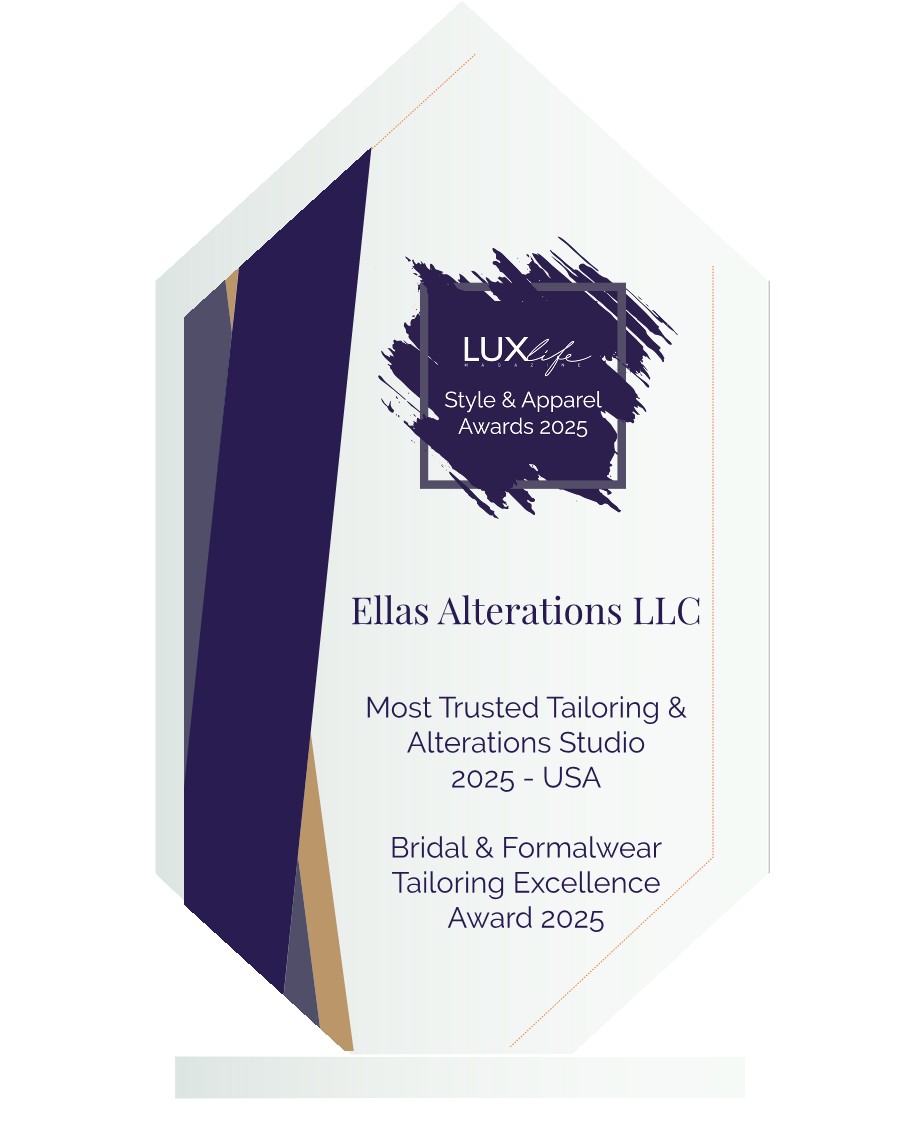
Bridal & Formalwear Tailoring Excellence Award 2025 – USA
Award Winning Bridal & Formalwear Tailoring
Ella’s Alterations is proudly recognized as one of Zephyrhills’ most trusted tailoring studios, specializing in wedding dress and formalwear alterations.

NextDoor Neighborhood Favorite 2023, 2024, 2025

Best Wedding Dress & Formalwear Tailoring Zephyrhills 2026
Why Clients Trust Ella’s Alterations
- 30 plus Years of Expertise: Master tailoring and formal wear alterations trusted across Florida.
- Award Winning Service: Best of Florida Tailor and Best of Zephyrhills.
- Private Bridal Fittings: Discreet, elegant, and tailored to you.
- Proven Local Reputation: Five star customer reviews and repeat clients from Tampa to Orlando.
- Transparent and Personal: Clear pricing, expert guidance, and no rushed fittings.
- Recognized nationally by LUXlife Magazine for craftsmanship and client trust
- Chosen year after year for precision bridal and formal tailoring
- Best Wedding Dress & Formalwear Tailoring Zephyrhills 2026
- NextDoor Neighborhood Favorite 2023 2024 2025
Address: 6986 Fort King Road, Zephyrhills FL 33541
Phone: +1 813-445-8894
Email: admin@ellasalterations.com
Hours:
Get Directions | Book Your Fitting