A Tailor’s Guide: How Veils, Sashes, and Accessories Complete Your Wedding Gown.
TLDR: Quick Take
- Veils, sashes, and overlays elevate your bridal gown with personal style and elegant detail.
- Birdcage, fingertip, and cathedral veils offer different vibes and suit various dress types.
- Sashes and belts shape your waistline and bring sparkle, softness, or structure to any silhouette.
- Detachable overlays offer a second-look effect while keeping your base gown intact.
- Tailoring customizes your dress to perfection from structure to sentiment.
Listen: Discover how veils, sashes, overlays, and expert tailoring transform your wedding gown into a personalized, couture-inspired bridal look. From dramatic cathedral veils to custom lace overlays, each element helps create a dress that reflects your style, shape, and story. (Audio Guide)
.
Introduction: The Power of the Finishing Touches:
The beauty of a bridal gown lies in its core silhouette, but its true identity comes alive in the finishing details.
The right accessories, veils, sashes, and overlays are not just enhancements.
They are design decisions that redefine the dress itself.
These components work in harmony to shape the bride’s overall look, creating a seamless blend of personality, proportion, and purpose.
Tailoring is the first layer of transformation.
A perfectly fitted gown makes everything else possible.
But beyond the seams and structure, styling plays a crucial role in creating a cohesive and elevated bridal presence.
Veils frame the face and trail behind with intention.
Sashes emphasize the waist, bringing balance to the silhouette.
Overlays introduce texture, movement, and a changeable mood that can shift from ceremony to celebration.
Let’s start with veils.
From the retro glamour of the birdcage to the graceful fingertip length and the awe-inspiring cathedral veil, each length holds meaning.
A veil is not just a piece of tulle.
It is a statement that must pair effortlessly with the gown’s length, style, and fabric.
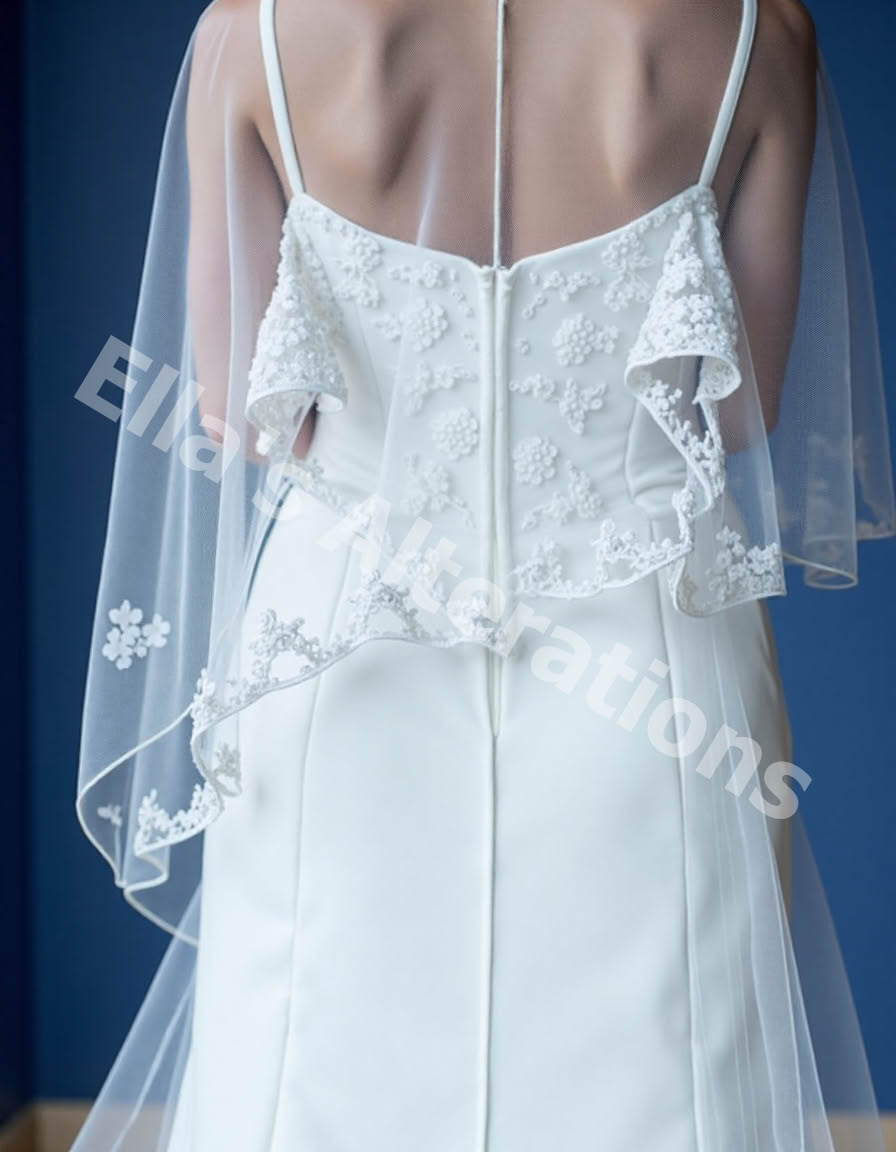
For example, a minimalist satin sheath might benefit from a single-layer fingertip veil with clean lines, while a full A-line gown in lace could shine under a cathedral veil with scalloped edging or floral appliqué.
Choosing the right veil is about knowing how it complements the gown's back detailing, neckline, and even hairstyle.
Sashes and belts often get overlooked but hold serious power.
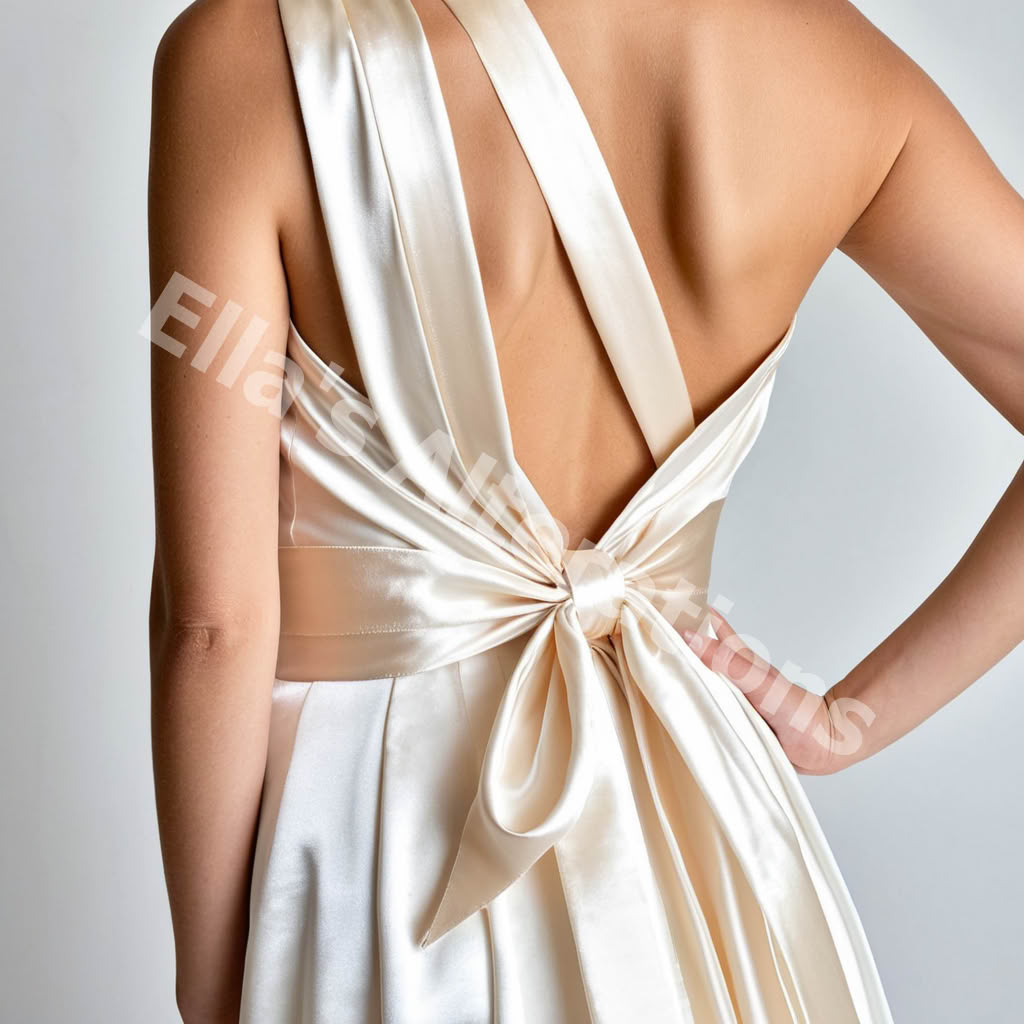
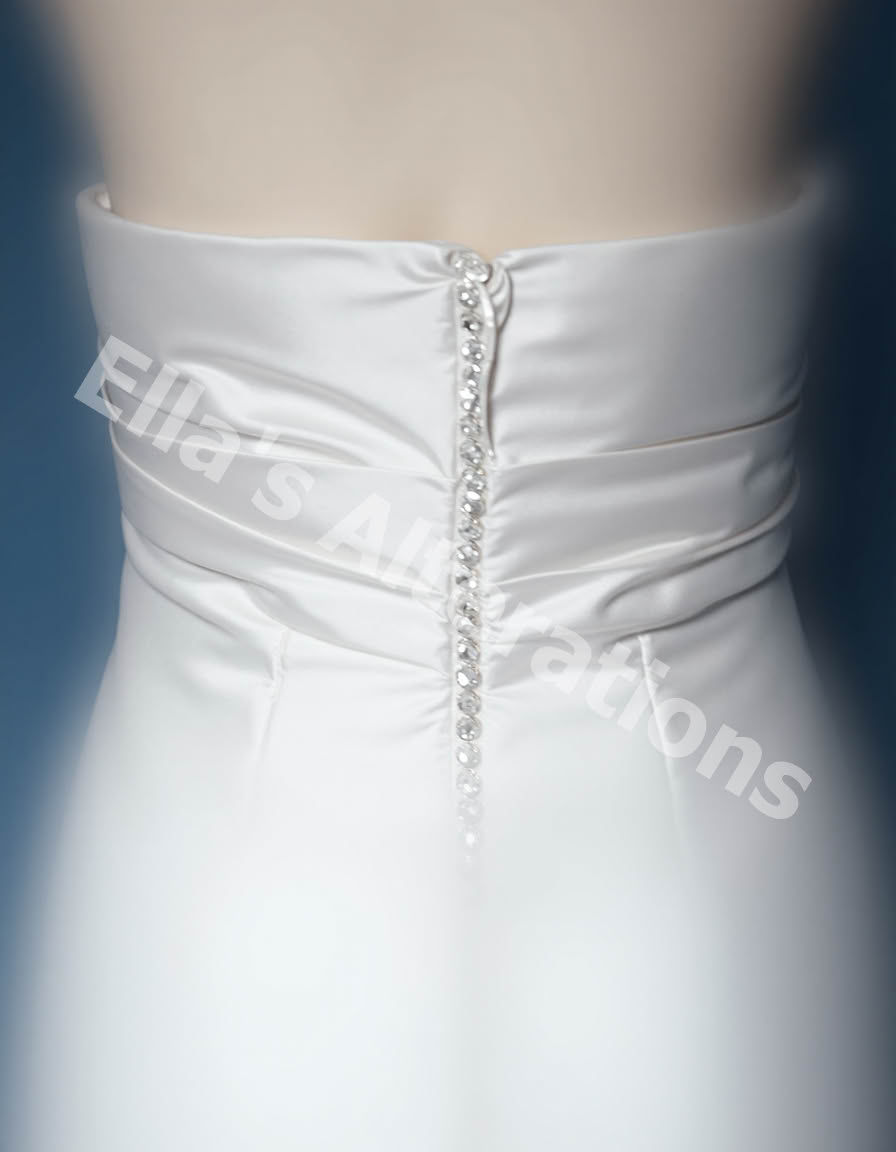
A bridal sash can define the waist, add a hint of color or sparkle, and provide contrast that lifts the entire look.
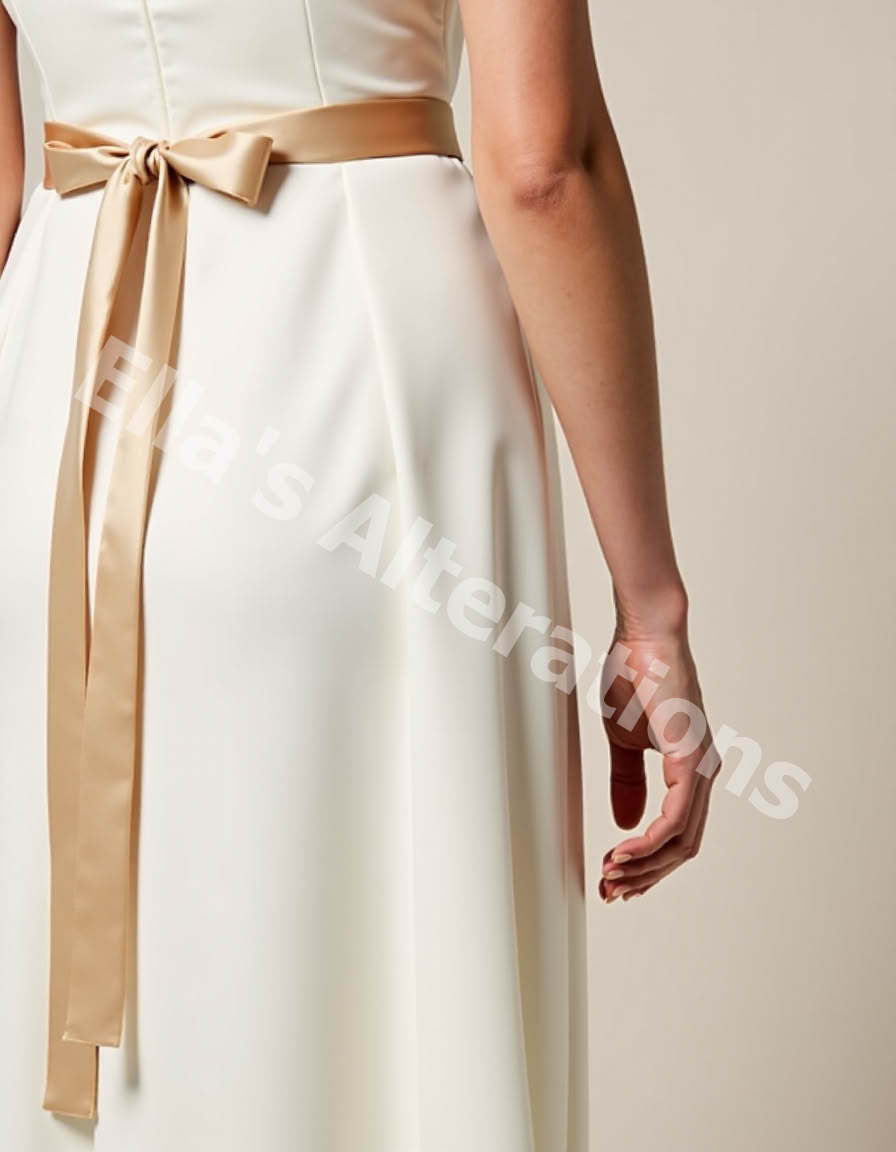
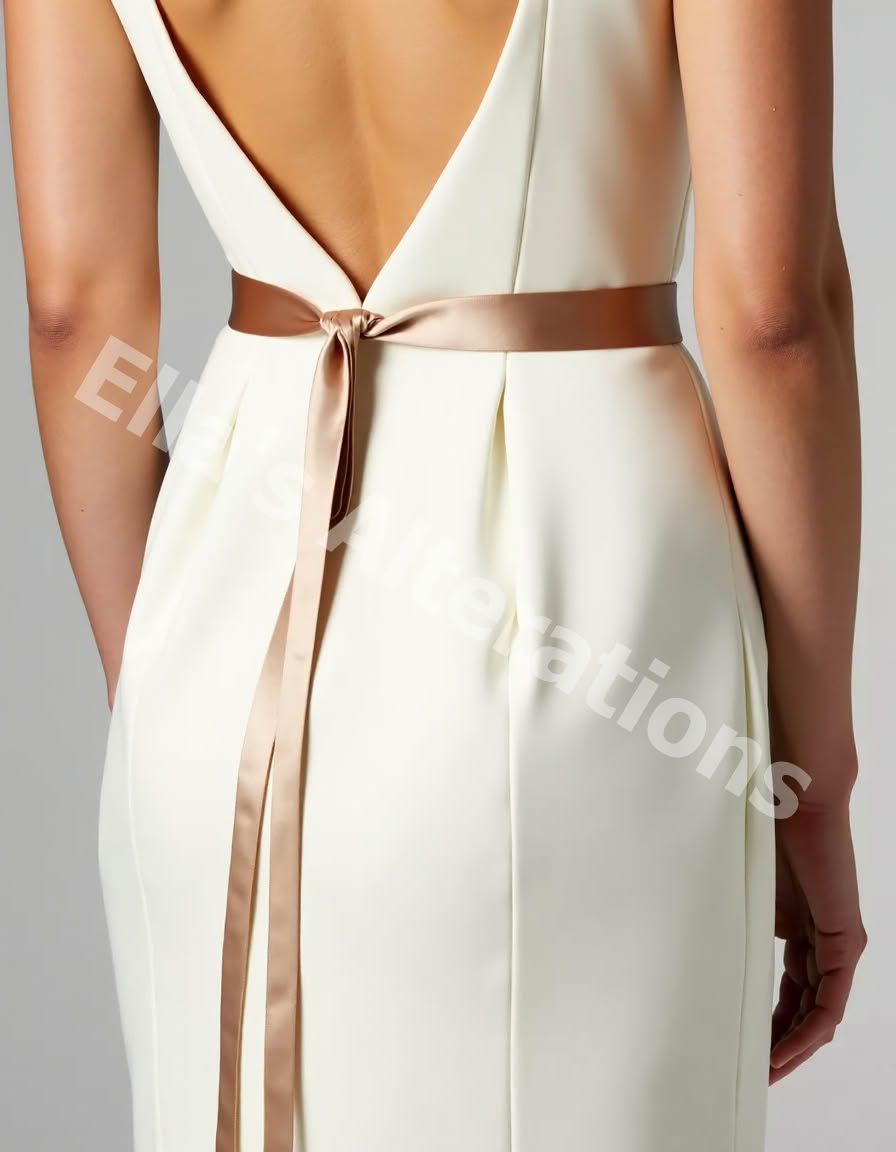
Satin ribbons tied at the waist bring softness and romance.
Beaded or embellished belts add a touch of luxury and create a focal point.
Custom-tailored sashes ensure the fit is secure without disrupting the gown’s flow.
Proper placement is everything.
A slightly raised sash can lengthen the legs visually, while a lower-set belt may balance proportions on taller frames.
Overlays add a layer of modern versatility.
Whether lace, chiffon, or sheer tulle, overlays bring fluidity to a gown and open up endless styling possibilities.
Some brides wear an overlay for the ceremony and remove it for the reception, revealing a sleeker silhouette underneath.
Others use overlays to introduce subtle coverage or artistic dimension with embroidery, appliqué, or shimmer.
The tailoring here matters deeply.
A well-designed overlay blends into the gown without bulk and is often detachable with discreet closures to maintain clean lines.
These accessories are more than decorative.
They solve styling problems, enhance body proportions, and bring out features of the dress that might otherwise be hidden.
For example, a high-waisted sash can draw attention to the narrowest point of the torso, while a sheer overlay softens sharp lines on structured gowns.
A veil with sparkle may catch light in photos, adding glow and depth to bridal portraits.
At Ella’s Alterations, we work closely with each bride to ensure these elements are not just added on but are integrated with care.
Every embellishment is considered, every detail intentional.
With years of hands-on bridal tailoring experience, we understand how fabric behaves, how silhouettes shift with layering, and how the smallest stitch can change everything.
This guide exists to help brides make confident, informed decisions about how to complete their gown in a way that reflects who they are.
Whether you are drawn to timeless elegance or contemporary styling, the veil, sash, and overlay you choose can make all the difference.
You are not just wearing a dress.
You are curating a moment, a memory, and a masterpiece that will live forever in photos, video, and the hearts of everyone who sees it.
Tailor’s Insight ✂️
Your wedding gown is the star of the show, but it’s the details that steal the spotlight. Veils, sashes, overlays, and accessories aren’t afterthoughts — they’re the voice of your personal style. In this guide, we reveal how each addition works in harmony with expert tailoring to create a truly one-of-a-kind bridal look. Whether you're aiming for timeless elegance or modern flair, these elements ensure your gown is more than just worn — it’s lived in and unforgettable.
Quick Answer Box
To complete your wedding gown, focus on the details: Veils frame your silhouette, sashes define your waist, overlays add texture, and tailoring ensures the perfect fit. Each choice enhances the elegance, comfort, and personality of your bridal look.
Veil Lengths – Birdcage, Fingertip, Cathedral:
When it comes to bridal styling, few elements carry the weight of tradition and personal flair quite like a veil.
Choosing the right length can subtly shift the mood of your entire look.
It's not just about matching the veil to the dress.
It's about finding the one that frames your face, complements your silhouette, and speaks to your story.
The birdcage veil is a bold choice, short and sweet, typically made of netting that covers part of the face.
It’s perfect for brides leaning into a vintage or fashion-forward aesthetic.
Think tea-length gowns, city hall weddings, or chic elopements.
This veil adds character and confidence.
It doesn't trail behind or get in the way.
It frames the eyes, adds texture to the hairstyle, and pairs beautifully with structured or retro-inspired gowns.
For a bride who wants simplicity with edge, this is a strong contender.
Moving into mid-length territory, the fingertip veil is a versatile favorite.
It’s called fingertip because it ends right around the bride’s fingertips when her arms are at her sides.
This length flatters nearly every silhouette without overwhelming the gown.
It gives you the softness of a longer veil with the practicality of ease and movement.
This option works particularly well with A-line dresses, fit-and-flare gowns, or any style with detail in the skirt.
A fingertip veil in soft tulle can enhance flow, while one edged with lace or pearls can echo the gown’s embellishment.
It also photographs beautifully from all angles, adding just the right touch of romance without taking over the look.
Then there’s the cathedral veil.
Long, sweeping, and unapologetically dramatic, this style is all about impact.
It extends well beyond the train of the gown, often making the first statement before the bride even arrives at the altar.
Cathedral veils are traditionally associated with formal weddings and grand venues, but modern brides are finding ways to make them their own.
A simple sheath dress with a bold cathedral veil creates a minimalist moment with maximum elegance.
Meanwhile, a heavily embellished dress paired with a veil trimmed in lace or embroidery offers a regal, layered effect.
Tailoring plays a big role here.
The veil must fall evenly, flow with your movements, and align with the gown's train for a seamless look.
Each veil length offers its own kind of magic.
- Shorter styles feel fun and flirty.
- Mid-length veils strike a balance between form and function.
- Longer veils bring a sense of tradition and grandeur.
But what matters most is how the veil connects with the gown and the bride wearing it.
Fabric choices can influence the overall feel.
- Tulle is light and airy, perfect for soft silhouettes.
- Organza offers a bit more structure.
- Lace adds vintage charm, while embroidery can weave in personal motifs or meaningful symbols.
The number of tiers in a veil also affects how it frames the body.
A single-tier veil keeps things clean and modern, while double or triple tiers add volume and layers of movement.
At Ella’s Alterations, we always encourage brides to try different veil lengths during fittings.
What looks good on a hanger can feel very different when paired with your gown, your hair, and your proportions.
A veil should not just match your dress, it should match your energy.
The right veil does more than complete your look.
It creates a moment.
Whether that moment is bold, timeless, or quietly elegant, the length you choose becomes part of the memory you carry with you.
It floats behind you.
It catches the light.
And for just a few unforgettable hours, it becomes a part of your story.
Key Takeaways
- Choose veil length based on your dress silhouette and formality of the event.
- Belts and sashes flatter the waist and elevate simple gowns.
- Detachable overlays provide versatility and texture without a second dress.
- Accessories personalize your bridal style and add visual balance.
- Expert tailoring customizes every element to suit your figure and vision.
Dare to Bare: The Sensational Sheer Fabrics Wedding Dress…
Sash/Belt – Accentuates the Waistline:
A well-placed sash or belt is one of the most underrated styling secrets in bridal fashion.
It might seem like a small detail, but this simple addition can completely reshape a gown’s silhouette, highlight your natural waist, and bring balance to the overall look.
When chosen and tailored thoughtfully, a sash or belt does more than just add decoration.
It becomes a defining element of your dress.
One of the first things to understand is how a sash or belt can affect your proportions.
By cinching the waist, it naturally draws the eye to the narrowest part of the torso.
This helps create or enhance an hourglass shape, especially on gowns with fuller skirts or more relaxed silhouettes.
Whether your dress is A-line, ballgown, column, or sheath, the placement of the sash makes a difference.
- Higher placement can elongate the legs and flatter petite frames.
- Lower placement can add curve definition or balance a longer torso.
There are endless styles of sashes to choose from, and each one carries its own personality.
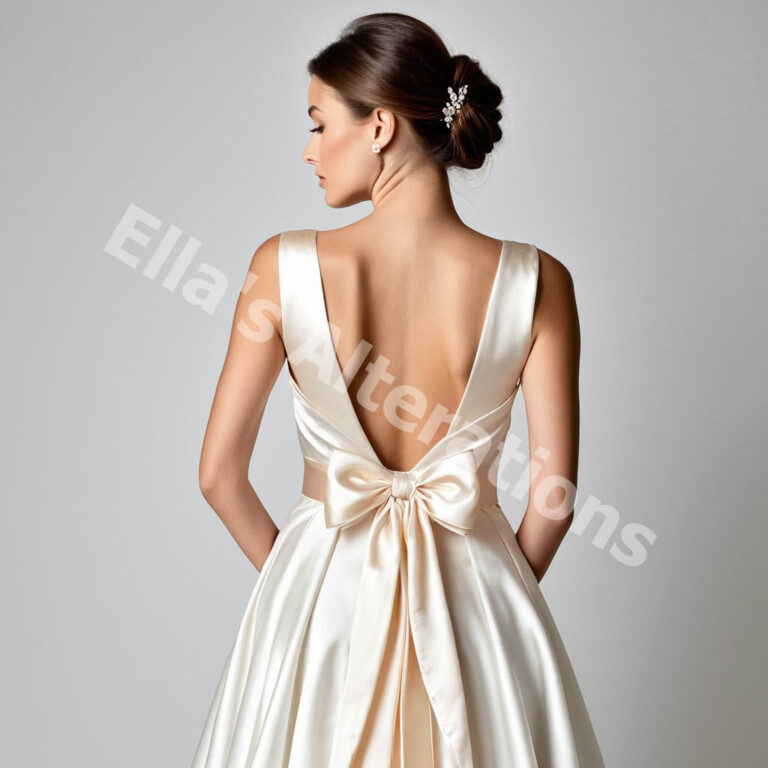
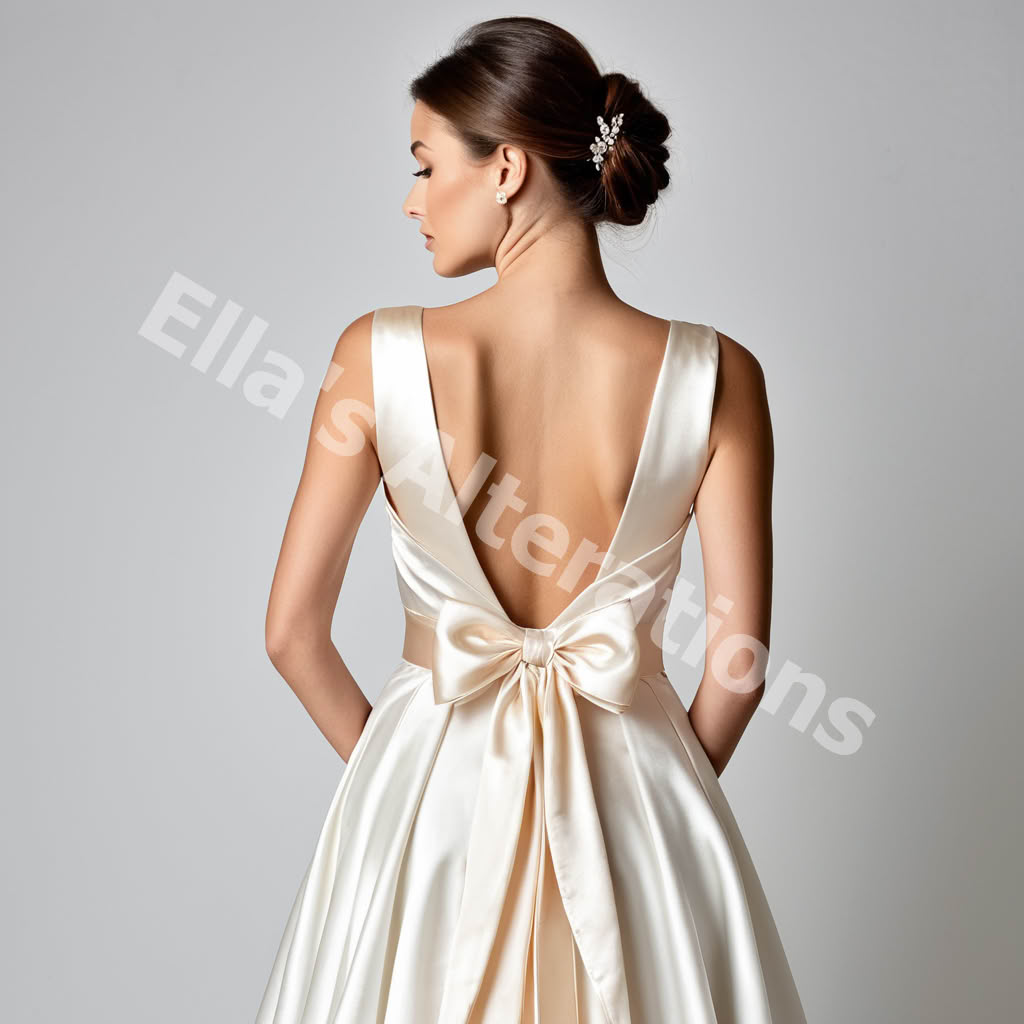
- A satin ribbon tied in a bow at the back adds a romantic, feminine feel.
- A structured belt with beading or crystals brings in just the right amount of glamour.
- Delicate lace sashes can echo detailing on the gown, helping to create a cohesive look.
More modern brides might opt for a minimal sash in matte fabric with no embellishment at all, letting the clean lines speak for themselves.
Customization is key here.
Off-the-rack belts are lovely, but having one tailored to fit your exact body and gown ensures everything sits perfectly.
A belt that’s too loose can shift or bunch during the day, while one that’s too tight can distort the fabric beneath.
At Ella’s Alterations, we often sew the sash directly into the gown to maintain smoothness and prevent slippage, especially if the bride is moving between different looks or venues.
Color also plays a role.
While ivory and white remain popular choices for a seamless blend, some brides love to introduce a soft blush, champagne, or even silver-gray tone through their belt.
This small pop of color can subtly set your look apart without overwhelming the rest of the dress.
It also gives you a chance to tie in your bouquet, shoes, or jewelry.
The embellishments you choose on your sash can echo other elements in your bridal look.
Pearls, crystals, sequins, or hand embroidery all add texture and visual interest.
But it’s important to keep balance in mind.
If your gown already has a heavily detailed bodice, a simple belt may be the best choice.
On the other hand, if your dress is sleek and understated, a sparkly or textured sash can be just the right finishing touch.
Another thoughtful use of the sash is to transform a simple gown into something that feels entirely personal.
Many brides opt for a minimalist dress with clean lines, then style it up with a statement belt to make it their own.
That one styling decision can change the entire tone of the outfit, from timeless to contemporary or soft to structured.
During fittings, we always recommend testing out different sash styles in front of a mirror.
Pay attention to how it moves with your body, how it looks from the side and back, and how it pairs with your gown’s neckline and fabric.
Sometimes, it’s the smallest detail that makes everything click into place.
A sash or belt is not just an accessory.
It is a moment of definition, both for your figure and your style.
When chosen with care and tailored precisely, it turns your dress into a reflection of who you are , balanced, beautiful, and completely your own.
Tailor’s Insight ✂️
Few elements define the body quite like a well-placed sash or belt. These accessories add definition to your waist, introduce texture, and enhance balance across your silhouette. Choose from soft satin, intricate beadwork, or floral appliqués — each brings something special. A sash can break up a solid gown, add sparkle, or introduce a hint of color. Tailors can integrate the sash into the gown or keep it removable for styling flexibility. Custom sizing ensures it sits perfectly at your natural waist, enhancing curves and giving you that coveted hourglass shape — no matter your dress style.
Veil Style Comparison Table
| Veil Style | Best For | Vibe | Dress Pairing |
|---|---|---|---|
| Birdcage | Vintage, Courthouse, Retro themes | Chic, Classic, Flirty | Short, structured, or tea-length gowns |
| Fingertip | Modern elegance, romantic weddings | Soft, Flowing, Graceful | A-line, sheath, and lace gowns |
| Cathedral | Formal, grand weddings | Dramatic, Regal, Timeless | Ball gowns, mermaid, heavily embellished dresses |
Overlays – Detachable Decorative Layer:
There is something undeniably magical about an overlay.
It floats, it layers, and most importantly, it transforms.
For brides who want multiple looks without changing dresses, overlays offer a creative solution.
They can shift a gown from classic to dramatic, modest to modern, or ceremony to reception in a matter of seconds.
This is the power of a detachable decorative layer , it gives you style options while preserving the structure of your original gown.
An overlay is essentially an added layer of fabric that sits over your wedding dress.
It can cover the full gown or just part of it, like the bodice, skirt, sleeves, or shoulders.
Some are sheer and lightweight, made from soft tulle or chiffon.
Others are richly detailed, featuring lace, embroidery, sequins, or beading.
What makes overlays especially versatile is that they are often removable, allowing for seamless transitions throughout the day without needing a full outfit change.
One of the most popular styles is the full-length tulle overlay.
This can be worn over a fitted gown to create the illusion of a fuller skirt, adding movement and softness without committing to a ballgown silhouette.
It’s ideal for brides who want the drama of volume during the ceremony but prefer a sleeker look for dancing and mingling later on.
The fabric flows gracefully and often catches the light, especially when adorned with subtle sparkle or floral appliqué.
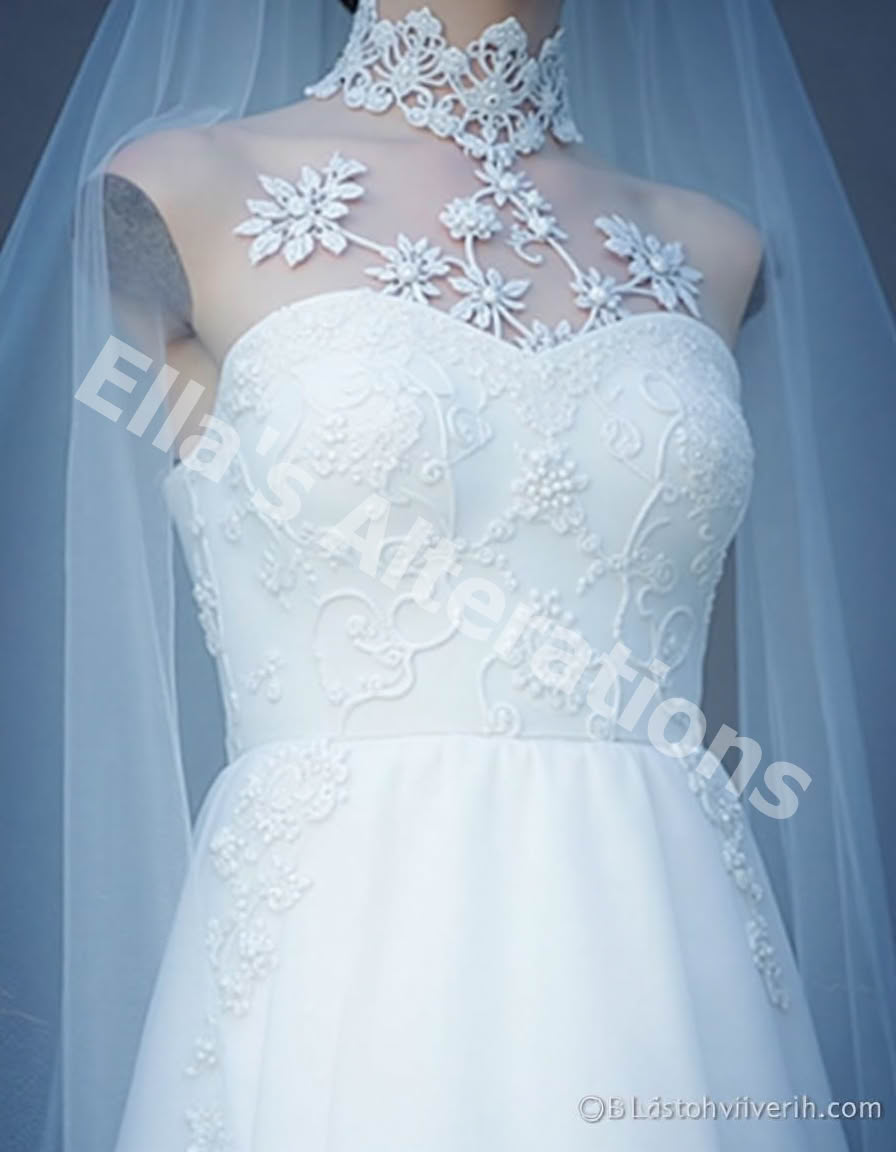
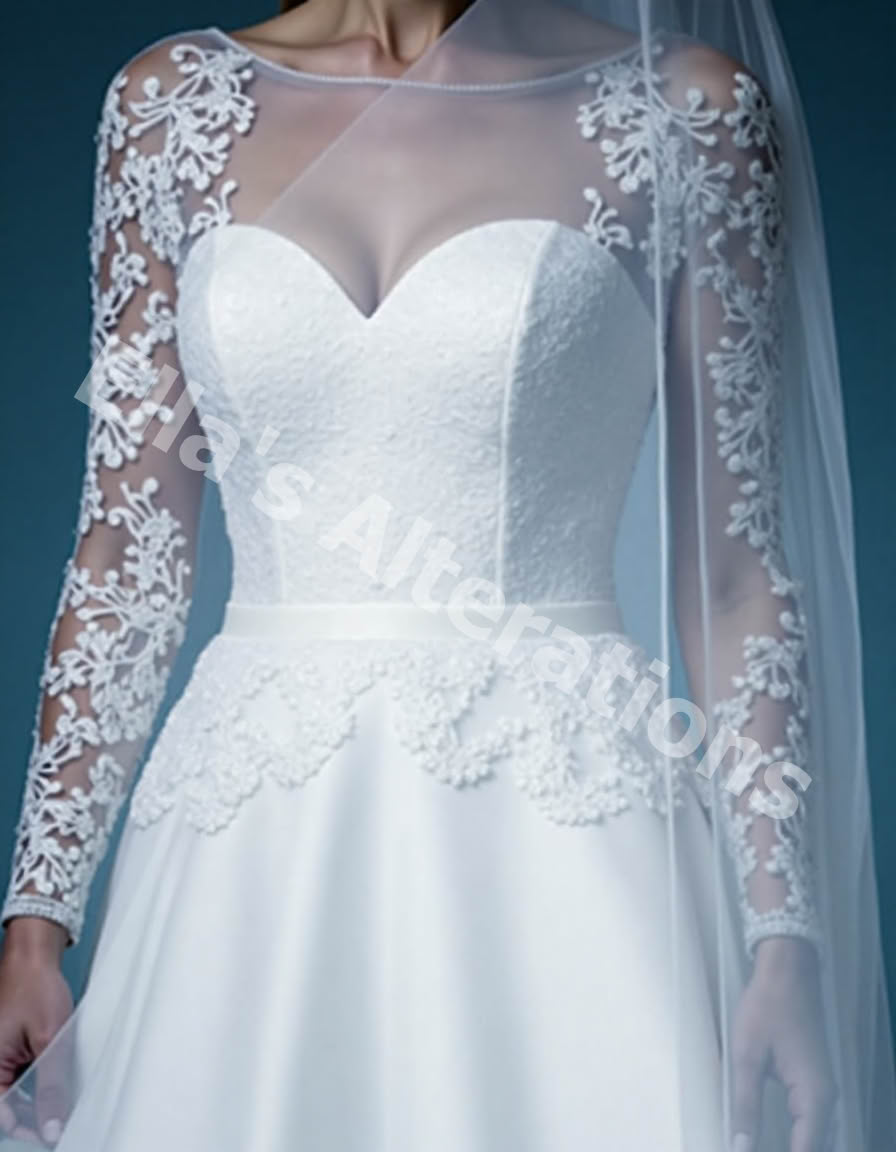
There are also bodice overlays, which can provide more coverage or introduce texture to a simple neckline.
For example, a strapless gown can be instantly transformed with a lace overlay that includes illusion sleeves or a high neckline.
This is a beautiful way to add modesty or vintage flair without altering the gown itself.
Capes and shoulder drapes fall into this category too.
These pieces bring elegance and individuality while still remaining removable.
Tailoring overlays requires precision.
At Ella’s Alterations, we ensure every overlay sits smoothly against the dress without bulk or uneven lines.
Placement is crucial.
Hidden hooks, delicate snaps, or invisible buttons are often used to secure the overlay while keeping the original gown intact.
The key is making sure the connection feels natural.
The overlay should enhance the dress, not distract from it.
Brides often use overlays to incorporate design elements that hold personal meaning.
Floral motifs, subtle embroidery, or even custom monograms can be stitched into the fabric.
This adds a personal layer that feels both emotional and beautiful.
Overlays are also practical.
They can provide coverage for a religious ceremony and then be removed for a more relaxed reception look.
Some overlays are even styled like detachable trains, adding drama during the walk down the aisle and disappearing for the celebration that follows.
Fabric choice plays a big role in how the overlay interacts with the gown underneath.
Tulle is a favorite because of its weightlessness and soft drape.
Lace offers visual texture and elegance, while organza or chiffon provides more structure.
The design of the overlay should complement the gown’s base fabric and cut.
A simple crepe dress looks stunning with a beaded lace overlay, while a heavily embroidered dress may benefit from a sheer, minimalist top layer.
Ultimately, overlays give brides permission to evolve their look without compromise.
You can embrace tradition during your vows, lean into a fashion-forward twist for your photos, and enjoy comfort and movement throughout the reception.
All of this without needing a second dress or a major wardrobe change.
With the right overlay, you’re not just dressing for a moment.
You’re styling your story in layers that reflect who you are and how you want to be remembered.
Tailor’s Insight ✂️
Want two looks in one? Overlays offer that second-dress moment without needing a full change. From sheer lace capes to tulle skirts or beaded panels, overlays add depth and movement. They’re a popular choice for ceremonies where you want more coverage or drama, and then can be removed for dancing or a sleek reception vibe. Overlays can create a train, soften sharp lines, or add visual interest with texture and embroidery. When tailored to your base gown, overlays blend flawlessly, offering the flexibility to shift your bridal look throughout the day while keeping comfort and consistency.
Quick Bridal Gown Styling Facts
- Fingertip veils average 38–45 inches in length.
- Most sashes are removable and come in beaded, satin, or lace finishes.
- Overlays are ideal for brides who want ceremony drama and reception ease.
- Custom tailoring often includes internal structuring and fabric enhancements.
- Accessories should complement — not compete with — your gown’s focal points.
From Subtle to Bold: How to Rock Black Accents on Your…
Accessory Styling – From Head to Hem:
Once your gown is tailored to perfection and the main styling elements are in place, it’s time to bring the look together with accessories.
These final touches are not just decorative.
They’re essential to creating a complete, cohesive bridal presence that feels like you from head to hem.
Every piece , from your earrings to your shoes , has the power to enhance your gown, highlight your best features, and create visual harmony.
Start with hair accessories.
Whether you’re wearing your hair up, down, or somewhere in between, the right headpiece can tie your look together.
For a more traditional aesthetic, a jeweled comb or pearl pins can add a soft sparkle.
A floral crown brings in a natural, romantic vibe that works beautifully with boho dresses or outdoor settings.
For modern elegance, a sleek headband or minimalist clip can add structure and polish.
When paired with a veil, your hairpiece should feel integrated, not competing.
It should sit comfortably with your hairstyle and not interfere with the flow of your veil or the neckline of your gown.
Jewelry is next.
The key is to complement, not compete.
If your gown features a lot of embellishment , lace, beading, or texture , keep jewelry minimal.
A pair of delicate drop earrings or a thin bracelet may be all you need.
On the other hand, if your gown is clean and structured, you have more room to introduce bolder pieces.
Consider the neckline.
Strapless and off-shoulder gowns often pair well with statement necklaces, while high necklines may only need earrings.
Match metals and tones to the detailing on your gown and veil for a look that feels intentional.
Then, consider your hands.
Your ring may take center stage, but don’t overlook the effect of manicured nails and delicate rings or a minimal bracelet.
A subtle shimmer on the fingers can complement the sparkle of your accessories without drawing attention away from your dress.
Some brides also choose to wear gloves , a detail that adds vintage glamour and can be styled in short lace or long satin depending on the overall theme.
Shoes, although not always fully visible, contribute significantly to your comfort and posture.
They should support you throughout the day, but that doesn’t mean they need to be basic.
Choose a style that echoes your dress , satin pumps for formal gowns, strappy sandals for summer weddings, or even embellished flats for a touch of personality.
If your gown is tea-length or features a slit, your shoes become part of the statement, so feel free to go bold with color or texture.
Clutches and wraps are often overlooked, but they’re part of the full picture, especially for transitional moments during the day.
- A beaded or satin clutch can hold essentials without clashing with your gown.
- A faux fur stole, silk shawl, or structured capelet offers warmth and elegance for evening celebrations or cooler seasons.
Finally, remember that accessory styling is deeply personal.
It’s your opportunity to include heirlooms, borrow something meaningful, or introduce a subtle pop of personality.
From vintage brooches to blue-soled shoes, every choice tells a story.
These small additions, when selected with care, pull your look together with polish and purpose.
At Ella’s Alterations, we always look at the full picture during fittings.
We encourage brides to bring their accessories to try on with the gown, not just at the final fitting, but throughout the tailoring process.
This allows us to make any necessary adjustments, whether it’s raising a neckline to match a necklace or securing space for a veil comb.
The goal is to create a look where every element feels considered and effortlessly aligned.
Accessories are the final thread that connects your vision.
From head to hem, they’re the details that make your look feel finished, balanced, and truly your own.
Tailor’s Insight ✂️
The right accessories polish your bridal ensemble and bring your personality into every detail. Think pearl combs, lace gloves, crystal earrings, heirloom pins, or embroidered capes. Even small additions — like a velvet ribbon or vintage brooch — can transform a gown’s feel. Tailoring these pieces to your dress ensures they enhance, rather than overwhelm. Placement matters — a well-fitted bolero or detachable sleeve can change the entire energy of a gown. Coordinate metals, colors, and textures to create a bridal look that feels cohesive, meaningful, and yours alone.
Mini Glossary
- Overlay
- A detachable decorative fabric layer worn over a gown.
- Birdcage Veil
- A short veil that covers part of the face, typically made of netting.
- Sash
- A fabric band worn around the waist for decoration and definition.
- Cathedral Veil
- A long, formal veil that extends past the train of the wedding gown.
- Tailoring
- The art of customizing a garment to fit and flatter the body perfectly.
Tailoring & Customization – The Tailors Secret:
The most beautiful wedding gown is the one that fits you perfectly, not just in size, but in spirit.
That’s where expert tailoring and thoughtful customization come in.
No matter how exquisite the dress is on the hanger, it only becomes yours when it’s shaped to your body and your vision.
Tailoring brings the gown to life.
Customization gives it a soul.
Alterations begin with the basics , fit, length, and proportion.
These adjustments may seem standard, but they require precision.
A hem that skims the floor without tripping you, a bodice that hugs without squeezing, or straps that stay put throughout the day , these are the quiet victories of a skilled seamstress.
A gown that fits well feels effortless.
You can breathe, move, and celebrate with confidence.
But the art of tailoring extends far beyond technical adjustments.
- It’s about understanding the architecture of the gown and how to enhance it while preserving its integrity.
- Every change, no matter how subtle, must honor the fabric, the structure, and the overall design.
- Whether your dress is made from silk, satin, lace, or crepe, it requires a different hand, a different technique.
At Ella’s Alterations, each fabric is treated with respect, and each gown is given individualized care.
Customization is where creativity meets craftsmanship.
This is where brides make the gown truly their own.
Maybe it’s adding delicate sleeves to a strapless gown.
Maybe it’s lowering the back for a touch of drama.
You might want a detachable bow, a unique bustle, or a custom appliqué inspired by your grandmother’s veil.
- These decisions are not just aesthetic.
- They are emotional.
- They add layers of meaning to your look.
Veils, sashes, and overlays are often the starting points for customization.
You might want to attach your sash so it doesn’t slip during the ceremony.
Or modify your veil length slightly to complement your train.
Maybe your overlay needs invisible snaps or hook placements that won’t disrupt the drape.
Each of these details is small on its own, but together they create a seamless, confident look.
Tailoring also helps solve real-world challenges.
A gown bought off the rack might not match your proportions.
A dress passed down through family may need restyling to feel more modern.
Even custom gowns can arrive needing adjustments.
Wedding days are long, and your dress should support you through it all , from the walk down the aisle to the final dance.
Good tailoring ensures that nothing distracts you from the moment.
One of the most valuable things a seamstress brings to this process is experience.
A professional knows how a fabric will behave under pressure, how to handle unexpected challenges like uneven hems or last-minute weight changes, and how to create solutions that are both beautiful and functional.
- Alterations should never feel like compromises.
- They should feel like enhancements.
Brides are encouraged to start the tailoring process early, ideally two to three months before the wedding.
This allows time for multiple fittings and the freedom to explore changes without feeling rushed.
Bring your shoes, your undergarments, your accessories.
See how everything moves together.
Test out the bustle, the zipper, the comfort level when you sit.
This is where the magic happens , not in adding more, but in making sure everything works in harmony.
In the end, tailoring is not just about making a dress fit.
It’s about making it feel like it was made for you from the very beginning.
With customization, you’re not just wearing a wedding gown.
You’re stepping into a version of yourself that feels authentic, powerful, and unforgettable.
Tailor’s Insight ✂️
Tailoring isn’t just for the fit — it’s for the finish. A professional tailor can sculpt the gown to your figure, ensuring the fabric hugs and flows exactly where it should. Beyond hemming and adjustments, tailoring includes structural upgrades like adding boning, repositioning lace, or creating bust support. It’s where couture meets comfort. Customization also allows brides to adapt vintage gowns, blend cultural details, or integrate sentimental elements — such as embroidery, initials, or custom trim. This is your opportunity to turn a beautiful dress into the perfect expression of who you are on your biggest day.
Conclusion: Complete the Look, Own the Moment:
There’s something transformative about the moment a bride sees herself fully styled , gown fitted flawlessly, veil in place, sash perfectly tied, and each accessory aligned like it was always meant to be there.
It’s no longer just a dress.
It’s the look.
And it carries something deeper than design.
It holds identity, intention, and joy.
Creating that moment is not about piling on more details.
It’s about carefully choosing the ones that matter.
From the very first fitting to the final placement of a crystal hairpin, every decision should serve the full picture of who you are and how you want to feel on your wedding day.
When each element works in harmony , the veil that floats just right, the belt that shapes your silhouette, the overlay that adds movement, the tailoring that brings it all together , that’s when your look becomes a reflection of you.
It’s easy to feel overwhelmed by choice.
Modern brides have access to more options than ever before, and the pressure to make the “perfect” decision can be intense.
But perfection doesn’t mean extravagance.
- It means alignment.
- It means taking a dress you already love and finishing it with purpose.
Choosing a veil not just because it’s trending, but because it softens the lines of your gown in a way that feels just right.
Adding a sash because it flatters your waist and completes the silhouette you envisioned.
Removing or adjusting layers so your movement feels natural, your posture feels free, and your comfort never takes a backseat to style.
The details matter, but they don’t need to be complicated.
Sometimes it’s the simplest things , a clean, fingertip-length veil, a silk ribbon at the waist, a delicate lace overlay that floats with the breeze , that leave the most lasting impression.
What brings those details to life is how they’re integrated with care and styled with intention.
Throughout the process, the role of a professional tailor cannot be overstated.
- The expertise of someone who understands fabric, structure, and the movement of a gown in real time is invaluable.
- They’re not just sewing seams or adding buttons.
- They’re sculpting your bridal look to fit your body, your vision, and your moment.
- They’re helping you feel like yourself, only elevated.
This guide was created to remind you that you’re not just completing a look.
You’re building a feeling.
Confidence, elegance, and joy aren’t sewn into a dress.
They’re found in how it all comes together.
When the fabric flows with your step, when the veil catches the light just right, when your reflection feels undeniably you , that’s the moment we aim for.
Whether you’ve chosen a modern gown with sharp lines or a romantic silhouette layered in lace, the styling choices you make can elevate your look from beautiful to unforgettable.
And the best part is, it’s completely yours.
Your choices, your touches, your story stitched into every detail.
So when you step into your wedding day, you’re not just wearing a dress.
You’re stepping into a look that tells your story from head to hem.
Every stitch, every shimmer, every subtle curve or line has been placed with care , not just to impress, but to express.
Own that moment.
Complete the look not because you have to, but because you deserve to feel like the best version of yourself on the most unforgettable day of your life.
Tailor’s Insight ✂️
Your wedding day is a reflection of your love, your story, and your style. The dress may be the centerpiece, but it’s the veils, sashes, overlays, and tailored additions that create a look that’s fully your own. With the right finishing touches, you’re not just wearing a gown — you’re stepping into a moment that’s elegant, expressive, and unforgettable. From neckline to hem, every detail deserves your attention, because every bride deserves to feel like the best version of herself.
Know Your Gown: Essential Parts of a Wedding Dress.
Frequently Asked Questions
How Do I Choose The Right Veil Length For My Dress?
Choosing the right veil length depends on your gown's silhouette, train length, and overall vibe.
Birdcage veils suit vintage or courthouse weddings.
Fingertip veils are versatile and work with most modern gowns.
Cathedral veils are ideal for formal ceremonies or dresses with long trains.
Always match the veil’s drama level with your gown’s structure, and consider a trial fitting with both to ensure harmony in proportion and balance.
Should A Veil Be Longer Than A Wedding Dress Train?
Not always, it depends on your desired effect.
A veil that extends just past the train creates a dramatic, layered look.
A veil that ends at or above the train keeps the focus on your gown's silhouette.
For formal weddings, longer veils like cathedral styles add grandeur.
In more relaxed settings, fingertip or chapel lengths may be more practical while still elegant.
Does My Veil Have To Match The Color Of My Dress Exactly?
Matching is ideal, but not mandatory.
Many veils come in ivory, champagne, or blush shades that can complement rather than match your dress.
The key is coordination.
If your gown has warm undertones, go with ivory or cream.
For bright white gowns, stick to pure white veils. Always try them together in natural light before finalizing.
How Do I Wear A Veil With My Specific Hairstyle?
The veil should be secured based on your hairstyle and headpiece.
For updos, place the comb just above the bun or chignon.
With loose curls, the veil sits higher at the crown.
For half-up styles, anchor it where hair is pinned.
Consult with your hairstylist for best placement and pin security.
A trial session is highly recommended to see the full look in action.
Which Wedding Veil Should I Choose?
Choose a veil that reflects your personal style and complements your dress.
A birdcage veil adds vintage charm.
Fingertip veils offer versatility and suit most silhouettes. Cathedral veils bring drama and elegance for formal weddings.
Consider your dress fabric, back detail, and the formality of your venue.
When in doubt, try a few styles during fittings and trust your instincts — you’ll know when it feels right.
Tailor’s Insight ✂️
Every bride deserves to feel powerful, polished, and 100% herself walking down the aisle. This guide is more than fabric and flair — it's about confidence. Whether you're wearing a gown straight from the boutique or customizing a vintage heirloom, veils, sashes, overlays, and tailoring give you the final say in your bridal vision. It’s giving elegance, it’s giving couture, it’s giving “I found the one” energy — and you deserve nothing less.
Local Credibility
This article is brought to you by Ella’s Alterations — a bridal tailoring studio trusted by hundreds of brides for expert customizations, couture-level craftsmanship, and styling support. Based in Zephyrhills, we bring years of hands-on experience, timeless design knowledge, and local love to every gown. We don't just tailor dresses — we transform dreams into silhouettes.
Dress Styles Decoded: Wedding Dress by Shape

About Us
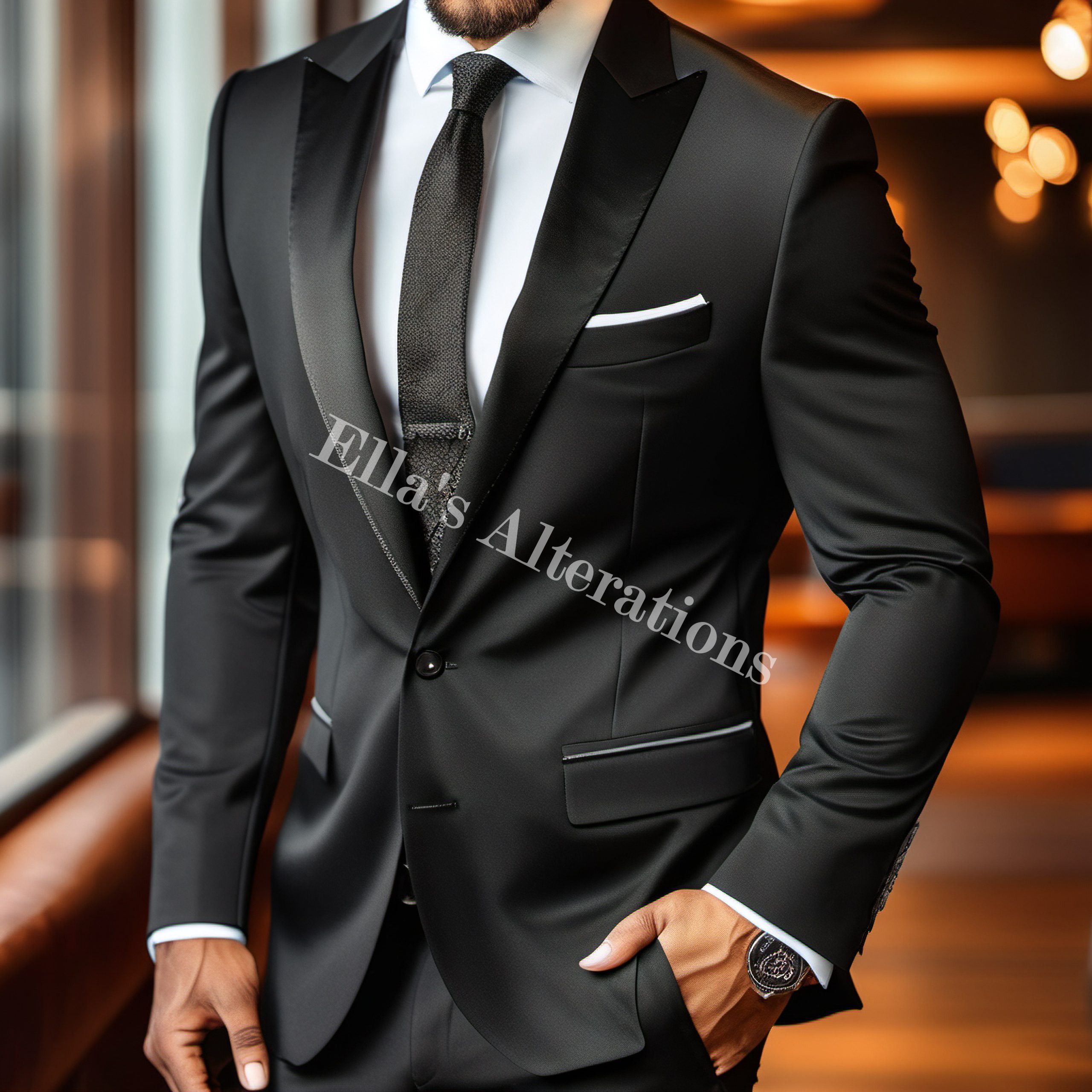
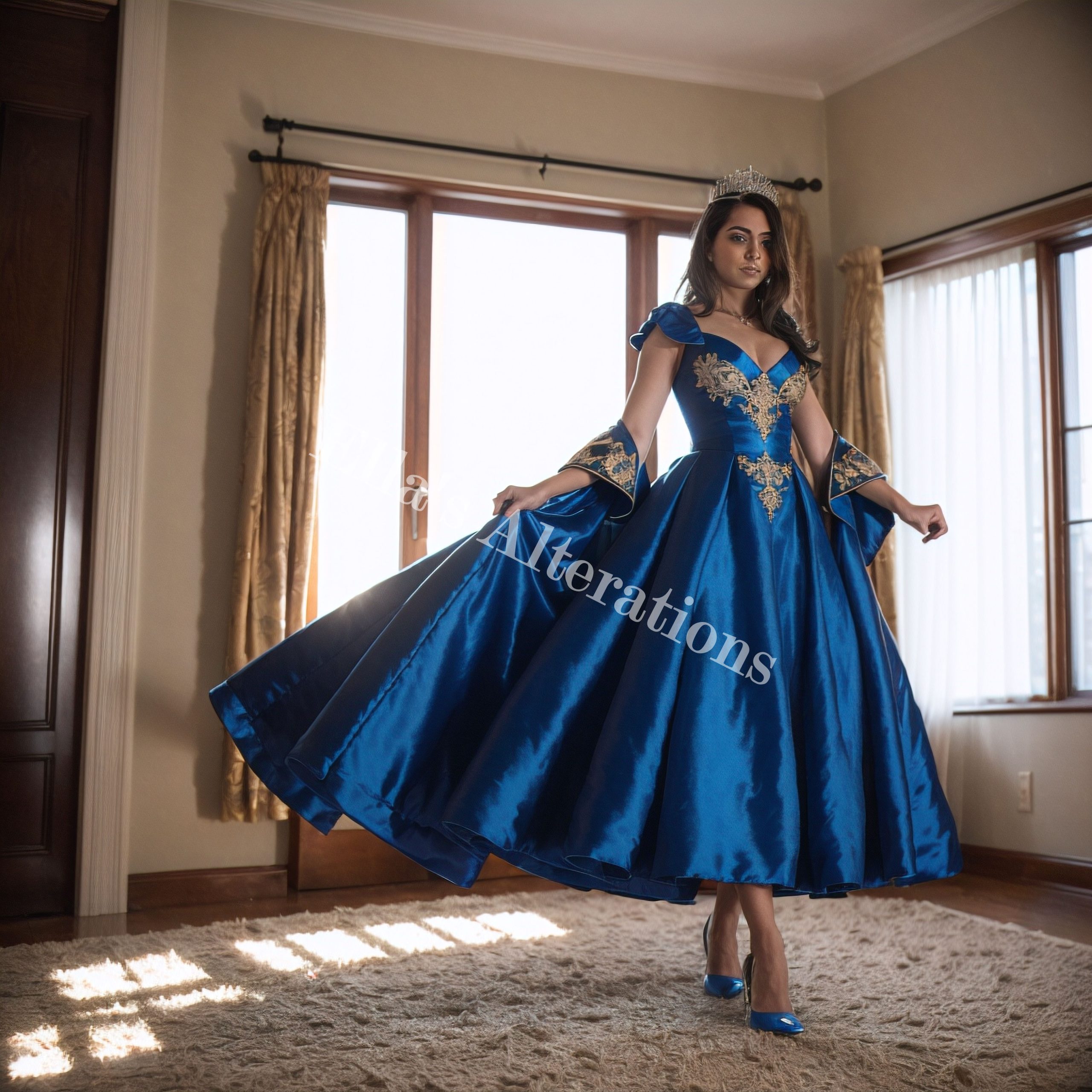
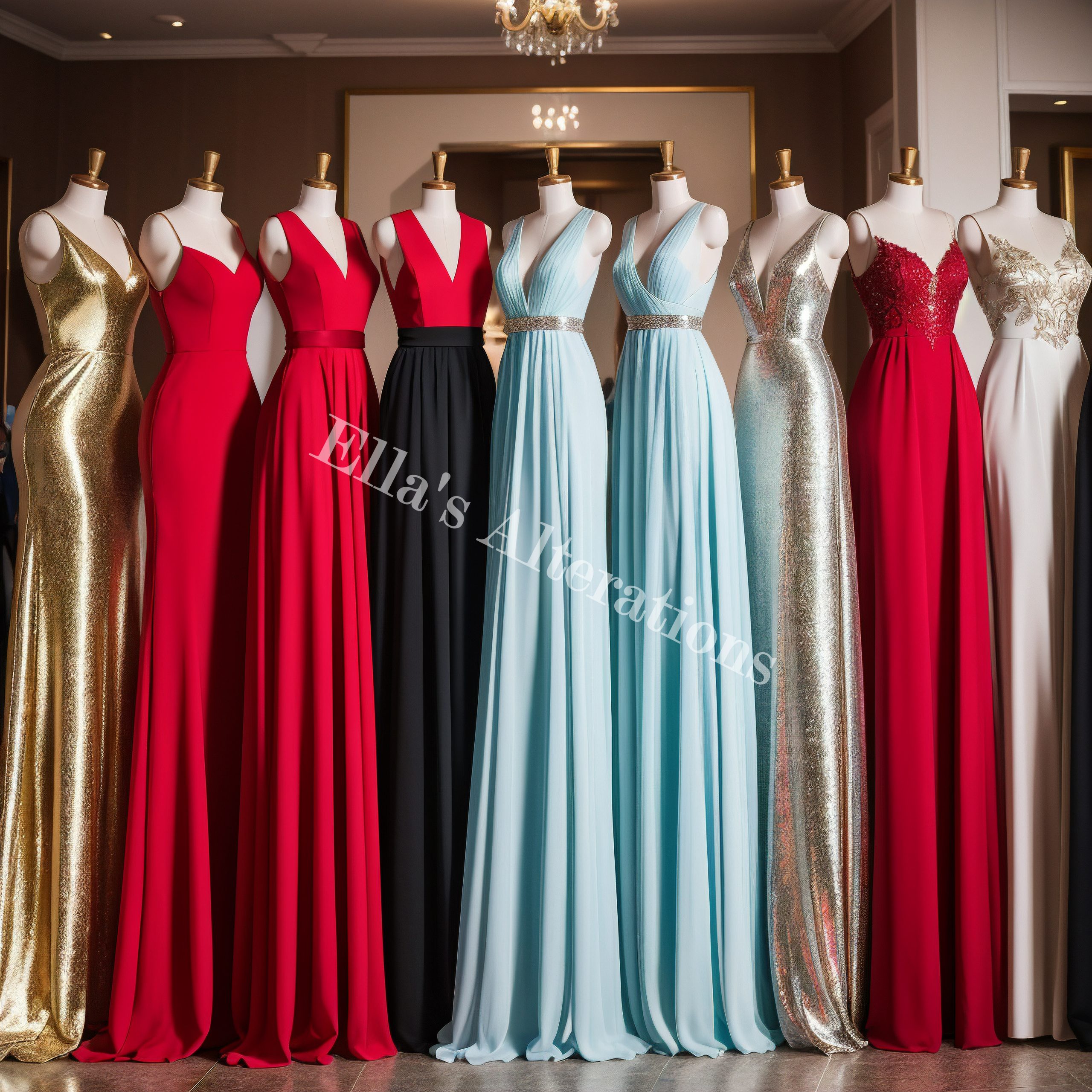
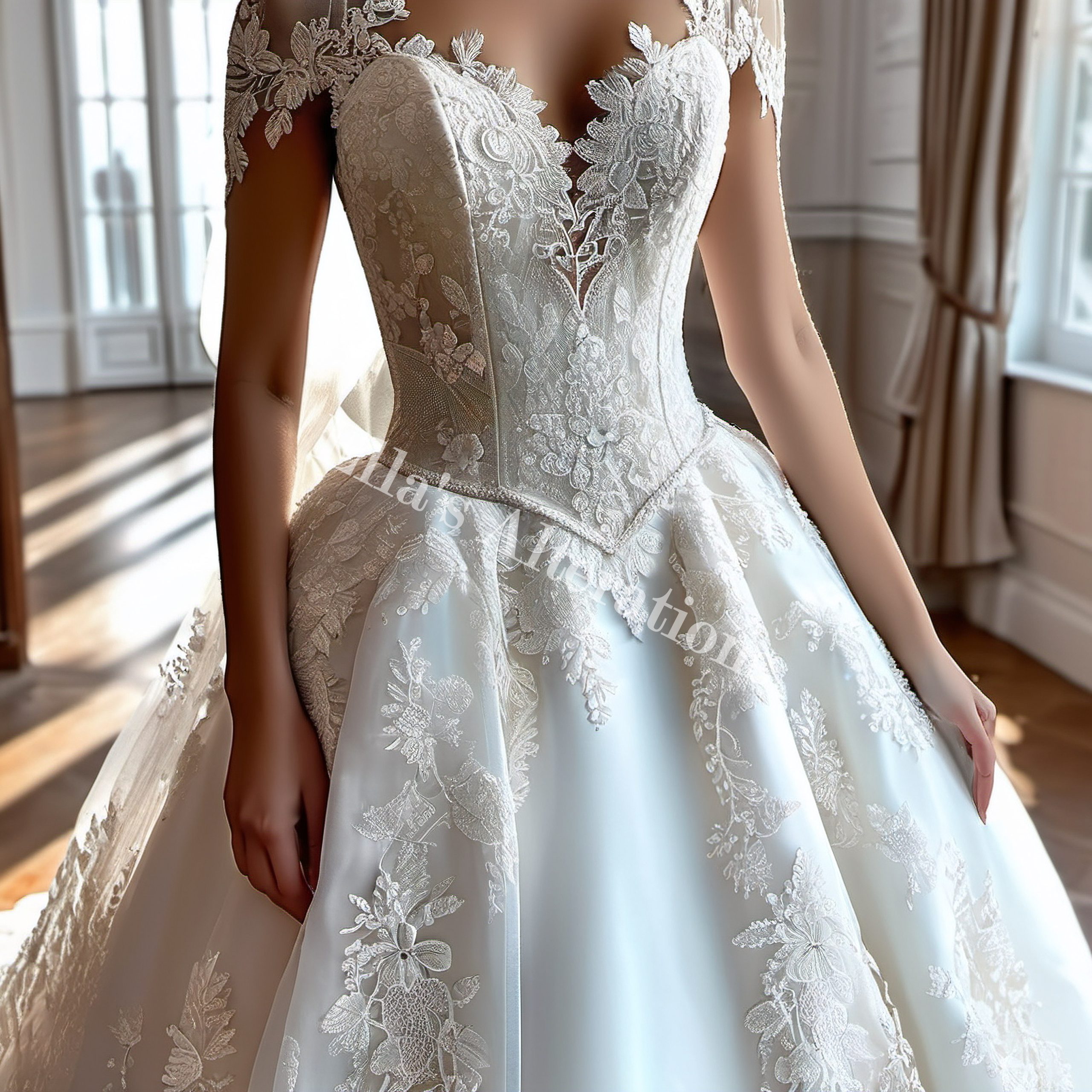
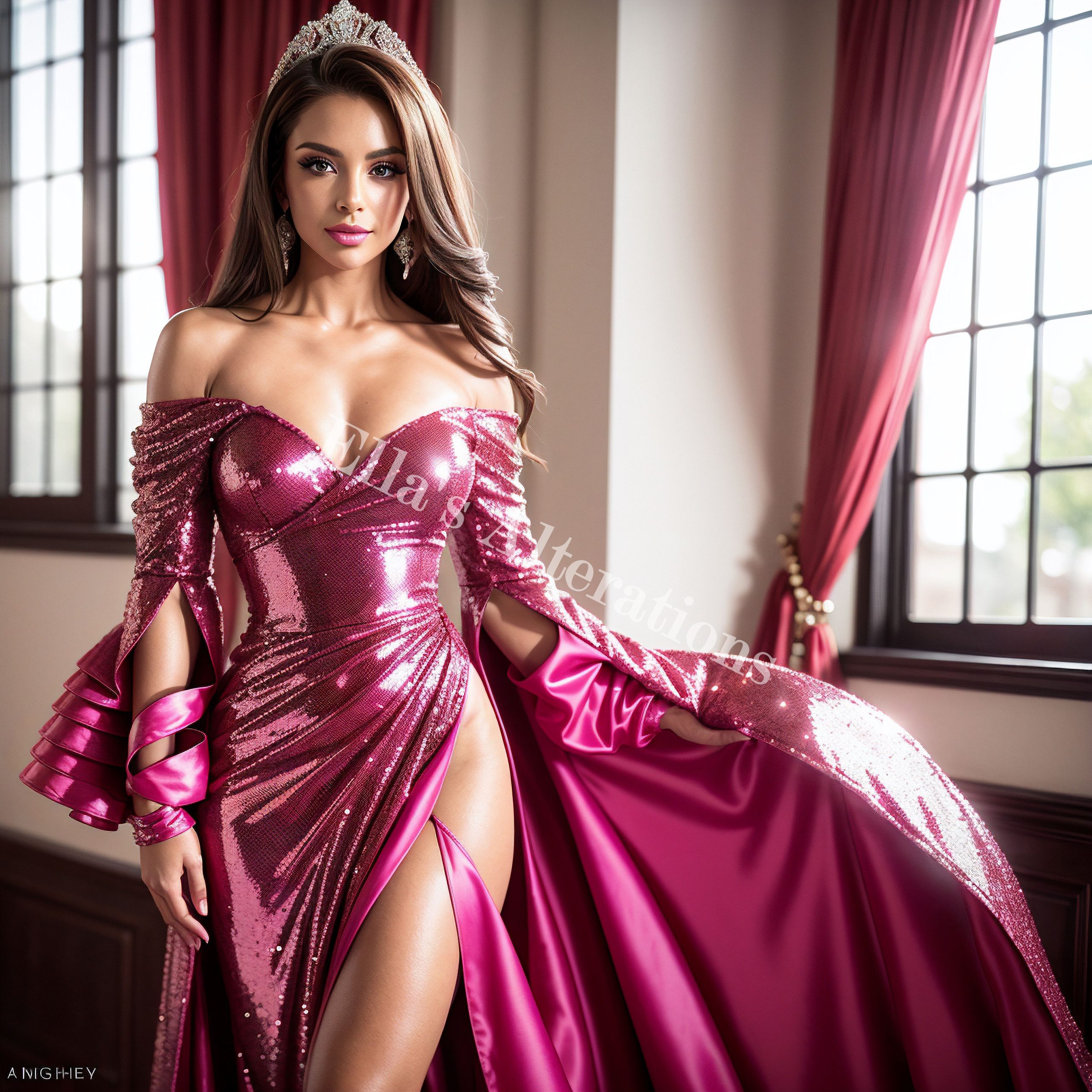
This is the guide every bride needs before the final fitting. A Tailor’s Guide: How Veils, Sashes, and Accessories Complete Your Wedding Gown breaks down the essential details that elevate your bridal ensemble from beautiful to breathtaking. It’s all about intention — choosing the right veil length to match your gown’s energy, selecting a sash or belt that defines your waistline, and exploring overlays that add movement, texture, or a second look entirely. Each section focuses on how thoughtful tailoring and styling choices create cohesion and confidence. Whether you’re drawn to classic lace, sleek satin, or dreamy tulle, this guide helps you layer in the elements that reflect your style while enhancing your silhouette. More than just fashion tips, this is about understanding how design, fit, and finishing touches come together to create a gown that feels as personal as it looks stunning.
Ella’s Style Confidence
Brought to you by Ella’s Alterations
-
Your body is not the problem. The fit is.
If something feels off when you put it on, that does not mean it is wrong for you. It means it has not been tailored for you yet. Clothes are made for averages. You are not average. -
Confidence starts at the seams.
The smallest adjustments change everything. A lifted waist, a shaped bust, a clean hem. These details quietly do the heavy lifting so you can walk in like you own the room. -
Comfort is not optional.
If you are pulling, tugging, or holding your breath, the garment is failing you. Real tailoring lets you move, sit, dance, and live without thinking about your clothes. -
Trends fade. Fit lasts.
Styles come and go fast. A perfect fit never goes out of style. When something fits you correctly, it always looks intentional and expensive. -
Support should be built in, not added later.
Hidden structure matters. Boning, cups, straps, and shaping should work with your body, not against it. When support is done right, no one sees it but everyone notices the result. -
You deserve clothes that work as hard as you do.
Whether it is a wedding dress, a suit, or everyday wear, your clothes should show up for you. Sharp, polished, and reliable. -
Confidence is quiet, not loud.
The best dressed people are not uncomfortable or flashy. They look effortless because their clothes fit correctly and feel natural. -
One great alteration beats five new outfits.
Fixing what you already own often gives you more confidence than buying something new. A tailored piece feels personal. Like it was made just for you. -
When it fits right, you stand differently.
Posture changes. Shoulders relax. You stop adjusting and start owning your space. That shift is what people actually notice. -
You are allowed to feel amazing in your clothes.
Not just okay. Not just good enough. Amazing. That is the standard.
Local Credibility
Ella’s Alterations is trusted by brides, professionals, and families across Central Florida for one reason. The work is done right.
Awards & Recognition
- Most Trusted Tailoring & Alterations Studio 2025 – USA
- Bridal & Formalwear Tailoring Excellence Award 2025
- Recognized nationally by LUXlife Magazine for craftsmanship and client trust
- Chosen year after year for precision bridal and formal tailoring
- Best Wedding Dress & Formalwear Tailoring Zephyrhills 2026
- NextDoor Neighborhood Favorite 2023 2024 2025
Service Area
Proudly serving Zephyrhills, Pasco County, Tampa, Wesley Chapel, Lakeland, and surrounding Central Florida communities. Clients travel from across the region for expert alterations that local shops simply cannot match.
Depth of Craft
With over 30 years of hands on tailoring experience, Ella works at a master level. This is not basic hemming or quick fixes. This is true garment engineering. Wedding gowns with structure, suits that need balance, formalwear that must move and photograph perfectly. Every adjustment is intentional and precise.
Proof of Trust & Fitting Care
Every fitting is handled with respect, privacy, and patience. Measurements are double checked. Details are explained. Nothing is rushed. Nothing is guessed.
Clients return because they feel heard, supported, and confident. Dresses are protected. Fabrics are handled correctly. Fit decisions are made with experience, not shortcuts.
This is why generations of clients trust Ella with their most important garments. When it has to fit perfectly, they choose experience.

Bridal & Formalwear Tailoring Excellence Award 2025 – USA
Award Winning Bridal & Formalwear Tailoring
Ella’s Alterations is proudly recognized as one of Zephyrhills’ most trusted tailoring studios, specializing in wedding dress and formalwear alterations.

NextDoor Neighborhood Favorite 2023, 2024, 2025

Best Wedding Dress & Formalwear Tailoring Zephyrhills 2026
Proud winner: Best Bridal & Formalwear Alterations Studio 2026 - USA
Proud winner: Best Wedding Dress and Formalwear Tailoring, Zephyrhills 2026
Why Clients Trust Ella’s Alterations
- 30 plus Years of Expertise: Master tailoring and formal wear alterations trusted across Florida.
- Award Winning Service: Best of Florida Tailor and Best of Zephyrhills.
- Private Bridal Fittings: Discreet, elegant, and tailored to you.
- Proven Local Reputation: Five star customer reviews and repeat clients from Tampa to Orlando.
- Transparent and Personal: Clear pricing, expert guidance, and no rushed fittings.
- Recognized nationally by LUXlife Magazine for craftsmanship and client trust
- Chosen year after year for precision bridal and formal tailoring
- Best Wedding Dress & Formalwear Tailoring Zephyrhills 2026
- NextDoor Neighborhood Favorite 2023 2024 2025
Address: 6986 Fort King Road, Zephyrhills FL 33541
Phone: +1 813-445-8894
Email: admin@ellasalterations.com
Hours:
Get Directions | Book Your Fitting