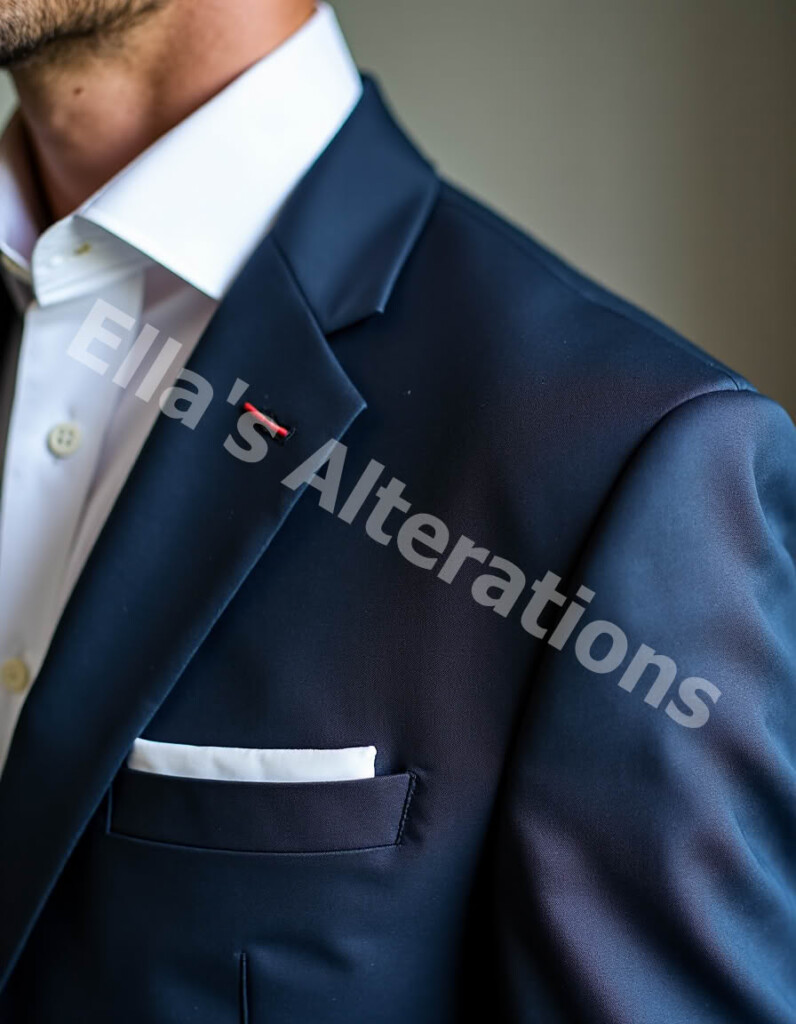
A Tailor’s Guide: What Is The Head to Toe Suit Overview.
TLDR: Quick Take
A head to toe suit overview is a full tailor’s check of how a suit fits from the shoulders all the way down to the pants. It is not just about sleeve length or pant hems. A tailor looks at the shoulders, chest, waist, sleeves, jacket balance, trouser rise, seat, thigh room, pant break, posture, movement, and overall shape.
The big idea is simple. A suit works like one connected system. If the shoulders are wrong, the chest may pull. If the chest is tight, the lapels may spread. If the waist is over shaped, the jacket can look strained. If the pants are too long or too tight, the whole outfit loses polish.
Quick answer: A head to toe suit overview helps you understand what fits, what needs tailoring, and what may not be worth fixing before you spend money on alterations.
Listen: A suit is not just a jacket and pants. It is a full structure that has to work from head to toe. A tailor starts with the shoulders because they control how the jacket hangs. Then the chest, waist, sleeves, and pants are checked for balance, comfort, movement, and clean lines. Some fit problems can be improved with alterations, but serious shoulder, chest, or construction problems may not be worth fixing. (Audio Guide)
Introduction: A Suit Is Not Just Clothing, It’s A System:
A suit is easy to misunderstand because most people judge it like any other piece of clothing.
They ask whether it feels tight or loose, whether the color looks good, or whether the size on the label seems right.
But a suit does not work like a T shirt, hoodie, or pair of jeans.
A suit is a connected system where every part affects the next.
- The shoulders influence the chest.
- The chest affects the drape.
- The waist changes the silhouette.
- The sleeve pitch can make the jacket look clean or awkward.
- The pants finish the visual story and either support the jacket or fight against it.
That is why a suit that looks almost right can still feel completely wrong.
When a tailor looks at a suit, the first goal is not to admire the fabric or the brand.
The first goal is to read the structure.
- A good suit has order.
- It has balance from top to bottom.
- It hangs correctly from the shoulders, follows the body without strain, and moves in a way that looks natural instead of forced.
If one part is off, the problem rarely stays in one place.
- A bad shoulder fit can create drag lines through the chest.
- A tight chest can distort the lapels and pull at the button.
- A collapsed collar can make the whole jacket look cheap, even if the fabric is expensive.
Suit fit is never just one isolated issue.
It is a chain reaction.
That is what makes a head to toe suit overview so important.
It teaches you to stop guessing and start diagnosing.
Instead of saying, “This suit looks weird,” you begin to ask smarter questions.
- Are the shoulders too wide or too narrow.
- Is the chest too tight, causing pulling lines.
- Does the jacket balance correctly from front to back.
- Is the waist shaped enough to create a clean silhouette without squeezing the body.
- Are the sleeves the right length and angle for the wearer’s posture.
- Do the pants break cleanly or bunch up and interrupt the line of the outfit.
These details might seem small on their own, but together they decide whether a suit looks polished, powerful, sloppy, or uncomfortable.
Another thing people miss is that a suit is not only reacting to the body’s size.
It is also reacting to the body’s posture, stance, and proportions.
Two men can wear the exact same tagged size and have completely different fit problems.
- One may have rounded shoulders.
- Another may stand very straight.
- One may have a prominent seat, athletic thighs, or a forward neck posture.
Another may carry more fullness in the chest or waist.
The suit does not care what the label says.
It responds to the real shape it is sitting on.
That is why tailoring matters.
Real tailoring adjusts the garment to the wearer, not the wearer to the garment.
This is also where expectations need to be realistic.
- A tailor can refine many things, but tailoring is not magic.
- A waist can often be shaped.
- Sleeves and trouser hems can usually be adjusted.
- Suppression through the jacket can improve silhouette.
But some problems come from the foundation.
If the shoulders are badly wrong, if the armholes are cut poorly, or if the jacket’s balance is fundamentally off, the suit may never look truly right.
Knowing that can save time, frustration, and money.
In the end, a suit is not just clothing you put on.
It is architecture in fabric.
It depends on structure, balance, proportion, and movement all working together.
Once you understand that, you stop seeing a suit as just jacket and pants.
You start seeing the full system, and that is when real fit begins.
Before judging a suit, step back and look at the full body first. Do not start with the sleeve or pant hem just because those are easy to see. A suit tells the truth from the top down. If the shoulder line is wrong, everything underneath has to fight for balance.Tailor’s Insight ✂️
Answer Box: What Does Head To Toe Suit Fit Mean?
Head to toe suit fit means checking the entire suit as one complete outfit instead of judging one small area at a time.
A tailor looks at how the jacket sits on the shoulders, how the chest drapes, how the waist shapes the body, how the sleeves hang, and how the pants finish the full silhouette. The goal is not just to make the suit tighter. The goal is to make the suit balanced, comfortable, clean, and natural on the body.
This matters because one fit problem can create another. A bad shoulder fit can cause chest wrinkles. A tight chest can distort the lapels. Poor pant fit can make even a sharp jacket look unfinished. That is why a professional suit fitting always looks at the full picture.
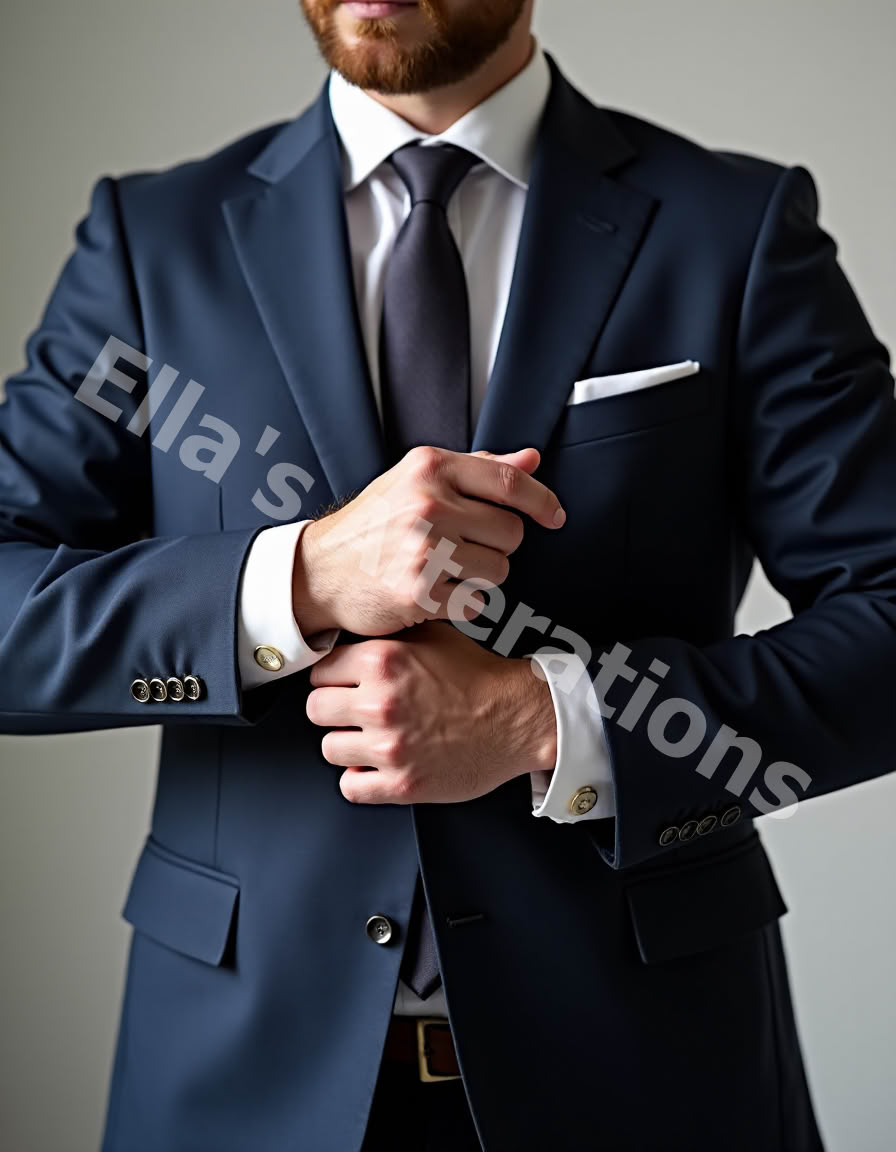
What Head to Toe Suit Fit Really Means:
Head to toe suit fit means evaluating the entire suit as one connected shape instead of judging random parts one at a time.
That sounds simple, but this is where most people get it wrong.
They notice the sleeve length or the pant hem and think that is the whole story.
It is not.
A suit can have the “right” sleeve length and still look awkward because the shoulders are too wide, the chest is collapsing, or the jacket balance is off.
In tailoring, fit is never just about measurements.
It is about how the garment hangs, follows the body, supports posture, and creates a clean visual line from the top of the shoulders to the bottom of the trouser leg.
A true head to toe fit check starts with the idea that every area affects the next.
The shoulders act like the frame of the house.
If they are wrong, the rest of the jacket struggles to sit properly.
From there, the chest controls whether the front of the jacket drapes cleanly or shows tension, pulling, or collapse.
The waist affects shape and silhouette.
- Too loose and the suit looks boxy and lifeless.
- Too tight and it looks strained, with stress lines around the button or lapels.
Then come the sleeves, which are not just about length.
They also need to hang at the correct angle for the wearer’s natural arm position.
After that, the pants matter more than people think.
Rise, seat, thigh room, taper, hem, and break all influence whether the lower half looks sharp, balanced, and comfortable or messy and restricted.
What makes head to toe suit fit especially important is that it helps separate symptoms from causes.
For example, a wrinkle near the chest may not mean the chest is too small.
It could be coming from shoulder imbalance.
A collar gap may look like a neck problem, but it can be tied to posture, stance, or the way the jacket is balanced from front to back.
Pants that twist may not just be “cheap pants.”
They may reflect leg shape, cutting issues, or poor alignment in the seams.
A full suit evaluation trains you to stop treating every wrinkle like its own separate emergency.
Instead, you learn to read the suit like a system.
This approach also changes how you think about alterations.
A lot of people walk into tailoring with one request, like “take in the waist” or “shorten the sleeves,” because that is the most obvious thing they noticed in the mirror.
But the most obvious problem is not always the most important one.
A tailor looks deeper.
They ask whether the jacket is balanced, whether the chest has enough room, whether the shoulders are stable, and whether the pants are finishing the look correctly.
- The goal is not to make one part smaller or tighter.
- The goal is to create harmony across the entire outfit.
Head to toe fit also matters because a suit has to do more than stand still in a dressing room.
It has to move with the body.
It should look clean when you stand, sit, walk, and reach naturally.
A suit that only looks good when you freeze like a mannequin is not truly fitting well.
Real fit includes comfort, movement, and visual control at the same time.
At the end of the day, head to toe suit fit means understanding the whole picture.
It is not about chasing tiny details while missing the foundation.
It is about seeing how structure, drape, silhouette, posture, and proportion all work together.
Once you understand that, you stop guessing why a suit looks off and start seeing exactly what the garment is trying to tell you.
A true suit fitting is not about making everything smaller. That is one of the biggest mistakes people make. The goal is balance. A suit should skim the body, support posture, allow movement, and create a clean shape without making the wearer look trapped inside the fabric.Tailor’s Insight ✂️
Key Takeaways
- A suit is a system. The shoulders, chest, waist, sleeves, and pants all affect each other.
- Shoulders matter most. If the shoulders are badly wrong, the suit may never look truly right.
- Chest fit controls drape. A tight chest creates pulling, while a loose chest can look hollow or sloppy.
- Waist shaping should flatter, not squeeze. A clean waist gives shape without creating stress lines.
- Sleeves are more than length. Sleeve angle, width, and hang can make the jacket look clean or awkward.
- Pants finish the look. Rise, seat, thigh room, taper, hem, and break control comfort and polish.
- Not every suit can be saved. Tailoring is powerful, but it cannot always rescue poor structure or bad construction.
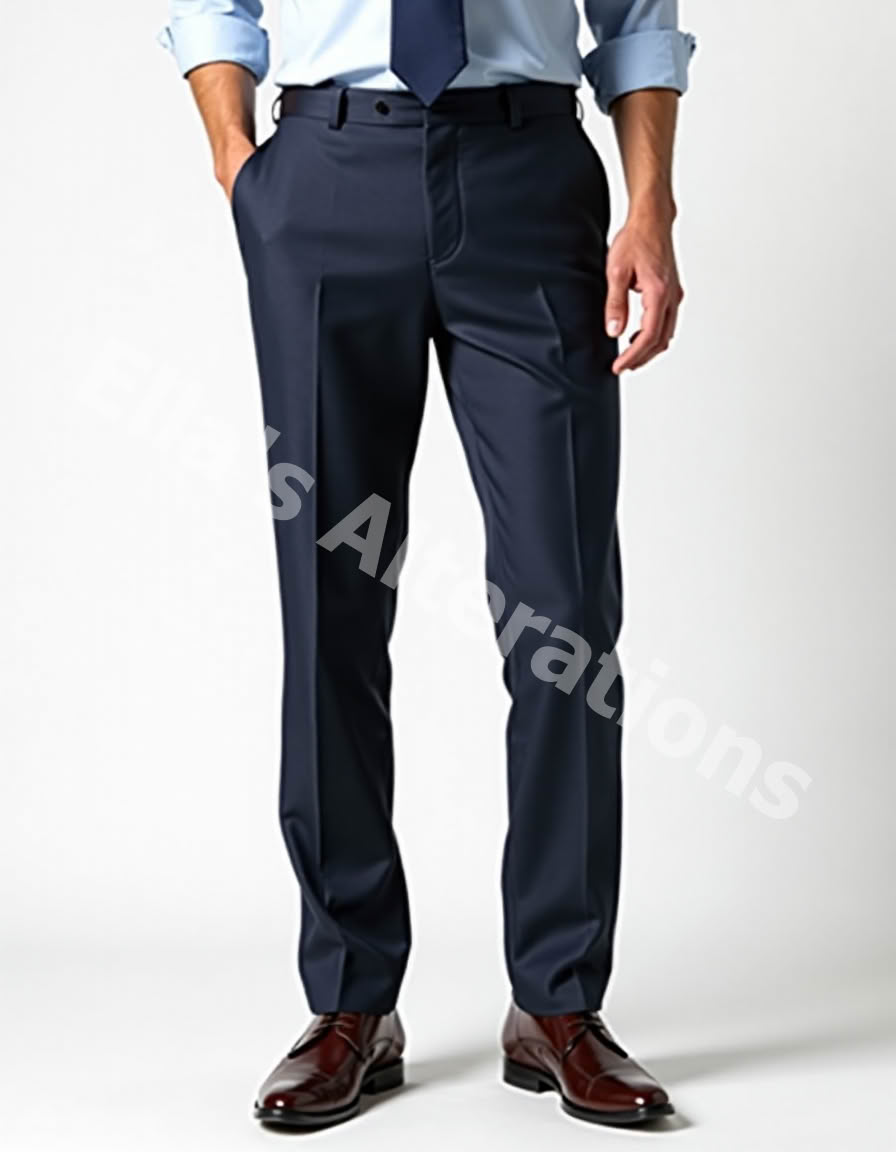
Know Your Suit: Essential Areas of a Suit That Can Be Tailored.
Why Tailors Look at the Whole Suit, Not One Wrinkle:
A single wrinkle can fool people fast.
They see one fold near the chest, one drag line near the sleeve, or one bunching point at the trouser front and assume they have found the problem.
But tailoring does not work like that.
A wrinkle is usually a clue, not a diagnosis.
It is the suit’s way of showing stress, imbalance, excess fabric, restriction, posture conflict, or construction issues somewhere in the system.
That is why a skilled tailor does not zoom in on one crease and start pinning blindly.
They step back, study the whole suit, and read how every part is interacting.
Think of a suit like a chain of connected parts.
- If the shoulders are too wide, the chest may collapse and create misleading folds.
- If the shoulders are too narrow, the upper sleeve and chest can pull in ways that make the front look too tight.
- If the jacket balance is off, meaning the front and back lengths are not sitting correctly on the wearer’s body, the collar may gap, the hem may kick away, and wrinkles may appear in places that seem unrelated.
- What looks like a simple chest issue may actually begin at the shoulders.
- What looks like a waist problem may come from posture.
- What looks like bad sleeve hang may start in the armhole or the jacket pitch.
That is why tailors study the full body first.
- They look at how the jacket sits on the neck and shoulders.
- They watch where the chest drapes cleanly and where it breaks.
- They notice whether the waist shaping supports the wearer’s body or fights it.
- They check whether the sleeves hang naturally based on the person’s stance.
- Then they move down to the trousers and see if the seat, rise, thigh, knee, and hem are working together.
Every area gives context to the others.
Without that context, a wrinkle can easily be misread.
Posture is a huge reason this matters.
A person with rounded shoulders, a forward neck, a fuller chest, a sloped shoulder line, or a tilted stance will produce different wrinkle patterns than someone standing perfectly upright.
The suit is reacting to the body it is on.
That means two men can wear similar suits and show very different drag lines even if the size is technically the same.
A tailor understands that wrinkles are often the result of real body geometry, not just poor sizing.
That is why good fit analysis is part garment reading and part body reading.
Fabric and construction matter too.
Heavier suiting may drape differently than lightweight cloth.
A structured jacket with more canvas and padding behaves differently than a soft unstructured coat.
Cheap fused jackets often create odd bubbling or stiffness that tailoring cannot fully solve.
So when a tailor sees a wrinkle, they are not only asking where it is.
They are asking what kind of cloth is causing it, how the jacket is built, and whether the issue is alterable or baked into the garment.
This whole suit approach also prevents wasted money.
If someone focuses on one visible wrinkle and asks for a quick fix, they may end up paying for an alteration that improves almost nothing.
Taking in the waist will not fix bad shoulders.
Shortening the sleeves will not solve a chest collapse.
Letting out the trousers will not correct a twisted leg if the cut itself is wrong.
Tailors know that a suit needs a correct foundation before detail fixes make sense.
In the end, one wrinkle never tells the full story.
It is just one sentence in a much bigger conversation.
A good tailor listens to the whole conversation before making changes.
That is the difference between random alterations and real fit diagnosis.
When the whole suit is evaluated together, the cause becomes clearer, the solution becomes smarter, and the final result looks intentional instead of patched together.
One wrinkle does not always mean one problem. A chest wrinkle can come from the shoulder. A collar gap can come from posture. Pants that twist may be reacting to stance or leg shape. Good tailoring starts with diagnosis, not guessing.Tailor’s Insight ✂️
Suit Fit Problems: What They Usually Mean
| Fit Area | Common Problem | What It Usually Means | Can Tailoring Help? |
|---|---|---|---|
| Shoulders | Drooping, divots, pulling | The jacket frame may not match the body. | Only sometimes. Major shoulder work is risky and expensive. |
| Chest | Pulling lines, tight button, lapel spread | The front of the jacket may be too tight or poorly balanced. | Sometimes, depending on seam allowance and construction. |
| Waist | Boxy shape or tight pulling | The jacket needs better shape or has been over fitted. | Usually yes, if the upper body fit is already decent. |
| Sleeves | Too long, twisting, wrinkling | Length, sleeve pitch, or arm position may be off. | Often yes, but sleeve pitch is more advanced. |
| Pants | Bunching, tight seat, poor break | Rise, thigh room, taper, or hem may need correction. | Usually yes, unless the cut is badly wrong. |
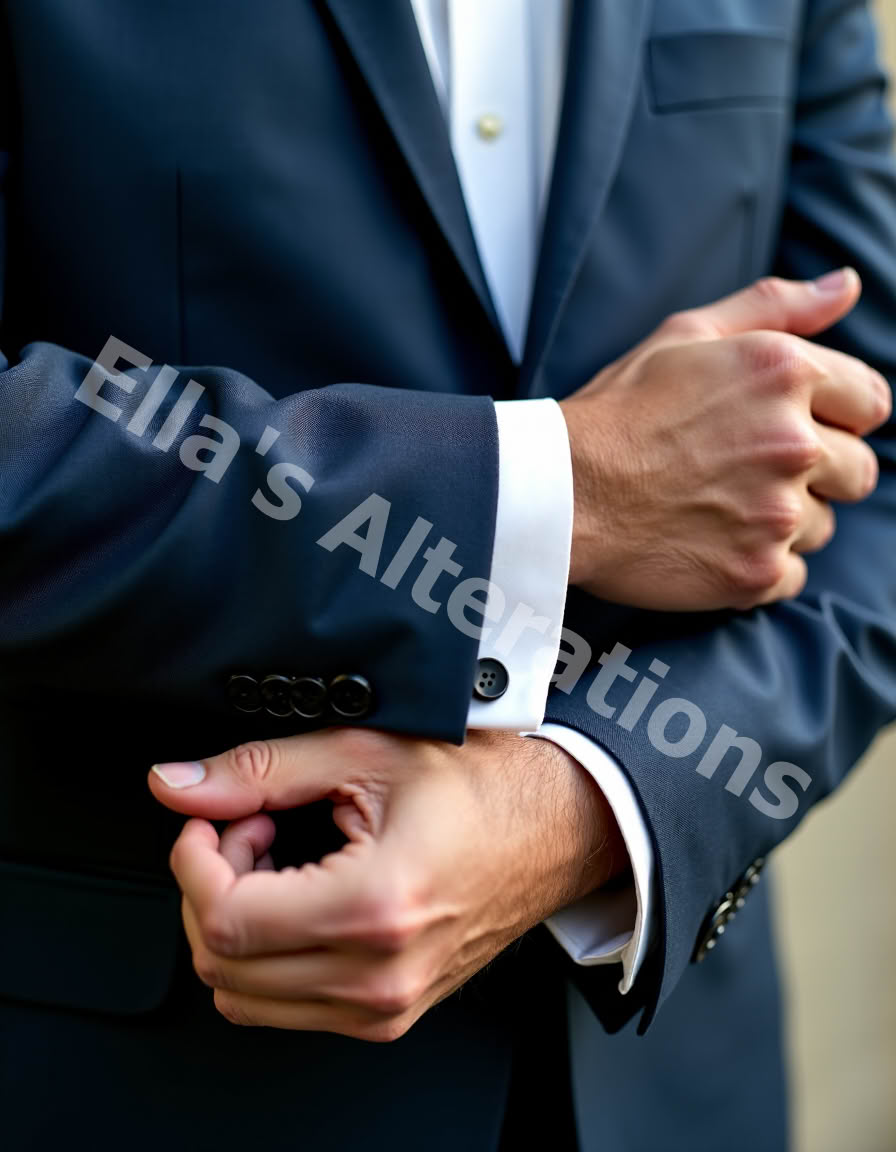
Shoulders and Chest Are the Foundation of Structure:
The shoulders and chest are where suit fit either comes to life or starts falling apart.
This is the real foundation of structure.
If these areas are wrong, everything below them has to fight uphill.
The waist can be shaped, the sleeves can be shortened, the pants can be hemmed, but if the upper body fit is off, the suit will rarely look fully right.
That is why experienced tailors pay so much attention to the shoulder line and chest drape before touching anything else.
The shoulders are the support system of the jacket.
They determine where the garment begins, how it hangs, and how the rest of the jacket falls over the body.
When shoulders are too wide, the jacket extends past the wearer’s natural frame and starts to look droopy, empty, or oversized.
The sleeve head can collapse, the upper chest can lose shape, and the whole silhouette starts to feel lazy instead of sharp.
When shoulders are too narrow, the opposite happens.
The jacket begins to strain, the chest and upper sleeve can pull, and the fabric may create tension lines that make the wearer look squeezed into the coat.
In both cases, the problem is not just visual.
It changes how the entire jacket behaves.
This is why people often hear that shoulders are the hardest area to alter.
It is not just because the sewing is complicated.
It is because the shoulder area connects to the collar, armhole, sleeve, chest, and balance of the jacket.
Change one part there and you affect several others at the same time.
A tailor can sometimes make minor refinements, but major shoulder problems are often a sign that the jacket was the wrong base choice from the start.
That is a hard truth, but it saves people from pouring money into a garment that will never fully cooperate.
Then comes the chest, which controls drape and front presentation.
A suit chest should sit smoothly across the body without caving in, ballooning out, or pulling at the button point.
This does not mean it should be skin tight.
- A chest that is too tight will show strain lines, especially when buttoned, and can distort the lapels or cause the front quarters to spread awkwardly.
- A chest that is too loose can look soft, sloppy, or hollow, especially when the wearer moves.
Good chest fit gives the jacket authority.
It lets the fabric fall cleanly and creates that polished menswear look people notice even if they do not know why.
The relationship between shoulders and chest is where the real nuance lives.
A jacket can seem too tight in the chest when the true issue is poor shoulder fit.
It can look collapsed in front because the shoulder slope does not match the wearer’s body.
It can gap at the collar because the upper back and chest balance are wrong.
That is why a tailor never judges the chest without reading the shoulders first.
- These areas work together.
- They are a team, not separate zones.
Posture also changes everything here.
A man with rounded shoulders, a prominent chest, a forward neck, or a more athletic upper body will affect how the jacket sits across the front and back.
The suit is not responding to a mannequin.
It is responding to a real human frame.
That is why one jacket can look amazing on one person and completely off on another, even if both wear the same size on paper.
When the shoulders and chest are right, the rest of the suit has a chance to succeed.
The jacket hangs better, the waist shaping looks cleaner, the sleeves fall more naturally, and the whole silhouette becomes more balanced.
In plain terms, this is the core of suit structure.
Get this foundation right, and almost everything above and below it starts working with you instead of against you.
If you are buying a suit, protect your money by checking the shoulders and chest first. Sleeve length and pant hems are normal alterations. Bad shoulders and a severely tight chest are a different story. Those can turn a bargain suit into an expensive regret.Tailor’s Insight ✂️
Quick Facts About Suit Fit
- The shoulder line is the foundation of the jacket.
- A suit should follow the body without clinging to it.
- Wrinkles are clues, not automatic diagnoses.
- Posture can affect collar gaps, sleeve wrinkles, and jacket balance.
- Pants should feel comfortable when standing, sitting, and walking.
- A clean pant break can make the entire suit look more expensive.
- The best suit alterations refine a good foundation. They do not rebuild a bad one.
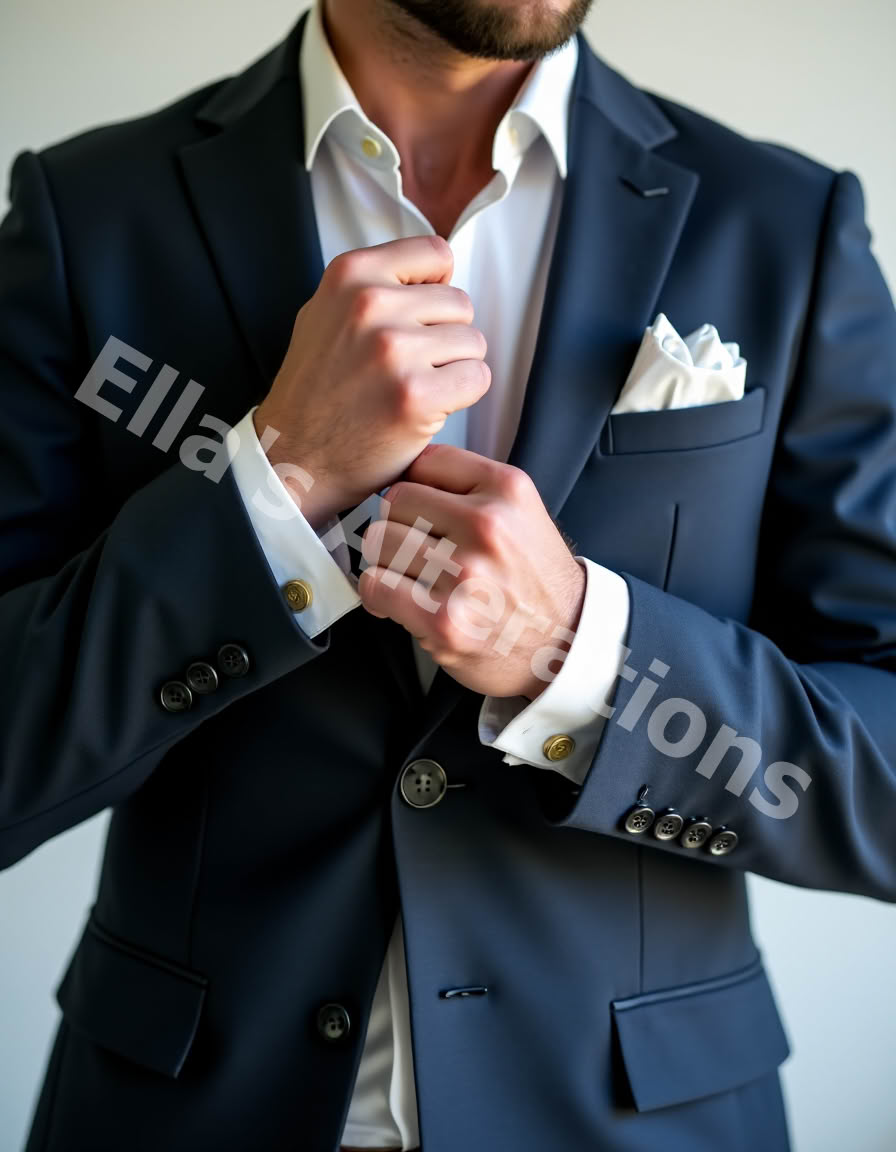
Modern Fit Suits for Every Occasion: Weddings, Work & More.
Waist and Sleeves Create the Sharp Visual Upgrade:
Once the shoulders and chest are doing their job, the waist and sleeves become the areas that create the biggest visual improvement.
This is where a suit starts to go from acceptable to sharp.
A lot of people think the magic of tailoring is in dramatic changes, but most of the time the strongest upgrade comes from refining shape and line.
The waist and sleeves are central to that.
They help turn a jacket from a generic garment into something that looks intentional, balanced, and made for the person wearing it.
The waist is what gives the jacket form through the middle of the body.
Without enough shape there, even an expensive suit can look flat, boxy, or bulky.
The wearer may seem hidden inside the garment instead of framed by it.
A properly shaped waist does not mean the jacket is tight.
It means the jacket follows the body cleanly enough to create definition while still allowing comfort and movement.
That difference matters.
- Too loose and the suit looks lifeless.
- Too tight and it starts to pull at the button, spread at the front, or create tension lines that ruin the silhouette.
Good waist shaping helps connect the chest to the lower part of the jacket in a smooth, controlled way.
It gives visual structure and makes the upper body look more athletic, even on someone with a straighter build.
That is one reason taking in the waist is one of the most popular alterations.
It often delivers a major payoff without needing extreme reconstruction.
But there is nuance here.
A tailor cannot shape the waist correctly unless the chest and shoulders are already sitting properly.
If the jacket is wrong up top, pulling in the waist can actually make the problems more obvious.
It can exaggerate chest strain, distort the lapels, or make the front quarters kick open awkwardly.
Body type and posture also play a big role.
Someone with a fuller midsection, prominent seat, or forward stance may need a different kind of suppression than someone with a very straight posture and lean frame.
- The goal is never to force every man into the same hourglass outline.
- The goal is to create a clean, flattering line that works with the wearer’s proportions.
Tailoring is not about squeezing the body into fashion.
It is about building shape that looks natural and confident.
Sleeves are just as important, but people often oversimplify them.
They think sleeve fit is only about length.
Length matters, of course.
A sleeve that is too long can swallow the hand and make the suit look borrowed.
A sleeve that is too short can look accidental unless it is balanced intentionally with the shirt cuff.
But sleeves are also about width, pitch, and hang.
If the sleeve does not follow the wearer’s natural arm position, it can twist, wrinkle, or bunch in ways that make the entire jacket look off.
That is why a suit can have the “correct” sleeve length and still appear sloppy.
Sleeve pitch is one of those subtle details most people never think about, but tailors notice it immediately.
Some people naturally hold their arms slightly forward.
Others stand with them more to the side or back.
The sleeve has to respect that reality.
If it does not, the fabric starts fighting the body, and strange wrinkles show up around the upper arm, elbow, or cuff.
Those lines are not always a sign that the sleeve is too tight or too loose.
Sometimes they mean the sleeve is hanging at the wrong angle for the wearer’s posture.
Together, the waist and sleeves refine the suit’s presentation in a huge way.
- They sharpen the outline, improve proportion, and make the jacket look cleaner in motion and at rest.
These are the areas that often give a suit that polished, tailored look people notice right away, even if they cannot explain why.
When handled well, they do not scream alteration.
They simply make the suit look right.
Waist shaping and sleeve length often give the fastest visual upgrade. But do not overdo it. A jacket that is too pinched at the waist or too short in the sleeve can look trendy for five minutes and awkward forever. Clean beats tight every time.Tailor’s Insight ✂️
Mini Glossary: Suit Fit Terms
Drape: How the fabric hangs from the body. Good drape looks smooth, clean, and natural.
Shoulder divot: A dent or wrinkle near the top of the sleeve where the shoulder and sleeve do not sit correctly.
Collar gap: A space between the jacket collar and the back of the neck. This can come from posture, balance, or fit issues.
Waist suppression: Shaping the jacket at the waist to create a cleaner silhouette.
Sleeve pitch: The angle at which the sleeve hangs from the jacket. This should match the wearer’s natural arm position.
Break: How the bottom of the pants meets the shoe. Too much break creates bunching. Too little can look too short if not styled intentionally.
Rise: The distance from the crotch seam to the waistband of the pants. Rise affects comfort, seat fit, and how the pants sit with the jacket.
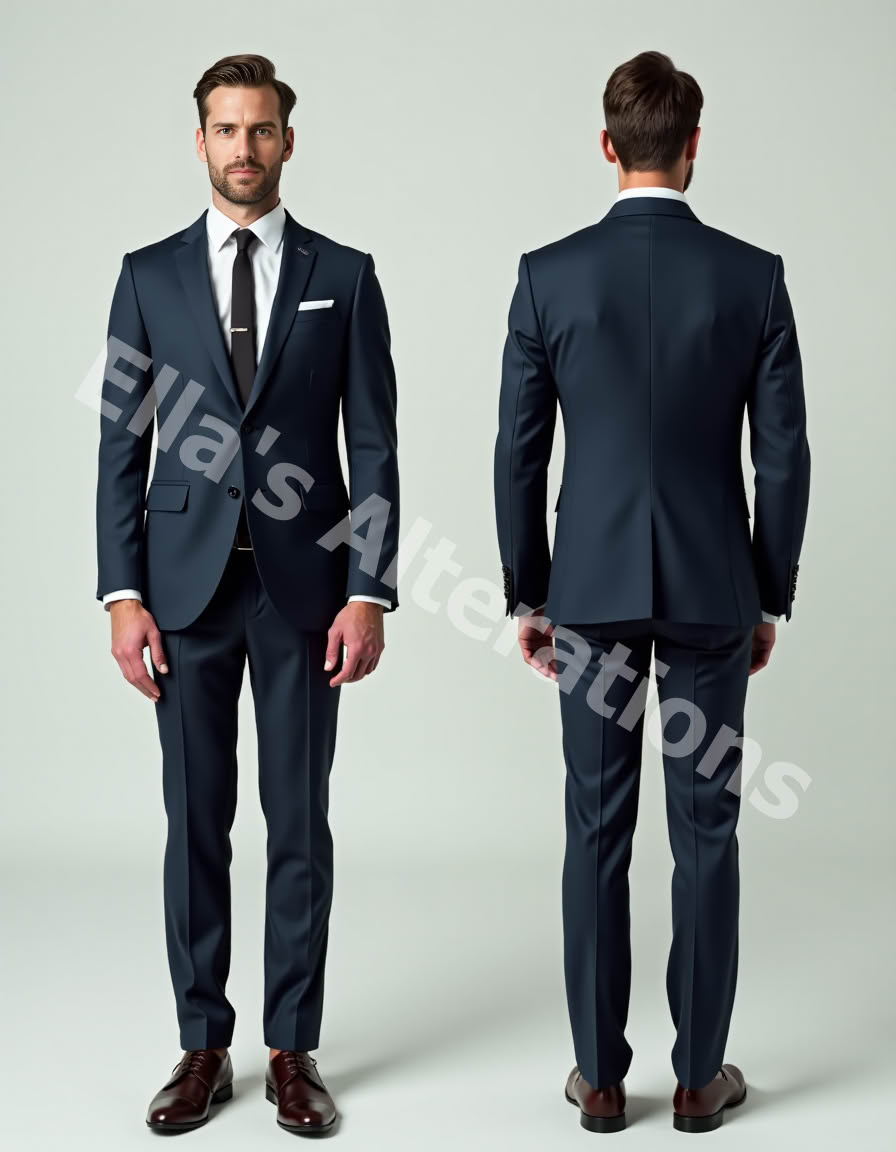
Pants Finish the Fit and Reveal Comfort Problems:
Pants are where a lot of suit evaluations either come together or fall apart.
People spend so much time staring at the jacket that they forget the trousers are finishing the entire silhouette.
A sharp jacket sitting over awkward pants is like a polished front door on a crooked house.
Something still feels off.
Trouser fit matters because it affects proportion, movement, comfort, and the way the whole outfit reads from a distance.
It is not just about whether the pants stay up.
It is about whether they support the jacket and complete a clean head to toe line.
The first thing pants reveal is comfort.
A jacket can sometimes hide a fit issue with structure and padding, but trousers are brutally honest.
- If the rise is wrong, the wearer feels it immediately.
- If the seat is too tight, movement becomes restricted and the fabric starts pulling in obvious ways.
- If the thighs are too narrow, walking, sitting, and even standing naturally can become uncomfortable.
- If the pants are too loose through the leg, the outfit can lose shape and look lazy instead of tailored.
Trousers tell the truth fast because they have to move with the body more directly than the jacket does.
Rise is one of the most overlooked parts of pant fit.
It affects where the waistband sits, how the pants relate to the jacket, and how comfortable they feel through the seat and upper thigh.
A rise that is too low can create pulling, gaping, and an unstable look through the front.
It can also break the visual connection between the trousers and the jacket, especially with more formal suiting.
A rise that is too high for the wearer’s proportions can also look off if the balance is not right.
The goal is not one universal rise for every man.
The goal is a rise that supports the body and keeps the pants sitting cleanly where they belong.
The seat and thigh area are where comfort problems often show up first.
- A tight seat can create horizontal stress lines, pull pockets open, and make the back of the trousers look strained.
- A tight thigh can make the fabric cling or pull, especially when the wearer walks or sits.
On the other hand, too much room in these areas can create sagging, collapsing, or excess cloth that makes the pants look cheap or oversized.
A good trouser fit should allow movement without looking baggy.
That balance is harder than people think, and it is one reason skilled alterations matter.
Then comes the lower leg, where taper, hem, and break control the final impression.
The taper affects how modern or classic the pants appear, but it also changes how smoothly the leg line falls from thigh to ankle.
- Too narrow and the pants can grab at the calf or break awkwardly.
- Too wide and they lose definition.
The hem and break are where all of this becomes visible.
A clean break gives the trousers an intentional finish.
- Too much break creates bunching and visual clutter around the shoe.
- Too little can look abrupt if it does not match the style of the suit.
There is no single perfect break for every man, but there should always be a clear relationship between the trouser shape, the shoe, and the overall formality of the outfit.
Pants also reveal posture and body geometry in ways people do not always notice.
A man with a prominent seat, bowed legs, flatter hips, or a stance that shifts weight unevenly may experience twisting, dragging, or uneven hems.
These are not random annoyances.
They are signals that the trousers are reacting to the real body underneath.
A tailor reads those signs carefully because fixing pants is not just about shortening them.
It is about understanding how the cloth hangs in motion and at rest.
In the end, trousers are not the secondary part of the suit.
They are the closing argument.
They show whether the wearer can move, sit, walk, and stand comfortably while still looking sharp.
When pants fit well, the whole suit feels finished.
When they do not, they expose every hidden weakness in the fit.
Pants are not an afterthought. A beautiful jacket over messy trousers still looks unfinished. Check how the pants sit, how they move, how the seat feels, and how the hem meets the shoe. That final break can make the whole suit look polished or careless.Tailor’s Insight ✂️
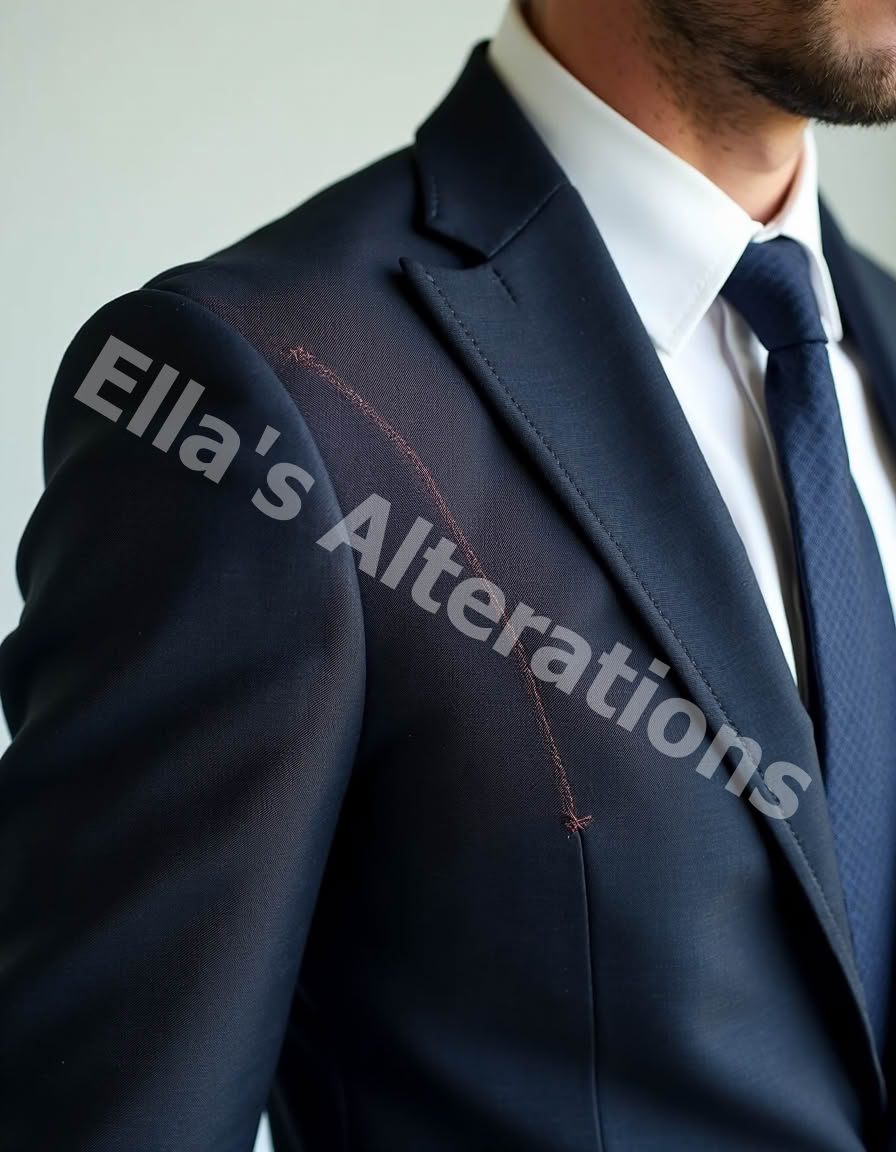
Conclusion: A Suit Must Work as One Unit:
A suit only looks truly right when every part is working together.
That is the core idea behind a head to toe suit overview.
It is not enough for the jacket to look decent on its own or for the pants to feel comfortable by themselves.
A suit is not a collection of separate pieces that happen to match.
It is a single visual and structural unit.
- The shoulders set the frame.
- The chest controls drape.
- The waist shapes the silhouette.
- The sleeves refine the presentation.
- The pants complete the line and reveal whether the fit actually supports real movement.
If one part is off, the whole system starts to lose harmony.
That is why experienced tailors never judge a suit by one detail alone.
They do not get distracted by one wrinkle, one tight spot, or one loose area without first reading the bigger picture.
- A wrinkle might be the result of poor shoulder fit.
- A collar gap might come from posture.
- A waist that looks boxy may actually be secondary to problems in the chest or balance.
Pants that break badly may reveal deeper issues with rise, seat, or leg shape.
Real fit diagnosis is not about guessing.
It is about understanding how structure, fabric, posture, and proportion are all interacting at once.
This also explains why some suits improve dramatically with alterations while others never quite get there.
A suit with a strong foundation can often be refined beautifully.
A tailor may shape the waist, clean up the sleeves, adjust the trouser hem, improve balance, and create a much sharper overall impression.
But when the foundation is wrong, especially in the shoulders, chest, or overall jacket structure, there are limits.
That is one of the most valuable lessons in tailoring.
Not every problem should be fixed.
Some problems should be avoided before purchase.
Knowing the difference can save a lot of money and disappointment.
Another truth is that great suit fit is not about chasing perfection in a stiff or unrealistic way.
A suit is meant to live on a real body.
People move, sit, walk, reach, and stand with different posture habits and different proportions.
A good suit should support that reality.
- It should look clean at rest and still behave well in motion.
- It should feel secure without feeling trapped.
- It should flatter the wearer without looking forced.
The best fit is not the one that looks tightest or trendiest.
It is the one that creates balance, comfort, and confidence at the same time.
That is where the head to toe approach becomes so powerful.
It teaches people to stop seeing suit fit as random little flaws and start seeing it as a complete language.
- The shoulders speak to the chest.
- The chest affects the waist.
- The sleeves influence the visual rhythm of the jacket.
- The pants either carry the look forward or break it apart.
Once you understand that, you stop relying on guesswork and start recognizing the difference between a suit that merely fits enough and a suit that truly works.
In the end, a suit must function as one unit because that is how the eye sees it.
Nobody experiences a suit in isolated sections.
They see the total silhouette, the balance, the movement, and the way the garment either supports the wearer or fights against him.
When all the parts are aligned, the result feels effortless, polished, and confident.
That is the real goal of tailoring.
Not just to alter fabric, but to bring the entire suit into harmony from head to toe.
The best suit is not always the most expensive one. It is the one with the strongest foundation for your body. Buy the closest fit you can through the shoulders, chest, and posture. Then let tailoring sharpen the details.Tailor’s Insight ✂️
Client Story: The Suit That Looked Fine Until He Moved
A client came in with a suit that looked decent at first glance. Standing still, the jacket seemed close enough. The sleeves were a little long, the pants needed a hem, and the waist looked slightly boxy.
But once he moved, the real problems showed up. The chest pulled when buttoned. The collar lifted away from the neck. The pants bunched badly at the shoe, and the seat felt tight when he sat down.
That is why a head to toe overview mattered. The issue was not just sleeve length or pant hems. The full suit needed to be read as one system. Some areas could be improved, like sleeve length, pant break, and waist shaping. But the jacket structure had limits because the upper body fit was already strained.
The lesson: A suit can look almost right in a mirror and still fail in real life. Always test movement before deciding what alterations are worth doing.
Fit Test Checklist System
Use this checklist before buying a suit or before deciding what needs tailoring.
Jacket Fit Checklist
- Do the shoulders end near your natural shoulder bone?
- Does the collar sit against your neck without a gap?
- Does the chest lie clean without pulling at the button?
- Does the waist create shape without squeezing?
- Do the lapels lie flat without popping or bending?
- Do the sleeves show a small amount of shirt cuff?
- Do the sleeves hang naturally without twisting?
Pants Fit Checklist
- Does the waistband sit comfortably without sliding?
- Can you sit without the seat pulling hard?
- Do the thighs have enough room to walk naturally?
- Does the leg line fall cleanly without twisting?
- Does the hem meet the shoe cleanly?
- Is the pant break intentional instead of messy?
Best move: Check the suit standing still, then check it again while moving. A suit that only looks good frozen in place is not truly fitted.
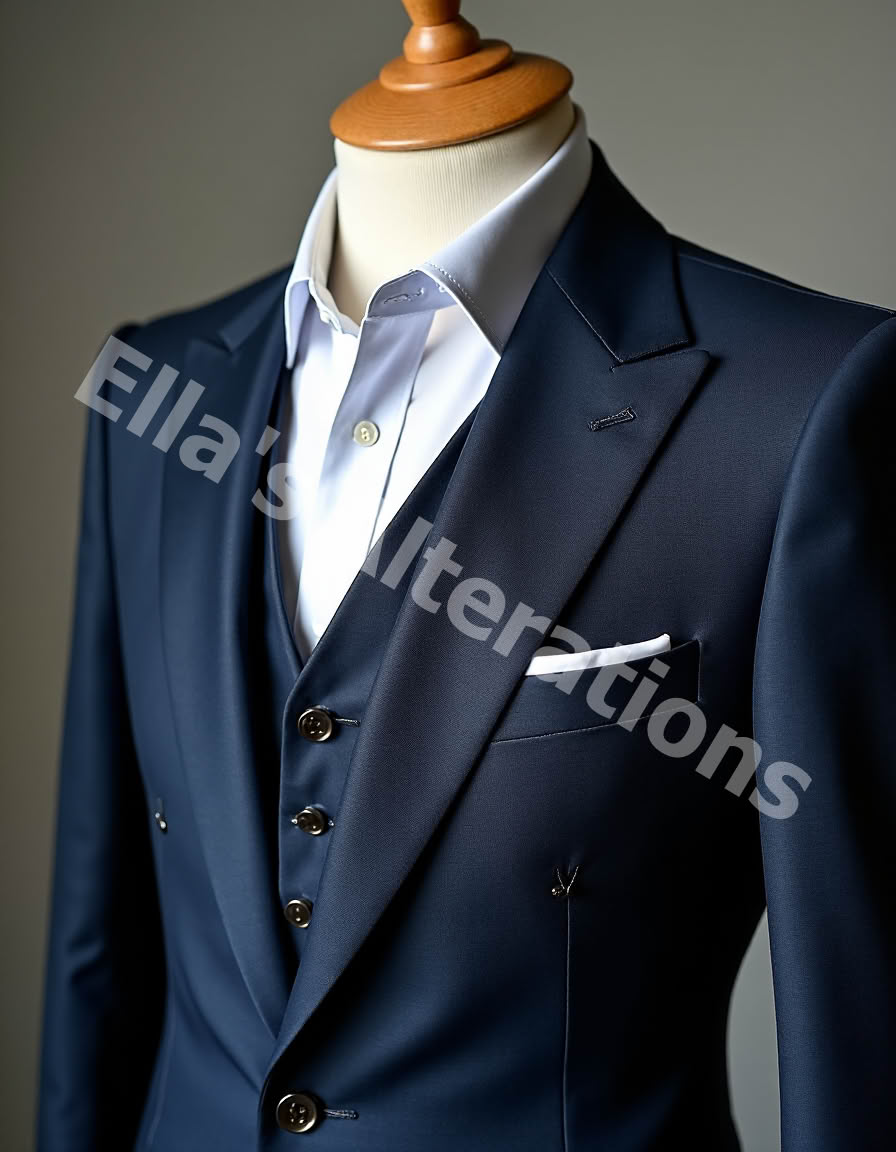
A Tailors Guide: Why Suit Anatomy Matters.
FAQs:
What suit fit problems can tailoring fix, and what problems cannot be fixed?
Tailoring can fix a lot, but it cannot perform miracles, and that is where many people waste money.
The best alterations are the ones that refine a suit that already has a decent foundation.
If the shoulders, chest, and overall structure are reasonably close, a tailor can usually make the suit look much sharper.
Common fixable issues include sleeves that are too long, pants that need hemming, waist suppression in the jacket for a cleaner silhouette, trouser waist adjustments, tapering the legs, reducing excess fabric through the seat or thigh, and cleaning up jacket sides so the coat looks less boxy.
In many cases, a tailor can also make small improvements to jacket balance, collar roll, or sleeve hang depending on how the suit is built.
These changes matter because they improve line, proportion, and polish without rebuilding the entire garment.
They are usually the alterations that give the biggest visual payoff for the least risk.
A suit that fits fairly well in the upper body can often be transformed from average to sharp with these kinds of targeted changes.
What tailoring usually cannot fix well are major structural probleMs. If the jacket shoulders are far too wide or too narrow, that is often a bad starting point.
If the chest is severely too small, the jacket may always pull and strain even after other adjustments.
If the armholes are cut poorly, if the jacket balance is fundamentally wrong, or if the collar gap is caused by deep posture conflict or cheap construction, the suit may never sit properly.
Very low quality fused jackets can also bubble, twist, or collapse in ways that tailoring cannot truly solve.
The simplest way to think about it is this.
Tailoring is great at refinement.
It is weak at rescuing a bad foundation.
A good tailor can shape, shorten, taper, and rebalance many details, but they cannot always rebuild the architecture of the suit.
That is why the smartest move is to buy the best base fit possible first, especially through the shoulders and chest, then use alterations to sharpen the rest.
Why do tailors look at the whole suit instead of just one problem area?
Tailors look at the whole suit because one visible problem is often only the symptom, not the actual cause.
A wrinkle, a pull line, a collar gap, or pants bunching at the shoe may catch your eye first, but that does not mean that spot is where the fit problem begins.
Suits work like a connected system.
If one area is off, it can create problems somewhere else.
That is why a good tailor steps back first and studies the full garment before deciding what needs to change.
For example, a chest wrinkle might not really be a chest problem.
It could be caused by shoulders that are too wide, too narrow, or sloping the wrong way.
A collar gap at the neck might not mean the collar itself is wrong.
It could come from posture, jacket balance, or the way the upper back fits.
Pants that twist or break badly may not just need hemming.
The issue could be in the rise, seat, thigh shape, or the way the wearer stands and moves.
If a tailor only fixes the most obvious area without understanding the full picture, they can waste time, waste money, and sometimes even make the suit look worse.
Tailors also know that the body changes how the suit behaves.
Posture, shoulder slope, stance, chest shape, and leg shape all affect the way fabric hangs.
So they are not just reading the garment.
They are reading how the garment reacts to the person inside it.
That is a huge difference.
Looking at the whole suit helps a tailor separate the real cause from the visible effect.
It allows them to choose smarter alterations and know when a problem can be improved or when the suit has a structural issue that cannot be fully fixed.
In simple terms, tailors look at the whole suit because fit is never just one little problem.
It is always part of a bigger story.
Why are jacket shoulders the hardest part of a suit to alter?
Jacket shoulders are the hardest part of a suit to alter because they are the structural base of the entire jacket.
They are not just one seam that can be adjusted quickly.
The shoulder area connects to the collar, chest, armhole, sleeve head, upper back, and the overall balance of the coat.
So when you change the shoulders, you are not fixing one isolated spot.
You are interfering with the framework that controls how the whole jacket hangs and moves.
That is why shoulder alterations are complex, expensive, and often risky.
To change them properly, a tailor may have to remove and reset the sleeves, reshape padding, adjust the armhole area, and rebalance how the front and back of the jacket sit on the body.
That is serious reconstruction, not a basic tweak.
Even then, the final result may still be limited by how the jacket was originally cut and built.
If the shoulder width is badly wrong, or if the jacket has poor structure from the start, there is only so much a tailor can realistically do.
Shoulders also matter more than people think because they influence everything below them.
If they are too wide, the jacket can look droopy, empty, or oversized.
If they are too narrow, the chest and sleeves can pull and create tension lines.
Bad shoulder fit can also lead to collar gaps, chest collapse, sleeve hang problems, and an overall unbalanced silhouette.
So when the shoulders are off, the rest of the jacket often starts misbehaving too.
This is why tailors usually say to buy a suit that fits the shoulders as closely as possible from the start.
Waist, sleeve length, and trouser hem are much easier to refine later.
Shoulders are different.
They are the foundation.
Once that foundation is wrong, fixing it is like trying to remodel the frame of a house after the walls are already built.
It can be done in some cases, but it is never the easiest or smartest place to start.
How does chest fit affect suit drape and movement?
Chest fit has a huge effect on how a suit looks, hangs, and moves because the chest is one of the main control points of the jacket.
If the chest fit is right, the fabric drapes smoothly over the front of the body, the lapels sit properly, the button stance looks clean, and the jacket moves with you instead of fighting you.
If the chest fit is wrong, the whole front of the suit starts sending distress signals.
When the chest is too tight, the jacket cannot relax over the body.
You will often see pulling lines around the button, tension across the lapels, or strain through the front panels.
The jacket may feel restrictive when you breathe, sit, reach forward, or button it.
Movement becomes stiff because the fabric has no room to respond naturally.
Instead of draping, it stretches and fights back.
This is when a suit can look sharp for one second in a still pose, then immediately look stressed and uncomfortable the moment the wearer moves.
When the chest is too loose, the opposite problem happens.
The fabric can collapse, billow, or look hollow across the upper torso.
Instead of a clean, controlled front, the jacket may appear soft, sloppy, or disconnected from the body.
Extra fabric in the chest can also affect how the lapels roll and how the waist shape reads visually.
Even if the jacket is expensive, a loose chest can make it look tired or oversized.
- Chest fit also works closely with the shoulders and armholes.
- A chest that seems tight may actually be reacting to bad shoulder fit.
- A chest that looks collapsed may be caused by poor balance or posture.
That is why tailors do not judge the chest alone.
They read how it behaves as part of the whole upper jacket.
In simple terms, good chest fit gives a suit clean drape and natural movement.
It lets the jacket follow the body without clinging or floating away from it.
That balance is what makes a suit look polished, comfortable, and alive instead of stiff, sloppy, or strained.
What suit fit problems can tailoring fix, and what problems cannot be fixed?
Tailoring can fix a lot, but it cannot perform miracles, and that is where many people waste money.
The best alterations are the ones that refine a suit that already has a decent foundation.
If the shoulders, chest, and overall structure are reasonably close, a tailor can usually make the suit look much sharper.
Common fixable issues include sleeves that are too long, pants that need hemming, waist suppression in the jacket for a cleaner silhouette, trouser waist adjustments, tapering the legs, reducing excess fabric through the seat or thigh, and cleaning up jacket sides so the coat looks less boxy.
In many cases, a tailor can also make small improvements to jacket balance, collar roll, or sleeve hang depending on how the suit is built.
These changes matter because they improve line, proportion, and polish without rebuilding the entire garment.
They are usually the alterations that give the biggest visual payoff for the least risk.
A suit that fits fairly well in the upper body can often be transformed from average to sharp with these kinds of targeted changes.
What tailoring usually cannot fix well are major structural probleMs. If the jacket shoulders are far too wide or too narrow, that is often a bad starting point.
If the chest is severely too small, the jacket may always pull and strain even after other adjustments.
If the armholes are cut poorly, if the jacket balance is fundamentally wrong, or if the collar gap is caused by deep posture conflict or cheap construction, the suit may never sit properly.
Very low quality fused jackets can also bubble, twist, or collapse in ways that tailoring cannot truly solve.
The simplest way to think about it is this.
Tailoring is great at refinement.
It is weak at rescuing a bad foundation.
A good tailor can shape, shorten, taper, and rebalance many details, but they cannot always rebuild the architecture of the suit.
That is why the smartest move is to buy the best base fit possible first, especially through the shoulders and chest, then use alterations to sharpen the rest.
Fast Answer Panel
What Problem This Solves
This guide helps you understand why a suit looks off, even when the size tag seems right. It explains how to spot fit problems before spending money on alterations.
Who This Is For
This is for men buying suits, grooms, tuxedo wearers, formalwear customers, business professionals, and anyone who wants a sharper fit without guessing.
What You Should Check First
Start with the shoulders and chest. If those areas are badly wrong, the suit may not be worth heavy alterations. Then check waist shape, sleeve length, pants, movement, and comfort.
What You Should Do Next
Try the suit on with the shirt, shoes, belt, and posture you plan to wear. Stand, sit, breathe, move your arms, and check the full silhouette in a mirror.
How To Book Help
If the suit is close but not polished, book a fitting with Ella’s Alterations in Zephyrhills, Florida. A professional fitting can show what can be improved, what should be avoided, and what will give the best visual payoff.
Alter Vs Replace: Cost Decision Block
Before spending money on suit alterations, ask one honest question. Is this suit a good base, or are you trying to force a bad suit to behave?
| Situation | Alter It | Replace It |
|---|---|---|
| Sleeves are too long | Usually yes | Usually no |
| Pants need hemming | Yes | No |
| Jacket waist is boxy | Often yes | Only if the rest also fits poorly |
| Shoulders are far too wide | Usually not worth it | Often yes |
| Chest is severely tight | Only if there is enough fabric to let out | Often yes |
| Cheap fused jacket is bubbling | Rarely worth it | Yes |
Tailor’s rule: Alter a suit when the foundation is good. Replace it when the foundation is fighting your body.
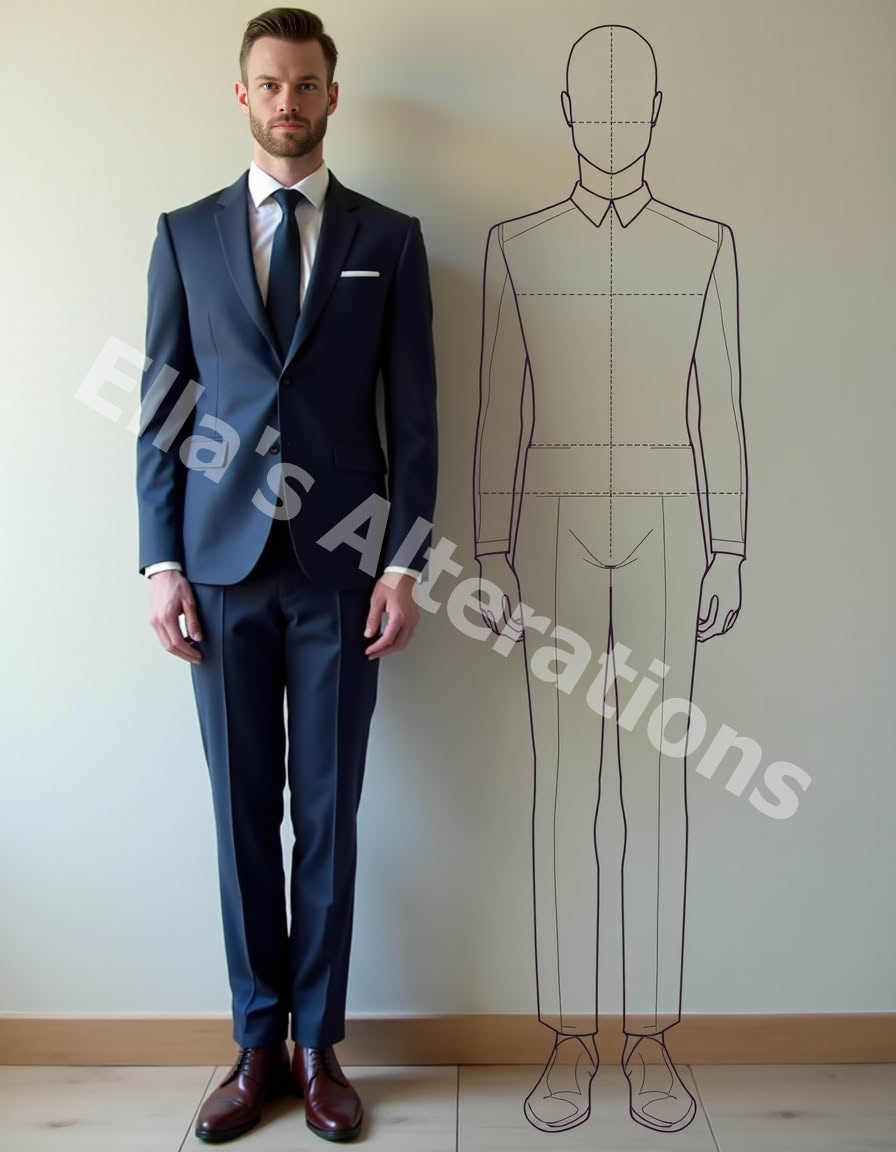
🌟 Say Hello to a Whole New Level of Style—We're Now…

About Us





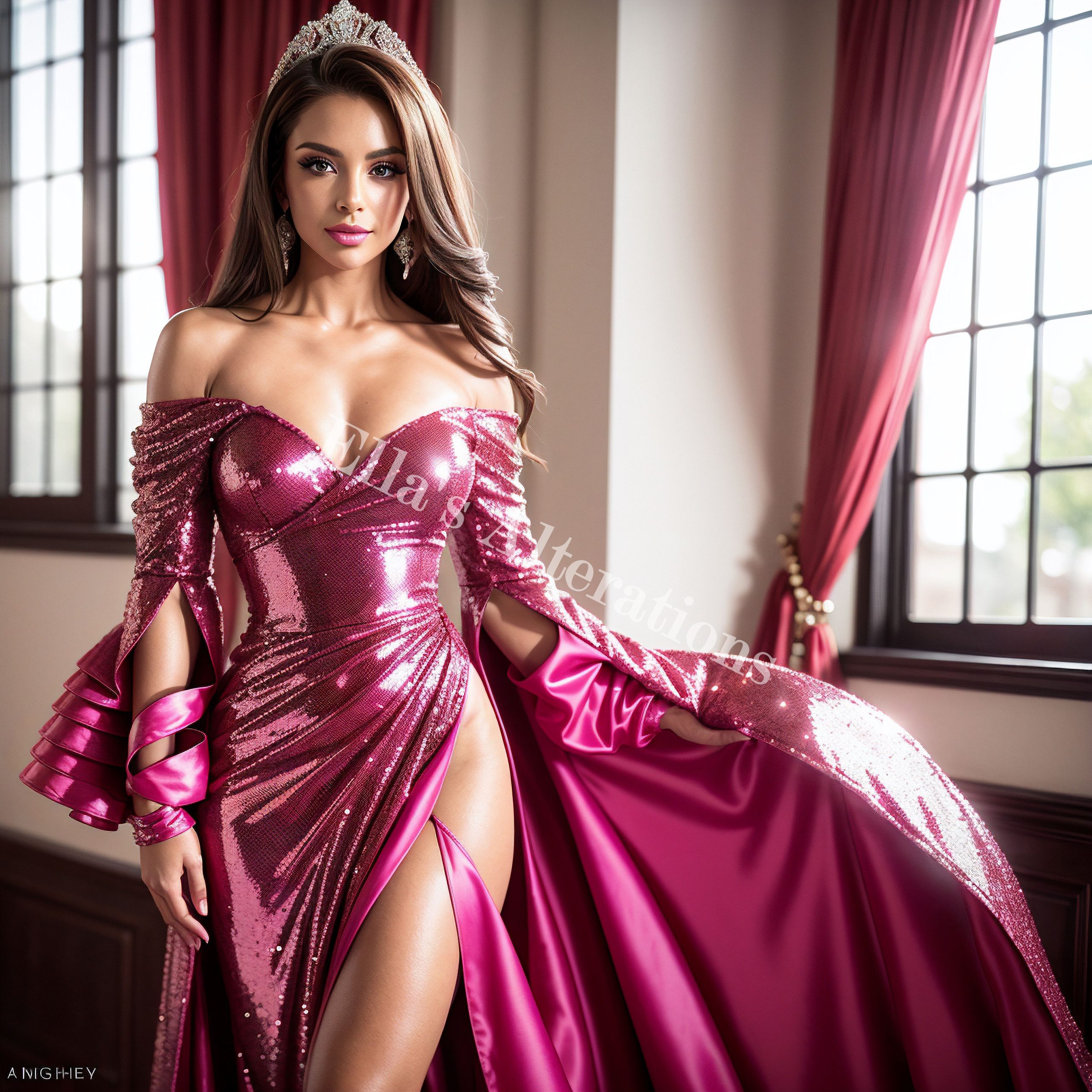
Ella’s Style Confidence
Brought to you by Ella’s Alterations
-
Your body is not the problem. The fit is.
If something feels off when you put it on, that does not mean it is wrong for you. It means it has not been tailored for you yet. Clothes are made for averages. You are not average. -
Confidence starts at the seams.
The smallest adjustments change everything. A lifted waist, a shaped bust, a clean hem. These details quietly do the heavy lifting so you can walk in like you own the room. -
Comfort is not optional.
If you are pulling, tugging, or holding your breath, the garment is failing you. Real tailoring lets you move, sit, dance, and live without thinking about your clothes. -
Trends fade. Fit lasts.
Styles come and go fast. A perfect fit never goes out of style. When something fits you correctly, it always looks intentional and expensive. -
Support should be built in, not added later.
Hidden structure matters. Boning, cups, straps, and shaping should work with your body, not against it. When support is done right, no one sees it but everyone notices the result. -
You deserve clothes that work as hard as you do.
Whether it is a wedding dress, a suit, or everyday wear, your clothes should show up for you. Sharp, polished, and reliable. -
Confidence is quiet, not loud.
The best dressed people are not uncomfortable or flashy. They look effortless because their clothes fit correctly and feel natural. -
One great alteration beats five new outfits.
Fixing what you already own often gives you more confidence than buying something new. A tailored piece feels personal. Like it was made just for you. -
When it fits right, you stand differently.
Posture changes. Shoulders relax. You stop adjusting and start owning your space. That shift is what people actually notice. -
You are allowed to feel amazing in your clothes.
Not just okay. Not just good enough. Amazing. That is the standard.
Local Credibility
Ella’s Alterations is trusted by brides, professionals, and families across Central Florida for one reason. The work is done right.
Awards & Recognition
- Most Trusted Tailoring & Alterations Studio 2025 – USA
- Bridal & Formalwear Tailoring Excellence Award 2025
- Recognized nationally by LUXlife Magazine for craftsmanship and client trust
- Chosen year after year for precision bridal and formal tailoring
- Best Wedding Dress & Formalwear Tailoring Zephyrhills 2026
- NextDoor Neighborhood Favorite 2023 2024 2025
Service Area
Proudly serving Zephyrhills, Pasco County, Tampa, Wesley Chapel, Lakeland, and surrounding Central Florida communities. Clients travel from across the region for expert alterations that local shops simply cannot match.
Depth of Craft
With over 30 years of hands on tailoring experience, Ella works at a master level. This is not basic hemming or quick fixes. This is true garment engineering. Wedding gowns with structure, suits that need balance, formalwear that must move and photograph perfectly. Every adjustment is intentional and precise.
Proof of Trust & Fitting Care
Every fitting is handled with respect, privacy, and patience. Measurements are double checked. Details are explained. Nothing is rushed. Nothing is guessed.
Clients return because they feel heard, supported, and confident. Dresses are protected. Fabrics are handled correctly. Fit decisions are made with experience, not shortcuts.
This is why generations of clients trust Ella with their most important garments. When it has to fit perfectly, they choose experience.

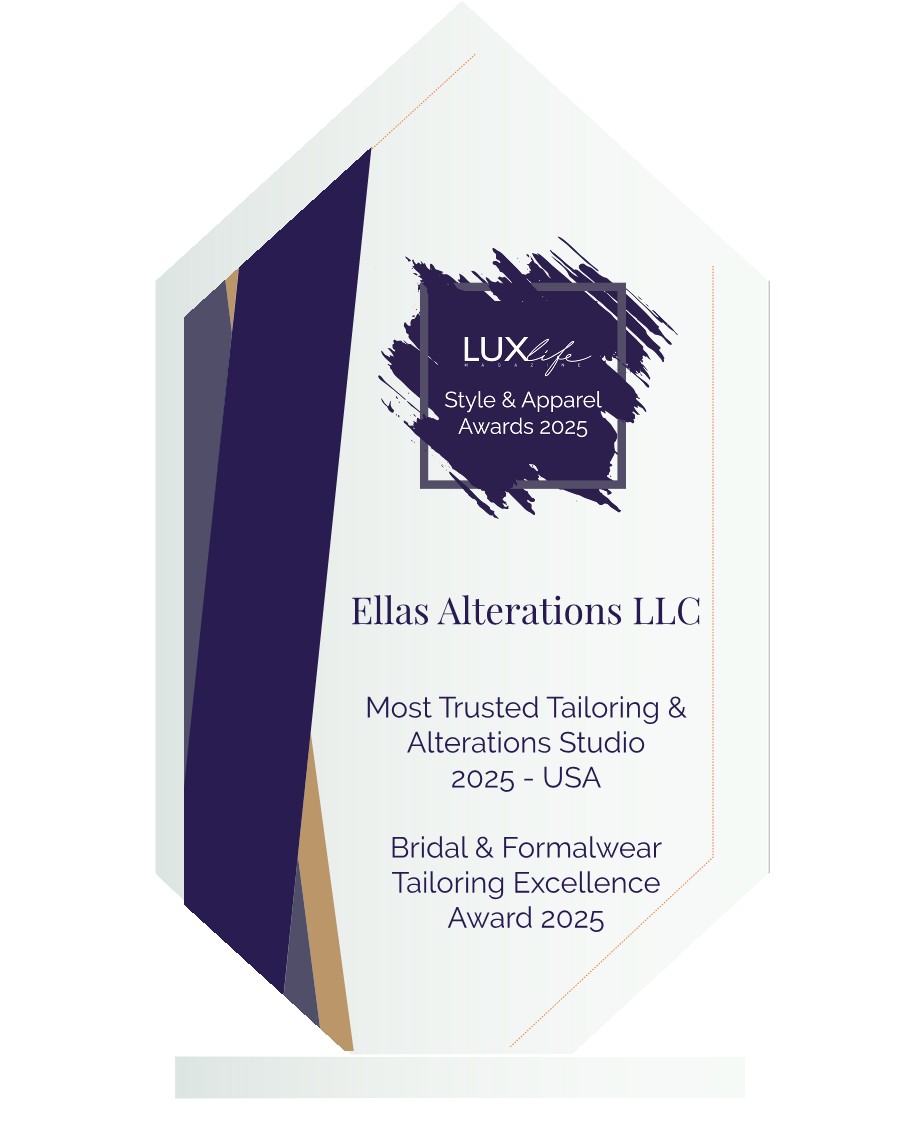
Bridal & Formalwear Tailoring Excellence Award 2025 – USA
Award Winning Bridal & Formalwear Tailoring
Ella’s Alterations is proudly recognized as one of Zephyrhills’ most trusted tailoring studios, specializing in wedding dress and formalwear alterations.

NextDoor Neighborhood Favorite 2023, 2024, 2025

Best Wedding Dress & Formalwear Tailoring Zephyrhills 2026

Proud winner: Best Bridal & Formalwear Alterations Studio 2026 - USA

Proud winner: Best Wedding Dress and Formalwear Tailoring, Zephyrhills 2026
Why Clients Trust Ella’s Alterations
- 30 plus Years of Expertise: Master tailoring and formal wear alterations trusted across Florida.
- Award Winning Service: Best of Florida Tailor and Best of Zephyrhills.
- Private Bridal Fittings: Discreet, elegant, and tailored to you.
- Proven Local Reputation: Five star customer reviews and repeat clients from Tampa to Orlando.
- Transparent and Personal: Clear pricing, expert guidance, and no rushed fittings.
- Recognized nationally by LUXlife Magazine for craftsmanship and client trust
- Chosen year after year for precision bridal and formal tailoring
- Best Wedding Dress & Formalwear Tailoring Zephyrhills 2026
- NextDoor Neighborhood Favorite 2023 2024 2025
Address: 6986 Fort King Road, Zephyrhills FL 33541
Phone: +1 813-445-8894 or +1 813-445-6721
Email: admin@ellasalterations.com
Hours:
Get Directions | Book Your Fitting