A Tailor’s Guide: Why Your Hemline Is the Final Touch on a Wedding Gown.
The hemline is the final detail that determines how your wedding gown looks, moves, and feels on your big day. At Ella’s Alterations in Zephyrhills—Best of Florida Tailor three years running—we perfect hems so your dress flows flawlessly from aisle to dance floor.
INTRODUCTION: The Hemline — The Underrated Hero of the Bridal Look:
Why the Hemline Is the Final Touch on Your Wedding Gown
Discover why your hemline is more than just the end of your wedding gown — it's the finishing touch that defines elegance, movement, and proportion.
When you think about a wedding gown, your mind likely jumps to the silhouette, the lace detailing, or maybe the dramatic train trailing behind the bride.
Necklines get their moment.
So do bodices, sleeves, and backless finishes.
But there’s one element that rarely gets the attention it deserves, even though it has everything to do with how a dress moves, photographs, and fits: the hemline.
Yes, the very bottom edge of your wedding gown is more than just a finish.
It’s the final touch in the tailoring process, the detail that seals the fit and flow of your entire look.
It’s also the part of the dress that interacts most with the world.
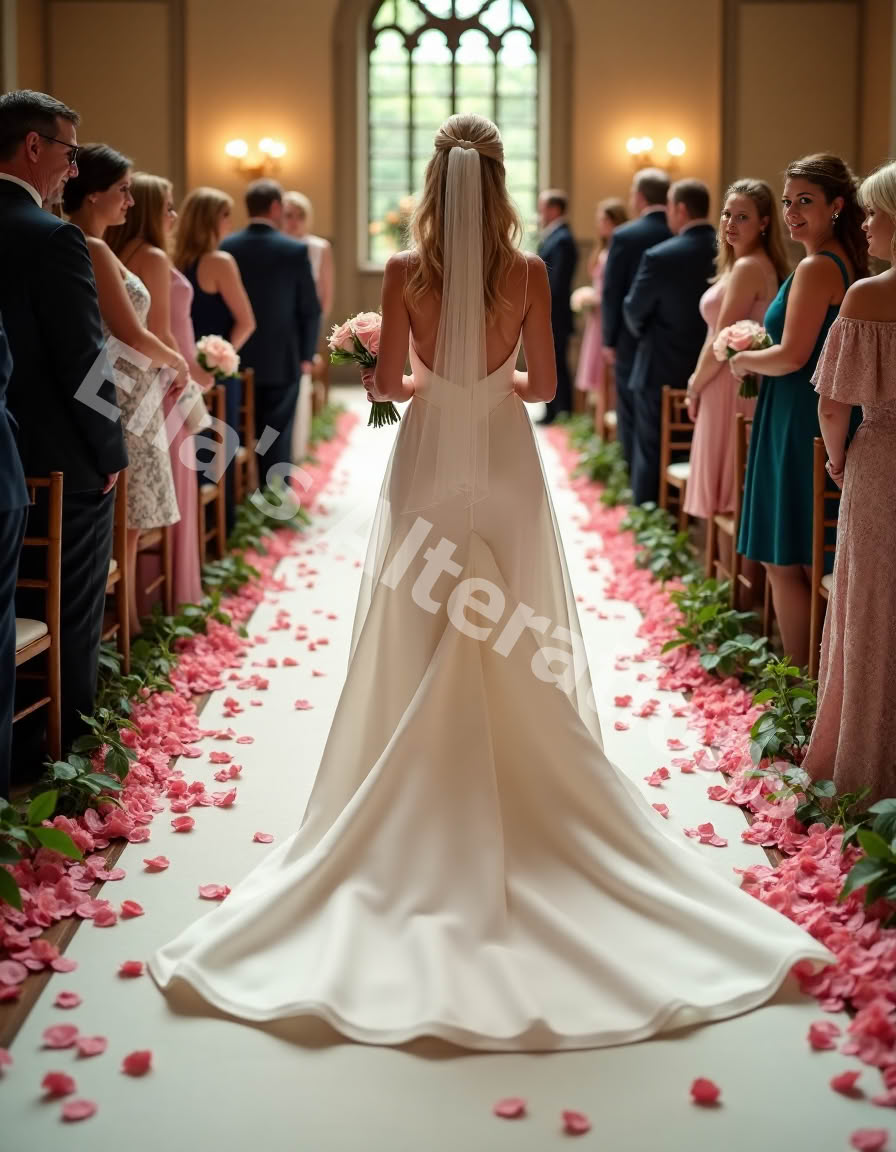
It skims the ground, brushes the aisle, meets the shoes, and supports every step you take from the ceremony to the dance floor.
When done right, it’s invisible.
When done wrong, it’s unforgettable, and not in a good way.
For brides, the hemline can be the secret to feeling both confident and comfortable.
It affects how you walk, how you dance, and how natural your movement feels in the dress.
- Too long, and you’re tripping or dragging the gown through dirt and grass.
- Too short, and the illusion of elegance breaks as your shoes peek out at the wrong time.
A hemline that hits just right allows your dress to float, not sag.
It enhances the silhouette you chose so carefully and highlights the shape of your body in a way that feels effortless.
Tailors and seamstresses will often leave the hemline for the very last step in the alteration process, and that’s no accident.
It’s only once the bodice is fitted, the seams are secured, and the train is structured that the hemline can be accurately adjusted.
That’s because every change above the skirt , whether it’s tightening the bust or adjusting the straps , affects how the dress falls.
And if the dress doesn’t fall naturally, the hemline won’t sit right either.
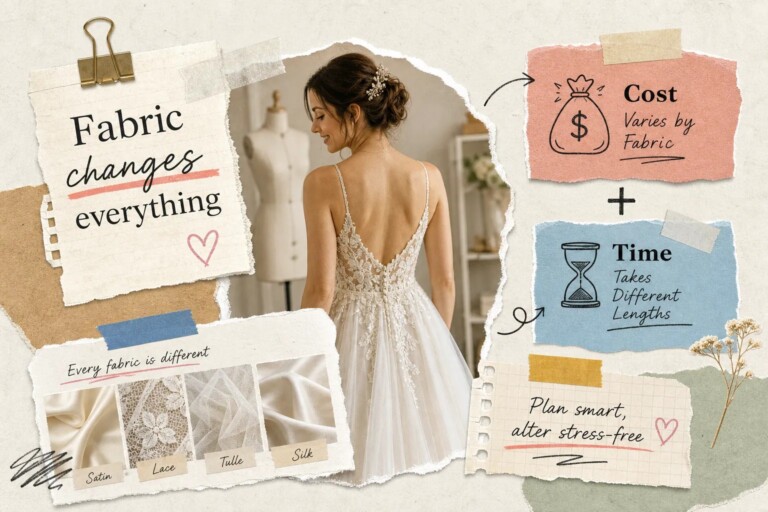
There’s also the fabric to consider.
Different materials behave differently when cut or pinned.
- Chiffon is soft and fluid, requiring delicate trimming.
- Lace often includes scalloped or embroidered edges that may need to be repositioned by hand.
- Satin is structured and reveals even the slightest wavering stitch.
- Tulle often involves multiple layers that must be balanced to avoid a lopsided or uneven finish.
A trained tailor knows exactly how each material responds to being hemmed and will handle it accordingly.
It’s a delicate process that’s both technical and artistic.
Another major influence on the hemline is the bride’s shoe height and posture.
You’ll want to bring your actual wedding shoes to every fitting.
Even half an inch can change where the hemline falls.
A proper fitting ensures that the gown just grazes the floor, providing that floating illusion without actually sweeping up every speck of dust.
The hemline also plays a role in how your dress interacts with your venue.
Walking down a stone aisle?
You’ll need a different hem strategy than a bride saying her vows on a beach.
Outdoor weddings, uneven surfaces, or long walks between ceremony and reception spaces all demand special attention to length and movement.
What makes the hemline so special is that it holds everything together.
It’s the finishing detail that elevates a gown from “beautiful” to “breathtaking.”
A perfect hem doesn’t call attention to itself.
Instead, it lets the rest of the dress shine by ensuring the entire piece flows naturally with your body and your environment.
In the end, it’s not just a line.
It’s a statement.
It’s the final quiet stitch that brings your entire bridal vision to life.
Why Is the Hemline the Final Touch on a Wedding Gown?
Your hemline isn’t just fabric—it’s the foundation of how your dress moves, photographs, and fits. A flawless hem means confidence, balance, and elegance every step of the way.
Quick Facts
- The hemline is the very bottom edge of your gown.
- It’s the last alteration done because every other change affects it.
- Even half an inch can change how your dress falls.
- Fabric type (satin, chiffon, lace) impacts hemming technique.
- Hems must be tailored with your actual wedding shoes.
- The hemline ties your entire bridal look together.
A hemline isn’t just where a gown ends—it’s where elegance begins.
Common Hemline Issues
- Too long = tripping hazard, dirty train
- Too short = awkward shoe reveal
- Uneven = ruins silhouette and flow
Stylist Tip: Always bring your actual shoes to fittings—your heel height makes or breaks the perfect hemline.
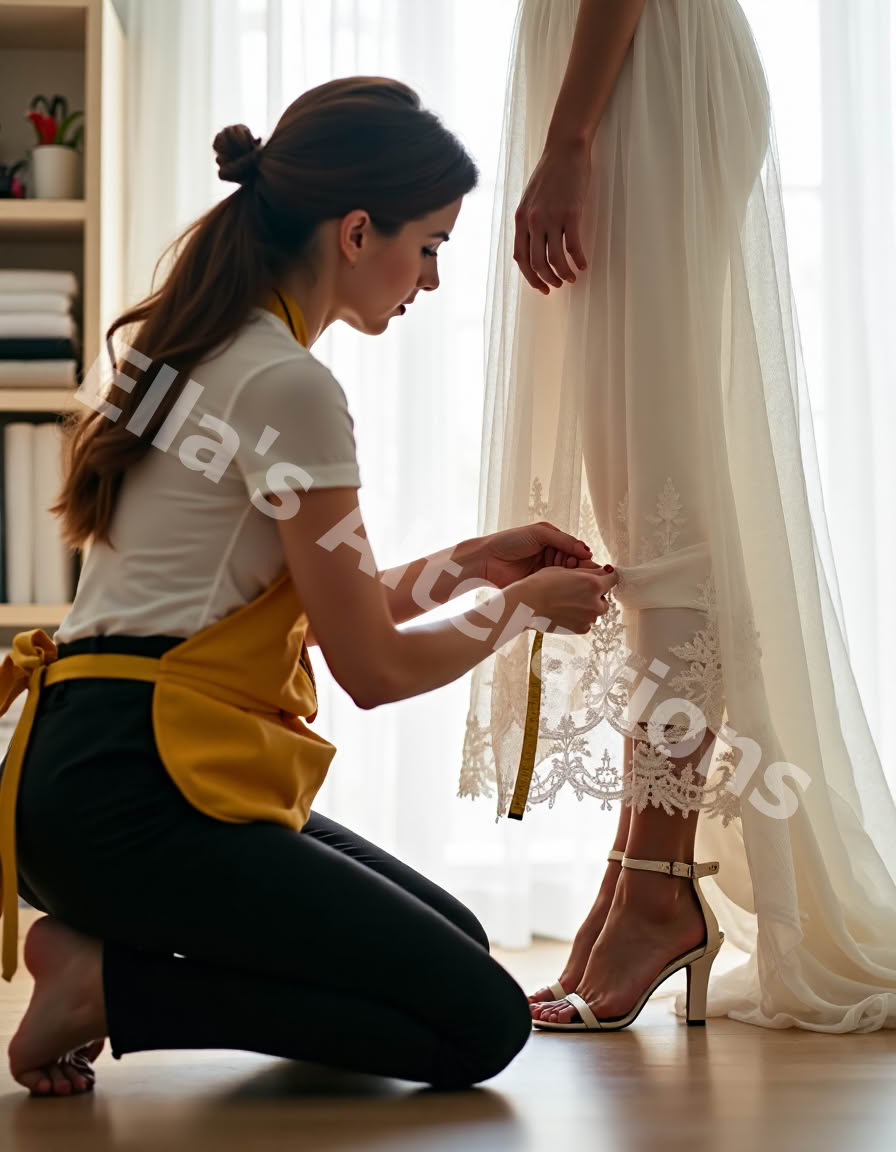
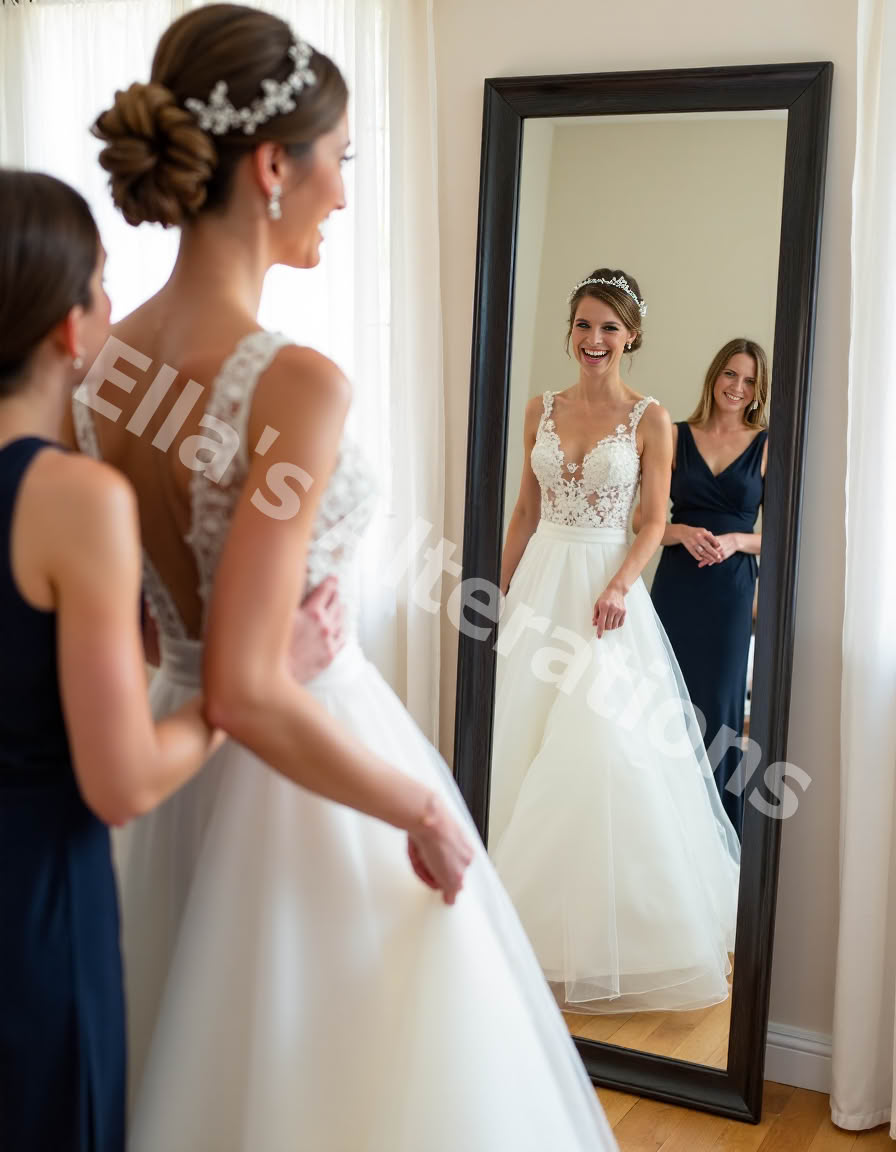
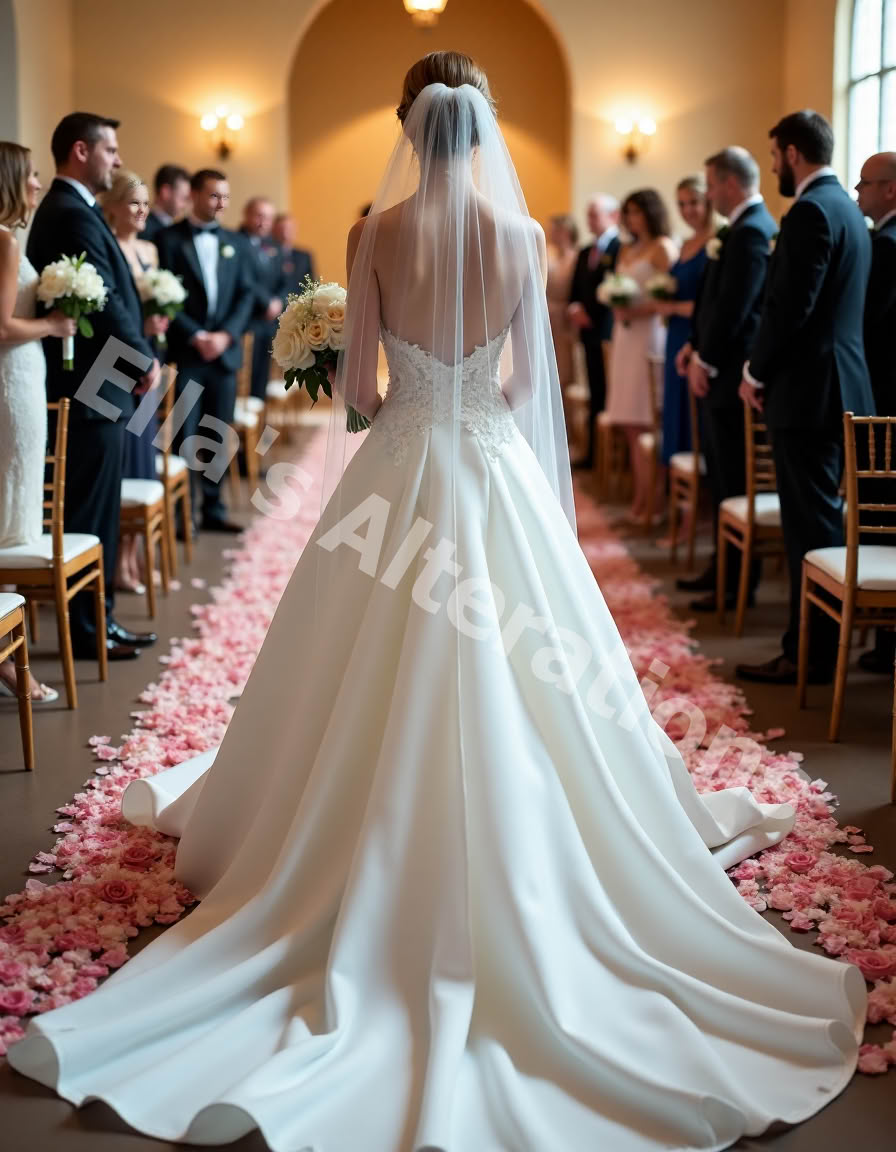
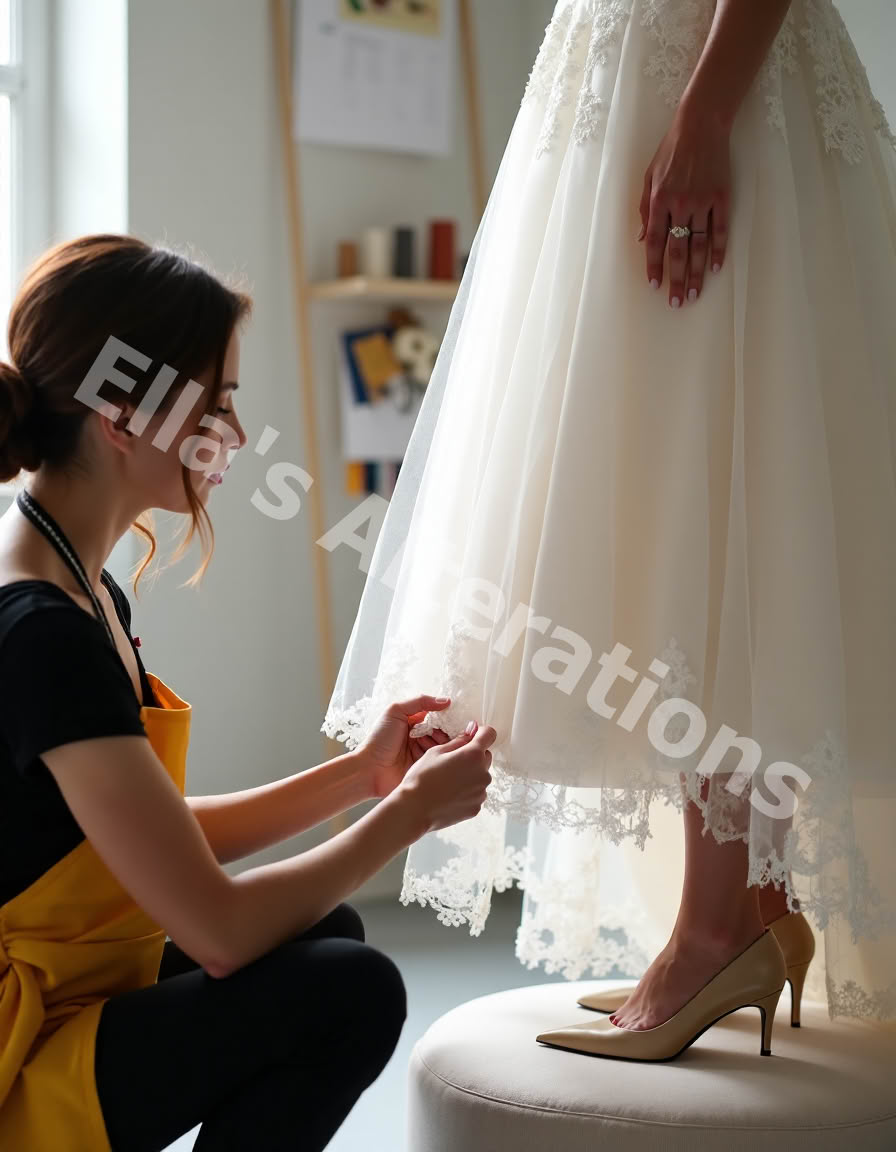
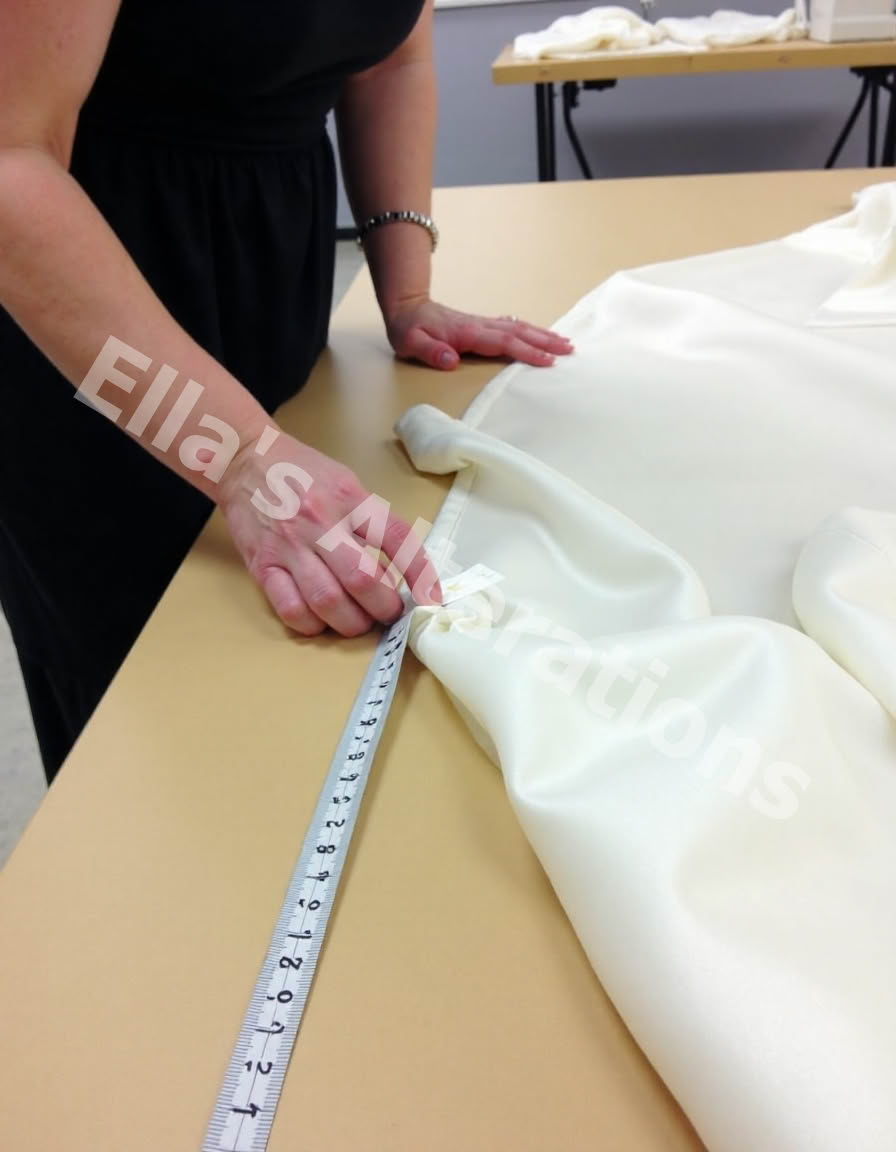
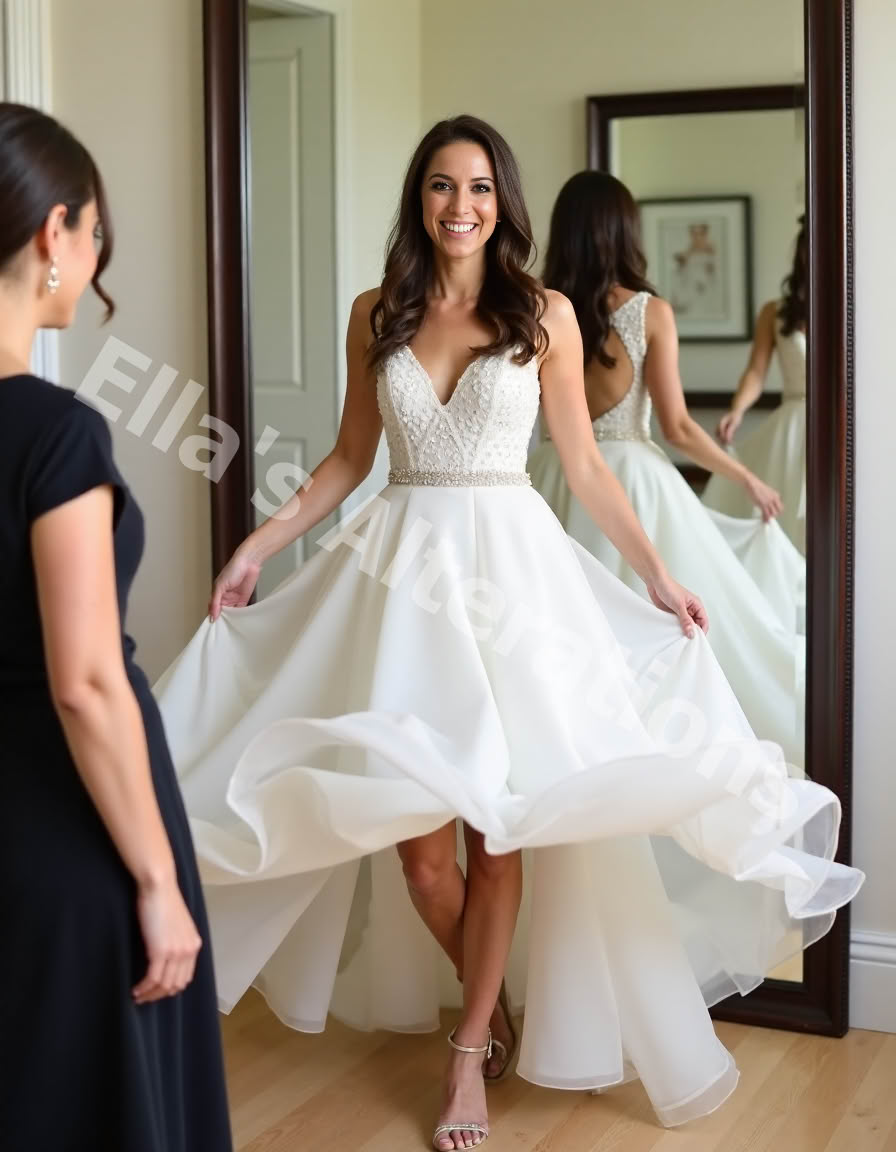
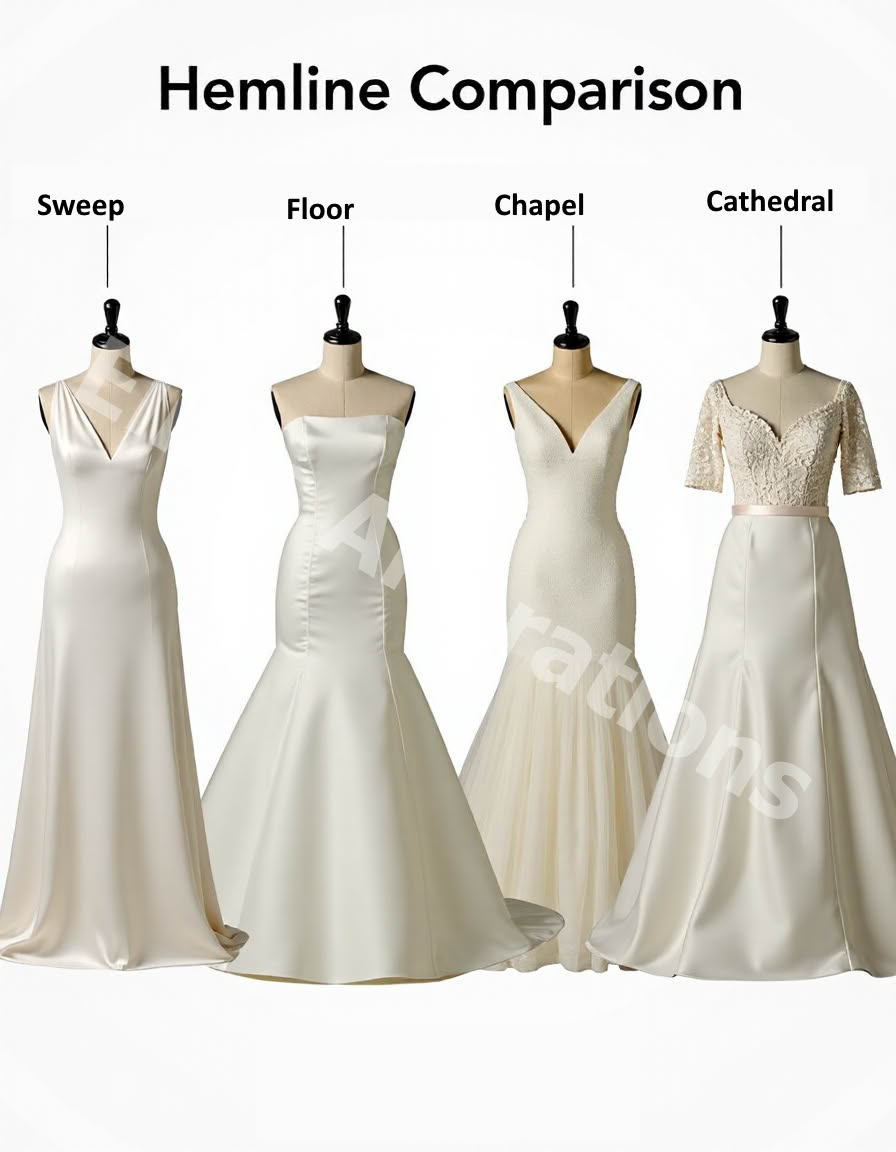
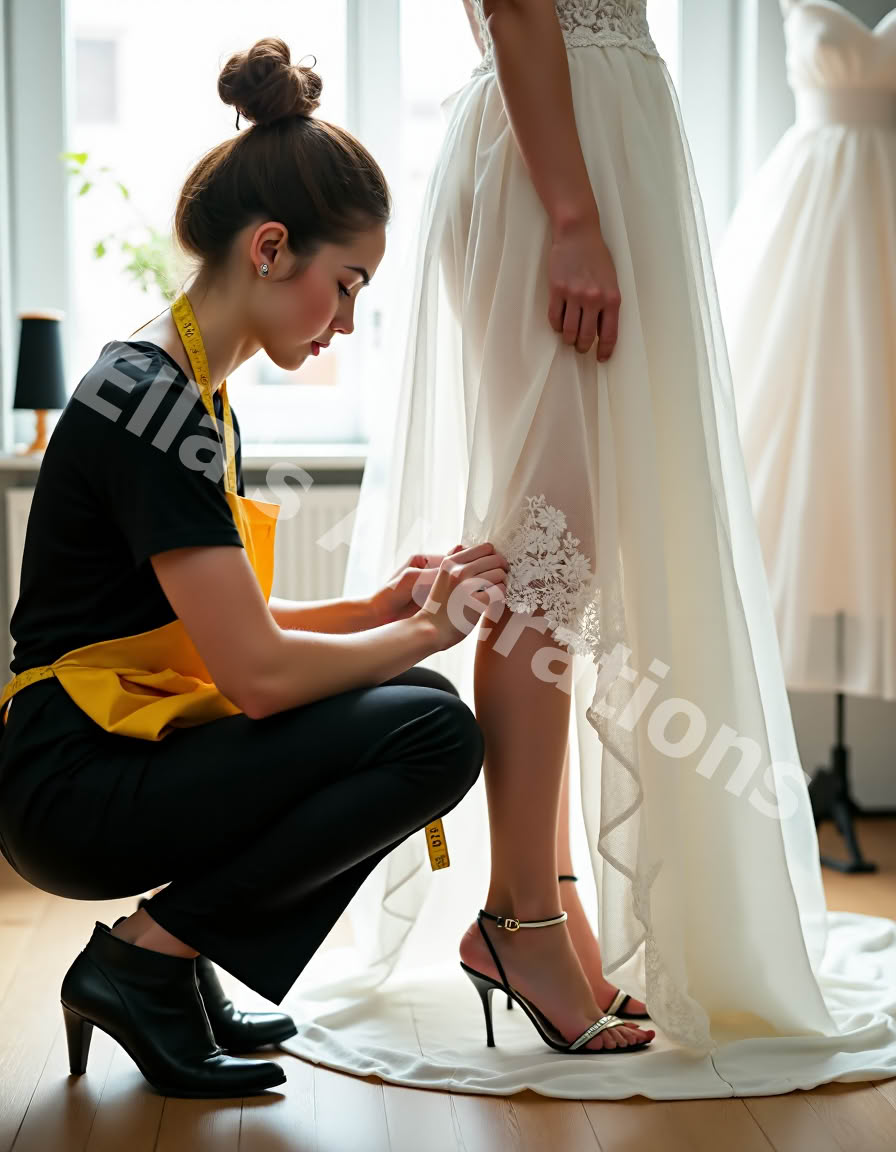
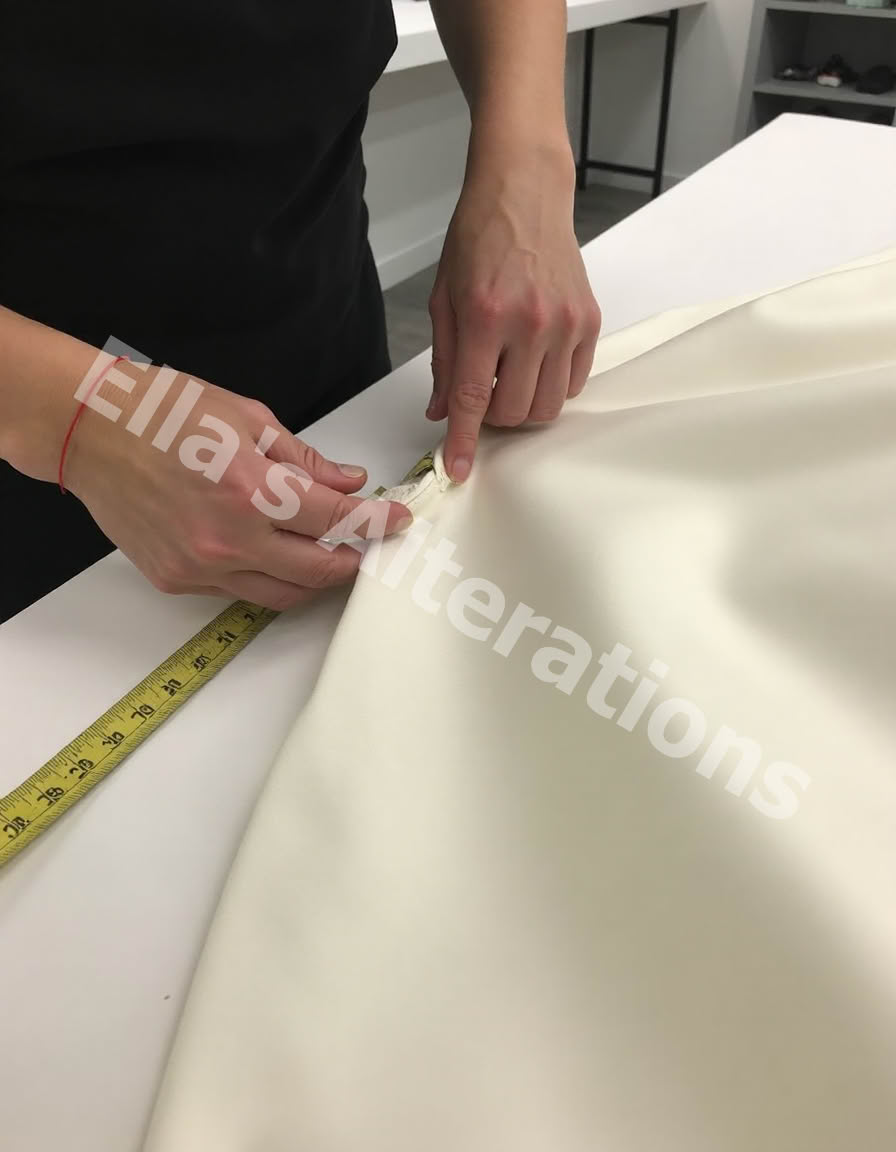
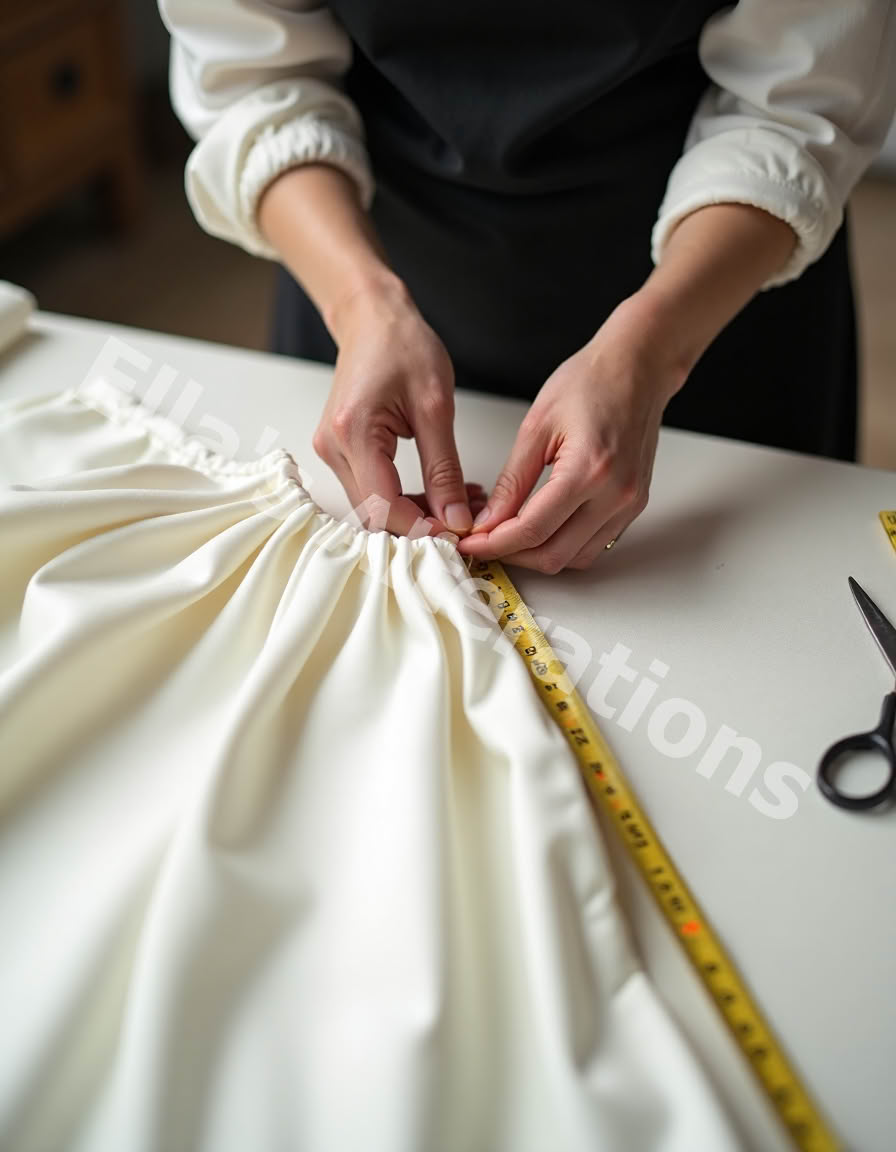
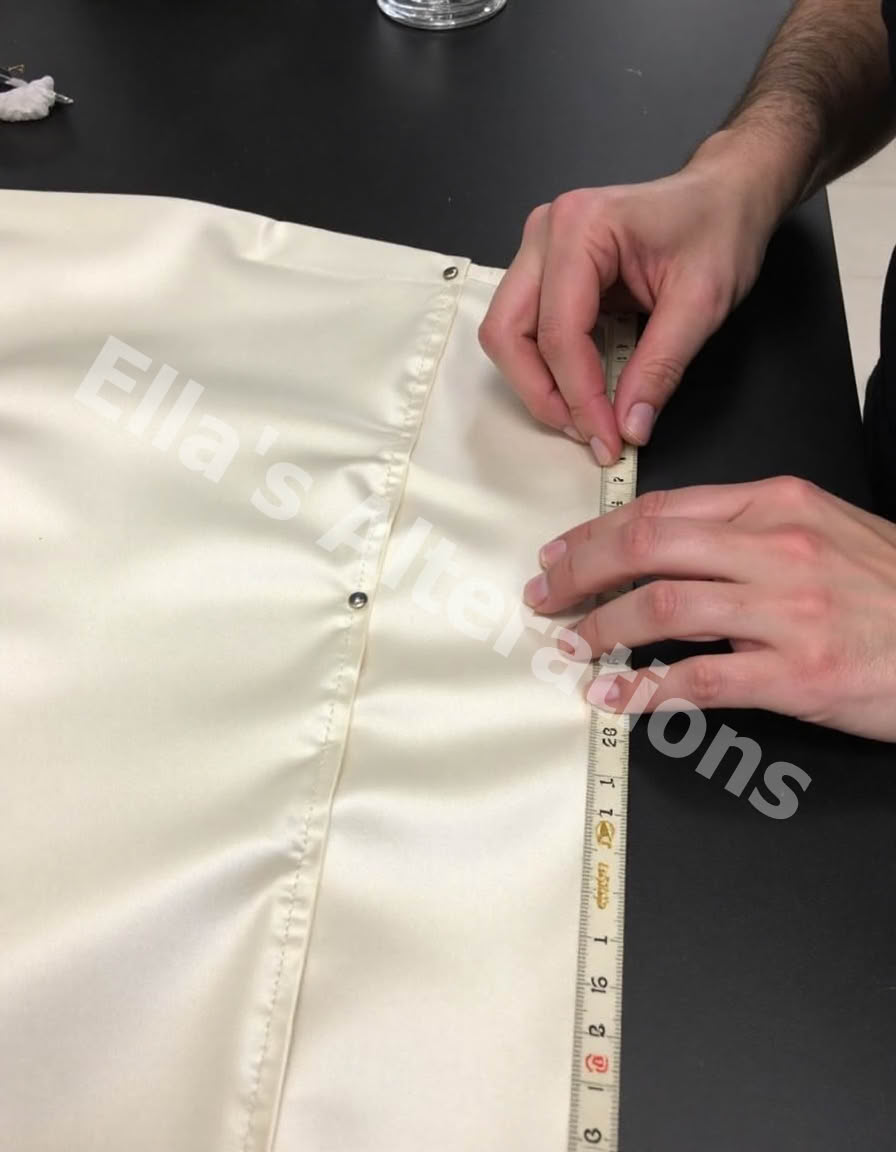
What Is a Hemline and Why Does It Matter?
The hemline isn’t just decoration—it dictates proportion, flow, and confidence. Too short or too long, and the whole silhouette collapses.
At first glance, a hemline might seem like a small detail.
It’s simply where the fabric ends, right?
But in the world of bridal fashion, the hemline is anything but simple.
It’s a defining element of the gown’s design and one of the most critical components of the overall fit and finish.
The hemline refers to the very bottom edge of the dress.
It can be straight, scalloped, layered, curved, or even asymmetrical.
It might rest right at the floor, sweep behind the bride in a soft train, or trail for several feet in a grand cathedral-length statement.
But beyond aesthetics, the hemline plays a deeply functional role.
It determines how a gown interacts with the ground, how it flows with the bride’s body, and how it appears in motion , which is key when you’re walking down the aisle or twirling into your first dance.
Why does this matter so much?
Because a wedding dress is meant to move.
Unlike fashion meant only to be seen, a bridal gown is lived in , walked in, stood in, danced in, hugged in.
Every inch matters.
- If the hemline is too short, it cuts off the silhouette and exposes the shoes in awkward ways.
- Too long, and it can cause stumbling, dragging, or even damage to the delicate fabric.
- The perfect hemline ensures that your dress works with you, not against you.
The hemline also influences balance and proportion.
- In a fitted gown like a mermaid or trumpet style, the hemline creates that dramatic flare near the bottom.
- In a ballgown, it defines the skirt’s final shape, keeping the fullness elegant rather than overwhelming.
- Even in a minimalist sheath dress, the clean line at the bottom must be precise to maintain that sleek, modern look.
A hem that falls even a little unevenly can throw off the whole effect.
Tailors treat the hemline as the last adjustment for good reason.
It’s shaped by everything else: the structure of the bodice, the height of the bride’s shoes, the type of bustle added, and the way the train is designed.
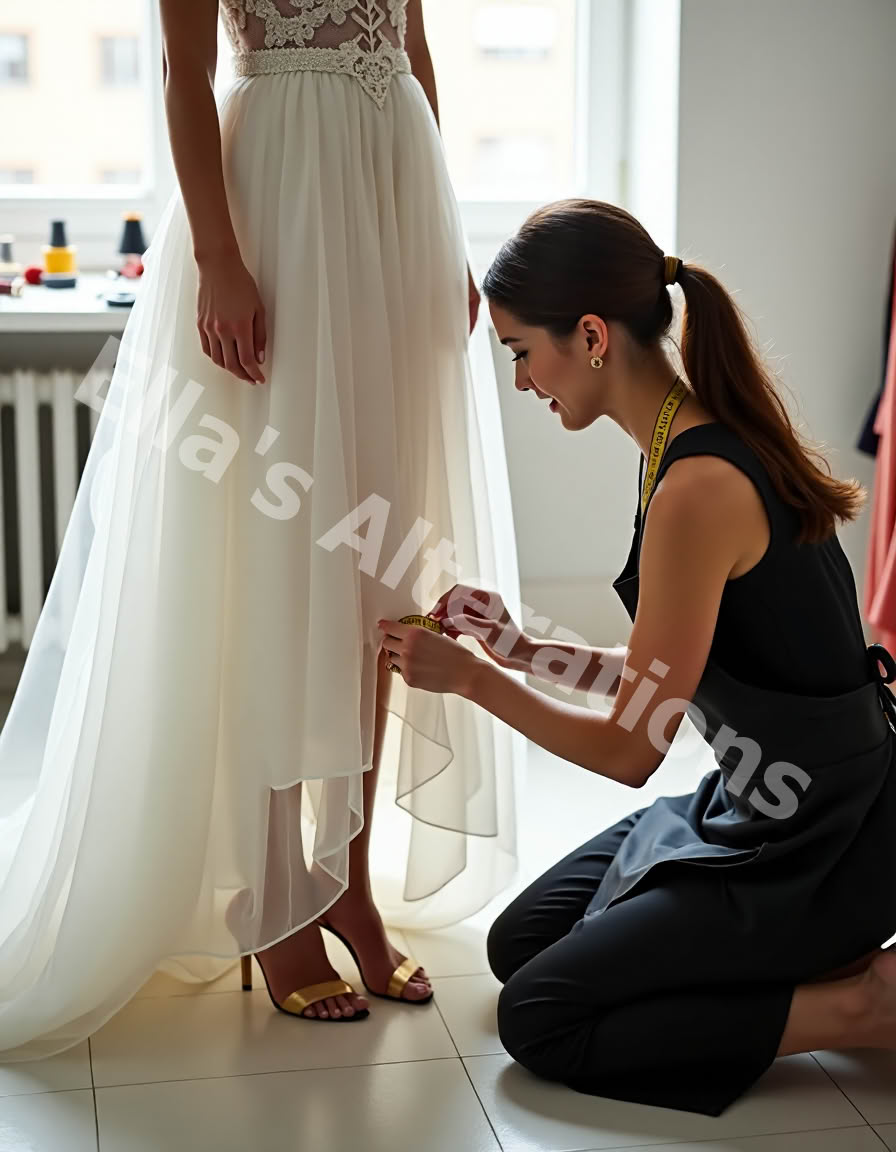
During fittings, a seamstress will pin and repin until the hem falls exactly where it should, taking into account posture, motion, and any unevenness in the floor or terrain of the venue.
This is not just about making a dress shorter , it’s about sculpting the fabric so it moves like it was made for you.
Then there’s the material.
- Satin, tulle, chiffon, lace , each fabric reacts differently to hemming.
- A hem on a single-layer chiffon skirt must be feather-light and invisible.
- A tiered tulle gown with horsehair trim needs to keep its volume without appearing bulky.
- Lace hems may need to be removed and repositioned by hand to maintain their decorative edge.
The complexity of this process is why a skilled tailor is so essential to the bridal journey.
Ultimately, the hemline matters because it’s the unspoken foundation of your gown’s beauty.
It supports the shape, protects the movement, and finishes the story your dress is telling.
It’s not just where the dress ends , it’s where everything comes together.
Whether you’re wearing a dramatic cathedral train or a sleek floor-length gown, the hemline completes the look and allows the magic to unfold naturally from head to toe.
Quick Facts
- The hemline defines how a gown moves and photographs.
- Mermaid hems flare dramatically at the bottom.
- Ballgowns rely on hems for fullness and shape.
- Sheath dresses demand clean, precise lines.
- Every hemline interacts with venue flooring.
- Tailors pin and repin hems for posture and motion.
The hemline is the unspoken foundation of every wedding gown.
Types of Hemlines
- Straight hem – clean and modern
- Scalloped hem – lace or embroidery detail
- High-low hem – playful and dynamic
Builder Tip: Uneven hems can ruin photos—always walk and twirl during fittings to test movement.
Know Your Gown: Essential Parts of a Wedding Dress.
How Do You Choose the Right Hemline?
Your hemline sets the tone for your bridal style. From timeless floor-length gowns to playful tea-length or high-low cuts, the hem shapes your comfort and look.
When it comes to wedding gowns, the hemline does far more than just mark where the fabric ends , it sets the tone for your entire bridal look.
From traditional elegance to playful modern flair, hemline types offer brides a chance to personalize their style in ways that are both fashionable and functional.
Whether you’re going full-length for a formal ceremony or opting for something with a little more movement and charm, understanding the different hemline types is key to choosing the dress that reflects not only your personality but also your comfort and confidence.
Let’s explore three popular hemline styles , floor-length, tea-length, and high-low , and break down how each one brings a unique aesthetic to your wedding day.
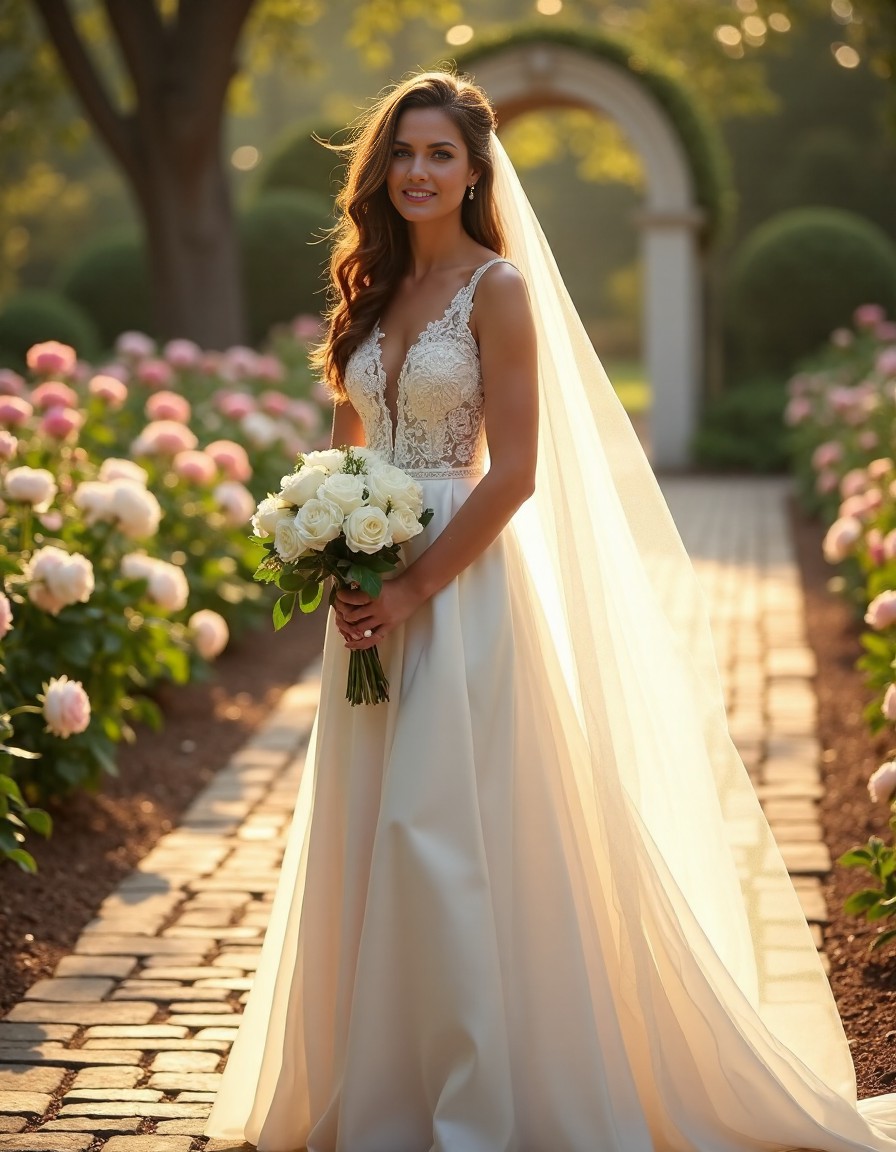
Floor-Length: The Bridal Standard When most people picture a wedding gown, they envision a dress that gracefully touches the floor.
Floor-length hemlines are considered the classic standard for bridal wear, and for good reason.
This hemline creates a seamless, elegant look that flatters every silhouette, from A-line and mermaid to ballgown and sheath.
It allows the gown to drape naturally and dramatically, adding to the formality and grace of your walk down the aisle.
This length is ideal for traditional or black-tie weddings and pairs well with longer trains and structured bustles.
It’s also incredibly versatile , a floor-length gown can be layered in tulle for a romantic, ethereal feel or cut in sleek satin for a more modern, minimal look.
One important note: a floor-length gown still needs custom hemming.
Even just an inch too long can cause tripping or dragging, while an inch too short can break the visual flow.
The perfect hem should just skim the floor when you’re wearing your wedding shoes, giving the illusion of effortless glide.
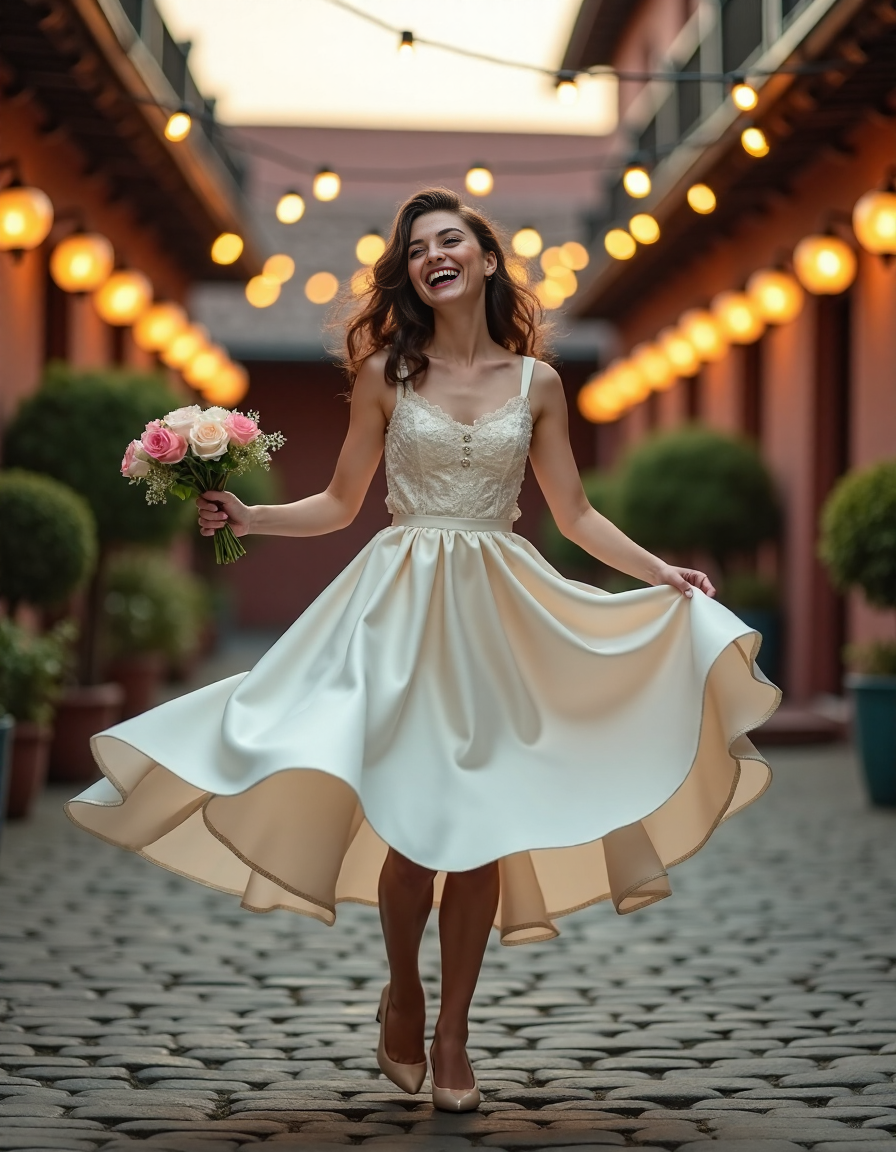
Tea-Length: Retro and Romantic For brides looking to mix vintage charm with modern sensibility, tea-length gowns offer a fresh alternative.
This hemline hits between the knee and the ankle , typically mid-calf , and was made popular in the 1950s.
It’s a favorite among retro-inspired brides, courthouse ceremonies, and destination weddings, where freedom of movement and a touch of personality go a long way.
Tea-length dresses have a playful energy, making them perfect for dancing and mingling at the reception.
They also allow you to show off your bridal shoes, whether you’ve chosen colorful heels, embellished flats, or something completely unconventional.
The shortened hem creates a visual balance that feels feminine and relaxed while still being unmistakably bridal.
Because the hem ends at a more visible spot on the leg, tailoring is just as crucial here as it is for floor-length styles.
An uneven tea-length hemline is much easier to spot and can interrupt the flattering lines of the dress.
A well-fitted tea-length gown will follow the body’s natural shape and maintain its structure throughout movement.
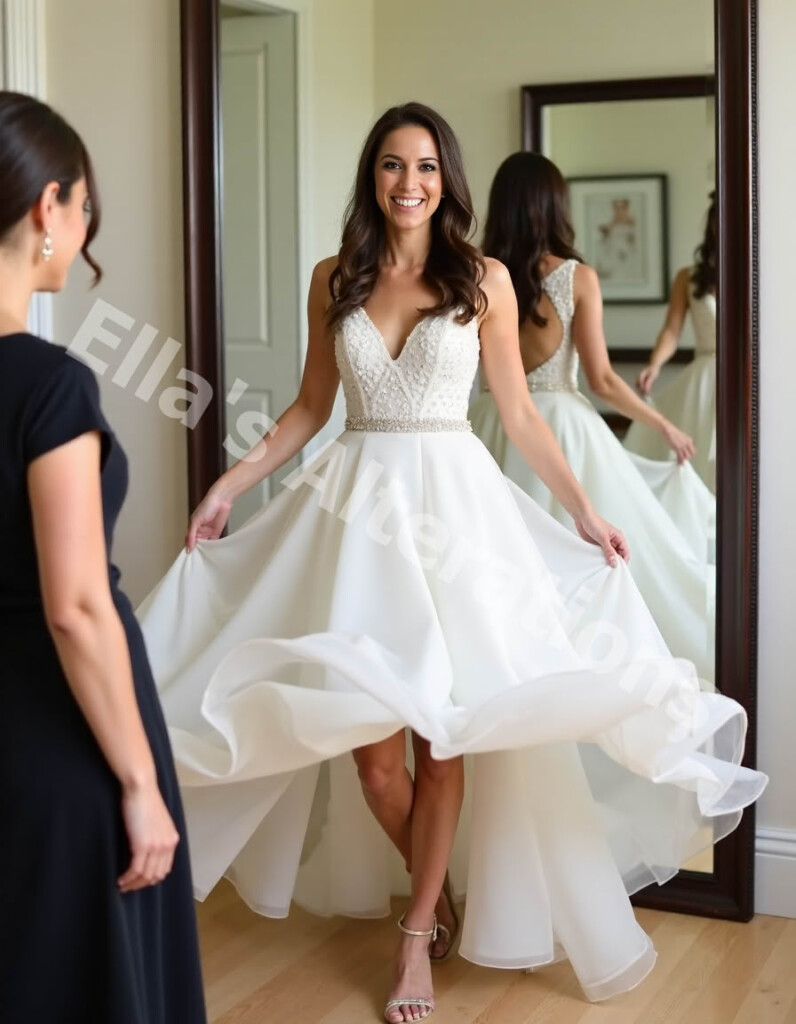
High-Low: Modern Movement and Style For the bride who loves a dramatic entrance but also wants to move with ease, the high-low hemline brings the best of both worlds.
This style features a shorter front , often hitting above the knee or mid-thigh , and a longer back that flows into a soft train.
It offers an unexpected twist on tradition and creates dynamic visual interest, especially when walking or dancing.
High-low gowns work beautifully with lighter fabrics like chiffon, organza, or layered tulle, which respond well to movement.
They’re also ideal for brides who want to show off their legs or make a statement with statement shoes.
From a tailoring perspective, high-low hems require serious precision.
Because the cut exposes more of the leg in the front, even the slightest unevenness becomes noticeable.
The transition between front and back must be smooth and intentional, and the overall symmetry should feel balanced from every angle.

Alteration Note: Precision Matters Regardless of which hemline you choose, one rule applies to all: hemming requires absolute precision.
This is especially true when working with delicate fabrics like lace, beading, or embroidered overlays.
In many cases, tailors must remove decorative elements at the edge of the gown, shorten the underlying fabric, and then reattach each appliqué or trim by hand , a time-consuming but necessary process to preserve the gown’s design.
Whether your hemline is floor-length, tea-length, or high-low, the final result should look intentional, balanced, and clean.
Quick Facts
- Floor-length is the classic bridal choice.
- Tea-length adds retro charm and shows off shoes.
- High-low mixes drama with freedom of movement.
- Precision hemming is essential for every style.
- Fabric type changes how hems must be cut.
- Venue type often dictates the best hemline choice.
Your hemline is your wedding day vibe in one cut.
Hemline Styles
- Floor-Length: Formal, seamless, versatile
- Tea-Length: Playful, retro, reception-ready
- High-Low: Dynamic, modern, shoe-showing
Stylist Tip: For beach or outdoor weddings, avoid dragging hems—opt for tea-length or high-low cuts that keep movement natural.
The perfect hemline doesn’t call attention to itself , it quietly enhances your movement, supports your silhouette, and ensures that every step down the aisle feels just right.
Wedding Dress Hemline Styles Explained:
What’s a Hemline, Really?
- The hemline is the very bottom edge of your gown
- It can be straight, scalloped, curved, layered, or asymmetrical
- Placement ranges from tea-length to cathedral train
- It directly affects movement, balance, and silhouette
Why It Actually Matters
✔ A hemline controls how your dress moves when you walk, pose, and dance
✔ It supports the shape of the gown — from sleek sheaths to voluminous ballgowns
✔ It balances your silhouette so the look is flattering, not frumpy
✔ An uneven hem? Instantly noticeable and hard to unsee
✔ Too short = awkward. Too long = dangerous
✔ It's the last step because it depends on everything else — shoes, posture, bustle, venue floor
Hemline by Dress Style
- Mermaid & Trumpet: Hemline = drama and flare
- Ballgown: Defines the final curve of the skirt
- Sheath or Column: Precision hem keeps the look modern
- A-line: Soft, romantic flow starts with the perfect edge
- High-Low or Tea-Length: All about playful elegance and showing off those shoes
Hemming Is Not Just Shortening
Tailors don’t just “trim” a dress
They sculpt the bottom to match the bride’s height, shoes, movement, and silhouette
They may need to:
- Hand-lift lace and reattach it
- Balance multi-layer tulle evenly
- Adjust horsehair trims for volume
- Shape chiffon hems so they seem to float
Hemline = Function + Fashion
It’s not just a design detail — it affects:
- Walking
- Dancing
- Photos
- Posture
- Fabric longevity
Every step down the aisle relies on a hem that moves with you, not against you.
Quick Fact: The hemline isn’t just the end of the dress — it’s the start of everything else working beautifully.
Stylist Tip: Always bring your wedding shoes and undergarments to your final fitting. The hemline can’t be set without them. Trust your tailor’s eye — they’re not just measuring length, they’re measuring how you move.
Final Takeaway:
The hemline is the last stitch — but the first impression.
It holds the gown’s story together, grounds its design, and supports every magical moment from “I do” to your final dance.
📏 A custom hemline is essential for different body types, dress styles, and venue surfaces like sand, grass, or marble.
A Tailors Guide: How Bustles Transform Your Wedding Gown.
What Happens During a Wedding Dress Hem Alteration?
Hemming is the final act of dressmaking. It’s technical, artistic, and deeply personal—shaped to your height, fabric, and wedding shoes.
While it may appear as just the edge of the skirt, the hemline defines not only the length of the gown but its attitude, flow, and interaction with the bride’s body and surroundings.
Choosing the right hemline isn’t just about taste.
It’s about harmony between silhouette, fabric, and function.
Let’s break down the main styles and what makes each one uniquely impactful.
One of the most timeless hemline styles is the floor-length hem.
As its name suggests, this hem barely skims the ground, offering a clean, classic look that suits nearly every silhouette, from sheath dresses to ballgowns.
It’s often chosen by brides who want simplicity, elegance, and ease of movement.
The key to nailing a floor-length hem is tailoring.
It must be cut precisely to the bride’s height with her wedding shoes on.
A floor-length hem that drags or hovers can break the illusion of perfect fit.
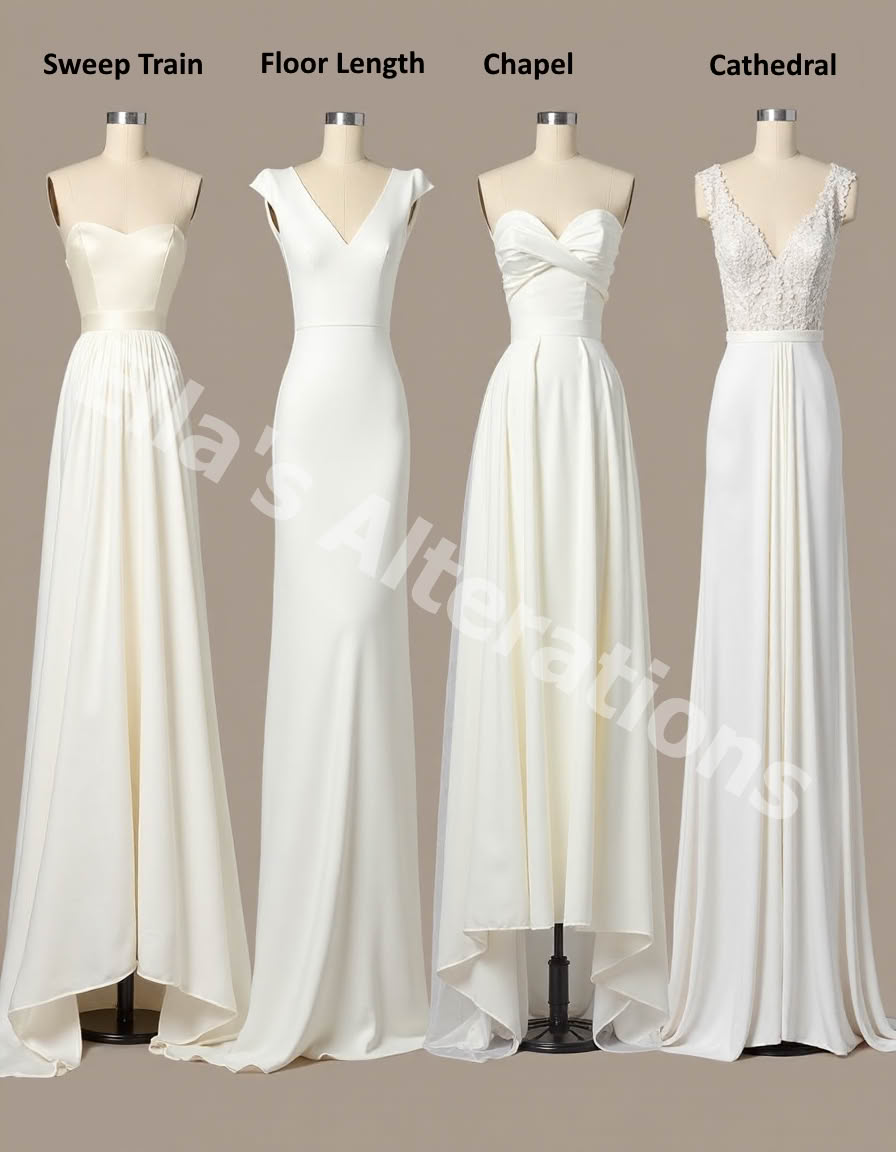
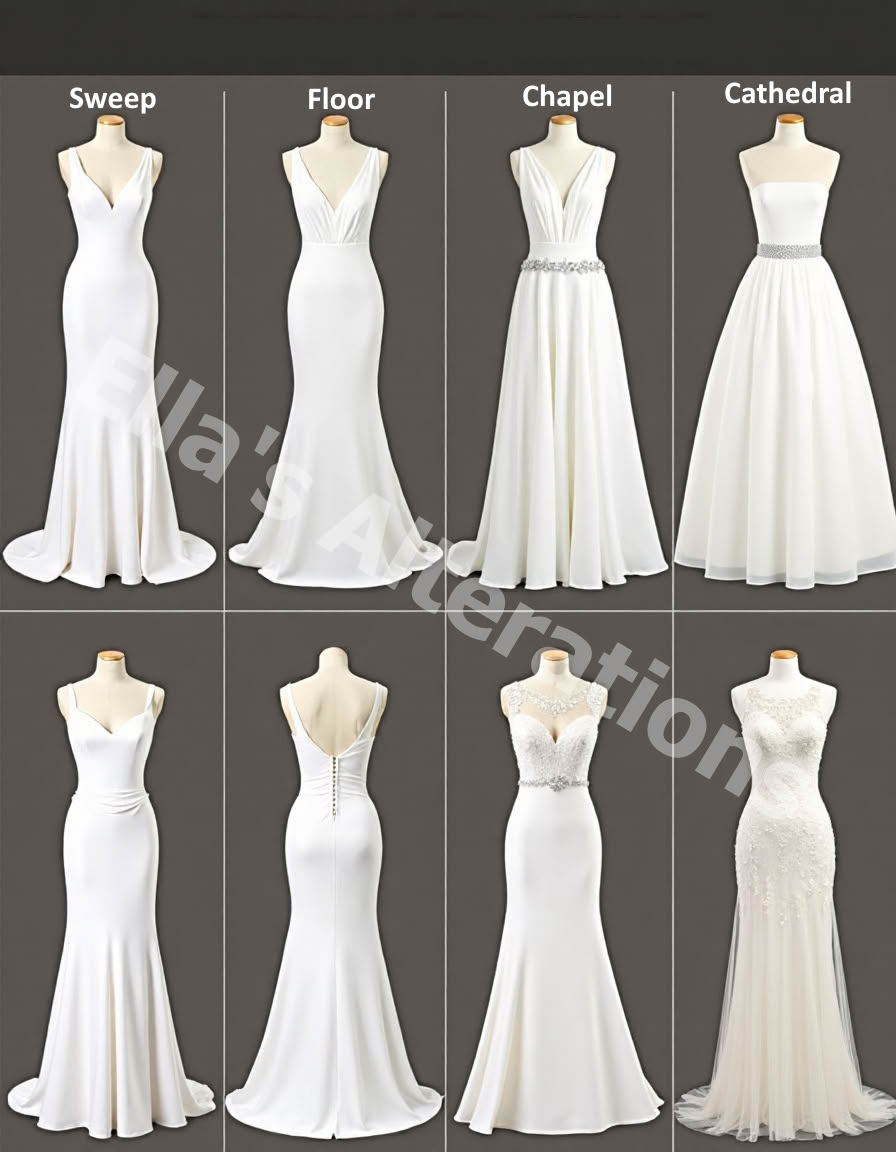
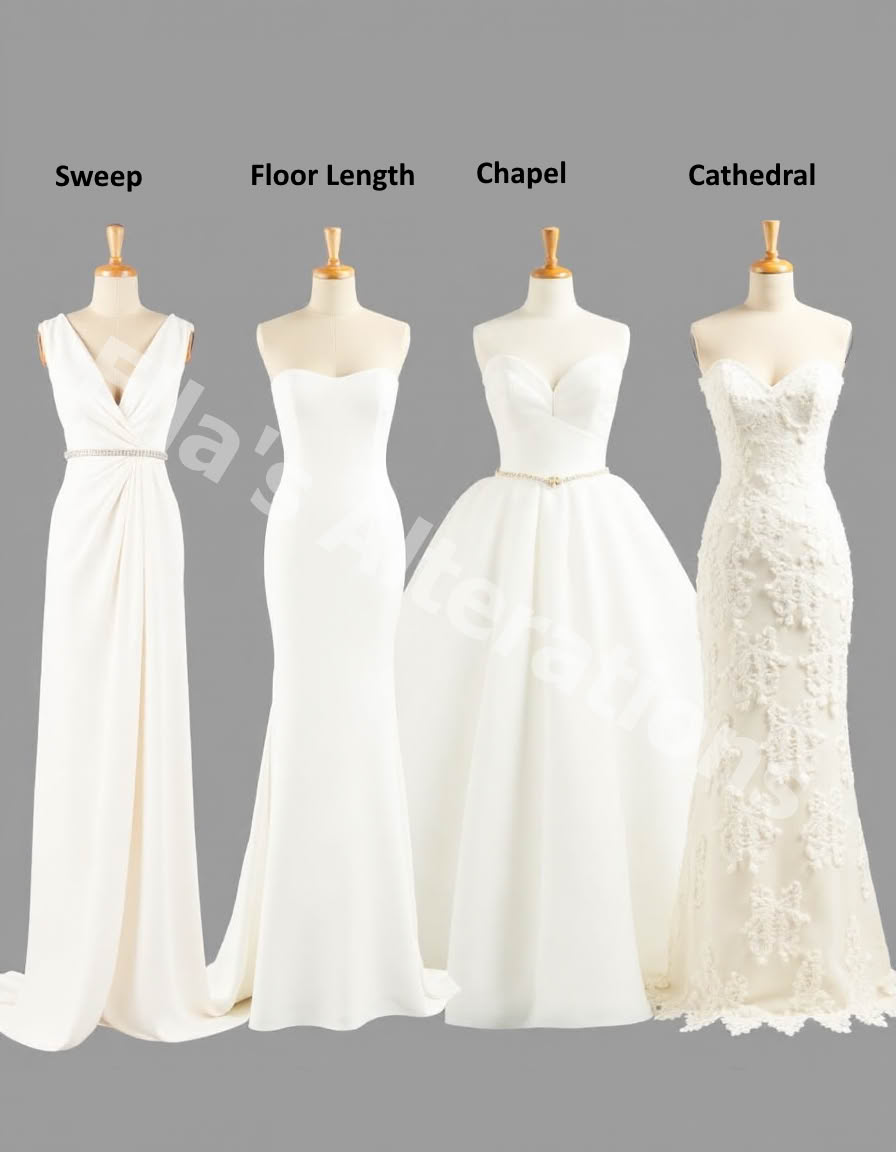
Next comes the sweep train, a subtle extension of the floor-length style.
This hemline adds just a few extra inches of fabric that gently trails behind the bride, creating softness and motion without the drama of a full train.
Sweep trains pair beautifully with lightweight fabrics like chiffon or crepe and are ideal for outdoor weddings where a longer train could catch on grass or gravel.
They offer a sense of grandeur without the need for bustling.
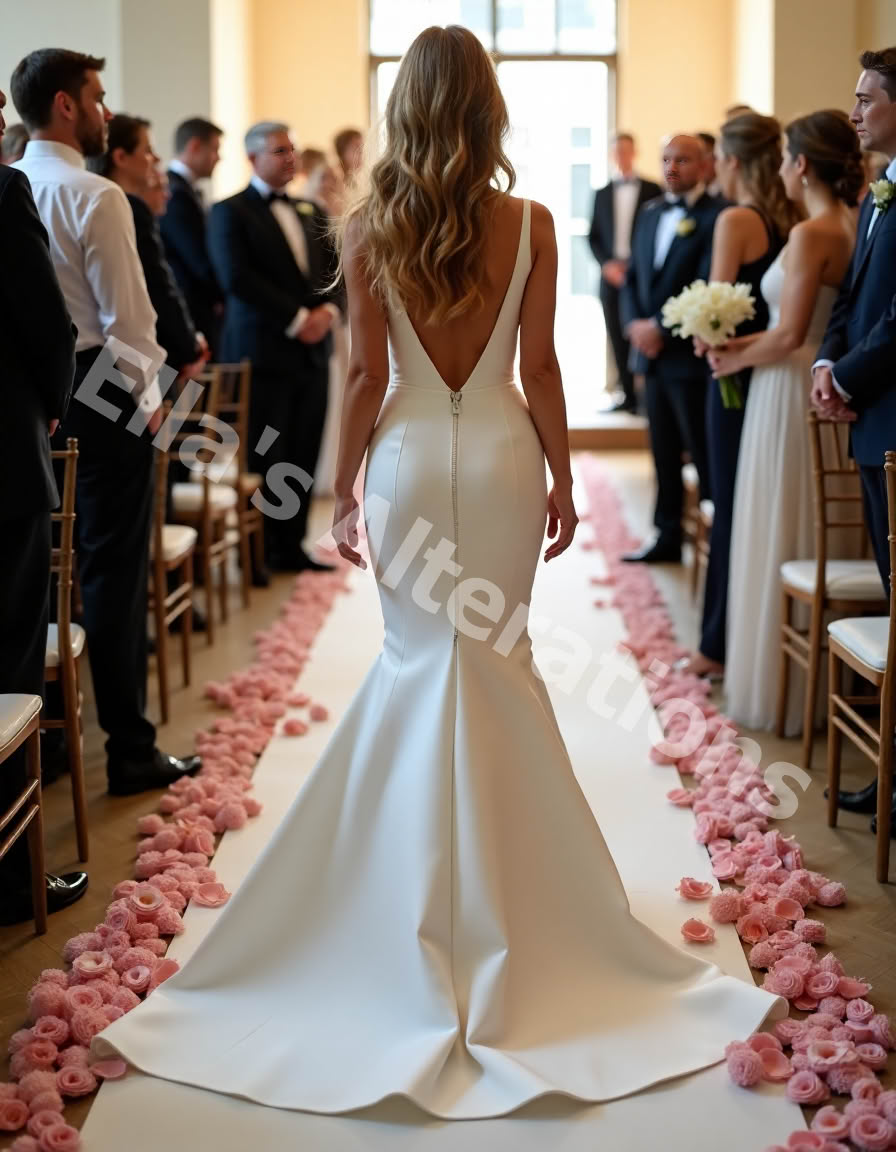
Then there’s the chapel train, one of the most popular choices for brides seeking elegance without excess.
This hemline extends approximately 12 to 18 inches beyond the floor, giving the gown a refined sense of drama while remaining manageable for walking and dancing.
Chapel-length hems are often seen in A-line or mermaid silhouettes and work especially well in formal ceremonies held in churches or grand venues.
They often require bustling for the reception, which your tailor can design based on your skirt structure and fabric type.
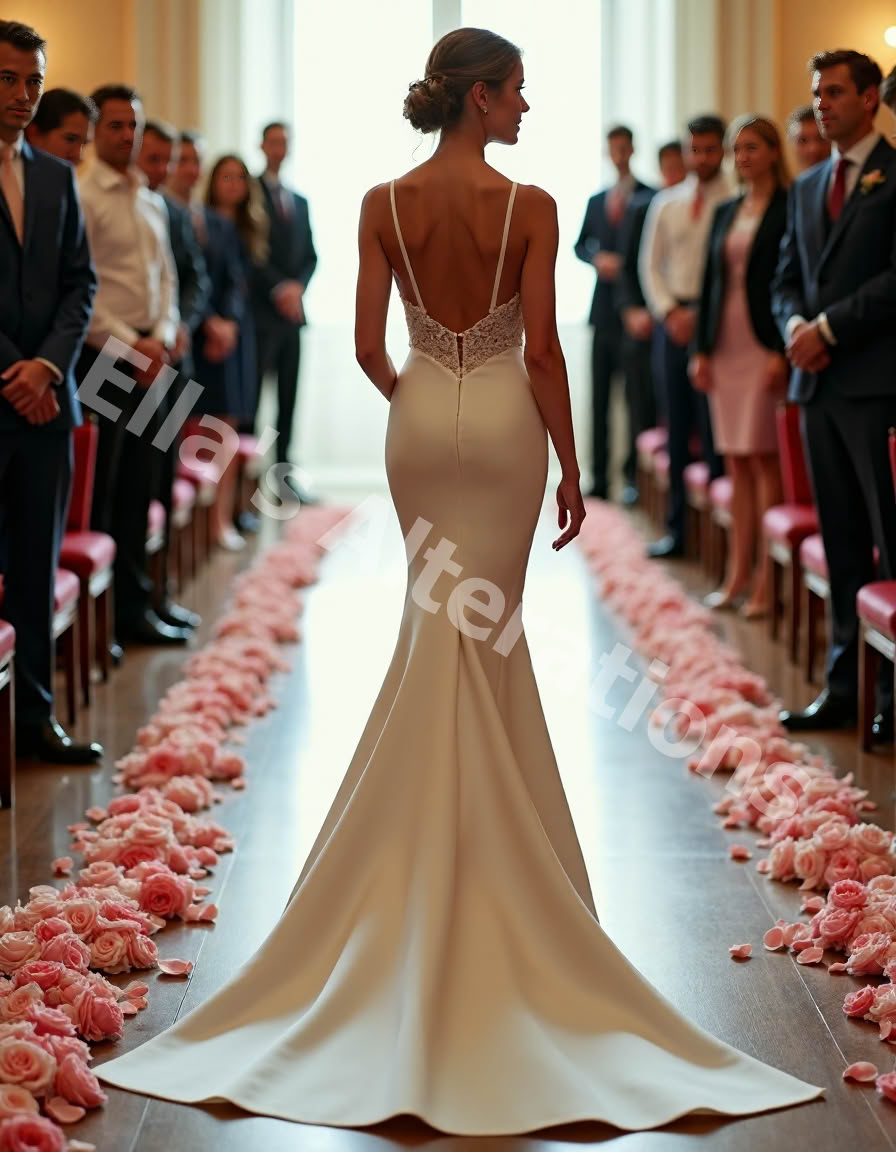
For brides dreaming of a royal-inspired moment, the cathedral train delivers on drama.
This hemline can trail up to 7 feet or more behind the bride, making it the most statement-making of all the train styles.
It’s best suited for grand venues with long aisles and plenty of space to show off the length.
A cathedral hem works well on structured gowns like ballgowns and trumpet dresses, and it pairs beautifully with lace overlays, beaded edges, or scalloped finishes.
Keep in mind, this style requires thoughtful bustling to avoid tripping or dragging during the reception.
There are also high-low hemlines, which combine a shorter front and a longer back, often used for modern, playful bridal looks.
This hemline allows brides to show off statement shoes while still maintaining the grace of a train.
It’s perfect for beach or destination weddings and tends to work best with lighter, more casual fabrics.
Each hemline style should also be viewed in the context of the gown’s silhouette.
A ballgown with a chapel train sends a completely different message than a sheath dress with a sweep hem.
The hemline reinforces the intention of the dress , whether that’s fairy tale elegance, minimalist chic, or ethereal romance.
What makes all of these styles work is customization.
Your tailor will adjust the hem not just to your height but to your posture, your venue, and your movement.
This is why final fittings are essential.
You may love the look of a cathedral train, but if your venue is outdoors or you plan to dance for hours, your seamstress will help you modify it to match your lifestyle without sacrificing style.
In the end, your hemline isn’t just about how your dress looks.
It’s about how it feels and flows in real time.
It’s a reflection of your personal style, your wedding setting, and the energy you want to carry into that unforgettable walk down the aisle.
Quick Facts
- Floor-length hems require exact shoe measurements.
- Sweep trains add softness without bulk.
- Chapel trains give elegance without excess.
- Cathedral trains bring dramatic royal flair.
- High-low hems balance fun with elegance.
- Custom hems ensure symmetry from every angle.
The hem is where craft meets couture.
Train Styles
- Sweep train – subtle elegance
- Chapel train – refined statement
- Cathedral train – regal drama
Builder Tip: Longer trains need bustling—plan ahead with your tailor so your gown works from aisle to dance floor.
Why Is Custom Hemming Better Than Standard Lengths?
Standard lengths don’t exist in bridal tailoring—every hem is custom. A gown is cut to your height, your shoes, your venue, and your posture.
When a wedding gown is first tried on, it’s rarely a perfect fit from the start.
That’s where alterations step in, transforming a beautiful dress into your dress.
Among all the adjustments a seamstress may make , from reshaping bodices to refining strap placements , the hem is always one of the last, and most precise, steps.
It’s the final touch that brings balance, grace, and functionality to your gown, and it’s a process that requires skill, patience, and an eye for detail.
Hemming a wedding dress is not a one-size-fits-all job.
In fact, it’s one of the most complex parts of bridal tailoring because it varies based on fabric type, silhouette, train length, and the bride’s chosen footwear.
The process begins after most major alterations are complete, especially bodice fitting.
That’s because any adjustment made to the structure of the dress above the waist can change how the skirt falls and, in turn, where the hemline naturally sits.
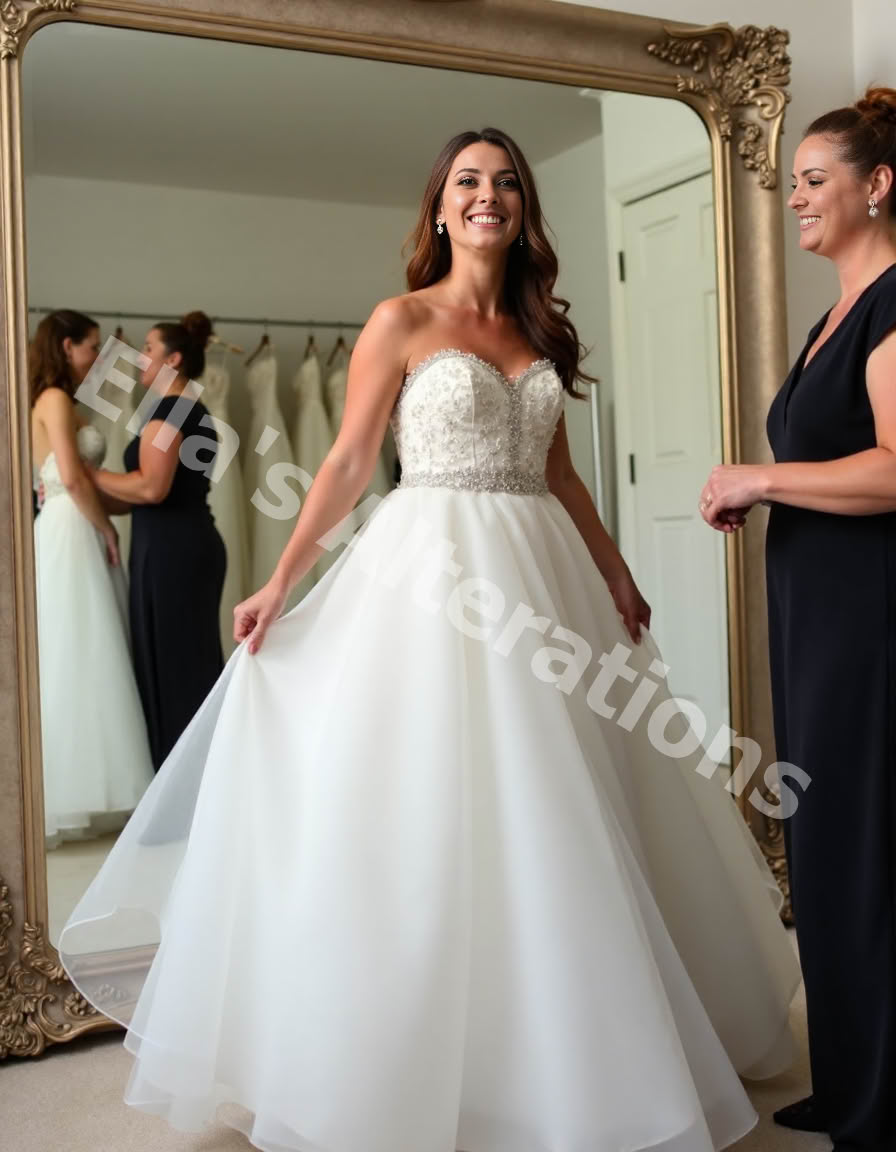
At your final fitting, the seamstress will first check your posture, the exact shoes you’ll be wearing on your wedding day, and any undergarments that might affect how the dress sits on your body.
All of these factors must be locked in before hemming begins.
Even a small change in heel height or hoop skirt volume can shift the dress length enough to require a fresh set of measurements.
Once everything is in place, the tailor will begin pinning the hem.
You’ll likely be asked to walk, stand still, and move naturally as this happens.
The goal is to find that perfect point where the hemline skims the floor without dragging.
For dresses with trains, the tailor will also begin planning how the hem transitions into the longer length, creating a seamless flow rather than an abrupt drop.
Each type of fabric presents its own challenges during hemming.
- Satin and crepe require exact, invisible stitching since they show even the smallest mistake.
- Tulle needs layering attention, as an uneven cut can lead to a lopsided look or a hem that lacks softness.
- Lace often has decorative edging that must be carefully removed, shortened, and reattached by hand , a labor-intensive process that preserves the integrity of the gown’s original design.
Multiple hem lengths may also need to be considered, especially in gowns with horsehair braid, petticoats, or layered underskirts.
A tailor doesn’t just hem the outer shell of the gown.
They must tailor every visible and structural layer underneath it to match, which ensures clean movement and visual harmony from every angle.
For dresses with dramatic trains, the alteration process includes building in a bustle , a set of discreet loops, buttons, or ties that lift and secure the train during the reception.
The bustle must be placed in a way that supports the hem without creating bulk or uneven draping.
Your tailor may recommend an American, French, or ballroom bustle, depending on your silhouette and train length.
This step is crucial for transitioning your gown from ceremony to celebration without sacrificing elegance.
Hemming is more than just shortening fabric.
- It’s about respecting the integrity of the dress while adjusting it to fit your height, posture, and venue.
- It requires a tailor’s eye to balance the technical with the aesthetic, ensuring that every inch of your gown works together in harmony.
When done right, the hem is invisible , not because it lacks presence, but because it blends so perfectly into your look that it simply belongs.
In this final phase of alterations, the dress becomes truly yours.
Every step stitched into the hemline is a step closer to the aisle, and a celebration of craftsmanship as much as style.
Quick Facts
- Hems are one of the most complex alterations.
- Every fabric demands different stitching methods.
- Even posture shifts can affect hem measurements.
- Bustles are built into hems for functionality.
- Multiple skirt layers must be hemmed in harmony.
- A custom hem creates invisible perfection.
A hem cut for you is a hem that disappears.
Fabric Challenges
- Satin – unforgiving, shows every stitch
- Tulle – layered, must be even
- Lace – requires hand-removal and reattachment
Stylist Tip: Always finalize shoes and undergarments before hemming—small changes can alter the cut.
How Do You Get the Perfect Hemline?
Perfect hems require planning. Bring your shoes, move at fittings, respect fabric differences, and consider your venue when choosing length.
Getting the perfect hemline on your wedding gown isn’t just about trimming fabric.
It’s a precise, multi-step process that combines practical planning with expert tailoring.
For brides who want that floaty, elegant finish , where the dress just grazes the floor without dragging , a few smart decisions can make all the difference.
From your first fitting to your walk down the aisle, the hemline is shaped by your body, your shoes, your venue, and the unique structure of your gown.
Let’s start with the most essential element: your wedding shoes.
Always bring the exact shoes you’ll wear on your big day to every fitting.
Even a half-inch difference in heel height can throw off the hemline, especially if you’re working with a floor-length dress or one with a delicate train.
Your tailor will measure the gown’s length based on how the skirt falls while you’re standing tall in your shoes.
This ensures the hemline is tailored to your real height, not just an estimate.
Movement is just as important as measurement.
During your fitting, don’t stand still the entire time.
- Walk around.
- Sit down.
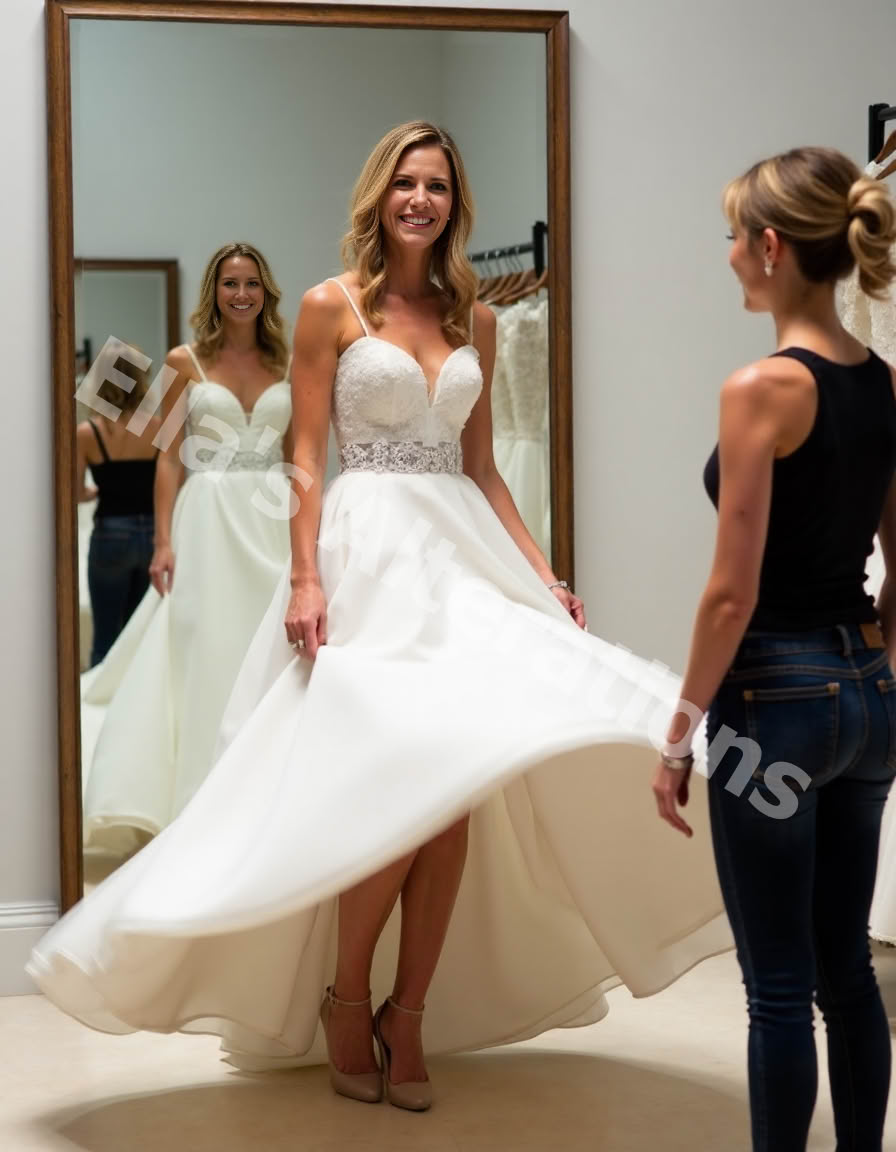
- Twirl.
- Step forward and back.
This gives your tailor a clear picture of how the gown shifts with your body, which can expose hidden issues like uneven hemlines or fabrics that don’t fall naturally.
A hemline that looks fine while standing might suddenly bunch or drag once you start walking.
Testing movement helps catch these issues early so they can be fixed with precision.
Timing also plays a big role in the hemming process.
Resist the urge to get your dress hemmed too early.
If you’re planning on changing your shoes, losing or gaining weight, or adjusting the underlayers of your gown, wait until all those factors are finalized before committing to the hem.
Your final fitting , usually scheduled two to three weeks before the wedding , is the best time to complete this step.
By then, everything from your posture to your accessories should be consistent with what you’ll wear on the actual day.
Another common tailoring tip is to be mindful of your gown’s fabric.
Each material requires a different hemming technique.
- For example, chiffon may need a rolled hem to keep it light and airy.
- Satin, on the other hand, shows every stitch, so the hem needs to be finished with extra care.
- Lace often demands that appliqués be removed and reapplied by hand so the design isn’t lost in the adjustment.
Trust your tailor’s advice on how to maintain the gown’s original style while making it work for your height and body shape.
Consider your venue, too.
An outdoor ceremony on grass or sand calls for a shorter hem or even a lift in the front to prevent snagging.
A ballroom wedding with polished floors may allow for a longer, more flowing hemline.
Your tailor can customize the length to match the environment, ensuring your gown glides instead of drags.
Finally, think about bustling.
If your gown has a train, your tailor will recommend a bustle style that not only supports the fabric but also preserves the hem’s clean line when the train is lifted.
Bustling is an art form on its own, and when done right, it allows you to move freely while maintaining the integrity of your silhouette.
The perfect hemline is all about balance , between form and function, fabric and movement, elegance and practicality.
With the right tailor, thoughtful planning, and careful fittings, your hemline won’t just look flawless.
It’ll feel like it was made just for you , because it was.
Quick Facts
- Bring your wedding shoes to every fitting.
- Walk, sit, and twirl to test the hem.
- Don’t hem too early—wait until final fitting.
- Fabric dictates hemming technique.
- Venue conditions matter for hem length.
- Bustles preserve hems during the reception.
The right hemline makes you float, not fuss.
Fitting Timeline
- First fitting – bodice & shape
- Second fitting – hem pinned
- Final fitting – hem finished & bustle tested
Builder Tip: Schedule your last fitting two weeks before the wedding—this keeps the hem fresh, precise, and ready for the aisle.
A Tailor’s Guide: Why Your Hemline Is the Final Touch on a Wedding Gown
From cathedral trains to high-low hems, this in-depth video breaks down why your hemline shapes your bridal look — and how expert tailoring brings it to life.
A Tailors Guide: How a Statement Trains Transforms Your Wedding Gown.
Why Does the Hemline Matter Most?
The hemline is the last stitch and the last word in your gown’s story.
It defines proportion, movement, and confidence. Get it wrong, and you’ll notice all day.
Get it right, and you’ll forget it’s there—because it feels like it was always meant to be.
When the final fitting is done and the last stitch is placed, what remains is not just a dress, but a gown that tells your story.
And at the very heart of that transformation , quietly but powerfully , is the hemline.
It may be the last thing a tailor touches, but it’s one of the first things that defines how your dress moves, how it falls, and how it feels when you finally step into it as a bride.
The hemline is where everything comes together.
It reflects all the choices you’ve made throughout your bridal journey.
The silhouette you chose, the shoes you fell in love with, the type of ceremony you planned , every one of those details feeds into how the hemline is cut, shaped, and finished.
It’s not just about where the fabric ends.
It’s about how the gown interacts with you and your world.
A flawless hemline allows the dress to move in sync with your body.
It creates that sweeping motion as you walk down the aisle, the light glide as you turn during your first dance, the soft sway as you greet your guests.
When done right, it goes unnoticed , and that’s the goal.
You never want to think about your hem.
You want it to disappear into the elegance of the moment.
But if it’s not right, you will notice.
A hem that’s too long might catch underfoot or collect dirt throughout the day.
A hem that’s too short might break the illusion of proportion, drawing attention away from your overall look.
And an uneven hem can disrupt the symmetry of even the most beautifully crafted gown.
That’s why tailors treat the hem with such care.
It’s not an afterthought.
It’s a final confirmation that the gown is ready.
What’s special about the hemline is that it’s both form and function.
- It finishes the visual composition of the gown and also plays a deeply practical role.
- It’s tailored for movement, designed to support comfort, and adjusted to respond to your environment.
Whether you’re walking on marble floors, grassy fields, or a sandy shore, your hemline determines how your gown behaves in that space.
It holds the weight of your dress and your day.
There’s also something symbolic about this final detail.
It’s the last part of your gown that gets touched before the wedding.
The last pin, the last measurement, the last thread pulled through fabric.
It’s the moment your dress goes from being a beautiful garment to being yours.
Tailors often say they can feel the energy shift in that moment , when a bride tries on her gown for the last time and everything just clicks.
The fit is perfect, the skirt flows naturally, and the hemline sits exactly where it should.
That’s when it becomes real.
So if you’ve ever wondered whether that final inch matters, it does.
- It always does.
The hemline is the quiet star of your bridal look.
- It doesn’t scream for attention, but it carries the weight of the entire design.
- It holds the posture of the dress.
- It sets the rhythm of your steps.
- It supports your walk into a new chapter.
In the end, the hemline isn’t just the last stitch.
It’s the last word in your gown’s story , and it speaks volumes.
Quick Facts
- The hemline is the final step in alterations.
- It shapes how your gown interacts with your body.
- Uneven hems distract from your silhouette.
- A flawless hem allows the dress to disappear into elegance.
- Hemlines adapt to different venues and surfaces.
- The hem is symbolic—the last detail before you walk the aisle.
The hem is the last stitch, but the first impression.
Hemline Mistakes to Avoid
- Hemming too early
- Skipping bustle planning
- Forgetting shoe changes
Stylist Tip: Trust your tailor’s eye—precision in the hemline is what elevates a gown from beautiful to breathtaking.
TLDR: Why the Hemline Is Everything
Your hemline sets the tone for your gown’s elegance, comfort, and flow.
Whether floor-length, tea-length, or cathedral train, the hem is the quiet stitch that makes or breaks your bridal look.
📅 Book your fitting with Ella’s Alterations today and step into your wedding day with confidence from head to hem.
FAQs:
What’s the Difference Between Hemming a Wedding Dress and Bustling It?
Hemming and bustling are both essential steps in wedding dress alterations, but they serve completely different purposes.
Understanding the difference will help you prepare for fittings and ensure your gown looks and functions exactly the way you want it to on your big day.
Hemming is the process of shortening the dress so that it fits your height perfectly when you’re wearing your wedding shoes.
It involves adjusting the bottom edge of your gown so it lightly skims the floor — not drags or hovers.
Hemming is usually done on all the visible layers of your dress, and it’s a permanent alteration.
This step is especially detailed when your gown is made of delicate fabrics like lace, tulle, or satin, which may require multiple layers to be cut and stitched precisely.
Hemming is completed during your final fittings, once your shoes and undergarments are finalized.
Bustling, on the other hand, is all about functionality.
It involves lifting and securing the train of your dress so that you can move freely during the reception without stepping on it.
Bustles are created using hidden hooks, buttons, or ribbons sewn into the back of your gown.
This temporary adjustment allows your train to be lifted off the ground and fastened to the skirt, giving your dress a new silhouette while protecting the fabric.
There are different types of bustles — like the American, French, and ballroom — and your seamstress will help you choose the one that best suits your dress and train length.
In short, hemming is about getting the length just right for your ceremony look, while bustling is what lets you celebrate in style afterward.
Both are essential for a gown that looks stunning and moves effortlessly from aisle to dance floor.
When Should I Schedule My Final Hem Fitting?
Your final hem fitting is one of the most important steps in perfecting your wedding dress, and timing is everything.
You should schedule your final fitting about two to three weeks before your wedding day.
By this point, your body, shoes, and undergarments should be finalized — and your gown is ready for those finishing touches.
Why wait until this close to the big day?
Because the hemline is all about precision.
Even small changes in your weight, posture, or shoe choice can shift how your dress falls.
If you hem too early, and then decide to wear different heels or change your shapewear, the hemline may no longer sit properly.
The final fitting ensures the dress fits your current shape exactly as you’ll wear it on your wedding day.
Make sure to bring your actual wedding shoes and any petticoats, slips, or shapewear you plan to wear.
These affect your height and silhouette, and the tailor will use them to mark the hemline accurately.
Walk, twirl, and stand naturally during the fitting — your movement helps the tailor ensure the hem doesn’t drag or ride up.
This appointment also gives your tailor a chance to finalize the bustle (if needed) and check the flow of the skirt and train.
Any small tweaks will be made now, and then your gown is steamed, pressed, and prepped for pickup.
Your final hem fitting is the last checkpoint before your gown becomes fully yours.
It’s when every stitch is locked in, and your dress transforms from “almost ready” to ready for the aisle.
Be on time, be prepared, and trust your tailor — they’ll make sure your gown fits like a dream from head to hem.
Can You Hem a Lace or Tulle Wedding Gown Without Ruining the Design?
Yes, you absolutely can hem a lace or tulle wedding gown without ruining the design — but it takes a skilled hand and a lot of precision.
These delicate fabrics are some of the most beautiful in bridal fashion, but they also require extra care during alterations.
The goal is always to maintain the integrity of the original design while making the gown fit your body and your vision perfectly.
With lace, the main concern is often the intricate detailing at the hem.
Many lace gowns have scalloped edges, floral appliqués, or beaded embroidery along the bottom.
When hemming lace, a tailor will often remove the decorative lace border first, shorten the underlayers, then carefully reapply the lace by hand.
This preserves the original pattern and ensures the dress looks exactly as the designer intended — just made for your height.
Tulle, on the other hand, is soft, sheer, and typically layered.
Hemming tulle involves cutting each layer evenly, one at a time, while maintaining the gown’s shape and flow.
Because tulle is prone to fraying or snagging, the cuts must be clean and often done by hand.
Horsehair braid (a flexible mesh used at the hem) may also need to be trimmed and reattached for structure.
Neither process is quick, but with the right seamstress, it’s seamless.
Tailors trained in bridal alterations know how to hem these fabrics without compromising their beauty.
So if your dream gown needs adjusting, don’t stress — it can be done.
Your dress won’t lose its magic just because it needs a little tailoring.
In fact, that careful hemming work is what makes it look like it was made just for you — because now, it truly is.
What’s the Difference Between Hemming a Wedding Dress and Bustling It?
Hemming and bustling are both essential steps in wedding dress alterations, but they serve completely different purposes.
Understanding the difference will help you prepare for fittings and ensure your gown looks and functions exactly the way you want it to on your big day.
Hemming is the process of shortening the dress so that it fits your height perfectly when you’re wearing your wedding shoes.
It involves adjusting the bottom edge of your gown so it lightly skims the floor — not drags or hovers.
Hemming is usually done on all the visible layers of your dress, and it’s a permanent alteration.
This step is especially detailed when your gown is made of delicate fabrics like lace, tulle, or satin, which may require multiple layers to be cut and stitched precisely.
Hemming is completed during your final fittings, once your shoes and undergarments are finalized.
Bustling, on the other hand, is all about functionality.
It involves lifting and securing the train of your dress so that you can move freely during the reception without stepping on it.
Bustles are created using hidden hooks, buttons, or ribbons sewn into the back of your gown.
This temporary adjustment allows your train to be lifted off the ground and fastened to the skirt, giving your dress a new silhouette while protecting the fabric.
There are different types of bustles — like the American, French, and ballroom — and your seamstress will help you choose the one that best suits your dress and train length.
In short, hemming is about getting the length just right for your ceremony look, while bustling is what lets you celebrate in style afterward.
Both are essential for a gown that looks stunning and moves effortlessly from aisle to dance floor.
What’s the Difference Between Hemming a Wedding Dress and Bustling It?
Hemming and bustling are both essential steps in wedding dress alterations, but they serve completely different purposes.
Understanding the difference will help you prepare for fittings and ensure your gown looks and functions exactly the way you want it to on your big day.
Hemming is the process of shortening the dress so that it fits your height perfectly when you’re wearing your wedding shoes.
It involves adjusting the bottom edge of your gown so it lightly skims the floor — not drags or hovers.
Hemming is usually done on all the visible layers of your dress, and it’s a permanent alteration.
This step is especially detailed when your gown is made of delicate fabrics like lace, tulle, or satin, which may require multiple layers to be cut and stitched precisely.
Hemming is completed during your final fittings, once your shoes and undergarments are finalized.
Bustling, on the other hand, is all about functionality.
It involves lifting and securing the train of your dress so that you can move freely during the reception without stepping on it.
Bustles are created using hidden hooks, buttons, or ribbons sewn into the back of your gown.
This temporary adjustment allows your train to be lifted off the ground and fastened to the skirt, giving your dress a new silhouette while protecting the fabric.
There are different types of bustles — like the American, French, and ballroom — and your seamstress will help you choose the one that best suits your dress and train length.
In short, hemming is about getting the length just right for your ceremony look, while bustling is what lets you celebrate in style afterward.
Both are essential for a gown that looks stunning and moves effortlessly from aisle to dance floor.
From the Bodice to the Train: A Guide to All Wedding Dress…

About Us




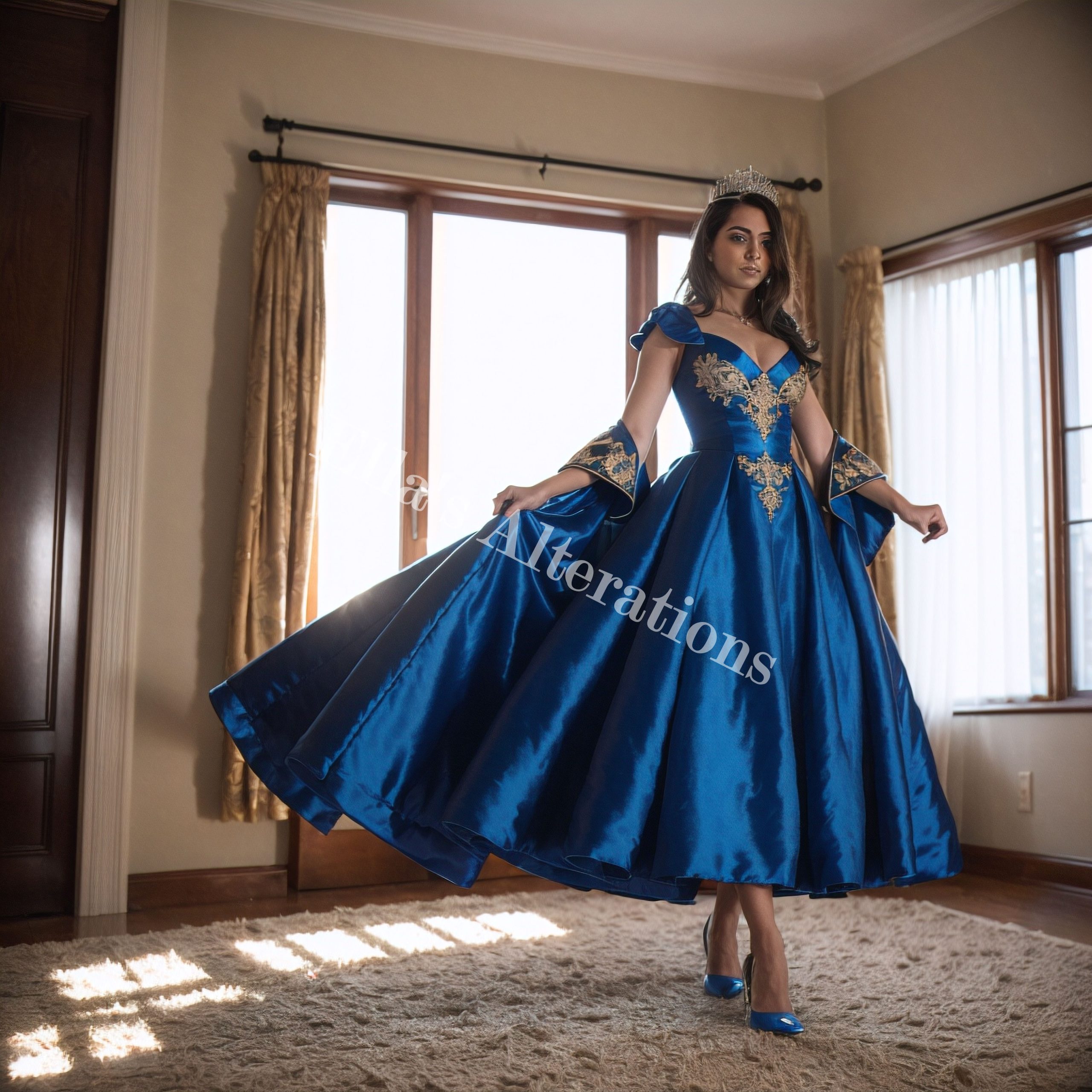
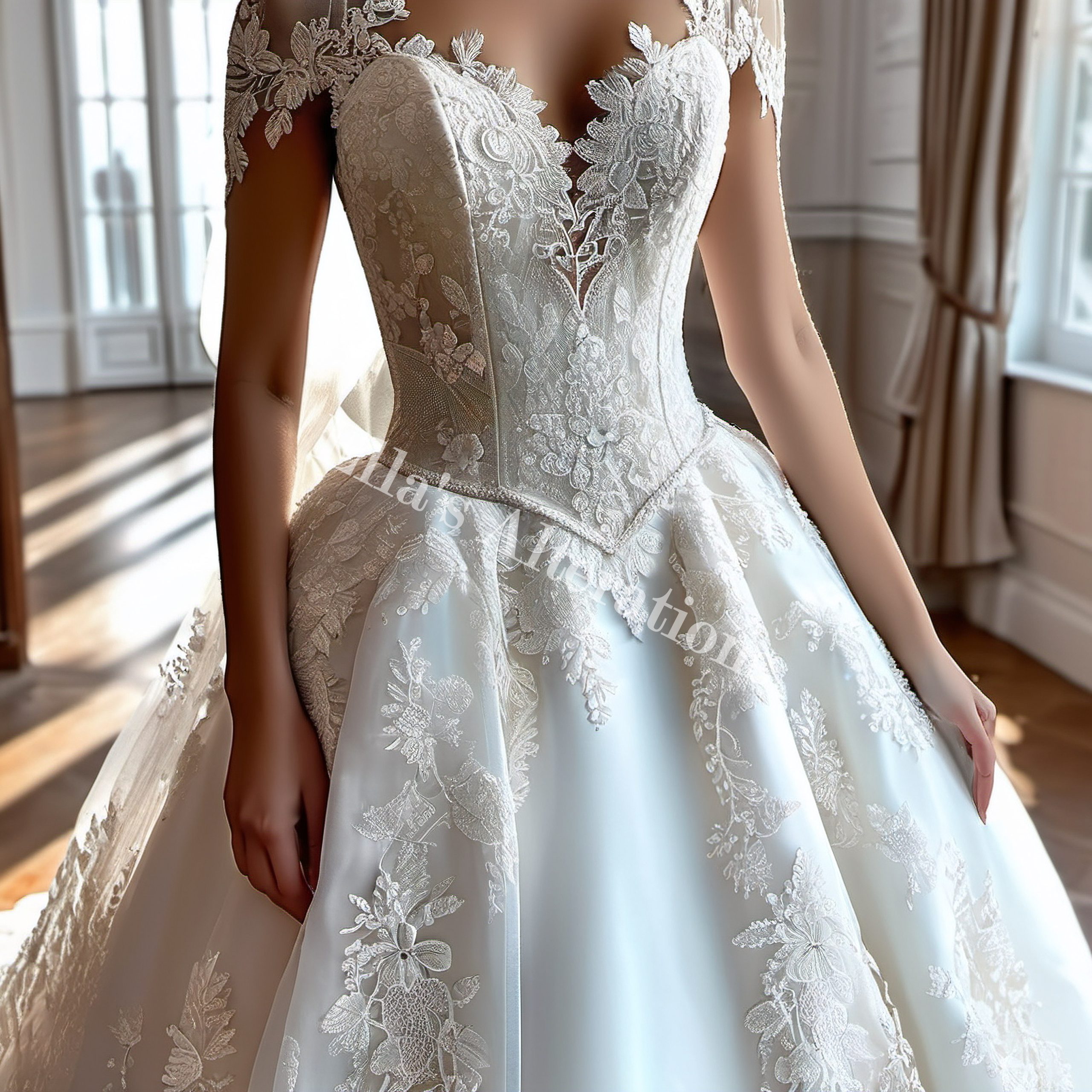
Let’s talk hems. You’ve got the dream dress, the perfect shoes, and your final fitting is just around the corner—but have you thought about your hemline? This post is your tailor-approved guide to understanding why the hem is the unsung hero of every wedding gown. Whether you’re going for floor-length elegance or a dramatic cathedral train, your hemline affects how your dress moves, photographs, and fits you like couture. We’re breaking down different hem styles, the tailoring process, fabric challenges, and how your venue (yes, the beach counts!) plays into the length of your skirt. From tulle and lace to satin and chiffon, we’ve got real advice to help you glide—never trip—down the aisle. The hemline isn’t just where your dress ends. It’s where the magic begins.
Ella’s Style Confidence
Brought to you by Ella’s Alterations
-
Your body is not the problem. The fit is.
If something feels off when you put it on, that does not mean it is wrong for you. It means it has not been tailored for you yet. Clothes are made for averages. You are not average. -
Confidence starts at the seams.
The smallest adjustments change everything. A lifted waist, a shaped bust, a clean hem. These details quietly do the heavy lifting so you can walk in like you own the room. -
Comfort is not optional.
If you are pulling, tugging, or holding your breath, the garment is failing you. Real tailoring lets you move, sit, dance, and live without thinking about your clothes. -
Trends fade. Fit lasts.
Styles come and go fast. A perfect fit never goes out of style. When something fits you correctly, it always looks intentional and expensive. -
Support should be built in, not added later.
Hidden structure matters. Boning, cups, straps, and shaping should work with your body, not against it. When support is done right, no one sees it but everyone notices the result. -
You deserve clothes that work as hard as you do.
Whether it is a wedding dress, a suit, or everyday wear, your clothes should show up for you. Sharp, polished, and reliable. -
Confidence is quiet, not loud.
The best dressed people are not uncomfortable or flashy. They look effortless because their clothes fit correctly and feel natural. -
One great alteration beats five new outfits.
Fixing what you already own often gives you more confidence than buying something new. A tailored piece feels personal. Like it was made just for you. -
When it fits right, you stand differently.
Posture changes. Shoulders relax. You stop adjusting and start owning your space. That shift is what people actually notice. -
You are allowed to feel amazing in your clothes.
Not just okay. Not just good enough. Amazing. That is the standard.
Local Credibility
Ella’s Alterations is trusted by brides, professionals, and families across Central Florida for one reason. The work is done right.
Awards & Recognition
- Most Trusted Tailoring & Alterations Studio 2025 – USA
- Bridal & Formalwear Tailoring Excellence Award 2025
- Recognized nationally by LUXlife Magazine for craftsmanship and client trust
- Chosen year after year for precision bridal and formal tailoring
- Best Wedding Dress & Formalwear Tailoring Zephyrhills 2026
- NextDoor Neighborhood Favorite 2023 2024 2025
Service Area
Proudly serving Zephyrhills, Pasco County, Tampa, Wesley Chapel, Lakeland, and surrounding Central Florida communities. Clients travel from across the region for expert alterations that local shops simply cannot match.
Depth of Craft
With over 30 years of hands on tailoring experience, Ella works at a master level. This is not basic hemming or quick fixes. This is true garment engineering. Wedding gowns with structure, suits that need balance, formalwear that must move and photograph perfectly. Every adjustment is intentional and precise.
Proof of Trust & Fitting Care
Every fitting is handled with respect, privacy, and patience. Measurements are double checked. Details are explained. Nothing is rushed. Nothing is guessed.
Clients return because they feel heard, supported, and confident. Dresses are protected. Fabrics are handled correctly. Fit decisions are made with experience, not shortcuts.
This is why generations of clients trust Ella with their most important garments. When it has to fit perfectly, they choose experience.

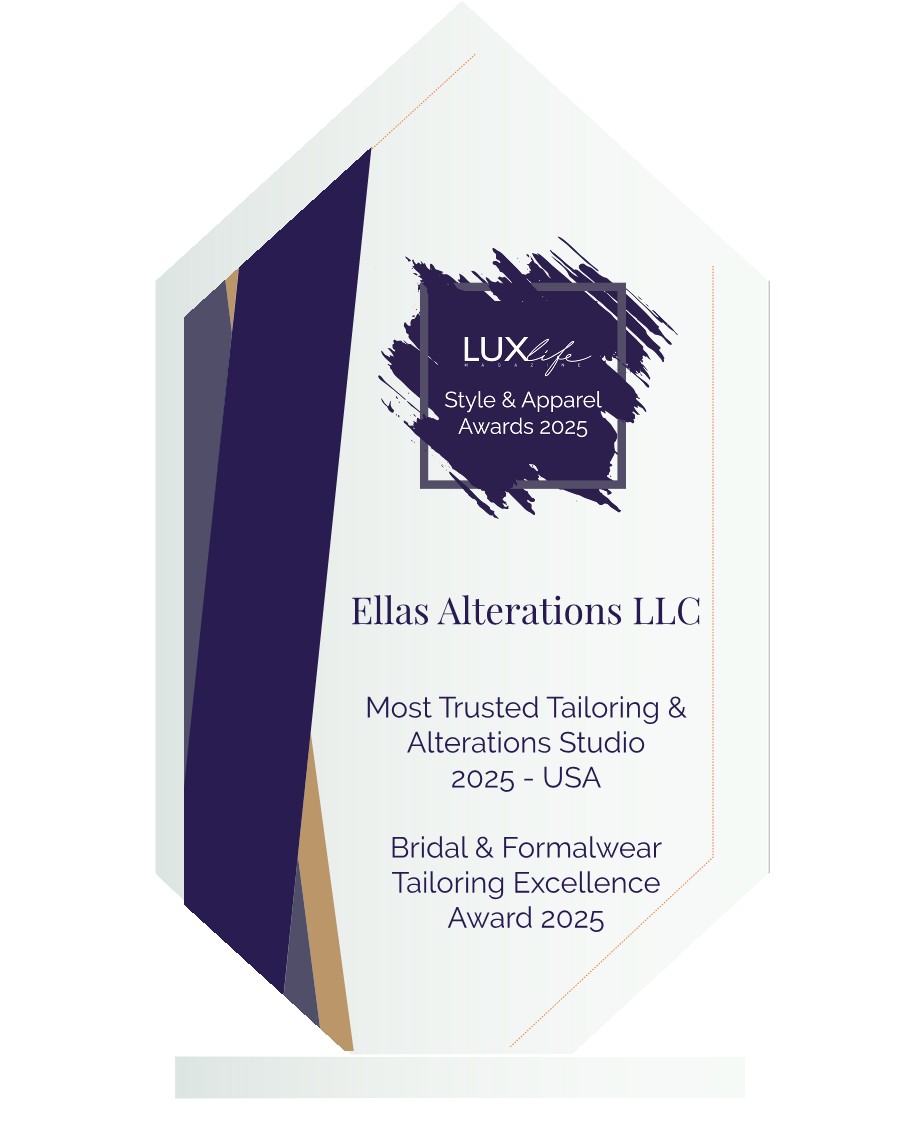
Bridal & Formalwear Tailoring Excellence Award 2025 – USA
Award Winning Bridal & Formalwear Tailoring
Ella’s Alterations is proudly recognized as one of Zephyrhills’ most trusted tailoring studios, specializing in wedding dress and formalwear alterations.

NextDoor Neighborhood Favorite 2023, 2024, 2025

Best Wedding Dress & Formalwear Tailoring Zephyrhills 2026
Why Clients Trust Ella’s Alterations
- 30 plus Years of Expertise: Master tailoring and formal wear alterations trusted across Florida.
- Award Winning Service: Best of Florida Tailor and Best of Zephyrhills.
- Private Bridal Fittings: Discreet, elegant, and tailored to you.
- Proven Local Reputation: Five star customer reviews and repeat clients from Tampa to Orlando.
- Transparent and Personal: Clear pricing, expert guidance, and no rushed fittings.
- Recognized nationally by LUXlife Magazine for craftsmanship and client trust
- Chosen year after year for precision bridal and formal tailoring
- Best Wedding Dress & Formalwear Tailoring Zephyrhills 2026
- NextDoor Neighborhood Favorite 2023 2024 2025
Address: 6986 Fort King Road, Zephyrhills FL 33541
Phone: +1 813-445-8894
Email: admin@ellasalterations.com
Hours:
Get Directions | Book Your Fitting