A Tailor’s Guide: What’s Underneath a Wedding Gown? The Hidden Heroes of Support.
TLDR: Quick Take
TLDR: A Tailor’s Guide: What’s Underneath a Wedding Gown? The Hidden Heroes of Support. A wedding gown is supported by hidden internal structure, not tightness. Corsetry, boning, waist stays, and foundation layers shape the body, carry weight, and keep dresses secure all day.
The Bodice Architecture That Shapes and Holds Everything:
Listen: A Tailor’s Guide: What’s Underneath a Wedding Gown? The Hidden Heroes of Support. (Audio Guide)
The bodice is the control center of a wedding gown.
If the bodice is engineered correctly, the whole dress stays where it should, smooths what needs smoothing, supports what needs support, and lets you move without constantly tugging or adjusting.
If it is engineered poorly, everything else becomes a fight.
The skirt pulls the top down, the neckline gaps, the waist wrinkles, and you spend your day doing tiny panic fixes that show up in photos.
A bridal bodice is not just fabric shaped into a pretty top.
It is a layered structure, built like wearable architecture.
The outside layer is what everyone sees, satin, lace, crepe, mikado, beaded tulle, whatever the style is.
But the real work happens underneath.
Most bodices have a lining, an interfacing layer for stability, and at least one foundation layer that provides strength.
That foundation might be firm organza, coutil, canvas, power mesh, or other stabilizing fabrics depending on the gown and the body it needs to support.
Each layer has a different job.
One gives shape, one controls stretch, one prevents puckering, one keeps seams from tearing under stress.
The seams in a bodice are not just for shaping the look, they are structural lines.
Princess seams, side seams, darts, and waist seams act like support beams.
They guide how the dress hugs the ribcage, how it frames the bust, and how it anchors at the waist.
A well built bodice fits the ribcage first, then the bust, then the waist.
Brides often assume bust size is the main issue, but the real anchor is the ribcage.
If the ribcage fit is loose, the dress will drift downward no matter how tight the waist looks.
That is why a strapless gown that feels snug at first can still slip after an hour of dancing.
Support is also about where tension is carried.
In a quality bodice, tension is distributed through multiple layers and reinforced seams, not concentrated at one zipper or one row of hooks.
This is where hidden waist stays matter.
A waist stay is an internal belt stitched into the bodice seam allowance.
It fastens separately and hugs the natural waist, taking the downward weight of the skirt and train off the outer bodice.
Think of it like a hidden seatbelt that locks the dress to your body.
It does not just cinch you, it keeps the whole gown from migrating.
Boning is another key part of bodice architecture.
Boning is not there to squeeze you into a corset shape unless that is the goal.
Its main job is to keep the fabric from collapsing, rolling, or folding.
It helps the bodice stand upright, keeps the neckline stable, and prevents the waist from crumpling when you sit.
Boning placement matters as much as boning type.
Boning should align with the natural shaping lines of the body, especially around the bust and side seams.
Too little boning causes slipping and wrinkling.
Too much boning or poorly placed boning causes poking, bruising, and that stiff cardboard feeling.
Then there is bust architecture.
Built in cups can shape and lift, but cups alone are not a full support plan.
A strong bodice often combines cups with supportive fabric layers like power mesh, plus seam engineering that controls where the bust sits.
For plunging necklines, the inner structure usually needs hidden reinforcement so the center front does not collapse or gap.
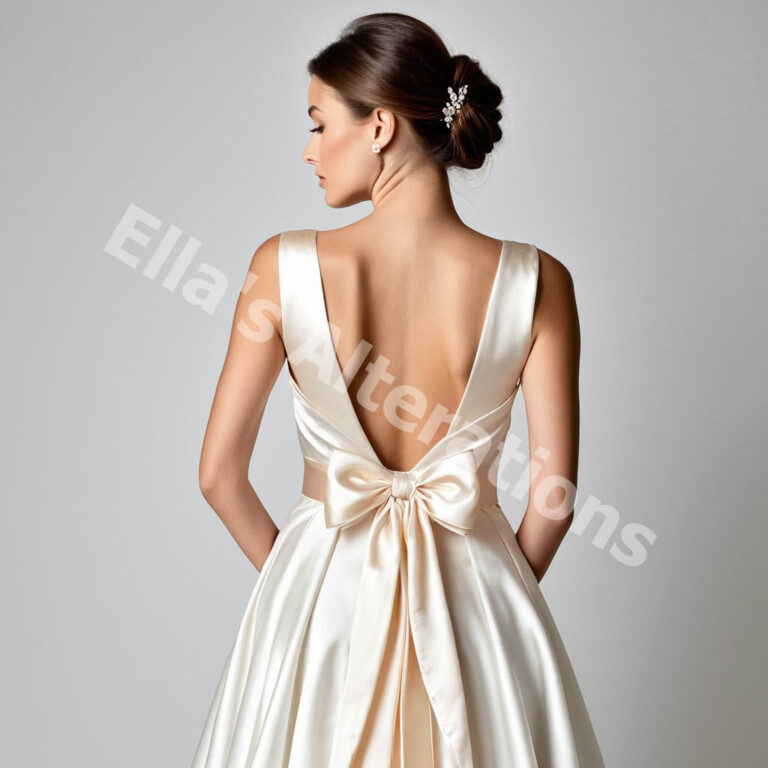
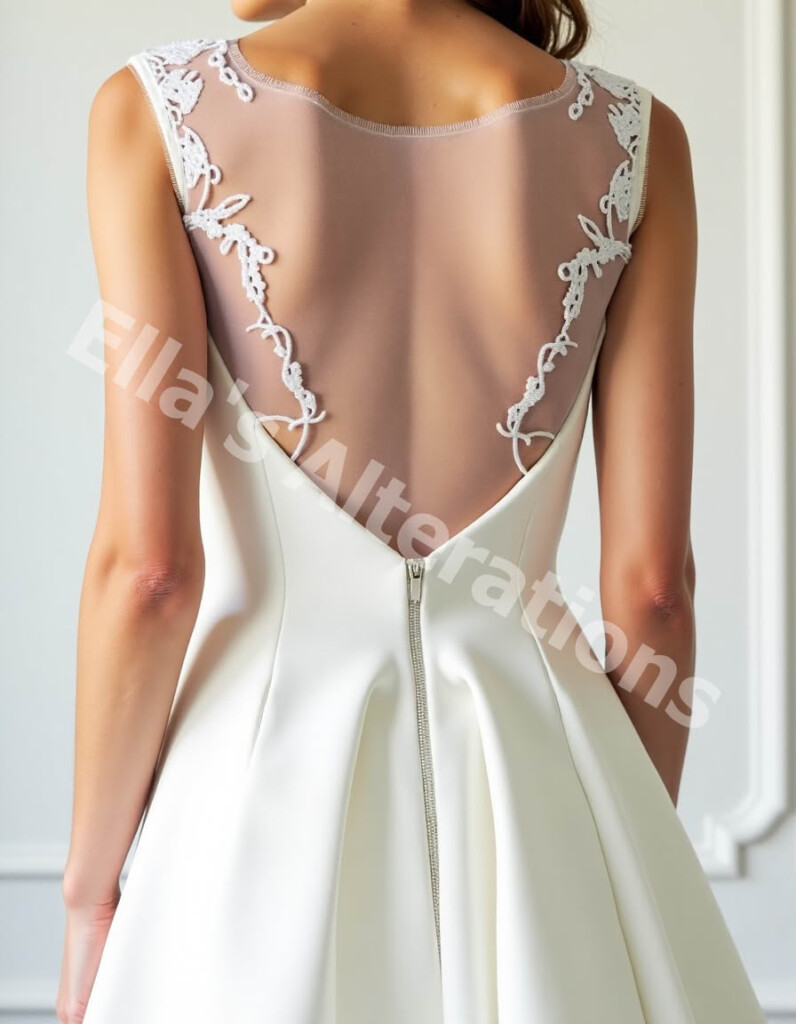
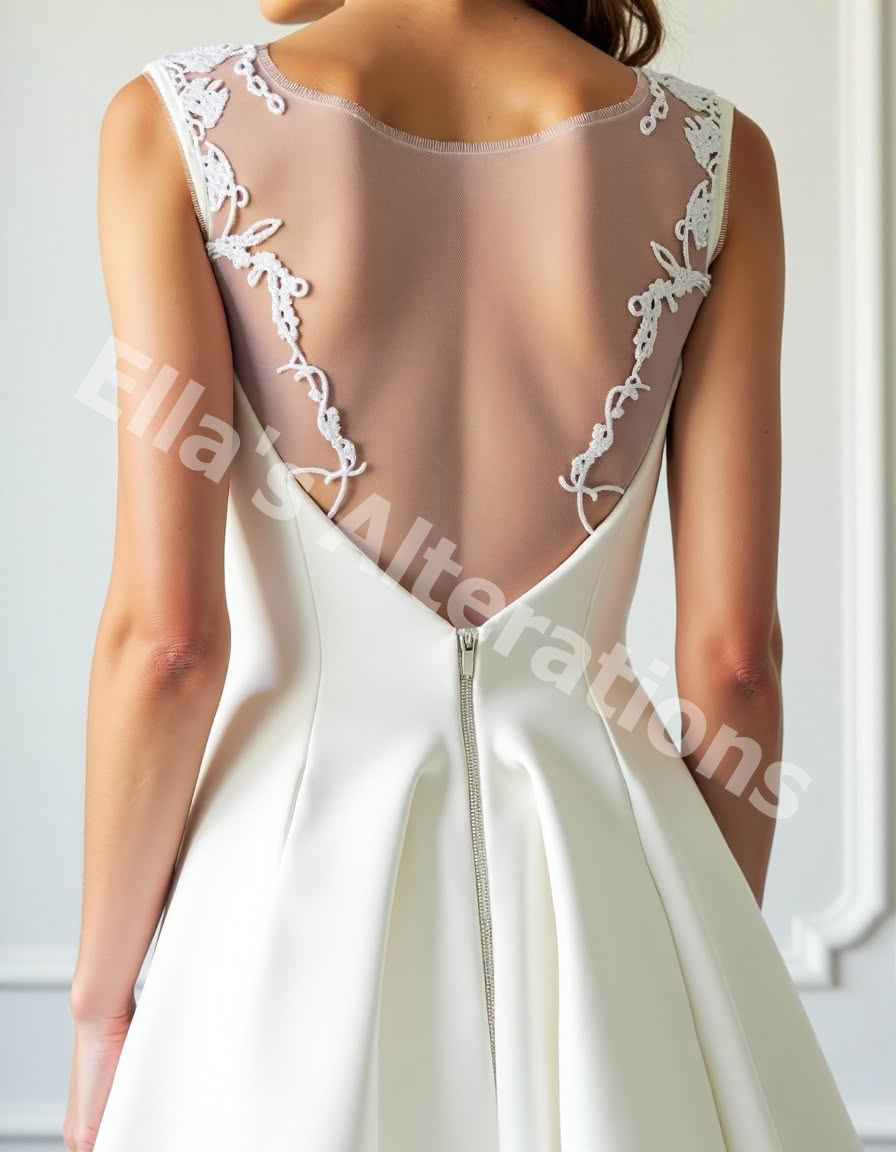
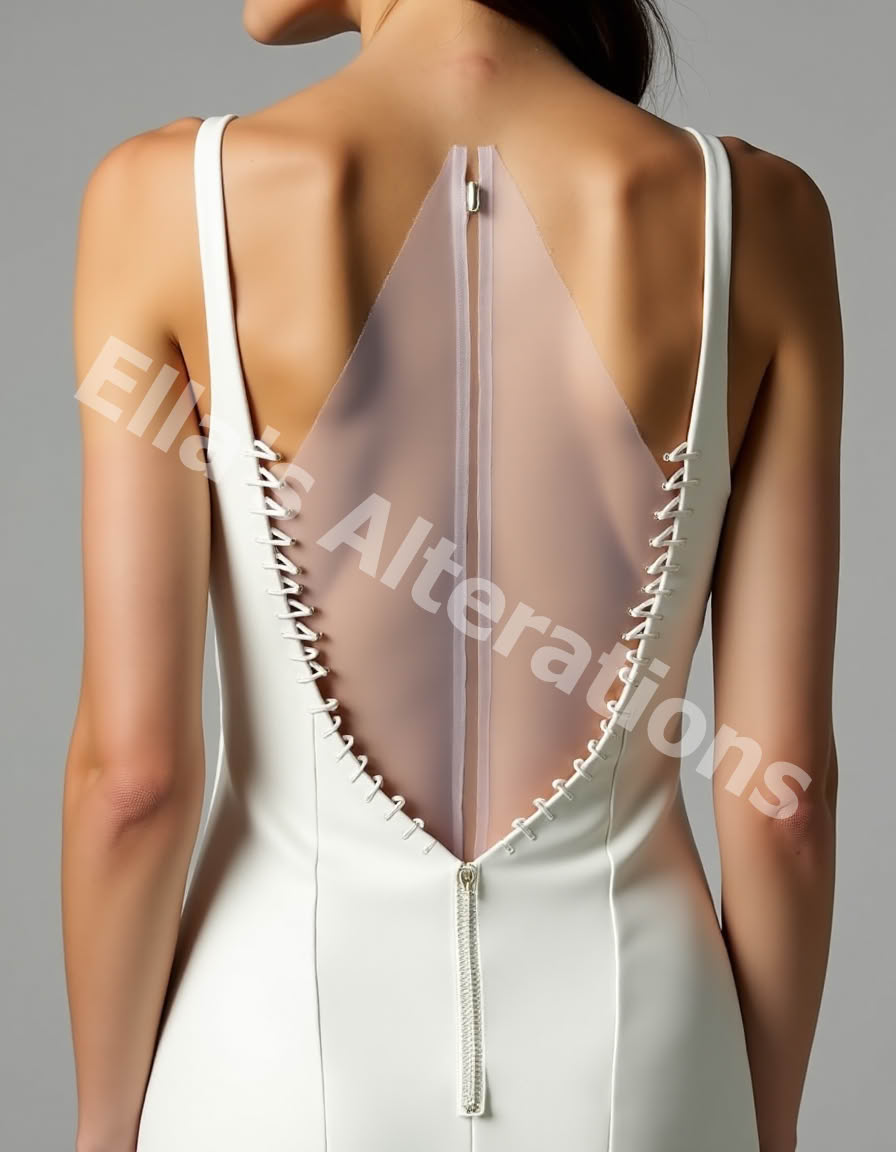
For low backs or illusion backs, support often shifts forward and sideways, using strong side panels and strategic boning so the back can stay open without sacrificing stability.
Body type and gown style change everything.
A minimalist crepe gown needs internal control because crepe shows every ripple and tension line.
A beaded bodice needs reinforcement because weight can distort the shape over time.
A plus size bodice often needs more thoughtful layering and stronger anchoring, not tighter squeezing, so the dress feels secure without restricting breathing.
In every case, the goal is the same.
The bodice must act like a stable frame that holds the dress in the right position, protects the seams from stress, and keeps the outer fabric looking smooth and intentional.
When brides say, I want my dress to feel snatched but comfortable, they are really talking about bodice architecture.
It is the hidden design work that makes a gown look effortless.
And when it is done right, you never notice it, you just feel secure.
Key Takeaways
- Fit and support are not the same thing
- Internal structure keeps dresses from slipping
- Boning stabilizes fabric and posture
- Waist stays carry skirt weight
- Comfort comes from engineering, not tightness
Tailor’s Insight ✂️
When a gown is engineered properly, it does not rely on friction or constant adjustment. The dress should carry itself.
Boning, Corsetry, and Bust Support Explained Simply:
Boning, corsetry, and bust support are often misunderstood because they are invisible when done correctly.
Many brides hear these terms and imagine something stiff, restrictive, or uncomfortable.
In reality, modern bridal structure is designed to support the body while allowing natural movement and breathing.
When support feels wrong, it is usually because the wrong materials were used or they were placed without regard for how the body actually moves.
Boning is the framework that keeps a bodice standing upright.
Its main purpose is not to cinch the waist but to prevent the fabric from collapsing, folding, or sliding downward.
There are several types of boning commonly used in wedding gowns, and each serves a different role.
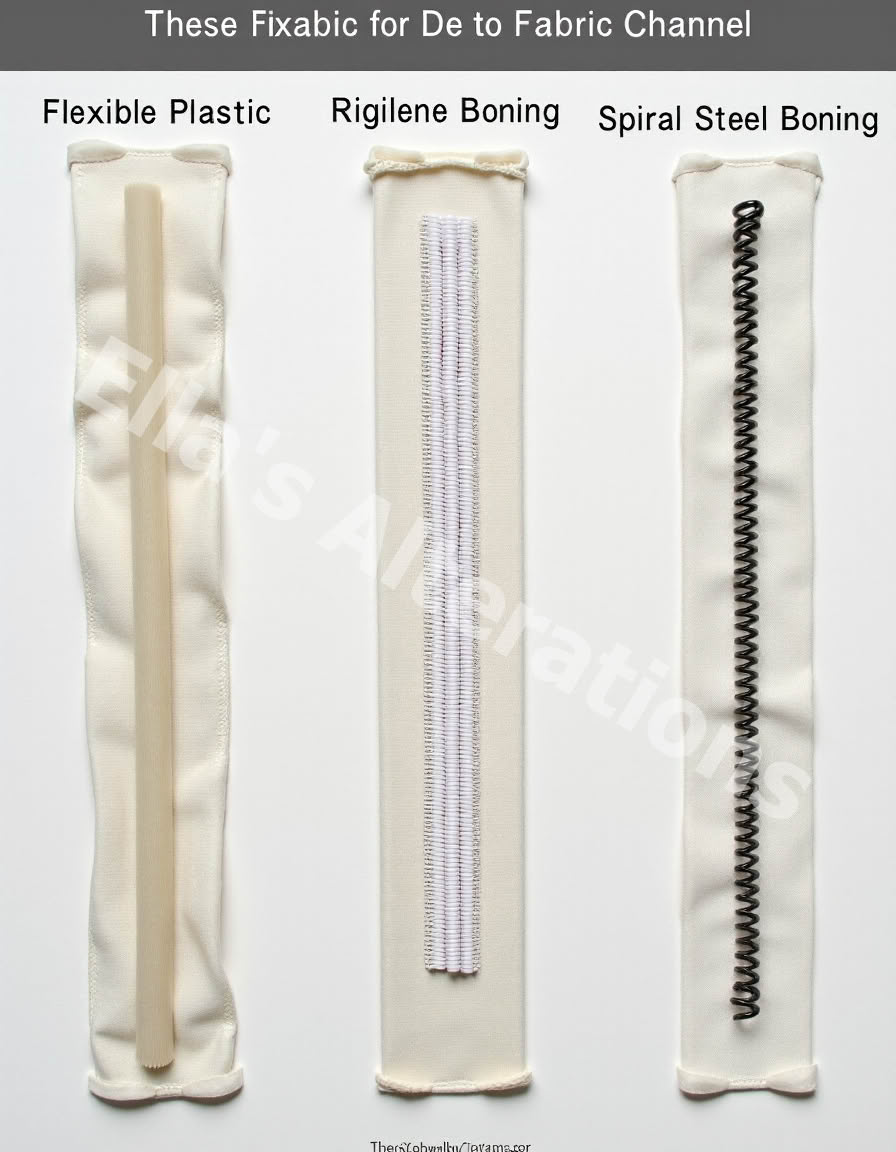
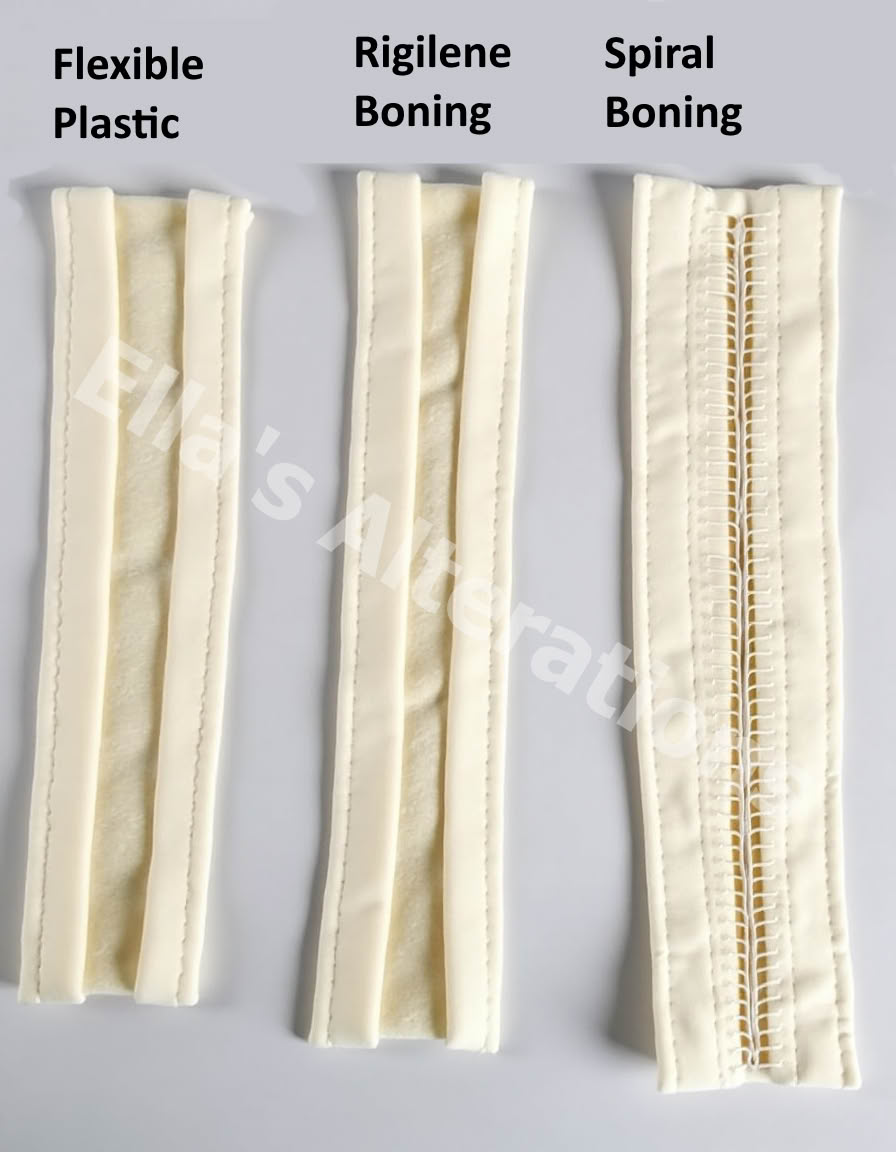
- Plastic boning is lightweight and inexpensive, but it bends easily and does not always return to shape.
- It can work in very light gowns or short bodices, but in strapless or heavy dresses it often leads to rolling and buckling.
- Rigilene boning is a woven plastic boning that offers more flexibility and breathability.
- It is often used in summer gowns or designs that need gentle shaping without stiffness.
- Steel boning is the strongest option and comes in two main forms.
- Spiral steel bends in multiple directions and moves well with the body, while flat steel provides firm vertical support.
When placed correctly, steel boning does not feel harsh.
It feels stable.
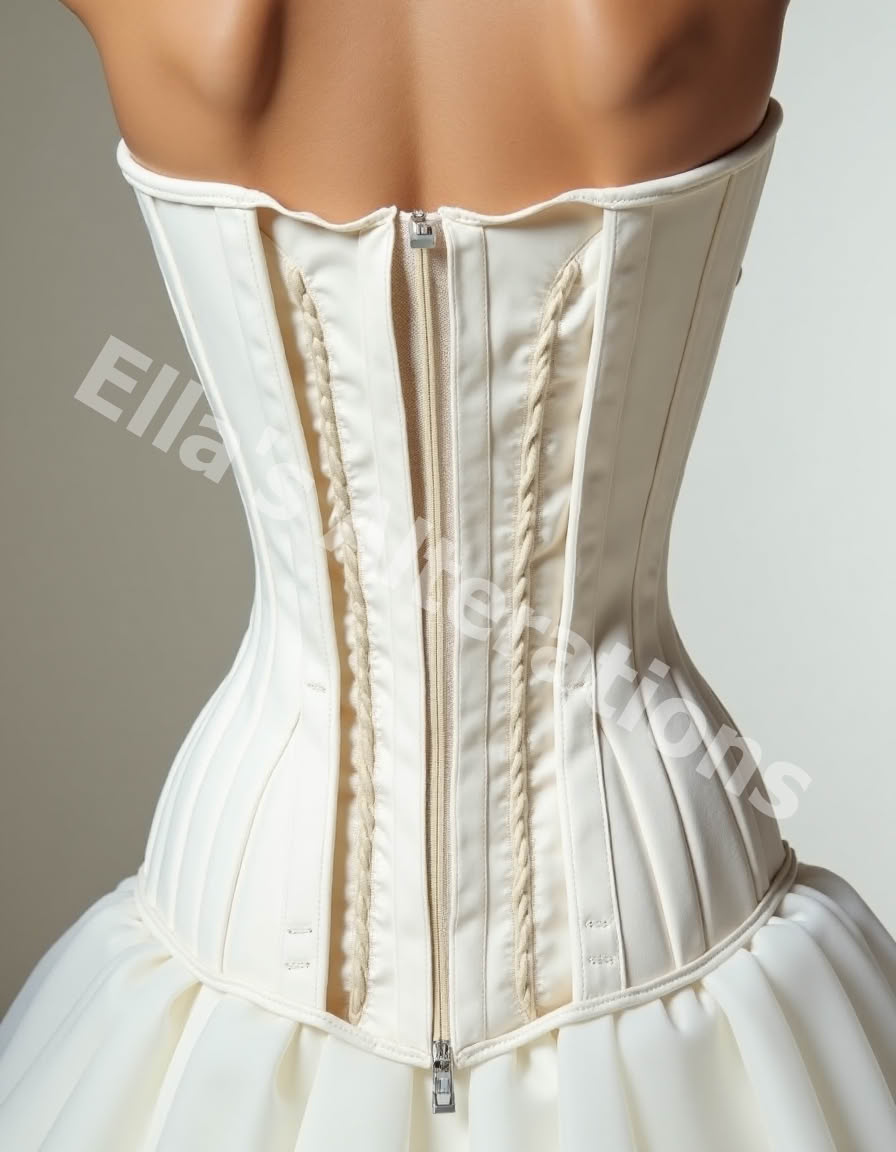
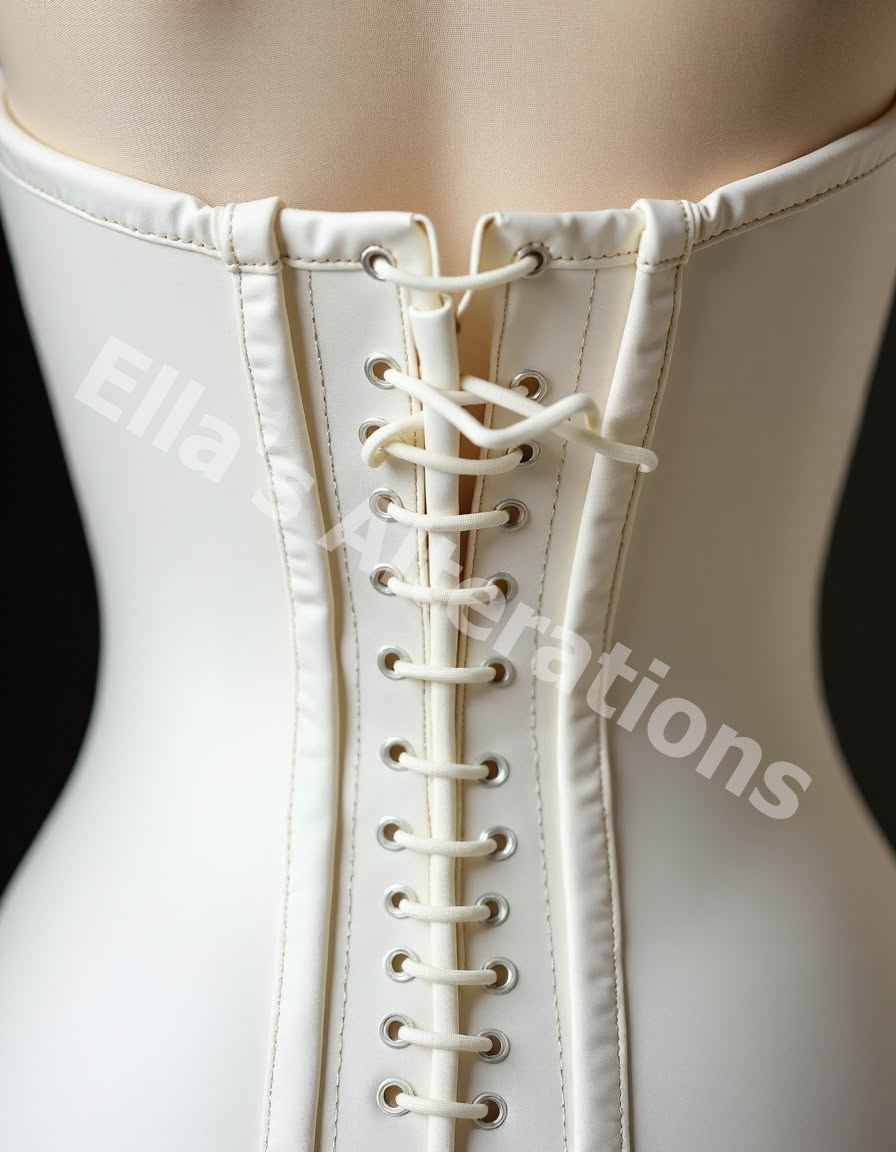
Corsetry takes boning a step further by combining boning with reinforced panels, lacing systems, and strategic seam placement.
A true corset bodice is engineered to distribute pressure evenly around the torso rather than squeezing in one spot.
This is why a well made corset can feel more comfortable than a poorly structured regular bodice.
The corset works with the ribcage, not against it.
It supports posture, lifts the bust, and keeps the dress anchored in place.
Many bridal gowns have a built in corset that is hidden beneath the outer fabric, giving the benefits of structure without the look of a traditional corset.
Bust support is where many brides struggle, especially with strapless, backless, or plunging styles.
Cups are only one piece of the puzzle.
Cups shape the bust, but they do not carry weight on their own.
True support comes from how the cups are anchored into the bodice.
This often involves power mesh panels, reinforced seams, and sometimes underwire that is sewn directly into the structure of the dress.
When done correctly, the bust feels lifted and secure without the need for a separate bra.
This is why some gowns feel supportive even when the back is open or made of illusion mesh.
For plunging necklines, support must be redirected.
Instead of relying on the center front, the structure pulls support from the sides and underbust area.
This prevents gaping while maintaining the deep V shape.
For backless gowns, the front of the bodice and the side seams do more of the work, often reinforced with stronger fabrics and carefully placed boning.
In these cases, the fit around the ribcage becomes even more critical.
Corsetry and boning must also account for comfort over time.
A wedding day is long.
Sitting, standing, hugging, dancing, and breathing deeply all put stress on the bodice.
Flexible materials, smooth seam finishes, and proper spacing between boning channels prevent digging and bruising.
Lightweight options exist for warm weather weddings, where breathability matters as much as support.
The biggest misconception is that more structure means less comfort.
In truth, the opposite is often true.
When a bodice lacks support, your body compensates by tensing muscles and constantly adjusting the dress.
Proper boning, thoughtful corsetry, and integrated bust support allow the dress to do the work instead.
That is when a gown feels secure, balanced, and effortless to wear.
Tailor’s Insight ✂️
The ribcage is the real anchor point of a wedding dress. When a bodice fits the bust but floats at the ribs, slipping is guaranteed.
| Feature | With Structure | Without Structure |
|---|---|---|
| Bodice Stability | Stays in place | Slips downward |
| Waist Appearance | Smooth and defined | Wrinkled and strained |
| Comfort | Balanced and secure | Heavy and restrictive |
| Longevity | Holds shape all day | Degrades over time |
A Tailor’s Guide: What's in a Wedding Dress Skirt?
Waist Cinching and Weight Distribution Secrets:
Waist cinching in a wedding gown is often misunderstood as simply making the waist smaller.
In reality, it is about creating a stable anchor point that allows the entire dress to sit correctly on the body.
When done properly, waist structure improves comfort, protects the gown from stress, and keeps the silhouette clean from every angle.
When done poorly or skipped entirely, the dress can feel heavy, shift constantly, and strain at the seams.
The natural waist is the strongest part of the torso for supporting weight.
A well designed gown uses this area intentionally.
Internal waist cinching works through a combination of seam placement, reinforced fabric layers, and hidden support elements that work together rather than relying on tightness alone.
One of the most important of these elements is the waist stay.
A waist stay is an interior belt, usually made from sturdy ribbon or grosgrain, sewn into the bodice at the waist seam.
It fastens independently from the zipper or buttons and hugs the body securely.
Its job is not to squeeze but to hold.
By anchoring the gown to the waist, the waist stay takes the downward pull of the skirt and train off the outer fabric and closure.
Weight distribution becomes critical as soon as a gown has volume.
Ball gowns, A line skirts, heavy lace overlays, beading, and long trains all add significant weight.
Without internal support, that weight pulls directly on the bodice, which leads to slipping, wrinkling at the waist, zipper strain, and even seam failure.
Brides often describe this as feeling like the dress is dragging them down.
The solution is not tighter alterations but better internal engineering.
Interior belts and reinforced waist seams spread the weight evenly around the torso instead of letting it hang from one point.
Cinching also affects how the waist looks visually.
A smooth, defined waist comes from controlled tension, not compression.
Strategic seam shaping and layered foundation fabrics help the bodice lie flat against the body without cutting in.
This is especially important for fitted styles like mermaid and trumpet gowns, where the waist must remain smooth while the hips and skirt carry volume.
When internal structure is missing, the waist can wrinkle or collapse as soon as the bride sits or moves.
Another key detail is how the waist interacts with the bust and skirt above and below it.
The bodice should hold the upper body stable so the waist does not have to fight gravity alone.
Likewise, the skirt should be supported in a way that allows it to flow without pulling upward.
In well constructed gowns, the waist acts like a suspension point where forces balance.
This is why couture gowns often feel surprisingly light.
The weight is distributed across the body rather than concentrated in one area.
Body type plays a major role in how waist support is designed.
- For curvier or plus size brides, waist cinching must be handled with care.
Over tightening can cause discomfort, bulging, or pressure points.
Proper structure uses stronger materials and thoughtful layering to create security without restriction.
- For petite brides, internal belts help prevent the skirt from overpowering the frame.
- For brides with softer midsections, internal support smooths the waistline without relying on external shapewear alone.
Waist support also protects the gown itself.
Zippers, buttons, and seams are not designed to carry the full weight of a heavy skirt.
When internal weight distribution is missing, these areas become stress points that can fail under movement.
A hidden waist stay acts like insurance, preserving the integrity of the dress throughout the day.
True waist cinching is not about forcing the body into shape.
It is about letting the structure do the work.
When weight is balanced and anchored correctly, the waist appears defined, the bodice stays in place, and the bride feels supported rather than constrained.
Quick Facts
- Most strapless gowns need steel boning
- Cups alone do not support bust weight
- Waist stays reduce zipper stress
- Couture gowns prioritize inner structure
- Alterations complete unfinished engineering
Tailor’s Insight ✂️
Boning is not about squeezing the body smaller. It is about preventing fabric from collapsing under gravity and movement.
Skirt and Hem Understructure That Creates Volume and Movement:
The skirt of a wedding gown is where drama lives, but it is also where gravity shows up fast.
Full skirts, fitted silhouettes, lace overlays, and long trains all depend on internal understructure to look intentional rather than heavy or unruly.
When skirt support is done well, the gown floats, moves smoothly, and photographs beautifully.
When it is done poorly, the skirt collapses, twists, drags, or pulls the bodice out of position.
Skirt understructure starts with layers.
Even gowns that appear soft and unstructured on the outside usually have multiple hidden layers underneath.
These layers control volume, shape, and movement.
- Crinolines and petticoats are the most familiar examples, but they come in many forms.
Some are soft and fluid, designed to gently lift fabric away from the legs.
Others are stiffer and strategically placed to create a dramatic bell shape or strong A line.
The key is that these layers are chosen based on the gown fabric, silhouette, and weight, not just the look the bride wants.
Mermaid and trumpet gowns often surprise brides because they still need understructure.
The fitted portion through the hips requires internal shaping so the fabric does not cling unevenly or wrinkle when walking.
Hidden petticoat layers or structured linings help the skirt flare at the correct point without collapsing inward.
Without this support, the silhouette can look limp or distorted, especially after hours of wear.
Hem structure plays a huge role in how a gown moves.
One of the most important tools here is horsehair braid.
Horsehair braid is a flexible woven trim sewn into the hem of the skirt.
It gives the hemline body and spring, helping the fabric hold its shape while still allowing movement.
It prevents the skirt from folding under itself and keeps the hem smooth and crisp.
In lightweight gowns, it adds subtle polish.
In heavier gowns, it helps control weight and swing so the skirt moves evenly instead of dragging in sections.
The relationship between the skirt and the waist is critical.
A well supported skirt should not rely on the outer bodice to hold its weight.
Internal skirt layers are often attached to waist stays or reinforced waist seams so the load is distributed properly.
This prevents the skirt from pulling the dress downward or causing the waistline to sag.
Brides often notice this difference when they sit.
A gown with proper understructure settles gracefully, while one without it bunches awkwardly at the waist or rides up.
Movement is another subtle but important consideration.
A wedding day involves walking, turning, dancing, and navigating stairs.
Skirt layers must be arranged so they move independently without tangling.
Too many stiff layers can make a skirt feel bulky or restrict movement.
Too few layers can cause the fabric to cling to the legs or twist around the body.
Skilled tailoring balances these layers so the skirt flows naturally and responds to motion rather than fighting it.
Fabric choice also affects understructure decisions.
Lace skirts often need more internal support because lace has little strength on its own.
Satin and mikado can hold shape better but show pressure lines if unsupported.
Tulle layers can add volume without weight but need control to avoid looking messy.
Each fabric interacts differently with gravity and movement, which is why understructure is always customized.
The goal of skirt and hem understructure is not stiffness.
It is control.
Proper internal layers guide the skirt so it behaves predictably and beautifully throughout the day.
When the understructure is right, the bride does not think about her skirt at all.
She simply moves, and the dress moves with her.
Mini Glossary
Corsetry: Internal shaping structure that distributes pressure evenly.
Boning: Vertical supports that stabilize fabric and posture.
Waist Stay: Internal belt that anchors the dress to the body.
Crinoline: Lightweight skirt layer for volume control.
Horsehair Braid: Hem support that controls movement.
Tailor’s Insight ✂️
Cups without structure are cosmetic, not supportive. True bust support comes from how those cups are integrated into the bodice.
Tailored Sheath Bridal Dress Silhouettes.
Couture vs Off the Rack Construction and Tailoring Fixes:
The difference between couture and off the rack wedding gowns is rarely obvious from the outside.
Both can be beautiful, well designed, and made from high quality fabrics.
The real difference lives underneath, in the way the dress is engineered to support the body and manage weight over time.
Understanding this difference helps brides set realistic expectations and see why professional tailoring is often the missing link.
Couture construction focuses on internal architecture first.
The outer fabric is treated almost like a decorative layer placed over a strong foundation.
Couture bodices are typically built with multiple internal layers that are hand shaped, reinforced, and adjusted to the individual body.
These layers may include coutil, canvas, organza, power mesh, and custom boning layouts that follow the wearer’s anatomy.
Seams are carefully balanced so tension is spread evenly, and stress points are reinforced before the dress is ever worn.
The result is a gown that feels lighter, even when it is heavy, because the structure carries the load instead of the fabric.
Off the rack gowns are designed for speed, consistency, and cost efficiency.
They must fit a wide range of bodies with minimal customization.
As a result, internal structure is often simplified.
Linings may be thinner, boning may be limited or flexible, and waist stays are frequently omitted.
Support is often expected to come from the fit alone, which works for some bodies but fails for many others.
This does not mean off the rack gowns are poorly made.
It means they are unfinished in a structural sense, waiting to be adapted to a specific person.
This is where tailoring becomes critical.
Bridal alterations are not just about taking a dress in or letting it out.
They are about completing the internal engineering so the gown functions properly on the bride’s body.
A skilled tailor looks beyond measurements and examines how the dress behaves when the bride moves, sits, breathes, and walks.
- If the bodice shifts, they identify where support is missing.
- If the skirt pulls, they assess weight distribution.
- If the waist wrinkles, they adjust internal layers rather than just tightening seams.
Common tailoring fixes include adding a hidden waist stay to anchor the gown, upgrading boning to provide better stability, reinforcing the bodice lining, or adjusting cup placement for proper bust support.
In some cases, internal panels are added to redistribute tension or improve comfort.
These changes are invisible from the outside but dramatically change how the dress feels.
A gown that once required constant adjusting can suddenly feel secure and effortless.
One of the biggest misconceptions brides have is that discomfort means the dress is too small.
Often the opposite is true.
A dress with insufficient internal structure allows gravity to do whatever it wants, which creates pressure in the wrong places.
Tailoring adds control so the dress stops fighting the body.
This is especially important for strapless styles, heavy skirts, beaded bodices, and minimalist gowns where flaws cannot hide.
Couture gowns come with this engineering built in, which is why they command higher prices.
Off the rack gowns rely on tailoring to bridge the gap.
When alterations are done correctly, an off the rack dress can approach couture level performance even if it does not start there.
The goal is not to change the look of the gown but to give it the internal strength it needs to perform for an entire wedding day.
In the end, the difference is not about labels.
It is about structure.
A well tailored gown respects the body, supports the design, and allows the bride to focus on the moment instead of the mechanics of her dress.
Tailor’s Insight ✂️
A cinched waist should feel secure, not tight. If breathing feels restricted, the structure is wrong, not the body.
Ella’s Style Confidence
A confident bride is supported, not restricted. When your gown works with your body, you stop thinking about the dress and start enjoying the moment.
Local Credibility
Written from decades of hands on bridal tailoring experience, this guide reflects real gowns, real bodies, and real solutions brides need on their wedding day.
FAQs:
What internal structure makes a strapless or backless wedding dress stay in place all day?
Strapless and backless wedding dresses stay in place all day because of internal structure, not because they are tight.
These styles remove the natural support that straps and backs provide, so the bodice must be engineered to anchor securely to the body.
When that structure is missing, the dress slips, gaps, or constantly needs adjusting.
The foundation starts with the ribcage fit.
A strapless or backless bodice must fit the ribcage precisely, because this is the strongest area for anchoring the dress.
If the ribcage is loose, gravity slowly pulls the gown downward.
This is why many slipping issues happen even when the waist feels snug.
Boning plays a major role.
Vertical boning keeps the bodice upright and prevents it from folding or rolling.
In high support designs, steel boning is often used because it maintains its shape under pressure.
Boning placement is just as important as the type.
It must follow the natural contours of the body, especially around the bust and side seaMs.
Bust support is built into the bodice itself.
Cups are anchored into reinforced lining layers, often combined with underwire and power mesh.
For backless styles, support shifts forward and sideways, allowing the back to remain open without sacrificing stability.
Hidden waist stays are another critical element.
These internal belts fasten separately and carry the weight of the skirt, keeping the bodice from being pulled downward.
What is the difference between plastic boning, Rigilene, and steel boning in a wedding dress?
Plastic boning, Rigilene boning, and steel boning all serve the same basic purpose in a wedding dress, which is to provide structure and keep the bodice from collapsing.
The difference lies in how much support they offer, how they move with the body, and how they perform over many hours of wear.
Choosing the wrong type can lead to slipping, wrinkling, or discomfort even if the dress fits correctly.
Plastic boning is the most common and least supportive option.
It is lightweight, inexpensive, and easy to sew, which is why it is widely used in off the rack gowns.
Plastic boning bends easily, but it does not always return to its original shape.
Under body heat and pressure, it can curl or warp.
In lightweight dresses with straps or sleeves, plastic boning may be enough.
In strapless, heavy, or structured gowns, it often fails to provide long term stability.
Rigilene boning is a woven plastic boning designed to be more flexible and breathable.
It bends in multiple directions and allows more natural movement, making it popular in summer gowns or dresses that need gentle shaping rather than firm control.
Rigilene offers better recovery than basic plastic boning but still does not provide the rigid support required for heavy skirts or dramatic silhouettes.
Steel boning is the strongest and most durable option.
There are two main types used in bridal wear.
Spiral steel bends in multiple directions and moves well with the body, while flat steel provides firm vertical support.
Steel boning maintains its shape under stress and is often used in corset bodices and high support designs.
Can a wedding dress have built in bust support without wearing a bra?
Yes, a wedding dress can absolutely have built in bust support without wearing a bra, and many well constructed bridal gowns are designed this way.
Built in support is not just possible, it is often the best option for achieving a smooth, secure look, especially in strapless, backless, plunging, or illusion style dresses.
The key is understanding that true support comes from the structure of the dress, not from a separate undergarment.
Built in bust support works by integrating multiple elements directly into the bodice.
Cups are usually the most visible component, but they are only one part of the system.
Cups shape the bust, but they do not hold weight on their own.
Real support comes from how the cups are anchored into the gown using reinforced seams, firm lining layers, and supportive fabrics like power mesh.
This allows the bust to be lifted and stabilized without relying on shoulder straps or a band around the back.
In many gowns, underwire is sewn directly into the bodice structure.
This provides lift similar to a bra but remains completely hidden.
The underwire works together with boning and corsetry to distribute weight across the torso.
For low backs or deep plunges, support is redirected to the sides and underbust area rather than the center back, which allows the dress to stay secure without visible hardware.
The success of built in support also depends heavily on fit.
The bodice must fit the ribcage correctly, as this is where the structure anchors.
If the ribcage area is loose, no amount of internal support will feel reliable.
How are heavy wedding skirts and trains supported underneath without feeling bulky?
Heavy wedding skirts and long trains can look effortless, but they require careful internal engineering to prevent the dress from feeling overwhelming.
Without proper support, the weight of the skirt pulls the gown downward, strains the bodice, and makes movement uncomfortable.
The reason well made gowns feel lighter than they look is because the weight is distributed, not stacked.
The foundation starts at the waist.
A hidden waist stay or interior belt anchors the gown at the natural waist and carries much of the skirt’s weight.
This keeps the load off the outer bodice fabric and zipper.
Instead of the skirt hanging from one seam, the weight is spread evenly around the torso.
Under the skirt, multiple lightweight layers are used instead of one thick layer.
Soft crinolines, tulle petticoats, and structured linings work together to create volume without stiffness.
Each layer has a specific role.
Some lift the skirt away from the legs, others control shape, and others manage movement.
By layering lighter materials, the gown maintains fullness without feeling heavy or restrictive.
Hem structure also plays an important role.
Horsehair braid is often sewn into the hem to give the skirt body and spring.
It helps the skirt hold its shape and move smoothly, preventing the fabric from collapsing or dragging unevenly.
What internal structure makes a strapless or backless wedding dress stay in place all day?
Strapless and backless wedding dresses stay in place all day because of internal structure, not because they are tight.
These styles remove the natural support that straps and backs provide, so the bodice must be engineered to anchor securely to the body.
When that structure is missing, the dress slips, gaps, or constantly needs adjusting.
The foundation starts with the ribcage fit.
A strapless or backless bodice must fit the ribcage precisely, because this is the strongest area for anchoring the dress.
If the ribcage is loose, gravity slowly pulls the gown downward.
This is why many slipping issues happen even when the waist feels snug.
Boning plays a major role.
Vertical boning keeps the bodice upright and prevents it from folding or rolling.
In high support designs, steel boning is often used because it maintains its shape under pressure.
Boning placement is just as important as the type.
It must follow the natural contours of the body, especially around the bust and side seaMs.
Bust support is built into the bodice itself.
Cups are anchored into reinforced lining layers, often combined with underwire and power mesh.
For backless styles, support shifts forward and sideways, allowing the back to remain open without sacrificing stability.
Hidden waist stays are another critical element.
These internal belts fasten separately and carry the weight of the skirt, keeping the bodice from being pulled downward.
Tailor’s Insight ✂️
If a skirt feels heavy, the problem is usually above the skirt. Proper waist anchoring changes everything.
Wedding Dress decoded: What's REALLY Underneath All That…

About Us
Brought to you by Ella’s Alterations
Ella’s Alterations
is trusted by brides, professionals, and families across Central Florida for one reason.
The work is done right.
Proudly serving Zephyrhills, Pasco County, Tampa, Wesley Chapel, Lakeland,
and surrounding Central Florida communities.
Clients travel from across the region for expert alterations that local shops
simply cannot match.
With over 30 years of hands on tailoring experience, Ella works at a master level.
This is not basic hemming or quick fixes. This is true garment engineering.
Wedding gowns with structure, suits that need balance, formalwear that must move
and photograph perfectly. Every adjustment is intentional and precise.
Every fitting is handled with respect, privacy, and patience.
Measurements are double checked. Details are explained.
Nothing is rushed. Nothing is guessed.
Clients return because they feel heard, supported, and confident.
Dresses are protected. Fabrics are handled correctly.
Fit decisions are made with experience, not shortcuts.
This is why generations of clients trust Ella with their most important garments.
When it has to fit perfectly, they choose experience.
Ella’s Style Confidence
If something feels off when you put it on, that does not mean it is wrong for you.
It means it has not been tailored for you yet. Clothes are made for averages.
You are not average.
The smallest adjustments change everything. A lifted waist, a shaped bust,
a clean hem. These details quietly do the heavy lifting so you can walk in
like you own the room.
If you are pulling, tugging, or holding your breath, the garment is failing you.
Real tailoring lets you move, sit, dance, and live without thinking about your clothes.
Styles come and go fast. A perfect fit never goes out of style.
When something fits you correctly, it always looks intentional and expensive.
Hidden structure matters. Boning, cups, straps, and shaping should work with your body,
not against it. When support is done right, no one sees it but everyone notices the result.
Whether it is a wedding dress, a suit, or everyday wear, your clothes should show up for you.
Sharp, polished, and reliable.
The best dressed people are not uncomfortable or flashy.
They look effortless because their clothes fit correctly and feel natural.
Fixing what you already own often gives you more confidence than buying something new.
A tailored piece feels personal. Like it was made just for you.
Posture changes. Shoulders relax. You stop adjusting and start owning your space.
That shift is what people actually notice.
Not just okay. Not just good enough. Amazing.
That is the standard.
Local Credibility
Awards & Recognition
Service Area
Depth of Craft
Proof of Trust & Fitting Care

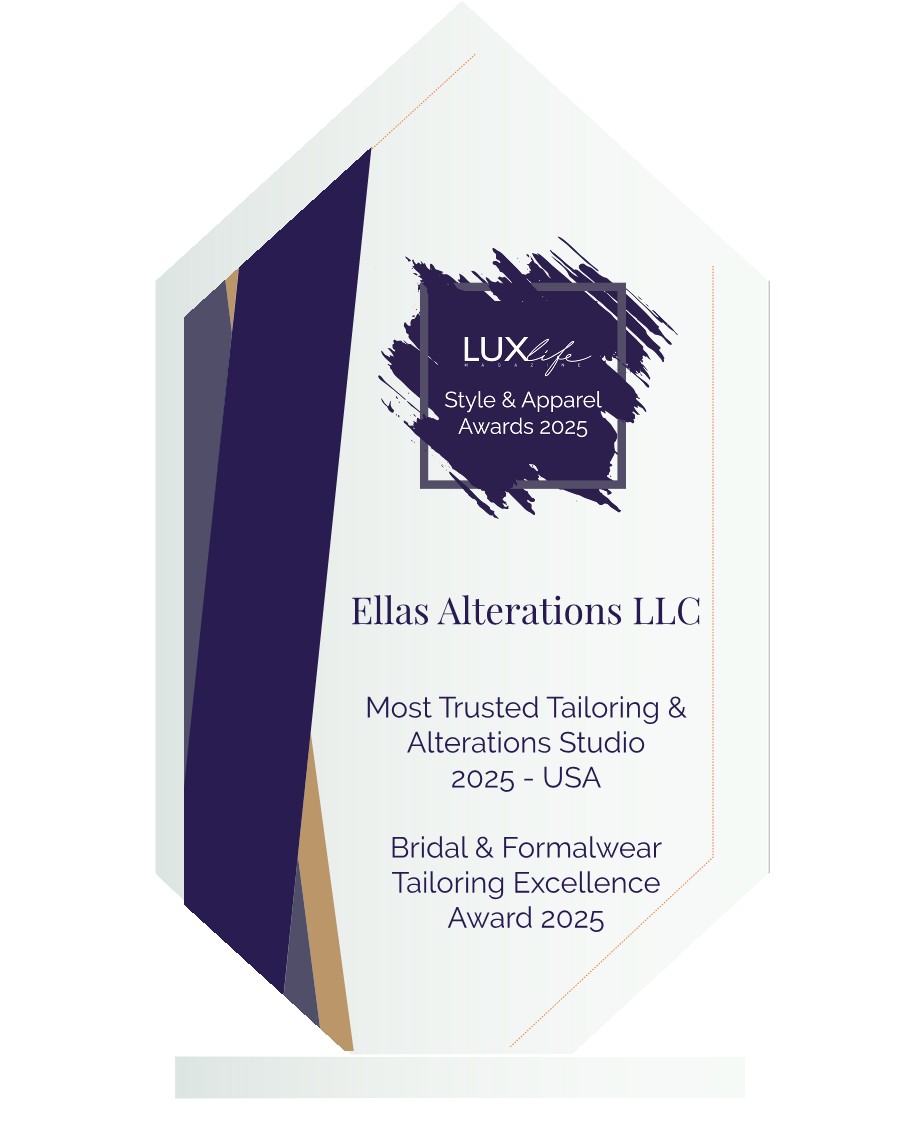
Bridal & Formalwear Tailoring Excellence Award 2025 – USA
Award Winning Bridal & Formalwear Tailoring
Ella’s Alterations is proudly recognized as one of Zephyrhills’ most trusted tailoring studios, specializing in wedding dress and formalwear alterations.

NextDoor Neighborhood Favorite 2023, 2024, 2025

Best Wedding Dress & Formalwear Tailoring Zephyrhills 2026

Proud winner: Best Bridal & Formalwear Alterations Studio 2026 - USA

Proud winner: Best Wedding Dress and Formalwear Tailoring, Zephyrhills 2026
Why Clients Trust Ella’s Alterations
- 30 plus Years of Expertise: Master tailoring and formal wear alterations trusted across Florida.
- Award Winning Service: Best of Florida Tailor and Best of Zephyrhills.
- Private Bridal Fittings: Discreet, elegant, and tailored to you.
- Proven Local Reputation: Five star customer reviews and repeat clients from Tampa to Orlando.
- Transparent and Personal: Clear pricing, expert guidance, and no rushed fittings.
- Recognized nationally by LUXlife Magazine for craftsmanship and client trust
- Chosen year after year for precision bridal and formal tailoring
- Best Wedding Dress & Formalwear Tailoring Zephyrhills 2026
- NextDoor Neighborhood Favorite 2023 2024 2025
Address: 6986 Fort King Road, Zephyrhills FL 33541
Phone: +1 813-445-8894 or +1 813-680-5821
Email: admin@ellasalterations.com
Hours:
Get Directions | Book Your Fitting