Bridal Fabric 101: The Essential Materials Explained
Bridal Fabric 101 — The Essential Materials Explained
Fabric: Each fabric has a job: structure, drape, breathability, or volume. Learn what each one does before you lock in a silhouette.
Why it matters: The same dress pattern looks totally different in satin vs chiffon vs crepe. Fabric changes the fit, feel, and photos.
Listen: Bridal Fabrics 101 Snippet
This is a short audio excerpt from our Bridal Fabrics 101 series — get a feel for the tone and style before diving in.
The Essential Bridal Fabrics, Explained Simply
- Satin: smooth, glossy, structured, amazing for formal silhouettes and cooler seasons; photographs like a dream.
- Chiffon: ultra-light and breathable; best as overlays for soft motion; watch for snags in rough terrain.
- Tulle: the volume builder; soft or stiff nets for airy skirts and veils; great base for appliqué and beads.
- Lace: texture, romance, and range—from Chantilly-light to structured; trims, appliqués, or full overlays.
- Organza: sheer but crisp; holds shape without bulk for sleeves, skirts, and overlays.
- Crepe: soft drape with a touch of texture; hugs clean lines without cling.
- Taffeta: crisp hand and subtle rustle; vintage or formal vibes.
- Mikado: heavier, architectural, elegant drama for sculpted shapes.
Dreamy Wedding Dresses: Explore Lace & Tulle Texture…
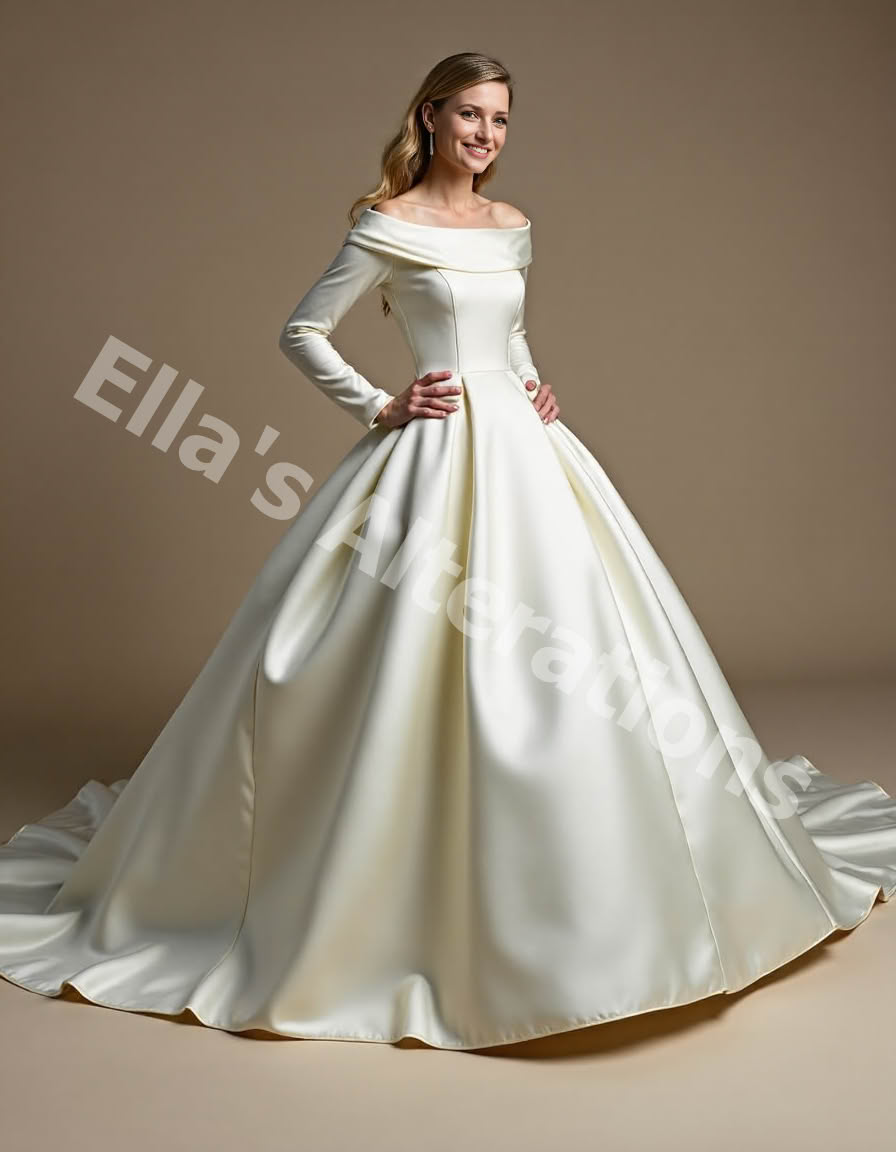
Bridal Fabric 101: The Essential Materials Explained
Fabric: The fabric you choose sets the entire tone of your dress — how it moves, photographs, and feels all day long.
Why this matters: Fabrics like satin, chiffon, lace, and organza behave very differently. Knowing their qualities helps you pick the one that truly fits your vibe.
When brides fall in love with a dress, what they’re really falling for is how the fabric looks and feels. This guide walks you through the most common bridal materials — satin, chiffon, lace, tulle, organza, crepe, and mikado — and gives you an insider’s look at how each one shapes your gown.
| Fabric | Feel & Look | Best For |
|---|---|---|
| Satin | Smooth, structured, classic shine | Ballrooms, formal weddings |
| Chiffon | Light, airy, soft drape | Beach and boho weddings |
| Lace | Delicate, textured, romantic | Vintage or classic themes |
| Tulle | Sheer, soft volume | Ballgowns, layered skirts |
| Organza | Crisp, structured, light shimmer | Statement silhouettes |
| Crepe | Soft matte finish, modern drape | Minimalist designs |
| Mikado | Thick, structured, luxurious sheen | High-end couture styles |
🧠 Tailor’s Insight
Touch every fabric before you choose. Move your arms. Sit. Walk. A fabric that looks beautiful but fights your movement isn’t your friend. Satin gives structure. Chiffon floats. Mikado commands attention.
The Essential Bridal Fabrics Explained In More Detail:
When it comes to choosing the fabric for your wedding dress, understanding the key players in the bridal fabric world is essential.
These materials do more than just look pretty.
Each fabric brings its own personality, weight, texture, and structure to your gown, ultimately shaping the way it fits, feels, and flows.
Knowing how these fabrics behave can help you narrow down your options, especially when your wedding season, venue, and silhouette are already set.
Let’s start with satin, one of the most iconic bridal fabrics.
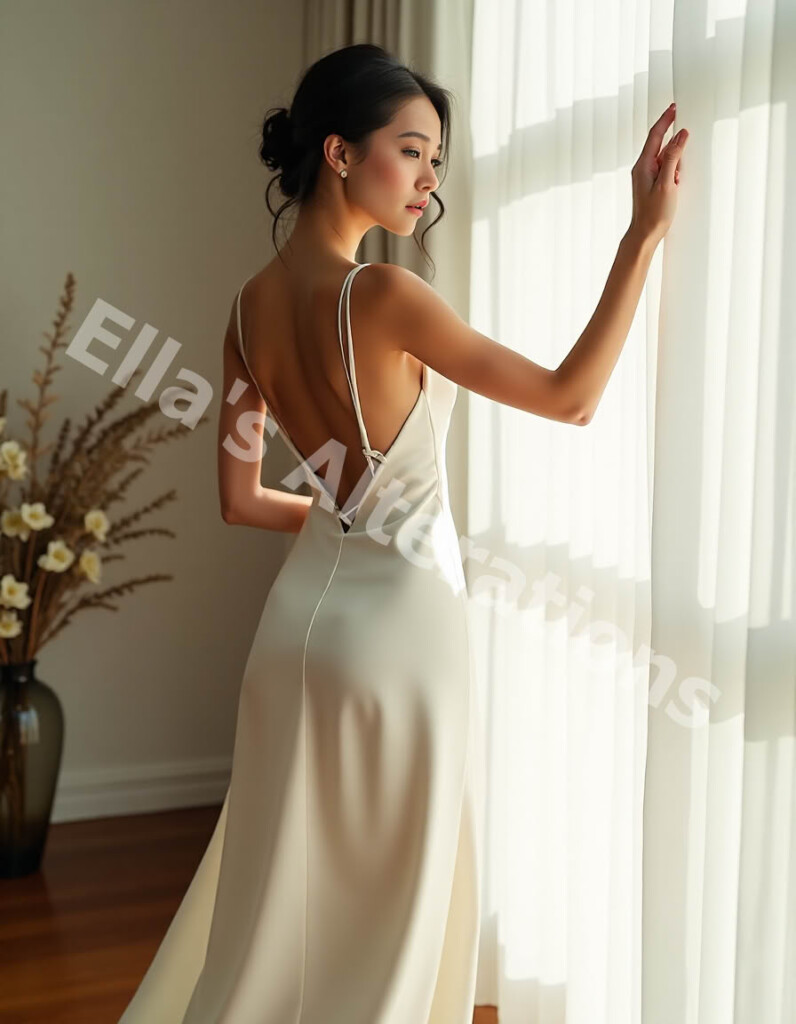
Satin is smooth, glossy, and has a beautiful weight to it.
It offers a clean, structured finish that holds its shape well, making it ideal for ball gowns, mermaid dresses, or anything with dramatic flair.
It's also perfect for colder seasons, as it provides warmth and weight.
The light-reflective sheen makes it feel luxurious and photographs beautifully under both natural and artificial light.
Next is chiffon, a favorite for romantic, flowy silhouettes.
Chiffon is lightweight, sheer, and floats beautifully with movement.
Because it’s so breathable, it’s a go-to for warm-weather weddings or destination ceremonies.
Often used as an overlay, chiffon softens the lines of a dress and creates gentle motion.
However, it’s delicate and prone to snags, so it’s not the best choice if you plan to walk through grassy areas or rocky terrain.
Tulle is another bridal staple, especially in voluminous skirts and veils.
It’s a fine net-like material that comes in various levels of stiffness.
Soft tulle creates dreamy layers that float and ripple, while stiffer versions give structure and fullness to ball gowns.
Tulle is often used to build dimension, making it a popular layering fabric.
It can also hold lace appliqué or beading, creating intricate surface detail while keeping the gown light.
Then there’s lace, the timeless favorite known for its intricate openwork and classic romance.
Lace can be used sparingly, as trim or appliqué, or as a full-overlay to cover the gown.
There are many types of lace, from bold, graphic patterns to fine, vintage-style Chantilly.
Lace adds texture and visual interest, while also hinting at tradition and femininity.
Depending on the type, it can range from stretchy and breathable to thick and structured.
Organza is sheer like chiffon but crisper and stiffer.
This gives it a unique place in bridal design.
It holds shape without the weight of satin or taffeta, making it a wonderful option for airy gowns with defined silhouettes.
Organza can be layered for volume or used alone for a light, architectural effect.
It’s often chosen for skirts, sleeves, and overlays that need structure but still want a touch of softness.
Other essential fabrics include crepe, which offers a slightly textured surface and a soft drape.
It hugs the body gently, making it ideal for minimalist gowns with clean lines.
Taffeta has a crisp texture and slight rustle, often used for vintage-inspired or formal styles.
Mikado, a heavier, structured weave, delivers elegance and drama with its clean, architectural lines.
Every fabric has its own voice.
The trick is to find the one that matches yours.
Whether you're drawn to the floaty ease of chiffon or the regal glow of satin, understanding how each material behaves can help you select a gown that complements your figure, suits your wedding day plans, and brings your bridal vision to life.
Fabric isn't just what your dress is made of, it's what shapes the moment you step into it.
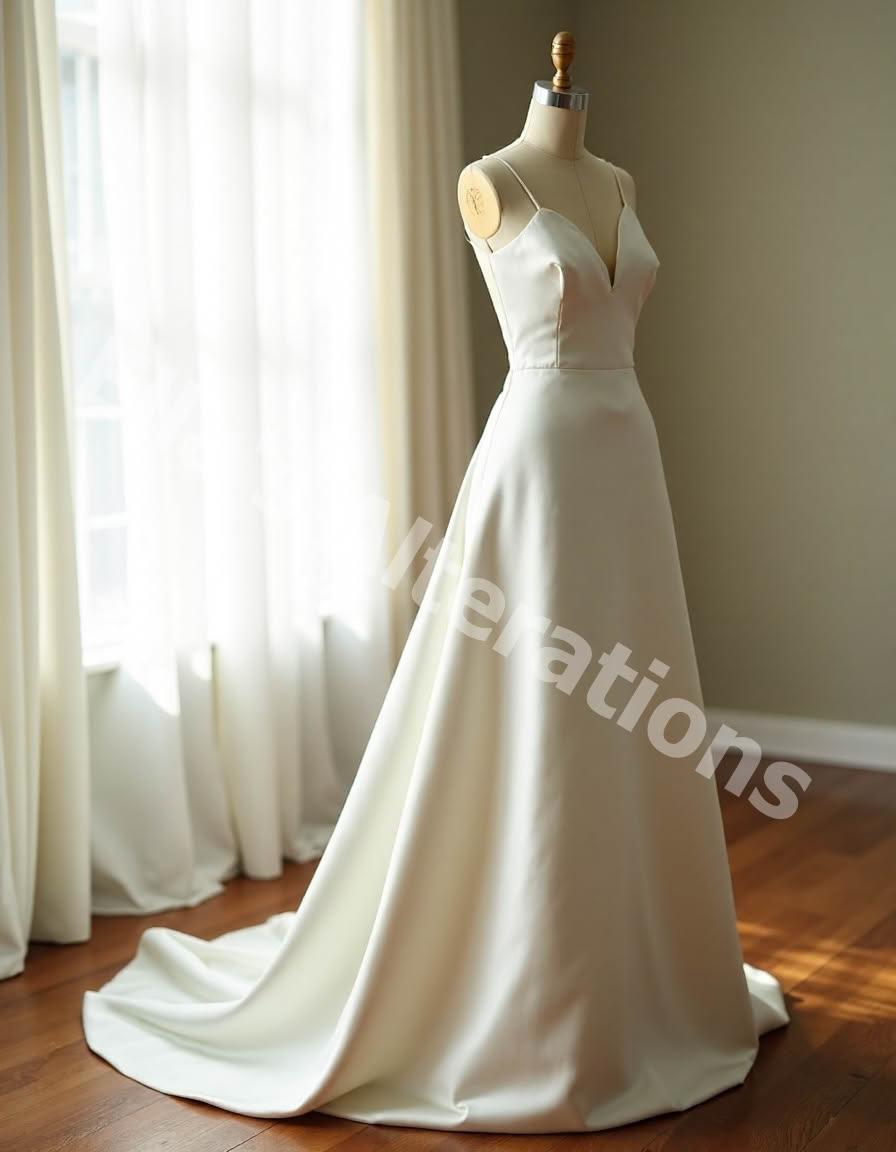
Q&A
Which fabrics look most formal on camera?
Satin and mikado. They hold shape and reflect light for that polished, regal finish.
What is the lightest combo that still reads bridal?
Chiffon over crepe or tulle with lace appliqué. You get movement plus dimension.
Need structure without heaviness?
Organza layers. Crisp enough to shape, light enough to breathe.
🧠 Tailor’s Insight
Pair a supportive base with a decorative top. Think satin or crepe base with lace or chiffon on top. Contrast creates depth without sacrificing comfort.
🎯 TL;DR
TLDR
Pick fabric first, silhouette second. The right material makes the rest fall into place.
Find Out More: Book a fabric swatch session at Ella’s Alterations—feel the difference in five minutes flat.
Ella’s Style Confidence
Brought to you by Ella’s Alterations
-
Your body is not the problem. The fit is.
If something feels off when you put it on, that does not mean it is wrong for you. It means it has not been tailored for you yet. Clothes are made for averages. You are not average. -
Confidence starts at the seams.
The smallest adjustments change everything. A lifted waist, a shaped bust, a clean hem. These details quietly do the heavy lifting so you can walk in like you own the room. -
Comfort is not optional.
If you are pulling, tugging, or holding your breath, the garment is failing you. Real tailoring lets you move, sit, dance, and live without thinking about your clothes. -
Trends fade. Fit lasts.
Styles come and go fast. A perfect fit never goes out of style. When something fits you correctly, it always looks intentional and expensive. -
Support should be built in, not added later.
Hidden structure matters. Boning, cups, straps, and shaping should work with your body, not against it. When support is done right, no one sees it but everyone notices the result. -
You deserve clothes that work as hard as you do.
Whether it is a wedding dress, a suit, or everyday wear, your clothes should show up for you. Sharp, polished, and reliable. -
Confidence is quiet, not loud.
The best dressed people are not uncomfortable or flashy. They look effortless because their clothes fit correctly and feel natural. -
One great alteration beats five new outfits.
Fixing what you already own often gives you more confidence than buying something new. A tailored piece feels personal. Like it was made just for you. -
When it fits right, you stand differently.
Posture changes. Shoulders relax. You stop adjusting and start owning your space. That shift is what people actually notice. -
You are allowed to feel amazing in your clothes.
Not just okay. Not just good enough. Amazing. That is the standard.
Local Credibility
Ella’s Alterations is trusted by brides, professionals, and families across Central Florida for one reason. The work is done right.
Awards & Recognition
- Most Trusted Tailoring & Alterations Studio 2025 – USA
- Bridal & Formalwear Tailoring Excellence Award 2025
- Recognized nationally by LUXlife Magazine for craftsmanship and client trust
- Chosen year after year for precision bridal and formal tailoring
- Best Wedding Dress & Formalwear Tailoring Zephyrhills 2026
- NextDoor Neighborhood Favorite 2023 2024 2025
Service Area
Proudly serving Zephyrhills, Pasco County, Tampa, Wesley Chapel, Lakeland, and surrounding Central Florida communities. Clients travel from across the region for expert alterations that local shops simply cannot match.
Depth of Craft
With over 30 years of hands on tailoring experience, Ella works at a master level. This is not basic hemming or quick fixes. This is true garment engineering. Wedding gowns with structure, suits that need balance, formalwear that must move and photograph perfectly. Every adjustment is intentional and precise.
Proof of Trust & Fitting Care
Every fitting is handled with respect, privacy, and patience. Measurements are double checked. Details are explained. Nothing is rushed. Nothing is guessed.
Clients return because they feel heard, supported, and confident. Dresses are protected. Fabrics are handled correctly. Fit decisions are made with experience, not shortcuts.
This is why generations of clients trust Ella with their most important garments. When it has to fit perfectly, they choose experience.
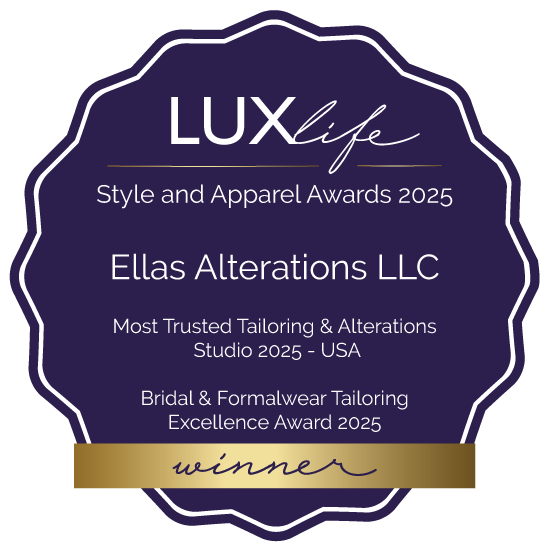
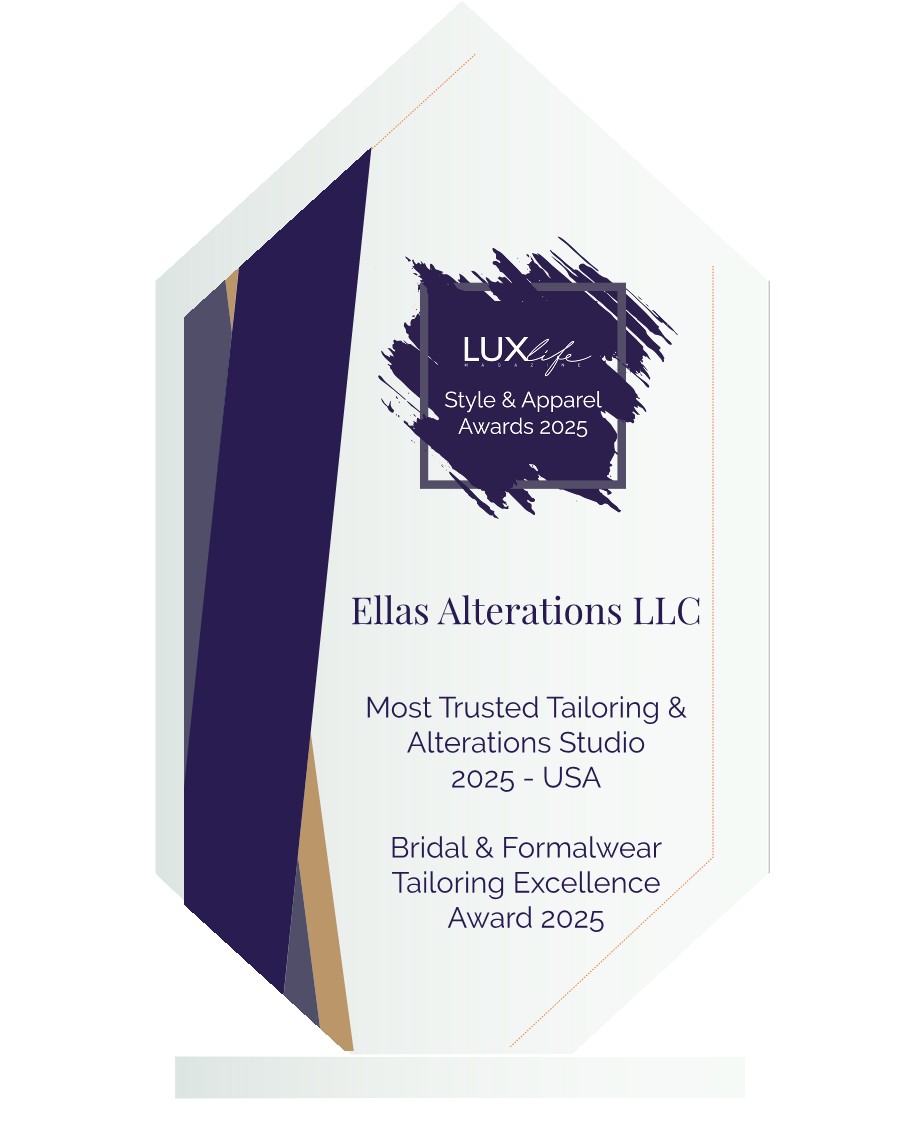
Bridal & Formalwear Tailoring Excellence Award 2025 – USA
Award Winning Bridal & Formalwear Tailoring
Ella’s Alterations is proudly recognized as one of Zephyrhills’ most trusted tailoring studios, specializing in wedding dress and formalwear alterations.

NextDoor Neighborhood Favorite 2023, 2024, 2025

Best Wedding Dress & Formalwear Tailoring Zephyrhills 2026
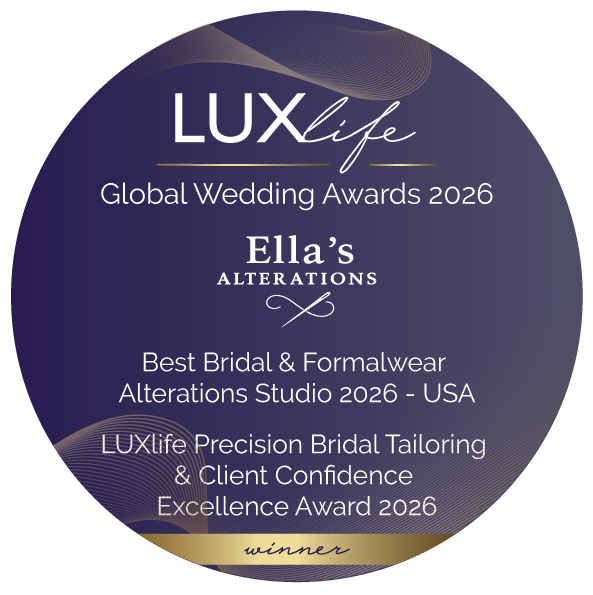
Proud winner: Best Bridal & Formalwear Alterations Studio 2026 - USA
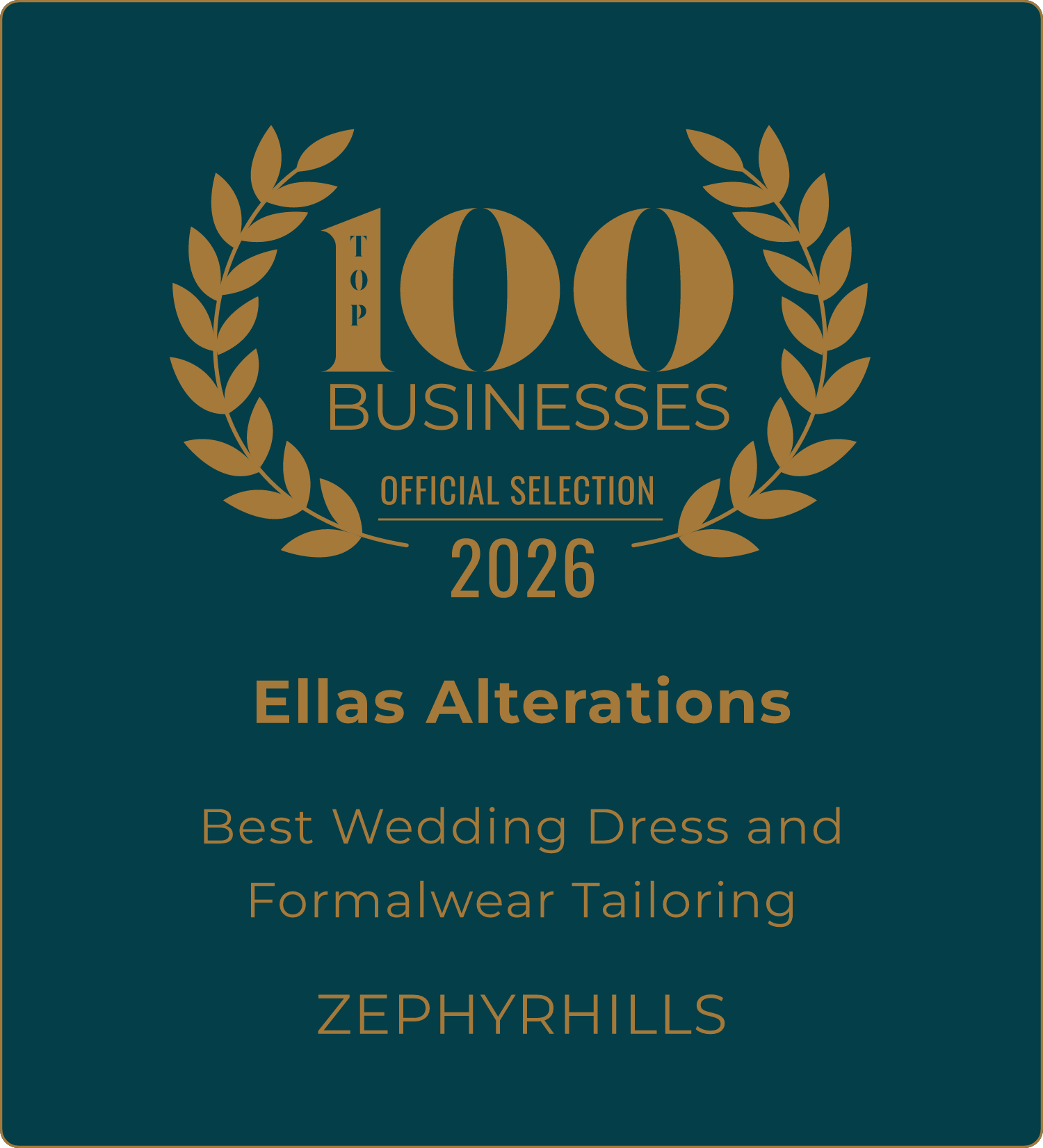
Proud winner: Best Wedding Dress and Formalwear Tailoring, Zephyrhills 2026
Why Clients Trust Ella’s Alterations
- 30 plus Years of Expertise: Master tailoring and formal wear alterations trusted across Florida.
- Award Winning Service: Best of Florida Tailor and Best of Zephyrhills.
- Private Bridal Fittings: Discreet, elegant, and tailored to you.
- Proven Local Reputation: Five star customer reviews and repeat clients from Tampa to Orlando.
- Transparent and Personal: Clear pricing, expert guidance, and no rushed fittings.
- Recognized nationally by LUXlife Magazine for craftsmanship and client trust
- Chosen year after year for precision bridal and formal tailoring
- Best Wedding Dress & Formalwear Tailoring Zephyrhills 2026
- NextDoor Neighborhood Favorite 2023 2024 2025
Address: 6986 Fort King Road, Zephyrhills FL 33541
Phone: +1 813-445-8894 or +1 813-445-6721
Email: admin@ellasalterations.com
Hours:
Get Directions | Book Your Fitting