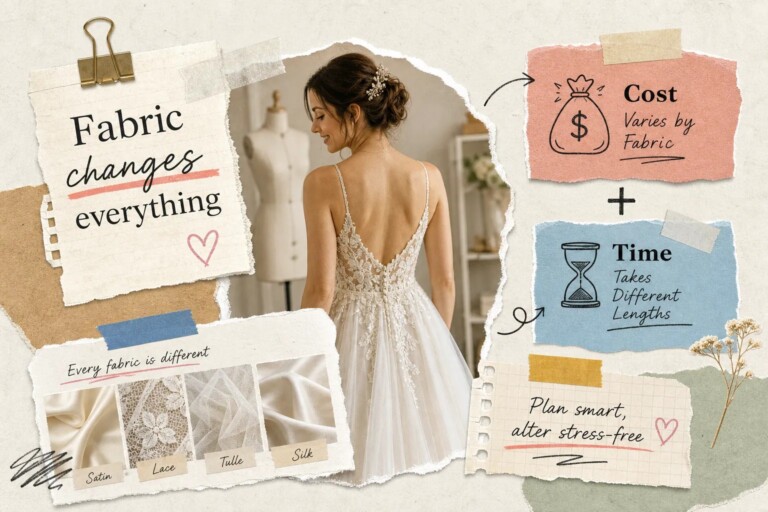
How Wedding Dress Fabric Affects Alteration Cost And Time
TLDR: Quick Take
Your wedding dress fabric affects how difficult the gown is to alter, how many fittings you may need, how long the work takes, and how much the alterations may cost. Crepe is usually more forgiving, while chiffon, layered tulle, satin, lace, beading, mikado, and taffeta require more care, time, or handwork. The more delicate, layered, structured, or embellished the gown is, the earlier you should begin alterations.
Listen: The fabric used to make your wedding dress can have a major effect on the cost, timeline, and difficulty of your alterations. Forgiving fabrics like crepe are often easier to adjust, while chiffon, layered tulle, satin, lace, beading, mikado, and taffeta require additional time, precision, fittings, or handwork. Ella’s Alterations explains what brides should know about bridal fabrics before purchasing a gown and why starting alterations early can protect both the dress and the wedding budget. (Audio Guide)
How Wedding Dress Fabric Affects Alteration Cost And Time
Picture this. A bride walks into a bridal boutique and finds the dress.
It has beautiful beaded lace, delicate appliqués across the bodice, and a detailed hem that looks like it came straight out of a fairy tale.
She falls in love instantly.
Then she receives the alteration quote.
Suddenly, the excitement turns into sticker shock.
She planned for the cost of the gown, but she did not realize how much time, skill, and detailed work it would take to make that gown fit her body perfectly.
This happens more often than most brides realize.
Brides may spend months comparing silhouettes, necklines, designers, and dress prices, but the construction of the fabric often gets overlooked.
Unfortunately, that detail can have a major effect on the alteration process.
Understanding how fabric affects wedding dress alterations is one of the smartest things a bride can do before choosing a gown. At Ella’s Alterations, the fabric and construction are some of the first things we look at during a consultation.
With more than 30 years of experience, we have worked on everything from clean and simple crepe gowns to heavily beaded, couture-style wedding dresses.
We have learned that the fabric sets the rules. It can affect how many fittings you need, how long the alterations will take, what kind of work can safely be done, and how much the final cost may be.
Before you commit to a wedding dress, here is what every bride should know about the fabric, the construction, and the alterations that may come with it.
How Does Wedding Dress Fabric Affect Alteration Cost and Time?
Wedding dress fabric affects alteration costs and timelines because every material responds differently to pins, stitching, cutting, pressing, and reshaping.
Smooth fabrics may reveal marks, delicate fabrics may stretch or fray, layered fabrics must be adjusted one layer at a time, and embellished gowns often require beads or lace appliqués to be removed and sewn back by hand.
These differences directly affect the labor, number of fittings, and total time needed to complete the gown properly.

Why The Fabric In Your Gown Matters Before The First Fitting
What “Alteration Difficulty” Really Means
When we talk about alteration difficulty, we are not simply asking whether a seam can be taken in or let out.
There is much more to it.
We look at how visible the finished seam may be, how much handwork is needed to make the alteration blend naturally, whether the fabric stretches, frays, or loses its shape, and how carefully it must be pressed.
Some fabrics are very forgiving and allow us to make changes without leaving obvious signs behind.
Others show everything, including pin marks, tiny stitches, pulled threads, and too much heat from an iron.
These details affect how carefully the gown must be handled, how much time the work takes, and how many fittings may be needed to get the final result just right.
How Fabric Affects Wedding Dress Alteration Costs And Timelines
The type of fabric used in your wedding dress can affect nearly every part of the alteration process.
It can change how noticeable the finished work may be, how many fittings are needed, how carefully the gown must be handled, and how much time the alterations will take.
Two gowns may have almost the same shape and need the same basic adjustments, but the alteration quotes can still be very different because of the fabric and construction.
A difference of several hundred dollars is not unusual when one gown requires more handwork, more layers, or more delicate techniques.
That price difference reflects the time and skill needed to protect the gown and create a clean, professional finish.
Knowing what your dress is made from can help you plan your budget and timeline before your first fitting.
It is always easier to prepare ahead of time than to be surprised after you have already purchased the gown.
Key Takeaways
- Crepe is one of the most forgiving bridal fabrics because its matte texture can hide small stitch lines and construction marks.
- Satin requires careful handling because its glossy surface may reveal pinholes, seam impressions, pulled threads, and pressing marks.
- Chiffon can fray, stretch, snag, and pucker, so alterations usually require slower and more controlled work.
- Tulle gowns often contain several layers, and each layer must be measured and trimmed separately.
- Lace, beads, and appliqués increase alteration costs because decorative details may need to be removed and reattached by hand.
- Mikado and taffeta hold their shape well, but their stiffness can make structural alterations more difficult.
- Simple gowns may need two or three fittings, while delicate, layered, embellished, or structured gowns may need three or more.
- Starting alterations three to four months before the wedding gives your tailor enough time to work carefully without rushing.

Wedding Gown Fabrics, Starting With The Easiest To Alter
Crepe: One Of The Most Alteration Friendly Bridal Fabrics
Crepe is often one of the easiest bridal fabrics to work with.
Its soft, matte finish and light texture can help hide small stitch lines and construction marks better than many smooth or shiny fabrics.
Seams usually sit nicely, adjustments hold their shape well, and the fabric responds well when handled carefully.
Crepe is still elegant and beautiful, but it tends to be more forgiving during alterations.
For the bride, that can mean cleaner results, a smoother fitting process, and fewer unexpected labor costs compared with more delicate or heavily detailed fabrics.
Satin: Beautiful, But Not As Forgiving As It Looks
Satin is stunning, especially when the light catches its smooth, glossy surface.
However, that same shine can make alteration work more noticeable.
Pin marks, seam impressions, pulled threads, and pressing marks may show if the fabric is not handled correctly.
Satin can absolutely be altered beautifully, but it requires patience, precision, and experience.
Every seam must be finished carefully because even a small mistake can be easier to see on a reflective surface.
Brides who choose satin should make sure their gown is handled by someone who understands how to work with this fabric without damaging its finish.
A Note About Tulle
Tulle may look simple because it is lightweight and does not usually fray like many other fabrics.
However, bridal gowns often use several layers of tulle to create fullness, movement, and shape.
Each layer must be measured and adjusted carefully so the skirt remains even from every angle.
Hemming a tulle gown is rarely just one quick cut.
It may involve trimming several layers separately while making sure none of them create visible steps, uneven edges, or changes in the shape of the skirt.
Because the work must be completed one layer at a time, tulle is often more time consuming than brides expect and is usually better placed in the intermediate category rather than the easy one.
Wedding Dress Fabric Alteration Comparison
| Fabric Type | Alteration Difficulty | Main Challenge | Typical Effect on Cost | Typical Effect on Timeline |
|---|---|---|---|---|
| Crepe | Easier | Requires careful handling but hides small stitch lines well | Usually lower than delicate or embellished fabrics | Often follows a standard fitting schedule |
| Satin | Moderate | Shows pinholes, seam impressions, pulled threads, and pressing marks | May cost more because mistakes are highly visible | May require additional checking and careful pressing |
| Chiffon | Difficult | Frays, stretches, snags, and can pucker easily | Often higher because the work must be completed slowly | May require extra fittings and a longer alteration window |
| Tulle | Moderate to difficult | Multiple layers must be trimmed and aligned separately | Increases with the number of layers | Usually takes longer than brides expect |
| Lace | Difficult | Patterns and motifs must be matched across altered seams | Higher because lace may need to be removed and reapplied | Often requires more handwork and additional fittings |
| Beaded Fabric | Very difficult | Beads must often be removed and reattached individually | Usually among the most expensive fabrics to alter | Can require a much longer completion window |
| Mikado | Moderate to difficult | Rigid structure can resist reshaping and show drag lines | May increase when major structural changes are needed | Often needs careful fitting and pressing at each stage |
| Taffeta | Moderate to difficult | Stiff fabric can distort if seams are not handled correctly | May be higher for bodice or silhouette changes | Can require additional time for structured adjustments |
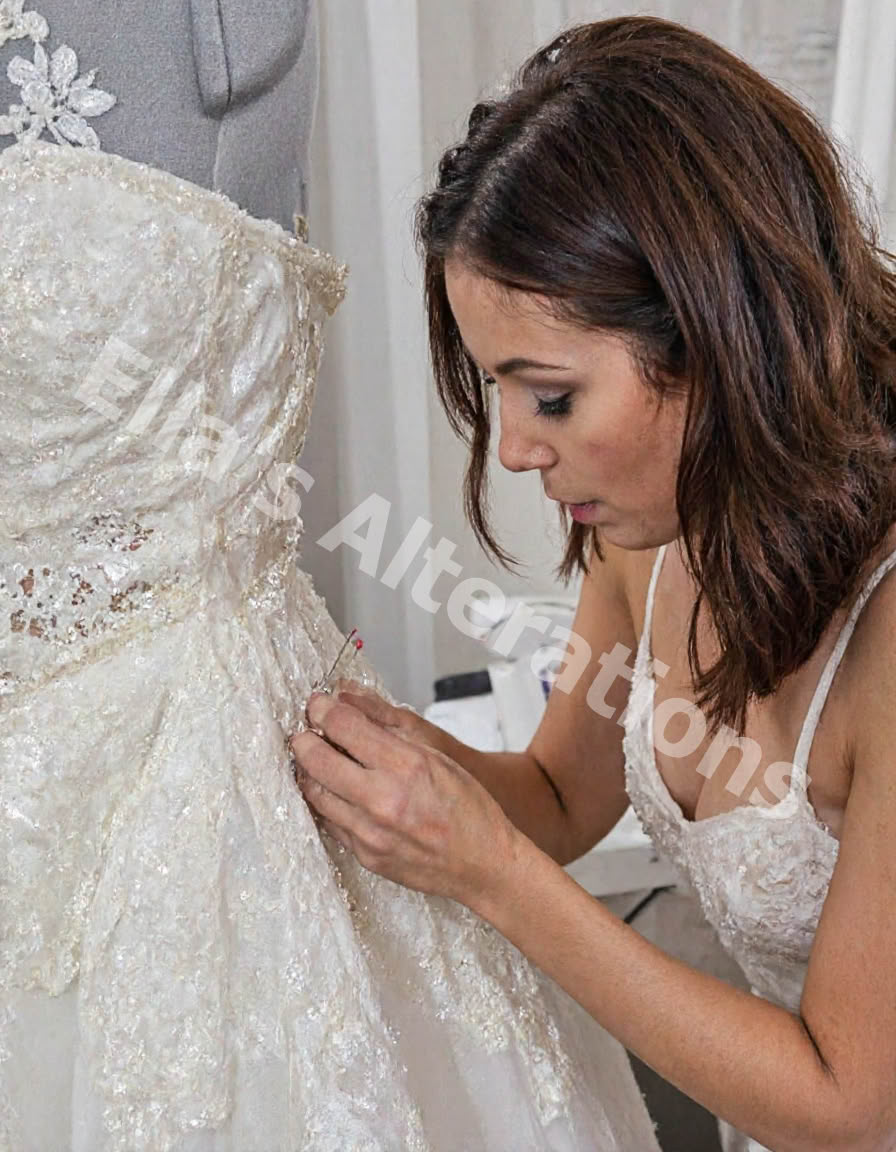
Chiffon And Tulle: When Delicate Fabrics Demand Extra Precision
Chiffon: Fragile, Sheer, And Harder Than It Appears
Chiffon is one of the most popular choices for romantic, flowing bridal gowns, and it's also one of the harder fabrics to alter well.
It frays easily, stretches during handling, snags unpredictably, and can distort if the tailor doesn't control tension on every seam.
The sheer quality means puckering is immediately visible.
Brides with chiffon gowns should expect more time per fitting, not because the alterations themselves are elaborate, but because the fabric requires slower, more controlled work at every single step.
Tulle: Lightweight Layers With Hidden Complexity
As noted above, tulle looks deceptively simple.
Altering a multi-layered tulle skirt requires each layer to be handled independently, with every cut and seam checked against the others to keep the overall silhouette even.
The challenge isn't just technical, it's cumulative.
Small inconsistencies across layers compound quickly, which is why this fabric rewards patience and a methodical approach over speed.
How These Fabrics Change Your Fitting Count
Both chiffon and tulle commonly require more fittings than structured or matte fabrics.
Small adjustments can look very different once the dress is on a moving body, so checking fit in stages becomes essential rather than optional.
Plan for at least one extra fitting appointment when either fabric is involved, many experienced bridal tailors recommend this as a standard precaution, and build that into your calendar from the moment the gown arrives.
Lace, Beading, And Embellishment: When Alteration Costs Climb Fast
The Real Cost Difference Between Plain And Embellished Gowns
The numbers here are worth knowing before you commit to a gown.
Plain fabric alterations for standard bridal work typically run between $300, $600 total.
Beaded or lace gowns shift that range to $600, $1,200, and heavily embellished designs can climb well beyond that.
Look at the hem alone: a plain fabric hem commonly costs $75, $150, while the same hem on a beaded lace dress often runs $150, $350 or more.
The reason isn't inflation or markup; it's labor.
Every bead and appliqué near a seam line has to be removed by hand, the seam adjusted, and each embellishment reattached, also by hand.
That work is slow, precise, and skilled.
What Happens To Beadwork And Lace During Seam Work
A tailor working on a beaded hem doesn't simply cut and re-sew.
She unpicks the beading in the work zone, adjusts the seam, and reattaches each element to restore the original visual design.
If the lace has a repeating pattern or a floral motif, she also has to match that pattern across the altered seam so the finished result looks continuous.
This is why the process takes as long as it does and why the cost reflects real craft rather than arbitrary pricing.
Why This Is Where Seamstress Skill Truly Separates
Any competent alterations shop can hem a pair of trousers.
Restoring beadwork around a princess seam after a silhouette adjustment is a different discipline entirely.
It sits closer to couture reconstruction than everyday tailoring, and the result is immediately visible if it isn't done correctly.
For embellished gowns, seeking out a Master Tailor or bridal alteration specialist with a strong portfolio of work on heavily decorated fabric isn't a luxury preference; it's the practical choice for protecting the gown you've already invested in.
Quick Facts About Wedding Dress Fabric and Alterations
- Most straightforward bridal alterations require about two or three fittings.
- Complex gowns may require three or more fittings.
- Standard alterations may take approximately four to eight weeks.
- Complex alterations may take eight to twelve weeks or longer.
- Heavily embellished gowns usually require more hand-finishing.
- A multilayer tulle hem is not one simple cut. Every layer must be checked separately.
- Reflective fabrics such as satin make small flaws easier to notice.
- Brides with delicate, layered, or embellished gowns should consider starting alterations three to four months before the wedding.
- Your wedding shoes and undergarments should be brought to each important fitting.
- The gown’s fabric tag can help your tailor provide a more accurate estimate.
Structured Fabrics Like Mikado And Taffeta: What Most Brides Don't Expect
How Rigidity In A Fabric Limits What Can Be Changed
Mikado and taffeta create a polished, architectural bridal silhouette precisely because they hold their shape without collapsing.
That same quality makes them less flexible during alterations.
Seams in stiff fabrics don't ease into new positions the way softer materials do, and structural changes like taking in the waist or reshaping the bodice require careful work to avoid pulling or distorting the surrounding fabric.
Brides who assume a structured gown will be straightforward to alter because it isn't embellished sometimes find that stiffness creates its own category of challenge.
The Techniques Specialists Use On Structured Gowns
Working on mikado or taffeta involves stabilizing seams with interfacing, using a tailor's ham to press curved seams without flattening them, and moving slowly through each adjustment to avoid creating drag lines or warping the grain.
These techniques require experience with structured bridal materials and the right equipment to execute properly.
For brides with structured gowns who need significant changes, the skill level of the tailor matters as much as the number of alterations on the list.
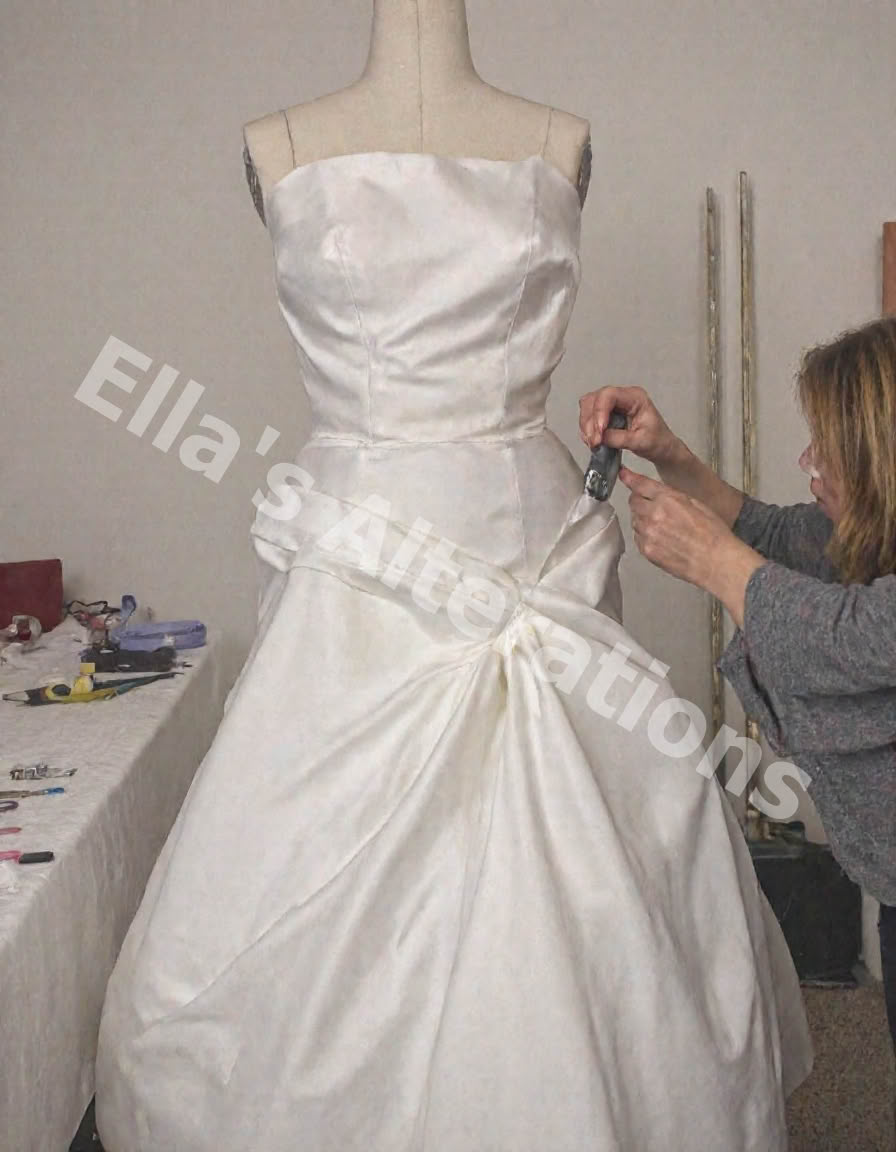
Mini Glossary of Bridal Alteration Terms
- Appliqué
- A decorative piece of lace, fabric, or embroidery attached to the surface of a gown.
- Beadwork
- Decorative beads, crystals, sequins, or pearls sewn onto the fabric by hand or machine.
- Bodice
- The upper portion of the wedding dress that fits around the chest, waist, and torso.
- Bustle
- A system of hooks, loops, buttons, or ribbons used to lift the train after the ceremony.
- Drag Lines
- Visible wrinkles or pulling lines that show where fabric is under uneven tension.
- Fabric Grain
- The direction in which the fabric threads run. Altering against the grain can cause twisting or distortion.
- Hand-Finishing
- Detailed sewing completed by hand to hide stitches, restore decorations, or create a cleaner finish.
- Hem
- The finished lower edge of the wedding dress or skirt.
- Interfacing
- A supporting material placed inside parts of a gown to add strength, shape, or stability.
- Princess Seam
- A long curved seam that runs vertically over the bust and down the bodice to shape the gown.
- Seam Allowance
- The extra fabric inside a seam that may allow a gown to be let out or reshaped.
- Silhouette
- The overall shape of the gown, such as fitted, A-line, ball gown, sheath, or mermaid.
How Fabric Type Affects Wedding Dress Alteration Timelines And Budgets
Fitting Counts And General Timelines By Fabric Type
Most brides need 2, 3 fittings spread over a 4, 8 week period for standard fabrics like crepe or mid-weight satin.
Complex fabrics, including chiffon, heavily beaded lace, and structured materials like mikado, often push toward three or more fittings, with total alteration timelines reaching 8, 12 weeks for significant changes.
or the most intricate work, some brides benefit from beginning the process 3, 4 months out to allow proper time at each stage.
The timeline starts from the moment the dress arrives, not from the week you realize the wedding is approaching.
Building that window into your calendar from the beginning is the single most effective thing you can do to avoid a stressful final fitting.
Bustle And Hem Work By Fabric Type
Two of the most common wedding dress alterations, hem adjustments and bustle additions, vary significantly in complexity depending on the fabric.
A plain crepe hem is a straightforward job.
The same hem on a chiffon gown with multiple floating layers takes considerably longer because each layer must be cut, finished, and checked independently.
Bustle work follows the same logic: attaching a French or ballroom bustle to a structured mikado skirt requires different handling than adding one to a lightweight chiffon overlay.
Before your first appointment, ask specifically how your fabric affects those two alterations, the answers will tell you a great deal about the tailor's experience with your gown type.
Questions To Ask Before Your First Alteration Appointment
Walk into your consultation with the right questions and you'll leave with real information instead of vague estimates.
Ask whether the seamstress has specific experience with your fabric type.
Ask if she handles beading and lace repair in-house or subcontracts it out, because that distinction affects both turnaround time and accountability.
Ask for examples of similar gowns she has altered, and ask for a clear timeline from first fitting to final pickup.
A tailor who answers those questions with specifics, not just reassurances, is one you can trust with the dress.
Why Starting Early And Choosing The Right Tailor Makes The Difference
For brides in the Tampa Bay area, working with Ella's Alterations means working with a Master Tailor who has spent over 30 years handling bridal fabrics from simple crepe to couture-level beaded silk.
Starting the alteration process 3, 4 months before the wedding gives the tailor room to do the work correctly, regardless of how complex the fabric turns out to be, and it's a particularly smart buffer for heavily embellished gowns or peak-season schedules.
Rushing a chiffon gown or a beaded bodice through a compressed timeline is where mistakes happen. Time and expertise together are what protect the dress you've chosen.
Tailor’s Insight ✂️
Two wedding dresses in the same size can require completely different alteration plans. The fabric, internal structure, number of layers, placement of lace, and amount of beading matter just as much as the measurements. This is why an accurate bridal alteration quote usually requires seeing the actual gown instead of estimating from the dress size alone.
The Fabric You Choose Shapes Everything That Follows
The fabric in your gown isn't just a style decision.
It's a practical one that influences every appointment, every quote, and every fitting between now and your wedding day.
A bride who knows that chiffon needs careful, patient handling, that lace and beading add real cost, and that crepe is the most forgiving starting point walks into her alteration consultation prepared.
She asks better questions, sets a realistic budget, and gives the tailor the time needed to do the work well.
Understanding how fabric type shapes the alteration process is worth thinking through before you fall in love with a gown, not after.
Bring your dress tag and any fabric information you have to your first consultation.
The more your tailor knows about what she's working with, the more accurately she can guide you through the entire process.
Tailor’s Insight ✂️
The bottom of the gown often tells us how involved the alteration will be. A clean crepe hem may be fairly straightforward, while a layered chiffon, lace, or beaded hem may require each section to be separated, adjusted, refinished, and carefully restored. What looks like one alteration to the bride may actually involve several different steps for the tailor.
Frequently Asked Questions: Fabric Type And Wedding Dress Alterations
How Does Fabric Type Affect Wedding Dress Alterations Overall?
Fabric type determines how visible alteration work will be, how many fittings the process requires, and what the total cost will be.
Forgiving fabrics like crepe hide seam work well and typically need fewer fittings.
Delicate fabrics like chiffon require slower handling and more check-ins.
Embellished fabrics like beaded lace add significant labor because beading and appliqués must be removed and reattached by hand around every altered seam.
How Many Fittings Does A Wedding Dress Alteration Typically Require?
For straightforward fabrics like crepe or mid-weight satin, most brides need 2, 3 fittings.
Gowns in chiffon, tulle, or heavily beaded lace commonly require 3 or more, and complex structural changes on any fabric can extend that further.
Plan for more fittings than you think you'll need, it's easier to cancel an appointment you don't need than to add one at the last minute.
How Long Does The Wedding Dress Alteration Process Take?
Standard alterations on simpler fabrics typically take 4, 8 weeks from first fitting to final pickup.
Complex work on embellished, structured, or layered fabrics can run 8, 12 weeks or longer.
Beginning the process 3, 4 months before your wedding date gives your tailor the time to work carefully through every stage without cutting corners.
What should I bring to my first alteration consultation?
Bring the gown, the shoes you plan to wear, and any undergarments you've chosen.
Also bring the dress tag or any documentation of the fabric content if you have it.
The fabric information helps your tailor assess the work accurately from the first appointment and give you a realistic quote and timeline upfront.
If you're in the Tampa Bay area and want to start that conversation with someone who has seen every fabric and handled every complication, Ella's Alterations is ready.
We bring more than 30 years of bridal expertise to every fitting and treat every gown, regardless of fabric, with the precision that kind of reputation is built on.
**Book your consultation today and walk in knowing your dress is in the right hands.**
Ella’s Style Confidence
Brought to you by Ella’s Alterations
-
Your body is not the problem. The fit is.
If something feels off when you put it on, that does not mean it is wrong for you. It means it has not been tailored for you yet. Clothes are made for averages. You are not average. -
Confidence starts at the seams.
The smallest adjustments change everything. A lifted waist, a shaped bust, a clean hem. These details quietly do the heavy lifting so you can walk in like you own the room. -
Comfort is not optional.
If you are pulling, tugging, or holding your breath, the garment is failing you. Real tailoring lets you move, sit, dance, and live without thinking about your clothes. -
Trends fade. Fit lasts.
Styles come and go fast. A perfect fit never goes out of style. When something fits you correctly, it always looks intentional and expensive. -
Support should be built in, not added later.
Hidden structure matters. Boning, cups, straps, and shaping should work with your body, not against it. When support is done right, no one sees it but everyone notices the result. -
You deserve clothes that work as hard as you do.
Whether it is a wedding dress, a suit, or everyday wear, your clothes should show up for you. Sharp, polished, and reliable. -
Confidence is quiet, not loud.
The best dressed people are not uncomfortable or flashy. They look effortless because their clothes fit correctly and feel natural. -
One great alteration beats five new outfits.
Fixing what you already own often gives you more confidence than buying something new. A tailored piece feels personal. Like it was made just for you. -
When it fits right, you stand differently.
Posture changes. Shoulders relax. You stop adjusting and start owning your space. That shift is what people actually notice. -
You are allowed to feel amazing in your clothes.
Not just okay. Not just good enough. Amazing. That is the standard.
Local Credibility
Ella’s Alterations is trusted by brides, professionals, and families across Central Florida for one reason. The work is done right.
Awards & Recognition
- Most Trusted Tailoring & Alterations Studio 2025 – USA
- Bridal & Formalwear Tailoring Excellence Award 2025
- Recognized nationally by LUXlife Magazine for craftsmanship and client trust
- Chosen year after year for precision bridal and formal tailoring
- Best Wedding Dress & Formalwear Tailoring Zephyrhills 2026
- NextDoor Neighborhood Favorite 2023 2024 2025
Service Area
Proudly serving Zephyrhills, Pasco County, Tampa, Wesley Chapel, Lakeland, and surrounding Central Florida communities. Clients travel from across the region for expert alterations that local shops simply cannot match.
Depth of Craft
With over 30 years of hands on tailoring experience, Ella works at a master level. This is not basic hemming or quick fixes. This is true garment engineering. Wedding gowns with structure, suits that need balance, formalwear that must move and photograph perfectly. Every adjustment is intentional and precise.
Proof of Trust & Fitting Care
Every fitting is handled with respect, privacy, and patience. Measurements are double checked. Details are explained. Nothing is rushed. Nothing is guessed.
Clients return because they feel heard, supported, and confident. Dresses are protected. Fabrics are handled correctly. Fit decisions are made with experience, not shortcuts.
This is why generations of clients trust Ella with their most important garments. When it has to fit perfectly, they choose experience.

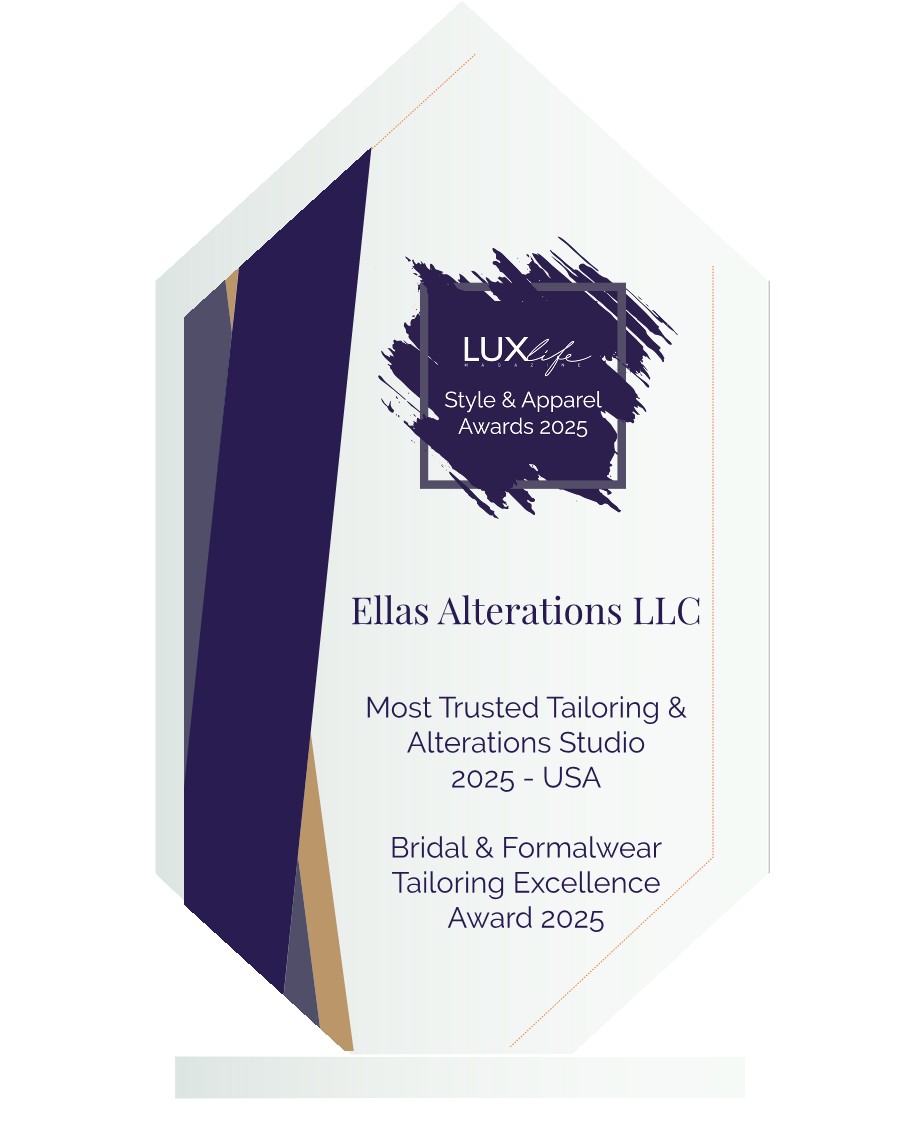
Bridal & Formalwear Tailoring Excellence Award 2025 – USA
Award Winning Bridal & Formalwear Tailoring
Ella’s Alterations is proudly recognized as one of Zephyrhills’ most trusted tailoring studios, specializing in wedding dress and formalwear alterations.

NextDoor Neighborhood Favorite 2023, 2024, 2025

Best Wedding Dress & Formalwear Tailoring Zephyrhills 2026

Proud winner: Best Bridal & Formalwear Alterations Studio 2026 - USA

Proud winner: Best Wedding Dress and Formalwear Tailoring, Zephyrhills 2026
Why Clients Trust Ella’s Alterations
- 30 plus Years of Expertise: Master tailoring and formal wear alterations trusted across Florida.
- Award Winning Service: Best of Florida Tailor and Best of Zephyrhills.
- Private Bridal Fittings: Discreet, elegant, and tailored to you.
- Proven Local Reputation: Five star customer reviews and repeat clients from Tampa to Orlando.
- Transparent and Personal: Clear pricing, expert guidance, and no rushed fittings.
- Recognized nationally by LUXlife Magazine for craftsmanship and client trust
- Chosen year after year for precision bridal and formal tailoring
- Best Wedding Dress & Formalwear Tailoring Zephyrhills 2026
- NextDoor Neighborhood Favorite 2023 2024 2025
Address: 6986 Fort King Road, Zephyrhills FL 33541
Phone: +1 813-445-8894 or +1 813-445-6721
Email: admin@ellasalterations.com
Hours:
Get Directions | Book Your Fitting