A Tailor's Guide: What's the Right Wedding Dress Fabric for You?
A Tailor’s Guide Series Part 1: The Foundation of Every Gown — Why Fabric Matters
Fabric: Fabric decides how your dress looks, moves, breathes, and photographs, so picking the right one is the smartest first choice you can make.
Why this matters: This guide is written from a Master Tailor’s point of view with decades of fittings and fabric fixes for real brides in real rooms.
A Tailor’s Guide: Wedding Dress Fabric (Short)
Every dream dress begins with one choice — the fabric. Get a quick look at chiffon, lace, organza, and satin.
Introduction:
When you start shopping for your wedding dress, it’s easy to get swept up in silhouettes, sparkle, and sweetheart necklines.
But one often-overlooked detail plays a huge role in how your dress looks, feels, and fits: the fabric.
Choosing the right wedding dress fabric isn’t just about taste.
It’s about comfort, movement, structure, and how that fabric interacts with your body, your venue, and your wedding season.
Think of it like the foundation of a building.
Without the right material, even the most beautiful design can fall flat.
Wedding dress fabrics set the tone for the entire gown.
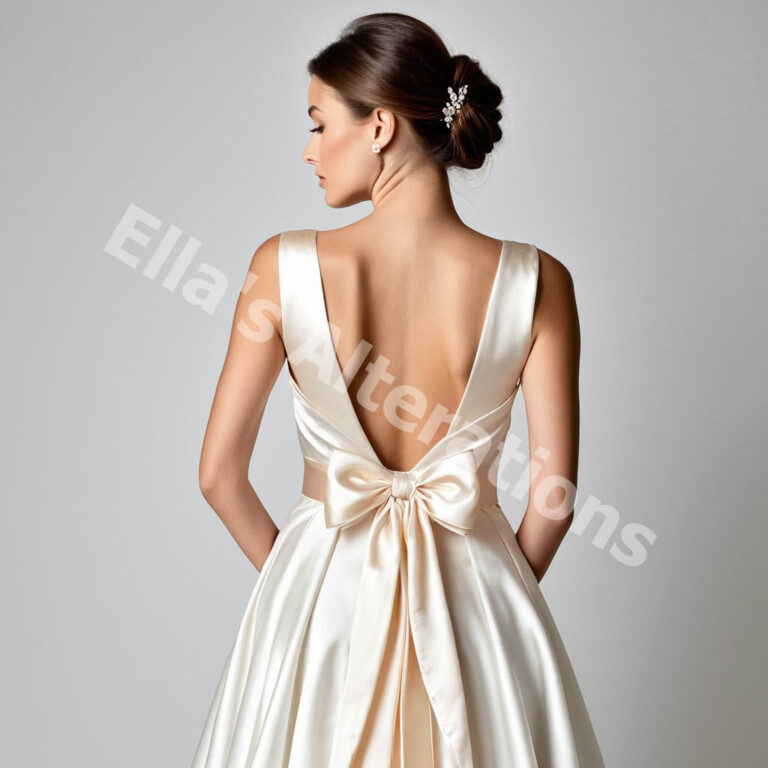
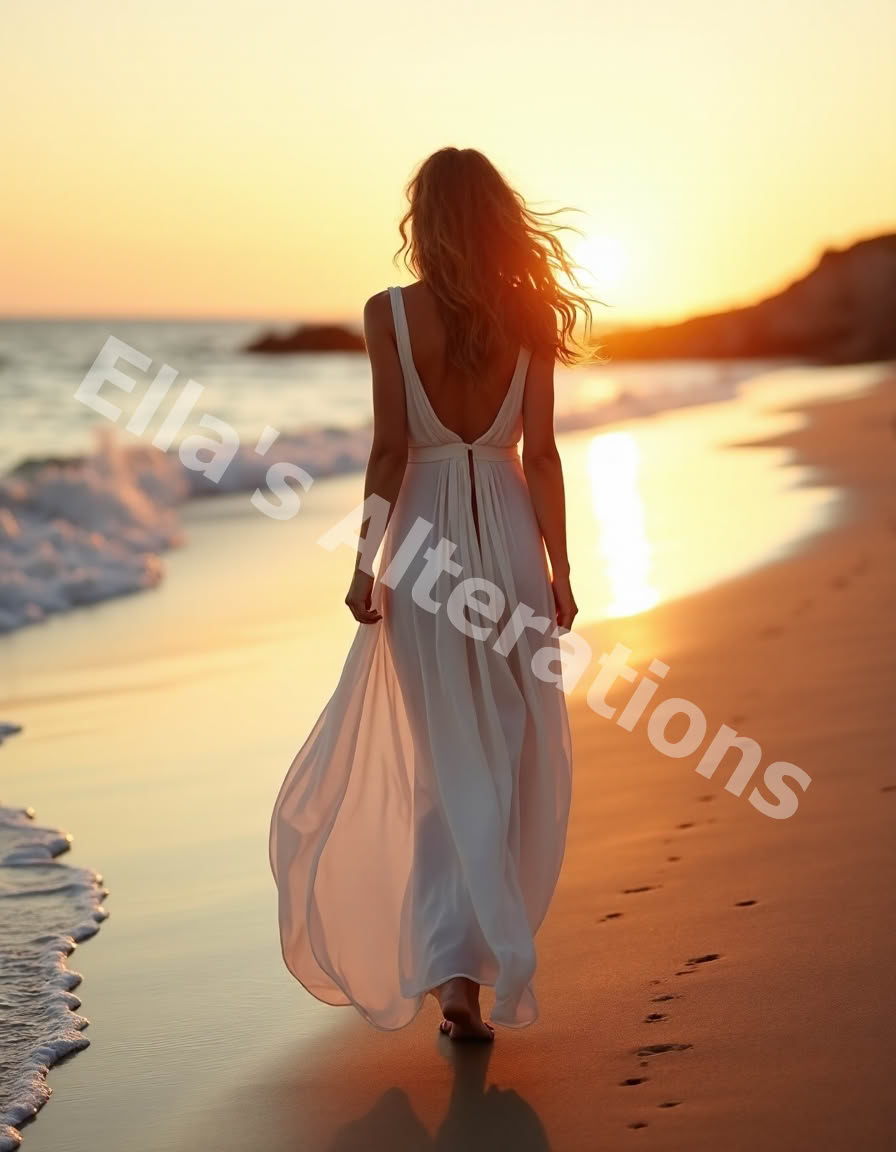
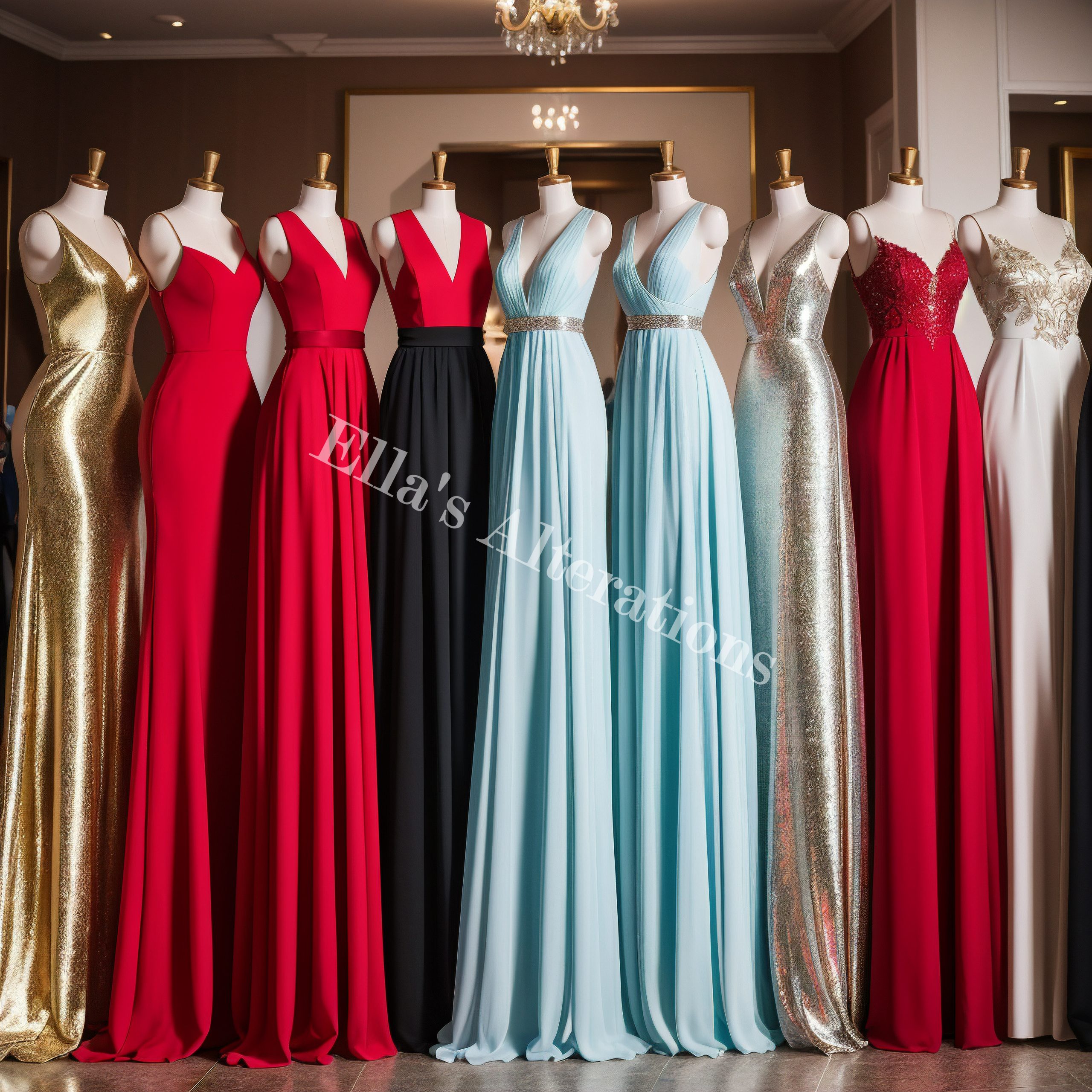
A glossy satin might give you regal, formal energy, while chiffon flows with the soft romance of a beach ceremony.
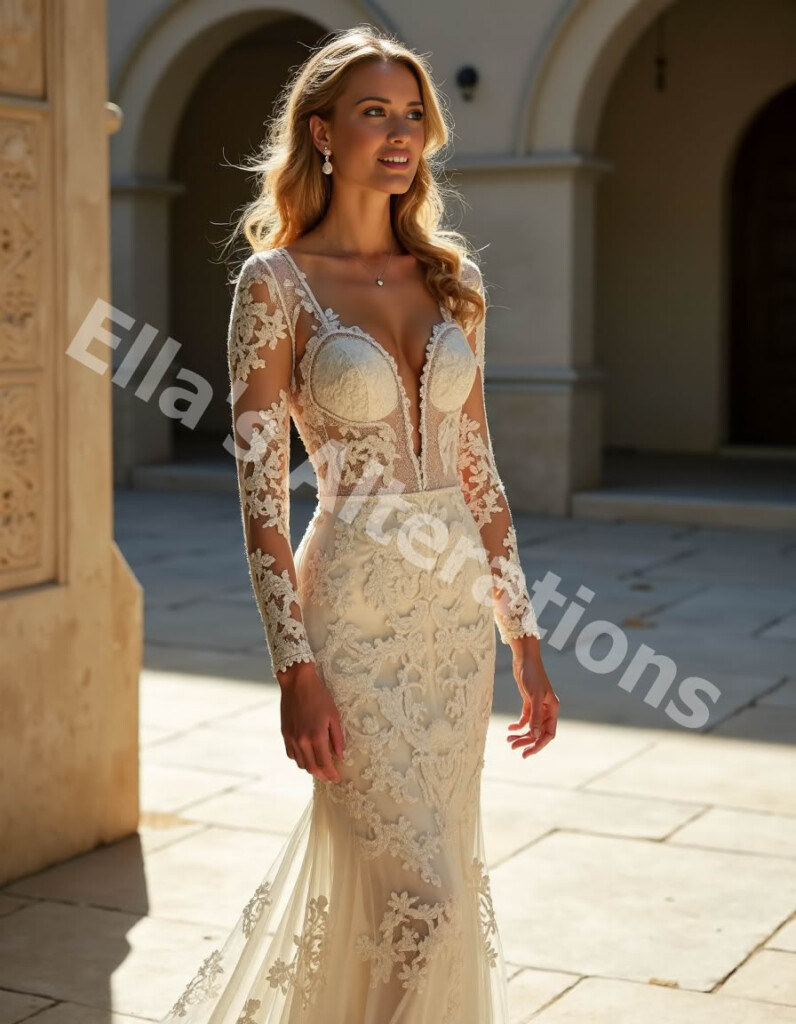
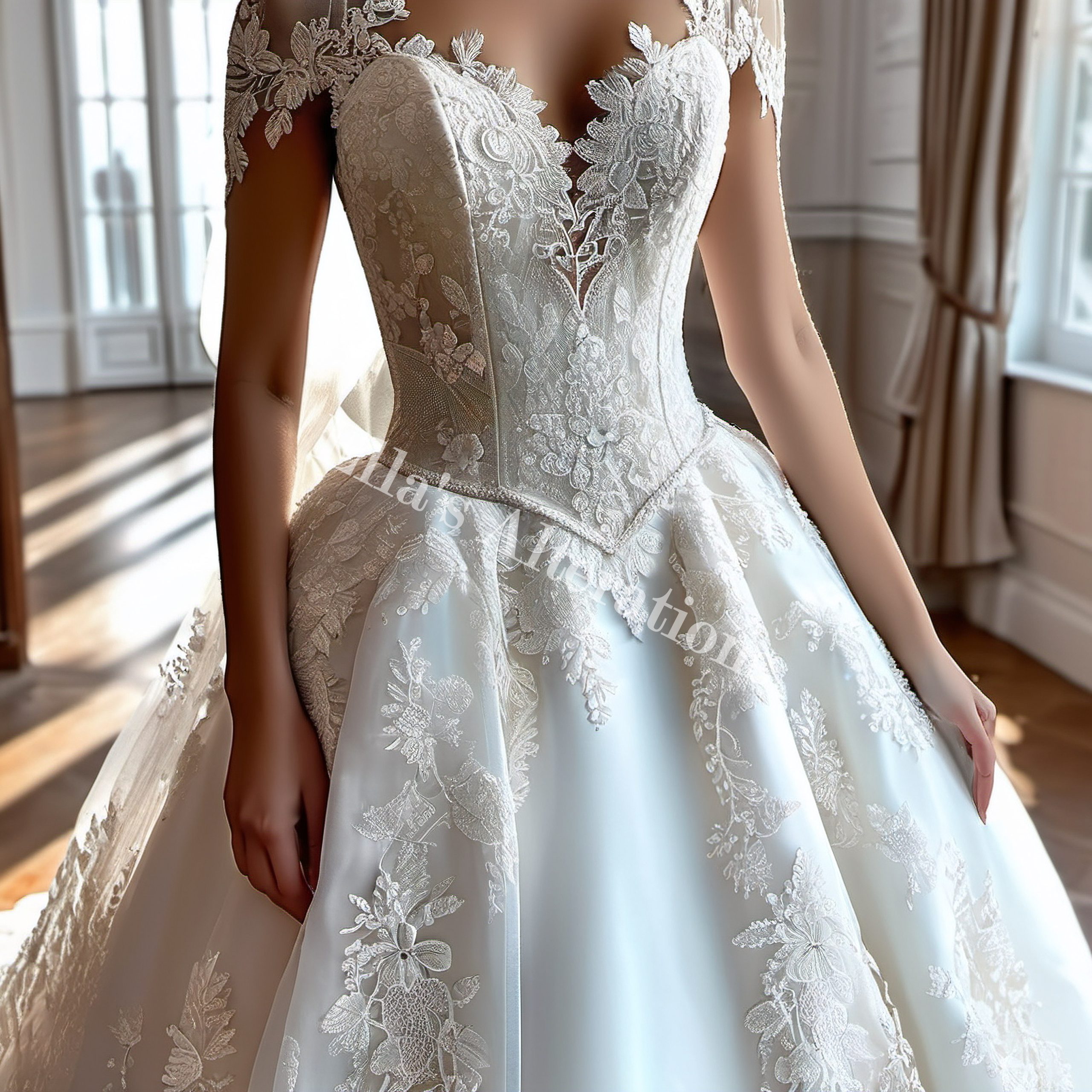
Lace evokes timeless charm, while organza and tulle bring drama and volume.
Each fabric tells its own story.
And when combined with your silhouette, body shape, and personal style, it creates a gown that feels uniquely you.
Some fabrics are ideal for structure.
Mikado, duchess satin, and shantung hold shape well, making them perfect for ball gowns, A-line dresses, and any style that benefits from a little sculptural flair.
Others, like silk charmeuse and georgette, are all about movement.
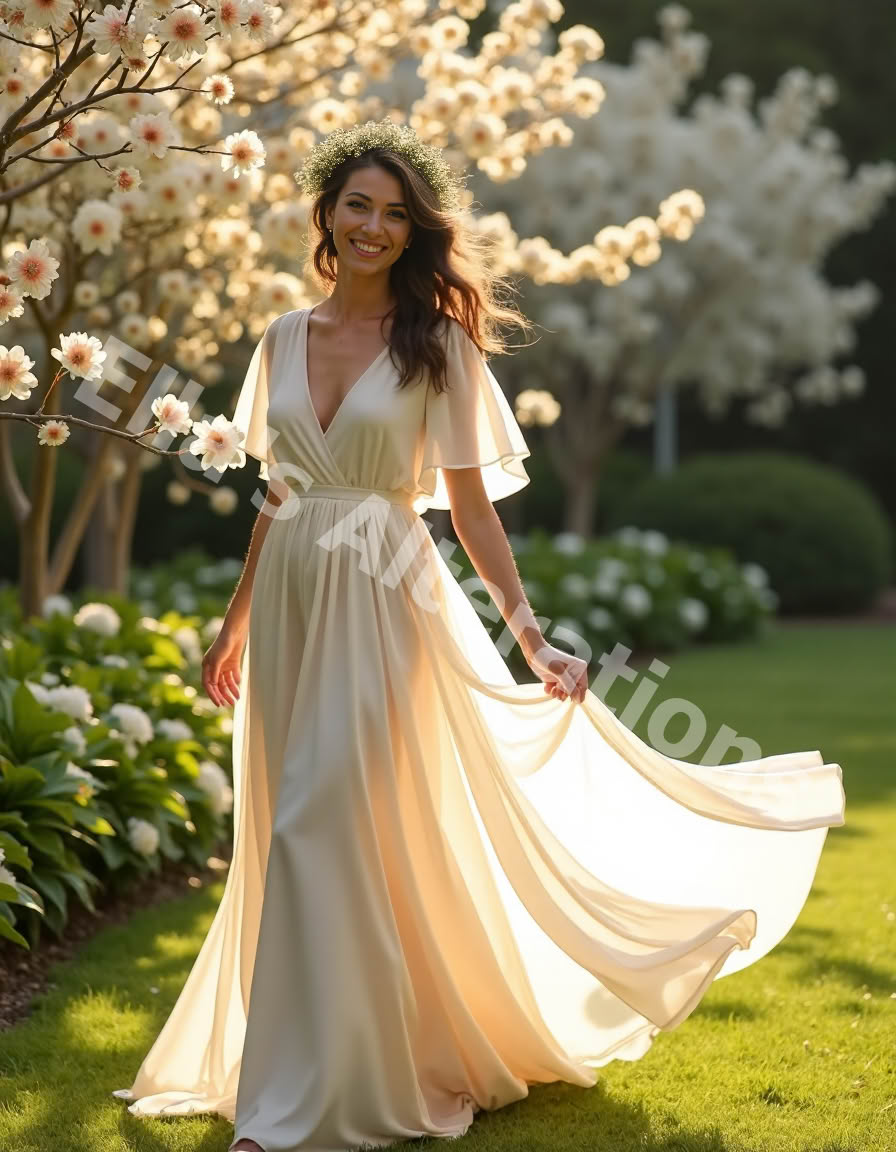
These fabrics drape beautifully and hug the body softly, creating a fluid, romantic feel.
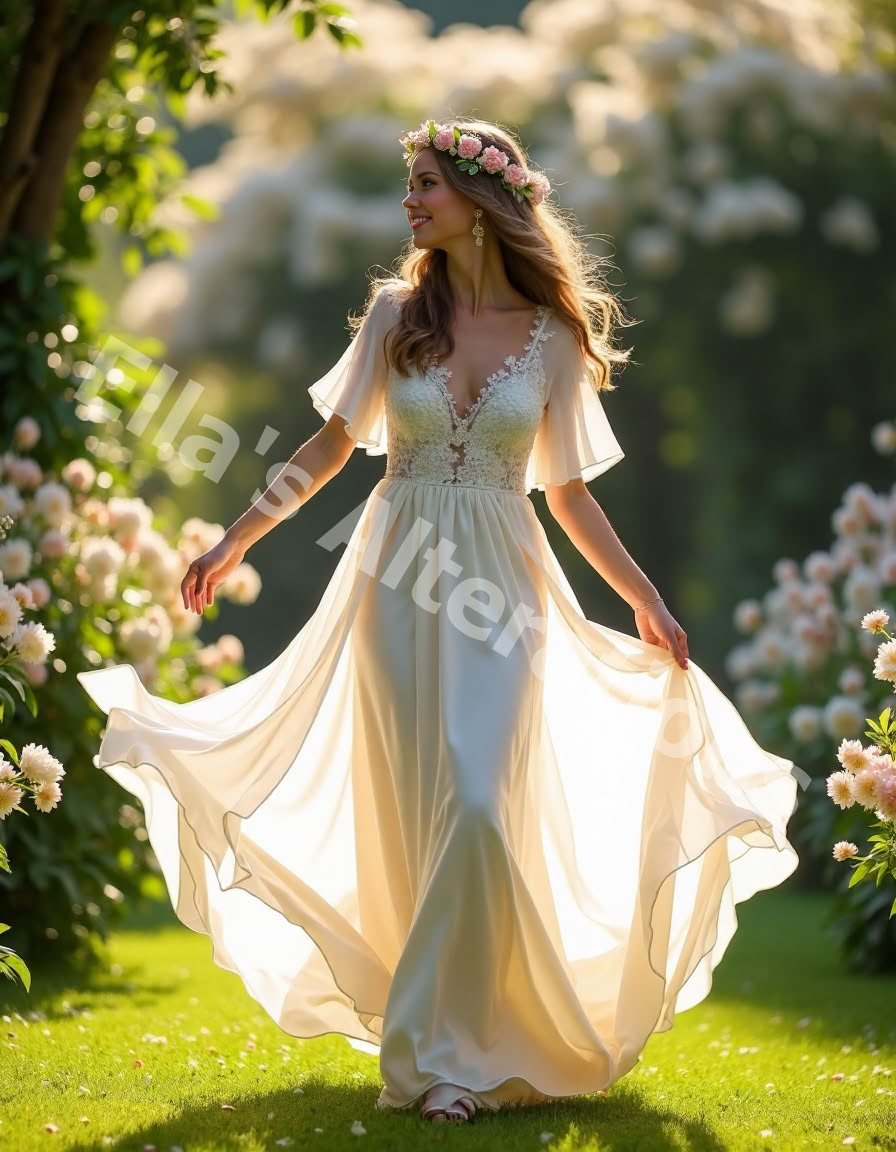
Then there are layered combinations, like a chiffon overlay on a crepe base or lace appliqué over tulle.
These mix textures to create visual depth and dimension without overwhelming the design.
Texture is also a key factor.
- Smooth fabrics like satin and silk reflect light, giving off a polished, almost glowing appearance.
- Matte options like crepe or faille absorb light more softly, creating a more subtle, modern aesthetic.
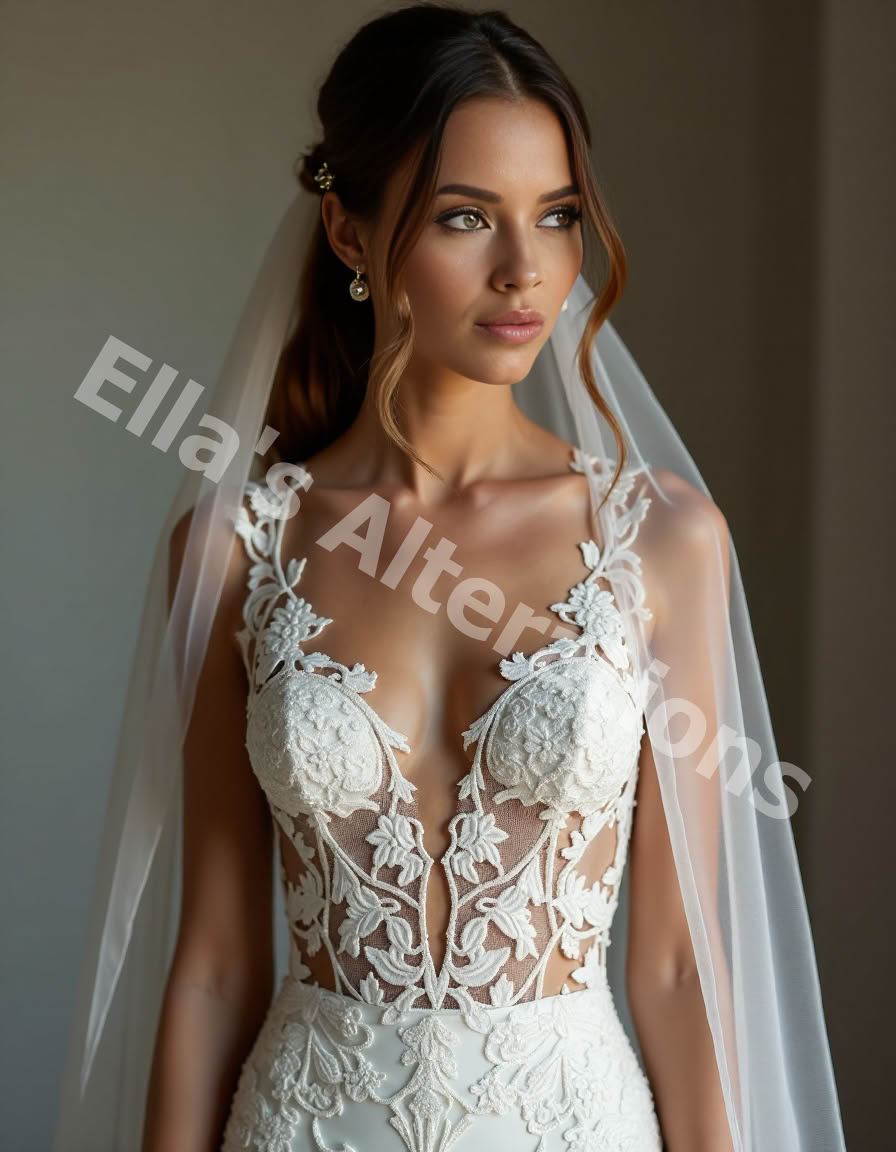
- Lace, with its intricate patterns and openwork, adds visual detail and classic elegance.
- Tulle, on the other hand, is sheer and net-like, often used in layers to build volume in skirts or as a dreamy veil floating behind you.
But beyond style, the right fabric has to match your environment.
Planning a beach wedding?
- Lightweight, breathable fabrics like chiffon and georgette are perfect to keep you cool and comfortable.
Getting married in winter?
- Heavier weaves like velvet or brocade offer warmth and richness.
For destination weddings or outdoor venues, wrinkle-resistant fabrics like polyester blends or rayon mixes can keep your gown looking fresh from ceremony to reception.
The season matters, but so does the feel.
If you’re sensitive to textures, some fabrics might irritate your skin after hours of wear.
Others may not breathe as well, which can be uncomfortable under lights or in heat.
This is where a tailor’s guidance becomes invaluable.
They can help you understand how a fabric will behave on your body, how it works with your chosen silhouette, and what options exist to balance comfort with style.
There’s also the visual effect to consider.
Shiny fabrics tend to photograph with more drama, especially in bright lighting, while matte fabrics look more natural in candid shots.
Lace details can either be bold or barely-there depending on their scale and placement.
And fabric weight will affect how your dress moves, whether it floats with you down the aisle or commands presence with every step.
In the end, selecting your wedding dress fabric is about more than just preference.
It’s about finding the right combination of texture, weight, movement, and visual impact that suits your day, your dress, and your personal story.
With so many beautiful options out there, having a clear understanding of each fabric’s strengths helps you make a decision with confidence.
Because your wedding dress should feel like magic, and the right fabric is where that magic begins.
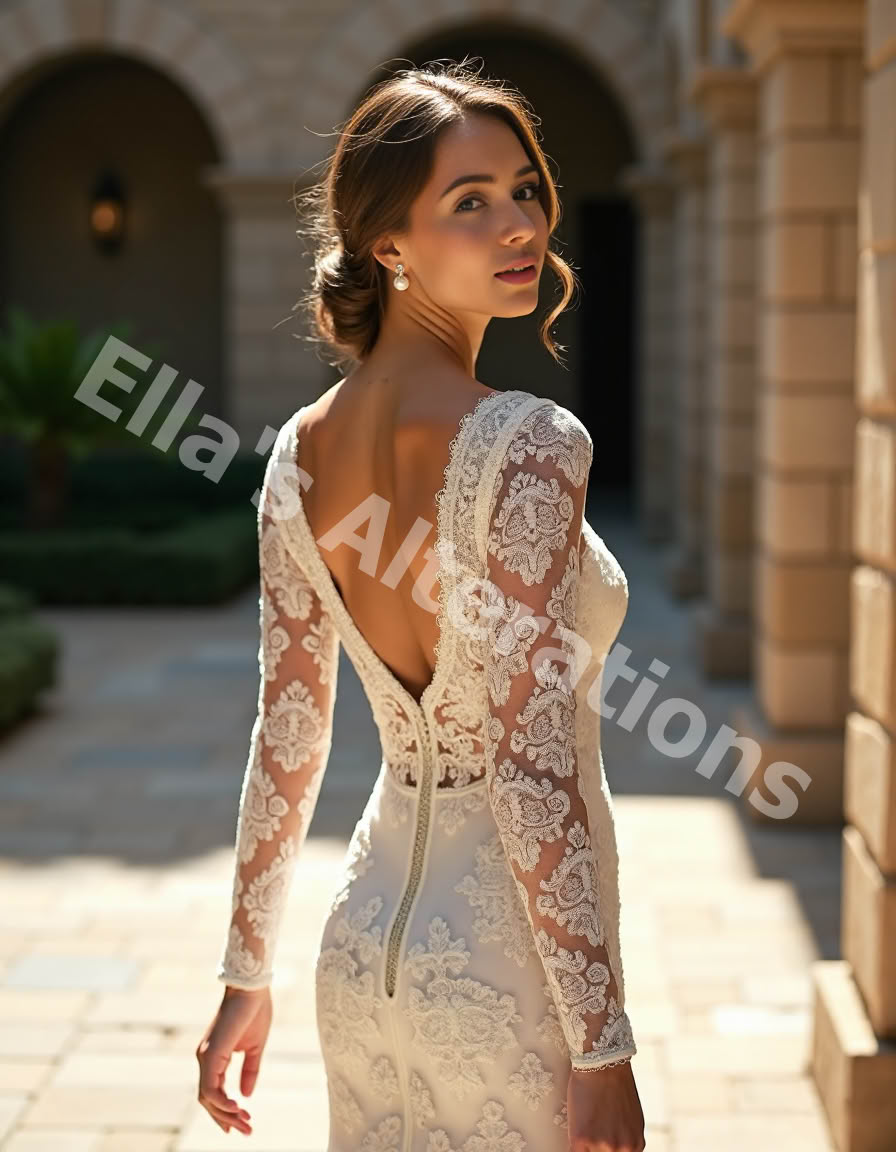
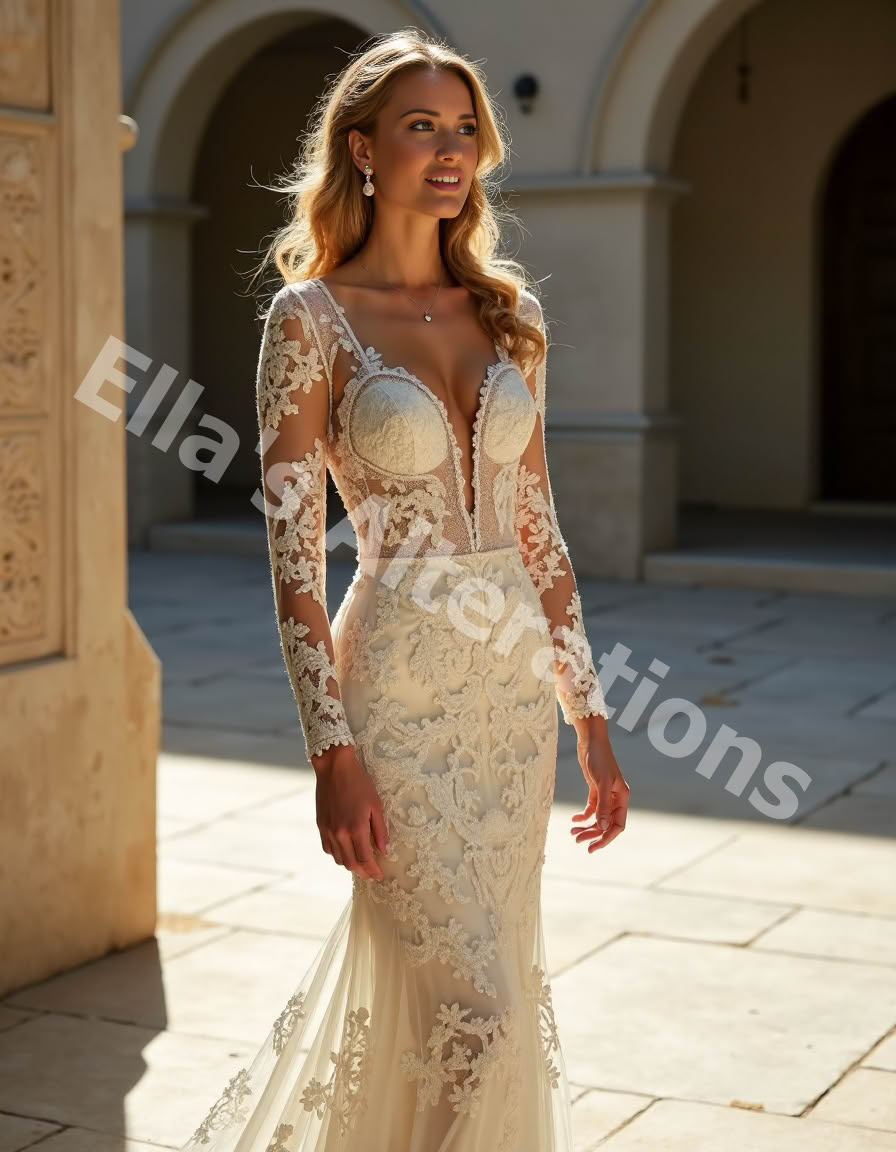
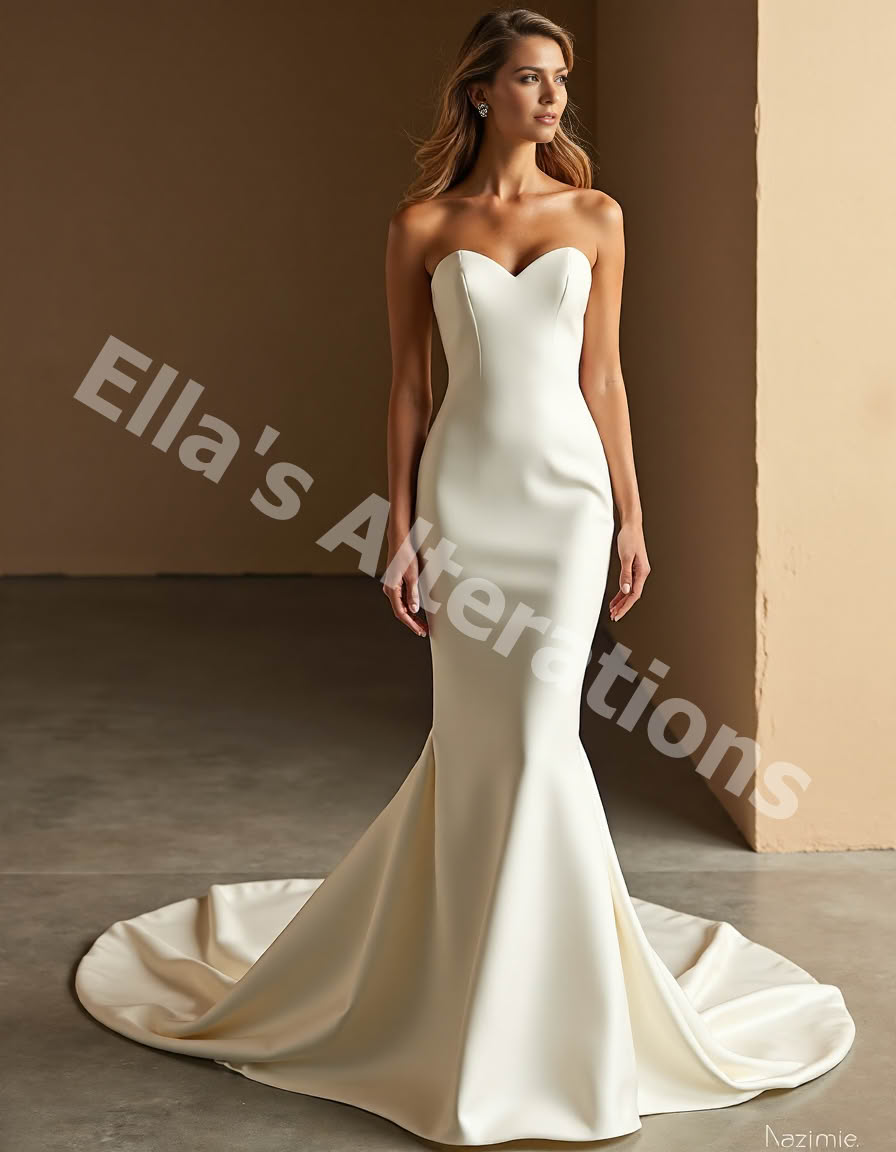
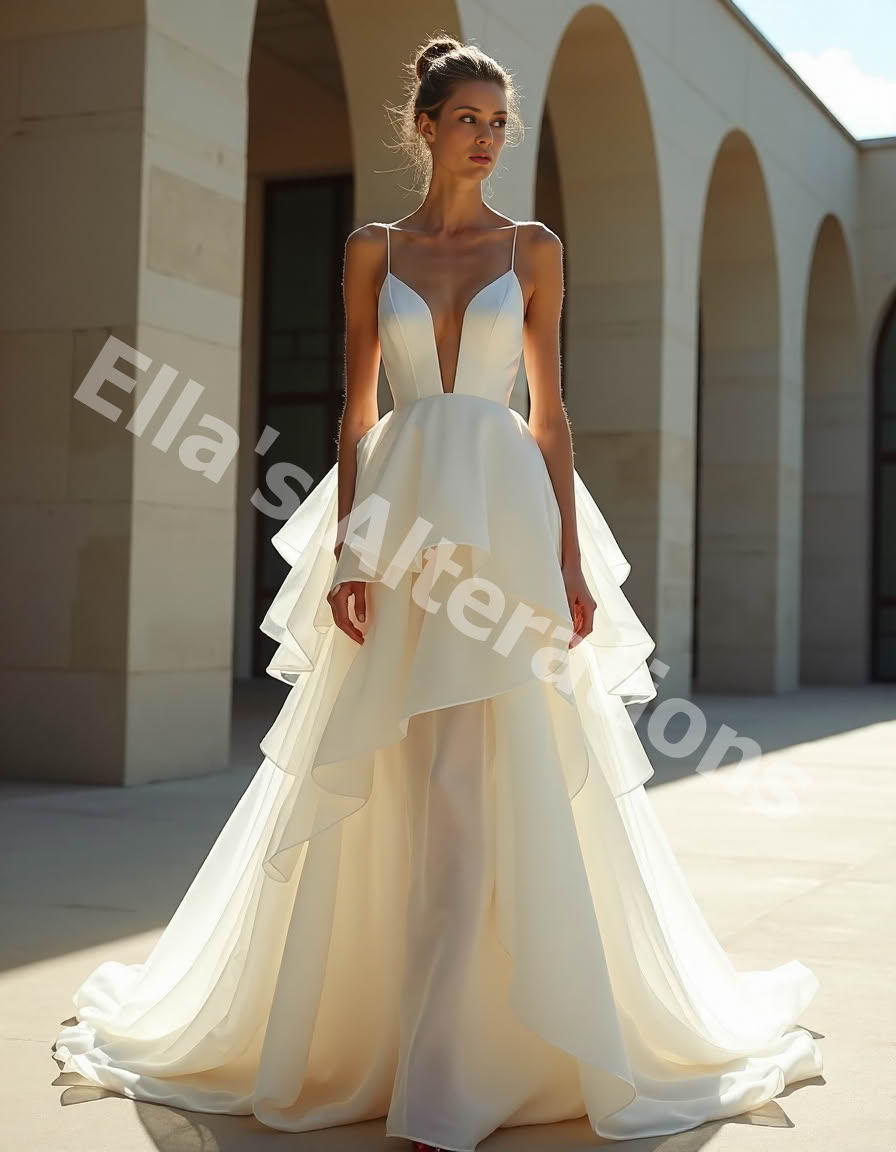
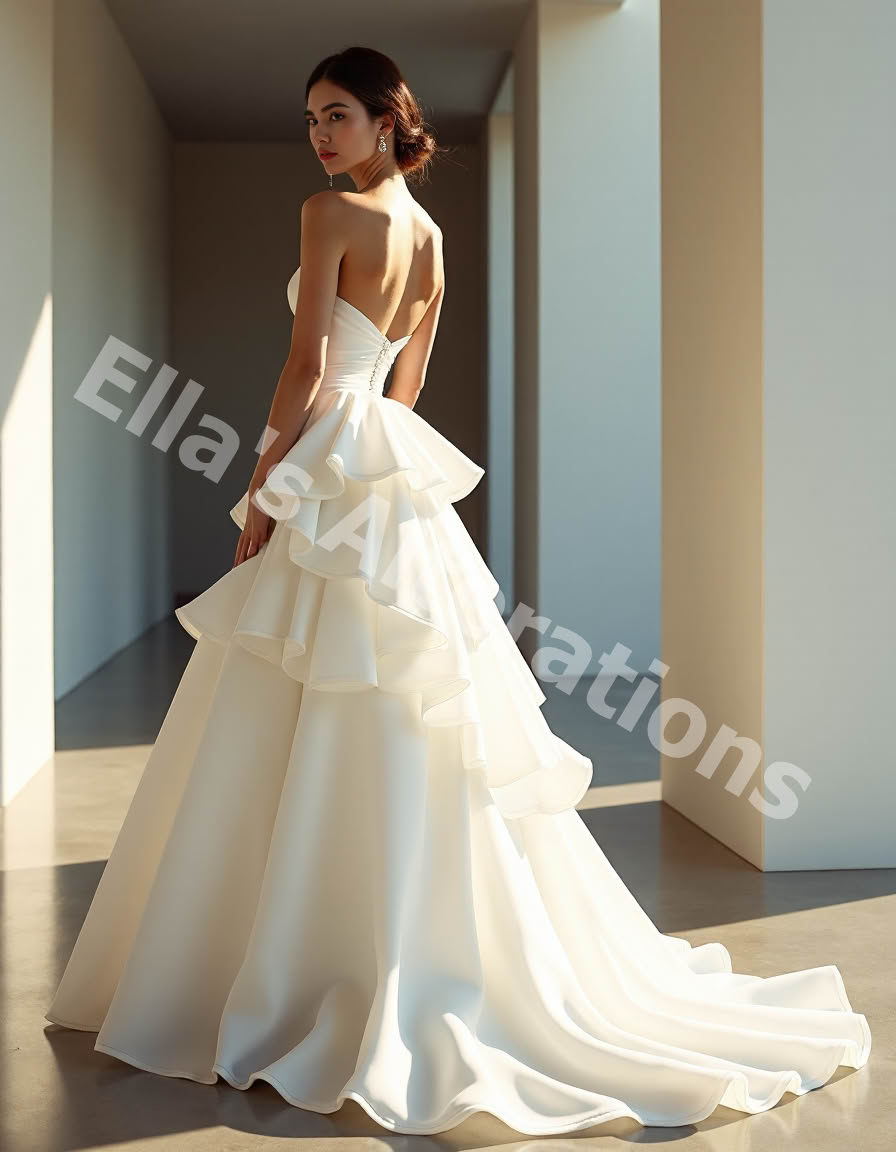
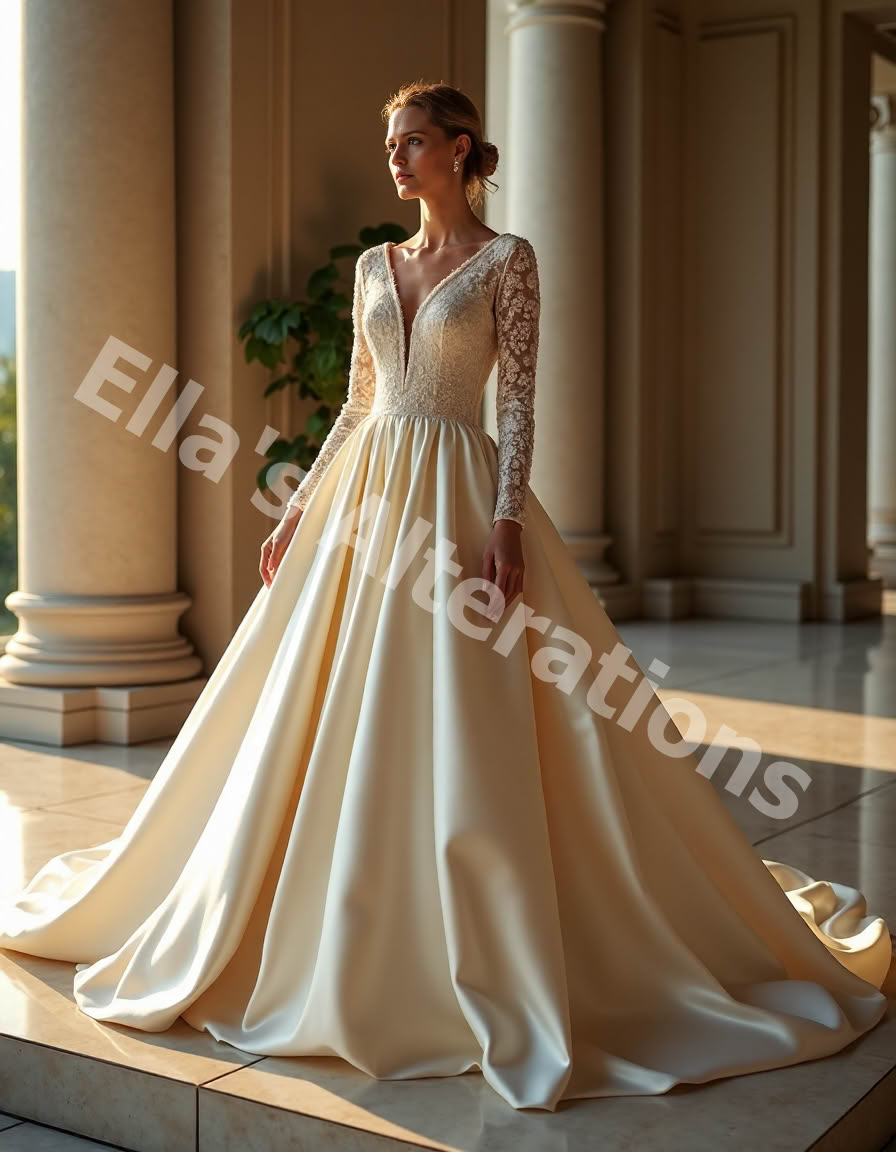
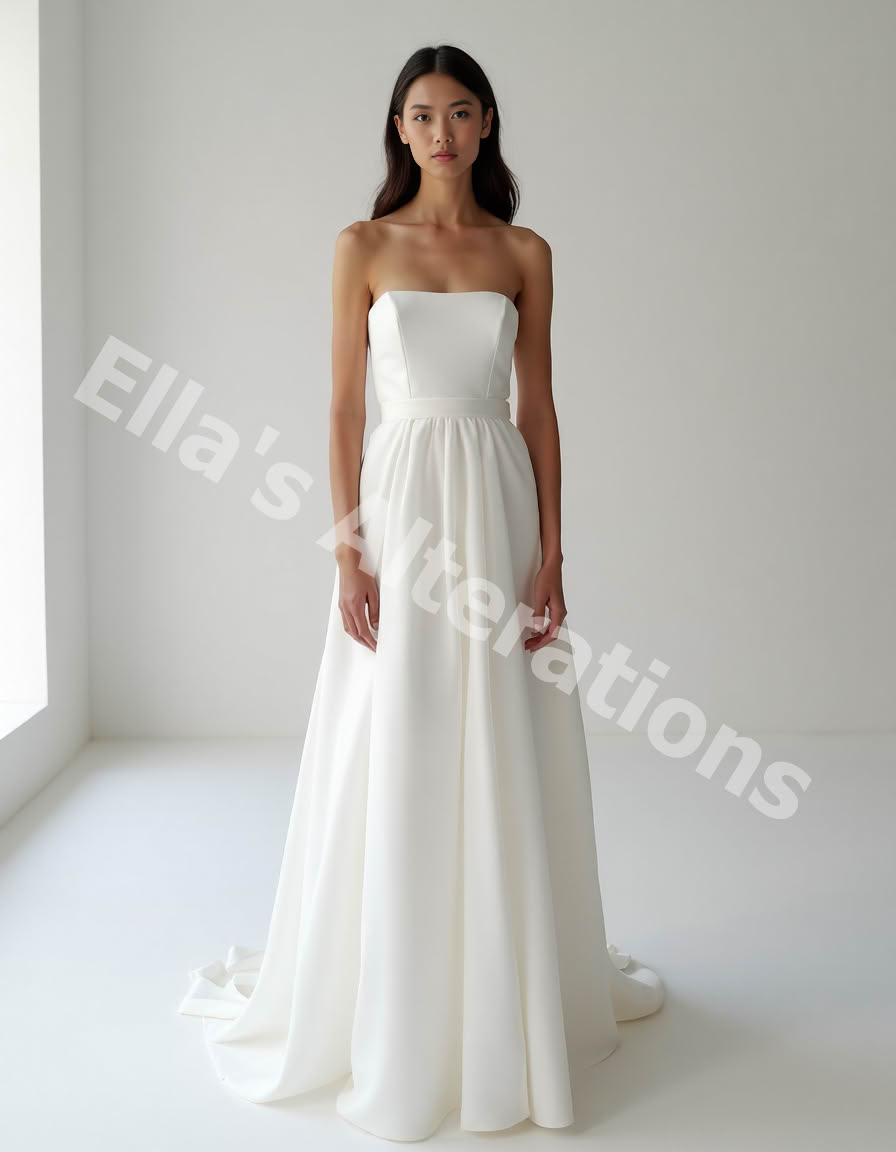
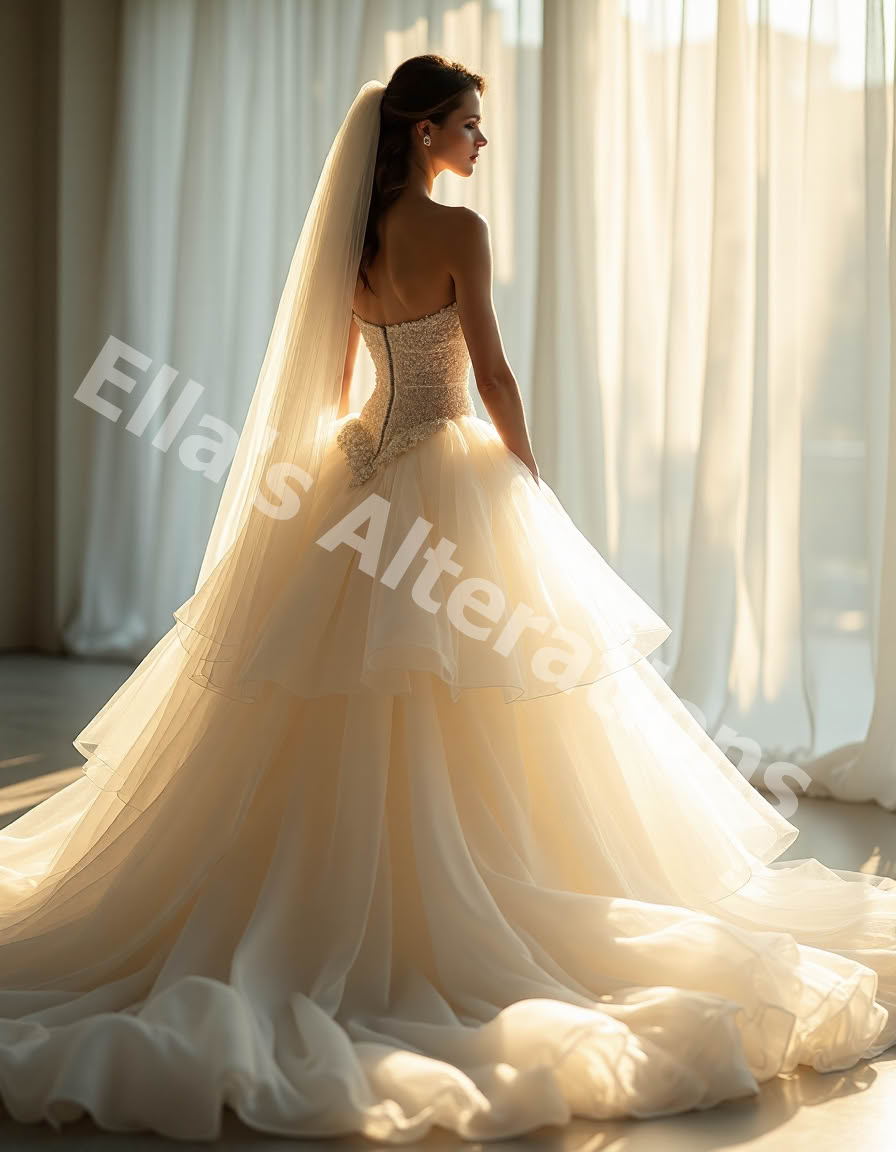
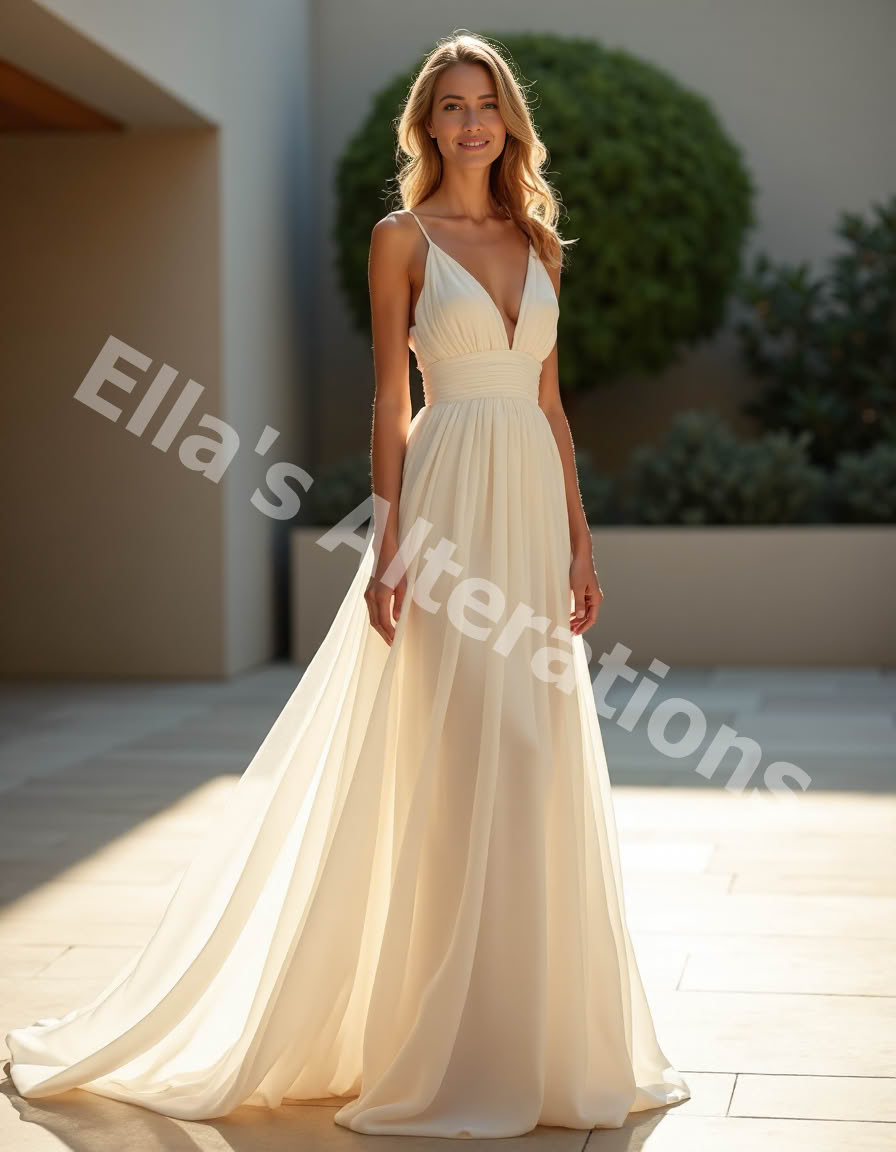
Why Fabric Matters in a Wedding Dress:
One truth becomes clear very quickly: fabric is everything.
It shapes the way a dress moves, how it feels against your skin, how it photographs, and how well it performs throughout one of the most important days of your life.
While design gets a lot of the attention, it’s the fabric that brings that design to life and transforms it into something wearable, breathable, and unforgettable.
The fabric you choose can completely change the personality of your dress.
Imagine the same silhouette crafted in two different materials.
A sheath gown in silk charmeuse becomes a slinky, seductive slip-style dress that hugs every curve.
That same silhouette in crepe feels more structured, modern, and minimalist.
The body of the dress hasn’t changed, but the fabric has altered its energy entirely.
That’s the power of material.
It adds dimension, weight, softness, shine, and even emotion to the overall look.
Fabric also directly impacts how a dress fits and functions.
Heavier fabrics like Mikado or brocade provide structure and support, which can be helpful for fuller skirts, dramatic shapes, or dresses with corseted bodices.
These fabrics hold their shape and resist wrinkles, perfect for formal ceremonies where elegance and presence are key.
On the other hand, fabrics like chiffon, georgette, and organza are much lighter and more breathable.
They are ideal for warm weather, outdoor ceremonies, or destination weddings where you want ease of movement and airy comfort.
A tailored gown is all about harmony, and the right fabric is what makes that harmony possible.
You want a fabric that complements your body shape, highlights your favorite features, and works with, not against, your chosen silhouette.
For example, if you love the drama of a ball gown but want to avoid too much bulk, tulle offers volume without weight.
If you want a fitted gown that doesn't cling too tightly, crepe provides structure while still feeling soft and elegant.
Beyond wearability, fabric also sets the visual tone.
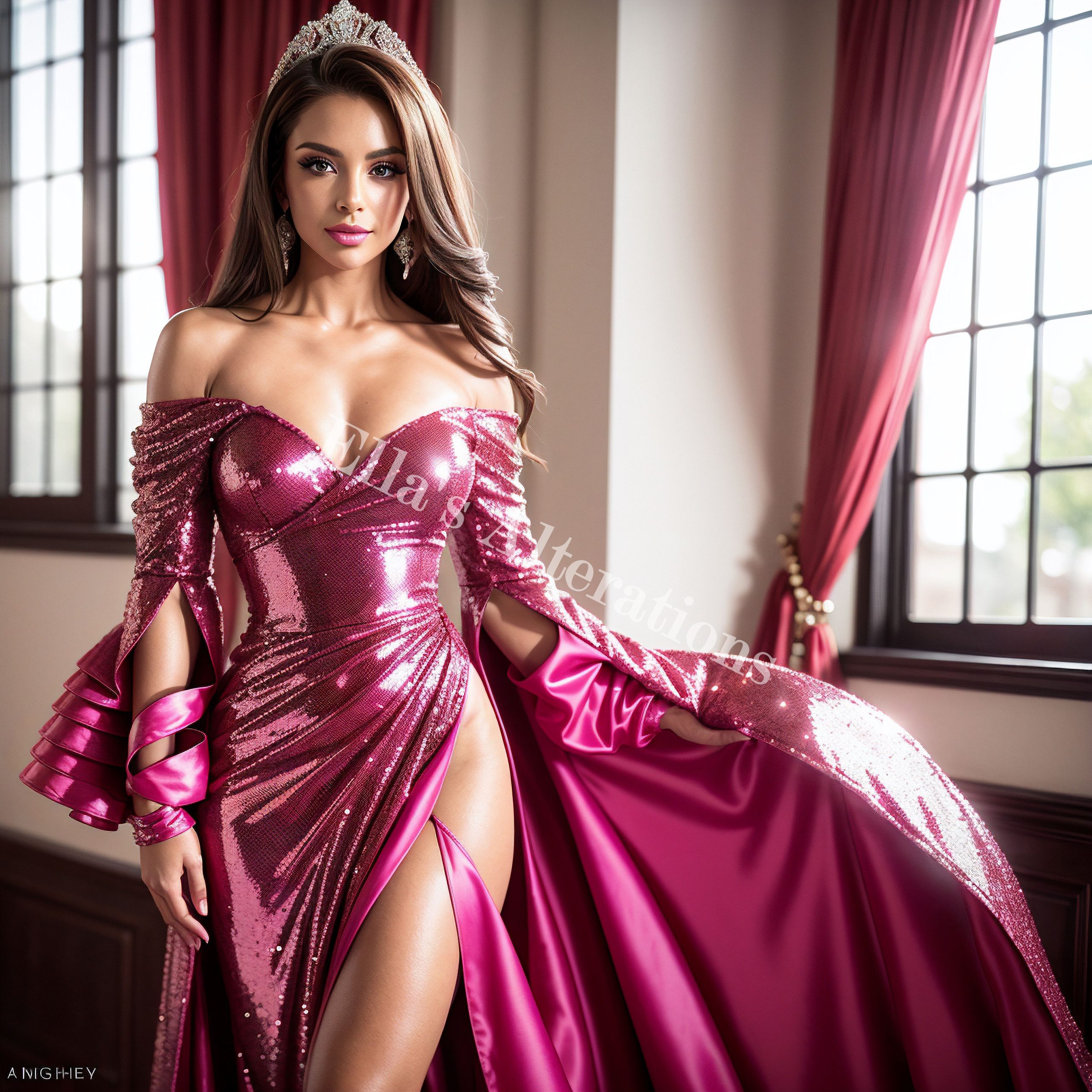
High-shine fabrics like satin and silk create a more glamorous, formal impression.
Matte finishes like faille or cotton blends bring in a touch of modern ease.
Texture plays a role too.
Lace adds softness and tradition, while jacquard and damask introduce depth and ornate detailing.
These choices aren’t just about aesthetics.
They influence how your dress looks in motion and how it photographs, both of which matter when you’ll be walking down the aisle and looking back at those photos for a lifetime.
From a tailor’s perspective, fabric is the blueprint.
It determines how the gown can be constructed, how much it can be altered, and how it holds up to embellishments like beading, embroidery, or appliqué.
Some materials stretch slightly, giving a little flexibility in fit.
Others are rigid and unforgiving, requiring precise measurements and expert tailoring.
The more you understand about your chosen fabric, the better equipped you are to communicate with your tailor and bring your vision to life.
Lastly, your personal comfort and confidence matter.
Scratchy textures, overheating, or overly stiff fabrics can distract you from fully enjoying your big day.
The right fabric should feel like a second skin, beautiful, functional, and fully in sync with your personality.
Whether you're walking through sand, twirling on the dance floor, or posing under the lights, your dress should move with you and support every moment.
In short, fabric is not just a detail, it’s the foundation of your wedding dress.
It’s the thread that ties together design, comfort, and expression.
And when chosen with care, it turns a beautiful dress into your dream dress.
Fast Q&A
What does fabric actually change?
Fit, flow, and feel. Structured weaves hold shape for ball gowns and sculpted lines. Drapey fabrics glide and follow your moves for a softer feel.
Why do two dresses with the same cut feel different?
Swap the material and the energy flips. The body is the same but the fabric changes weight, shine, and motion, which changes the mood on camera and in person.
How does fabric affect photos?
Shiny surfaces reflect light and look bold. Matte surfaces absorb light and look modern and calm. Texture like lace adds detail that reads well in close shots.
Does comfort really come from fabric?
Yes. Breathability and texture decide if you run hot or stay cool and if seams rub the wrong way. The right lining and fabric choice keep you focused on the fun.
Builder Tip
Bring movement tests to your fitting. Sit. Walk. Do a hug. Try a small twirl. If the fabric fights you, pick a friendlier weave or add a stretch panel where you need it.
A Tailor’s Guide: What’s the Right Wedding Dress Fabric for You?
Before you fall in love with the look of the dress, fall in love with how it feels. Ella breaks down chiffon, lace, organza, and satin with expert tailoring insight.
TLDR
Fabric is the foundation. Pick the material that matches your venue, your season, and how you want to move. Then shape the silhouette on top of that choice.
Call to action: Book a fabric consult at Ella’s Alterations and test the real thing. Feel it. Walk in it. Own the room.
What Are The Parts of a Wedding Dress

About Us
Explore the Full Fabric Guide
Tip: ✔ means the section is live and ready to read. 🕓 means it’s still on the tailor’s bench — check back soon!
Trying on dresses is fun, but let’s be real—figuring out what fabric flatters your body and fits your wedding vibe? That’s next-level planning. A Tailor’s Guide: What’s the Right Wedding Dress Fabric for You? simplifies everything you need to know about bridal materials. We cover classic staples like satin, chiffon, and lace, but also go deeper into specialty fabrics like organza, tulle, and mikado. You’ll learn which fabrics work best for beach weddings, ball gowns, boho ceremonies, and beyond. Plus, we explore how fabric affects the way a dress moves, how it feels on your skin, and how it holds its shape throughout your big day. This isn’t just about aesthetics—it’s about comfort, confidence, and making sure your dream dress feels as good as it looks. If you want to walk down the aisle in a gown that’s uniquely you, this is your ultimate starting point.
Ella’s Style Confidence
Brought to you by Ella’s Alterations
-
Your body is not the problem. The fit is.
If something feels off when you put it on, that does not mean it is wrong for you. It means it has not been tailored for you yet. Clothes are made for averages. You are not average. -
Confidence starts at the seams.
The smallest adjustments change everything. A lifted waist, a shaped bust, a clean hem. These details quietly do the heavy lifting so you can walk in like you own the room. -
Comfort is not optional.
If you are pulling, tugging, or holding your breath, the garment is failing you. Real tailoring lets you move, sit, dance, and live without thinking about your clothes. -
Trends fade. Fit lasts.
Styles come and go fast. A perfect fit never goes out of style. When something fits you correctly, it always looks intentional and expensive. -
Support should be built in, not added later.
Hidden structure matters. Boning, cups, straps, and shaping should work with your body, not against it. When support is done right, no one sees it but everyone notices the result. -
You deserve clothes that work as hard as you do.
Whether it is a wedding dress, a suit, or everyday wear, your clothes should show up for you. Sharp, polished, and reliable. -
Confidence is quiet, not loud.
The best dressed people are not uncomfortable or flashy. They look effortless because their clothes fit correctly and feel natural. -
One great alteration beats five new outfits.
Fixing what you already own often gives you more confidence than buying something new. A tailored piece feels personal. Like it was made just for you. -
When it fits right, you stand differently.
Posture changes. Shoulders relax. You stop adjusting and start owning your space. That shift is what people actually notice. -
You are allowed to feel amazing in your clothes.
Not just okay. Not just good enough. Amazing. That is the standard.
Local Credibility
Ella’s Alterations is trusted by brides, professionals, and families across Central Florida for one reason. The work is done right.
Awards & Recognition
- Most Trusted Tailoring & Alterations Studio 2025 – USA
- Bridal & Formalwear Tailoring Excellence Award 2025
- Recognized nationally by LUXlife Magazine for craftsmanship and client trust
- Chosen year after year for precision bridal and formal tailoring
- Best Wedding Dress & Formalwear Tailoring Zephyrhills 2026
- NextDoor Neighborhood Favorite 2023 2024 2025
Service Area
Proudly serving Zephyrhills, Pasco County, Tampa, Wesley Chapel, Lakeland, and surrounding Central Florida communities. Clients travel from across the region for expert alterations that local shops simply cannot match.
Depth of Craft
With over 30 years of hands on tailoring experience, Ella works at a master level. This is not basic hemming or quick fixes. This is true garment engineering. Wedding gowns with structure, suits that need balance, formalwear that must move and photograph perfectly. Every adjustment is intentional and precise.
Proof of Trust & Fitting Care
Every fitting is handled with respect, privacy, and patience. Measurements are double checked. Details are explained. Nothing is rushed. Nothing is guessed.
Clients return because they feel heard, supported, and confident. Dresses are protected. Fabrics are handled correctly. Fit decisions are made with experience, not shortcuts.
This is why generations of clients trust Ella with their most important garments. When it has to fit perfectly, they choose experience.

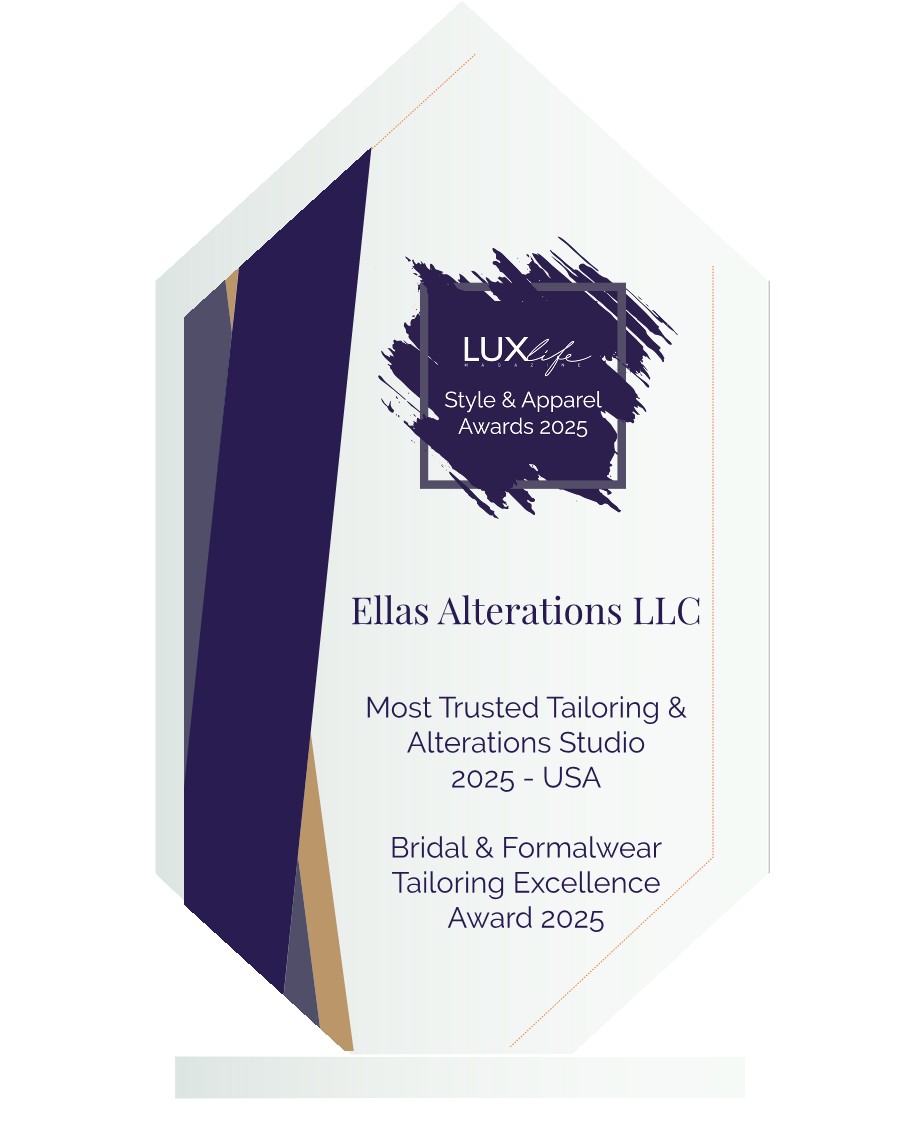
Bridal & Formalwear Tailoring Excellence Award 2025 – USA
Award Winning Bridal & Formalwear Tailoring
Ella’s Alterations is proudly recognized as one of Zephyrhills’ most trusted tailoring studios, specializing in wedding dress and formalwear alterations.

NextDoor Neighborhood Favorite 2023, 2024, 2025

Best Wedding Dress & Formalwear Tailoring Zephyrhills 2026
Why Clients Trust Ella’s Alterations
- 30 plus Years of Expertise: Master tailoring and formal wear alterations trusted across Florida.
- Award Winning Service: Best of Florida Tailor and Best of Zephyrhills.
- Private Bridal Fittings: Discreet, elegant, and tailored to you.
- Proven Local Reputation: Five star customer reviews and repeat clients from Tampa to Orlando.
- Transparent and Personal: Clear pricing, expert guidance, and no rushed fittings.
- Recognized nationally by LUXlife Magazine for craftsmanship and client trust
- Chosen year after year for precision bridal and formal tailoring
- Best Wedding Dress & Formalwear Tailoring Zephyrhills 2026
- NextDoor Neighborhood Favorite 2023 2024 2025
Address: 6986 Fort King Road, Zephyrhills FL 33541
Phone: +1 813-445-8894
Email: admin@ellasalterations.com
Hours:
Get Directions | Book Your Fitting